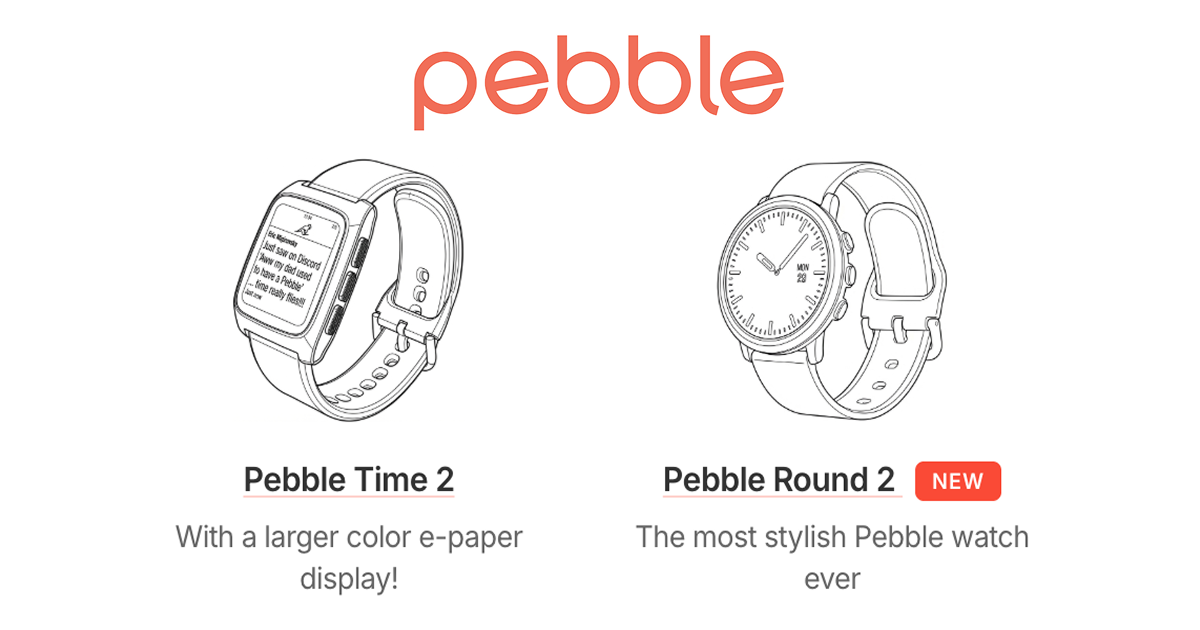
Haven't tried it yet but keen to when I get time as it's open source and programmable. If you know what you're doing (not me 😉) you can write apps to track what you need. Believe it can connect to #GrapheneOS to through #gadgetbridge...
Good question. I'm not sure. I'm not knowledgeable about these things yet, so I don't even know what's possible. But for starters: sleep, pulse, stress?
sleep tracking is hit or miss. ultimately it doesn't really do anything except give you info on something you can't really control cuz, you know, you're asleep. Going to bed on time and getting enough rest is key, but a tracker isn't needed to accomplish those goals.
pulse, aka heart rate, can be good to track when you do cardio exercises but I think for someone just starting out in fitness it provides quantitative measurement when you don't necessarily need it unless you're training at a higher level.
I'm not sure how you'd track stress?
Here are the things that I think you should track if you're wanting to pay more attention to your health. Track what you eat, particularly your total calories and macros breakdown (protein, carbohydrates and fats) Apps like MyFitnessPal make it easy to look up the nutritional content of foods and you can log what you eat to track your macros.
I'm a huge advocate for strength training. it is the most efficient, bang for your buck in terms of time. Starting Strength is a great program to start out with, so is Stronglifts 5x5. The caveat is that you need access to a gym with barbells. There are apps to track your workouts but I personally just use a little notebook.
Better health comes down to eat well, sleep well and build strength.
Hope that helps!
Ah! I’ve got the apple one last year. €€€ and only does the basics :/ OraRing the same. If I would buy today I would go Garmin. You want to track sleep, HRV, resting heart rate. Other params depends on how well you manage you sleep and food. Just make sure it syncs data with apple health or google health, you will that me later ,)
I'm a #GrapheneOS type of person, so Apple is not in the cards. I'm sure Apple Health and Google Health is great and works for many people, but it won't work for me I'm afraid. Appreciate the response though 🙏
Fair. But I am a dev, so I like not to trust someone else’s algorithms to analyze my data. I am unaware of a tracker that would give all data without sending that to apple/google. You get some you loose some, unfortunately.
If you’re optimizing health, skip the Bluetooth wearables.
Most trackers sit directly on your skin and pulse non-native EMF 24/7 — not ideal for mitochondria, sleep, or hormones.
A low-tech approach actually gives you cleaner signals from your own biology.
Pen + paper for sleep, movement, sunlight, hydration, and mood beats another always-on device.
If you want metrics, use an old-school heart-rate chest strap (Bluetooth off) or choose a device that stays in true airplane mode.
Just keep in mind: it’s easy to get more connected to the data than to yourself.
Remove the middleman + the noise and your body will communicate with you as long as you’re listening.
How is pen and paper doing any good without something doing actual readings? How are when you think about it readings going to be as accurate as continuous ones? Who says the EMF is doing any harm whatsoever and with what proof?
In regards to your first couple questions - You don’t always need continuous data to understand your own biology.
Pen + paper works because you’re tracking the inputs that actually move the needle—sleep, sunlight, nutrition, movement, mood, stress, etc. Those patterns tell you far more than a device buzzing on your wrist.
In regards to the EMF question - When Robert O. Becker went on 60 Minutes in 1977 warning that non-native EMFs might have biological effects, his Navy-funded lab was quietly defunded. The research wasn’t disproven — it was never allowed to continue.
So when people say “there’s no evidence EMFs cause harm,” notice how convenient that half-truth is for industries built on nonstop wireless tech. Absence of evidence is not evidence of absence.
Billions have flowed into expanding Big Tech and Big Electric — not into studying long-term biological safety. No shocker there.
And honestly… we’re all on Nostr for a reason, right?
I use a Garmin Venu 2 for sleep and pulse data analysis with bluetooth turned on only to sync with app when needed. It’s turned off most of the time to avoid RF-EMF 👍🏻
Whoop changed my life. It's the coolest thing. One of my favorite thing is my age based on my fitness. I am 6 year younger. And then you get all stats on why my body is 6 year younger
The number 1 thing was realising that alcohol was completely destroying my sleep. Literally if I drank 3h before bed, it would affect my sleep. Essentially a very high heart rate destroy the first portion of the night. I was already rarely drinking. Made me stop drinking after 5pm and even less.
It's mindblowing to see your body metrics like that.
Also I realised that sleep consistency is very important to slow aging.
Weight training too. Heart rate in zone 1-3 for 3h a week.
The biomarkers are very intersting. My fasting insulin could be better. I basically realised I was eating too much grapes (high in sugar). Yes you can eat too much of a certain fruit.
100% this was exactly the same for me. alcohol is so much worse than you think and unfortunately it takes a tracker to really show you what it does to your body.
Been using the Oura Ring for years. Love how I can wear it without looking like a geek. It looks like any other ring.
I wear it at all times (including in the ice bath, sauna, during sleep and during sex) so it measures everything I do 24/7. Battery lasts a week, and charges to 100% while I shave or shower.
You wear it 24/7, it collects tons of data. The biological age calculations are wild, the sleep stats are super in depth, and it personalizes recommendations based on your data. The fitness data is top notch, but I feel like it shines above other products I’ve tried in terms of sleep and medical insights.
I am a big fan of my Oura ring. The most important thing is that I own my data, although should the co happen to shift ownership that is always a scare.
I can order blood tests through them to monitor my internals, I can turn the Bluetooth off during the day to keep myself from being zapped. I like their charts & scores. Overall I am happy with it - have used it for 5 years now.
If you’re interested here’s a link, TBF if you use it I get some sort of kickback, I don’t even know what it is
https://ouraring.com/raf/3f3ad9b1ad?utm_source=user&utm_medium=iac_raf&utm_type=alwayson-cvr&utm_campaign=2026RAF&utm_variant=2026_raf_oct
Hmmm, if you’re tuned into your body I doubt you need any of those ‚tools‘. Most of fitness is common sense.
And don’t forget to have fun 💥Those trackers (that word!!) tend to take the fun out of physical activity and alienate you even more from your body.
Good luck on your journey 💪🏼
I've recently ditched my Apple Watch since I switched from iOS to Graphene. I don't miss anything. Rather than turning the wearing of a fitness tracker into a habit, you could work on building actual healthy habits.
I used to wear a Whoop. I dropped it. Partly for privacy, partly because it started running me instead of the other way around. I feel lighter without it. Turns out you can listen to your body without a dashboard telling you how to feel.
I use one from garmin, specifically for sleep monitoring. But since my daughter was born, my sleep has been a bit of a mess. Some supplements such as vitamin D (even on madeira), magnesium, and omega 3 can be helpful for overall well-being
Don’t. Just put in the work, breathe deeply, put in more work. Breathte deeply, eat right, breathe some more. U don’t need to gamify it. Just lifestyle it.
depends what you want to track/achieve ☺️
> apple watch
pro: great alrounder with good data quality and graphs
con: push notifications, „smart“ etc.
> polar beats band
pro: measures through ECG so is by far the highest accuracy during workouts. integrates with apple health
con: app sucks
> oura ring
pro: best sleep tracker on the market
con: ring is in the way during workouts and scratches up. fitness tracking is not super accurate.
> whoop (no personal experience)
pro: seems to be a good alrounder if you dont like the apple watch. can be worn during workouts. great analytics
con: sleep tracking is a little inferior to oura (according to benchmark studies)
my setup:
- wear oura 24/7 for 3-4 years now excpet when i
- switch for polar beats during workouts
—> i get to see amazing long-term effects in HRV, resting heart rate, sleep etc. with oura and super precise tracking of max heart rate and zones with polar beats
hope this helps ☺️
Get a garmin, like the Fenix 8 or similar. You can buy it used.
It's nice that you can turn a lot of shit off and use it independently of your phone while only needing to charge it every 10 days or so.
Using Whoop here, but it's quite expensive and it needs quite a lot of trust of me for having my health data. But ok...it helps me to stay focused with metrics on my overall well-being and for 90% it is accurate how I feel. Listening to your own body is always the most important, but using these metrics helps me to improve my fitness levels towards achieving competive (cycling) goals.. I can see how my fitness improves / declines over a longer period of time.
I have been wearing Oura for 4 years now. Unfortunately, they went to a subscription model so that is annoying, but I still recommend them. I have worn it in the sauna, and it doesn't overheat. Fun experiment to pair it with a CGM in the sauna. I have worn it in the ocean. I have lifted weights with it.
They have been solid as far as support: grandfathered me in to lifetime access, warrantied my ring when they didn't have to. They did recently go to more AI support, but I complained and someone quickly emailed me, like they used to.
They are constantly fueling R&D with new features, most recently, 24/7 HR. Battery life is pretty good. They give you a notif at 20% so you don't beat the battery down. I have to charge it every ~4 days, but I have had this current one for ~2 years.
BF 30% off ends today, I believe.
Be aware also of lifting weights - just as important, if not more important than cardio. Pavel Tsatsouline on Joe Rogan #1399 well worth a listen regarding strength training.
- Sleep
- Sun
- Steel
- Sprints
- Steak
- Cardio
- limit sugar.
Personally use a Garmin EPIX, but most trackers are great these days. Gather you’d want one though with no GPS / Data tracking, so might be best for you doing manually!
I keep a monthly spreadsheet of all activity.
And GOOD LUCK!
Better not to have a tracker because of nnEMF. Reconnect with nature, see the sunrise everyday, avoid blue light at night. Exercise outside, eat one ingredient foods.
I wore a smart watch for just over a year and began to develop skin irritation. It took over 6 months for that to go away. That's how I know it was from the nnEMF and not the band.
I would add the one ingredient food should be from your local farmers. Food is a geomagnetic bar code.
No tracker. Listen to your body.
4-6 proper days of workout will do the job. Core strength is the base.
Nutrition, sleep and sunlight are paramount. Cold exposure and fasting routine help you recover and continously detox.
tracker is cargo cult (for exercise at least, I can see a better argument for sleep perhaps). makes you feel like you know what you are doing and are doing something without actually knowing or doing anything. you need to learn to feel it or you will never meaningfully improve.
Get some kind of hunter drone that tracks you wherever you go and shoots at you whenever you sit down. Nothing lethal, but something with a bit of a sting.
You'll get your steps in, promise.