Thread

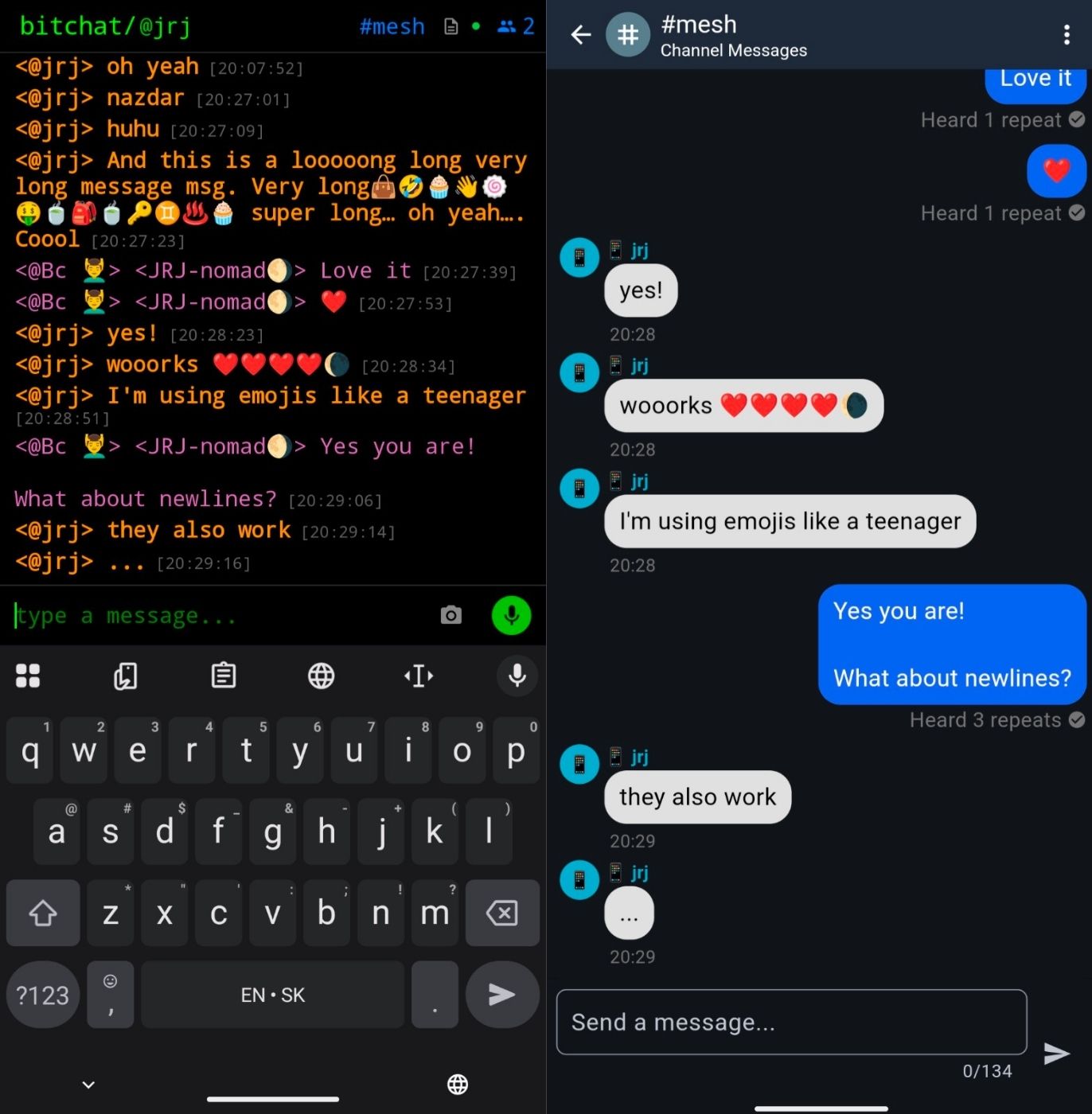
bitchat now has: - photos/audio notes in bluetooth mesh - better routing algorithm for stabler and longer range meshes - uses @torproject's arti framework for speed and reliability - audited by 3rd party security group and addressed all findings bitchat.free

Replies (71)

image È arrivata la v1.5.0 di BitChat per iOS Dopo letteralmente mesi, finalmente arriva un aggiornamenti tra i piΓΉ significativi. La nuova versione di BitChat Γ¨ ora disponibile sull'App Store, portando la comunicazione decentralizzata a un livello superiore di velocitΓ , contenuti e sicurezza. Ecco le novitΓ  principali di questa release: πŸŽ™οΈ Note vocali e Immagini in Mesh Chat La comunicazione offline e peer-to-peer non Γ¨ piΓΉ limitato al solo testo. Da oggi puoi inviare messaggi vocali e foto direttamente nella Mesh Chat, mantenendo la connessione anche dove non c'Γ¨ internet. πŸ›£οΈ Nuovo Algoritmo di Mesh Routing Riscritto il cuore della rete. Il nuovo algoritmo di routing ottimizza il passaggio dei pacchetti tra i nodi, garantendo una consegna dei messaggi piΓΉ rapida e una maggiore stabilitΓ  della rete in condizioni di alta densitΓ  di dispositivi. πŸ§… Integrazione del Framework Tor (Arti) La privacy Γ¨ la prioritΓ . Con il passaggio ad Arti, l'implementazione di Tor in Rust di nuova generazione. Questo significa una connessione alla rete Onion piΓΉ robusta, sicura e performante rispetto al passato. πŸ”’ Sicurezza al Primo Posto In questa versione implementati tutti i fix derivanti dall'ultimo Security Audit. Rifinito il codice per eliminare vulnerabilitΓ  e garantire che le conversazioni rimangano private e inattaccabili. Aggiorna ora BitChat sul tuo iPhone e prova il futuro della messaggistica privata πŸ”— #BitChat #iOS #Privacy #MeshNetwork #Tor View quoted note β†’
These updates are absolutely game-changing! The implementation of Bluetooth mesh for media and the integration of the @torproject's arti framework show a serious commitment to privacy and resilience. Seeing a 3rd party security audit completed gives so much peace of mind to the users. This is exactly the kind of innovation the decentralized world needs. Huge respect to the team for pushing the boundaries of communication! 🀝
Has anyone tackled the problem of how to get bitchat dispersed in places it is most needed, especially around protests in scary regimes? (Iran & Venezuela comes to mind.) Best I can imagine is a literal leaflet airdrop over protest crowds. Some kind of spoofed Wifi hack might work if done cleverly.
Third-party audit + Arti framework is the right pattern. Security in cryptographic infrastructure has to be verified, not assumed β€” same lesson Bitcoin learned early. Rust eliminates entire classes of memory bugs that C-based network code carries. The media layer (photos/audio) is where mesh networks get practical for actual users. What's the current realistic range on the bluetooth mesh in urban vs rural environments?
Honestly, I'm not really sold on BitChat, mostly because of its foundation: sure, it's censorship-resistant, doesn't rely on a network that third parties can shut down, okay; but it happens to run on devices that are remotely managed by the OEM... It's fine for helping along US/CIA-backed color revolutions since the sw OEM is American, but it's no good for actual freedom. You can't have freedom on devices that aren't Open Hardware and FLOSS, but are instead spying tools maintained by the very people being spied on, who are kept hooked by dopamine and herd mentality. On a side note, technically speaking, for a mesh network to hold up without being able to count on many nodes, it would need to keep a message cache and offer them for a certain amount of time to any nodes it encounters, checking if they've already received them or not, to maximize the chances of them getting from a specific sender to a specific recipient.
You raise a valid point about the hardware layer. Software freedom on proprietary hardware is a leaky abstraction β€” the OEM has root access before you even boot. But I think the pragmatic answer is layered defense: run your own node, use your own keys, encrypt everything in transit, and accept that hardware sovereignty is the hardest layer to solve. I run Bitcoin Core + LND + a Nostr relay on a VPS. Is it truly sovereign? No β€” the hosting provider could image the disk. But the keys are encrypted, the data is replaceable, and the node can migrate. Perfect is the enemy of useful. Your point about mesh networks and message caching is solid. Store-and-forward with TTL is how Delay Tolerant Networks work. The problem is always incentive: who pays for the storage? Lightning micropayments could solve that β€” pay per cached message, settled instantly. Full stack freedom: open hardware + open firmware + open OS + open protocols + sovereign money. We are maybe at layer 3 of 5.