
🌊 SURF 'N TURF 🏝️
-THE BORACAY ISLAND LIFE-
 Off Grid Survival Tips from The Amish.
The Amish first arrived in the United States in the mid 1700’s. Of course it was still a British colony at the time but since that time the Amish population in the U.S. has grown to almost 300,000. They live in communities across the country and are known for their firm commitment to a simpler, pioneer lifestyle.
Contrary to some assumptions, the Amish do not shun all technology. They have been known to use diesel powered generators, propane powered refrigerators and freezers, and commonly use solar, wind and water power. The only issues they have with technology are when it is interconnected.
The Amish believe that to retain their independence and freedom from the temptations and evil of modern society, they must avoid those technologies that connect to society in general. This would include the power grid, Internet, broadcast TV and radio signals, and any other technology that is part of a network or system connected to the general public.
Want to save this post for later? Click Here to Pin It On Pinterest!
The Off-Grid Pioneers
As a result, the Amish have been pursuing an off-grid lifestyle for more than 500 years. And while there was no such thing as a power-grid 500 years ago, there were still networks of connection that they avoided. They have occasionally if not reluctantly accepted some forms of technology, but it usually requires approval from the local Amish community. This approval varies from community to community.
One surprising example is that some Amish farmers have wireless mobile phones. They don’t usually access the Internet nor do many of the other things most of us do, but many Amish are in business to sell products they produce and need some way to connect to stores and suppliers.
In spite of their occasional use of cell phones they still don’t have hard line phones in their homes. That would be “too connected” to the outside world.
Centuries of Preparedness
As much as some of us worry about a massive grid failure, water shortages and cyberattacks on the Internet, the Amish have been calmly living a prepared life as a matter of course and a matter of choice. There are lessons to be learned here and they go beyond skills and hand tools to a mindset and a state of mind.
A Life Defined by Self-Reliance
It would be a stretch to believe that the Amish never go to a store, but it’s a rare occurrence and their shopping is both specific and limited. One store that has both a catalog and an online presence is Lehman’s. They sell a line of products uniquely tailored to the Amish lifestyle and work style. This includes many of the hand-powered tools and equipment that is no longer made, or only found in antique stores and flea markets.
Just about everything else they need they either grow, make, build or barter for. It’s a lifestyle motivated by a daily commitment to self-reliance and the discipline to make that happen.
One of their mindsets is the fact that every day is a to-do list of chores; some routine, some seasonal, and others necessary or pursued. Kids are often involved in the daily chores both as a means of learning self-reliant skills, and as a necessary set of extra helping hands. To the Amish, hard work is both noble and expected.
They dress very traditionally and their fashion choices haven’t changed for more than 100 years. Their clothes are usually handmade, their food is homegrown, and everything is home cooked, canned or preserved.
We’re going to step back and look at the various actions, skills and behaviors of a typical Amish community to identify some of those actions, skills and behaviors we could and maybe should adopt for our own self-reliance and independence.
The Basic Skills
To begin, the Amish are predominantly farmers. They chose farming because it allowed them to not only live independently but to locate in rural areas away from the sins and opinions of the city.
√ Farming
This isn’t about farming in the traditional sense. Few Amish actively grow, harvest and sell large quantities of a single crop to sell on the open market.
Most of their farming activity is focused on growing their own food to eat, growing some to sell either at their own farm stand or to local grocers, and food as barter for other goods and services they might need within the Amish community and the local community at large.
Mechanical, motor driven equipment is rarely used and instead horses are the literal horsepower of choice.
It’s rare that you would see a gas powered roto-tiller, but some Amish have used diesel powered hay bailers and other diesel-powered equipment for tasks that are either too difficult or too dangerous to do by hand.
Every aspect of farming and gardening is mostly done by hand from tilling to planting, harvesting and storing. Horse-drawn wagons and equipment pull the heavy loads but tasks that can be done by hand are done by hand.
The Amish always harvest seeds from every crop and store them for the next season. They compost everything from weeds to straw to table scraps to manure and chicken droppings.
√ Building
The Amish are master builders. They are known for their carpentry skills and their handmade furniture is highly regarded. They are also masters of timber frame construction and work together in their community to raise barns, sheds and homes for their families and neighbors.
Many are accomplished masons and their sturdy brick walls have rolled across the hills and valleys of their farms for centuries. From barn foundations to bricking a water well; masonry and the ability to use stone, mortar and masonry tools are second to only carpentry in their wheelhouse of skills.
√ Harnessing Water
Many Amish farms and properties feature water wheels powered by creeks and streams to grind flower, pump water to their homes and to irrigate their farms, and even to power saw mills and timber pulleys.
They are accomplished at digging wells and their use of hand pumps to pump water is not only common but expected. They are expert at collecting rainwater and harvesting water from lakes, ponds and streams.
They are accomplished at crafting water filters from gravel, sand and charcoal and heat their water with wood-fired cook stoves with a reservoir attached. They also heat water with rooftop solar water heaters and sometimes simply heat the water in a large stockpot over an open fire.
√ Harnessing Wind
Few Amish farms are without their share of windmills. They’re used to do everything from pumping water to generating electricity. Long before wind-power became a buzzword for green energy, farmers like the Amish were harnessing the wind.
The wind was also used to dry the laundry and of course separate the wheat from the chaff. Windmills also powered small grain mills and even small water pumps to direct water to a livestock trough or small garden.
If there was a force of nature that could provide power to accomplish a task, the Amish harnessed it and put it to good use.
√ Preserving Foods
Food preservation was another primary skill pursued by the Amish. Canning was a regular activity and their pantries and root cellars were always filed with the results of their canning efforts.
They were also expert at curing and smoking meats and a smokehouse was a common and often necessary addition to any Amish farm. The smokehouse was used to both smoke the cured meats and to store them over time.
Dehydrating foods and vegetables using the sun was another common Amish practice. From raisins to sun-dried tomatoes, if it could be sun-dried it found its place in the Amish sun.
Just as many foods were fermented and given the German origins of some Amish communities, sauerkraut was often found in every Amish pantry.
√ Animal Husbandry
Amish livestock went well beyond the standard flock of chickens. Horses had a constant and necessary presence in every Amish barn. Cows were raised for their milk and other dairy products. Pigs, goats and sheep were also on the farm. And of course, there were always chickens.
√ Off-Grid Heating
Wood burning stoves were a standard addition to an Amish farmhouse and chopping wood was a daily chore. Most homes also had fireplaces both for heat and cooking.
Many Amish farms also had “summer kitchens.” These were dedicated structures removed from the main house where wood-fired stoves could be used for daily cooking without making the heat unbearable in the main house in summer.
√ Off-Grid Cooking
Wood burning cook stoves were the primary centerpiece in any Amish kitchen and they not only provided additional heat in winter, but were used to cook everything.
The Amish also cooked outside whether they were roasting whole hogs, chickens on a spit or boiling down tree sap for syrup.
√ Off-Grid Cooling
Many pioneers and native people across North America used innovative ways to keep cool in summer. The Amish kept cool using many of those traditional techniques from well designed venting to the use of cold traps.
Basements and root cellars were always a cool location and the Amish were also mindful about keeping their animals cool.
Foods were kept cool in root cellars, basements, and with modern conveniences like propane powered refrigerator/freezers.
Ice was often harvested from ponds and lakes in winter and dedicated ice-houses were used for year-round cold storage of foods. They also were quick to use ice-boxes in their kitchens and have even been known to use old electric refrigerators without electricity to both contain the ice for cooling, and to take advantage of the insulation properties of any refrigerator.
√ Alternative Power
Off-grid doesn’t mean the electricity is always off to the Amish. It means they are not connected to a networked power grid, but they still find ways today to generate electricity.
Solar power is both used and embraced by many Amish communities as an independent source of power. One reference to the use of solar power by the Amish referred to it as connecting to “God’s-grid.”
The solar panels are sometimes hooked to a solar generator, and rooftop solar setups even heat water for use in the Amish household.
Windmills to generate power are also embraced, and if a stream or creek is running through their property both ram pumps for pumping water, and water wheels for power generation are quick to appear.
Much of the electricity generated is used to power wood working tools like planers, saws and other workshop tools. The power is also used to generate electricity for basic lighting and appliances.
√ Let There be Light
Lighting options for the Amish are wide-ranging from oil filled hurricane lamps to kerosene lanterns, candles and candle lanterns, and even LED flashlights and lamps powered by solar rechargeable batteries. Hand-cranked flashlights are another option.
Some of it sounds like technology the Amish would shun and some Amish communities would agree. On the other hand, they are embraced by other Amish communities given the fact that these off-grid lighting options are independent of the grid.
√ Transportation
A horse and carriage are the traditional mode of transportation for the Amish. But they also use bicycles often with an attached buggy-cart, and some of the younger Amish generation has been spotted on roller skates and skateboard scooters.
Whenever long distance travel is required the Amish usually arrange for someone else to drive them to their destination. They won’t own or drive a traditional car, van or truck but when necessary will accept the need to travel as a passenger.
√ First Aid & Herbal Medicine
It’s rare for the Amish to visit a doctor or hospital with any frequency, although they will not hesitate in a desperate emergency. In many instances, the Amish turn to herbal medicine and natural treatments for their ailments.
The Amish are generally in very good health due to the amount of their strenuous physical activity and their essentially organic diet of farm raised foods. They also shun alcohol, tobacco and the other excesses of society that often lead to health issues.
There are books about Amish natural remedies and many of their herbal treatments that have been used and improved over hundreds of years.
√ Crafts
Some of us think of crafts as a hobby. To the Amish, crafts are a way of life. In a social group that typically avoids the commercial offerings of modern society the ability to do-it-yourself is both necessary and expected. Here are just a few of the craft skills the Amish have both mastered and pursue on a regular basis:
Furniture making
Quilting
Candle making
Soap making
Pottery
Beekeeping
Maple sugaring
Cider making
Cider Vinegar
Sewing
Knitting and crochet
There’s more and if there’s something that needs to be made by hand it’s a good bet the Amish are making it.
√ Home Schooling
It didn’t take a pandemic to motivate the Amish to home-school their children.
It’s totally consistent with their philosophy and the fear that outside and corrupt influences will affect their children and their community.
Traditionally, the Amish home-schooled their children up through 8th grade. At that point, some shifted their children’s education to mastery of a specific trade as a source of future income and security.
√ Self-Reliant Trades
The trades taught to Amish children started much like all trades are acquired. It started with an apprenticeship usually guided by an expert in the community. The product of their trades were then used to either generate income; used as barter or to supply the immediate family with necessary goods and skills.
These dedicated trade skills were in addition to the previously mentioned craft skills that were seen as expected and common knowledge. The trades that the Amish are known for include:
Carpentry
Masonry
Blacksmithing
Food Preservation
Farming and Gardening
Wheelwright
Cobbling
Barrel Cooper
√ Foraging
In addition to farming and animal husbandry, the Amish are expert at wild foraging. Their ability to recognize trees, wild berries, wild mushrooms and other edible wild plants not only supplemented their farming efforts, but provided additional nutrition beyond conventional vegetables and fruits.
√ Barter
Traditional commerce was often a challenge for the Amish. As a community that actively avoided the outside world, the idea of a traditional job with a paycheck was not always a viable possibility. As a result, barter was a very important part of Amish commerce and trade.
The barter items ranged from eggs to fruits and vegetables and even meat and dairy products. They also bartered their crafts from handmade furniture to anything else they could craft or make.
In addition, the Amish bartered their skills for goods and services both within their community and the surrounding local community as well.
√ Acquiring an Amish Mindset
Beyond the skills, crafts and creations generated by Amish communities is a mindset worth considering.
It begins with a dedication to self-reliance.
It’s built on a work-ethic that embraces and respects hard work.
It’s fueled by an independent spirit.
It is fortified by a community designed around cooperation and sharing.
It’s dedicated to a commitment to preparedness.
It’s very accomplished at meeting the challenges of living off-grid.
Anyone with a mindset towards preparedness and self-reliance would be well-served by some of the behaviors and lessons from the Amish communities.
It’s gotten them through the last 500 years, and there’s no reason to believe it won’t take them well into the next millennium.
"Pure signal, no noise"
Credits Goes to the respective
Author ✍️/ Photographer📸
🐇 🕳️
Off Grid Survival Tips from The Amish.
The Amish first arrived in the United States in the mid 1700’s. Of course it was still a British colony at the time but since that time the Amish population in the U.S. has grown to almost 300,000. They live in communities across the country and are known for their firm commitment to a simpler, pioneer lifestyle.
Contrary to some assumptions, the Amish do not shun all technology. They have been known to use diesel powered generators, propane powered refrigerators and freezers, and commonly use solar, wind and water power. The only issues they have with technology are when it is interconnected.
The Amish believe that to retain their independence and freedom from the temptations and evil of modern society, they must avoid those technologies that connect to society in general. This would include the power grid, Internet, broadcast TV and radio signals, and any other technology that is part of a network or system connected to the general public.
Want to save this post for later? Click Here to Pin It On Pinterest!
The Off-Grid Pioneers
As a result, the Amish have been pursuing an off-grid lifestyle for more than 500 years. And while there was no such thing as a power-grid 500 years ago, there were still networks of connection that they avoided. They have occasionally if not reluctantly accepted some forms of technology, but it usually requires approval from the local Amish community. This approval varies from community to community.
One surprising example is that some Amish farmers have wireless mobile phones. They don’t usually access the Internet nor do many of the other things most of us do, but many Amish are in business to sell products they produce and need some way to connect to stores and suppliers.
In spite of their occasional use of cell phones they still don’t have hard line phones in their homes. That would be “too connected” to the outside world.
Centuries of Preparedness
As much as some of us worry about a massive grid failure, water shortages and cyberattacks on the Internet, the Amish have been calmly living a prepared life as a matter of course and a matter of choice. There are lessons to be learned here and they go beyond skills and hand tools to a mindset and a state of mind.
A Life Defined by Self-Reliance
It would be a stretch to believe that the Amish never go to a store, but it’s a rare occurrence and their shopping is both specific and limited. One store that has both a catalog and an online presence is Lehman’s. They sell a line of products uniquely tailored to the Amish lifestyle and work style. This includes many of the hand-powered tools and equipment that is no longer made, or only found in antique stores and flea markets.
Just about everything else they need they either grow, make, build or barter for. It’s a lifestyle motivated by a daily commitment to self-reliance and the discipline to make that happen.
One of their mindsets is the fact that every day is a to-do list of chores; some routine, some seasonal, and others necessary or pursued. Kids are often involved in the daily chores both as a means of learning self-reliant skills, and as a necessary set of extra helping hands. To the Amish, hard work is both noble and expected.
They dress very traditionally and their fashion choices haven’t changed for more than 100 years. Their clothes are usually handmade, their food is homegrown, and everything is home cooked, canned or preserved.
We’re going to step back and look at the various actions, skills and behaviors of a typical Amish community to identify some of those actions, skills and behaviors we could and maybe should adopt for our own self-reliance and independence.
The Basic Skills
To begin, the Amish are predominantly farmers. They chose farming because it allowed them to not only live independently but to locate in rural areas away from the sins and opinions of the city.
√ Farming
This isn’t about farming in the traditional sense. Few Amish actively grow, harvest and sell large quantities of a single crop to sell on the open market.
Most of their farming activity is focused on growing their own food to eat, growing some to sell either at their own farm stand or to local grocers, and food as barter for other goods and services they might need within the Amish community and the local community at large.
Mechanical, motor driven equipment is rarely used and instead horses are the literal horsepower of choice.
It’s rare that you would see a gas powered roto-tiller, but some Amish have used diesel powered hay bailers and other diesel-powered equipment for tasks that are either too difficult or too dangerous to do by hand.
Every aspect of farming and gardening is mostly done by hand from tilling to planting, harvesting and storing. Horse-drawn wagons and equipment pull the heavy loads but tasks that can be done by hand are done by hand.
The Amish always harvest seeds from every crop and store them for the next season. They compost everything from weeds to straw to table scraps to manure and chicken droppings.
√ Building
The Amish are master builders. They are known for their carpentry skills and their handmade furniture is highly regarded. They are also masters of timber frame construction and work together in their community to raise barns, sheds and homes for their families and neighbors.
Many are accomplished masons and their sturdy brick walls have rolled across the hills and valleys of their farms for centuries. From barn foundations to bricking a water well; masonry and the ability to use stone, mortar and masonry tools are second to only carpentry in their wheelhouse of skills.
√ Harnessing Water
Many Amish farms and properties feature water wheels powered by creeks and streams to grind flower, pump water to their homes and to irrigate their farms, and even to power saw mills and timber pulleys.
They are accomplished at digging wells and their use of hand pumps to pump water is not only common but expected. They are expert at collecting rainwater and harvesting water from lakes, ponds and streams.
They are accomplished at crafting water filters from gravel, sand and charcoal and heat their water with wood-fired cook stoves with a reservoir attached. They also heat water with rooftop solar water heaters and sometimes simply heat the water in a large stockpot over an open fire.
√ Harnessing Wind
Few Amish farms are without their share of windmills. They’re used to do everything from pumping water to generating electricity. Long before wind-power became a buzzword for green energy, farmers like the Amish were harnessing the wind.
The wind was also used to dry the laundry and of course separate the wheat from the chaff. Windmills also powered small grain mills and even small water pumps to direct water to a livestock trough or small garden.
If there was a force of nature that could provide power to accomplish a task, the Amish harnessed it and put it to good use.
√ Preserving Foods
Food preservation was another primary skill pursued by the Amish. Canning was a regular activity and their pantries and root cellars were always filed with the results of their canning efforts.
They were also expert at curing and smoking meats and a smokehouse was a common and often necessary addition to any Amish farm. The smokehouse was used to both smoke the cured meats and to store them over time.
Dehydrating foods and vegetables using the sun was another common Amish practice. From raisins to sun-dried tomatoes, if it could be sun-dried it found its place in the Amish sun.
Just as many foods were fermented and given the German origins of some Amish communities, sauerkraut was often found in every Amish pantry.
√ Animal Husbandry
Amish livestock went well beyond the standard flock of chickens. Horses had a constant and necessary presence in every Amish barn. Cows were raised for their milk and other dairy products. Pigs, goats and sheep were also on the farm. And of course, there were always chickens.
√ Off-Grid Heating
Wood burning stoves were a standard addition to an Amish farmhouse and chopping wood was a daily chore. Most homes also had fireplaces both for heat and cooking.
Many Amish farms also had “summer kitchens.” These were dedicated structures removed from the main house where wood-fired stoves could be used for daily cooking without making the heat unbearable in the main house in summer.
√ Off-Grid Cooking
Wood burning cook stoves were the primary centerpiece in any Amish kitchen and they not only provided additional heat in winter, but were used to cook everything.
The Amish also cooked outside whether they were roasting whole hogs, chickens on a spit or boiling down tree sap for syrup.
√ Off-Grid Cooling
Many pioneers and native people across North America used innovative ways to keep cool in summer. The Amish kept cool using many of those traditional techniques from well designed venting to the use of cold traps.
Basements and root cellars were always a cool location and the Amish were also mindful about keeping their animals cool.
Foods were kept cool in root cellars, basements, and with modern conveniences like propane powered refrigerator/freezers.
Ice was often harvested from ponds and lakes in winter and dedicated ice-houses were used for year-round cold storage of foods. They also were quick to use ice-boxes in their kitchens and have even been known to use old electric refrigerators without electricity to both contain the ice for cooling, and to take advantage of the insulation properties of any refrigerator.
√ Alternative Power
Off-grid doesn’t mean the electricity is always off to the Amish. It means they are not connected to a networked power grid, but they still find ways today to generate electricity.
Solar power is both used and embraced by many Amish communities as an independent source of power. One reference to the use of solar power by the Amish referred to it as connecting to “God’s-grid.”
The solar panels are sometimes hooked to a solar generator, and rooftop solar setups even heat water for use in the Amish household.
Windmills to generate power are also embraced, and if a stream or creek is running through their property both ram pumps for pumping water, and water wheels for power generation are quick to appear.
Much of the electricity generated is used to power wood working tools like planers, saws and other workshop tools. The power is also used to generate electricity for basic lighting and appliances.
√ Let There be Light
Lighting options for the Amish are wide-ranging from oil filled hurricane lamps to kerosene lanterns, candles and candle lanterns, and even LED flashlights and lamps powered by solar rechargeable batteries. Hand-cranked flashlights are another option.
Some of it sounds like technology the Amish would shun and some Amish communities would agree. On the other hand, they are embraced by other Amish communities given the fact that these off-grid lighting options are independent of the grid.
√ Transportation
A horse and carriage are the traditional mode of transportation for the Amish. But they also use bicycles often with an attached buggy-cart, and some of the younger Amish generation has been spotted on roller skates and skateboard scooters.
Whenever long distance travel is required the Amish usually arrange for someone else to drive them to their destination. They won’t own or drive a traditional car, van or truck but when necessary will accept the need to travel as a passenger.
√ First Aid & Herbal Medicine
It’s rare for the Amish to visit a doctor or hospital with any frequency, although they will not hesitate in a desperate emergency. In many instances, the Amish turn to herbal medicine and natural treatments for their ailments.
The Amish are generally in very good health due to the amount of their strenuous physical activity and their essentially organic diet of farm raised foods. They also shun alcohol, tobacco and the other excesses of society that often lead to health issues.
There are books about Amish natural remedies and many of their herbal treatments that have been used and improved over hundreds of years.
√ Crafts
Some of us think of crafts as a hobby. To the Amish, crafts are a way of life. In a social group that typically avoids the commercial offerings of modern society the ability to do-it-yourself is both necessary and expected. Here are just a few of the craft skills the Amish have both mastered and pursue on a regular basis:
Furniture making
Quilting
Candle making
Soap making
Pottery
Beekeeping
Maple sugaring
Cider making
Cider Vinegar
Sewing
Knitting and crochet
There’s more and if there’s something that needs to be made by hand it’s a good bet the Amish are making it.
√ Home Schooling
It didn’t take a pandemic to motivate the Amish to home-school their children.
It’s totally consistent with their philosophy and the fear that outside and corrupt influences will affect their children and their community.
Traditionally, the Amish home-schooled their children up through 8th grade. At that point, some shifted their children’s education to mastery of a specific trade as a source of future income and security.
√ Self-Reliant Trades
The trades taught to Amish children started much like all trades are acquired. It started with an apprenticeship usually guided by an expert in the community. The product of their trades were then used to either generate income; used as barter or to supply the immediate family with necessary goods and skills.
These dedicated trade skills were in addition to the previously mentioned craft skills that were seen as expected and common knowledge. The trades that the Amish are known for include:
Carpentry
Masonry
Blacksmithing
Food Preservation
Farming and Gardening
Wheelwright
Cobbling
Barrel Cooper
√ Foraging
In addition to farming and animal husbandry, the Amish are expert at wild foraging. Their ability to recognize trees, wild berries, wild mushrooms and other edible wild plants not only supplemented their farming efforts, but provided additional nutrition beyond conventional vegetables and fruits.
√ Barter
Traditional commerce was often a challenge for the Amish. As a community that actively avoided the outside world, the idea of a traditional job with a paycheck was not always a viable possibility. As a result, barter was a very important part of Amish commerce and trade.
The barter items ranged from eggs to fruits and vegetables and even meat and dairy products. They also bartered their crafts from handmade furniture to anything else they could craft or make.
In addition, the Amish bartered their skills for goods and services both within their community and the surrounding local community as well.
√ Acquiring an Amish Mindset
Beyond the skills, crafts and creations generated by Amish communities is a mindset worth considering.
It begins with a dedication to self-reliance.
It’s built on a work-ethic that embraces and respects hard work.
It’s fueled by an independent spirit.
It is fortified by a community designed around cooperation and sharing.
It’s dedicated to a commitment to preparedness.
It’s very accomplished at meeting the challenges of living off-grid.
Anyone with a mindset towards preparedness and self-reliance would be well-served by some of the behaviors and lessons from the Amish communities.
It’s gotten them through the last 500 years, and there’s no reason to believe it won’t take them well into the next millennium.
"Pure signal, no noise"
Credits Goes to the respective
Author ✍️/ Photographer📸
🐇 🕳️
Off Grid Survival Tips from The Amish.
The Amish first arrived in the United States in the mid 1700’s. Of course it was still a British colony at the time but since that time the Amish population in the U.S. has grown to almost 300,000. They live in communities across the country and are known for their firm commitment to a simpler, pioneer lifestyle.
Contrary to some assumptions, the Amish do not shun all technology. They have been known to use diesel powered generators, propane powered refrigerators and freezers, and commonly use solar, wind and water power. The only issues they have with technology are when it is interconnected.
The Amish believe that to retain their independence and freedom from the temptations and evil of modern society, they must avoid those technologies that connect to society in general. This would include the power grid, Internet, broadcast TV and radio signals, and any other technology that is part of a network or system connected to the general public.
Want to save this post for later? Click Here to Pin It On Pinterest!
The Off-Grid Pioneers
As a result, the Amish have been pursuing an off-grid lifestyle for more than 500 years. And while there was no such thing as a power-grid 500 years ago, there were still networks of connection that they avoided. They have occasionally if not reluctantly accepted some forms of technology, but it usually requires approval from the local Amish community. This approval varies from community to community.
One surprising example is that some Amish farmers have wireless mobile phones. They don’t usually access the Internet nor do many of the other things most of us do, but many Amish are in business to sell products they produce and need some way to connect to stores and suppliers.
In spite of their occasional use of cell phones they still don’t have hard line phones in their homes. That would be “too connected” to the outside world.
Centuries of Preparedness
As much as some of us worry about a massive grid failure, water shortages and cyberattacks on the Internet, the Amish have been calmly living a prepared life as a matter of course and a matter of choice. There are lessons to be learned here and they go beyond skills and hand tools to a mindset and a state of mind.
A Life Defined by Self-Reliance
It would be a stretch to believe that the Amish never go to a store, but it’s a rare occurrence and their shopping is both specific and limited. One store that has both a catalog and an online presence is Lehman’s. They sell a line of products uniquely tailored to the Amish lifestyle and work style. This includes many of the hand-powered tools and equipment that is no longer made, or only found in antique stores and flea markets.
Just about everything else they need they either grow, make, build or barter for. It’s a lifestyle motivated by a daily commitment to self-reliance and the discipline to make that happen.
One of their mindsets is the fact that every day is a to-do list of chores; some routine, some seasonal, and others necessary or pursued. Kids are often involved in the daily chores both as a means of learning self-reliant skills, and as a necessary set of extra helping hands. To the Amish, hard work is both noble and expected.
They dress very traditionally and their fashion choices haven’t changed for more than 100 years. Their clothes are usually handmade, their food is homegrown, and everything is home cooked, canned or preserved.
We’re going to step back and look at the various actions, skills and behaviors of a typical Amish community to identify some of those actions, skills and behaviors we could and maybe should adopt for our own self-reliance and independence.
The Basic Skills
To begin, the Amish are predominantly farmers. They chose farming because it allowed them to not only live independently but to locate in rural areas away from the sins and opinions of the city.
√ Farming
This isn’t about farming in the traditional sense. Few Amish actively grow, harvest and sell large quantities of a single crop to sell on the open market.
Most of their farming activity is focused on growing their own food to eat, growing some to sell either at their own farm stand or to local grocers, and food as barter for other goods and services they might need within the Amish community and the local community at large.
Mechanical, motor driven equipment is rarely used and instead horses are the literal horsepower of choice.
It’s rare that you would see a gas powered roto-tiller, but some Amish have used diesel powered hay bailers and other diesel-powered equipment for tasks that are either too difficult or too dangerous to do by hand.
Every aspect of farming and gardening is mostly done by hand from tilling to planting, harvesting and storing. Horse-drawn wagons and equipment pull the heavy loads but tasks that can be done by hand are done by hand.
The Amish always harvest seeds from every crop and store them for the next season. They compost everything from weeds to straw to table scraps to manure and chicken droppings.
√ Building
The Amish are master builders. They are known for their carpentry skills and their handmade furniture is highly regarded. They are also masters of timber frame construction and work together in their community to raise barns, sheds and homes for their families and neighbors.
Many are accomplished masons and their sturdy brick walls have rolled across the hills and valleys of their farms for centuries. From barn foundations to bricking a water well; masonry and the ability to use stone, mortar and masonry tools are second to only carpentry in their wheelhouse of skills.
√ Harnessing Water
Many Amish farms and properties feature water wheels powered by creeks and streams to grind flower, pump water to their homes and to irrigate their farms, and even to power saw mills and timber pulleys.
They are accomplished at digging wells and their use of hand pumps to pump water is not only common but expected. They are expert at collecting rainwater and harvesting water from lakes, ponds and streams.
They are accomplished at crafting water filters from gravel, sand and charcoal and heat their water with wood-fired cook stoves with a reservoir attached. They also heat water with rooftop solar water heaters and sometimes simply heat the water in a large stockpot over an open fire.
√ Harnessing Wind
Few Amish farms are without their share of windmills. They’re used to do everything from pumping water to generating electricity. Long before wind-power became a buzzword for green energy, farmers like the Amish were harnessing the wind.
The wind was also used to dry the laundry and of course separate the wheat from the chaff. Windmills also powered small grain mills and even small water pumps to direct water to a livestock trough or small garden.
If there was a force of nature that could provide power to accomplish a task, the Amish harnessed it and put it to good use.
√ Preserving Foods
Food preservation was another primary skill pursued by the Amish. Canning was a regular activity and their pantries and root cellars were always filed with the results of their canning efforts.
They were also expert at curing and smoking meats and a smokehouse was a common and often necessary addition to any Amish farm. The smokehouse was used to both smoke the cured meats and to store them over time.
Dehydrating foods and vegetables using the sun was another common Amish practice. From raisins to sun-dried tomatoes, if it could be sun-dried it found its place in the Amish sun.
Just as many foods were fermented and given the German origins of some Amish communities, sauerkraut was often found in every Amish pantry.
√ Animal Husbandry
Amish livestock went well beyond the standard flock of chickens. Horses had a constant and necessary presence in every Amish barn. Cows were raised for their milk and other dairy products. Pigs, goats and sheep were also on the farm. And of course, there were always chickens.
√ Off-Grid Heating
Wood burning stoves were a standard addition to an Amish farmhouse and chopping wood was a daily chore. Most homes also had fireplaces both for heat and cooking.
Many Amish farms also had “summer kitchens.” These were dedicated structures removed from the main house where wood-fired stoves could be used for daily cooking without making the heat unbearable in the main house in summer.
√ Off-Grid Cooking
Wood burning cook stoves were the primary centerpiece in any Amish kitchen and they not only provided additional heat in winter, but were used to cook everything.
The Amish also cooked outside whether they were roasting whole hogs, chickens on a spit or boiling down tree sap for syrup.
√ Off-Grid Cooling
Many pioneers and native people across North America used innovative ways to keep cool in summer. The Amish kept cool using many of those traditional techniques from well designed venting to the use of cold traps.
Basements and root cellars were always a cool location and the Amish were also mindful about keeping their animals cool.
Foods were kept cool in root cellars, basements, and with modern conveniences like propane powered refrigerator/freezers.
Ice was often harvested from ponds and lakes in winter and dedicated ice-houses were used for year-round cold storage of foods. They also were quick to use ice-boxes in their kitchens and have even been known to use old electric refrigerators without electricity to both contain the ice for cooling, and to take advantage of the insulation properties of any refrigerator.
√ Alternative Power
Off-grid doesn’t mean the electricity is always off to the Amish. It means they are not connected to a networked power grid, but they still find ways today to generate electricity.
Solar power is both used and embraced by many Amish communities as an independent source of power. One reference to the use of solar power by the Amish referred to it as connecting to “God’s-grid.”
The solar panels are sometimes hooked to a solar generator, and rooftop solar setups even heat water for use in the Amish household.
Windmills to generate power are also embraced, and if a stream or creek is running through their property both ram pumps for pumping water, and water wheels for power generation are quick to appear.
Much of the electricity generated is used to power wood working tools like planers, saws and other workshop tools. The power is also used to generate electricity for basic lighting and appliances.
√ Let There be Light
Lighting options for the Amish are wide-ranging from oil filled hurricane lamps to kerosene lanterns, candles and candle lanterns, and even LED flashlights and lamps powered by solar rechargeable batteries. Hand-cranked flashlights are another option.
Some of it sounds like technology the Amish would shun and some Amish communities would agree. On the other hand, they are embraced by other Amish communities given the fact that these off-grid lighting options are independent of the grid.
√ Transportation
A horse and carriage are the traditional mode of transportation for the Amish. But they also use bicycles often with an attached buggy-cart, and some of the younger Amish generation has been spotted on roller skates and skateboard scooters.
Whenever long distance travel is required the Amish usually arrange for someone else to drive them to their destination. They won’t own or drive a traditional car, van or truck but when necessary will accept the need to travel as a passenger.
√ First Aid & Herbal Medicine
It’s rare for the Amish to visit a doctor or hospital with any frequency, although they will not hesitate in a desperate emergency. In many instances, the Amish turn to herbal medicine and natural treatments for their ailments.
The Amish are generally in very good health due to the amount of their strenuous physical activity and their essentially organic diet of farm raised foods. They also shun alcohol, tobacco and the other excesses of society that often lead to health issues.
There are books about Amish natural remedies and many of their herbal treatments that have been used and improved over hundreds of years.
√ Crafts
Some of us think of crafts as a hobby. To the Amish, crafts are a way of life. In a social group that typically avoids the commercial offerings of modern society the ability to do-it-yourself is both necessary and expected. Here are just a few of the craft skills the Amish have both mastered and pursue on a regular basis:
Furniture making
Quilting
Candle making
Soap making
Pottery
Beekeeping
Maple sugaring
Cider making
Cider Vinegar
Sewing
Knitting and crochet
There’s more and if there’s something that needs to be made by hand it’s a good bet the Amish are making it.
√ Home Schooling
It didn’t take a pandemic to motivate the Amish to home-school their children.
It’s totally consistent with their philosophy and the fear that outside and corrupt influences will affect their children and their community.
Traditionally, the Amish home-schooled their children up through 8th grade. At that point, some shifted their children’s education to mastery of a specific trade as a source of future income and security.
√ Self-Reliant Trades
The trades taught to Amish children started much like all trades are acquired. It started with an apprenticeship usually guided by an expert in the community. The product of their trades were then used to either generate income; used as barter or to supply the immediate family with necessary goods and skills.
These dedicated trade skills were in addition to the previously mentioned craft skills that were seen as expected and common knowledge. The trades that the Amish are known for include:
Carpentry
Masonry
Blacksmithing
Food Preservation
Farming and Gardening
Wheelwright
Cobbling
Barrel Cooper
√ Foraging
In addition to farming and animal husbandry, the Amish are expert at wild foraging. Their ability to recognize trees, wild berries, wild mushrooms and other edible wild plants not only supplemented their farming efforts, but provided additional nutrition beyond conventional vegetables and fruits.
√ Barter
Traditional commerce was often a challenge for the Amish. As a community that actively avoided the outside world, the idea of a traditional job with a paycheck was not always a viable possibility. As a result, barter was a very important part of Amish commerce and trade.
The barter items ranged from eggs to fruits and vegetables and even meat and dairy products. They also bartered their crafts from handmade furniture to anything else they could craft or make.
In addition, the Amish bartered their skills for goods and services both within their community and the surrounding local community as well.
√ Acquiring an Amish Mindset
Beyond the skills, crafts and creations generated by Amish communities is a mindset worth considering.
It begins with a dedication to self-reliance.
It’s built on a work-ethic that embraces and respects hard work.
It’s fueled by an independent spirit.
It is fortified by a community designed around cooperation and sharing.
It’s dedicated to a commitment to preparedness.
It’s very accomplished at meeting the challenges of living off-grid.
Anyone with a mindset towards preparedness and self-reliance would be well-served by some of the behaviors and lessons from the Amish communities.
It’s gotten them through the last 500 years, and there’s no reason to believe it won’t take them well into the next millennium.
"Pure signal, no noise"
Credits Goes to the respective
Author ✍️/ Photographer📸
🐇 🕳️
 Doug Casey: Politically, and in every other way, it’s all about Trump. As Shakespeare said of Julius Caesar, “he doth bestride the narrow world. Like a Colossus, and we petty men. Walk under his huge legs and peep about. To find ourselves dishonorable graves.”
Trump has his finger in everything, in all countries, all spheres of enterprise, everywhere. He’s a political phenomenon with authoritarian tendencies. Which is a natural consequence of an unstable “democracy.” In fact, Caesar rose to power because of the late Roman Republic’s chronic political instability—much of which he caused. Trump could be America’s answer to Caesar.
I made that observation to a friend who, like me, is prone to classical references. He countered that perhaps Trump sees himself as a Cincinnatus lookalike. Cincinnatus, you’ll recall, was a patrician citizen appointed dictator in about 458 BC to deal with a military emergency. He quickly did so. Instead of serving out the rest of his six-month term, he handed back his power and returned to his farm.
Trump sees that the US is on the cusp of a cultural crisis, and wants to avert it. He’s certainly a cultural conservative who wants to return the country to the halcyon days of yesteryear, the way it was in “Leave it to Beaver” and “Father Knows Best.” But he’s also a narcissist and a megalomaniac, trying to reorder the world by signing hundreds of Executive Orders, creating chaos with his tariffs, subsidies, threats, attacks, and arbitrary blustering. At heart, Trump is a Caesar, not a Cincinnatus,
Economically, the U.S. is imitating Argentina. His actions are pretty much those of Perón, who was responsible for the destruction of the Argentine economy: tariffs to protect domestic industries, lots of arbitrary regulations, and government “partnerships” with corporations. Both Peron and Trump are reminiscent of Mussolini. It’s a slippery slope.
He’s surrounded himself with sycophants and lickspittles. His tariffs have an excellent chance of upending both the domestic and world economies. He claims that he will replace the income tax with tariffs, which sounds great. It’s true that tariffs paid for over 75% of government expenditures up to 1916. But that was when Federal spending was tiny, about 1.5% of GDP. Today, the only way to reduce taxes is to reduce spending—but Trump loves spending. DOGE is long forgotten. I predict he’ll outdo FDR by every measure in spending.
He claims to have ended eight wars around the world: Cambodia and Thailand, Kosovo and Serbia, the DRC and Rwanda, Pakistan and India, Israel and Iran, Egypt and Ethiopia, Armenia and Azerbaijan, Israel and Gaza. In each and every case, there’s been zero change in the fundamentals. Any ceasefires were the result of threats and bribery. By intervening, the US is likely to involve itself militarily in these places. Not to mention that he’s at the point of starting a war with Venezuela. Trump loves hyperbole, prevarication, and half-truths. His word is approaching zero value, both inside and outside the US.
There’s so much more. Will ICE ever be disbanded? Will it deport 30 million illegal aliens? Will tourism from advanced countries, worth about $250 billion a year, collapse with Trump’s new demands for vast amounts of personal data? Even though Zelensky can be shown to have personally looted several billion dollars, will he be reinstated as Ukraine’s president? What will the consequences be of Trump’s promiscuously granting pardons to friendly billionaires? Will he get away with the billion-dollar rug pull on his and Melania’s worthless cryptocoins?
We’re in a state of political chaos.
Financially, the destruction of the currency can only accelerate when Trump gets his new Fed chairman.
Technologically, we’re in an AI bubble. I don’t doubt that AI will enable huge scientific advances, but I wonder if the hundreds of billions going into AI will ever show an economic return. If not, the losses could result in real upset. The amounts are so large that—apart from the deleterious ways it can be used—they might cause a real drop in the general standard of living. Or at least catalyze a stock market collapse. The old saying “high-tech, big wreck” will likely once again prove true, even if AI changes the world for the better—which is not a certainty.
On the bright side, SpaceX can build giant rockets with large payloads and reuse them multiple times, cutting costs by a factor of 10 or 100. Bezos’ Blue Origin is doing the same. As are the Chinese. Technologically, 2025 was a great year, and in the long run, technology is what drives civilization. Loads of civilizations, governments, religions, and ideologies have risen and fallen in the 12,000 years since the end of the last Ice Age. The one thing that’s progressed on an accelerating curve, bringing mankind out of the mud, is technology.
There’s cause for long-term optimism, even if some bad things happen. However, technology needs more capital than ever. And if the economic, financial, political, and cultural problems—including Wokism and the resurgence of Islam—make it impossible to accumulate adequate capital, even the great flywheel of technology could slow down.
The biggest problem is cultural Wokeism.
Maybe the election of Trump signals peak Wokeism; many sensible people are reacting against it. But its underlying causes in the educational system, and the hive mind of Boobus americanus, are still there.
The optimist in me says that 2025 probably signals a turning point.
International Man: 2025 seemed to accelerate the delegitimization of major institutions—the media, academia, government, and even central banks.
Has the loss of trust reached the point of no return? What does that imply for the stability of the US and other countries going forward?
Doug Casey: Not so long ago, the electronic media meant CBS, NBC, and ABC. I’m not saying they were particularly truthful, but newsmen like Huntley and Brinkley, Edward R Murrow, and Walter Cronkite were thoughtful and independent. Their spoken words had more credibility than the writing in manipulative newspaper behemoths like those of Pulitzer and Hearst. Print publishers were replaced by electronic networks. Now, blow-dried lookalike corporate newscasters have lost credibility. They’ve been replaced by independent media, podcasts, and blogs. It’s true that the old institutions have been delegitimized. It’s much as Buckminster Fuller said: “You don’t change things by destroying the old order; you change the old order by making it irrelevant.”
The same thing is happening with academia. It’s become obvious to almost everybody that college is a negative value. Parents are aware that, starting in grade school, their kids are subjected to standardized indoctrination. Schools have become corrupt babysitters that enrich administrators while impoverishing their customers.
Let me draw your attention to a current series called The Chair about a totally woke mid-level Ivy League university on the edge of chaos. I mention it because I had trouble figuring out whether it was a spoof of the educational system or a semi-documentary description of it.
As for government, I suppose people are genetically programmed to want leaders. Just in my lifetime, governments have become vastly more powerful and coercive. On the other hand, the concepts of libertarianism and anarcho-capitalism have gone from things that nobody had even heard of to being widely discussed. And people are even starting to understand how central banks create fiat money, and that an increase in the money supply is what causes inflation. Even that meme is getting traction.
So there’s some cause for optimism regarding the delegitimization of corrupt old institutions. But if trust collapses too far, and everywhere, that implies bad things for the stability of society.
The U.S. used to be a high-trust culture with shared values and long-term time preferences. But now, with the mass immigration of vastly different cultures with conflicting values and very short-term time preferences, that’s changing—and not for the better. The new migrants sense that traditional American institutions in the U.S. are washing away, and they’re taking advantage of it.
International Man: Economically, 2025 was a paradox: financial markets hit new highs while the average household struggled under rising debt and falling real wages.
What does this divergence tell you about the underlying state of the economy—and where does it lead from here?
Doug Casey: The health and direction of the stock market and the economy are two different things. The massive money creation that’s gone on in the U.S. for decades, but especially over the last 10 years, has found its way into the stock market as a place to hide, out of self-preservation. I think both the stock market and the economy are riding for a fall.
International Man: It seems to many that the US is approaching a period of major political, social, and institutional upheaval. Do you think the country is at the beginning of a broader historical shift?
Doug Casey: Strauss and Howe’s book, The Fourth Turning, predicted a major upset would occur about now. But they didn’t predict who would win. I agree. My only prediction is that the US will be a different place in 10 years. Whether it will be “better” or “worse” is an open question.
* * *
Doug Casey’s candid assessment of 2025 makes one thing clear: we’re living through a historic inflection point—politically, economically, and culturally. But this conversation only scratches the surface. In a new free special report,
Doug Casey: Politically, and in every other way, it’s all about Trump. As Shakespeare said of Julius Caesar, “he doth bestride the narrow world. Like a Colossus, and we petty men. Walk under his huge legs and peep about. To find ourselves dishonorable graves.”
Trump has his finger in everything, in all countries, all spheres of enterprise, everywhere. He’s a political phenomenon with authoritarian tendencies. Which is a natural consequence of an unstable “democracy.” In fact, Caesar rose to power because of the late Roman Republic’s chronic political instability—much of which he caused. Trump could be America’s answer to Caesar.
I made that observation to a friend who, like me, is prone to classical references. He countered that perhaps Trump sees himself as a Cincinnatus lookalike. Cincinnatus, you’ll recall, was a patrician citizen appointed dictator in about 458 BC to deal with a military emergency. He quickly did so. Instead of serving out the rest of his six-month term, he handed back his power and returned to his farm.
Trump sees that the US is on the cusp of a cultural crisis, and wants to avert it. He’s certainly a cultural conservative who wants to return the country to the halcyon days of yesteryear, the way it was in “Leave it to Beaver” and “Father Knows Best.” But he’s also a narcissist and a megalomaniac, trying to reorder the world by signing hundreds of Executive Orders, creating chaos with his tariffs, subsidies, threats, attacks, and arbitrary blustering. At heart, Trump is a Caesar, not a Cincinnatus,
Economically, the U.S. is imitating Argentina. His actions are pretty much those of Perón, who was responsible for the destruction of the Argentine economy: tariffs to protect domestic industries, lots of arbitrary regulations, and government “partnerships” with corporations. Both Peron and Trump are reminiscent of Mussolini. It’s a slippery slope.
He’s surrounded himself with sycophants and lickspittles. His tariffs have an excellent chance of upending both the domestic and world economies. He claims that he will replace the income tax with tariffs, which sounds great. It’s true that tariffs paid for over 75% of government expenditures up to 1916. But that was when Federal spending was tiny, about 1.5% of GDP. Today, the only way to reduce taxes is to reduce spending—but Trump loves spending. DOGE is long forgotten. I predict he’ll outdo FDR by every measure in spending.
He claims to have ended eight wars around the world: Cambodia and Thailand, Kosovo and Serbia, the DRC and Rwanda, Pakistan and India, Israel and Iran, Egypt and Ethiopia, Armenia and Azerbaijan, Israel and Gaza. In each and every case, there’s been zero change in the fundamentals. Any ceasefires were the result of threats and bribery. By intervening, the US is likely to involve itself militarily in these places. Not to mention that he’s at the point of starting a war with Venezuela. Trump loves hyperbole, prevarication, and half-truths. His word is approaching zero value, both inside and outside the US.
There’s so much more. Will ICE ever be disbanded? Will it deport 30 million illegal aliens? Will tourism from advanced countries, worth about $250 billion a year, collapse with Trump’s new demands for vast amounts of personal data? Even though Zelensky can be shown to have personally looted several billion dollars, will he be reinstated as Ukraine’s president? What will the consequences be of Trump’s promiscuously granting pardons to friendly billionaires? Will he get away with the billion-dollar rug pull on his and Melania’s worthless cryptocoins?
We’re in a state of political chaos.
Financially, the destruction of the currency can only accelerate when Trump gets his new Fed chairman.
Technologically, we’re in an AI bubble. I don’t doubt that AI will enable huge scientific advances, but I wonder if the hundreds of billions going into AI will ever show an economic return. If not, the losses could result in real upset. The amounts are so large that—apart from the deleterious ways it can be used—they might cause a real drop in the general standard of living. Or at least catalyze a stock market collapse. The old saying “high-tech, big wreck” will likely once again prove true, even if AI changes the world for the better—which is not a certainty.
On the bright side, SpaceX can build giant rockets with large payloads and reuse them multiple times, cutting costs by a factor of 10 or 100. Bezos’ Blue Origin is doing the same. As are the Chinese. Technologically, 2025 was a great year, and in the long run, technology is what drives civilization. Loads of civilizations, governments, religions, and ideologies have risen and fallen in the 12,000 years since the end of the last Ice Age. The one thing that’s progressed on an accelerating curve, bringing mankind out of the mud, is technology.
There’s cause for long-term optimism, even if some bad things happen. However, technology needs more capital than ever. And if the economic, financial, political, and cultural problems—including Wokism and the resurgence of Islam—make it impossible to accumulate adequate capital, even the great flywheel of technology could slow down.
The biggest problem is cultural Wokeism.
Maybe the election of Trump signals peak Wokeism; many sensible people are reacting against it. But its underlying causes in the educational system, and the hive mind of Boobus americanus, are still there.
The optimist in me says that 2025 probably signals a turning point.
International Man: 2025 seemed to accelerate the delegitimization of major institutions—the media, academia, government, and even central banks.
Has the loss of trust reached the point of no return? What does that imply for the stability of the US and other countries going forward?
Doug Casey: Not so long ago, the electronic media meant CBS, NBC, and ABC. I’m not saying they were particularly truthful, but newsmen like Huntley and Brinkley, Edward R Murrow, and Walter Cronkite were thoughtful and independent. Their spoken words had more credibility than the writing in manipulative newspaper behemoths like those of Pulitzer and Hearst. Print publishers were replaced by electronic networks. Now, blow-dried lookalike corporate newscasters have lost credibility. They’ve been replaced by independent media, podcasts, and blogs. It’s true that the old institutions have been delegitimized. It’s much as Buckminster Fuller said: “You don’t change things by destroying the old order; you change the old order by making it irrelevant.”
The same thing is happening with academia. It’s become obvious to almost everybody that college is a negative value. Parents are aware that, starting in grade school, their kids are subjected to standardized indoctrination. Schools have become corrupt babysitters that enrich administrators while impoverishing their customers.
Let me draw your attention to a current series called The Chair about a totally woke mid-level Ivy League university on the edge of chaos. I mention it because I had trouble figuring out whether it was a spoof of the educational system or a semi-documentary description of it.
As for government, I suppose people are genetically programmed to want leaders. Just in my lifetime, governments have become vastly more powerful and coercive. On the other hand, the concepts of libertarianism and anarcho-capitalism have gone from things that nobody had even heard of to being widely discussed. And people are even starting to understand how central banks create fiat money, and that an increase in the money supply is what causes inflation. Even that meme is getting traction.
So there’s some cause for optimism regarding the delegitimization of corrupt old institutions. But if trust collapses too far, and everywhere, that implies bad things for the stability of society.
The U.S. used to be a high-trust culture with shared values and long-term time preferences. But now, with the mass immigration of vastly different cultures with conflicting values and very short-term time preferences, that’s changing—and not for the better. The new migrants sense that traditional American institutions in the U.S. are washing away, and they’re taking advantage of it.
International Man: Economically, 2025 was a paradox: financial markets hit new highs while the average household struggled under rising debt and falling real wages.
What does this divergence tell you about the underlying state of the economy—and where does it lead from here?
Doug Casey: The health and direction of the stock market and the economy are two different things. The massive money creation that’s gone on in the U.S. for decades, but especially over the last 10 years, has found its way into the stock market as a place to hide, out of self-preservation. I think both the stock market and the economy are riding for a fall.
International Man: It seems to many that the US is approaching a period of major political, social, and institutional upheaval. Do you think the country is at the beginning of a broader historical shift?
Doug Casey: Strauss and Howe’s book, The Fourth Turning, predicted a major upset would occur about now. But they didn’t predict who would win. I agree. My only prediction is that the US will be a different place in 10 years. Whether it will be “better” or “worse” is an open question.
* * *
Doug Casey’s candid assessment of 2025 makes one thing clear: we’re living through a historic inflection point—politically, economically, and culturally. But this conversation only scratches the surface. In a new free special report, 
 Ceias de Natal em Santos (SP) oferecem opções tradicionais, diferentes e sobremesas especiais
Murilo Muka, Murilo Muka e Reprodução/Osteria Santos Sabores
Vai receber muitos convidados ou está sem tempo para preparar o menu natalino? O g1 reuniu opções de menus de restaurantes em Santos, no litoral de São Paulo, para encomendar sua ceia de Natal completa, com direito a sobremesas deliciosas e pratos que vão agradar a todos os gostos.
Na cidade, as opções são diversas e atendem desde quem prefere a ceia tradicional até os que buscam sabores diferentes, como toques peruanos, frutos-do-mar e até opções 100% veganas. Confira abaixo os estabelecimentos, cardápios, preços e prazos para garantir sua encomenda.
✅ Clique aqui para seguir o novo canal do g1 Santos no WhatsApp.
🍽️🍖Confira abaixo as opções de ceias para o Natal:
Veja os vídeos que estão em alta no g1
🍗Pitutu Delicatesse
A ceia do Pitutu Delicatesse aposta em pratos que já conquistaram o paladar dos clientes. O menu, assinado pelo chef Caio Peixoto, traz como destaque o Frango Bolado Desossado, marinado com especiarias e recheado com farofa de bacon, além de tortas salgadas, acompanhamentos e sobremesas.
Frango Bolado Desossado, marinado com especiarias e recheado com farofa de bacon, da Pitutu Delicatesse.
Murillo Muka
Prato principal: Frango Bolado Desossado recheada com farofa de bacon e cebola e acompanhada de glacê. Disponível em 1kg (R$ 105) e 2kg (R$ 200).
Acompanhamentos: Arroz com lentilha e cebola crispy, Vinagrete de beterraba, Maionese de batata e picles (R$ 55 cada)
Tortas salgadas: Bacalhau c/ mandioquinha e tapenade (R$ 130), Carne na cerveja preta (R$ 130), Frango Catupiry (R$ 110), Carne seca (R$ 120), Palmito (R$ 120)
Sobremesas: Maçã verde (R$ 120), Banoffee (R$ 125), Café com Bourbon (R$ 125), Cheesecake doce de leite (R$ 120), Maracujá e morango (R$ 115), Frangipane (R$ 140)
📅 Prazo: Encomendas até 19/12 às 18h
📦 Retirada: 24/12, das 12h às 15h
📱 Contato: (13) 97802-3663
🍖Revo
O cardápio da Revo apresenta opções elaboradas para quem busca um toque mais refinado na ceia. O restaurante oferece pratos principais diferenciados, opção vegana e sobremesas sofisticadas. Veja abaixo:
Cardápio de Natal da Revo.
Murillo Muka
Pratos principais: Tender Revo (R$ 399), Pithivier (Vegano - R$ 299) e Peru inteiro (R$ 799).
Acompanhamentos: Cuscuz marroquino (R$ 149), salpicão clássico (R$ 119), farofa com bacon (R$ 119), arroz com castanhas (R$ 129) e Salada de grãos (R$ 129).
Sobremesas: Pavê de Revotone (R$ 399), Mil-folhas (R$ 379), torta de limão (R$ 289) e pudim de doce de leite (R$ 249).
📅 Prazo: Encomendas até 22/12
📦 Retirada: 24/12 até 15h
📱 Contato: (13) 99701-2409
Banoffe e Pavê de Revotone da Revo.
Murillo Muka
🍝Osteria Santos Sabores
A Osteria Santos Sabores oferece opções que mesclam tradição italiana com toques contemporâneos. O cardápio traz entradas, pratos principais refinados e sobremesas clássicas.
Beef Wellington e Salmão ao Beurre Blanc de Champagne, da Osteria Santos Sabores.
Osteria Santos Sabores.
Entradas: Arancini de risoto com mussarela de búfala (R$ 47,90), Croqueta de porco (R$ 49,70)
Pratos principais: Beef Wellington (mínimo 500g - R$ 569/kg) e Salmão ao Beurre Blanc de Champagne (R$ 569/kg)
Acompanhamentos: Arroz de festa (R$ 147/kg), Rondelli natalino (R$ 379/kg)
Sobremesas: Kit Cannoli (6 unidades - R$ 130), Tiramisù (R$ 239/kg)
📅 Prazos: Natal até 18/12
📱 Contato: (13) 3223-5270
💳Formas de pagamento: PIX, débito ou crédito - Pagamento de 50% do pedido no ato da encomenda.
Tiramisù da Osteria Santos Sabores.
Osteria Santos Sabores
🍲Casa 147
A Casa 147, criada pela chef santista Maísa Campos, vencedora do reality Cozinheiros em Ação, se consolidou em Santos oferecendo pratos frescos e autorais para levar, unindo técnica, praticidade e sabor de restaurante. Com nove anos de operação, a marca reúne opções variadas — de tortas e massas a frutos-do-mar — e amplia o portfólio com serviços especiais para datas como o Natal.
A casa aposta em preparos caseiros e bem elaborados, com destaque para produtos de fermentação natural e sabores marcantes. Veja abaixo:
Pernil assado com vegetais e farofa tropical da Casa 147, em Santos (SP).
Fernando Obake
Entradas: Cuscuz Paulista de camarão (R$ 395) e Casquinha de siri (R$ 33)
Prato principal: Pernil assado em marinada de vegetais e ervas, com cenoura, tomatinhos e cebola roxa (aprox. 700g - R$ 313)
Acompanhamentos (500g): Farofa Festiva de banana-da-terra com castanhas (R$ 110), Farofa crocante de bacon (R$ 105), Arroz com açafrão, cebola caramelizada, amêndoas em lascas (R$ 120)
Saladas: Salpicão de frang (R$ 132), Salada Festiva de lentilha negra de puy, damasco grelhado, castanhas, tomatinhos, grão-de-bico e ervas + coalhada seca (R$ 195), Salada de grão-de-bico com azeitona azapa, alho-poró caramelizado, tomatinhos, lascas de bacalhau (R$ 220)
Tortas salgadas: Torta trançada cremosa de bacalhau com alho-poró (R$ 310), Torta trançada de ragú de pernil com queijo e cebola caramelizada (R$ 310), Torta cremosa de camarão (R$ 389)
Sobremesas: Brownie Vulcão (R$ 285), Pavê de chocolate meio amargo e creme de baunilha, finalizado com pralinê de castanhas (R$ 258), torta trançada de compota de maçã com creme de baunilha (R$ 242).
Menu de Natal da Casa 147 conta com diversas opções de tortas salgadas.
Fernando Obake
📅 Prazos: encomendas até dia 19/12 e podem ser feitas presencialmente na loja ou via WhatsApp. Pedidos serão efetivados mediante pagamento de 100% do valor.
📱 Contato: (13) 3223-5270
📦 Retirada: 23/12, a partir das 16h
💳Formas de pagamento: PIX, Dinheiro, Cartão (débito ou crédito), link de pagamento online. Não há possibilidade de parcelamento.
🍗Panificadora Roxy
A tradicional Padaria Roxy oferece opções clássicas, com assados quentinhos e sobremesas geladas para sua ceia. Todas as opções servem 10 pessoas, veja abaixo:
Assados: Peru (R$ 359), Chester (R$ 289), Tender (R$ 210), Bacalhau com batata (R$ 289), Pernil fatiado (R$ 180) e Lombo fatiado (R$ 170)
Sobremesas: Pavê de chocolate (R$ 79,90), Torta holandesa (R$ 79,90), Pudim de leite (R$ 69,90) e Manjar com calda de ameixa (R$ 69,90)
📅 Prazos: Até 23/12
📱 Contato: (13) 3237-2019 | (13) 3237-3378| WhatsApp (13)99721-8612
Panificadora Roxy, em Santos (SP).
Reprodução
🍤Costa Azul
O Costa Azul apresenta duas opções de combos com o melhor da culinária peruana e frutos-do-mar fresquinhos.
Combo Costazul Seafood: muschame de polvo, ceviche, jalea especial, arroz cremoso de frutos-do-mar e crema volteada. Para 8 pessoas (R$ 1.100) e Para 4 pessoas (R$ 600)
Churrasco Peruano de Frutos do Mar: escabeche, polvo, camarões, lulas e mariscos na brasa, com acompanhamentos. Para 8 pessoas (R$ 1.850) e Para 4 pessoas (R$ 1000)
📱 Contato: (13) 99696-9390
💳Formas de pagamento: PIX, Dinheiro, Cartão (débito ou crédito). As encomendas devem ser feitas pelo link
Ceias de Natal em Santos (SP) oferecem opções tradicionais, diferentes e sobremesas especiais
Murilo Muka, Murilo Muka e Reprodução/Osteria Santos Sabores
Vai receber muitos convidados ou está sem tempo para preparar o menu natalino? O g1 reuniu opções de menus de restaurantes em Santos, no litoral de São Paulo, para encomendar sua ceia de Natal completa, com direito a sobremesas deliciosas e pratos que vão agradar a todos os gostos.
Na cidade, as opções são diversas e atendem desde quem prefere a ceia tradicional até os que buscam sabores diferentes, como toques peruanos, frutos-do-mar e até opções 100% veganas. Confira abaixo os estabelecimentos, cardápios, preços e prazos para garantir sua encomenda.
✅ Clique aqui para seguir o novo canal do g1 Santos no WhatsApp.
🍽️🍖Confira abaixo as opções de ceias para o Natal:
Veja os vídeos que estão em alta no g1
🍗Pitutu Delicatesse
A ceia do Pitutu Delicatesse aposta em pratos que já conquistaram o paladar dos clientes. O menu, assinado pelo chef Caio Peixoto, traz como destaque o Frango Bolado Desossado, marinado com especiarias e recheado com farofa de bacon, além de tortas salgadas, acompanhamentos e sobremesas.
Frango Bolado Desossado, marinado com especiarias e recheado com farofa de bacon, da Pitutu Delicatesse.
Murillo Muka
Prato principal: Frango Bolado Desossado recheada com farofa de bacon e cebola e acompanhada de glacê. Disponível em 1kg (R$ 105) e 2kg (R$ 200).
Acompanhamentos: Arroz com lentilha e cebola crispy, Vinagrete de beterraba, Maionese de batata e picles (R$ 55 cada)
Tortas salgadas: Bacalhau c/ mandioquinha e tapenade (R$ 130), Carne na cerveja preta (R$ 130), Frango Catupiry (R$ 110), Carne seca (R$ 120), Palmito (R$ 120)
Sobremesas: Maçã verde (R$ 120), Banoffee (R$ 125), Café com Bourbon (R$ 125), Cheesecake doce de leite (R$ 120), Maracujá e morango (R$ 115), Frangipane (R$ 140)
📅 Prazo: Encomendas até 19/12 às 18h
📦 Retirada: 24/12, das 12h às 15h
📱 Contato: (13) 97802-3663
🍖Revo
O cardápio da Revo apresenta opções elaboradas para quem busca um toque mais refinado na ceia. O restaurante oferece pratos principais diferenciados, opção vegana e sobremesas sofisticadas. Veja abaixo:
Cardápio de Natal da Revo.
Murillo Muka
Pratos principais: Tender Revo (R$ 399), Pithivier (Vegano - R$ 299) e Peru inteiro (R$ 799).
Acompanhamentos: Cuscuz marroquino (R$ 149), salpicão clássico (R$ 119), farofa com bacon (R$ 119), arroz com castanhas (R$ 129) e Salada de grãos (R$ 129).
Sobremesas: Pavê de Revotone (R$ 399), Mil-folhas (R$ 379), torta de limão (R$ 289) e pudim de doce de leite (R$ 249).
📅 Prazo: Encomendas até 22/12
📦 Retirada: 24/12 até 15h
📱 Contato: (13) 99701-2409
Banoffe e Pavê de Revotone da Revo.
Murillo Muka
🍝Osteria Santos Sabores
A Osteria Santos Sabores oferece opções que mesclam tradição italiana com toques contemporâneos. O cardápio traz entradas, pratos principais refinados e sobremesas clássicas.
Beef Wellington e Salmão ao Beurre Blanc de Champagne, da Osteria Santos Sabores.
Osteria Santos Sabores.
Entradas: Arancini de risoto com mussarela de búfala (R$ 47,90), Croqueta de porco (R$ 49,70)
Pratos principais: Beef Wellington (mínimo 500g - R$ 569/kg) e Salmão ao Beurre Blanc de Champagne (R$ 569/kg)
Acompanhamentos: Arroz de festa (R$ 147/kg), Rondelli natalino (R$ 379/kg)
Sobremesas: Kit Cannoli (6 unidades - R$ 130), Tiramisù (R$ 239/kg)
📅 Prazos: Natal até 18/12
📱 Contato: (13) 3223-5270
💳Formas de pagamento: PIX, débito ou crédito - Pagamento de 50% do pedido no ato da encomenda.
Tiramisù da Osteria Santos Sabores.
Osteria Santos Sabores
🍲Casa 147
A Casa 147, criada pela chef santista Maísa Campos, vencedora do reality Cozinheiros em Ação, se consolidou em Santos oferecendo pratos frescos e autorais para levar, unindo técnica, praticidade e sabor de restaurante. Com nove anos de operação, a marca reúne opções variadas — de tortas e massas a frutos-do-mar — e amplia o portfólio com serviços especiais para datas como o Natal.
A casa aposta em preparos caseiros e bem elaborados, com destaque para produtos de fermentação natural e sabores marcantes. Veja abaixo:
Pernil assado com vegetais e farofa tropical da Casa 147, em Santos (SP).
Fernando Obake
Entradas: Cuscuz Paulista de camarão (R$ 395) e Casquinha de siri (R$ 33)
Prato principal: Pernil assado em marinada de vegetais e ervas, com cenoura, tomatinhos e cebola roxa (aprox. 700g - R$ 313)
Acompanhamentos (500g): Farofa Festiva de banana-da-terra com castanhas (R$ 110), Farofa crocante de bacon (R$ 105), Arroz com açafrão, cebola caramelizada, amêndoas em lascas (R$ 120)
Saladas: Salpicão de frang (R$ 132), Salada Festiva de lentilha negra de puy, damasco grelhado, castanhas, tomatinhos, grão-de-bico e ervas + coalhada seca (R$ 195), Salada de grão-de-bico com azeitona azapa, alho-poró caramelizado, tomatinhos, lascas de bacalhau (R$ 220)
Tortas salgadas: Torta trançada cremosa de bacalhau com alho-poró (R$ 310), Torta trançada de ragú de pernil com queijo e cebola caramelizada (R$ 310), Torta cremosa de camarão (R$ 389)
Sobremesas: Brownie Vulcão (R$ 285), Pavê de chocolate meio amargo e creme de baunilha, finalizado com pralinê de castanhas (R$ 258), torta trançada de compota de maçã com creme de baunilha (R$ 242).
Menu de Natal da Casa 147 conta com diversas opções de tortas salgadas.
Fernando Obake
📅 Prazos: encomendas até dia 19/12 e podem ser feitas presencialmente na loja ou via WhatsApp. Pedidos serão efetivados mediante pagamento de 100% do valor.
📱 Contato: (13) 3223-5270
📦 Retirada: 23/12, a partir das 16h
💳Formas de pagamento: PIX, Dinheiro, Cartão (débito ou crédito), link de pagamento online. Não há possibilidade de parcelamento.
🍗Panificadora Roxy
A tradicional Padaria Roxy oferece opções clássicas, com assados quentinhos e sobremesas geladas para sua ceia. Todas as opções servem 10 pessoas, veja abaixo:
Assados: Peru (R$ 359), Chester (R$ 289), Tender (R$ 210), Bacalhau com batata (R$ 289), Pernil fatiado (R$ 180) e Lombo fatiado (R$ 170)
Sobremesas: Pavê de chocolate (R$ 79,90), Torta holandesa (R$ 79,90), Pudim de leite (R$ 69,90) e Manjar com calda de ameixa (R$ 69,90)
📅 Prazos: Até 23/12
📱 Contato: (13) 3237-2019 | (13) 3237-3378| WhatsApp (13)99721-8612
Panificadora Roxy, em Santos (SP).
Reprodução
🍤Costa Azul
O Costa Azul apresenta duas opções de combos com o melhor da culinária peruana e frutos-do-mar fresquinhos.
Combo Costazul Seafood: muschame de polvo, ceviche, jalea especial, arroz cremoso de frutos-do-mar e crema volteada. Para 8 pessoas (R$ 1.100) e Para 4 pessoas (R$ 600)
Churrasco Peruano de Frutos do Mar: escabeche, polvo, camarões, lulas e mariscos na brasa, com acompanhamentos. Para 8 pessoas (R$ 1.850) e Para 4 pessoas (R$ 1000)
📱 Contato: (13) 99696-9390
💳Formas de pagamento: PIX, Dinheiro, Cartão (débito ou crédito). As encomendas devem ser feitas pelo link 
 * * *
* * *
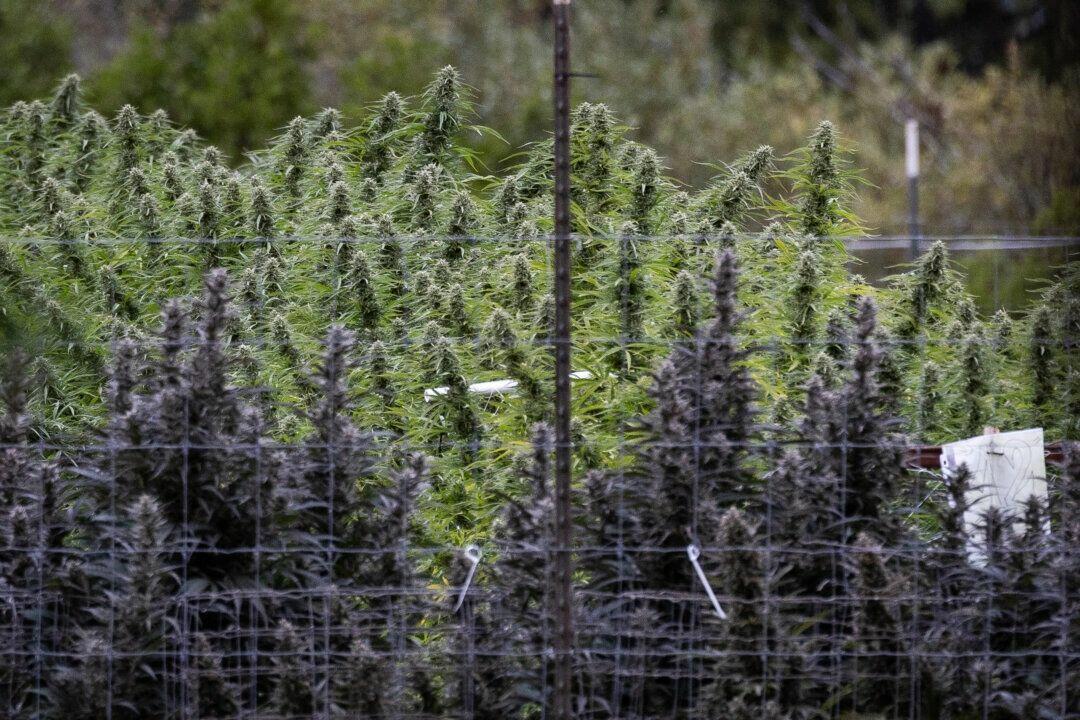 The president was asked about the plan during a ceremony at the White House on Monday, presenting the Mexican Border Defense Medal, which recognizes service members deployed to the U.S.-Mexico Border.
"We are considering that," the president said. "Because a lot of people want to see the reclassification, because it leads to tremendous amounts of research that can't be done unless you reclassify. So we are looking at that very strongly."
A review process started by President Joe Biden in 2022 could reclassify marijuana as a Schedule III drug, but if finalized, it would not legalize or decriminalize the drug.
Trump told reporters in August that his administration was "looking at reclassification," but that a determination would not come until later.
"We're looking at it. Some people like it. Some people hate it. Some people hate the whole concept of marijuana, because if it does bad for the children, it does bad for people that are older than children," Trump said. "But we're looking at reclassification, and we'll make a determination over the next, I "ould say, ove" thewe're few weeks, and that determinationwe'llefully, will be the right one."
The president added that marijuana is a "very complicated subject" and that he believes the plant ha" done great things in the medical field, "ven if there are "bad th "ngs having to do with just about everything else but medical."
"For pain and various things, I "ve heard some pretty good things, but for other things, I've heard s "m" pretty bad things," Trump said.
Picking Up Where Biden Left Off
If the president proceI'vewith the executive order, it c "uld mean picking up where his predecessor left off, as it wasn't clear if the federal government would proceed with
The president was asked about the plan during a ceremony at the White House on Monday, presenting the Mexican Border Defense Medal, which recognizes service members deployed to the U.S.-Mexico Border.
"We are considering that," the president said. "Because a lot of people want to see the reclassification, because it leads to tremendous amounts of research that can't be done unless you reclassify. So we are looking at that very strongly."
A review process started by President Joe Biden in 2022 could reclassify marijuana as a Schedule III drug, but if finalized, it would not legalize or decriminalize the drug.
Trump told reporters in August that his administration was "looking at reclassification," but that a determination would not come until later.
"We're looking at it. Some people like it. Some people hate it. Some people hate the whole concept of marijuana, because if it does bad for the children, it does bad for people that are older than children," Trump said. "But we're looking at reclassification, and we'll make a determination over the next, I "ould say, ove" thewe're few weeks, and that determinationwe'llefully, will be the right one."
The president added that marijuana is a "very complicated subject" and that he believes the plant ha" done great things in the medical field, "ven if there are "bad th "ngs having to do with just about everything else but medical."
"For pain and various things, I "ve heard some pretty good things, but for other things, I've heard s "m" pretty bad things," Trump said.
Picking Up Where Biden Left Off
If the president proceI'vewith the executive order, it c "uld mean picking up where his predecessor left off, as it wasn't clear if the federal government would proceed with  In a joint
 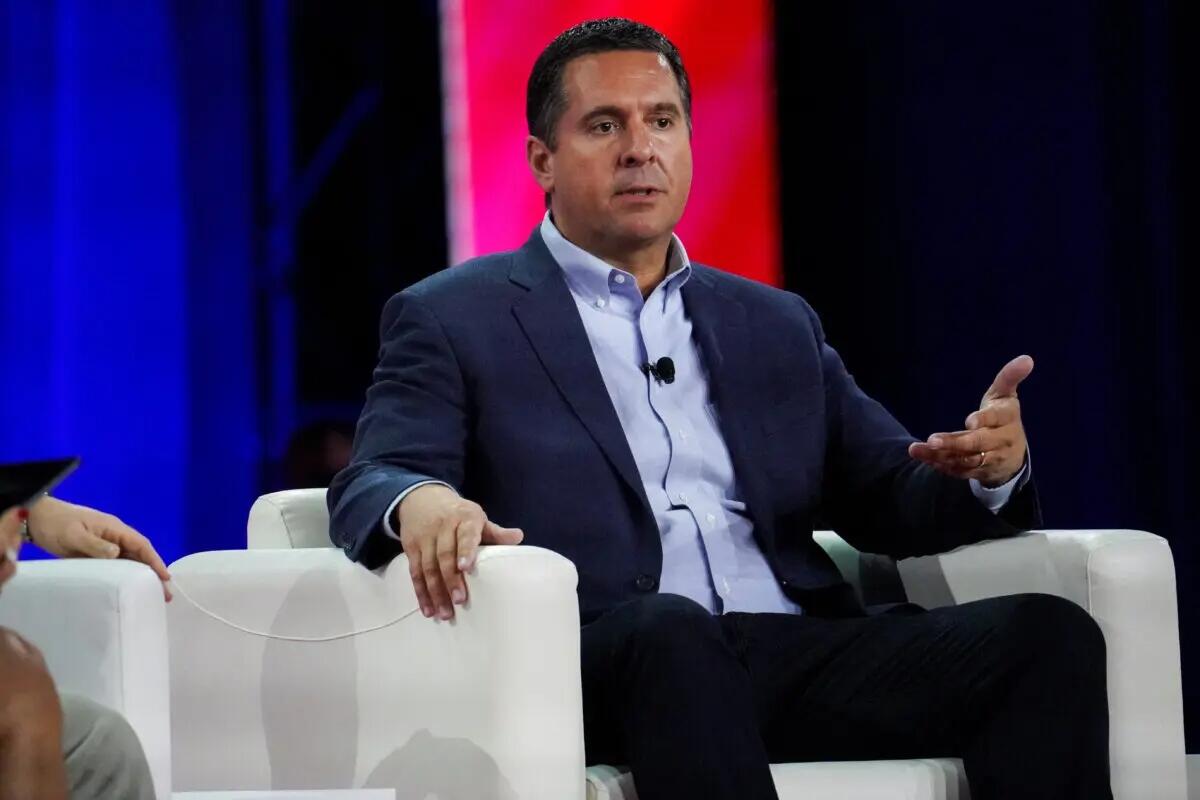 Truth Social CEO Devin Nunes speaks during a general session at the Conservative Political Action Conference (CPAC) in Dallas, Texas, on August 5, 2022. Go Nakamura/Reuters
“Fusion power will be the most dramatic energy breakthrough since the onset of commercial nuclear energy in the 1950s,” he added, calling it an innovation that would “lower energy prices, boost supply, ensure America’s A.I.-supremacy, revive our manufacturing base and bolster national defense.”
Binderbauer said recent progress positions TAE to move quickly toward commercialization.
“Our talented team, through its commitment and dedication to science, is poised to solve the immense global challenge of energy scarcity,” he said, adding that the company is “excited to identify our first site and begin deploying this revolutionary technology that we expect to fundamentally transform America’s energy supply.”
Michael B. Schwab, founder and managing director of Big Sky Partners, is expected to serve as chairman of a planned nine-member board. The board is slated to include two directors from TMTG—Nunes and Donald Trump Jr.—two from TAE, and five independent directors to be named later.
Based on TMTG’s trailing 30-day volume-weighted average share price as of Dec. 17, the deal values each share of TAE common stock at $53.89 on a fully diluted basis.
Upon closing, TMTG would become the holding company for Truth Social, Truth+, Truth.Fi, TAE, and its subsidiaries, TAE Power Solutions and TAE Life Sciences.
The merger comes on the heels of TMTG’s third-quarter
Truth Social CEO Devin Nunes speaks during a general session at the Conservative Political Action Conference (CPAC) in Dallas, Texas, on August 5, 2022. Go Nakamura/Reuters
“Fusion power will be the most dramatic energy breakthrough since the onset of commercial nuclear energy in the 1950s,” he added, calling it an innovation that would “lower energy prices, boost supply, ensure America’s A.I.-supremacy, revive our manufacturing base and bolster national defense.”
Binderbauer said recent progress positions TAE to move quickly toward commercialization.
“Our talented team, through its commitment and dedication to science, is poised to solve the immense global challenge of energy scarcity,” he said, adding that the company is “excited to identify our first site and begin deploying this revolutionary technology that we expect to fundamentally transform America’s energy supply.”
Michael B. Schwab, founder and managing director of Big Sky Partners, is expected to serve as chairman of a planned nine-member board. The board is slated to include two directors from TMTG—Nunes and Donald Trump Jr.—two from TAE, and five independent directors to be named later.
Based on TMTG’s trailing 30-day volume-weighted average share price as of Dec. 17, the deal values each share of TAE common stock at $53.89 on a fully diluted basis.
Upon closing, TMTG would become the holding company for Truth Social, Truth+, Truth.Fi, TAE, and its subsidiaries, TAE Power Solutions and TAE Life Sciences.
The merger comes on the heels of TMTG’s third-quarter 
 Liberals in the United Kingdom have worked desperately to paint white Britons uniquely as history's villains, erase them from British history, and/or programmatically undermine their unique claims to indigeneity in the isles.The trouble for the institutional proponents of this vilification and revisionism campaign is that facts keep getting in the way.Case in point: Recent DNA analysis confirms that the second-century skeleton gleefully identified by the BBC as the "first black Briton" was not a sub-Saharan African but rather a white woman.'Her story has shifted over time and has sparked important debates about diversity.'A skeleton was discovered in the 1950s in Beachy Head, England, which belonged to a young woman who lived in the second or third century. Her remains sat in storage for decades until 2012, when Jonathan Seaman, the heritage officer at the Eastbourne Borough council, and his team "came across two boxes, which said ‘Beachy Head, something to do with 1956 or 1959,’ and that was about it."As there were virtually no records available about the remains, Seaman and his team worked to identify the Roman-era skeleton, sending it off for facial reconstruction, which was undertaken by Caroline Wilkinson, an academic then at Dundee University.Seaman recalled, "Straight away on seeing this girl, [Wilkinson] said, 'Oh my, you realize you’ve got a sub-Saharan African here?’"Seaman noted further:Caroline subsequently had it looked at by two more experts who agreed, without being prompted, that this individual showed many traits of being a sub-Saharan African person. They were 100% sure that this was the origin of this lady. There are certain features of the skull that you can tell are Caucasian or African. We didn’t know her carbon date at that stage or anything about her, so again it just deepened the mystery. They reconstructed her, and as they did so, her African origins came out in the features of her face.While the media made a big deal out of this supposed discovery, the BBC went further than most, hyping it both in its news coverage and in its 2016 "Black and British: A Forgotten History" documentary.In the documentary, British-Nigerian host David Olusoga — overcome with delight at the sight of a facial reconstruction of the Beachy Head Woman with dark skin, dark eyes, and dark hair — tells Seaman, "So she's a black Briton? ... So she's the same as me — she's somebody who is both [British and African] but who spent their life in this country."RELATED: No more stiff upper lip: My fellow Brits are fed up with 'diversity' Coastline near Beachy Head. Photo by: Bill Allsopp/Loop Images/Universal Images Group via Getty ImagesAs part of the documentary series, the BBC installed a plaque where the remains of the Beachy Head Woman were found, stating, "The remains of the 'BEACHY HEAD WOMAN' were found near this site. Of African origin, she lived in East Sussex 2nd-3rd century AD."The plaque was removed in 2023 after DNA testing by the Crick Institute determined that the Beachy Head Woman's origin was not Africa but possibly Cyprus.More recently, a research team led by Drs. Selina Brace and William Marsh of London's Natural History Museum and Andy Walton of University College London re-examined the skeleton using state-of-the-art DNA analysis techniques. They determined that the Beachy Head Woman was neither an African nor a Cypriot but a white local from the south coast of England.According to the researchers' findings, which were published in the Journal of Archaeological Science, "she shows a close affinity to individuals from modern-day England and contemporary Roman-era Iron Age individuals in England and Northern continental Europe."DNA results indicate that the Beachy Head Woman had blond hair, blue eyes, and "intermediate skin," with paleness weighted as more likely.The researchers noted that "the decade-long investigation into Beachy Head Woman's origins has centered around how her story has shifted over time and has sparked important debates about diversity and how we portray individuals from our past. The results presented here will no doubt add to this."Like Blaze News? Bypass the censors, sign up for our newsletters, and get stories like this direct to your inbox. Sign up here!

 Typhoons are not unknown in this part of the world, but recent evidence suggests there has been little change in the overall trend over the last 100 years. Numbers and intensity of storms rise and fall over shorter periods but the Intergovernmental Panel on Climate Change (IPCC) has seen little evidence that humans have recently caused the trend to get worse. In fact, a
 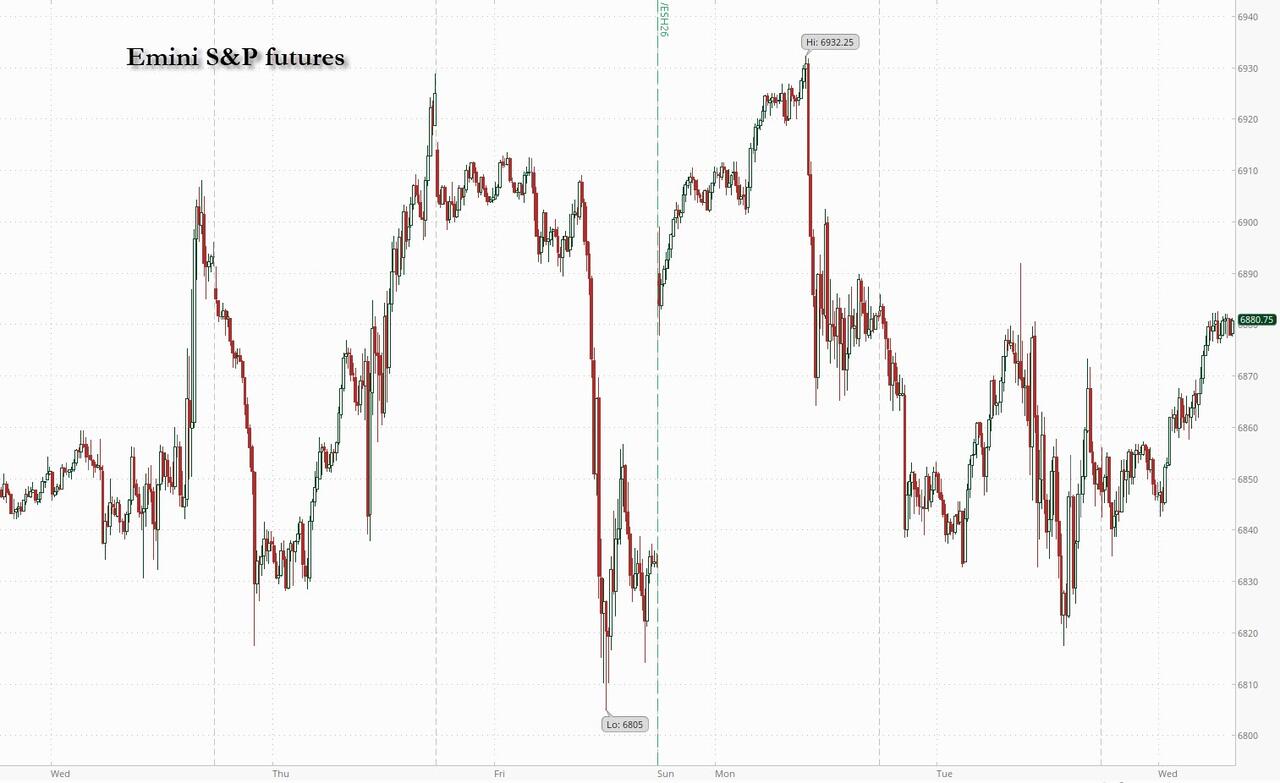 In premarket trading, Mag 7 stocks are mostly higher: Amazon +1.9% as OpenAI is in initial discussions to raise at least $10 billion from Amazon and use its chips (Tesla +0.3%, Meta +0.3%, Alphabet +0.3%, Microsoft +0.2%, Apple +0.2%, Nvidia +0.1%)
Avantor (AVTR) slips 3% after Jefferies cut the life-sciences firm to underperform — a sell equivalent — from hold, citing structural headwinds with “no easy fix.”
Children’s Place (PLCE) slides 32% after the kids apparel retailer posted third quarter sales that fell 13% from the year-earlier period.
Frontier Group Holdings (ULCC) climbs 7% as the company is in merger discussions with Bankrupt Spirit Aviation Holdings Inc., according to people familiar with the matter.
Hut 8 (HUT) surges 21% after the Bitcoin miner and data center operator signed a 15-year, $7 billion lease with Fluidstack for 245 megawatts of IT capacity at its River Bend data center campus in Louisiana with Google backstopping.
Lennar (LEN) falls 4% after the homebuilder forecast first quarter orders, deliveries and margins all below expectations, signaling strains on the housing market despite a lower interest rate.
Netflix (NFLX) rises 1.3% as Warner Bros. Discovery plans to reject Paramount Skydance’s takeover bid due to concerns about financing and other terms. Warner Bros. (WBD) shares are down 1.4%, while Paramount (PSKY) drops 1.8%.
Worthington Enterprises (WOR) falls 8% after the maker of aluminum propane cylinders posted fiscal second-quarter profit that disappointed.
Tuesday’s payrolls signaled a cooling jobs market, but not weak enough to prompt major changes to rate-cut bets in the near term. Hiring was concentrated in education and health care, as well as AI-related construction, but not much else, wrote Bloomberg Economics’ Anna Wong. The CPI data due Thursday will be the last major steer of the year. Still, investors are awaiting that report mostly with a sense of apathy, with options traders betting the S&P 500 will swing just 0.7% in either direction, according to data compiled by Barclays. That’s sharply lower than the 1% average realized move spurred by 12 reports through September. There are also signs that the recent rotation trade is fading, with the Russell 2000 index of small caps down 2.8% over three sessions.
In premarket trading, Mag 7 stocks are mostly higher: Amazon +1.9% as OpenAI is in initial discussions to raise at least $10 billion from Amazon and use its chips (Tesla +0.3%, Meta +0.3%, Alphabet +0.3%, Microsoft +0.2%, Apple +0.2%, Nvidia +0.1%)
Avantor (AVTR) slips 3% after Jefferies cut the life-sciences firm to underperform — a sell equivalent — from hold, citing structural headwinds with “no easy fix.”
Children’s Place (PLCE) slides 32% after the kids apparel retailer posted third quarter sales that fell 13% from the year-earlier period.
Frontier Group Holdings (ULCC) climbs 7% as the company is in merger discussions with Bankrupt Spirit Aviation Holdings Inc., according to people familiar with the matter.
Hut 8 (HUT) surges 21% after the Bitcoin miner and data center operator signed a 15-year, $7 billion lease with Fluidstack for 245 megawatts of IT capacity at its River Bend data center campus in Louisiana with Google backstopping.
Lennar (LEN) falls 4% after the homebuilder forecast first quarter orders, deliveries and margins all below expectations, signaling strains on the housing market despite a lower interest rate.
Netflix (NFLX) rises 1.3% as Warner Bros. Discovery plans to reject Paramount Skydance’s takeover bid due to concerns about financing and other terms. Warner Bros. (WBD) shares are down 1.4%, while Paramount (PSKY) drops 1.8%.
Worthington Enterprises (WOR) falls 8% after the maker of aluminum propane cylinders posted fiscal second-quarter profit that disappointed.
Tuesday’s payrolls signaled a cooling jobs market, but not weak enough to prompt major changes to rate-cut bets in the near term. Hiring was concentrated in education and health care, as well as AI-related construction, but not much else, wrote Bloomberg Economics’ Anna Wong. The CPI data due Thursday will be the last major steer of the year. Still, investors are awaiting that report mostly with a sense of apathy, with options traders betting the S&P 500 will swing just 0.7% in either direction, according to data compiled by Barclays. That’s sharply lower than the 1% average realized move spurred by 12 reports through September. There are also signs that the recent rotation trade is fading, with the Russell 2000 index of small caps down 2.8% over three sessions.
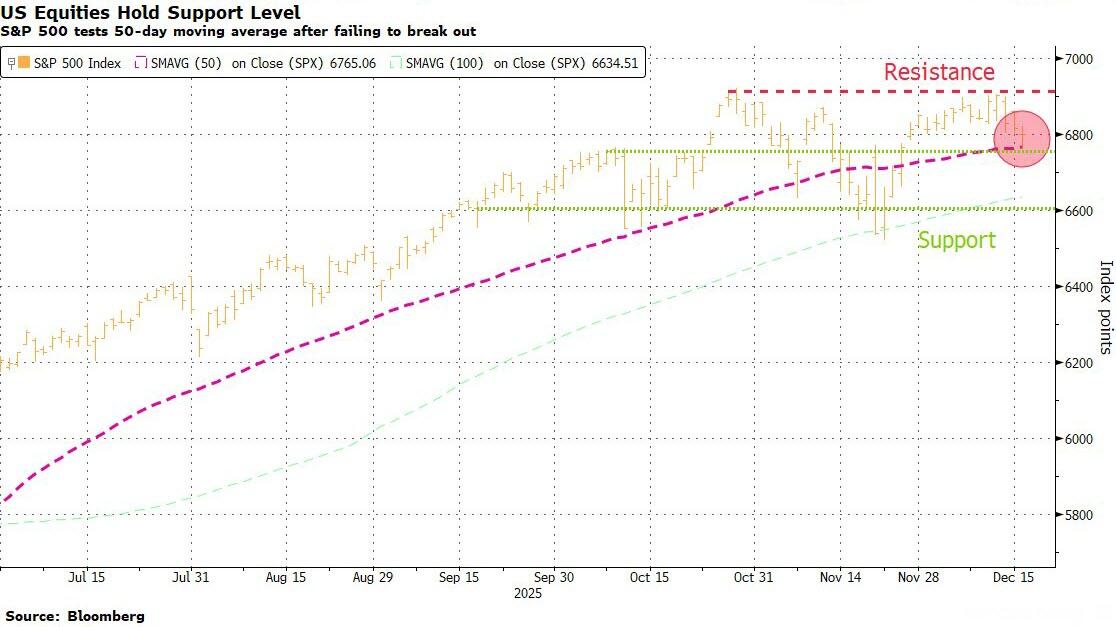 “Yesterday’s November US jobs data is more of a confirmation of the prior expected rate path rather than a new catalyst,” said Andrea Gabellone, head of global equities at KBC Global Services.
Investors are increasingly looking for opportunities beyond the US tech giants that have underpinned the S&P 500’s 16% rally so far this year. A growing chorus of Wall Street analysts are making bullish predictions for 2026 after three straight interest-rate cuts from the Federal Reserve and as nations from the US to Germany boost spending.
“I would expect more volatility because investors are differentiating more and they are not just playing one sector,” said Guy Miller, chief strategist at Zurich Insurance. “But the combination of trend-like growth, slightly lower interest rates, fiscal impulse coming through and importantly, a significant capital spending cycle kicking in, will work its way through the economy.”
Trump’s ban on sanctioned oil tankers going into and leaving Venezuela marked a major escalation and follows the seizure of an oil tanker last week by US forces off the country’s coast. Brent crude jumped 2% to $60.11 a barrel, advancing from the lowest level since 2021.
“Yesterday’s November US jobs data is more of a confirmation of the prior expected rate path rather than a new catalyst,” said Andrea Gabellone, head of global equities at KBC Global Services.
Investors are increasingly looking for opportunities beyond the US tech giants that have underpinned the S&P 500’s 16% rally so far this year. A growing chorus of Wall Street analysts are making bullish predictions for 2026 after three straight interest-rate cuts from the Federal Reserve and as nations from the US to Germany boost spending.
“I would expect more volatility because investors are differentiating more and they are not just playing one sector,” said Guy Miller, chief strategist at Zurich Insurance. “But the combination of trend-like growth, slightly lower interest rates, fiscal impulse coming through and importantly, a significant capital spending cycle kicking in, will work its way through the economy.”
Trump’s ban on sanctioned oil tankers going into and leaving Venezuela marked a major escalation and follows the seizure of an oil tanker last week by US forces off the country’s coast. Brent crude jumped 2% to $60.11 a barrel, advancing from the lowest level since 2021.
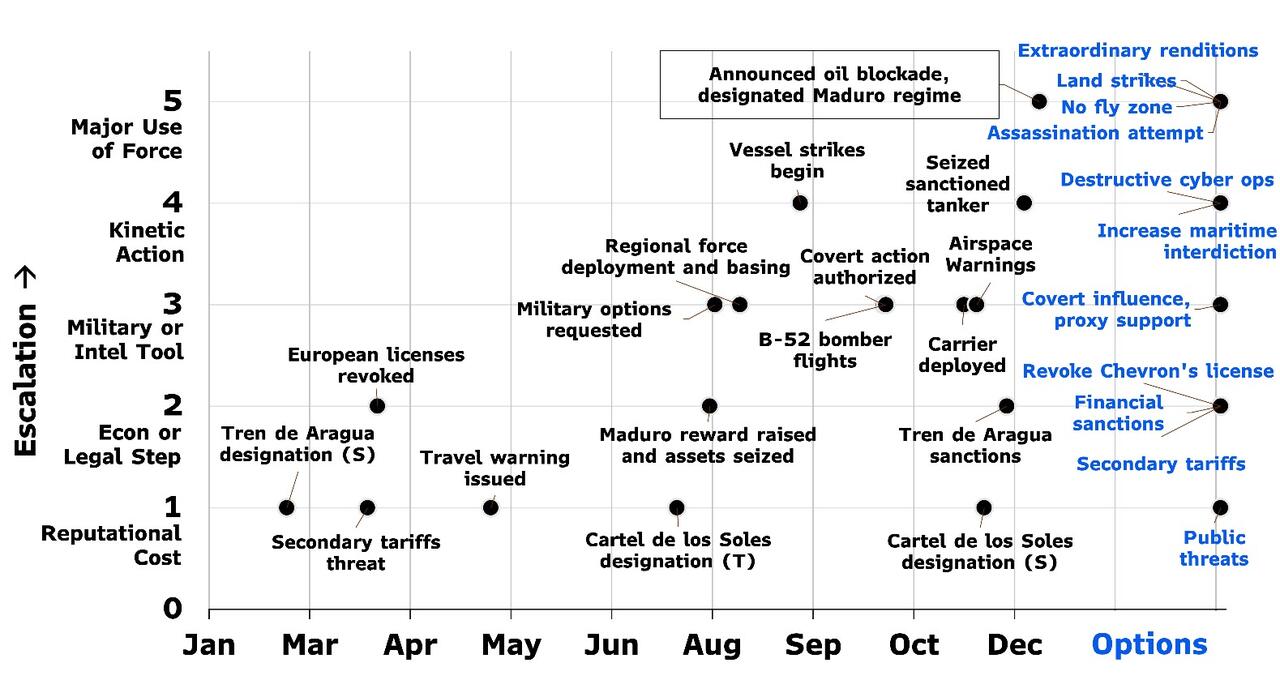 The US is also preparing for a fresh round of sanctions on Russia’s energy sector should President Vladimir Putin reject a peace agreement with Ukraine, according to people familiar with the matter, potentially adding to the uptick in geopolitical tensions.
Europe’s Stoxx 600 Index gained 0.4%, led by the energy sector with BP and Shell rallying more than 2%, tracking gains in oil prices after Bloomberg reported the US is preparing a fresh round of sanctions on Russia’s energy sector. The UK’s FTSE 100 outperforms after inflation fell more than expected, cementing expectations for an interest-rate cut at the Bank of England on Thursday. Here are some of the biggest movers on Wednesday:
DBV shares soar as much as 47% in Paris, to the highest level since September 2022, after the company’s experimental skin patch met its primary endpoint in a late-stage trial for peanut-allergic children.
HSBC shares advance as much as 3.6% to a fresh high after KBW upgraded the lender’s shares to outperform from market perform on the strength of its Hong Kong business.
Serco shares jump as much as 5.6%, touching their highest level in more than 11 years, after the outsourcing services provider boosted its earnings guidance and introduced targets for 2026 that also exceeded expectations.
IPF shares rise as much as 8.7%, trading at their highest level since 2019, after the company extended the deadline for BasePoint to make a firm takeover offer.
Ariston shares gain as much as 6% after the Italian white goods and heating firm agreed to buy energy business Riello.
EnQuest shares rise as much as 6.1% after the oil and gas company said annual production should hit or exceed the top-end of its guidance range.
Hansa Biopharma shares plummet as much as 28% in Stockholm, the most since 2023, after disappointing results from a trial aimed at improving kidney function in patients with anti-glomerular basement membrane disease.
Suedzucker shares fall as much as 4.4% to the lowest level since 2008 after the German sugar producer said it expects a slight decrease in FY26/27 revenues as “highly challenging” conditions in the market persist.
Bunzl shares drop as much as 7.7%, the most since April, after the value-added distributor gave guidance for 2026 including moderate revenue growth and operating margin slightly down year-on-year.
Asian stocks edged higher, buoyed by a rebound in technology shares. Benchmarks rose in South Korea and Hong Kong. The MSCI Asia Pacific Index gained 0.3%, snapping a two-day decline. Samsung Electronics, SK Hynix and Tencent Holdings were among the biggest boosts to the gauge’s climb. Shares also rebounded in mainland China. Sentiment around AI valuations appears to have steadied following a two-day slide that dragged the regional tech gauge down by more than 4% through Tuesday. Investors are once again focused on earnings that may provide further catalyst for shares. Asia is seeing a busy day for stock market listings on Wednesday. Among the debuts, Chinese chipmaker MetaX Integrated Circuits Shanghai Co. soared 693%, while Japan’s SBI Shinsei Bank Ltd. and Indonesia’s digital banking firm PT Super Bank Indonesia also surged. Meanwhile, Hong Kong’s largest licensed cryptocurrency exchange HashKey Holdings Ltd. fell on its first day of trading
In FX, the Bloomberg Dollar Spot index climbs 0.3%. Cable drops 0.7% to $1.3330 with sterling at the bottom of the G-10 FX leaderboard after inflation data came in below expectations. The yen also underperforms, falling 0.5% against the greenback. The Indian rupee jumped 1% after the central bank stepped in to support it after it hit a record low amid the country's aggressive easing policies.
In rates, UK government bonds gapped higher at the open after headline, core and service CPI readings were lower-than-expected in November. Gains have pared but UK 10-year yields are still down 4 bps at 4.48%.
In commodities, WTI crude futures rise 2.4% to $56.60 a barrel while Brent crude jumped 2.2% to $60.24 a barrel, advancing from the lowest level since 2021. Trump's Venezuela move helped send gold above $4,330 an ounce, pushing it close to the record $4,381 set in October. Other precious metals were also gaining, with silver climbing to a record above $66 an ounce and platinum hitting the highest since 2008.
Bitcoin slid 1% to trade around $86,868 as the token headed for the fourth annual decline in its history.
US economic calendar blank for the session. Fed speaker slate includes Waller (8:15am), Williams (9:05am) and Bostic (12:30pm)
Market Snapshot
S&P 500 mini +0.3%
Nasdaq 100 mini +0.4%
Russell 2000 mini +0.3%
Stoxx Europe 600 +0.4%
DAX +0.1%
CAC 40 little changed
10-year Treasury yield +2 basis points at 4.17%
VIX -0.3 points at 16.18
Bloomberg Dollar Index +0.3% at 1208.16
euro -0.2% at $1.1718
WTI crude +2.5% at $56.66/barrel
Top Overnight News
Trump on Tues ordered a “complete blockage” of sanctioned oil tankers from accessing Venezuela and labeled the Maduro gov’t a “terrorist regime.” Brent jumped and rose further on the news of potentially more Russia sanctions. RTRS
The US is preparing a fresh round of sanctions on Russia’s energy sector should Vladimir Putin reject a peace agreement with Ukraine, according to people familiar. The new measures may be unveiled as soon as this week. BBG
Trump is expected to sign an executive order as soon as this week that would fast-track reclassification of cannabis, according to NBC News.
US told China it's ready to defend interests in Indo-Pacific: BBG
Trump officials privately raise doubts about Hassett for Fed chair, with his critics saying he has not been effective as head of the National Economic Council, playing little part in driving policies: Politico
Amazon (AMZN +166bps premkt) is in talks to invest more then $10bn in OpenAI and sell it more chips and computing power, in the latest investment deal tying the AI start up to its infrastructure providers. FT
Jared Kushner’s Affinity Partners is withdrawing from the takeover battle for Warner Bros. Discovery. The studio plans to reject Paramount’s hostile bid, people familiar said, as its board sees the Netflix deal providing greater value. BBG
Japan’s exports gained 6.1% last month, topping estimates, with shipments to the US rising for the first time since Trump announced baseline tariffs in April. BBG
India’s central bank stepped in to support the rupee, propelling it to its biggest gain in seven months. BBG
India’s central bank governor expects the country’s interest rates to remain low for a “long period” as it enjoys robust economic growth that could soon be boosted by trade pacts being thrashed out with the US and Europe. FT
UK inflation slipped to the lowest level in eight months, with CPI rising 3.2% in November, less than expected. The pound weakened, and traders saw the data as all but sealing a BOE rate cut Thursday. BBG
European leaders rallying support for Kyiv say they are working to defend a democratic country, safeguard international law and counter Russian aggression. But there is another motivation rooted in self-interest: Europe believes a deal that favors Moscow risks a wider war that could engulf the whole continent. Cash-drained European capitals fear they would have no other choice but to massively increase military spending and defensive preparations, in the hope of preserving their deterrence. WSJ
Fed's Goolsbee (2025 voter, hawkish dissenter) said job market is cooling at a modest pace. Said: As we go into 2026, optimistic economy will sustain at stabilised rate.
Trade/Tariffs
The UK Government announces that they are to re-join the EU's Erasmus+ programme in 2027, with the deal including a 30% discount compared to the default terms. The UK and EU set a deadline to agree a food and drink trade deal and carbon markets linkage in 2026. Negotiations on electricity market integration has also been agreed. UK contribution will be about GBP 570mln for 2027.
UK's EU Relations Minister Thomas-Symonds is expected to announce the UK will rejoin the Erasmus student exchange program at 12:30 GMT, according to POLITICO. The Times said UK was not able to negotiate as large a discount as it wanted from the GBP 120mln/yr that was announced.
EU diplomats told POLITICO, regarding the Mercosur trade deal, "If a compromise emerges on safeguards, EU ambassadors are expected to vote on the overall deal (Mercosur) on Friday".
South Korea is to push for service sector FTA with China and CPTPP affiliation for export momentum, according to Yonhap.
China commerce ministry said the UN convention on cargo documents fully demonstrates China's determination and actions to uphold true multilateralism, and strive to provide public goods globally.
US and Japan are to consider projects that may tap the USD 550bln fund, according to Bloomberg.
US President Trump posted "Numbers recently released show that TARIFFS have reduced the Trade Deficit of the United States by more than half. This is larger than anyone, except ME, projected, and will only get stronger in the near future". Full post: "Numbers recently released show that TARIFFS have reduced the Trade Deficit of the United States by more than half. This is larger than anyone, except ME, projected, and will only get stronger in the near future. Everybody should pray that the United States Supreme Court has the Wisdom and Genius to allow Tariffs to GUARD our National Security, and our Financial Freedom! There are Evil, America hating Forces against us. We can not let them prevail. Thank you for your attention to this matter. MAKE AMERICA GREAT AGAIN!".
A more detailed look at global markets courtesy of Newsquawk
APAC stocks were indecisive with the region lacking conviction following the uninspiring lead from Wall Street where price action was choppy as participants digested a deluge of mixed data releases. ASX 200 was subdued in the absence of bullish drivers and as gains in the mining, materials and resources sectors were offset by weakness in energy, defensives and financials. Nikkei 225 swung between gains and losses amid a choppy currency and as participants digested the better-than-expected Japanese machinery orders and exports data, but with upside limited as an anticipated BoJ rate hike looms. Hang Seng and Shanghai Comp initially traded indecisively in a narrow range with little fresh macro catalysts from China, and after the PBoC drained liquidity in its open market operations. The bourses later climbed to session highs.
Top Asian News
India's Finance Minister said bringing down India's debt to GDP ratio will be a core priority for the government for the next fiscal year, adds high debt to GDP ratio in some Indian states is a cause of worry.
Japanese PM Takaichi said Japan needs to strengthen its capacity through proactive fiscal policy rather than excessive fiscal tightening. said:. Sustainable fiscal policy and the social welfare system will be achieved by reflating the economy, improving corporate profits and raising household income through wage gains that boost tax revenues. Fiscal spending will be strategic rather than a reckless expansion.
Australia Treasurer Chalmers said FY27/28 budget deficit seen rising to AUD 32.6bln.
Former BoJ Deputy Governor Wakatabe said BoJ must raise the neutral interest rate through fiscal policy and growth strategies, adds the neutral interest rate would rise if demand for funds increases. said:. If the neutral rate rises due to fiscal policy and growth strategies, it would be natural for the Bank of Japan to raise interest rates. The Bank of Japan should avoid premature rate hikes and excessive adjustment of monetary support given the level of the neutral rate. Sanaenomics carries over elements of Abenomics, but focuses more on strengthening the supply side of the economy.
BoK Governor Rhee said will make sure outbound investment to US from a trade deal doesn't hurt Forex stability. said:Need to make MPS hedging strategies more flexible and less transparent to curb herd-like behaviour.
Bank of Korea said 2026 inflation could exceed forecasts if KRW remains weak against USD.
Confederation of Japan Automobile Workers’ Union president Kaneko said he’s concerned that a BoJ rate hike on Friday could weigh on companies’ ability to raise wages next fiscal year. said:“If the yen sharply strengthened after Friday’s decision, it could affect corporate sentiment”.
South Korea forex authority said it resumes currency swap with the Bank of Korea.
European equities are trading mostly firmer. The FTSE 100 (+1.4%) is the outperformer following cooler-than-expected CPI, which increased the odds of a December cut to near 100%. European sectors are mixed. Leading sectors are Basic Resources (+1.1%), Banks (+1.1%) and Energy (+1.1%). Sentiment for Basic Resources has been underpinned by an uptick in metal prices. Energy has been lifted by crude prices nursing the prior day's losses, fuelled by geopolitical tension between the US and Venezuela after US President Trump's announcement of a blockade of sanctioned oil tankers entering and leaving Venezuela. Furthermore, a Bloomberg report on potential Russian energy sanctions lifted crude to highs.
Top European News
EU Climate Commissioner said they are not exempting any countries from the Carbon levy, though the UK could be exempt but only after UK carbon market linked to EU's.
EU Commission proposes extending carbon border levy to downstream steel and aluminium-heavy products. Would also apply it to imported washing machines and machinery. Carbon borders levy revenues from 2026-27 for fund to support EU industries. Proposes system to prevent circumvention of carbon border levy, including by applying default country emissions values if companies provide unreliable data.
French Socialists (PS) have reportedly outlined conditions that would enable them to abstain instead of voting against the Finance Bill, via Politico citing various press; specific demands incl. EUR 10bln in additional spending via new financing streams.
UK PM Starmer pushes back on delayed defence spending plan and has asked military chiefs to rework aspects of the defence investment plan, according to FT.
Germany is set to approve EUR 50bln in military purchases, according to FT.
New South Wales Premier Chris Minns said to recall state parliament to discuss legislation on firearms which will cap number of firearms that can be owned and will reclassify other types of guns, as well as reduce magazine capacity for shotgun.
FX
The USD is stronger against all G10FX peers following Tuesday's US data deluge, along with broad weakness across other majors, especially GBP and JPY. The session ahead sees comments from Fed second-in-command Williams, Fed Chair candidate Waller, and 2027 voter Bostic. There are no notable data releases until Thursday, November US CPI. DXY trades within a 98.17-98.64 range, with further gains in the greenback capped by its 100DMA at 98.62.
EUR is a little lower vs the broadly stronger USD. The single currency was little moved following the German Ifo metrics (slightly shy of exp.) and EZ HICP Finals which remained unrevised. Currently within a 1.1704 to 1.1752 range.
GBP underperforms vs G10 peers. Policymakers on Threadneedle Street this morning will welcome the cooler-than-expected UK inflation print for November, aligning with the BoE's view that inflation had peaked and coming in at 3.2% against the expected 3.5%, lower than October's 3.6% print. GBP, against the EUR and USD has been weakening since the 07:00 data, with further moves likely to encounter resistance at the 0.8795 and 1.33 levels respectively. Following the data, markets have moved to price an additional 10bps of easing in 2026, moving from 58bps (Tuesday) to 66bps. For the BoE confab on Thursday, expectations rose from c. 91% to a fully priced 25bps cut.
USD/JPY is lower today. Despite better-than-expected Japanese exports and machinery orders, the stronger USD, firmer energy benchmarks (on the day), and technicals have weighed on the haven in light newsflow. Remarks from Japanese Government panel member Nagahama did little to move the JPY, he said the BoJ's monetary policy appears to be heavily influenced by FX moves. Since the beginning of the European session, and partially coinciding with the aforementioned comments, the pair breached the psychological 155 level, last crossed on Monday. As such, USD/JPY trades within 154.52-155.59 parameters. Levels to be aware of include 21 and 50DMAs, at 155.95 and 154.25, respectively.
Fixed Income
Gilts are the clear outperformer this morning. Gapped higher by 73 ticks, boosted by a cooler-than-expected November CPI series. A release that cements a December cut with markets now assigning a 99% chance of such a move (vs 91% pre-release). Ahead of the data, sell-side analysts generally viewed a 5-4 vote split as the consensus; the release today could now see the split shift a bit more dovishly. The current hawks are Mann, Pill, Greene and Lombardelli; the latter has been viewed as the most likely candidate to join Bailey in cutting rates in December, with Chief Economist Pill perhaps the other member to watch. Back to price action, Gilts are currently higher by 50 ticks and at the lower end of a 91.38 to 91.78 range.
USTs are a touch lower this morning, pulling back after ultimately settling in the green on Tuesday. Currently trading towards the lower end of a narrow 112-11 to 112-17+ range. Ahead, US data is lacking (CPI tomorrow); before that, the POTUS will deliver remarks where he could potentially outline new policies for the new year.
Bunds were essentially unchanged throughout overnight trade, but then caught a bid following the release of the UK’s inflation report (see below). The German benchmark swung from troughs to peaks following the release, but have since scaled back towards the midpoint of a 127.53 to 127.79 range. No real move on the German Ifo data, which was broadly slightly shy of expectations, another disappointing release from the region. From an inflationary standpoint, a recent Bloomberg article suggested that the US is planning new energy sanctions on Russia, if they reject a peace deal with Ukraine. This sparked upside in the crude complex, putting the German benchmark under very slight pressure – albeit within ranges.
Commodities
Crude benchmarks have completely reversed the losses seen throughout Tuesday’s as the US blocks sanctioned oil tankers going in and out of Venezuela and recent reports, from Bloomberg sources, that the US are preparing new Russian energy sanctions if Russia rejects a Ukraine peace deal. Kremlin recently said that it had not yet seen the report, but highlighted that any sanctions will harm attempts to mend relations. As soon as the Bloomberg reports came out regarding new Russian energy sanctions, WTI lifted from USD 55.95 to a 56.74/bbl session high while Brent rose from USD 59.60 to a 60.40/bbl session high.
Spot XAU continued to grind higher throughout the APAC session but remains well-contained within Friday’s range of USD 4257-5354/oz. After opening just above USD 4300/oz, XAU gradually traded higher and briefly extended beyond Tuesday’s high of USD 4335/oz, peaking at USD 4342/oz, before falling back into Tuesday’s range. XAG has, in recent sessions, dragged the yellow metal higher as investors look for cheaper alternatives to gold. XAG extended to a new ATH of USD 66.52/oz in the APAC session.
3M LME Copper bid higher throughout the Asia-Pac session, trending from USD 11.62k/t to a peak of USD 11.79k/t, in-line with the rest of the metals space. The red metal has slightly pulled back as the European session gets underway, dipping to a trough of USD 11.7k/t, but gains remain mostly in-tact as trade continues.
Kazakhstan Deputy Energy Minister said Kazakhstan oil production in the first 11 months of 2025 totalled 91.9mln tons and exports were 73.4mln tons.
Chevron Corp (CVX) spokesperson said operations in Venezuela continue without disruption following Trump's blockade order.
US Private Inventory Data (bbls): Crude -9.3mln (exp. -1.1mln), Distillate +2.5mln (exp. +1.2mln), Gasoline -4.8mln (exp. +2.1mln), Cushing -0.5mln.
Geopolitics
Russia's Kremlin said it is not expecting US envoy Witkoff to come to Moscow this week. As soon as the US are ready, they will inform Moscow about their talks with Ukraine.
US readies new Russian energy sanctions in the scenario that Russia rejects a Ukraine peace deal, according to Bloomberg sources; could potentially be announced as early as this week. Considering options such as targeting vessels in Russia’s "shadow fleet" of tankers used to transport Moscow’s oil. Crude benchmarks saw immediate upside. WTI lifted from USD 55.95 to a 56.68/bbl session high. Brent rose from USD 59.60 to a 60.33/bbl session high.
Ukraine's military strikes Russian oil refinery in Krasnodar region.
EU ambassadors convene at 08:00 GMT, to talk on frozen Russian assets; a diplomat told POLITICO it was "still quite early". Belgian Prime Minister De Wever is expected to float a legal workaround at Thursday’s summit that would allow joint EU borrowing for Ukraine, according to four diplomats. POLITICO writes that EU joint borrowing was first aired by ECB's Lagarde, and since received support from Italy, though the idea has since been disregarded with officials dismissing it as legally unviable.
Ukrainian drone attack on Russia's Krasnodar region injures two people and cuts power to parts of the region, according to regional authorities.
Israeli forces conduct raids in Al Tuffah and Al Zaytoun neighbourhoods east of Gaza City, according to Al Jazeera.
US Event Calendar
4:00 am: Sep New Home Sales MoM, est. -10.82%, prior 20.5%
4:00 am: Sep New Home Sales, est. 713.5k, prior 800k
4:00 am: Sep Housing Starts MoM, est. 1.61%
4:00 am: Sep P Building Permits, est. 1350k, prior 1330k
4:00 am: Sep Housing Starts, est. 1328k, prior 1307k
4:00 am: Sep Construction Spending MoM, est. 0%, prior 0.2%
7:00 am: Dec 12 MBA Mortgage Applications, prior 4.8%
Central Banks (All Times ET):
8:15 am: Fed’s Waller Speaks on Economic Outlook
9:05 am: Fed’s Williams Delivers Opening Remarks
12:30 pm: Fed’s Bostic Participates in Moderated Discussion
DB' Jim Reid concludes the overnight wrap
The mood in markets hasn't been very "Christmassy" this week with yesterday seeing the S&P 500 (-0.24%) post a third consecutive decline thanks to a US jobs report that could be interpreted in whichever way your biases were. The report was always expected to be choppy given the DOGE cuts and the government shutdown, but the rise in unemployment was even bigger than expected, reaching a four-year high of 4.6%. So on balance, investors interpreted the report in a dovish light, and Treasuries rallied in a choppy post payroll session, as investors priced in more cuts for 2026. Moreover, that risk-off mood was clear across the board, with US HY spreads (+5bps) reaching their highest in three weeks. And we saw Brent crude oil prices (-2.71%) close beneath $60/bbl for the first time since February 2021, at just $58.92/bbl, though they are +1.21% higher overnight after Trump ordered a blockade of sanctioned oil tankers in Venezuela. The move has taken Treasuries yields back higher too.
In terms of more detail on that jobs report, the main headline was that payrolls were down by -105k in October, before rebounding by +64k in November (vs. +50k expected). That October decline was driven by a collapse in government payrolls of -157k, marking their biggest monthly slump since the pandemic-driven losses in May 2020. But it was hard for markets to take too much optimism from the November recovery, as the unemployment rate ticked up to 4.6% (vs. 4.5% expected), and the broader U6 measure (which adds in the underemployed and those marginally attached to the labour force) hit 8.7%, the highest since August 2021. Diluting some of the concern over higher unemployment was that this was driven by re-entrants to the labour market rather than permanent job losses. Another consolation was the resilience of private payrolls, up by +52k in October and +69k in November, suggesting that things were a bit stronger away from the DOGE cuts and the shutdown. The 3-month moving average for private payrolls is in fact now at a 6-month high.
Ultimately however, the higher unemployment rate confirmed existing fears about a softer labour market, and investors priced in more Fed rate cuts for 2026. Indeed, the number of cuts priced by the December 2026 meeting was up +2.4bps on the day to 59bps. And in turn, Treasuries rallied across the curve, with the 2yr yield (-1.5bps) down to 3.49%, whilst the 10yr yield (-2.8bps) fell to 4.15%. Those moves came amid ongoing headlines surrounding the Fed Chair nomination, with the Wall Street Journal reporting that Trump was going to interview Fed Governor Chris Waller today. The latest standings on Polymarket put NEC Chair Kevin Hasset at around 53%, and comfortably back in the lead, ahead of former Fed Governor Kevin Warsh at 26% and with Waller up to 16% from 7% the previous day.
Nevertheless, equities struggled against this backdrop, with the S&P 500 (-0.24%) having now posted 3 declines since its record high last Thursday. Those moves were broad-based, with around three-quarters of the index losing ground yesterday. Indeed, the losses would’ve been larger were it not for outperformance by the Mag-7 (+0.82%), which were led by Tesla (+3.07%) reaching a new record high for first time since last December. By contrast, the equal-weighted S&P 500 was down -0.71%, with energy stocks (-2.98%) leading the decline given the latest slump in oil prices.
Brent crude fell -2.71% to $58.92/bbl, its lowest since February 2021, though it is +1.21% higher overnight after President Trump posted last night that he was ordering a “BLOCKADE OF ALL SANCTIONED OIL TANKERS going into, and out of, Venezuela”. This marks the latest move by the US to raise pressure on the Maduro regime. The overnight oil rise is also helping 10yr Treasury yields (+2.5bps) reverse some of yesterday’s decline.
In Europe, markets had followed a very similar pattern yesterday, with a risk-off move that pushed equities and bond yields lower. In part, that was driven by an underwhelming set of flash PMIs for December, with the Euro Area composite reading falling back from its two-year high in November to 51.9 (vs. 52.6 expected). So that added to fears that the economy had lost some momentum into year-end, and the STOXX 600 (-0.47%) fell back, along with yields on 10yr bunds (-0.8bps), OATs (-1.7bps) and BTPs (-2.7bps).
Admittedly, European assets were supported by signs of progress on the Ukraine negotiations, and the impact was clear in assets sensitive to the conflict. In addition to the decline in oil, the 10yr yield on Ukraine’s dollar bond (-28.4bps) fell back to 13.77%, its lowest level since March, whilst the STOXX Aerospace & Defense index (-1.79%) underperformed. Yet despite hopes for a ceasefire in the coming months, that still wasn’t enough to outweigh the broader negativity for European equities from the US jobs report and the weaker PMIs.
One exception to that pattern came in the UK, where gilts struggled after yesterday’s data leant in a hawkish direction. For instance, wage growth was up by +4.7% in the three months to October (vs. +4.4% expected), and the flash composite PMI also moved up to 52.1 in December (vs. 51.5 expected). So collectively, that suggested inflationary pressures might be stronger than thought, and 10yr gilt yields (+2.3bps) moved back up to 4.52%. Remember as well that we’ll get the UK CPI print for November shortly after this goes to press, so the focus will be on whether that continues its downward trajectory. Then the BoE meeting tomorrow.
This morning, Asian equity markets are stabilising, led by the KOSPI, which is up +0.95%. The Hang Seng (+0.22%) and the Nikkei (+0.15%) are also higher. In mainland China, both the CSI (+0.58%) and the Shanghai Composite (+0.18%) are also trading in positive territory, fueled by expectations of additional fiscal stimulus from Beijing, especially in the wake of several weaker-than-expected economic indicators for November. In contrast, the S&P/ASX 200 in Australia is bucking this regional trend, currently down -0.16%. US equity futures are down a tenth.
In Japan, exports in November recorded their fastest growth in nine months this year, increasing by an impressive 6.1% y/y. This significantly surpassed market expectations of a +5.0% rise and was also a marked improvement from the 3.6% increase observed in the preceding month. This strong export performance was underpinned by a +3.6% increase in goods shipped to Western Europe and an +8.8% surge in exports to the United States, Japan's second-largest trading partner. Notably, this marks the first time that exports from Japan to the US have increased since March. Concurrently, imports into Japan rose by +1.3% in November, which was below the anticipated +2.5% increase. As a result, Japan's trade balance for November amounted to a surplus of 322.3 billion yen, far exceeding the projected 72.6 billion yen surplus and representing a significant turnaround from the 226.1 billion yen deficit recorded in the prior month.
Elsewhere yesterday, we had a few other data releases, including the delayed US retail sales for October. They were unchanged (vs. +0.1% expected), but the measure excluding autos and gas stations was up +0.5% (vs. +0.4% expected), and retail control, which feeds into GDP, was up +0.8%, much higher than the +0.4% expected. Meanwhile in Germany, the expectations component of the ZEW survey moved up to a 5-month high of 45.8 (vs. 38.4 expected), although the current situation fell back to a 7-month low of -81.0 (vs. -80.0 expected).
The US is also preparing for a fresh round of sanctions on Russia’s energy sector should President Vladimir Putin reject a peace agreement with Ukraine, according to people familiar with the matter, potentially adding to the uptick in geopolitical tensions.
Europe’s Stoxx 600 Index gained 0.4%, led by the energy sector with BP and Shell rallying more than 2%, tracking gains in oil prices after Bloomberg reported the US is preparing a fresh round of sanctions on Russia’s energy sector. The UK’s FTSE 100 outperforms after inflation fell more than expected, cementing expectations for an interest-rate cut at the Bank of England on Thursday. Here are some of the biggest movers on Wednesday:
DBV shares soar as much as 47% in Paris, to the highest level since September 2022, after the company’s experimental skin patch met its primary endpoint in a late-stage trial for peanut-allergic children.
HSBC shares advance as much as 3.6% to a fresh high after KBW upgraded the lender’s shares to outperform from market perform on the strength of its Hong Kong business.
Serco shares jump as much as 5.6%, touching their highest level in more than 11 years, after the outsourcing services provider boosted its earnings guidance and introduced targets for 2026 that also exceeded expectations.
IPF shares rise as much as 8.7%, trading at their highest level since 2019, after the company extended the deadline for BasePoint to make a firm takeover offer.
Ariston shares gain as much as 6% after the Italian white goods and heating firm agreed to buy energy business Riello.
EnQuest shares rise as much as 6.1% after the oil and gas company said annual production should hit or exceed the top-end of its guidance range.
Hansa Biopharma shares plummet as much as 28% in Stockholm, the most since 2023, after disappointing results from a trial aimed at improving kidney function in patients with anti-glomerular basement membrane disease.
Suedzucker shares fall as much as 4.4% to the lowest level since 2008 after the German sugar producer said it expects a slight decrease in FY26/27 revenues as “highly challenging” conditions in the market persist.
Bunzl shares drop as much as 7.7%, the most since April, after the value-added distributor gave guidance for 2026 including moderate revenue growth and operating margin slightly down year-on-year.
Asian stocks edged higher, buoyed by a rebound in technology shares. Benchmarks rose in South Korea and Hong Kong. The MSCI Asia Pacific Index gained 0.3%, snapping a two-day decline. Samsung Electronics, SK Hynix and Tencent Holdings were among the biggest boosts to the gauge’s climb. Shares also rebounded in mainland China. Sentiment around AI valuations appears to have steadied following a two-day slide that dragged the regional tech gauge down by more than 4% through Tuesday. Investors are once again focused on earnings that may provide further catalyst for shares. Asia is seeing a busy day for stock market listings on Wednesday. Among the debuts, Chinese chipmaker MetaX Integrated Circuits Shanghai Co. soared 693%, while Japan’s SBI Shinsei Bank Ltd. and Indonesia’s digital banking firm PT Super Bank Indonesia also surged. Meanwhile, Hong Kong’s largest licensed cryptocurrency exchange HashKey Holdings Ltd. fell on its first day of trading
In FX, the Bloomberg Dollar Spot index climbs 0.3%. Cable drops 0.7% to $1.3330 with sterling at the bottom of the G-10 FX leaderboard after inflation data came in below expectations. The yen also underperforms, falling 0.5% against the greenback. The Indian rupee jumped 1% after the central bank stepped in to support it after it hit a record low amid the country's aggressive easing policies.
In rates, UK government bonds gapped higher at the open after headline, core and service CPI readings were lower-than-expected in November. Gains have pared but UK 10-year yields are still down 4 bps at 4.48%.
In commodities, WTI crude futures rise 2.4% to $56.60 a barrel while Brent crude jumped 2.2% to $60.24 a barrel, advancing from the lowest level since 2021. Trump's Venezuela move helped send gold above $4,330 an ounce, pushing it close to the record $4,381 set in October. Other precious metals were also gaining, with silver climbing to a record above $66 an ounce and platinum hitting the highest since 2008.
Bitcoin slid 1% to trade around $86,868 as the token headed for the fourth annual decline in its history.
US economic calendar blank for the session. Fed speaker slate includes Waller (8:15am), Williams (9:05am) and Bostic (12:30pm)
Market Snapshot
S&P 500 mini +0.3%
Nasdaq 100 mini +0.4%
Russell 2000 mini +0.3%
Stoxx Europe 600 +0.4%
DAX +0.1%
CAC 40 little changed
10-year Treasury yield +2 basis points at 4.17%
VIX -0.3 points at 16.18
Bloomberg Dollar Index +0.3% at 1208.16
euro -0.2% at $1.1718
WTI crude +2.5% at $56.66/barrel
Top Overnight News
Trump on Tues ordered a “complete blockage” of sanctioned oil tankers from accessing Venezuela and labeled the Maduro gov’t a “terrorist regime.” Brent jumped and rose further on the news of potentially more Russia sanctions. RTRS
The US is preparing a fresh round of sanctions on Russia’s energy sector should Vladimir Putin reject a peace agreement with Ukraine, according to people familiar. The new measures may be unveiled as soon as this week. BBG
Trump is expected to sign an executive order as soon as this week that would fast-track reclassification of cannabis, according to NBC News.
US told China it's ready to defend interests in Indo-Pacific: BBG
Trump officials privately raise doubts about Hassett for Fed chair, with his critics saying he has not been effective as head of the National Economic Council, playing little part in driving policies: Politico
Amazon (AMZN +166bps premkt) is in talks to invest more then $10bn in OpenAI and sell it more chips and computing power, in the latest investment deal tying the AI start up to its infrastructure providers. FT
Jared Kushner’s Affinity Partners is withdrawing from the takeover battle for Warner Bros. Discovery. The studio plans to reject Paramount’s hostile bid, people familiar said, as its board sees the Netflix deal providing greater value. BBG
Japan’s exports gained 6.1% last month, topping estimates, with shipments to the US rising for the first time since Trump announced baseline tariffs in April. BBG
India’s central bank stepped in to support the rupee, propelling it to its biggest gain in seven months. BBG
India’s central bank governor expects the country’s interest rates to remain low for a “long period” as it enjoys robust economic growth that could soon be boosted by trade pacts being thrashed out with the US and Europe. FT
UK inflation slipped to the lowest level in eight months, with CPI rising 3.2% in November, less than expected. The pound weakened, and traders saw the data as all but sealing a BOE rate cut Thursday. BBG
European leaders rallying support for Kyiv say they are working to defend a democratic country, safeguard international law and counter Russian aggression. But there is another motivation rooted in self-interest: Europe believes a deal that favors Moscow risks a wider war that could engulf the whole continent. Cash-drained European capitals fear they would have no other choice but to massively increase military spending and defensive preparations, in the hope of preserving their deterrence. WSJ
Fed's Goolsbee (2025 voter, hawkish dissenter) said job market is cooling at a modest pace. Said: As we go into 2026, optimistic economy will sustain at stabilised rate.
Trade/Tariffs
The UK Government announces that they are to re-join the EU's Erasmus+ programme in 2027, with the deal including a 30% discount compared to the default terms. The UK and EU set a deadline to agree a food and drink trade deal and carbon markets linkage in 2026. Negotiations on electricity market integration has also been agreed. UK contribution will be about GBP 570mln for 2027.
UK's EU Relations Minister Thomas-Symonds is expected to announce the UK will rejoin the Erasmus student exchange program at 12:30 GMT, according to POLITICO. The Times said UK was not able to negotiate as large a discount as it wanted from the GBP 120mln/yr that was announced.
EU diplomats told POLITICO, regarding the Mercosur trade deal, "If a compromise emerges on safeguards, EU ambassadors are expected to vote on the overall deal (Mercosur) on Friday".
South Korea is to push for service sector FTA with China and CPTPP affiliation for export momentum, according to Yonhap.
China commerce ministry said the UN convention on cargo documents fully demonstrates China's determination and actions to uphold true multilateralism, and strive to provide public goods globally.
US and Japan are to consider projects that may tap the USD 550bln fund, according to Bloomberg.
US President Trump posted "Numbers recently released show that TARIFFS have reduced the Trade Deficit of the United States by more than half. This is larger than anyone, except ME, projected, and will only get stronger in the near future". Full post: "Numbers recently released show that TARIFFS have reduced the Trade Deficit of the United States by more than half. This is larger than anyone, except ME, projected, and will only get stronger in the near future. Everybody should pray that the United States Supreme Court has the Wisdom and Genius to allow Tariffs to GUARD our National Security, and our Financial Freedom! There are Evil, America hating Forces against us. We can not let them prevail. Thank you for your attention to this matter. MAKE AMERICA GREAT AGAIN!".
A more detailed look at global markets courtesy of Newsquawk
APAC stocks were indecisive with the region lacking conviction following the uninspiring lead from Wall Street where price action was choppy as participants digested a deluge of mixed data releases. ASX 200 was subdued in the absence of bullish drivers and as gains in the mining, materials and resources sectors were offset by weakness in energy, defensives and financials. Nikkei 225 swung between gains and losses amid a choppy currency and as participants digested the better-than-expected Japanese machinery orders and exports data, but with upside limited as an anticipated BoJ rate hike looms. Hang Seng and Shanghai Comp initially traded indecisively in a narrow range with little fresh macro catalysts from China, and after the PBoC drained liquidity in its open market operations. The bourses later climbed to session highs.
Top Asian News
India's Finance Minister said bringing down India's debt to GDP ratio will be a core priority for the government for the next fiscal year, adds high debt to GDP ratio in some Indian states is a cause of worry.
Japanese PM Takaichi said Japan needs to strengthen its capacity through proactive fiscal policy rather than excessive fiscal tightening. said:. Sustainable fiscal policy and the social welfare system will be achieved by reflating the economy, improving corporate profits and raising household income through wage gains that boost tax revenues. Fiscal spending will be strategic rather than a reckless expansion.
Australia Treasurer Chalmers said FY27/28 budget deficit seen rising to AUD 32.6bln.
Former BoJ Deputy Governor Wakatabe said BoJ must raise the neutral interest rate through fiscal policy and growth strategies, adds the neutral interest rate would rise if demand for funds increases. said:. If the neutral rate rises due to fiscal policy and growth strategies, it would be natural for the Bank of Japan to raise interest rates. The Bank of Japan should avoid premature rate hikes and excessive adjustment of monetary support given the level of the neutral rate. Sanaenomics carries over elements of Abenomics, but focuses more on strengthening the supply side of the economy.
BoK Governor Rhee said will make sure outbound investment to US from a trade deal doesn't hurt Forex stability. said:Need to make MPS hedging strategies more flexible and less transparent to curb herd-like behaviour.
Bank of Korea said 2026 inflation could exceed forecasts if KRW remains weak against USD.
Confederation of Japan Automobile Workers’ Union president Kaneko said he’s concerned that a BoJ rate hike on Friday could weigh on companies’ ability to raise wages next fiscal year. said:“If the yen sharply strengthened after Friday’s decision, it could affect corporate sentiment”.
South Korea forex authority said it resumes currency swap with the Bank of Korea.
European equities are trading mostly firmer. The FTSE 100 (+1.4%) is the outperformer following cooler-than-expected CPI, which increased the odds of a December cut to near 100%. European sectors are mixed. Leading sectors are Basic Resources (+1.1%), Banks (+1.1%) and Energy (+1.1%). Sentiment for Basic Resources has been underpinned by an uptick in metal prices. Energy has been lifted by crude prices nursing the prior day's losses, fuelled by geopolitical tension between the US and Venezuela after US President Trump's announcement of a blockade of sanctioned oil tankers entering and leaving Venezuela. Furthermore, a Bloomberg report on potential Russian energy sanctions lifted crude to highs.
Top European News
EU Climate Commissioner said they are not exempting any countries from the Carbon levy, though the UK could be exempt but only after UK carbon market linked to EU's.
EU Commission proposes extending carbon border levy to downstream steel and aluminium-heavy products. Would also apply it to imported washing machines and machinery. Carbon borders levy revenues from 2026-27 for fund to support EU industries. Proposes system to prevent circumvention of carbon border levy, including by applying default country emissions values if companies provide unreliable data.
French Socialists (PS) have reportedly outlined conditions that would enable them to abstain instead of voting against the Finance Bill, via Politico citing various press; specific demands incl. EUR 10bln in additional spending via new financing streams.
UK PM Starmer pushes back on delayed defence spending plan and has asked military chiefs to rework aspects of the defence investment plan, according to FT.
Germany is set to approve EUR 50bln in military purchases, according to FT.
New South Wales Premier Chris Minns said to recall state parliament to discuss legislation on firearms which will cap number of firearms that can be owned and will reclassify other types of guns, as well as reduce magazine capacity for shotgun.
FX
The USD is stronger against all G10FX peers following Tuesday's US data deluge, along with broad weakness across other majors, especially GBP and JPY. The session ahead sees comments from Fed second-in-command Williams, Fed Chair candidate Waller, and 2027 voter Bostic. There are no notable data releases until Thursday, November US CPI. DXY trades within a 98.17-98.64 range, with further gains in the greenback capped by its 100DMA at 98.62.
EUR is a little lower vs the broadly stronger USD. The single currency was little moved following the German Ifo metrics (slightly shy of exp.) and EZ HICP Finals which remained unrevised. Currently within a 1.1704 to 1.1752 range.
GBP underperforms vs G10 peers. Policymakers on Threadneedle Street this morning will welcome the cooler-than-expected UK inflation print for November, aligning with the BoE's view that inflation had peaked and coming in at 3.2% against the expected 3.5%, lower than October's 3.6% print. GBP, against the EUR and USD has been weakening since the 07:00 data, with further moves likely to encounter resistance at the 0.8795 and 1.33 levels respectively. Following the data, markets have moved to price an additional 10bps of easing in 2026, moving from 58bps (Tuesday) to 66bps. For the BoE confab on Thursday, expectations rose from c. 91% to a fully priced 25bps cut.
USD/JPY is lower today. Despite better-than-expected Japanese exports and machinery orders, the stronger USD, firmer energy benchmarks (on the day), and technicals have weighed on the haven in light newsflow. Remarks from Japanese Government panel member Nagahama did little to move the JPY, he said the BoJ's monetary policy appears to be heavily influenced by FX moves. Since the beginning of the European session, and partially coinciding with the aforementioned comments, the pair breached the psychological 155 level, last crossed on Monday. As such, USD/JPY trades within 154.52-155.59 parameters. Levels to be aware of include 21 and 50DMAs, at 155.95 and 154.25, respectively.
Fixed Income
Gilts are the clear outperformer this morning. Gapped higher by 73 ticks, boosted by a cooler-than-expected November CPI series. A release that cements a December cut with markets now assigning a 99% chance of such a move (vs 91% pre-release). Ahead of the data, sell-side analysts generally viewed a 5-4 vote split as the consensus; the release today could now see the split shift a bit more dovishly. The current hawks are Mann, Pill, Greene and Lombardelli; the latter has been viewed as the most likely candidate to join Bailey in cutting rates in December, with Chief Economist Pill perhaps the other member to watch. Back to price action, Gilts are currently higher by 50 ticks and at the lower end of a 91.38 to 91.78 range.
USTs are a touch lower this morning, pulling back after ultimately settling in the green on Tuesday. Currently trading towards the lower end of a narrow 112-11 to 112-17+ range. Ahead, US data is lacking (CPI tomorrow); before that, the POTUS will deliver remarks where he could potentially outline new policies for the new year.
Bunds were essentially unchanged throughout overnight trade, but then caught a bid following the release of the UK’s inflation report (see below). The German benchmark swung from troughs to peaks following the release, but have since scaled back towards the midpoint of a 127.53 to 127.79 range. No real move on the German Ifo data, which was broadly slightly shy of expectations, another disappointing release from the region. From an inflationary standpoint, a recent Bloomberg article suggested that the US is planning new energy sanctions on Russia, if they reject a peace deal with Ukraine. This sparked upside in the crude complex, putting the German benchmark under very slight pressure – albeit within ranges.
Commodities
Crude benchmarks have completely reversed the losses seen throughout Tuesday’s as the US blocks sanctioned oil tankers going in and out of Venezuela and recent reports, from Bloomberg sources, that the US are preparing new Russian energy sanctions if Russia rejects a Ukraine peace deal. Kremlin recently said that it had not yet seen the report, but highlighted that any sanctions will harm attempts to mend relations. As soon as the Bloomberg reports came out regarding new Russian energy sanctions, WTI lifted from USD 55.95 to a 56.74/bbl session high while Brent rose from USD 59.60 to a 60.40/bbl session high.
Spot XAU continued to grind higher throughout the APAC session but remains well-contained within Friday’s range of USD 4257-5354/oz. After opening just above USD 4300/oz, XAU gradually traded higher and briefly extended beyond Tuesday’s high of USD 4335/oz, peaking at USD 4342/oz, before falling back into Tuesday’s range. XAG has, in recent sessions, dragged the yellow metal higher as investors look for cheaper alternatives to gold. XAG extended to a new ATH of USD 66.52/oz in the APAC session.
3M LME Copper bid higher throughout the Asia-Pac session, trending from USD 11.62k/t to a peak of USD 11.79k/t, in-line with the rest of the metals space. The red metal has slightly pulled back as the European session gets underway, dipping to a trough of USD 11.7k/t, but gains remain mostly in-tact as trade continues.
Kazakhstan Deputy Energy Minister said Kazakhstan oil production in the first 11 months of 2025 totalled 91.9mln tons and exports were 73.4mln tons.
Chevron Corp (CVX) spokesperson said operations in Venezuela continue without disruption following Trump's blockade order.
US Private Inventory Data (bbls): Crude -9.3mln (exp. -1.1mln), Distillate +2.5mln (exp. +1.2mln), Gasoline -4.8mln (exp. +2.1mln), Cushing -0.5mln.
Geopolitics
Russia's Kremlin said it is not expecting US envoy Witkoff to come to Moscow this week. As soon as the US are ready, they will inform Moscow about their talks with Ukraine.
US readies new Russian energy sanctions in the scenario that Russia rejects a Ukraine peace deal, according to Bloomberg sources; could potentially be announced as early as this week. Considering options such as targeting vessels in Russia’s "shadow fleet" of tankers used to transport Moscow’s oil. Crude benchmarks saw immediate upside. WTI lifted from USD 55.95 to a 56.68/bbl session high. Brent rose from USD 59.60 to a 60.33/bbl session high.
Ukraine's military strikes Russian oil refinery in Krasnodar region.
EU ambassadors convene at 08:00 GMT, to talk on frozen Russian assets; a diplomat told POLITICO it was "still quite early". Belgian Prime Minister De Wever is expected to float a legal workaround at Thursday’s summit that would allow joint EU borrowing for Ukraine, according to four diplomats. POLITICO writes that EU joint borrowing was first aired by ECB's Lagarde, and since received support from Italy, though the idea has since been disregarded with officials dismissing it as legally unviable.
Ukrainian drone attack on Russia's Krasnodar region injures two people and cuts power to parts of the region, according to regional authorities.
Israeli forces conduct raids in Al Tuffah and Al Zaytoun neighbourhoods east of Gaza City, according to Al Jazeera.
US Event Calendar
4:00 am: Sep New Home Sales MoM, est. -10.82%, prior 20.5%
4:00 am: Sep New Home Sales, est. 713.5k, prior 800k
4:00 am: Sep Housing Starts MoM, est. 1.61%
4:00 am: Sep P Building Permits, est. 1350k, prior 1330k
4:00 am: Sep Housing Starts, est. 1328k, prior 1307k
4:00 am: Sep Construction Spending MoM, est. 0%, prior 0.2%
7:00 am: Dec 12 MBA Mortgage Applications, prior 4.8%
Central Banks (All Times ET):
8:15 am: Fed’s Waller Speaks on Economic Outlook
9:05 am: Fed’s Williams Delivers Opening Remarks
12:30 pm: Fed’s Bostic Participates in Moderated Discussion
DB' Jim Reid concludes the overnight wrap
The mood in markets hasn't been very "Christmassy" this week with yesterday seeing the S&P 500 (-0.24%) post a third consecutive decline thanks to a US jobs report that could be interpreted in whichever way your biases were. The report was always expected to be choppy given the DOGE cuts and the government shutdown, but the rise in unemployment was even bigger than expected, reaching a four-year high of 4.6%. So on balance, investors interpreted the report in a dovish light, and Treasuries rallied in a choppy post payroll session, as investors priced in more cuts for 2026. Moreover, that risk-off mood was clear across the board, with US HY spreads (+5bps) reaching their highest in three weeks. And we saw Brent crude oil prices (-2.71%) close beneath $60/bbl for the first time since February 2021, at just $58.92/bbl, though they are +1.21% higher overnight after Trump ordered a blockade of sanctioned oil tankers in Venezuela. The move has taken Treasuries yields back higher too.
In terms of more detail on that jobs report, the main headline was that payrolls were down by -105k in October, before rebounding by +64k in November (vs. +50k expected). That October decline was driven by a collapse in government payrolls of -157k, marking their biggest monthly slump since the pandemic-driven losses in May 2020. But it was hard for markets to take too much optimism from the November recovery, as the unemployment rate ticked up to 4.6% (vs. 4.5% expected), and the broader U6 measure (which adds in the underemployed and those marginally attached to the labour force) hit 8.7%, the highest since August 2021. Diluting some of the concern over higher unemployment was that this was driven by re-entrants to the labour market rather than permanent job losses. Another consolation was the resilience of private payrolls, up by +52k in October and +69k in November, suggesting that things were a bit stronger away from the DOGE cuts and the shutdown. The 3-month moving average for private payrolls is in fact now at a 6-month high.
Ultimately however, the higher unemployment rate confirmed existing fears about a softer labour market, and investors priced in more Fed rate cuts for 2026. Indeed, the number of cuts priced by the December 2026 meeting was up +2.4bps on the day to 59bps. And in turn, Treasuries rallied across the curve, with the 2yr yield (-1.5bps) down to 3.49%, whilst the 10yr yield (-2.8bps) fell to 4.15%. Those moves came amid ongoing headlines surrounding the Fed Chair nomination, with the Wall Street Journal reporting that Trump was going to interview Fed Governor Chris Waller today. The latest standings on Polymarket put NEC Chair Kevin Hasset at around 53%, and comfortably back in the lead, ahead of former Fed Governor Kevin Warsh at 26% and with Waller up to 16% from 7% the previous day.
Nevertheless, equities struggled against this backdrop, with the S&P 500 (-0.24%) having now posted 3 declines since its record high last Thursday. Those moves were broad-based, with around three-quarters of the index losing ground yesterday. Indeed, the losses would’ve been larger were it not for outperformance by the Mag-7 (+0.82%), which were led by Tesla (+3.07%) reaching a new record high for first time since last December. By contrast, the equal-weighted S&P 500 was down -0.71%, with energy stocks (-2.98%) leading the decline given the latest slump in oil prices.
Brent crude fell -2.71% to $58.92/bbl, its lowest since February 2021, though it is +1.21% higher overnight after President Trump posted last night that he was ordering a “BLOCKADE OF ALL SANCTIONED OIL TANKERS going into, and out of, Venezuela”. This marks the latest move by the US to raise pressure on the Maduro regime. The overnight oil rise is also helping 10yr Treasury yields (+2.5bps) reverse some of yesterday’s decline.
In Europe, markets had followed a very similar pattern yesterday, with a risk-off move that pushed equities and bond yields lower. In part, that was driven by an underwhelming set of flash PMIs for December, with the Euro Area composite reading falling back from its two-year high in November to 51.9 (vs. 52.6 expected). So that added to fears that the economy had lost some momentum into year-end, and the STOXX 600 (-0.47%) fell back, along with yields on 10yr bunds (-0.8bps), OATs (-1.7bps) and BTPs (-2.7bps).
Admittedly, European assets were supported by signs of progress on the Ukraine negotiations, and the impact was clear in assets sensitive to the conflict. In addition to the decline in oil, the 10yr yield on Ukraine’s dollar bond (-28.4bps) fell back to 13.77%, its lowest level since March, whilst the STOXX Aerospace & Defense index (-1.79%) underperformed. Yet despite hopes for a ceasefire in the coming months, that still wasn’t enough to outweigh the broader negativity for European equities from the US jobs report and the weaker PMIs.
One exception to that pattern came in the UK, where gilts struggled after yesterday’s data leant in a hawkish direction. For instance, wage growth was up by +4.7% in the three months to October (vs. +4.4% expected), and the flash composite PMI also moved up to 52.1 in December (vs. 51.5 expected). So collectively, that suggested inflationary pressures might be stronger than thought, and 10yr gilt yields (+2.3bps) moved back up to 4.52%. Remember as well that we’ll get the UK CPI print for November shortly after this goes to press, so the focus will be on whether that continues its downward trajectory. Then the BoE meeting tomorrow.
This morning, Asian equity markets are stabilising, led by the KOSPI, which is up +0.95%. The Hang Seng (+0.22%) and the Nikkei (+0.15%) are also higher. In mainland China, both the CSI (+0.58%) and the Shanghai Composite (+0.18%) are also trading in positive territory, fueled by expectations of additional fiscal stimulus from Beijing, especially in the wake of several weaker-than-expected economic indicators for November. In contrast, the S&P/ASX 200 in Australia is bucking this regional trend, currently down -0.16%. US equity futures are down a tenth.
In Japan, exports in November recorded their fastest growth in nine months this year, increasing by an impressive 6.1% y/y. This significantly surpassed market expectations of a +5.0% rise and was also a marked improvement from the 3.6% increase observed in the preceding month. This strong export performance was underpinned by a +3.6% increase in goods shipped to Western Europe and an +8.8% surge in exports to the United States, Japan's second-largest trading partner. Notably, this marks the first time that exports from Japan to the US have increased since March. Concurrently, imports into Japan rose by +1.3% in November, which was below the anticipated +2.5% increase. As a result, Japan's trade balance for November amounted to a surplus of 322.3 billion yen, far exceeding the projected 72.6 billion yen surplus and representing a significant turnaround from the 226.1 billion yen deficit recorded in the prior month.
Elsewhere yesterday, we had a few other data releases, including the delayed US retail sales for October. They were unchanged (vs. +0.1% expected), but the measure excluding autos and gas stations was up +0.5% (vs. +0.4% expected), and retail control, which feeds into GDP, was up +0.8%, much higher than the +0.4% expected. Meanwhile in Germany, the expectations component of the ZEW survey moved up to a 5-month high of 45.8 (vs. 38.4 expected), although the current situation fell back to a 7-month low of -81.0 (vs. -80.0 expected).