
"People Begging Me To Do This": Trump Signs Executive Order Reclassifying Cannabis
"People Begging Me To Do This": Trump Signs Executive Order Reclassifying Cannabis
Update (Thursday Afternoon):
Moments ago in the Oval Office, President Donald Trump signed an executive order expanding access to cannabis, a long-anticipated move that would represent one of the most significant shifts in U.S. drug policy in decades.
"Today, I'm pleased to announce that I will be signing an executive order to reschedule marijuana from a Schedule 1 to a Schedule 3 controlled substance with legitimate medical uses," Trump said.
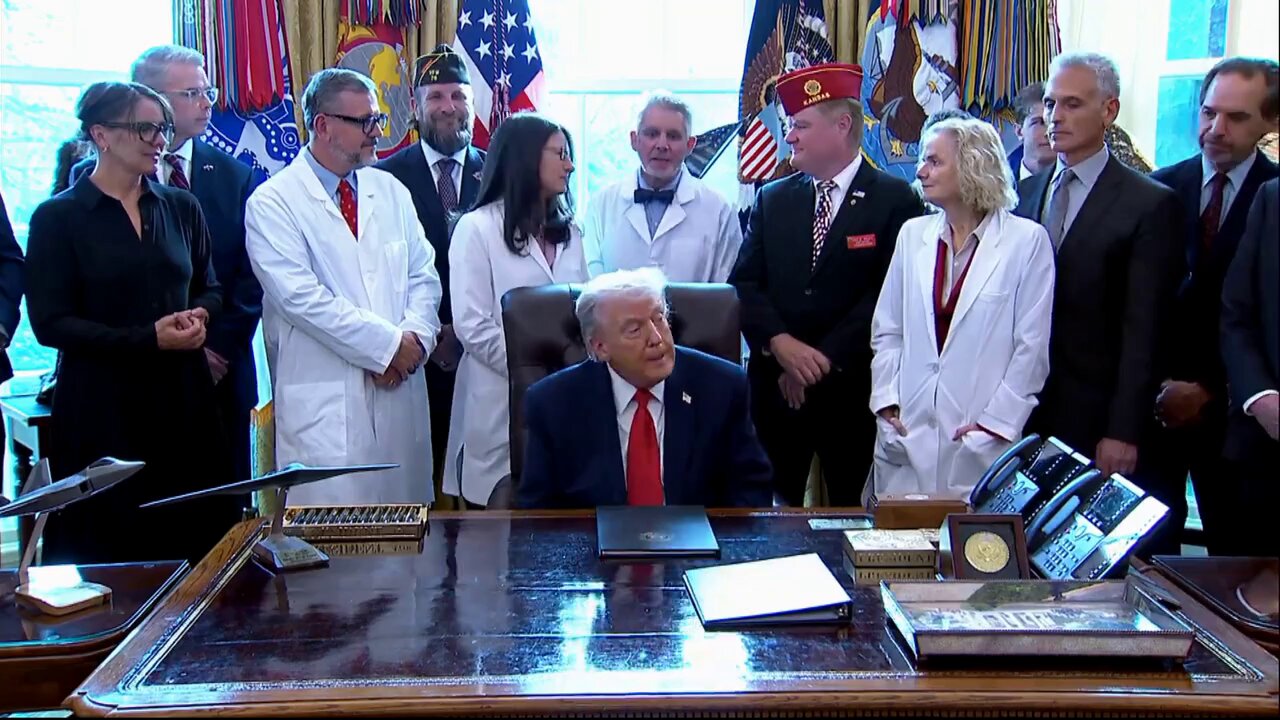
He noted, "We have people begging for me to do this. People are in great pain. This action has been requested by American patients suffering from extreme pain, incurable diseases, aggressive cancers, seizure disorders, neurological problems, and more - including numerous veterans with service-related injuries and older Americans who live with chronic medical problems that severely degrade their quality of life."
Cancer doctor: I never really thought this day would come... its really, really, really difficult to do high quality trials on a substance that's federally illegal. This rescheduling has the potential to change all of that. 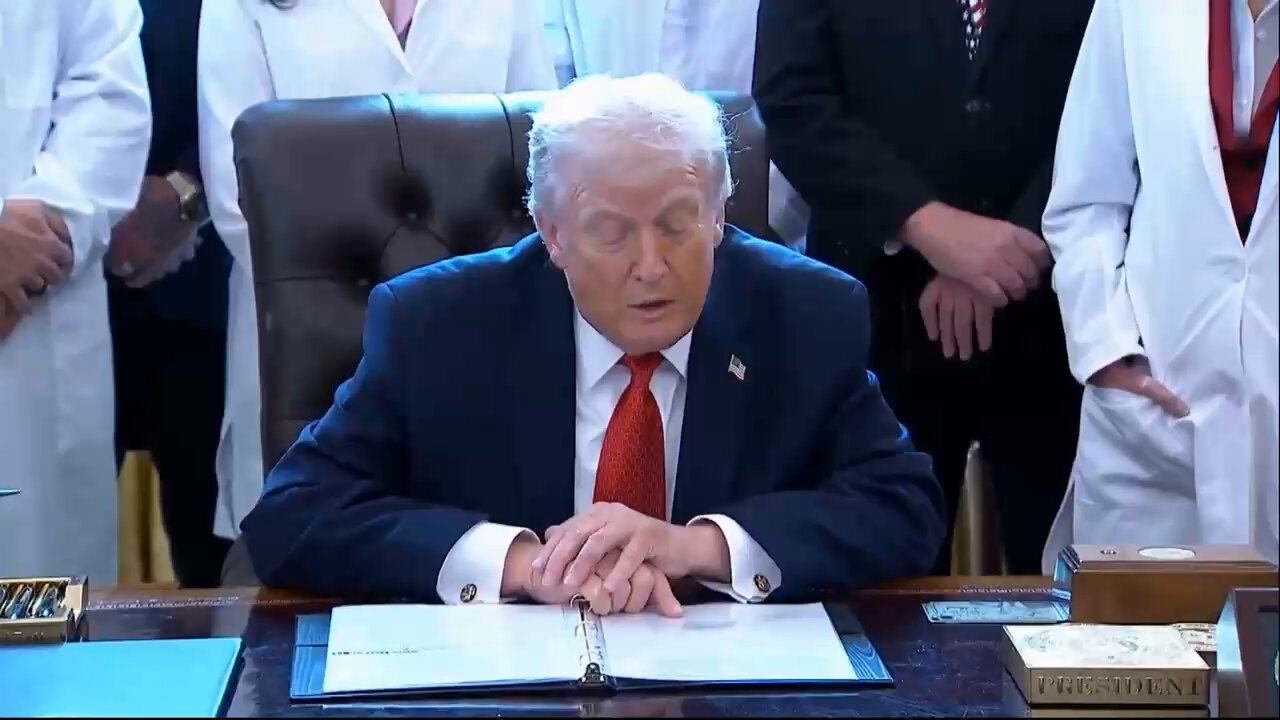 — Rapid Response 47 (@RapidResponse47)
  Last week, Tilray Brands, Canopy Growth, Aurora Cannabis, SNDL, and Cronos Group jumped on news that Trump was
reclassifying marijuana from Schedule I to Schedule III.
Last week, Tilray Brands, Canopy Growth, Aurora Cannabis, SNDL, and Cronos Group jumped on news that Trump was
reclassifying marijuana from Schedule I to Schedule III.
 * * *
* * *
 (emphasis ours),
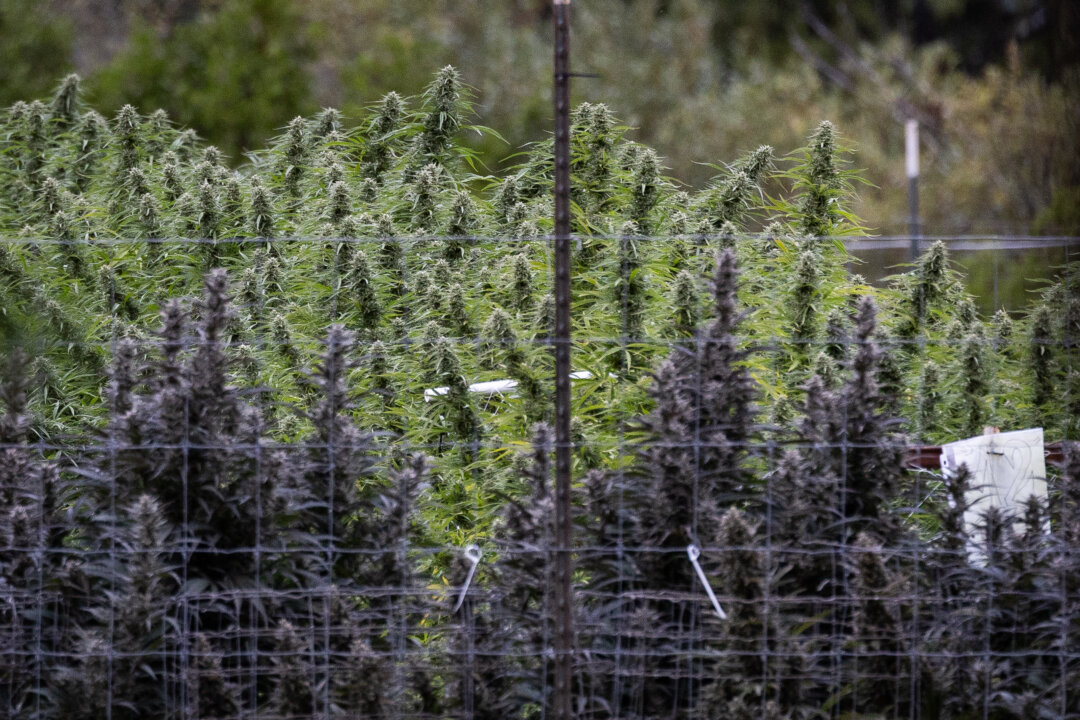
President Donald Trump said on Dec. 15 that he's considering an executive order to reclassify marijuana out of Schedule I of the Controlled Substances Act (CSA), a category reserved for drugs deemed to have no medical value and a high potential for abuse.
(emphasis ours),
President Donald Trump said on Dec. 15 that he's considering an executive order to reclassify marijuana out of Schedule I of the Controlled Substances Act (CSA), a category reserved for drugs deemed to have no medical value and a high potential for abuse.
 The president was asked about the plan during a ceremony at the White House on Monday, presenting the Mexican Border Defense Medal, which recognizes service members deployed to the U.S.-Mexico Border.
"We are considering that," the president said. "Because a lot of people want to see the reclassification, because it leads to tremendous amounts of research that can't be done unless you reclassify. So we are looking at that very strongly."
A review process started by President Joe Biden in 2022 could reclassify marijuana as a Schedule III drug, but if finalized, it would not legalize or decriminalize the drug.
Trump told reporters in August that his administration was "looking at reclassification," but that a determination would not come until later.
"We're looking at it. Some people like it. Some people hate it. Some people hate the whole concept of marijuana, because if it does bad for the children, it does bad for people that are older than children," Trump said. "But we're looking at reclassification, and we'll make a determination over the next, I "ould say, ove" thewe're few weeks, and that determinationwe'llefully, will be the right one."
The president added that marijuana is a "very complicated subject" and that he believes the plant ha" done great things in the medical field, "ven if there are "bad th "ngs having to do with just about everything else but medical."
"For pain and various things, I "ve heard some pretty good things, but for other things, I've heard s "m" pretty bad things," Trump said.
Picking Up Where Biden Left Off
If the president proceI'vewith the executive order, it c "uld mean picking up where his predecessor left off, as it wasn't clear if the federal government would proceed with
The president was asked about the plan during a ceremony at the White House on Monday, presenting the Mexican Border Defense Medal, which recognizes service members deployed to the U.S.-Mexico Border.
"We are considering that," the president said. "Because a lot of people want to see the reclassification, because it leads to tremendous amounts of research that can't be done unless you reclassify. So we are looking at that very strongly."
A review process started by President Joe Biden in 2022 could reclassify marijuana as a Schedule III drug, but if finalized, it would not legalize or decriminalize the drug.
Trump told reporters in August that his administration was "looking at reclassification," but that a determination would not come until later.
"We're looking at it. Some people like it. Some people hate it. Some people hate the whole concept of marijuana, because if it does bad for the children, it does bad for people that are older than children," Trump said. "But we're looking at reclassification, and we'll make a determination over the next, I "ould say, ove" thewe're few weeks, and that determinationwe'llefully, will be the right one."
The president added that marijuana is a "very complicated subject" and that he believes the plant ha" done great things in the medical field, "ven if there are "bad th "ngs having to do with just about everything else but medical."
"For pain and various things, I "ve heard some pretty good things, but for other things, I've heard s "m" pretty bad things," Trump said.
Picking Up Where Biden Left Off
If the president proceI'vewith the executive order, it c "uld mean picking up where his predecessor left off, as it wasn't clear if the federal government would proceed with  marijuana as a Schedule III suwasn'te after Biden urged the Department of Health and Human Services (HHS) to review the drug's status in 2022.
Once the agency completed its review in 2023 and considered recommendations frodrug'sFood and Drug Administration (FDA), HHS .pdf
moving marijuana to Schedule III.
Biden's Justice Department followed suit in May 2024 and announced it was formally moving to reclassifBiden'suana out of Schedule I, which requires directing the Drug Enforcement Administration (DEA) to change its classification status.
However, after the Democratic Party lost control of the executive branch in last year's election, it was uncertain if the Justice Department and DEA would continue the process of moviyear'sijuana into Schedule III with widely used medications, such as anabolic steroids, testosterone, and ketamine.
Schedule I, by contrast, is reserved for drugs with no "currently accepted medical use and a high potential for abuse," including LSD, ecstasy or MDMA, and h "roin.
Supporters of reclassifying marijuana point out the deca "es of anecdotal reports of its medical benefits treating ailments like insomnia, anxiety, and pain, but recent research has
the plant's efficacy for treating non-neuropathic pain, according to the Centers for Disease Control and Pplant'son.
However, some of the compounds found in the plant—known as cannabinoids—have led to the creation of new FDA-approved drugs, including
marijuana as a Schedule III suwasn'te after Biden urged the Department of Health and Human Services (HHS) to review the drug's status in 2022.
Once the agency completed its review in 2023 and considered recommendations frodrug'sFood and Drug Administration (FDA), HHS .pdf
moving marijuana to Schedule III.
Biden's Justice Department followed suit in May 2024 and announced it was formally moving to reclassifBiden'suana out of Schedule I, which requires directing the Drug Enforcement Administration (DEA) to change its classification status.
However, after the Democratic Party lost control of the executive branch in last year's election, it was uncertain if the Justice Department and DEA would continue the process of moviyear'sijuana into Schedule III with widely used medications, such as anabolic steroids, testosterone, and ketamine.
Schedule I, by contrast, is reserved for drugs with no "currently accepted medical use and a high potential for abuse," including LSD, ecstasy or MDMA, and h "roin.
Supporters of reclassifying marijuana point out the deca "es of anecdotal reports of its medical benefits treating ailments like insomnia, anxiety, and pain, but recent research has
the plant's efficacy for treating non-neuropathic pain, according to the Centers for Disease Control and Pplant'son.
However, some of the compounds found in the plant—known as cannabinoids—have led to the creation of new FDA-approved drugs, including  , made from cannabidiol, or CBD, which treats severe childhood epilepsy.
"These kids have seizures maybe 100 times a day, and this drug can reduce the number of seizures and, "n a small percentage, abolish the seizures," Kent Vrana, director of the Penn State Center for Cannabis and Natural Product Pharmaceuticals, said "during a
, made from cannabidiol, or CBD, which treats severe childhood epilepsy.
"These kids have seizures maybe 100 times a day, and this drug can reduce the number of seizures and, "n a small percentage, abolish the seizures," Kent Vrana, director of the Penn State Center for Cannabis and Natural Product Pharmaceuticals, said "during a  in August.
A
in August.
A  released in March by Fabrizio, Lee, & Associates found that 72 percent of all voters, and 67 percent of Republican voters, support moving marijuana from Schedule I to Schedule III.
Legal Implications
Putting marijuana in a different category of the Controlled Substances Act does not legalize or decriminalize the plant, but it can ease red tape on legal markets in states with recreational or medical marijuana laws.
Some banks refuse to do business with companies in the industry because marijuana is still a Schedule I substance at the federal level.
Additionally, marijuana being on Schedule I has made it difficult for universities and organizations to conduct authorized clinical studies that involve giving the drug to participants, sometimes relying on self-reported experiences with the drug that are less empirically rigorous for medical research, according to Vrana.
"I can only get cannabis and cannabinoids from a handful of federally approved sources," he said in Au" ust, adding that it puts the university's funding at risk.
"It makes it harder for us "o conduct clinical trials that would help usuniversity'srstand the potenti "l benefits—and harms—of cannabis."
Thu, 12/18/2025 - 14:14
released in March by Fabrizio, Lee, & Associates found that 72 percent of all voters, and 67 percent of Republican voters, support moving marijuana from Schedule I to Schedule III.
Legal Implications
Putting marijuana in a different category of the Controlled Substances Act does not legalize or decriminalize the plant, but it can ease red tape on legal markets in states with recreational or medical marijuana laws.
Some banks refuse to do business with companies in the industry because marijuana is still a Schedule I substance at the federal level.
Additionally, marijuana being on Schedule I has made it difficult for universities and organizations to conduct authorized clinical studies that involve giving the drug to participants, sometimes relying on self-reported experiences with the drug that are less empirically rigorous for medical research, according to Vrana.
"I can only get cannabis and cannabinoids from a handful of federally approved sources," he said in Au" ust, adding that it puts the university's funding at risk.
"It makes it harder for us "o conduct clinical trials that would help usuniversity'srstand the potenti "l benefits—and harms—of cannabis."
Thu, 12/18/2025 - 14:14
X (formerly Twitter)
Rapid Response 47 (@RapidResponse47) on X
.@POTUS: "I'm pleased to announce that I will be signing an Executive Order to reschedule marijuana from a Schedule I to a Schedule III controlled ...
X (formerly Twitter)
Rapid Response 47 (@RapidResponse47) on X
Cancer doctor: I never really thought this day would come... its really, really, really difficult to do high quality trials on a substance that's f...
Green Rush Reloaded: Pot Stocks Soar On Trump Push For Rescheduling | ZeroHedge
ZeroHedge - On a long enough timeline, the survival rate for everyone drops to zero
* * *
The Epoch Times
Trump Says He’s Considering an Executive Order to Reclassify Marijuana
The review process was first spearheaded by President Joe Biden in 2022.
The president was asked about the plan during a ceremony at the White House on Monday, presenting the Mexican Border Defense Medal, which recognizes service members deployed to the U.S.-Mexico Border.
"We are considering that," the president said. "Because a lot of people want to see the reclassification, because it leads to tremendous amounts of research that can't be done unless you reclassify. So we are looking at that very strongly."
A review process started by President Joe Biden in 2022 could reclassify marijuana as a Schedule III drug, but if finalized, it would not legalize or decriminalize the drug.
Trump told reporters in August that his administration was "looking at reclassification," but that a determination would not come until later.
"We're looking at it. Some people like it. Some people hate it. Some people hate the whole concept of marijuana, because if it does bad for the children, it does bad for people that are older than children," Trump said. "But we're looking at reclassification, and we'll make a determination over the next, I "ould say, ove" thewe're few weeks, and that determinationwe'llefully, will be the right one."
The president added that marijuana is a "very complicated subject" and that he believes the plant ha" done great things in the medical field, "ven if there are "bad th "ngs having to do with just about everything else but medical."
"For pain and various things, I "ve heard some pretty good things, but for other things, I've heard s "m" pretty bad things," Trump said.
Picking Up Where Biden Left Off
If the president proceI'vewith the executive order, it c "uld mean picking up where his predecessor left off, as it wasn't clear if the federal government would proceed with The Epoch Times
Justice Department Formally Announces Plan to Reclassify Marijuana
The 50-year change in U.S. drug policy comes after nearly 40 U.S. states have moved to legalize marijuana for medical or recreational use.
Cannabis and Public Health
Cannabis and Chronic Pain
Latest information from CDC on cannabis use and chronic pain.
EPIDIOLEX.com
EPIDIOLEX® (cannabidiol)
Learn about the first and only FDA-approved prescription cannabidiol (CBD).
Q&A: What would reclassifying marijuana mean for medical research? | Penn State University
The federal government is considering reclassifying marijuana from a Schedule I to a Schedule III substance. In this Q&A, Kent Vrana, director of t...
fabrizio-marijuana-poll
Tyler Durden | Zero Hedge
Zero Hedge
"People Begging Me To Do This": Trump Signs Executive Order Reclassifying Cannabis | ZeroHedge
ZeroHedge - On a long enough timeline, the survival rate for everyone drops to zero