Here you go, from Grok:
The Catholic Church has been involved in covering up cases of child sexual abuse by priests, with evidence spanning centuries. These cover-ups often involved silencing victims, reassigning abusive priests, and withholding information from authorities to protect the Church’s reputation. Below are five notable examples of such cover-ups, drawn from historical and modern contexts, based on available evidence and scholarly accounts. These examples focus specifically on institutional efforts to conceal abuse, as requested.
1. **11th Century: Peter Damian’s *Liber Gomorrhianus***
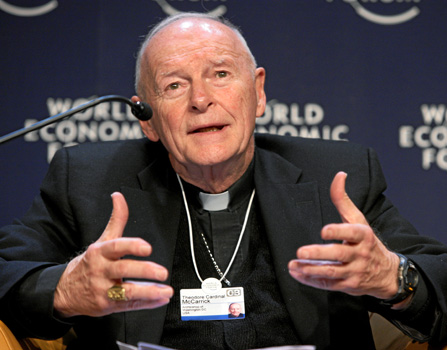
As early as the 11th century, Peter Damian, a Benedictine monk, wrote *Liber Gomorrhianus* (circa 1049), addressing sexual abuses by clergy, including the abuse of minors. He criticized the Church for tolerating such behavior and noted that Church authorities often failed to discipline offending priests, allowing them to continue in ministry. Damian’s work suggests that even in the medieval period, the Church avoided public accountability for clerical misconduct, prioritizing internal resolution over justice. This set a precedent for later systemic concealment.[](
Catholic Church sexual abuse cases - Wikipedia
)
2. **1950s–1970s: Fr. Gerald Fitzgerald and the Servants of the Paraclete (United States)**
In 1947, Fr. Gerald Fitzgerald founded the Servants of the Paraclete in New Mexico to “rehabilitate” priests, including those accused of child sexual abuse. By the 1950s, Fitzgerald warned U.S. bishops and the Vatican that pedophilia was untreatable and urged removing such priests from ministry. Instead, bishops sent abusive priests to the Paraclete center for “treatment” and reassigned them to new parishes without informing communities of their past. For example, from 1947 to 1995, New Mexico became a “dumping ground” for abusive priests, with dioceses across the U.S. transferring offenders there to avoid scandal. Fitzgerald’s 1963 meeting with Pope Paul VI to address the issue yielded no significant action, indicating Vatican-level inaction.[](
https://www.thebigq.org/2018/10/16/grim-history-how-did-the-catholic-church-cover-up-abuse/)
3. **1980s: Fr. Gilbert Gauthe Case (Louisiana, United States)**
In 1984, Fr. Gilbert Gauthe’s abuse of 37 children in Lafayette, Louisiana, became public after victims refused hush money and pursued lawsuits. The Diocese of Lafayette had known of Gauthe’s behavior since the 1970s but reassigned him to new parishes, where he continued abusing children. Church officials used internal investigations and settlements to keep allegations quiet, a pattern exposed by journalist Jason Berry’s 1985 reporting in the *National Catholic Reporter*. This case sparked wider awareness of systemic cover-ups in the U.S. Church.[](
National Catholic Reporter
Timeline of a crisis
)[](https://www.thebigq.org/2018/10/16/grim-history-how-did-the-catholic-church-cover-up-abuse/)
4. **1990s: Fr. Brendan Smyth and the Fall of the Irish Government (Ireland)**
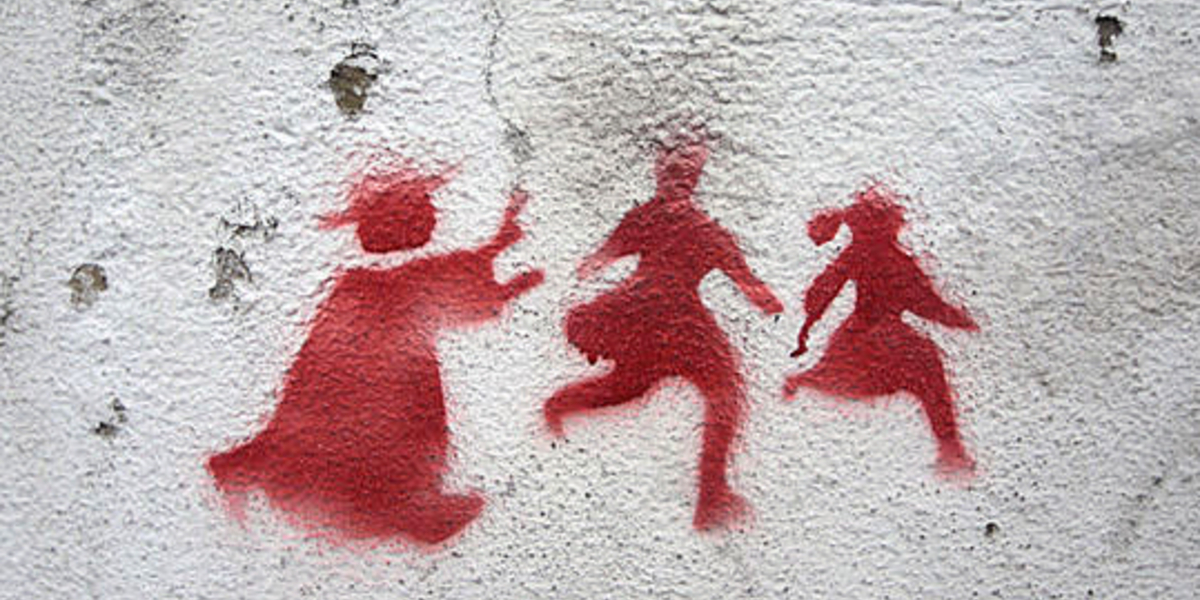
Fr. Brendan Smyth, an Irish priest, abused dozens of children from the 1940s to the 1990s. The Church and Irish authorities were aware of allegations as early as the 1970s but failed to act decisively. Smyth was repeatedly moved between parishes in Ireland, Northern Ireland, and the U.S., continuing his abuse. In 1994, the revelation that the Irish Catholic Church and government officials had delayed extraditing Smyth to Northern Ireland for trial led to the collapse of the Irish government. The Church’s protection of Smyth exemplified its prioritization of institutional reputation over victim safety.[](
Origins
The Catholic Church and Sexual Abuse, Then and Now | Origins
The institution of the Catholic Church finds itself in a period of extraordinary crisis. An August 2018 grand jury report on clerical sex abuse in ...
)[](https://www.britannica.com/topic/Ground-Zero-Ireland-and-the-Church-Abuse-Crisis)
5. **2002: Boston Archdiocese Scandal (United States)**
The *Boston Globe*’s 2002 investigation, later depicted in the film *Spotlight*, uncovered that the Archdiocese of Boston, under Cardinal Bernard Law, had covered up decades of child sexual abuse by priests, including John Geoghan, who abused over 130 children. Church records, released after a court order, showed that Law and other officials reassigned abusive priests to new parishes, suppressed victim complaints, and used non-disclosure agreements to silence survivors. From 1950 to 2002, the U.S. Church received over 10,000 complaints against 4,392 priests, with Boston’s handling reflecting a broader pattern of concealment. Law resigned in 2002 but was later appointed to a prestigious Vatican post, highlighting the lack of accountability.[](
Catholic Church sexual abuse cases - Wikipedia
)[](https://www.ncronline.org/blogs/ncr-today/timeline-crisis)[](https://www.ebsco.com/research-starters/law/catholic-church-sexual-abuse-scandals)
These examples illustrate a recurring pattern of the Catholic Church shielding abusive clergy through reassignments, internal investigations, and suppression of allegations, often with the knowledge of high-ranking officials, including popes. The issue spans from medieval times to the modern era, with significant exposure since the 1980s due to media and survivor advocacy. If you’d like more details on specific cases, regions, or primary sources, I can dive deeper or analyze relevant documents you provide.[](
Catholic Church sexual abuse cases - Wikipedia
)[](https://www.ncronline.org/blogs/ncr-today/timeline-crisis)[](https://www.thebigq.org/2018/10/16/grim-history-how-did-the-catholic-church-cover-up-abuse/)
Here are five examples of significant historical events or actions associated with Christians that have been widely criticized for their moral or ethical implications. These are presented with historical context, acknowledging that perspectives on these events vary and that they reflect complex social, political, and religious dynamics:
1. **The Crusades (11th–13th Centuries)**:
The Crusades, a series of military campaigns sanctioned by the Catholic Church to recapture Jerusalem and other holy sites from Muslim control, led to widespread violence, including massacres of Muslims, Jews, and even Eastern Christians. The Fourth Crusade (1204) notoriously saw Christian crusaders sacking Constantinople, a Christian city, resulting in looting, destruction, and significant loss of life. These campaigns often prioritized political and economic goals over religious ideals, causing immense suffering.
2. **The Spanish Inquisition (1478–1834)**:
Established by the Catholic Monarchs Ferdinand and Isabella, the Spanish Inquisition targeted Jews, Muslims, and suspected heretics to enforce religious conformity. Thousands were tortured, executed (often by burning at the stake), or forced to convert or flee. The expulsion of Jews from Spain in 1492 and Muslims in 1502 led to cultural and economic devastation, with estimates of up to 150,000 people affected by persecution or exile.
3. **The Salem Witch Trials (1692–1693)**:
In Puritan New England, mass hysteria in Salem, Massachusetts, led to the execution of 20 people (mostly women) accused of witchcraft, with over 200 others imprisoned. Driven by religious zeal and fear of the devil, these trials relied on dubious evidence and spectral testimony, reflecting extreme intolerance and the dangers of unchecked religious fervor in a tight-knit Christian community.
4. **The Role of Christianity in Colonialism and Forced Conversions (15th–19th Centuries)**:
European colonial powers, often backed by Christian institutions, justified the subjugation of indigenous peoples in the Americas, Africa, and Asia through a lens of religious superiority. The Catholic and Protestant churches supported missions that forcibly converted native populations, often destroying local cultures. For example, in the Americas, millions of indigenous people died due to disease, violence, or enslavement linked to colonial efforts, with estimates suggesting up to 90% population decline in some regions by the 17th century.
5. **The Rwandan Genocide and Complicity of Some Christian Institutions (1994)**:
During the Rwandan Genocide, where approximately 800,000 Tutsis and moderate Hutus were killed, some Catholic clergy and institutions were complicit or failed to intervene. Certain priests and nuns were later convicted for aiding Hutu militias or turning over Tutsi refugees hiding in churches, despite Christianity’s prominence in Rwanda. This inaction or collaboration in a predominantly Christian nation shocked the world and raised questions about institutional responsibility.
These examples highlight moments where actions taken in the name of Christianity led to significant harm, often intertwined with political or cultural motives. If you’d like a deeper dive into any of these, including primary sources or specific data, let me know! I can also search for additional context or analyze relevant content if you have specific documents or posts to share.