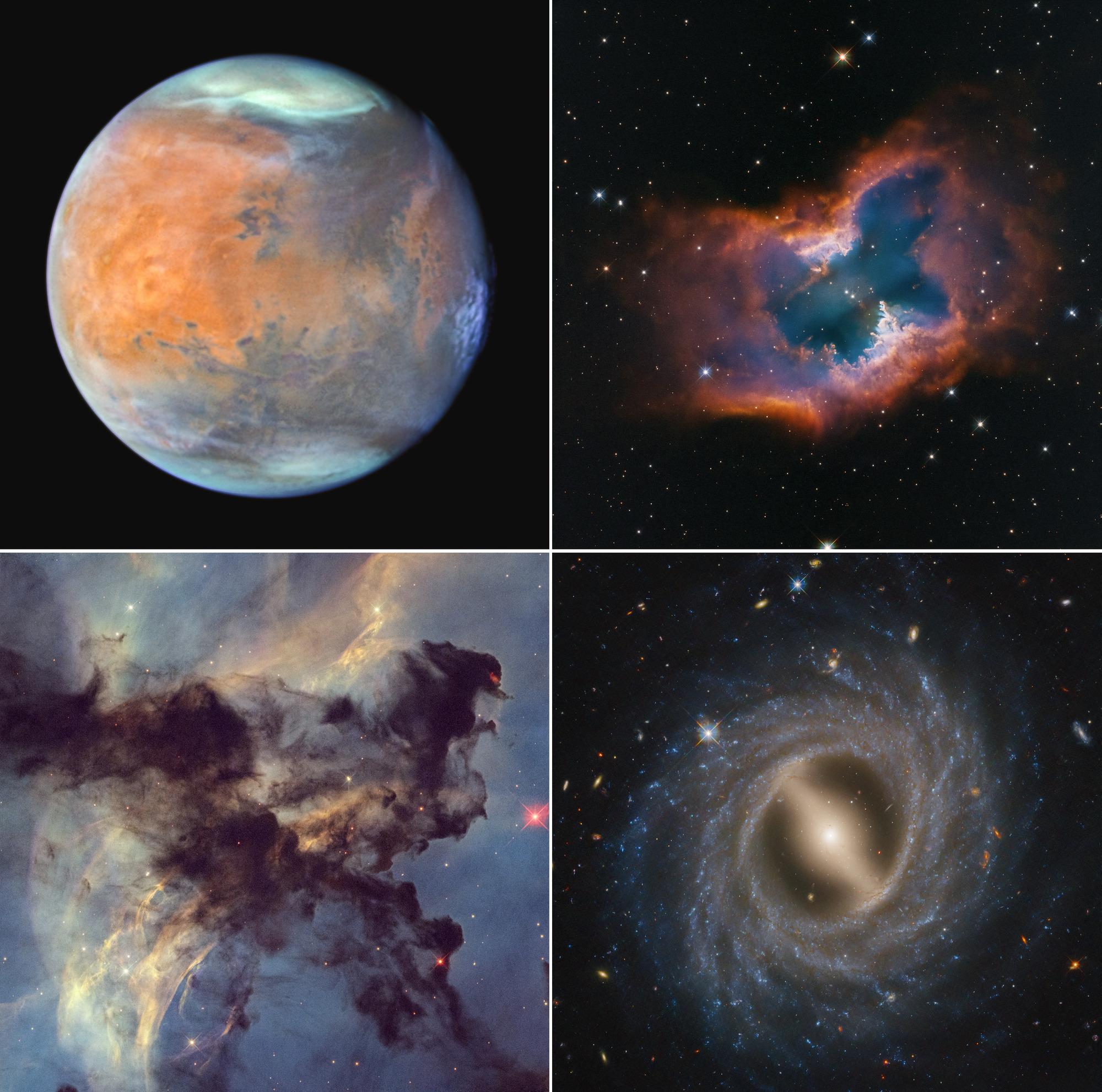
Hubble has spent 35 years in orbit! Celebrate with an array of compelling images recently taken by Hubble: Mars, dramatic views of stellar birth and death, and a magnificent spiral galaxy: bit.ly/4jjsAs7
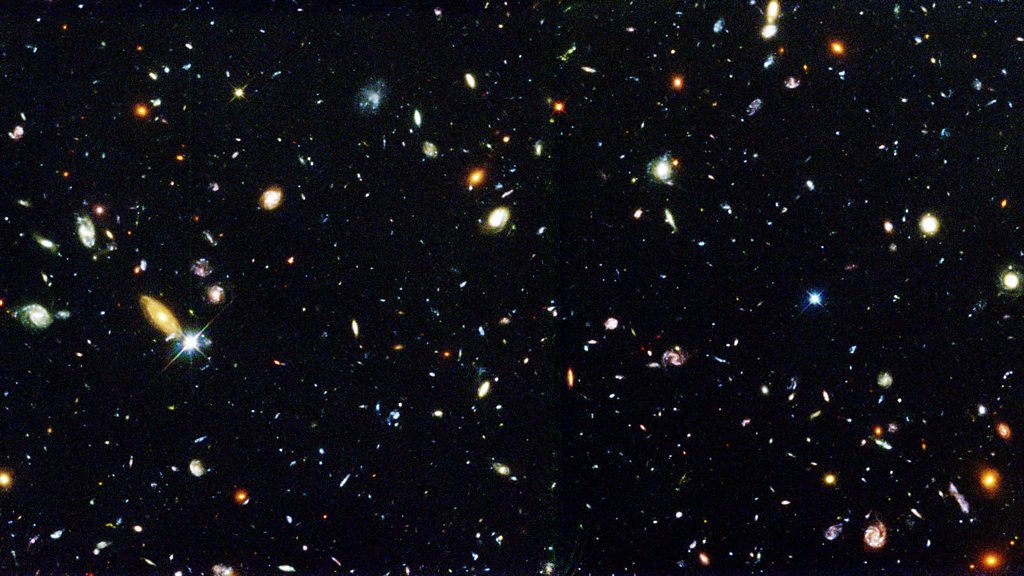
Dr. Robert Williams, former director of the Space Telescope Science Institute, recalls when the Hubble Space Telescope "looked back in time" and peered into a small patch of empty sky for ten days straight.
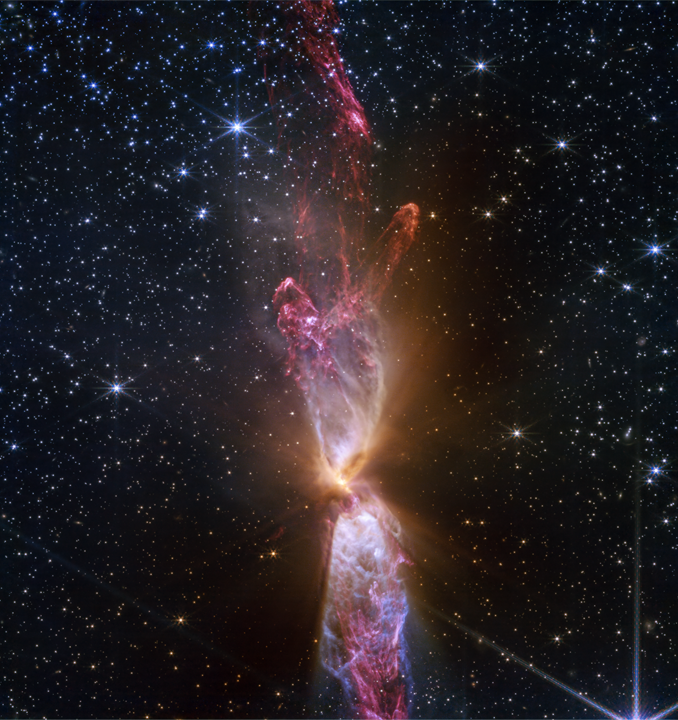
#NASAWebb captured Lynds 483 in unprecedented detail. Two forming stars hidden in one pixel at the center are responsible for sending out these vibrant jets and outflows. Examine the twists and arcs in these ejections up close: https://webbtelescope.pub/4h538oK
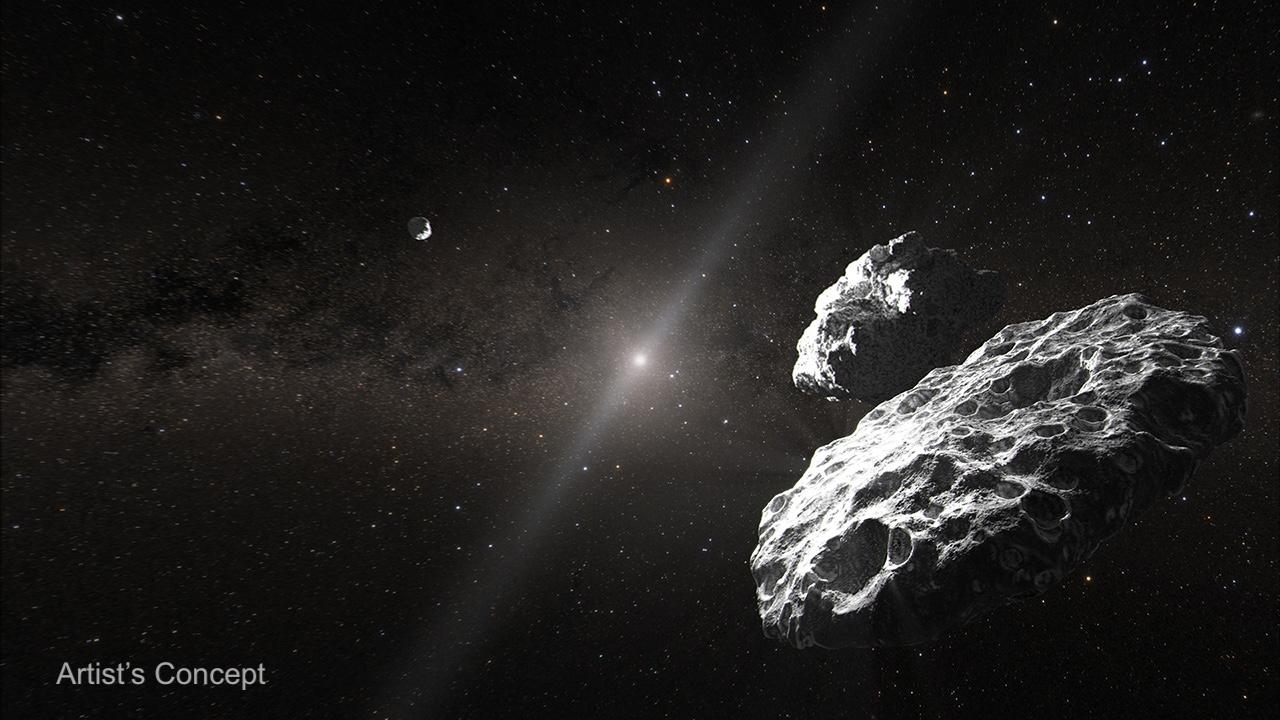
The Kuiper Belt object 148780 Altjira, already known to be a binary system shows signs of containing a third member in new Hubble observations: https://bit.ly/3EQtQnK
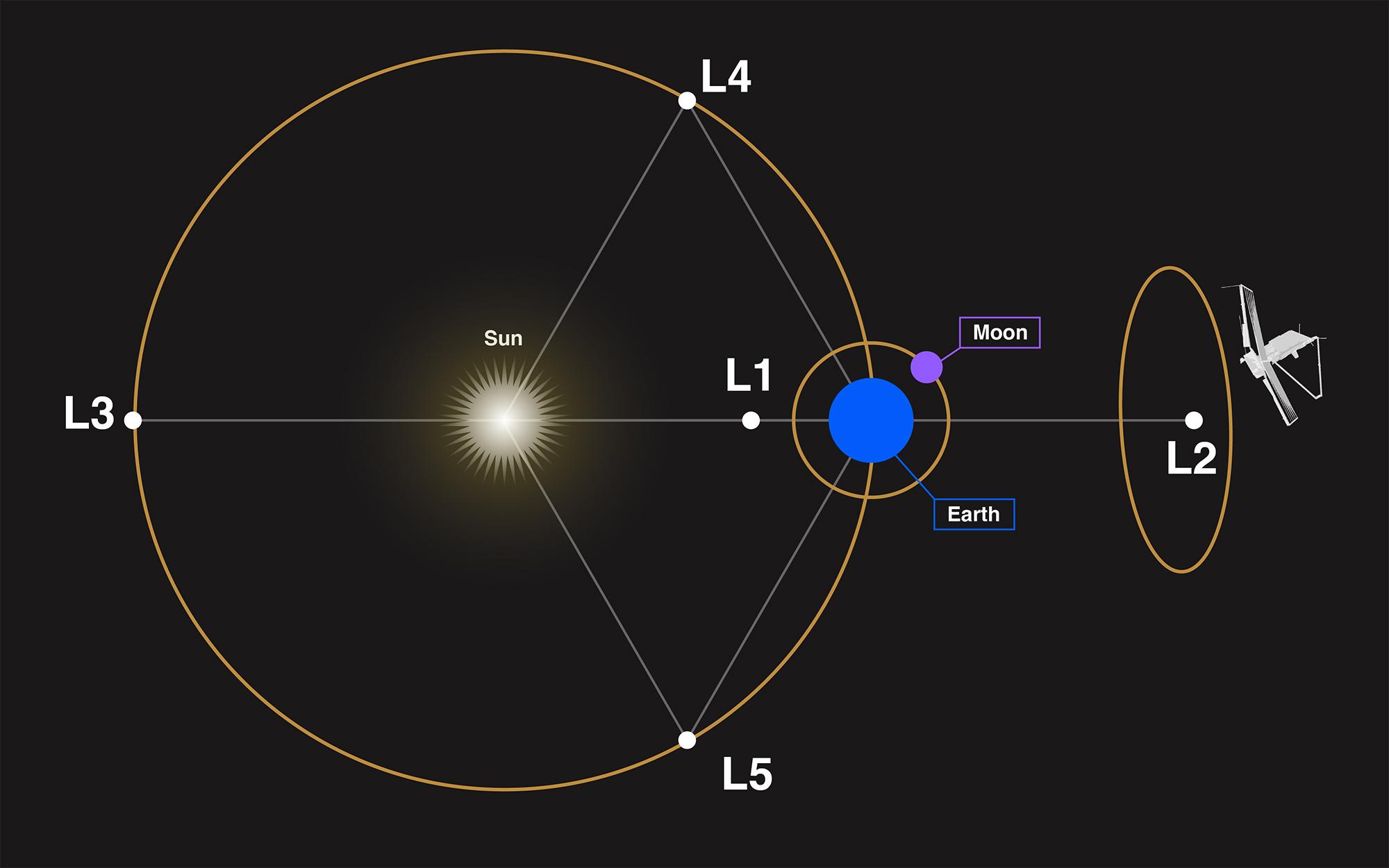
#NASAWebb orbits the Sun near Sun-Earth Lagrange point 2 (L2), approximately 1.5 million kilometers (1 million miles) from Earth. This makes it possible for Webb to remain in constant communication with Earth. Learn more about L2: https://webbtelescope.pub/3BY6H1x
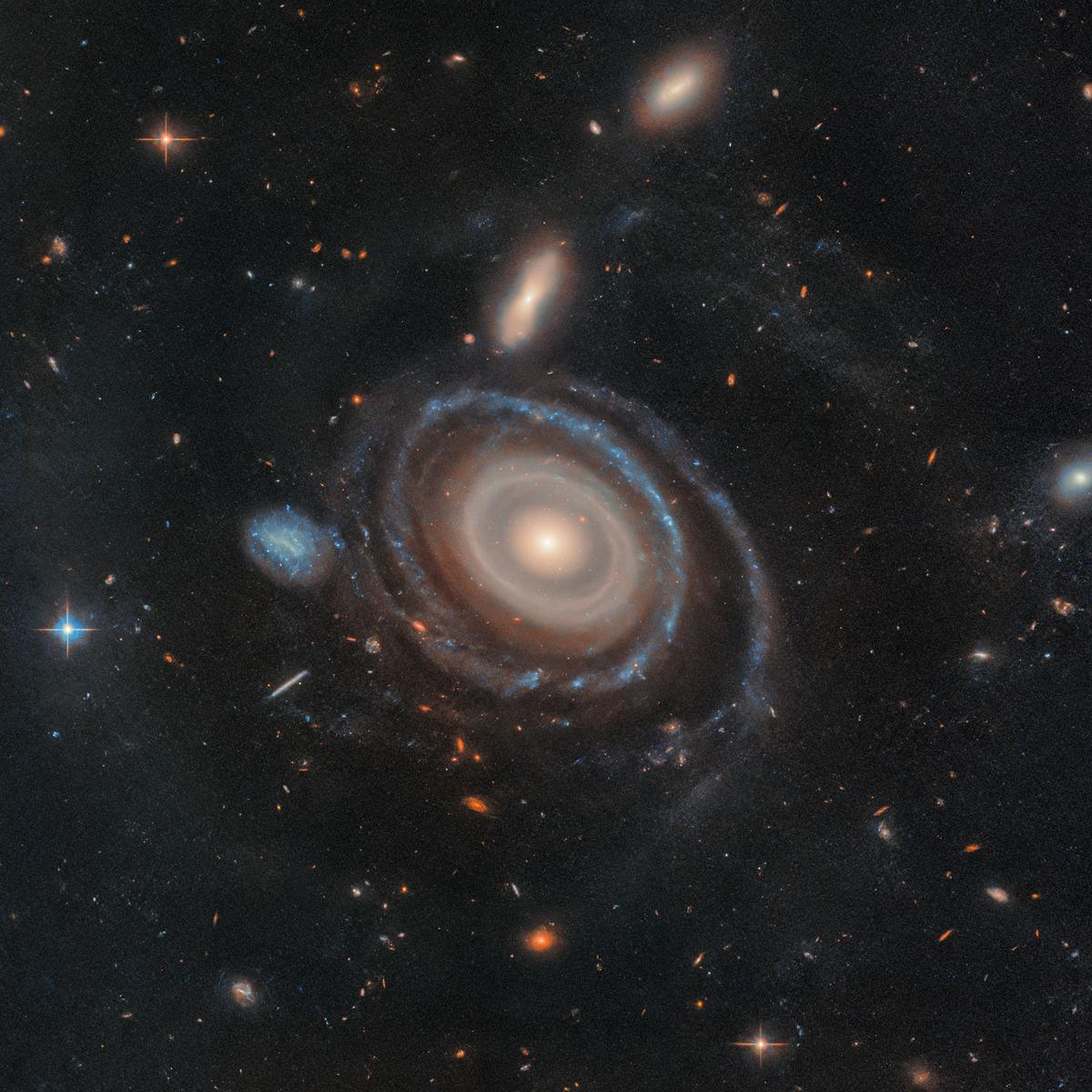
Bullseye! Researchers using Hubble found a massive galaxy rippling with nine star-filled rings after an “arrow,” the blue dwarf galaxy to its center-left, plunged through its core 50 million years ago. A thin trail of gas still links the pair: https://bit.ly/4hcX52n
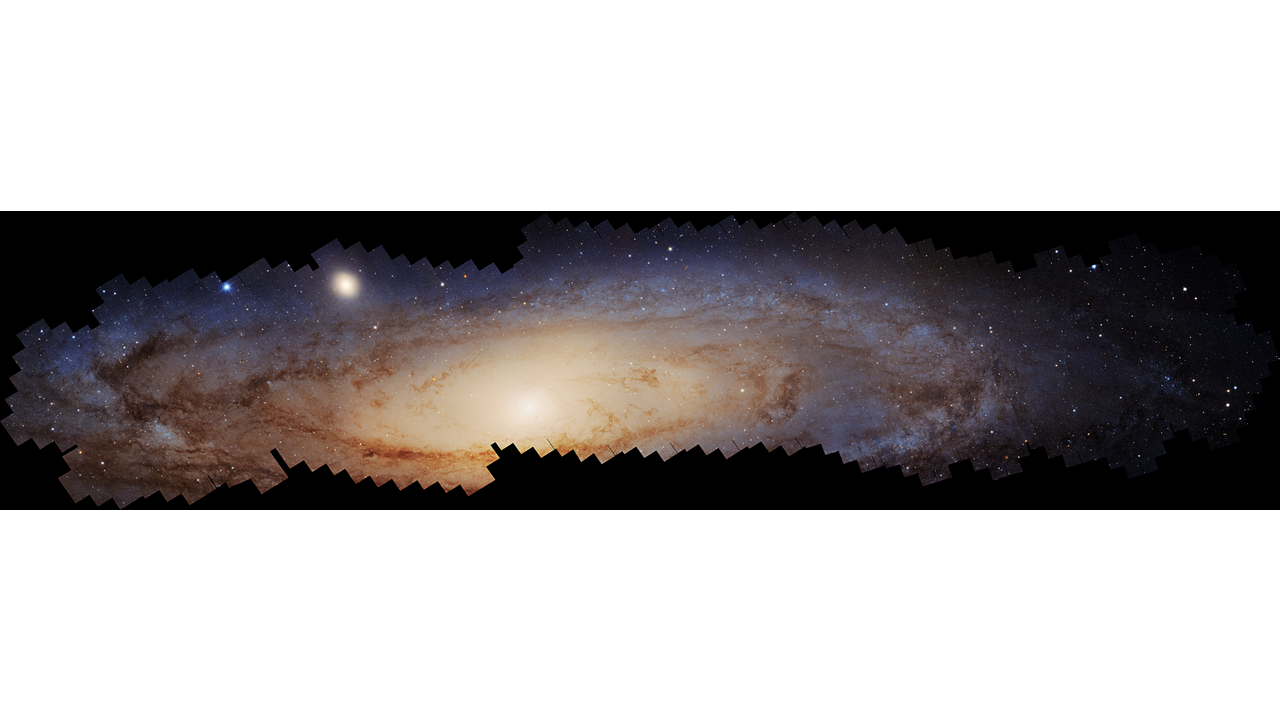
The largest photomosaic of the Andromeda galaxy, assembled from Hubble observations, has been unveiled. It took more than 10 years to collect data for this colorful portrait of our neighboring galaxy and was created from more than 600 snapshots: https://bit.ly/405MsbK #AAS245
#NASAWebb has spotted a reverberating light echo spreading across space. As a light pulse travels through space, it illuminates previously unseen material, revealing intricate structures resembling wood grain: https://webbtelescope.pub/422ET6Z #AAS245
Applications are open for the Space Astronomy Summer Program (SASP) at STScI.
Every year, a dozen highly motivated college students work individually with STScI researchers and staff on science projects. Learn more and apply: