HistoryofBitcoin

HistoryofBitcoin's avatar
HistoryofBitcoin
npub1k5c3...lzzq
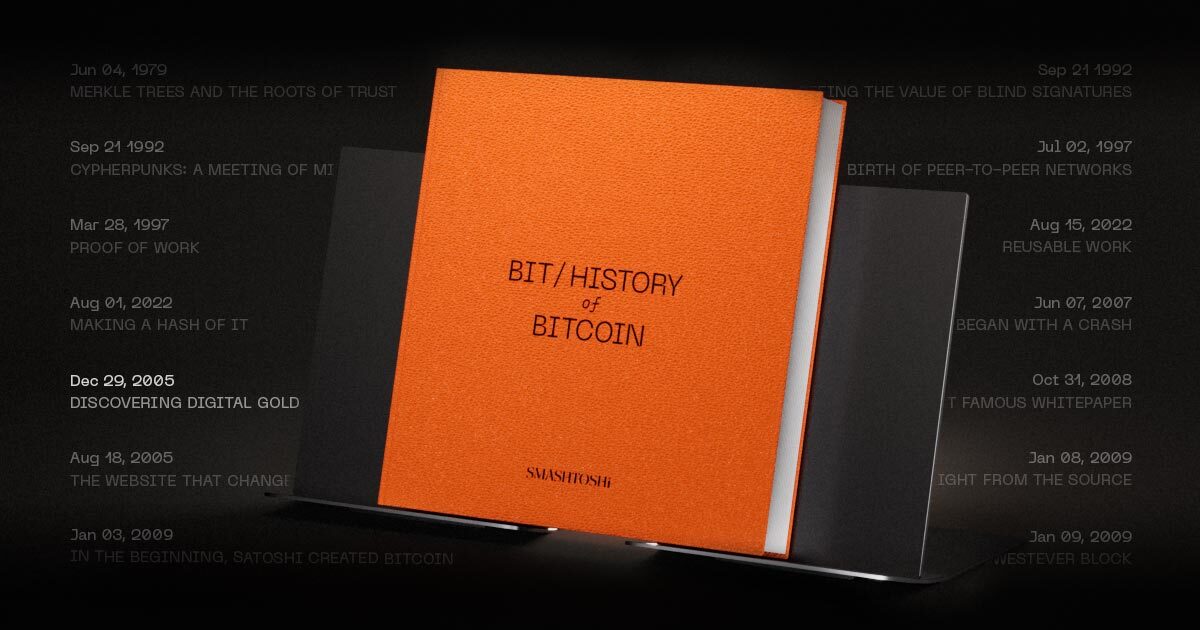
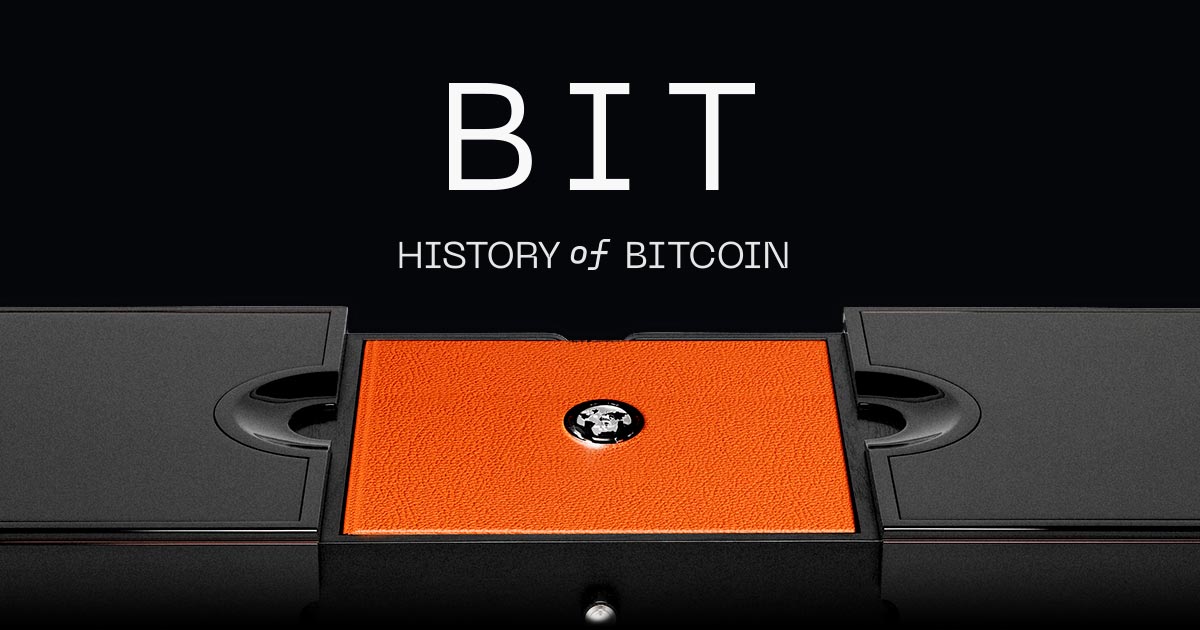
To know where we're going, remember where we came from. A free interactive timeline and an ultra-premium collectors edition book on Bitcoins history.
Last month in #Mayfair, History of #Bitcoin was unveiled at #AspreyStudio. The evening brought together artists, collectors and members of the Bitcoin community to mark an important milestone in preserving Bitcoin’s cultural history. Thank you to Alastair Walker and the team at Asprey Studio / Asprey for hosting, and to John Karborn, @Abubakar Nur Khalil, harto fr, and Maliha Abidi for sharing their perspectives during the panel discussion. Each contributed valuable insight into the intersection of Bitcoin, art and cultural memory. The event marked another step in positioning Bitcoin not just as technology or money, but as a movement with a history worth documenting, collecting and passing on. There is still time to register for the upcoming pre sale. More information is availabe on the link below: #BitcoinArt #Art
Before #Bitcoin became a global asset, it needed something simple: a place to trade. Bitcoin Market, launched in early 2010, became the first true exchange where Bitcoin could be bought and sold in real time. It existed before liquidity, before speculation and before anyone knew what Bitcoin would become. New Liberty Standard was technically the first exchange, but it functioned more like a trust-based OTC service. Bitcoin Market, announced by forum user dwdollar on January 15, 2010, was different. He described it as a real market where users could buy and sell Bitcoin with each other, creating a live exchange rate for the first time. This marked a shift in Bitcoin’s identity. What began as decentralised digital cash was now becoming a financial commodity, attracting a new demographic: traders. On March 17, 2010, the first trade occurred on Bitcoin Market. A user bought 333 BTC for one dollar. At the time, only nine people were registered on the platform. Liquidity was almost nonexistent. A fifty-dollar order could double the price. But by the summer, Bitcoin Market was clearing around three hundred dollars per week, quickly overtaking New Liberty Standard and becoming the primary reference point for Bitcoin’s value. Like its predecessor, Bitcoin Market relied heavily on PayPal, which worked only while PayPal remained unaware of Bitcoin’s existence. As Bitcoin gained attention in 2011, chargeback fraud inevitably followed, and PayPal terminated support, a move that effectively ended Bitcoin Market’s operations. By then, Mt. Gox had launched and was rapidly becoming the dominant exchange. Despite its short lifespan, Bitcoin Market played a crucial role in Bitcoin’s early evolution. Its price ticker became the community’s standard, even as volatility remained extreme. During its tenure, the price of Bitcoin rose from $0.003 to $0.02, almost a seven-fold increase in six weeks. It formed the bridge between the earliest OTC trades and the order-book exchanges that would later shape Bitcoin’s trading ecosystem. Read the full article on the link below! The artwork “Making a Market” appears in the History of Bitcoin Collector’s Book and on the interactive timeline.
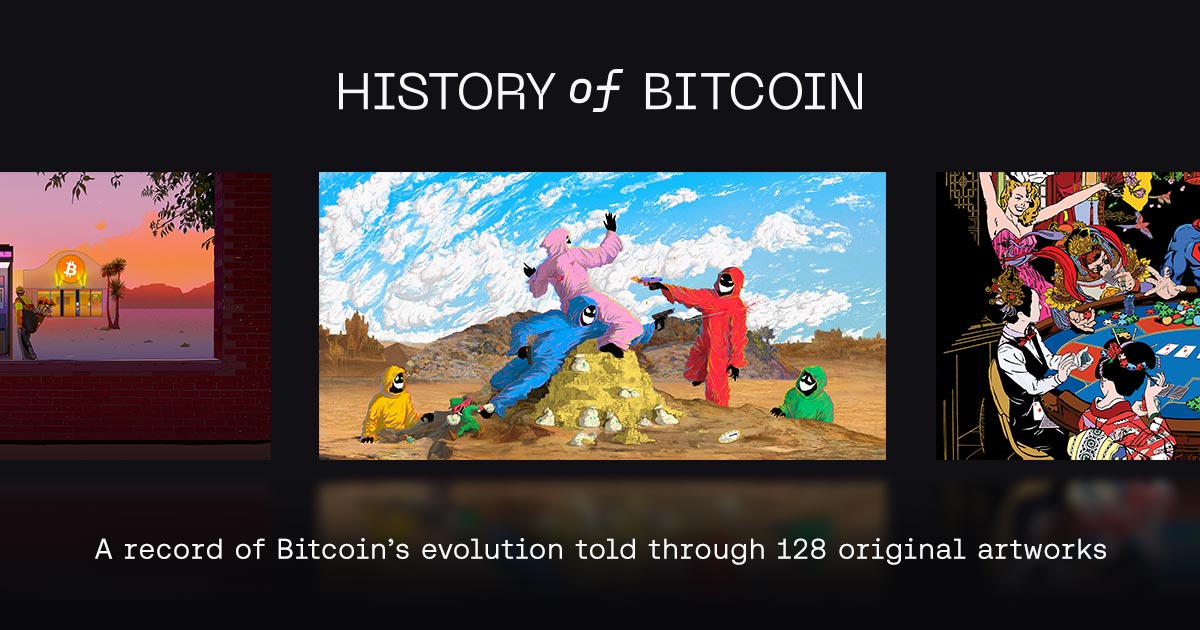
The First Edition contains the first fragment of #Bitcoin’s original source code. Together with all editions, they form the complete codebase, forever connecting every collector 🤝 Auction ends in 3 hours. Bid on the link below. image
We spent weeks in Italy searching for paper worthy of the art. The metallic stock used for this piece by Grant Yun was chosen with intention, just as every detail in #Bitcoin’s creation was shaped by careful thought. Auction for the First Edition ends in less than 4 hours. See link below. #BitcoinArt image
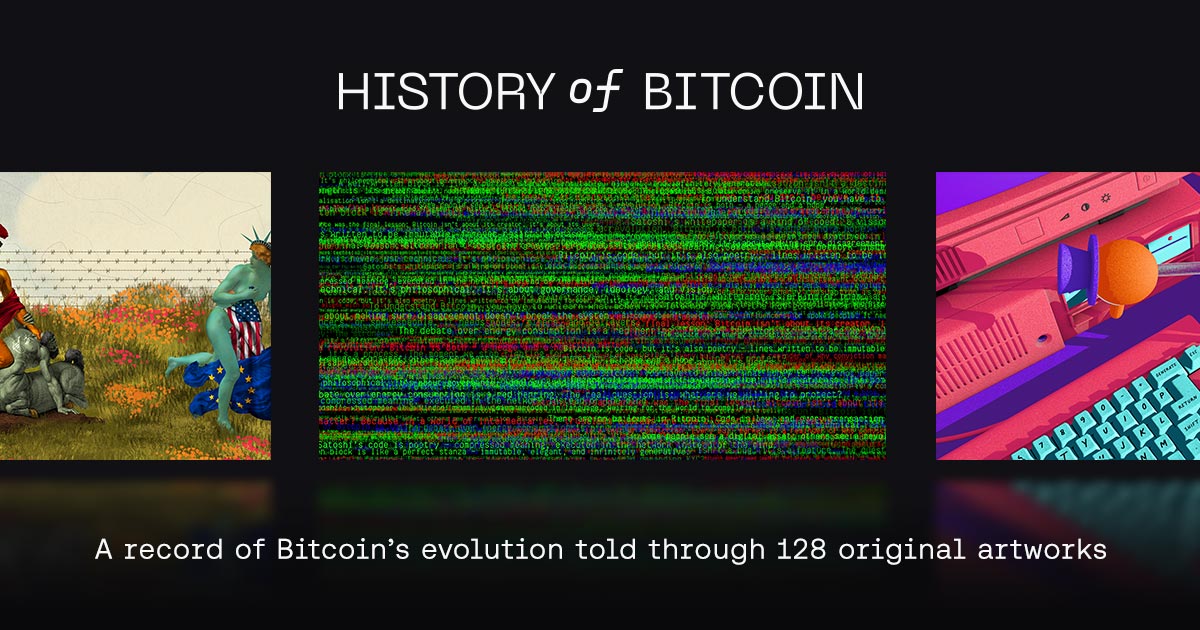
If the #blockchain records the transactions, #Bitcointalk records the humanity. It is the archive that captured #Bitcoin’s earliest culture: Satoshi’s posts, first debates, early memes and the birth of a movement. Artwork by Sasha Stiles (@sashastiles). While Bitcoin’s blockchain preserves its on-chain history, the Bitcointalk forum has become the permanent record of everything that happened around it. Across thousands of posts, you can trace the ideas, personalities and tensions that shaped Bitcoin long before it went mainstream. The forum originally lived at bitcoin dot org/smf and later at forums.bitcoin dot org before moving to bitcointalk dot org in 2011. Registered by Satoshi on November 17 2009, it quickly became the centre of discussion for the early community. From technical questions about how to run a node to philosophical debates about privacy and value, the forum documented Bitcoin’s evolution from concept to reality. #Satoshi posted only 575 times during the 13 months he was active, but every message now serves as a historical artefact. Alongside him were names who would later become central to Bitcoin’s story: #HalFinney, @Martti Malmi, Gavin Andresen and even a young #VitalikButerin. In its earliest months, the forum felt small and united. A few dozen users experimented with the software, shared ideas and worked together to help Bitcoin grow. They did not know where Bitcoin was headed, but they sensed they were building something meaningful. After Satoshi stepped back, Martti Malmi took over as lead admin, later passing the role to #Theymos in 2012, who continues to maintain the forum. Though not decentralised, Bitcointalk has remained resistant to censorship and has preserved its grassroots ethos as Bitcoin expanded into global territory. Many pivotal early events occurred on Bitcointalk, including the first bitcoin to fiat trade in 2009. They remain archived there today, forming a parallel ledger of the human side of Bitcoin’s origin story. Read the full article: Artwork: A Forum for Debate by Sasha Stiles (@sashastiles). Appears in the History of Bitcoin Collector’s Book and on our interactive timeline.