
Why DeSantis Believes AI Needs Tight Regulation Now
Why DeSantis Believes AI Needs Tight Regulation Now
 (emphasis ours),
As Florida lawmakers debate legislation in the state’s capital, Gov. Ron DeSantis is making an all-out push to a finish line.
(emphasis ours),
As Florida lawmakers debate legislation in the state’s capital, Gov. Ron DeSantis is making an all-out push to a finish line.
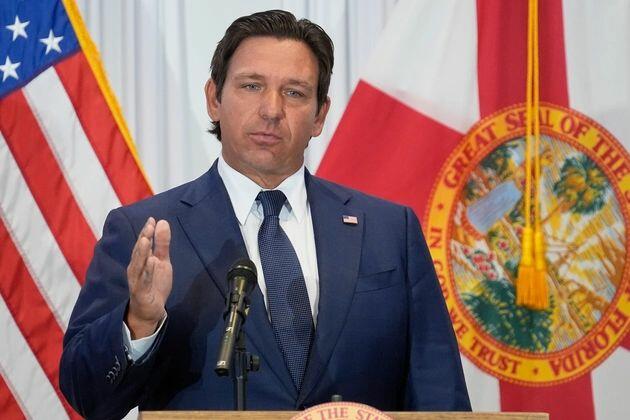 The 47-year-old Republican is in the last year of his second four-year term as governor, making him ineligible to run again.
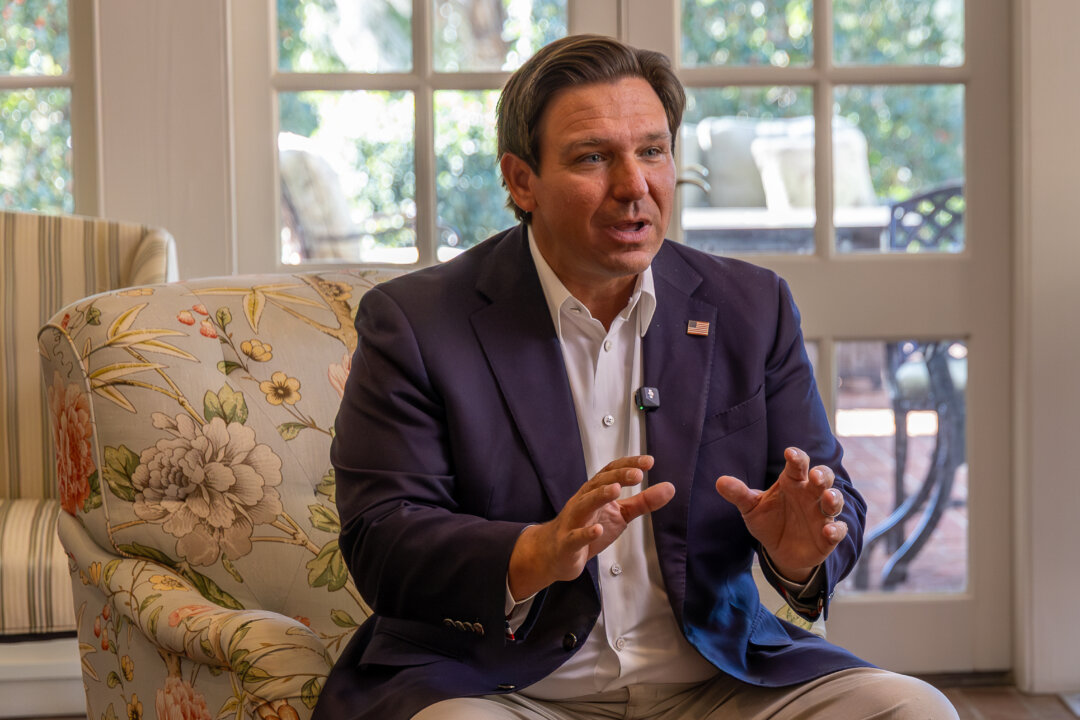
So he’s spending his political capital as he runs “through the tape,” he told The Epoch Times during an interview at the Florida Governor’s Mansion.
He’s hoping for this prize—for lawmakers to pass his proposed AI Bill of Rights. He said it’s needed to protect Floridians and the state’s natural resources from potential harms of unrestricted and explosive growth of artificial intelligence.
Senate Bill 482, dubbed the AI Bill of Rights, and the identical House Bill 1395 are taking separate journeys through the Florida Legislature, being examined by committees in both chambers. Lawmakers have until mid-March to pass the legislation.
DeSantis hopes they’ll pass, be merged into one bill, and sent to his desk for his signature, along with another bill meant to regulate the growth of data centers needed to power AI.
The governor realizes this legislative push may set him up for clashes with President Donald Trump, who has called for states not to meddle much in regulating AI. He and Trump, a former political mentor who helped DeSantis get elected in 2018, have vacillated between being allies and adversaries, with a warming of relations in the past year.
But DeSantis, a Harvard-trained lawyer, former congressman, and father of three young children, says curbing the creep of AI can’t wait.
Guardrails are needed now, he said, to protect the state’s people, jobs, economy, and environment from harm.
In December 2025, DeSantis announced his proposal for the AI Bill of Rights, which covers data privacy, parental controls for children’s interactions with AI, requirements for consumers to be alerted when dealing with AI, and much more.
The measure is needed, he said, because rapidly expanding AI technology already infiltrates daily life in everything from retail purchases to medical care. And often, people don’t realize they’re interacting with a technological tool, rather than a human, he said.
“Any new technology, as it’s developed, needs to be developed in an ethical way, in a moral way, and it’s got to reinforce our values as Americans,” DeSantis said. “And it cannot be something that is seeking to supplant the human experience. It needs to enhance the human experience.
“I get very nervous when I hear these people talk about this transhumanism as where somehow humans aren’t going to be in control, and the AI is going to rule the world,” he said.
That goes against what it means to be an American, he said.
“Our Founding Fathers, 250 years ago—they set forth the rule: We’re endowed by our Creator with certain inalienable rights, not [by] machines.”
He said “there’s a lot of good that can come with technological innovation,” such as in medicine and national defense. “We welcome that in these particular areas, but there’s also really big downsides.”
The 47-year-old Republican is in the last year of his second four-year term as governor, making him ineligible to run again.
So he’s spending his political capital as he runs “through the tape,” he told The Epoch Times during an interview at the Florida Governor’s Mansion.
He’s hoping for this prize—for lawmakers to pass his proposed AI Bill of Rights. He said it’s needed to protect Floridians and the state’s natural resources from potential harms of unrestricted and explosive growth of artificial intelligence.
Senate Bill 482, dubbed the AI Bill of Rights, and the identical House Bill 1395 are taking separate journeys through the Florida Legislature, being examined by committees in both chambers. Lawmakers have until mid-March to pass the legislation.
DeSantis hopes they’ll pass, be merged into one bill, and sent to his desk for his signature, along with another bill meant to regulate the growth of data centers needed to power AI.
The governor realizes this legislative push may set him up for clashes with President Donald Trump, who has called for states not to meddle much in regulating AI. He and Trump, a former political mentor who helped DeSantis get elected in 2018, have vacillated between being allies and adversaries, with a warming of relations in the past year.
But DeSantis, a Harvard-trained lawyer, former congressman, and father of three young children, says curbing the creep of AI can’t wait.
Guardrails are needed now, he said, to protect the state’s people, jobs, economy, and environment from harm.
In December 2025, DeSantis announced his proposal for the AI Bill of Rights, which covers data privacy, parental controls for children’s interactions with AI, requirements for consumers to be alerted when dealing with AI, and much more.
The measure is needed, he said, because rapidly expanding AI technology already infiltrates daily life in everything from retail purchases to medical care. And often, people don’t realize they’re interacting with a technological tool, rather than a human, he said.
“Any new technology, as it’s developed, needs to be developed in an ethical way, in a moral way, and it’s got to reinforce our values as Americans,” DeSantis said. “And it cannot be something that is seeking to supplant the human experience. It needs to enhance the human experience.
“I get very nervous when I hear these people talk about this transhumanism as where somehow humans aren’t going to be in control, and the AI is going to rule the world,” he said.
That goes against what it means to be an American, he said.
“Our Founding Fathers, 250 years ago—they set forth the rule: We’re endowed by our Creator with certain inalienable rights, not [by] machines.”
He said “there’s a lot of good that can come with technological innovation,” such as in medicine and national defense. “We welcome that in these particular areas, but there’s also really big downsides.”
 Protecting Privacy
Some of the proposed legislation would reinforce protections Florida previously passed against so-called “deepfakes” and explicit AI-created materials, including those depicting minors.
Deepfakes are realistic-looking images, videos, or audio recordings altered to make them appear as if a person has done or said something he or she didn’t do or say. Using AI, deepfakes can mimic a person’s likeness or voice well enough to fool others into believing they’re real.
The legislation would prohibit using AI to depict an individual without consent, such as in an advertisement or criminal scheme. And it would require notice when a person is interacting with AI, such as in a chatbot.
Chatbots simulate human conversations, often in customer service phone calls or messaging tools.
The new measure would prohibit state and local government agencies from using AI tools created by “foreign countries of concern,” such as China. And it would require what’s put into AI platforms by users to be kept private and block it from being sold.
DeSantis’s proposal would also prohibit businesses from offering what they call “licensed” therapy or mental health counseling to clients who interact with AI for that care.
And it would establish controls allowing children’s conversations with AI to be limited and monitored by parents. If a child “exhibits concerning behavior” when interacting with AI, the legislation would require that parents be notified.
The legislation also would limit how insurance companies use AI to decide on whether to pay insurance claims.
Data Center Demands
Around the world, there’s been widespread concern that facilities needed to support AI may affect the environment, natural resources, and the health of people living nearby in negative ways.
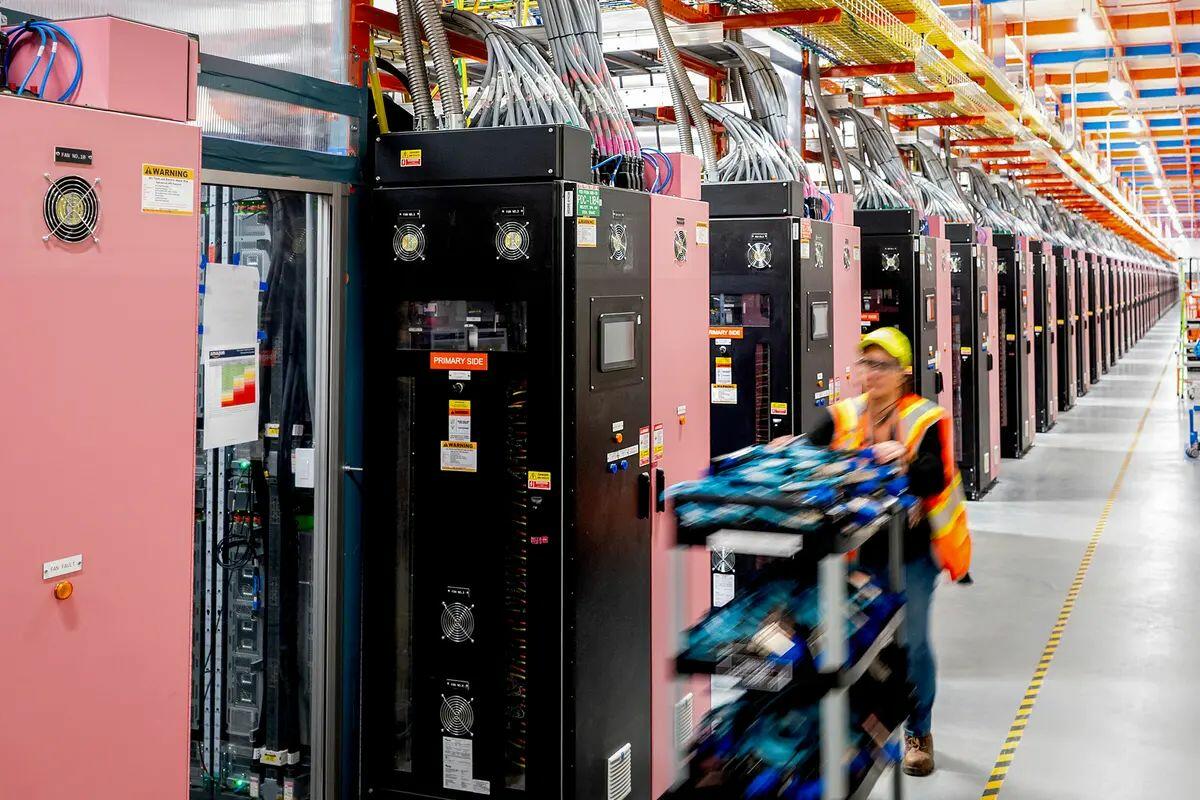
Digital hubs that process AI use massive amounts of resources. Data centers used 4.4 percent of the country’s electricity in 2023, according to the U.S. Department of Energy. By 2028, data center demand is expected to swell to up to 12 percent of total electricity usage across the country.
Large data centers use up to five million gallons of water per day. That’s about the same amount used by a town of 10,000–50,000 people, according to the Washington-based Environmental and Energy Study Institute.
DeSantis acknowledged that hyperscale data centers, as they’re known, can bring jobs and add lots of tax money to state coffers. But they need careful regulation, he said.
A related
he’s pushing would prohibit taxpayer subsidies for Big Tech, would hold down energy costs, and would give local governments the option of turning away proposed development of the massive facilities needed to support AI workloads.
That bill would strengthen protections of Florida’s natural environment. And it would prohibit electric, gas, and water utilities from charging Florida residents more, as growing data centers demand more energy and water.
As AI use grows, Floridians likely will lose jobs, he said. Amazon announced on Jan. 28 that it would be cutting 16,000 jobs. The company increasingly uses AI in its operations.
Yet taxpayers facing job-loss to AI often are forced to help pay for AI expansion through federal subsidies to data centers, DeSantis said.
That could lead to “a generation of college students” who “won’t be able to find jobs,” he said. “That’s not going to be good for our society.”
DeSantis also described his concern that “whoever is controlling the data sets—they’re going to have a huge amount of power, the more pervasive these applications are in society.”
“And human nature being what it is—they will abuse that power. That will happen. And so, we need to have some protections against that abuse of power.”
That power, put under the control of a “handful of tech companies,” could be “more significant than has ever been wielded by a king or a president,” DeSantis told The Epoch Times.
Protecting Privacy
Some of the proposed legislation would reinforce protections Florida previously passed against so-called “deepfakes” and explicit AI-created materials, including those depicting minors.
Deepfakes are realistic-looking images, videos, or audio recordings altered to make them appear as if a person has done or said something he or she didn’t do or say. Using AI, deepfakes can mimic a person’s likeness or voice well enough to fool others into believing they’re real.
The legislation would prohibit using AI to depict an individual without consent, such as in an advertisement or criminal scheme. And it would require notice when a person is interacting with AI, such as in a chatbot.
Chatbots simulate human conversations, often in customer service phone calls or messaging tools.
The new measure would prohibit state and local government agencies from using AI tools created by “foreign countries of concern,” such as China. And it would require what’s put into AI platforms by users to be kept private and block it from being sold.
DeSantis’s proposal would also prohibit businesses from offering what they call “licensed” therapy or mental health counseling to clients who interact with AI for that care.
And it would establish controls allowing children’s conversations with AI to be limited and monitored by parents. If a child “exhibits concerning behavior” when interacting with AI, the legislation would require that parents be notified.
The legislation also would limit how insurance companies use AI to decide on whether to pay insurance claims.
Data Center Demands
Around the world, there’s been widespread concern that facilities needed to support AI may affect the environment, natural resources, and the health of people living nearby in negative ways.
Digital hubs that process AI use massive amounts of resources. Data centers used 4.4 percent of the country’s electricity in 2023, according to the U.S. Department of Energy. By 2028, data center demand is expected to swell to up to 12 percent of total electricity usage across the country.
Large data centers use up to five million gallons of water per day. That’s about the same amount used by a town of 10,000–50,000 people, according to the Washington-based Environmental and Energy Study Institute.
DeSantis acknowledged that hyperscale data centers, as they’re known, can bring jobs and add lots of tax money to state coffers. But they need careful regulation, he said.
A related
he’s pushing would prohibit taxpayer subsidies for Big Tech, would hold down energy costs, and would give local governments the option of turning away proposed development of the massive facilities needed to support AI workloads.
That bill would strengthen protections of Florida’s natural environment. And it would prohibit electric, gas, and water utilities from charging Florida residents more, as growing data centers demand more energy and water.
As AI use grows, Floridians likely will lose jobs, he said. Amazon announced on Jan. 28 that it would be cutting 16,000 jobs. The company increasingly uses AI in its operations.
Yet taxpayers facing job-loss to AI often are forced to help pay for AI expansion through federal subsidies to data centers, DeSantis said.
That could lead to “a generation of college students” who “won’t be able to find jobs,” he said. “That’s not going to be good for our society.”
DeSantis also described his concern that “whoever is controlling the data sets—they’re going to have a huge amount of power, the more pervasive these applications are in society.”
“And human nature being what it is—they will abuse that power. That will happen. And so, we need to have some protections against that abuse of power.”
That power, put under the control of a “handful of tech companies,” could be “more significant than has ever been wielded by a king or a president,” DeSantis told The Epoch Times.
 Opposition
Officially opposing Florida’s AI Bill of Rights is the Washington-based Computer & Communications Industry Association, an international group representing Google, Meta, and others.
The association sent members of the Florida Senate a letter saying that the proposed legislation “would impose an expansive and fragmented regulatory regime that risks chilling innovation, undermining free expression, and placing Florida significantly out of step with recommended federal and international approaches to artificial intelligence governance.”
The group’s top complaint is that the legislation “contains an overly broad and vague regulatory scope” and that the policies may cause privacy concerns.
Trump has been critical of states’ efforts to impose regulations on AI, too. It’s unclear whether Florida’s proposed AI Bill of Rights and data center restrictions could conflict with an executive
Opposition
Officially opposing Florida’s AI Bill of Rights is the Washington-based Computer & Communications Industry Association, an international group representing Google, Meta, and others.
The association sent members of the Florida Senate a letter saying that the proposed legislation “would impose an expansive and fragmented regulatory regime that risks chilling innovation, undermining free expression, and placing Florida significantly out of step with recommended federal and international approaches to artificial intelligence governance.”
The group’s top complaint is that the legislation “contains an overly broad and vague regulatory scope” and that the policies may cause privacy concerns.
Trump has been critical of states’ efforts to impose regulations on AI, too. It’s unclear whether Florida’s proposed AI Bill of Rights and data center restrictions could conflict with an executive  he signed a week after DeSantis announced the proposed legislation.
Among other things, the White House directive instructs federal agencies to identify states with “onerous laws” affecting AI and to restrict some of their federal funding. The order focuses on establishing a nationwide framework for AI, so states’ differing laws don’t create a “patchwork of 50 different regulatory regimes.”
It aims to eliminate “cumbersome regulation” for AI companies and seeks to foster innovation within the area so that the United States “wins the AI race.”
Until Congress passes a national standard for AI, the administration will challenge “excessive” state laws that hinder AI innovation, Trump’s order states.
The framework passed by Congress “must forbid state laws that conflict with policy set forth in this order,” and also should “ensure children are protected, censorship is prevented, copyrights are respected, and communities are safeguarded.”
“We remain in the earliest days of this technological revolution and are in a race with adversaries for supremacy within it,” the order says.
Last year, state lawmakers across the nation introduced more than 1,000 bills related to AI, with 38 states adopting laws targeting the technology, according to a recent report from the Cato Institute. In addition to Florida, laws in California, New York, and Texas could be affected by Trump’s order, which specifically calls out a Colorado statute prohibiting algorithmic discrimination.
AI Aversion
Opposition to unchecked AI continues to grow within the United States and internationally.
As of Feb. 4, more than 800 artists, writers, and actors signed on to a new anti-AI campaign in which they call for an end to the “theft” of their work.
Read the rest
Fri, 02/06/2026 - 19:15
he signed a week after DeSantis announced the proposed legislation.
Among other things, the White House directive instructs federal agencies to identify states with “onerous laws” affecting AI and to restrict some of their federal funding. The order focuses on establishing a nationwide framework for AI, so states’ differing laws don’t create a “patchwork of 50 different regulatory regimes.”
It aims to eliminate “cumbersome regulation” for AI companies and seeks to foster innovation within the area so that the United States “wins the AI race.”
Until Congress passes a national standard for AI, the administration will challenge “excessive” state laws that hinder AI innovation, Trump’s order states.
The framework passed by Congress “must forbid state laws that conflict with policy set forth in this order,” and also should “ensure children are protected, censorship is prevented, copyrights are respected, and communities are safeguarded.”
“We remain in the earliest days of this technological revolution and are in a race with adversaries for supremacy within it,” the order says.
Last year, state lawmakers across the nation introduced more than 1,000 bills related to AI, with 38 states adopting laws targeting the technology, according to a recent report from the Cato Institute. In addition to Florida, laws in California, New York, and Texas could be affected by Trump’s order, which specifically calls out a Colorado statute prohibiting algorithmic discrimination.
AI Aversion
Opposition to unchecked AI continues to grow within the United States and internationally.
As of Feb. 4, more than 800 artists, writers, and actors signed on to a new anti-AI campaign in which they call for an end to the “theft” of their work.
Read the rest
Fri, 02/06/2026 - 19:15
The Epoch Times
Why DeSantis Believes AI Needs Tight Regulation Now
The governor aims to spend his political capital to see guardrails put on the pervasive and rapidly expanding tech before leaving office in a year.
The 47-year-old Republican is in the last year of his second four-year term as governor, making him ineligible to run again.
So he’s spending his political capital as he runs “through the tape,” he told The Epoch Times during an interview at the Florida Governor’s Mansion.
He’s hoping for this prize—for lawmakers to pass his proposed AI Bill of Rights. He said it’s needed to protect Floridians and the state’s natural resources from potential harms of unrestricted and explosive growth of artificial intelligence.
Senate Bill 482, dubbed the AI Bill of Rights, and the identical House Bill 1395 are taking separate journeys through the Florida Legislature, being examined by committees in both chambers. Lawmakers have until mid-March to pass the legislation.
DeSantis hopes they’ll pass, be merged into one bill, and sent to his desk for his signature, along with another bill meant to regulate the growth of data centers needed to power AI.
The governor realizes this legislative push may set him up for clashes with President Donald Trump, who has called for states not to meddle much in regulating AI. He and Trump, a former political mentor who helped DeSantis get elected in 2018, have vacillated between being allies and adversaries, with a warming of relations in the past year.
But DeSantis, a Harvard-trained lawyer, former congressman, and father of three young children, says curbing the creep of AI can’t wait.
Guardrails are needed now, he said, to protect the state’s people, jobs, economy, and environment from harm.
In December 2025, DeSantis announced his proposal for the AI Bill of Rights, which covers data privacy, parental controls for children’s interactions with AI, requirements for consumers to be alerted when dealing with AI, and much more.
The measure is needed, he said, because rapidly expanding AI technology already infiltrates daily life in everything from retail purchases to medical care. And often, people don’t realize they’re interacting with a technological tool, rather than a human, he said.
“Any new technology, as it’s developed, needs to be developed in an ethical way, in a moral way, and it’s got to reinforce our values as Americans,” DeSantis said. “And it cannot be something that is seeking to supplant the human experience. It needs to enhance the human experience.
“I get very nervous when I hear these people talk about this transhumanism as where somehow humans aren’t going to be in control, and the AI is going to rule the world,” he said.
That goes against what it means to be an American, he said.
“Our Founding Fathers, 250 years ago—they set forth the rule: We’re endowed by our Creator with certain inalienable rights, not [by] machines.”
He said “there’s a lot of good that can come with technological innovation,” such as in medicine and national defense. “We welcome that in these particular areas, but there’s also really big downsides.”
Protecting Privacy
Some of the proposed legislation would reinforce protections Florida previously passed against so-called “deepfakes” and explicit AI-created materials, including those depicting minors.
Deepfakes are realistic-looking images, videos, or audio recordings altered to make them appear as if a person has done or said something he or she didn’t do or say. Using AI, deepfakes can mimic a person’s likeness or voice well enough to fool others into believing they’re real.
The legislation would prohibit using AI to depict an individual without consent, such as in an advertisement or criminal scheme. And it would require notice when a person is interacting with AI, such as in a chatbot.
Chatbots simulate human conversations, often in customer service phone calls or messaging tools.
The new measure would prohibit state and local government agencies from using AI tools created by “foreign countries of concern,” such as China. And it would require what’s put into AI platforms by users to be kept private and block it from being sold.
DeSantis’s proposal would also prohibit businesses from offering what they call “licensed” therapy or mental health counseling to clients who interact with AI for that care.
And it would establish controls allowing children’s conversations with AI to be limited and monitored by parents. If a child “exhibits concerning behavior” when interacting with AI, the legislation would require that parents be notified.
The legislation also would limit how insurance companies use AI to decide on whether to pay insurance claims.
Data Center Demands
Around the world, there’s been widespread concern that facilities needed to support AI may affect the environment, natural resources, and the health of people living nearby in negative ways.
Digital hubs that process AI use massive amounts of resources. Data centers used 4.4 percent of the country’s electricity in 2023, according to the U.S. Department of Energy. By 2028, data center demand is expected to swell to up to 12 percent of total electricity usage across the country.
Large data centers use up to five million gallons of water per day. That’s about the same amount used by a town of 10,000–50,000 people, according to the Washington-based Environmental and Energy Study Institute.
DeSantis acknowledged that hyperscale data centers, as they’re known, can bring jobs and add lots of tax money to state coffers. But they need careful regulation, he said.
A related Senate Bill 484 (2026) - The Florida Senate
Opposition
Officially opposing Florida’s AI Bill of Rights is the Washington-based Computer & Communications Industry Association, an international group representing Google, Meta, and others.
The association sent members of the Florida Senate a letter saying that the proposed legislation “would impose an expansive and fragmented regulatory regime that risks chilling innovation, undermining free expression, and placing Florida significantly out of step with recommended federal and international approaches to artificial intelligence governance.”
The group’s top complaint is that the legislation “contains an overly broad and vague regulatory scope” and that the policies may cause privacy concerns.
Trump has been critical of states’ efforts to impose regulations on AI, too. It’s unclear whether Florida’s proposed AI Bill of Rights and data center restrictions could conflict with an executive The White House
Ensuring a National Policy Framework for Artificial Intelligence
By the authority vested in me as President by the Constitution and the laws of the United States of America, it is hereby ordered: Section 1. Pur...
The Epoch Times
Why DeSantis Believes AI Needs Tight Regulation Now
The governor aims to spend his political capital to see guardrails put on the pervasive and rapidly expanding tech before leaving office in a year.
Tyler Durden | Zero Hedge
Zero Hedge
Why DeSantis Believes AI Needs Tight Regulation Now | ZeroHedge
ZeroHedge - On a long enough timeline, the survival rate for everyone drops to zero
 The nonpartisan group released

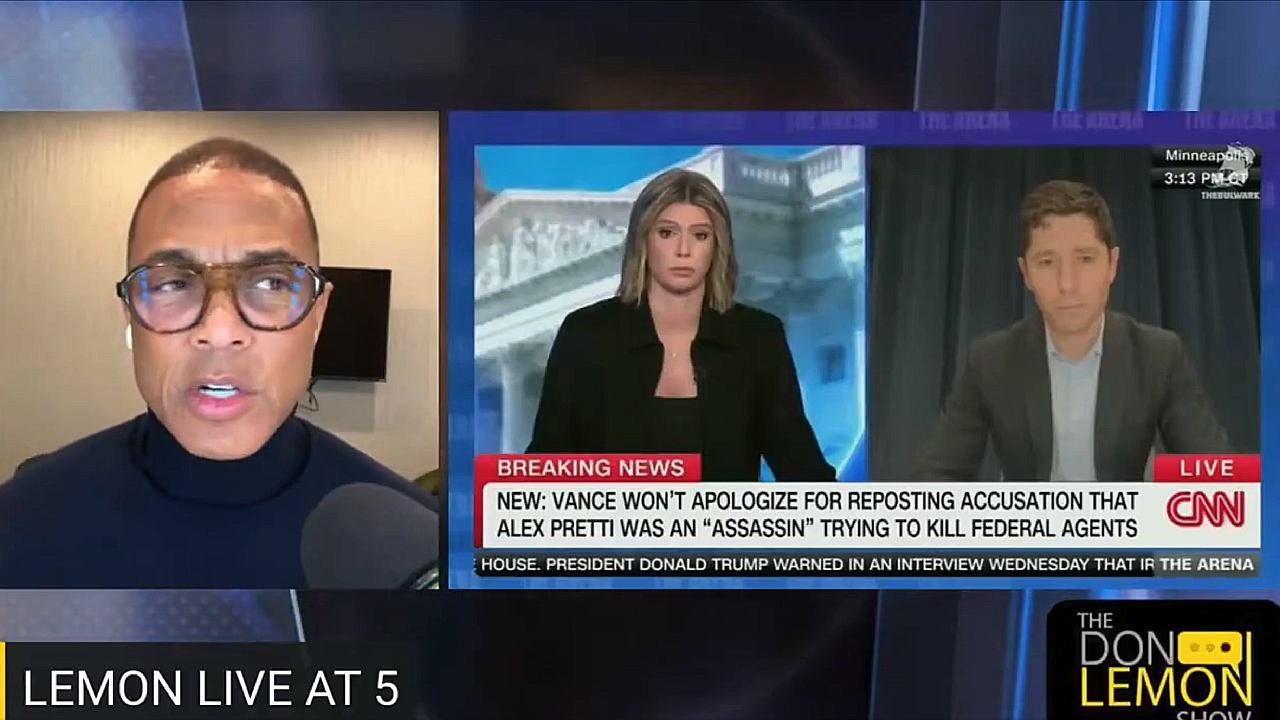
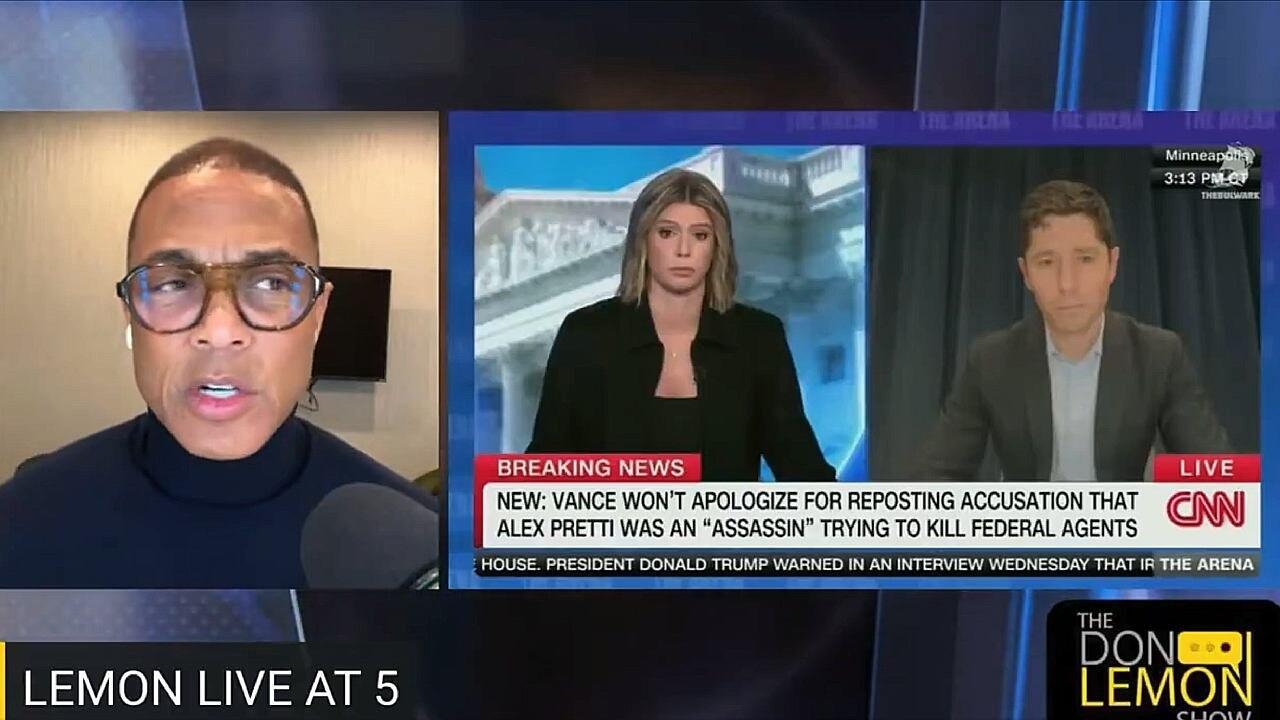 Lemon labeled Vance a “vile human being” for refusing to apologize over a reposted tweet, while insisting HE is the real Christian.
This latest outburst comes amid Lemon’s ongoing legal troubles, where prosecutors accuse him of conspiring to interfere with religious freedoms under the FACE Act.
Don Lemon calls out JD Vance: “This is a vile human being. It’s not that hard, all he would have to say is I am sorry, no one should die that way. Why can’t you do that JD Vance? Do you have to kiss Donald Trump’s ring and his butt that much that you have to forgo your humanity?…
Lemon labeled Vance a “vile human being” for refusing to apologize over a reposted tweet, while insisting HE is the real Christian.
This latest outburst comes amid Lemon’s ongoing legal troubles, where prosecutors accuse him of conspiring to interfere with religious freedoms under the FACE Act.
Don Lemon calls out JD Vance: “This is a vile human being. It’s not that hard, all he would have to say is I am sorry, no one should die that way. Why can’t you do that JD Vance? Do you have to kiss Donald Trump’s ring and his butt that much that you have to forgo your humanity?… 




 To him, the area is a hidden gem, far from urban crime and congestion. Families thrive, kids play and go to school safely, and neighbors look out for each other.
He had no idea that one of these homes was hiding a secret that could threaten public health.
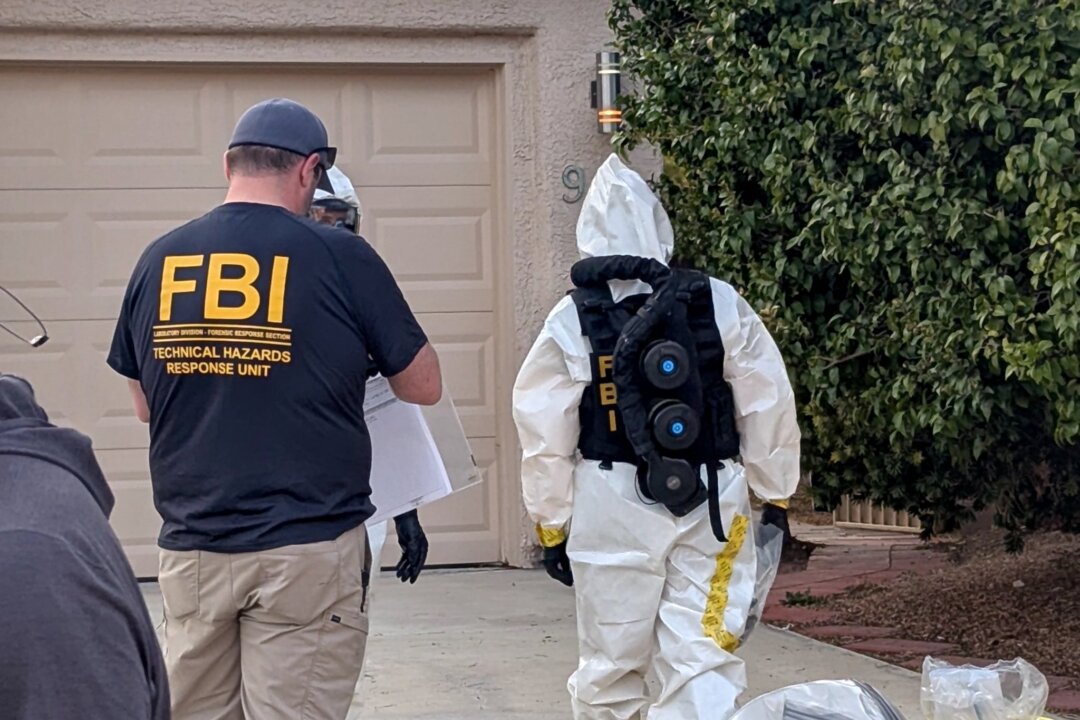
On Jan. 31, Las Vegas Metropolitan Police and SWAT teams raided the house at 979 Sugar Springs Drive, a place Contreras passes every day.
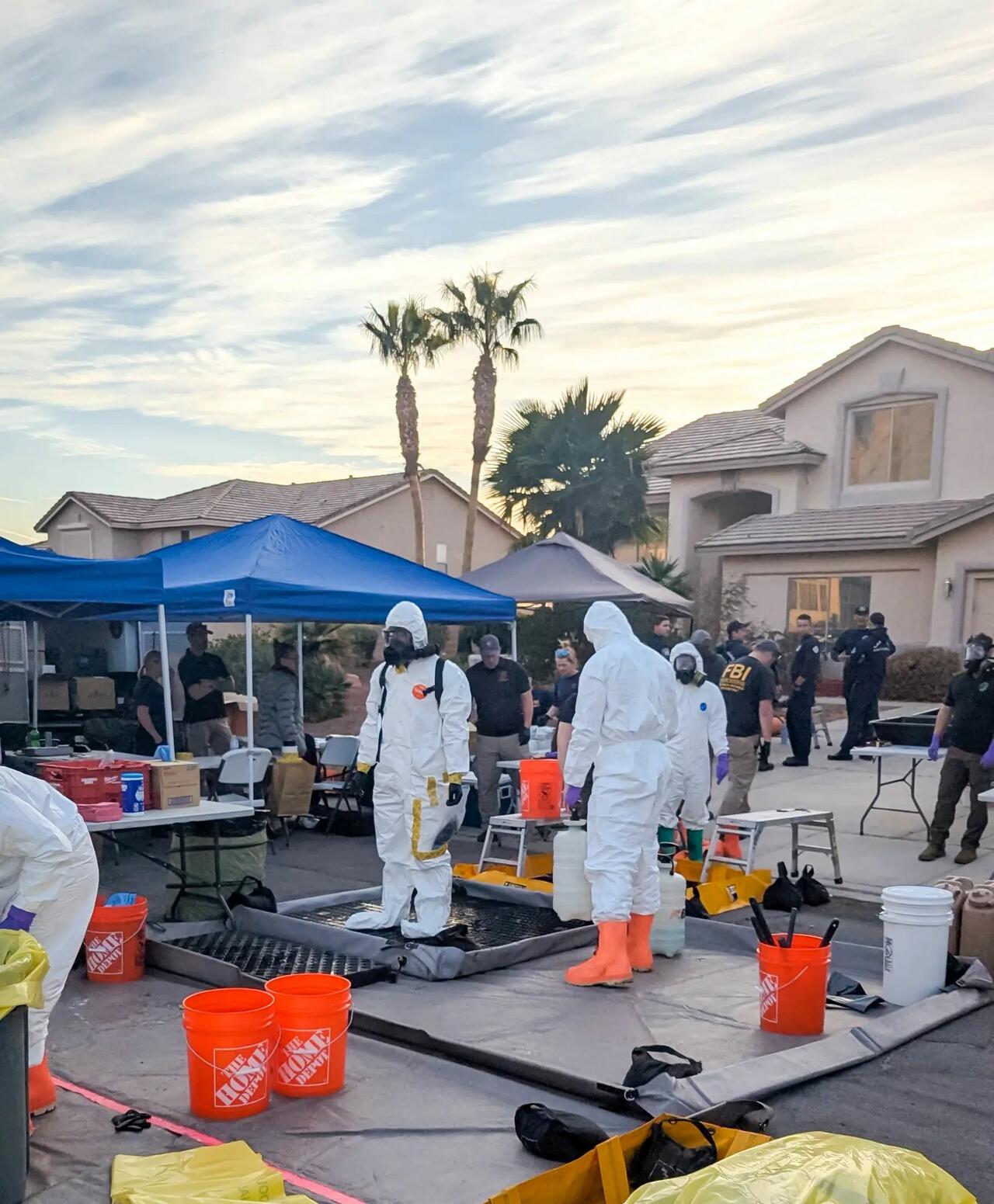
Inside the garage, they discovered a suspected biological laboratory containing a freezer, several refrigerators, a centrifuge and other specialized equipment, and over 1,000 vials and gallon-sized containers of unknown red and brown liquids.
“That’s kind of scary,” Contreras, who lives about two blocks away, told The Epoch Times. “You don’t know what the hell is in that stuff.”
“Now, you know it can happen in any neighborhood—even the quietest,” he said.
The discovery has left residents feeling unsettled and unsure. Some are asking how this suspected biolab went unnoticed, possibly as long as three years, in an active crime watch community.
A crime watch community is one in which residents partner with local law enforcement to reduce crime through increased surveillance, reporting, and, in some cases, technology.
“I feel they shouldn’t have let it go on,” said Kathy, who gave only her first name, as she walked her dog near the now-empty home.
“It’s scary. It’s really easy to operate under the radar here.”
Cody Human, who owns a tree trimming service in Las Vegas, said he and his crew had planned to work at the house next door on the day of the raid.
However, when they arrived, they saw police officers and hazmat-suited personnel throughout the property.
“If I lived in this neighborhood, I would definitely be scared,” Human told The Epoch Times as he resumed work on Feb. 3.
To him, the area is a hidden gem, far from urban crime and congestion. Families thrive, kids play and go to school safely, and neighbors look out for each other.
He had no idea that one of these homes was hiding a secret that could threaten public health.
On Jan. 31, Las Vegas Metropolitan Police and SWAT teams raided the house at 979 Sugar Springs Drive, a place Contreras passes every day.
Inside the garage, they discovered a suspected biological laboratory containing a freezer, several refrigerators, a centrifuge and other specialized equipment, and over 1,000 vials and gallon-sized containers of unknown red and brown liquids.
“That’s kind of scary,” Contreras, who lives about two blocks away, told The Epoch Times. “You don’t know what the hell is in that stuff.”
“Now, you know it can happen in any neighborhood—even the quietest,” he said.
The discovery has left residents feeling unsettled and unsure. Some are asking how this suspected biolab went unnoticed, possibly as long as three years, in an active crime watch community.
A crime watch community is one in which residents partner with local law enforcement to reduce crime through increased surveillance, reporting, and, in some cases, technology.
“I feel they shouldn’t have let it go on,” said Kathy, who gave only her first name, as she walked her dog near the now-empty home.
“It’s scary. It’s really easy to operate under the radar here.”
Cody Human, who owns a tree trimming service in Las Vegas, said he and his crew had planned to work at the house next door on the day of the raid.
However, when they arrived, they saw police officers and hazmat-suited personnel throughout the property.
“If I lived in this neighborhood, I would definitely be scared,” Human told The Epoch Times as he resumed work on Feb. 3.
 “Anything like that is scary, especially for neighborhoods like this that have kids and families,” he said.
“I mean, this neighborhood is known as a family-oriented neighborhood. You’ve got churches. This is one of the better neighborhoods. It’s very clean, very quiet.”
Meanwhile, a team of local, state, and federal investigators is working to identify the materials seized from the suspected biolab and their purpose.
“We recognize that the public is seeking clarity,” Clark County Sheriff Kevin McMahill told reporters on Feb. 2. “What were they testing for? What possibilities are being considered?”
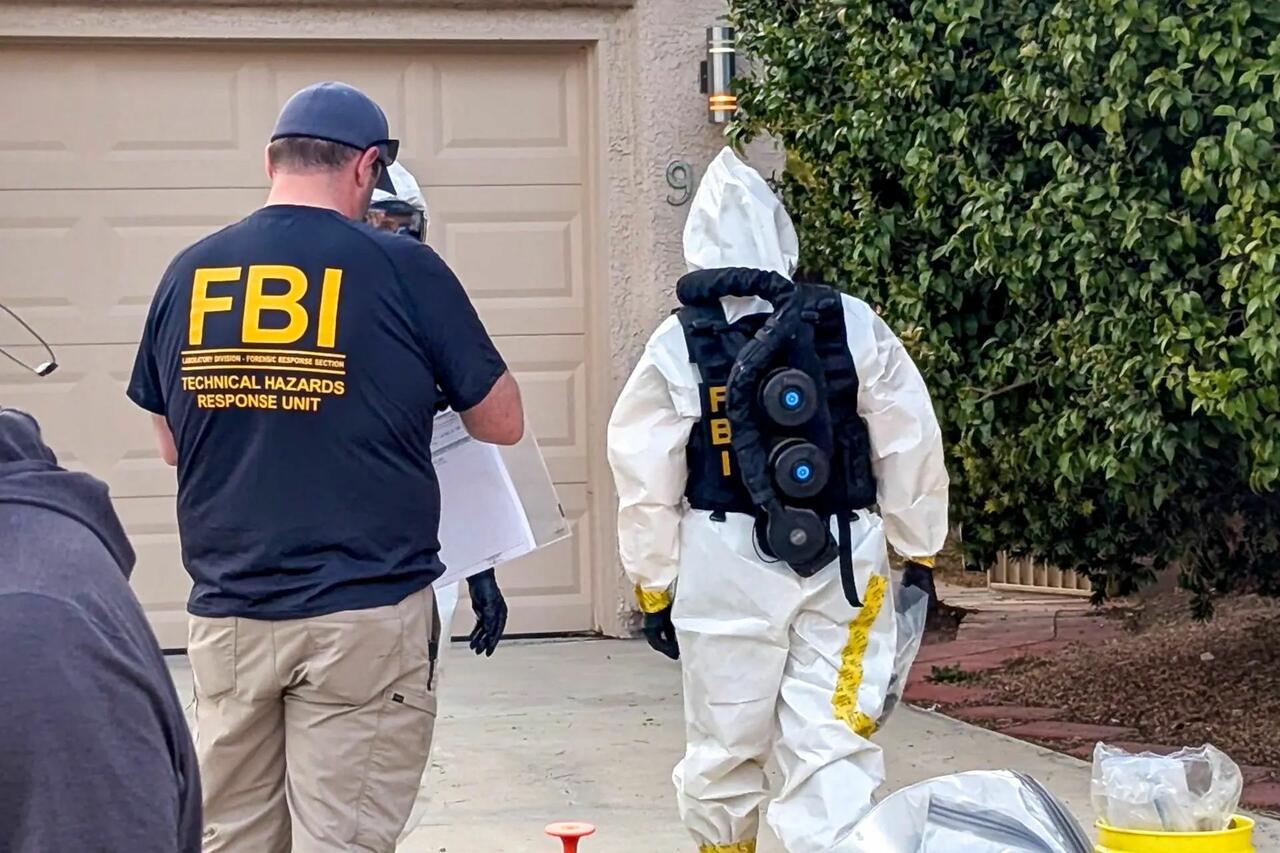
FBI scientists and specialized evidence teams entered the garage, where they opened the refrigerators and a freezer to inspect their contents.
Some items appeared to have been used to store biological and chemical materials, McMahill said.
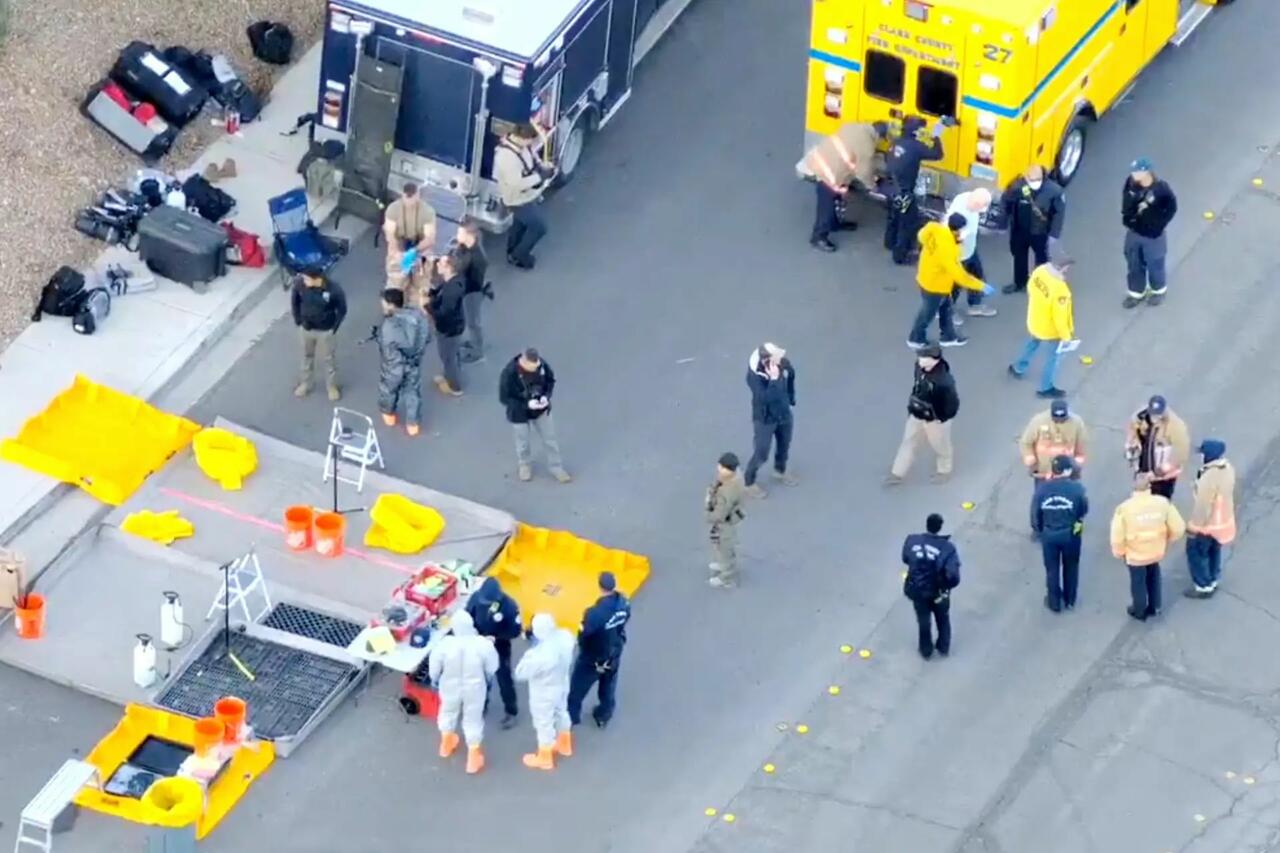
The joint investigation involved multiple agencies and a “layered use of technology,” including Las Vegas Metropolitan Police Department drones and a robotic dog, to assess environmental conditions at the residence to limit risk of exposure to potential pathogens.
“Anything like that is scary, especially for neighborhoods like this that have kids and families,” he said.
“I mean, this neighborhood is known as a family-oriented neighborhood. You’ve got churches. This is one of the better neighborhoods. It’s very clean, very quiet.”
Meanwhile, a team of local, state, and federal investigators is working to identify the materials seized from the suspected biolab and their purpose.
“We recognize that the public is seeking clarity,” Clark County Sheriff Kevin McMahill told reporters on Feb. 2. “What were they testing for? What possibilities are being considered?”
FBI scientists and specialized evidence teams entered the garage, where they opened the refrigerators and a freezer to inspect their contents.
Some items appeared to have been used to store biological and chemical materials, McMahill said.
The joint investigation involved multiple agencies and a “layered use of technology,” including Las Vegas Metropolitan Police Department drones and a robotic dog, to assess environmental conditions at the residence to limit risk of exposure to potential pathogens.
 McMahill said investigators collected more than 1,000 pieces of evidence and stored them temporarily at the Southern Nevada Health District building.
On Feb. 2, FBI agents transported the materials by aircraft to the National Bioforensic Analysis Center in Maryland, according to Christopher Delzotto, special agent in charge of the investigation at the FBI’s Las Vegas office.
McMahill said the Sugar Springs Drive home is owned by David Destiny Discovery LLC, whose principal is David He, the same person
McMahill said investigators collected more than 1,000 pieces of evidence and stored them temporarily at the Southern Nevada Health District building.
On Feb. 2, FBI agents transported the materials by aircraft to the National Bioforensic Analysis Center in Maryland, according to Christopher Delzotto, special agent in charge of the investigation at the FBI’s Las Vegas office.
McMahill said the Sugar Springs Drive home is owned by David Destiny Discovery LLC, whose principal is David He, the same person 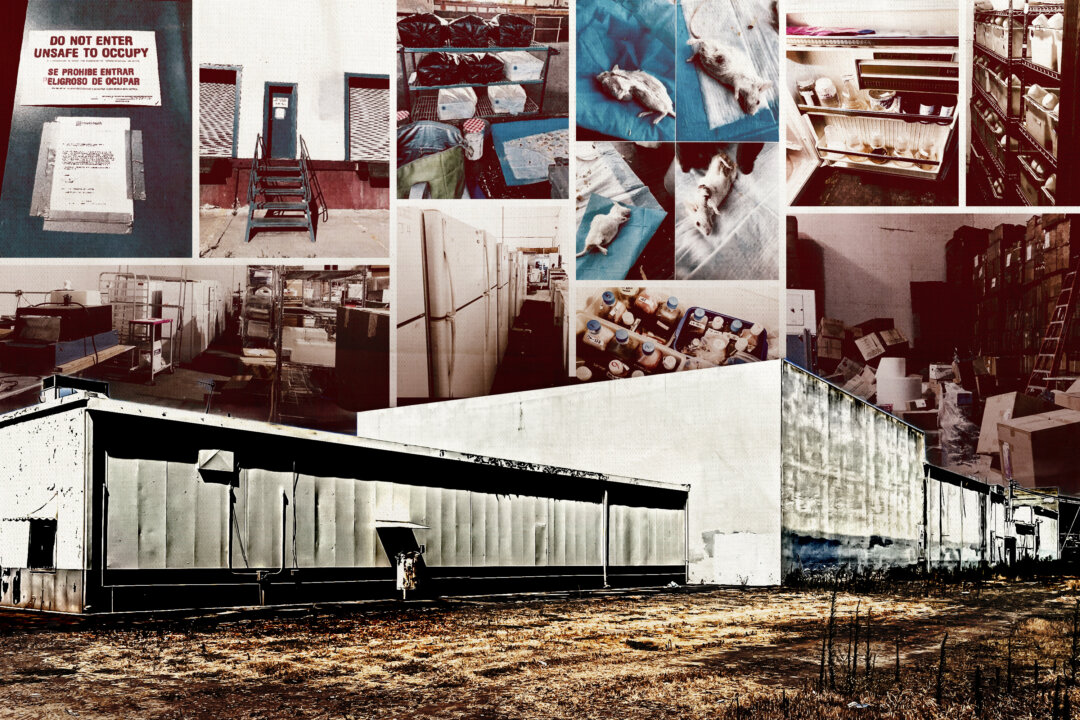
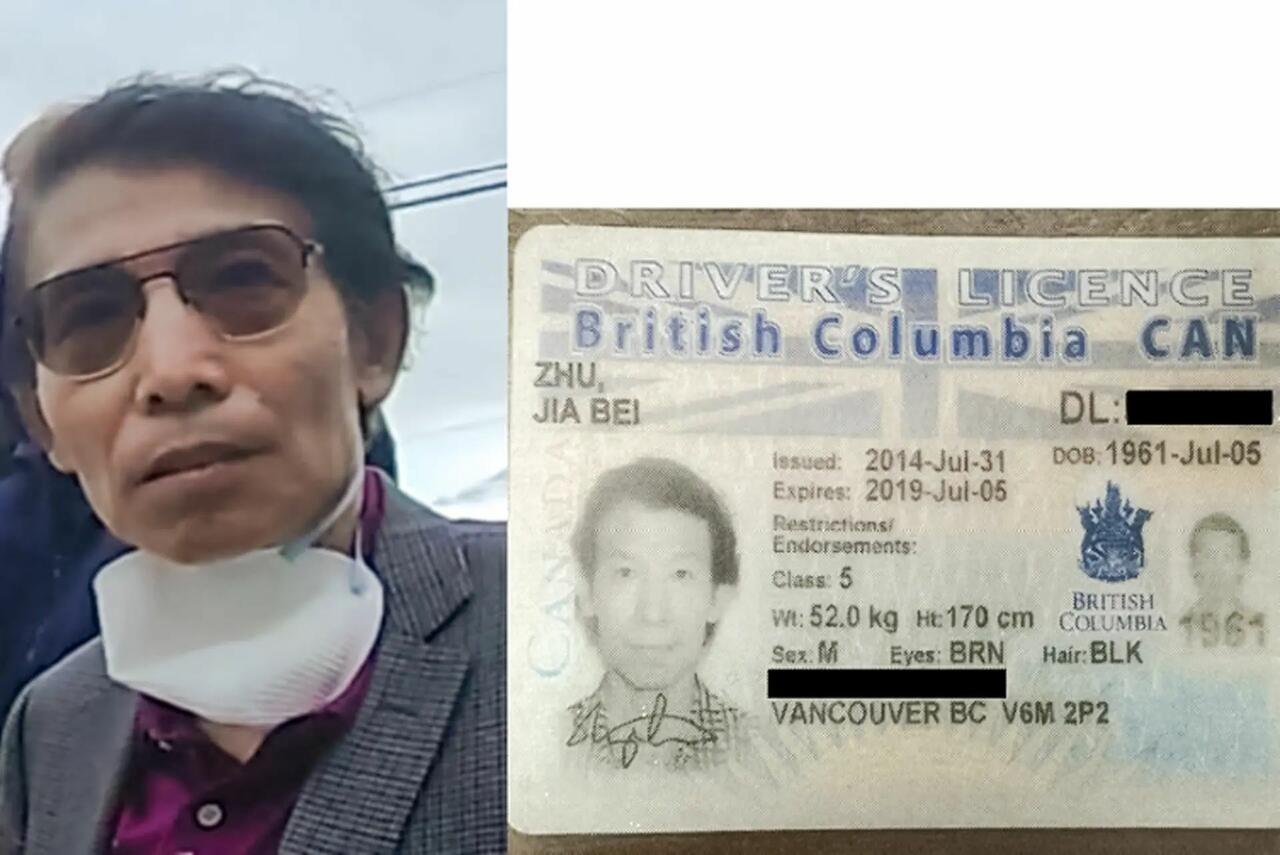 The Justice Department releases a photo of Jia Bei Zhu, arrested in connection with an illegal Chinese biolab in Reedley, Calif., on Oct. 19, 2023. Department of Justice
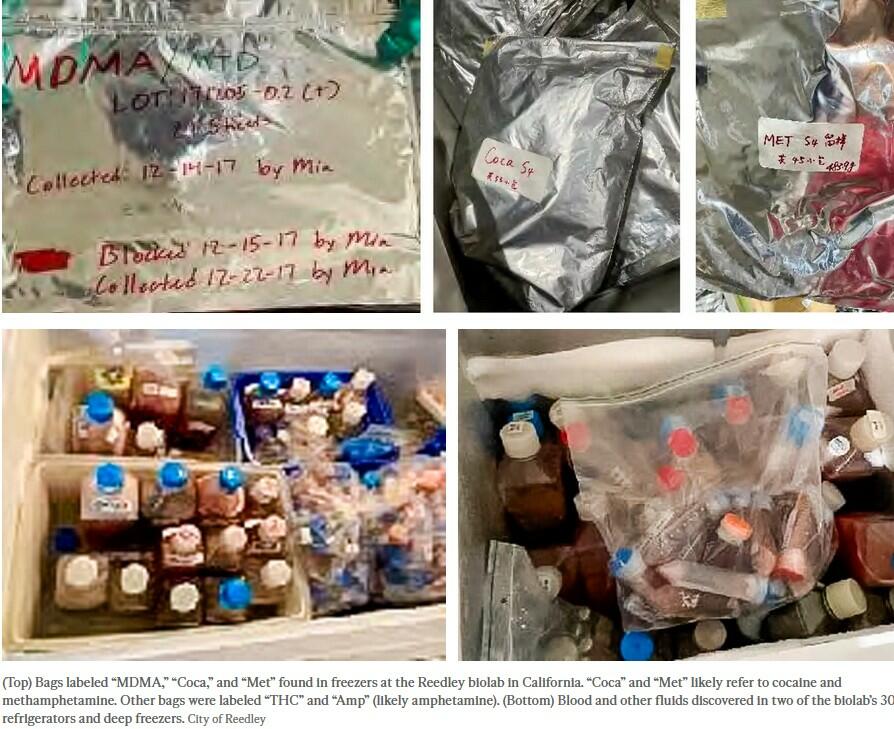
Investigators at the Reedley biolab found materials possibly linked to infectious diseases, including hepatitis, COVID-19, HIV, malaria, and other dangerous pathogens, McMahill said.
Police have named He as a suspect in the Las Vegas case, and said federal authorities were already holding him because of charges related to the 2023 investigation.
A second suspect, Ori Salomon, 55, a nonimmigrant foreign national, was also arrested in the Las Vegas investigation. Salomon, who also spells his surname as Solomon, manages the home on Sugar Springs Drive and a nearby house on Temple View Drive.
Police booked Salomon at the Clark County Detention Center for disposing of and releasing dangerous waste, and he was released on $3,000 bail. Salomon is also facing a federal felony charge of possession of a firearm by a prohibited person.
The Justice Department releases a photo of Jia Bei Zhu, arrested in connection with an illegal Chinese biolab in Reedley, Calif., on Oct. 19, 2023. Department of Justice
Investigators at the Reedley biolab found materials possibly linked to infectious diseases, including hepatitis, COVID-19, HIV, malaria, and other dangerous pathogens, McMahill said.
Police have named He as a suspect in the Las Vegas case, and said federal authorities were already holding him because of charges related to the 2023 investigation.
A second suspect, Ori Salomon, 55, a nonimmigrant foreign national, was also arrested in the Las Vegas investigation. Salomon, who also spells his surname as Solomon, manages the home on Sugar Springs Drive and a nearby house on Temple View Drive.
Police booked Salomon at the Clark County Detention Center for disposing of and releasing dangerous waste, and he was released on $3,000 bail. Salomon is also facing a federal felony charge of possession of a firearm by a prohibited person.
 His next court appearance is scheduled for March 4.
The sheriff said the Reedley investigation raised significant concerns about what local authorities might encounter at the Sugar Springs Drive property.
“While it is unknown whether similar materials were present here at the Las Vegas residence, the possibility required us to proceed with extreme caution,” McMahill said.
On Jan. 31, the FBI also executed a search warrant at the property on Temple View Drive, where several people resided, but found no illegal biological materials inside.
When police went into the property on Sugar Springs Drive, they found three people living in different rooms they were renting. These people are not involved in the current investigation, McMahill said.
His next court appearance is scheduled for March 4.
The sheriff said the Reedley investigation raised significant concerns about what local authorities might encounter at the Sugar Springs Drive property.
“While it is unknown whether similar materials were present here at the Las Vegas residence, the possibility required us to proceed with extreme caution,” McMahill said.
On Jan. 31, the FBI also executed a search warrant at the property on Temple View Drive, where several people resided, but found no illegal biological materials inside.
When police went into the property on Sugar Springs Drive, they found three people living in different rooms they were renting. These people are not involved in the current investigation, McMahill said.
 According to county documents obtained by The Epoch Times, David Destiny Discovery purchased the Sugar Springs Drive property in October 2022 from Wang Zhaoyan, who was connected to companies involved in the Reedley case.
Read the rest
According to county documents obtained by The Epoch Times, David Destiny Discovery purchased the Sugar Springs Drive property in October 2022 from Wang Zhaoyan, who was connected to companies involved in the Reedley case.
Read the rest 
 But his key caveat is that for dialogue to take place, it must happen "from a position of equals, with respect for our sovereignty, our independence and our self-determination" and without "interference in our internal affairs."
Díaz-Canel
But his key caveat is that for dialogue to take place, it must happen "from a position of equals, with respect for our sovereignty, our independence and our self-determination" and without "interference in our internal affairs."
Díaz-Canel 




 According to Haaretz, President Trump’s son-in-law, Jared Kushner,
 Trade tariffs, combined with rising component costs, especially the explosion in the price of high-bandwidth memory (HBM), are pressuring thin hardware margins for the electronics company.
Goldman analyst Maho Kamiya
Trade tariffs, combined with rising component costs, especially the explosion in the price of high-bandwidth memory (HBM), are pressuring thin hardware margins for the electronics company.
Goldman analyst Maho Kamiya 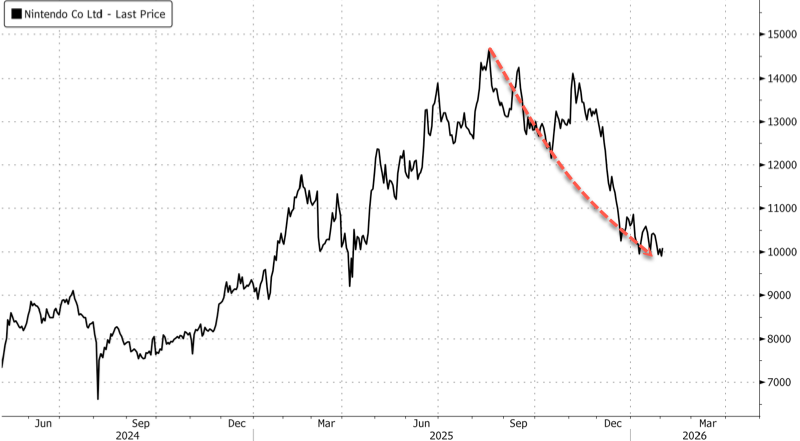 We have outlined a growing list of electronics companies pressured by soaring memory prices, even prompting
 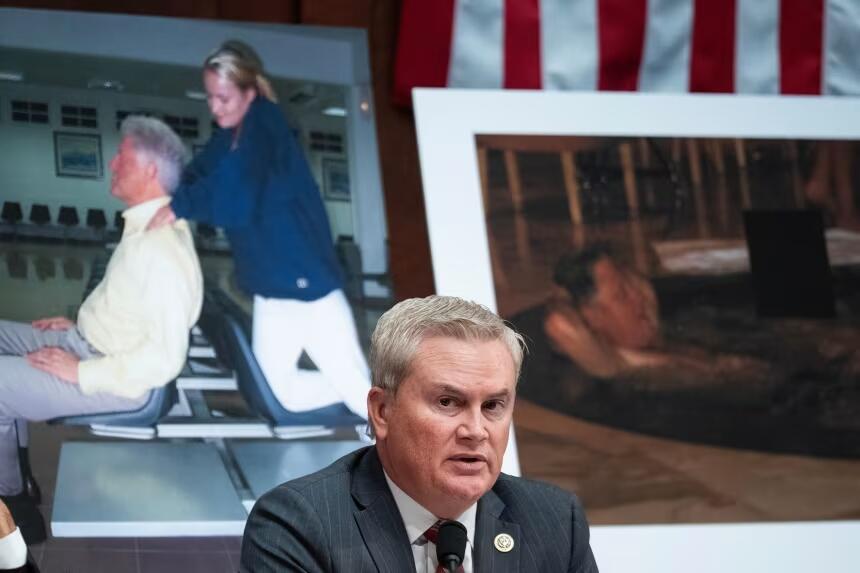 The initial correspondence,
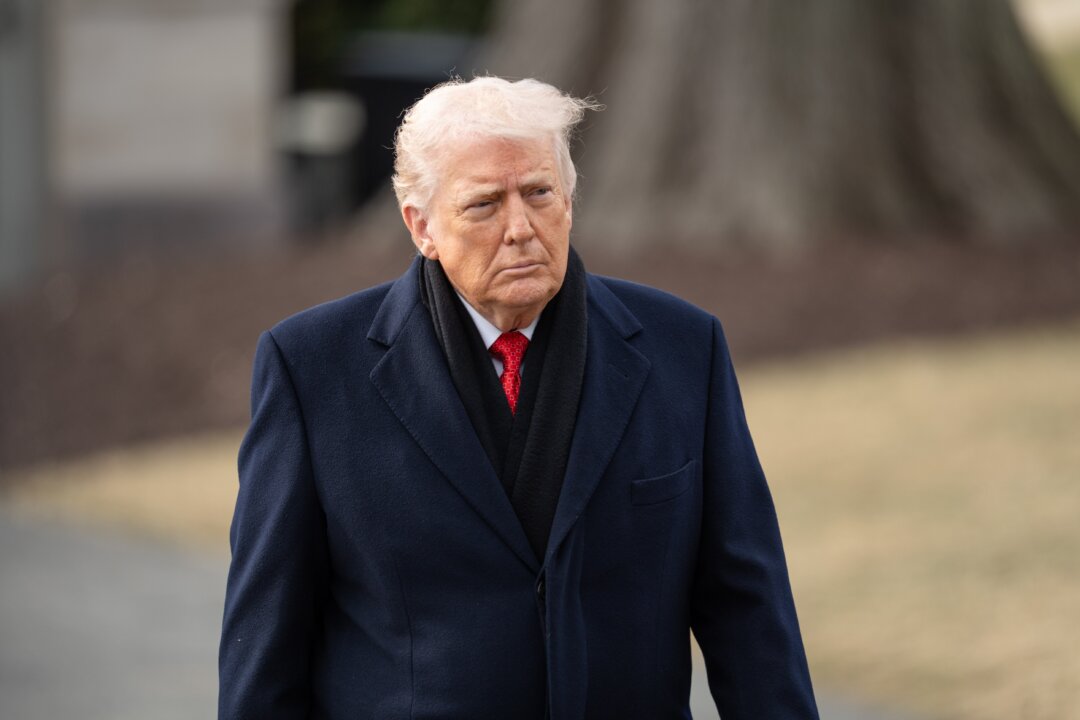
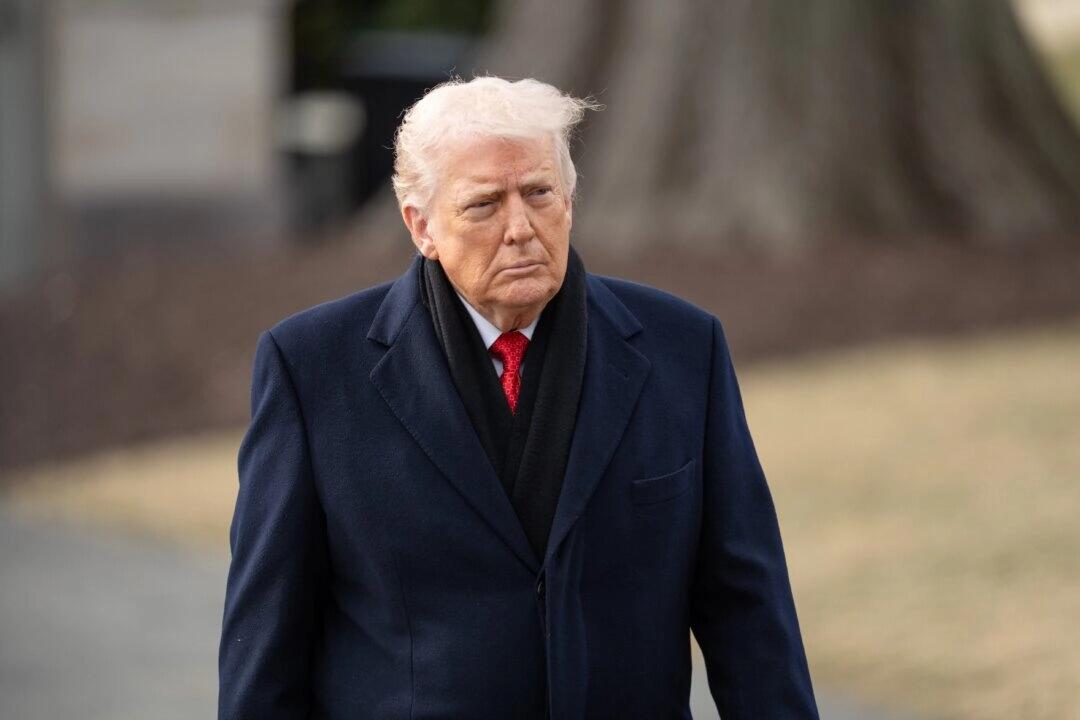 Some Democratic lawmakers
 Earlier Trump told Fox Business Network the deal would essentially bring "total access" for the United States. "There's no end, there's no time limit."
A source familiar with the matter told
Earlier Trump told Fox Business Network the deal would essentially bring "total access" for the United States. "There's no end, there's no time limit."
A source familiar with the matter told