
Year Two Of The Largest Ever Global LNG Supply Wave Is Hitting Markets
Year Two Of The Largest Ever Global LNG Supply Wave Is Hitting Markets
Roughly two and a half months after Goldman's head of Global Commodities Research, Samantha Dart, laid out a timeline for what she called the "
" LNG supply wave to hit global markets, she published a new client note late this week reiterating that the "supply wave is still on track."
"2025 was year one of what we see as the largest ever global LNG supply wave, lasting seven years," Dart began the note, warning that "this wave is the main driver of a lengthy bearish cycle for European natural gas (TTF) and LNG (JKM), which we expect to bottom in 2028/29."
Dart forecasts that TTF and JKM will average below $5/mmBtu by the end of the decade, around 2028-29, compared with current TTF prices of around $41/mmBtu.
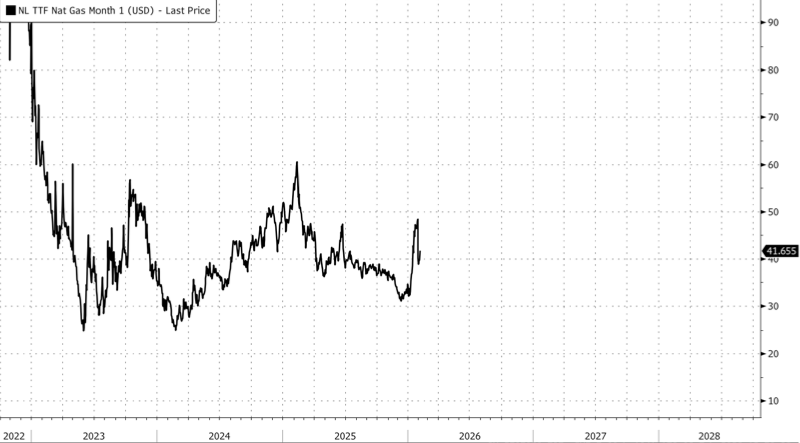 Here is Dart's update on the global LNG supply wave that is in year two, hitting markets:
We see realized 2025 and forecasted 2026 LNG supply largely in line with our previous expectations, despite the recent US disruptions and recent delays to liquefaction capacity starts. Specifically, 2025 global LNG supply averaged 431 mtpa, only marginally below our 433 mtpa expectation as of end-2024, as a large beat in the US (driven by larger-than-expected ramp up at Plaquemines) was ultimately offset by smaller misses across existing LNG producers. We see some of these misses, like for Algeria and Indonesia, as likely structural, owing partly to growing domestic energy demand, and we incorporate further supply losses (-1 mtpa in total initially, but building to -3 mtpa in 2028-2030[1]) in our forward balances.
Global LNG supply has started 2026 below our previous expectations driven by export capacity start delays in the US, Canada, Congo and Australia, though by 4Q26 we expect supply to largely catch up with our earlier numbers.
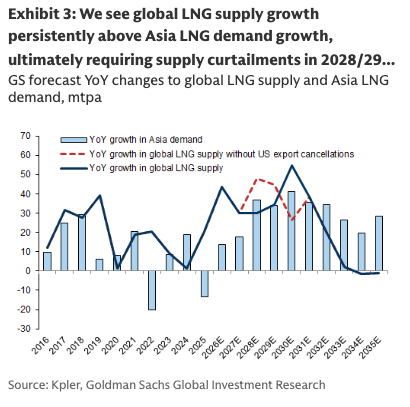
On net, we still expect 2025-to-2030 global LNG supply growth (+193 mtpa, 45% of 2025 global supply) to far exceed Asia demand growth (+144 mtpa), even taking into account our estimated demand response to low gas prices (>40 mtpa from China alone). We expect this oversupply to take European gas storage to congestion, particularly in 2028/29, leaving a temporary price-driven curtailment of US LNG exports as the likely solver of the imbalance in that period, in our view. We note that all but one of the supply projects in our balances through 2029 have already reached a Final Investment Decision (FID)[2].
The largest ever LNG supply wave is underway, and the early leadership is clear: U.S. capacity is ramping fastest and setting the tone for global balances.
Exhibit 18: The LNG supply wave has started.
Here is Dart's update on the global LNG supply wave that is in year two, hitting markets:
We see realized 2025 and forecasted 2026 LNG supply largely in line with our previous expectations, despite the recent US disruptions and recent delays to liquefaction capacity starts. Specifically, 2025 global LNG supply averaged 431 mtpa, only marginally below our 433 mtpa expectation as of end-2024, as a large beat in the US (driven by larger-than-expected ramp up at Plaquemines) was ultimately offset by smaller misses across existing LNG producers. We see some of these misses, like for Algeria and Indonesia, as likely structural, owing partly to growing domestic energy demand, and we incorporate further supply losses (-1 mtpa in total initially, but building to -3 mtpa in 2028-2030[1]) in our forward balances.
Global LNG supply has started 2026 below our previous expectations driven by export capacity start delays in the US, Canada, Congo and Australia, though by 4Q26 we expect supply to largely catch up with our earlier numbers.
On net, we still expect 2025-to-2030 global LNG supply growth (+193 mtpa, 45% of 2025 global supply) to far exceed Asia demand growth (+144 mtpa), even taking into account our estimated demand response to low gas prices (>40 mtpa from China alone). We expect this oversupply to take European gas storage to congestion, particularly in 2028/29, leaving a temporary price-driven curtailment of US LNG exports as the likely solver of the imbalance in that period, in our view. We note that all but one of the supply projects in our balances through 2029 have already reached a Final Investment Decision (FID)[2].
The largest ever LNG supply wave is underway, and the early leadership is clear: U.S. capacity is ramping fastest and setting the tone for global balances.
Exhibit 18: The LNG supply wave has started.
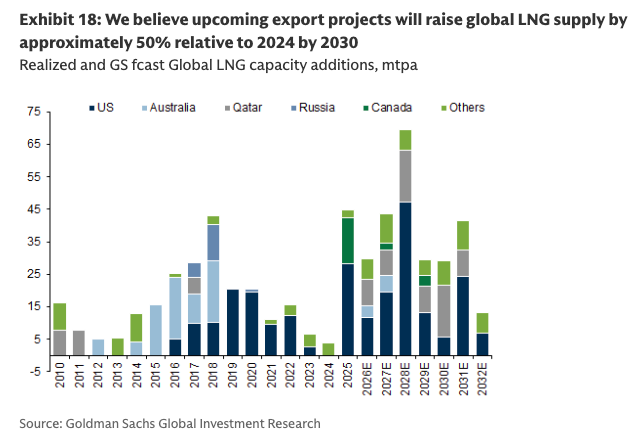 Exhibit 12: Supply growth is being led by the U.S.
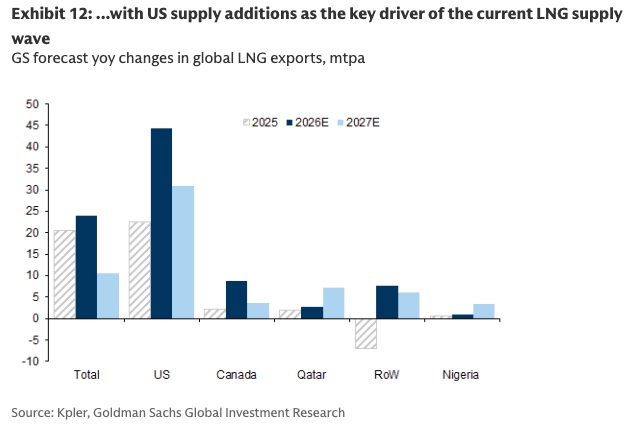 Exhibit 17: U.S. liquefaction start ups and ramp schedules, the core driver of incremental volumes.
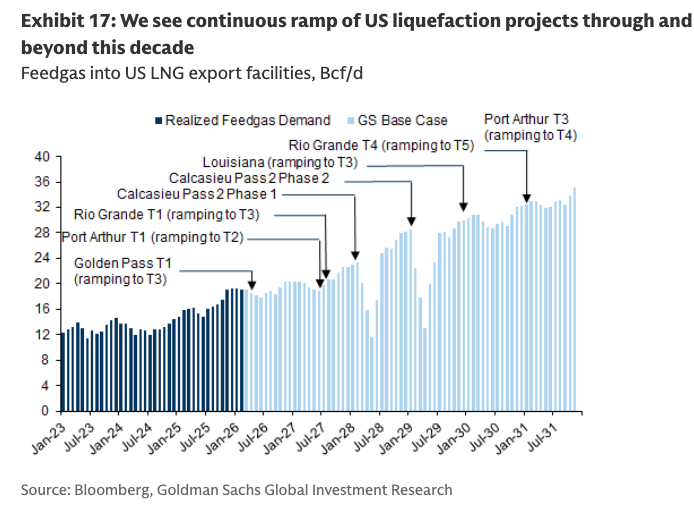 Exhibit 3: Global LNG supply growth remains structurally above Asia demand growth, pushing the market toward a late decade pressure point. In 2028 to 2029, the implied balancing mechanism is supply curtailment, most likely via price driven reductions in US LNG exports as storage and logistics constraints tighten.
 portal.
Sat, 02/07/2026 - 07:35
portal.
Sat, 02/07/2026 - 07:35
Timeline For "Largest-Ever LNG Supply Wave" To Hit Global Markets | ZeroHedge
ZeroHedge - On a long enough timeline, the survival rate for everyone drops to zero
Here is Dart's update on the global LNG supply wave that is in year two, hitting markets:
We see realized 2025 and forecasted 2026 LNG supply largely in line with our previous expectations, despite the recent US disruptions and recent delays to liquefaction capacity starts. Specifically, 2025 global LNG supply averaged 431 mtpa, only marginally below our 433 mtpa expectation as of end-2024, as a large beat in the US (driven by larger-than-expected ramp up at Plaquemines) was ultimately offset by smaller misses across existing LNG producers. We see some of these misses, like for Algeria and Indonesia, as likely structural, owing partly to growing domestic energy demand, and we incorporate further supply losses (-1 mtpa in total initially, but building to -3 mtpa in 2028-2030[1]) in our forward balances.
Global LNG supply has started 2026 below our previous expectations driven by export capacity start delays in the US, Canada, Congo and Australia, though by 4Q26 we expect supply to largely catch up with our earlier numbers.
On net, we still expect 2025-to-2030 global LNG supply growth (+193 mtpa, 45% of 2025 global supply) to far exceed Asia demand growth (+144 mtpa), even taking into account our estimated demand response to low gas prices (>40 mtpa from China alone). We expect this oversupply to take European gas storage to congestion, particularly in 2028/29, leaving a temporary price-driven curtailment of US LNG exports as the likely solver of the imbalance in that period, in our view. We note that all but one of the supply projects in our balances through 2029 have already reached a Final Investment Decision (FID)[2].
The largest ever LNG supply wave is underway, and the early leadership is clear: U.S. capacity is ramping fastest and setting the tone for global balances.
Exhibit 18: The LNG supply wave has started.
Exhibit 12: Supply growth is being led by the U.S.
Exhibit 17: U.S. liquefaction start ups and ramp schedules, the core driver of incremental volumes.
Exhibit 3: Global LNG supply growth remains structurally above Asia demand growth, pushing the market toward a late decade pressure point. In 2028 to 2029, the implied balancing mechanism is supply curtailment, most likely via price driven reductions in US LNG exports as storage and logistics constraints tighten.
ZeroHedge
ZeroHedge - On a long enough timeline, the survival rate for everyone drops to zero
Tyler Durden | Zero Hedge
Zero Hedge
Year Two Of The Largest Ever Global LNG Supply Wave Is Hitting Markets | ZeroHedge
ZeroHedge - On a long enough timeline, the survival rate for everyone drops to zero


 According to Haaretz, President Trump’s son-in-law, Jared Kushner,
 Trade tariffs, combined with rising component costs, especially the explosion in the price of high-bandwidth memory (HBM), are pressuring thin hardware margins for the electronics company.
Goldman analyst Maho Kamiya
Trade tariffs, combined with rising component costs, especially the explosion in the price of high-bandwidth memory (HBM), are pressuring thin hardware margins for the electronics company.
Goldman analyst Maho Kamiya 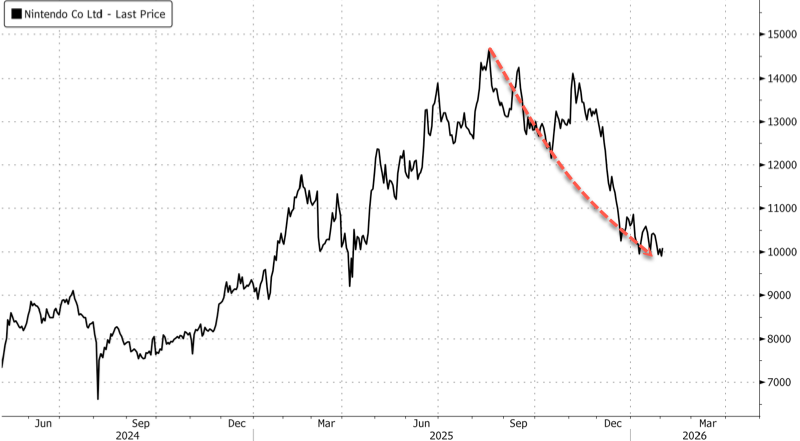 We have outlined a growing list of electronics companies pressured by soaring memory prices, even prompting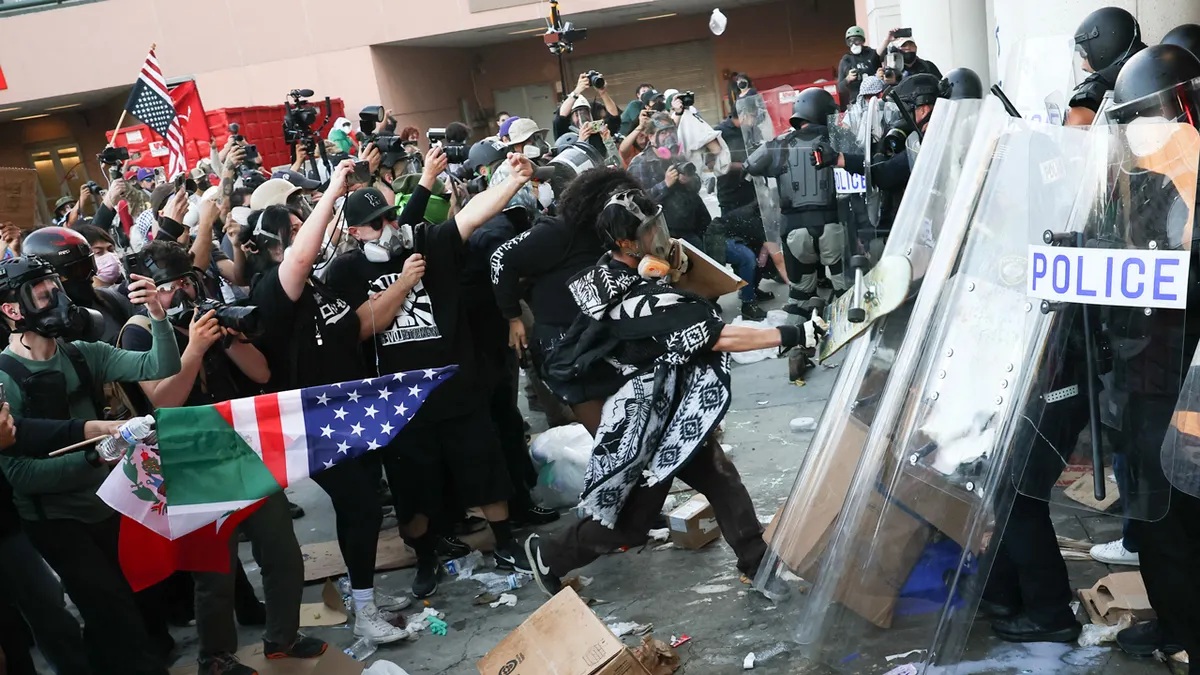
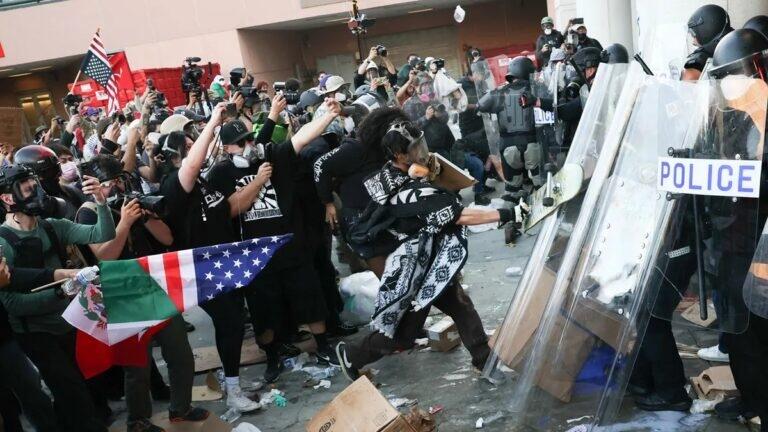 It’s important to understand that the “protests” are actually a highly coordinated guerrilla campaign – These are not sincere citizens exercising their civil rights. For now their stated motivation is to stop deportations of illegal migrants, but this is just an excuse for their insurgency. If ICE stopped operations tomorrow, the paid activists would simply fabricate another rationale for tearing the country apart. Placating them will accomplish nothing.
They are hostile combatants trying to assert dominance and grow their numbers through posturing. Their goal is the destruction of the western world. This cannot be allowed.
The clear solution would be for the government to shut down hostile NGOs, however, these institutions are protected by corporate personhood and have the same constitutional rights as individual citizens. The process of investigating them and prosecuting them takes time – time we don’t have.
Even if Trump utilized the Insurrection Act and deployed the military, there are not enough troops to lock down more than a handful of US cities. Those people hoping that martial law will resolve the issue are kidding themselves. By extension, leftists stand to gain greater support: Martial law would represent proof to the rest of the world that the administration is indeed “fascist.”
The course of the war will not depend on government intervention, so don’t hold your breath waiting for effective enforcement. The reality is, most activist arrests end with them right back out on the street anyway. Their support apparatus has to be permanently removed, or THEY have to be permanently removed from the equation.
Everything will be decided by regular conservatives. If they organize in large numbers, if they create a funding apparatus to move people and supplies around the country quickly, and if they form proper leadership and training guidelines, then there might be a chance for peace simply by presenting a formidable deterrent. If not, at least the means to put down the insurgency will be available.
If conservatives stay at home and refuse to protect any piece of territory beyond their front gate, they will lose everything. It’s inevitable. The side that wants to win will always have an edge over the side that “just wants to be left alone.”
Protests will continue to spread to other cities using the same model we have seen recently in Minneapolis. NGOs will try to provoke more activist deaths at the hands of federal agents. The more the activists go unchecked by the general public the more emboldened they will become and the more their numbers will grow in the assumption that they are the majority.
In the event that the protests are stalled but the organizations are not crushed, activists will revert to assassinations and Weather Underground-style terror attacks until they demoralize the populace and gather strength again. The bottom line? If the political left is not made to truly FEAR consequences, they will not stop until they get their own Red Terror purge.
The end result is not going to be “balkanization.” That idea might have worked during the pandemic, but at this stage it’s far too late for a national divorce. The leftists will never allow conservatives to live in peace in red states. Letting blue cities rule over entire states of mostly red counties would only legitimize progressive extremists and hurt the conservative cause. This fight is for the entire country, not pieces of it.
It’s also not going to be a war of “factions”. This is prepper SHTF theory nonsense. The lines could not be more defined. The “false left/right paradigm” is a dead remnant of the Ron Paul era. It no longer exists, at least not where the bottom of the pyramid is concerned. The vast majority of progressives and Democrats are onboard with woke extremism. They’re onboard with the purge. They are loyal soldiers of globalism. Unity with them means enslavement.
Leftists, globalists and their allies are not going to discern between MAGA, libertarians and centrists. They will ultimately treat everyone as an enemy worthy of elimination.
They’re also not going to divide and in-fight the way some conservatives predict, at least not until they’ve gotten rid of us first.
In the end, the fate of the US and western civilization stands on the precarious shoulders of a conservative movement that has the means to fight, but not necessarily the will. They are forever waiting for the perfect Hollywood scenario in which they can defend themselves in good conscience in a fair fight where they are the clear and undeniable “good guy.” They are forever waiting for the perfect moment to rise up – A moment that will never come.
Patriots have also planned and trained for decades under the pretenses that conservatives would be the insurgents, not the counter-insurgency. Counter-insurgency is much more difficult and requires far more resources. But guess what? You don’t always get to choose the wars you fight. Sometimes the war chooses you and you have to adapt.
There are certainly individuals who will do what they can. I will be among them as will many of the people I know.
But the great question, the great unknown, the unpredictable factor is whether or not average Americans will step off their porches in large numbers and send a clear message that they will no longer tolerate the chaos.
* * *
If you would like to support the work that Alt-Market does while also receiving content on advanced tactics for defeating the globalist agenda, subscribe to our exclusive newsletter The Wild Bunch Dispatch. Learn more about it
It’s important to understand that the “protests” are actually a highly coordinated guerrilla campaign – These are not sincere citizens exercising their civil rights. For now their stated motivation is to stop deportations of illegal migrants, but this is just an excuse for their insurgency. If ICE stopped operations tomorrow, the paid activists would simply fabricate another rationale for tearing the country apart. Placating them will accomplish nothing.
They are hostile combatants trying to assert dominance and grow their numbers through posturing. Their goal is the destruction of the western world. This cannot be allowed.
The clear solution would be for the government to shut down hostile NGOs, however, these institutions are protected by corporate personhood and have the same constitutional rights as individual citizens. The process of investigating them and prosecuting them takes time – time we don’t have.
Even if Trump utilized the Insurrection Act and deployed the military, there are not enough troops to lock down more than a handful of US cities. Those people hoping that martial law will resolve the issue are kidding themselves. By extension, leftists stand to gain greater support: Martial law would represent proof to the rest of the world that the administration is indeed “fascist.”
The course of the war will not depend on government intervention, so don’t hold your breath waiting for effective enforcement. The reality is, most activist arrests end with them right back out on the street anyway. Their support apparatus has to be permanently removed, or THEY have to be permanently removed from the equation.
Everything will be decided by regular conservatives. If they organize in large numbers, if they create a funding apparatus to move people and supplies around the country quickly, and if they form proper leadership and training guidelines, then there might be a chance for peace simply by presenting a formidable deterrent. If not, at least the means to put down the insurgency will be available.
If conservatives stay at home and refuse to protect any piece of territory beyond their front gate, they will lose everything. It’s inevitable. The side that wants to win will always have an edge over the side that “just wants to be left alone.”
Protests will continue to spread to other cities using the same model we have seen recently in Minneapolis. NGOs will try to provoke more activist deaths at the hands of federal agents. The more the activists go unchecked by the general public the more emboldened they will become and the more their numbers will grow in the assumption that they are the majority.
In the event that the protests are stalled but the organizations are not crushed, activists will revert to assassinations and Weather Underground-style terror attacks until they demoralize the populace and gather strength again. The bottom line? If the political left is not made to truly FEAR consequences, they will not stop until they get their own Red Terror purge.
The end result is not going to be “balkanization.” That idea might have worked during the pandemic, but at this stage it’s far too late for a national divorce. The leftists will never allow conservatives to live in peace in red states. Letting blue cities rule over entire states of mostly red counties would only legitimize progressive extremists and hurt the conservative cause. This fight is for the entire country, not pieces of it.
It’s also not going to be a war of “factions”. This is prepper SHTF theory nonsense. The lines could not be more defined. The “false left/right paradigm” is a dead remnant of the Ron Paul era. It no longer exists, at least not where the bottom of the pyramid is concerned. The vast majority of progressives and Democrats are onboard with woke extremism. They’re onboard with the purge. They are loyal soldiers of globalism. Unity with them means enslavement.
Leftists, globalists and their allies are not going to discern between MAGA, libertarians and centrists. They will ultimately treat everyone as an enemy worthy of elimination.
They’re also not going to divide and in-fight the way some conservatives predict, at least not until they’ve gotten rid of us first.
In the end, the fate of the US and western civilization stands on the precarious shoulders of a conservative movement that has the means to fight, but not necessarily the will. They are forever waiting for the perfect Hollywood scenario in which they can defend themselves in good conscience in a fair fight where they are the clear and undeniable “good guy.” They are forever waiting for the perfect moment to rise up – A moment that will never come.
Patriots have also planned and trained for decades under the pretenses that conservatives would be the insurgents, not the counter-insurgency. Counter-insurgency is much more difficult and requires far more resources. But guess what? You don’t always get to choose the wars you fight. Sometimes the war chooses you and you have to adapt.
There are certainly individuals who will do what they can. I will be among them as will many of the people I know.
But the great question, the great unknown, the unpredictable factor is whether or not average Americans will step off their porches in large numbers and send a clear message that they will no longer tolerate the chaos.
* * *
If you would like to support the work that Alt-Market does while also receiving content on advanced tactics for defeating the globalist agenda, subscribe to our exclusive newsletter The Wild Bunch Dispatch. Learn more about it 
 The initial correspondence,
 Judge Andrea Bradley-Baskin, 46, is alleged - among other things, "to have used $70,000 in a ward’s funds to purchase an ownership stake in a local bar," and "money embezzled from the estate of a ward to pay a two-year lease on a new Ford Expedition for herself."
In addition to Bradley-Baskin, her father, Avery Bradly, 72, Nancy Williams, 59, and Dwight Rashad, 69, were charged with conspiracy to commit wire fraud and several counts of money laundering. The judge was also hit with a single count for making a false statement to a federal law enforcement agent.
Bradley-Baskin and her father Avery represented a firm that was appointed to manage the estates of incapacitated wards of over 1,000 cases, the DOJ claims. The firm, Guardian & Associates, was run by indicted co-conspirator Nancy Williams, and would siphon funds from the estates of vulnerable individuals to the judge and her father - along with to a group home operator, Dwight Rashad, officials allege.
Bradley, Rashad, and Williams are accused of stealing $203,000 from one ward's legal settlement, while spending nothing on the individual.
Guardian and Associates is further accused of paying out sums to Rashad for individuals who weren't even living in his facilities, the indictment claims.
According to the indictment, probate courts regularly appoint guardians and conservators to manage the personal and financial affairs of adults, known as wards, who have been found by the court to lack the capacity to do so themselves. Guardians and conservators are fiduciaries who are obligated to act in the best interests of their wards. The indictment alleges that Nancy Williams owned Guardian and Associates, an agency that was appointed as a fiduciary by the Wayne County Probate Court for incapacitated wards in over 1,000 cases.
...
Avery Bradley is an attorney, who, along with his daughter (and fellow attorney) Andrea Bradley-Baskin, operated a law firm that often represented Guardian and Associates in Wayne County Probate Court and otherwise practiced regularly in that court. Bradley-Baskin is currently a district judge on Michigan’s 36th District Court. Dwight Rashad operated a series of group homes and residential facilities for elderly individuals, including wards, who needed support and care. -
Judge Andrea Bradley-Baskin, 46, is alleged - among other things, "to have used $70,000 in a ward’s funds to purchase an ownership stake in a local bar," and "money embezzled from the estate of a ward to pay a two-year lease on a new Ford Expedition for herself."
In addition to Bradley-Baskin, her father, Avery Bradly, 72, Nancy Williams, 59, and Dwight Rashad, 69, were charged with conspiracy to commit wire fraud and several counts of money laundering. The judge was also hit with a single count for making a false statement to a federal law enforcement agent.
Bradley-Baskin and her father Avery represented a firm that was appointed to manage the estates of incapacitated wards of over 1,000 cases, the DOJ claims. The firm, Guardian & Associates, was run by indicted co-conspirator Nancy Williams, and would siphon funds from the estates of vulnerable individuals to the judge and her father - along with to a group home operator, Dwight Rashad, officials allege.
Bradley, Rashad, and Williams are accused of stealing $203,000 from one ward's legal settlement, while spending nothing on the individual.
Guardian and Associates is further accused of paying out sums to Rashad for individuals who weren't even living in his facilities, the indictment claims.
According to the indictment, probate courts regularly appoint guardians and conservators to manage the personal and financial affairs of adults, known as wards, who have been found by the court to lack the capacity to do so themselves. Guardians and conservators are fiduciaries who are obligated to act in the best interests of their wards. The indictment alleges that Nancy Williams owned Guardian and Associates, an agency that was appointed as a fiduciary by the Wayne County Probate Court for incapacitated wards in over 1,000 cases.
...
Avery Bradley is an attorney, who, along with his daughter (and fellow attorney) Andrea Bradley-Baskin, operated a law firm that often represented Guardian and Associates in Wayne County Probate Court and otherwise practiced regularly in that court. Bradley-Baskin is currently a district judge on Michigan’s 36th District Court. Dwight Rashad operated a series of group homes and residential facilities for elderly individuals, including wards, who needed support and care. -