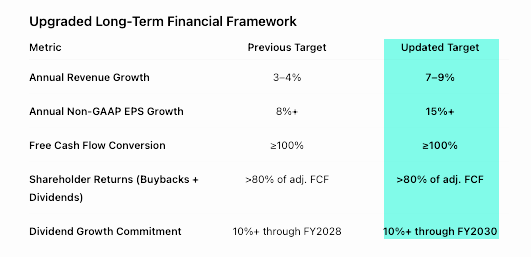
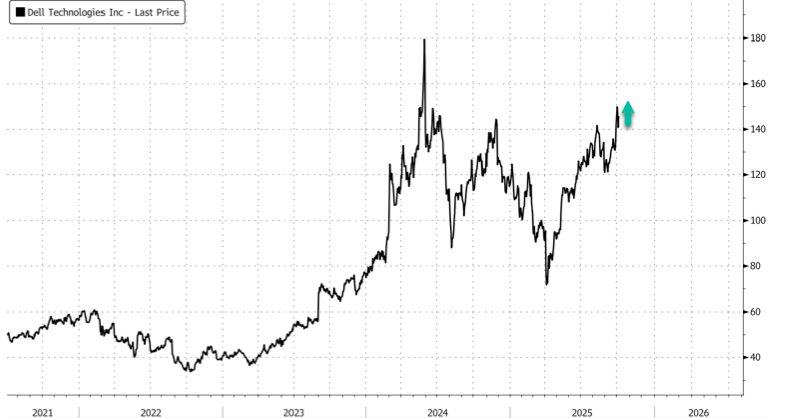
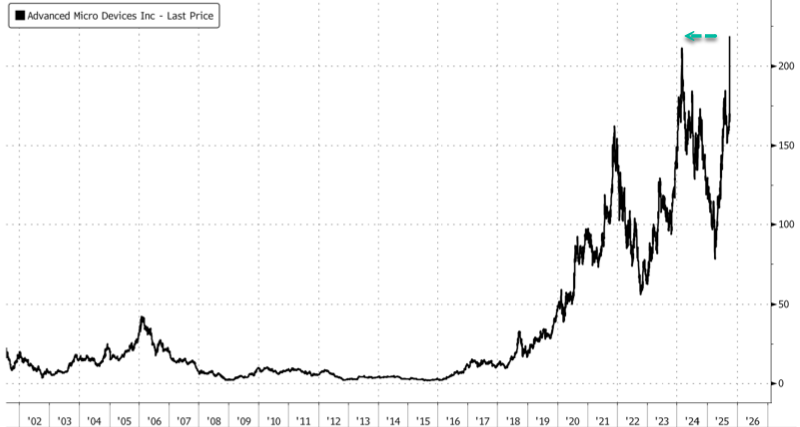
"Customers Are Hungry For AI ": Dell Upgrades Long-Term Outlook  "Customers Are Hungry For AI ": Dell Upgrades Long-Term Outlook  Shares of Dell Technologies jumped in premarket trading in New York after executives are expected to unveil a sharply higher long-term financial outlook at the company's Securities Analyst Meeting on Tuesday morning, boosting confidence in AI-driven demand across its data center and PC units. It seems that with each passing day, more AI-related headlines, from Monday's AMD-OpenAI deal to the ongoing AI vendor-financing "circle jerk", continue to propel AI and chip stocks to record highs.  Chairman and CEO Michael Dell and other members of the executive leadership team will announce a new "long-term financial framework" that forecasts sales to rise at a rate of 7% to 9% annually for the next four years, while earnings per share, excluding some items, will increase 15% or more. The previous forecast, which was made in 2023, had an estimated revenue growth of 3% to 4% and adjusted EPS of 8% or better.  image Ahead of the Securities Analyst Meeting that begins around 0930 ET, COO Jeff Clarke told , "We were all wrong how big we thought the AI market was two years ago, and it's nothing but bigger." This growth is fueled by orders from CoreWeave, Elon Musk's xAI, the U.S. Energy Department, and Abu Dhabi's G42. Here's more commentary from Dell leadership ahead of the analyst meeting: CEO Michael Dell: "Customers are hungry for AI and the compute, storage, and networking we provide to deploy intelligence at scale. The opportunity ahead is massive." COO Jeff Clarke: "We're actively shaping the future of AI infrastructure — growing AI into a $20 billion business in two years." CFO David Kennedy: "With our increased EPS target, we expect to double EPS again." Shares of Dell in New York in premarket trading jumped 6% on the press release from the company detailing what executives were planning to unveil at the upcoming analyst meeting. Shares are up 26.5% on the year (as of Monday's close).  image News from Dell adds to the positive news flow that has sent the Philadelphia Stock Exchange Semiconductor to record highs. image Yesterday's news: Endless positive news flow generated by: . . .  Tue, 10/07/2025 - 09:40
US Airports Experience Delays Due To Staffing Issues Caused By Shutdown: Duffy US Airports Experience Delays Due To Staffing Issues Caused By Shutdown: Duffy Major U.S. airports reported widespread delays Monday as the federal shutdown strained an already short-staffed air-traffic system, prompting fresh warnings from industry and labor leaders that the impasse could ripple across the peak travel season. image Transportation Secretary Sean Duffy said air-traffic control towers were contending with mounting absenteeism since the shutdown began Oct. 1, forcing the Federal Aviation Administration to slow operations at times to maintain safety. While roughly 13,000 controllers are classified as essential and continue working, there is no assurance they will be paid on time, he said. About 50,000 Transportation Security Administration officers are also required to report to work; their next paycheck is due Oct. 14. https://www.facebook.com/watch/live/?ref=watch_permalink&v=1474051970409642 Duffy, he's been receiving reports of varying levels of absenteeism across the country, which rely on air traffic controllers from the Fededral Aviation Administration (FAA). He said that the department was tracking the staff shortages, which are being reported in "one area in one day, another area another day." By late Monday, flight-tracking service FlightAware https://www.flightaware.com/live/cancelled more than 5,500 delayed flights nationwide. The FAA cited staffing impacts at several major airports, including Newark, Phoenix, Denver, Las Vegas and Hollywood Burbank near Los Angeles. Weather compounded the backups. At Denver International, about 32% of arrivals were delayed; Newark saw 22% delayed, while roughly 15% of flights were late at Burbank, according to FlightAware. The mounting staffing strain threatens to undo progress the FAA has tried to make after years of shortfalls. Many controllers have been working mandatory overtime and six-day weeks, and the agency remains about 3,500 controllers shy of its target staffing levels. The FAA has been surging hiring through its academy in Oklahoma City and training centers nationwide - efforts that rely on support personnel who, Mr. Duffy warned, are at risk of being laid off during the shutdown. “I don’t want them driving Uber. I don’t want them finding a second job to pay the bills,” the secretary said. “I want them to get paid for the work that they’re doing today, keeping our planes in the air and our skies safe.” He also pressed congressional leaders to reopen the government, criticizing the stalemate on social media. Labor leaders echoed the call. “We do not have the luxury of time,” said Nick Daniels, president of the National Air Traffic Controllers Association, speaking at Newark Liberty International Airport. “This work includes accelerating the hiring of controllers and modernizing our air-traffic control system. Both initiatives are long overdue and require our immediate and full attention…. End the shutdown.” Airlines warned of broader repercussions if the funding lapse continues. Airlines for America, which represents United, Delta, American and Southwest, said the system may need to slow down during a prolonged shutdown, eroding efficiency and inconveniencing travelers. In 2019, a 35-day shutdown led to increased absences among controllers and TSA officers and forced the FAA to slow traffic in the New York area—pressure that helped end that impasse. Then-House Speaker Nancy Pelosi said at the time the shutdown was “pushing our airspace to the breaking point.” The latest shutdown also threatens smaller communities that depend on federal subsidies to maintain service. Mr. Duffy said funding for the Essential Air Service program, which helps airlines serve rural and remote towns, runs out Oct. 12. “There’s many small communities across the country that will now no longer have the resources to make sure they have air service in their community,” he said, noting that Alaska would be among the states affected. For now, the FAA says U.S. airspace remains safe, and officials are managing traffic flows to match available staffing. But with absenteeism rising and a large contingent of essential workers facing uncertainty over paychecks, the margin for operational flexibility is narrowing. As Mr. Duffy put it: “You’ll see more delays” - and possibly cancellations - “if this continues.” Tue, 10/07/2025 - 09:25
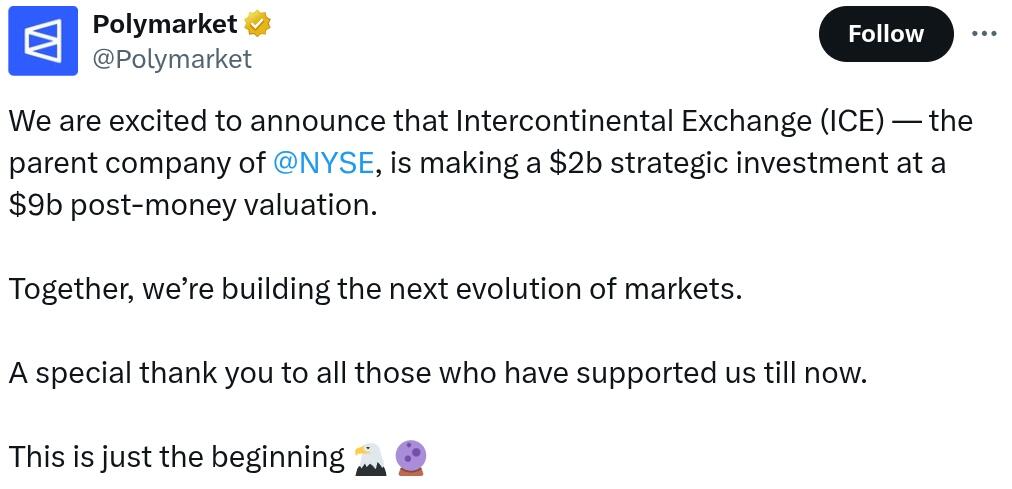
'Best Is Yet To Come': NYSE Parent Invests $2 Billion In Polymarket At $9 Billion Valuation 'Best Is Yet To Come': NYSE Parent Invests $2 Billion In Polymarket At $9 Billion Valuation Intercontinental Exchange (ICE), the parent company of the New York Stock Exchange (NYSE), has invested $2 billion in cryptocurrency-based prediction market Polymarket. image According to a Tuesday Polymarket X  , the ICE invested $2 billion in the prediction market. The deal values Polymarket at a $9 billion post-money valuation. image  $25 trillion as of July 2024. Its interest is the latest move that fuses the United States’ traditional financial landscape with the cryptocurrency industry. Polymarket is a crypto-powered   where people buy and sell “shares” in real-world event outcomes (elections, sports, crypto prices), with market prices reflecting the crowd’s implied probabilities. Trades typically settle in stablecoins, and markets are resolved against predefined, verifiable sources, with access for US users restricted due to regulatory reasons. image Polymarket’s homepage. Source: Polymarket :  Markets on everything. We’re proud to announce that https://x.com/search?q=%24ICE&src=cashtag_click  and the largest exchange company in the world, is making a strategic investment of $2 billion into Polymarket, valuing us at $9 billion post-money. Our partnership with ICE marks a major step in bringing prediction markets into the financial mainstream. But in addition to that, it’s a monumental step forward for DeFi. ICE is the one remaining founder-led exchange company, and Jeff is all-in on utilizing his assets, including NYSE, to usher in a new financial era of tokenization. We’re humbled to be working together on this endeavor. ICE will also begin distributing Polymarket data to thousands of financial institutions around the world. There is so much to build when you combine the force of ICE’s institutional scale and credibility with Polymarket’s consumer + cultural savvy and distribution. The past two years have been surreal. Going from a write off to creating a category, watching our vision become a reality. The Polymarket origin story is funny because it's a rare case of the dream being identical to how things played out. If I learned one thing, it’s that bold ideas are everywhere, hidden in plain sight. It just takes someone crazy enough to spend their life willing it into existence. That’s entrepreneurship: willing things into existence. I remember reading Robin Hanson’s literature on prediction markets and thinking - man, this is too good of an idea to just exist in whitepapers. There were a million reasons why it shouldn’t work, countless arguments of why not to do it, and the odds were against us, but we had to try. At the onset of the pandemic, I quite literally had nothing to lose: 21, running out of money, 2.5 years since I dropped out and nothing to show for it. But I knew we were entering an era where ways to find truth would matter more than ever, and Polymarket could play a critical role in that. After all, nothing is more valuable than the truth. It’s still a work in progress, but we’re honored to have made the impact we have thus far. I’d also like to give a special thank you to all of our users, builders, and community members who have been with us since 2020. Your support will not be forgotten. Last but not least, I am deeply grateful for all of the support and hard work of my brilliant team. I’m getting to live my wildest dreams, seemingly against all odds, and I don’t take it for granted. The best is yet to come… Que Sera Sera Polymarket prepares US relaunch The news also follows recent reports that Polymarket is reportedly preparing a US launch that   granting Polymarket relief from certain federal reporting and record-keeping requirements. That stance marks a notable shift from prior years. In mid-November 2024, the United States Federal Bureau of Investigation (FBI) went as far as to   a cease-and-desist order against Polymarket in early 2022. This followed   for $112 million in preparation for its re-entry into the US market. In recent times, the prediction market has undergone significant leadership changes. In late August, Polymarket added Donald Trump Jr., the son of   from self-described politically aligned vehicle 1789 Capital. The financial details are unclear, but according to some estimates, the investment was worth “double-digit millions of dollars." Tue, 10/07/2025 - 08:50
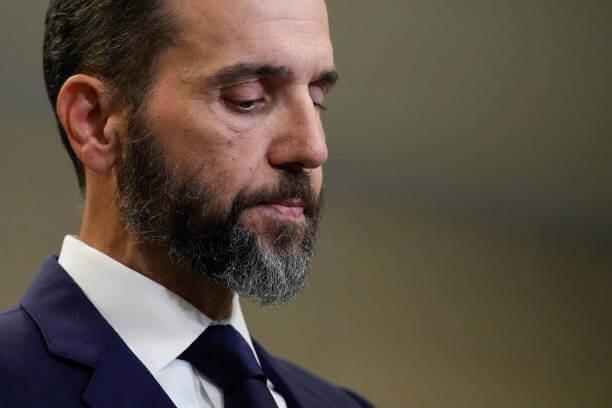
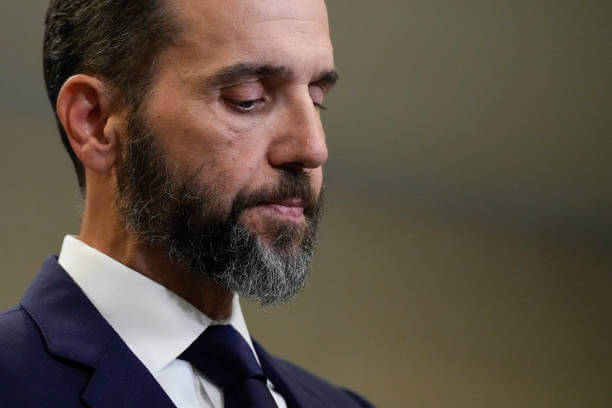
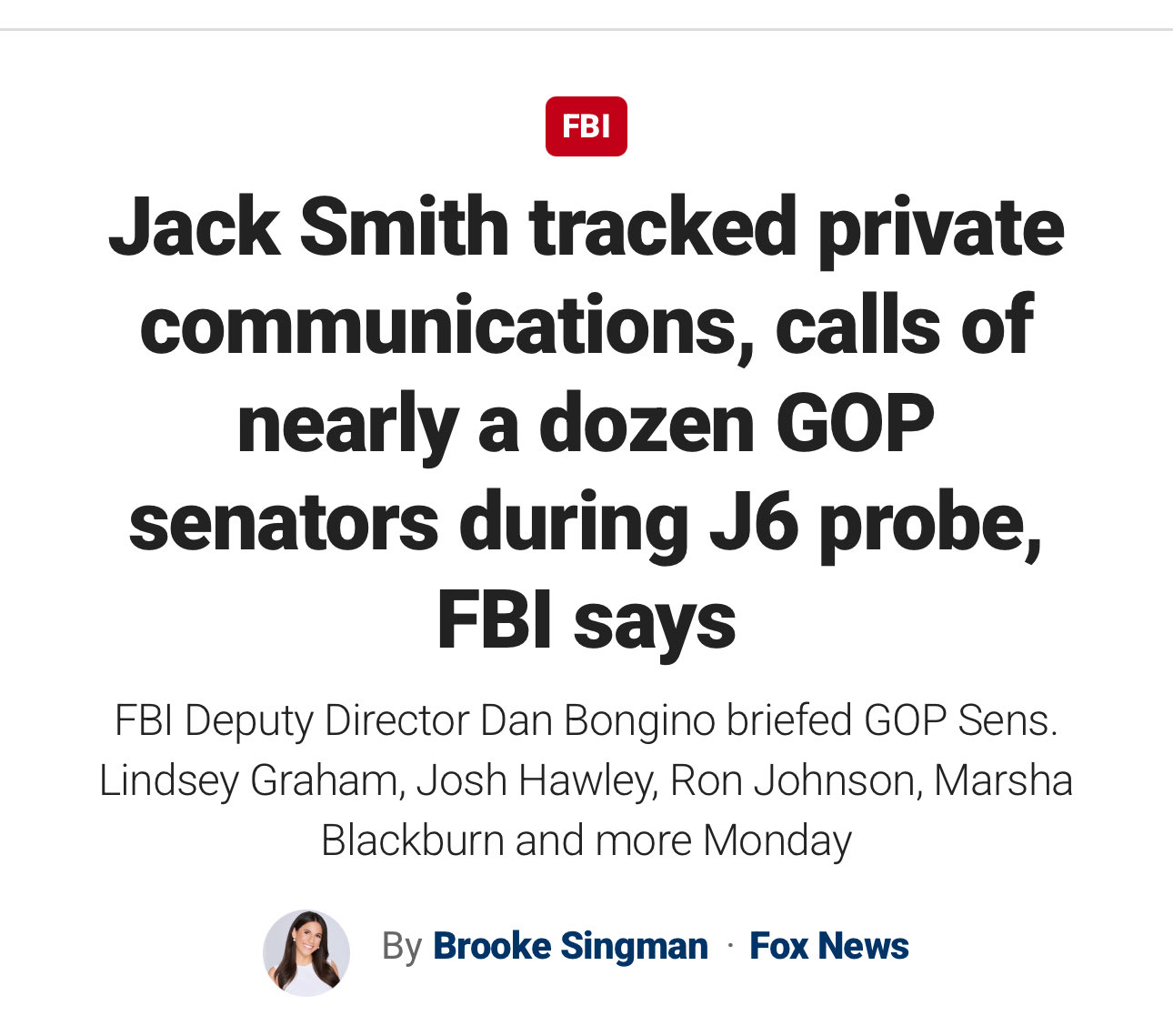
'Arctic Frost': Bombshell Memo Exposes Biden FBI Spying On GOP Senators 'Arctic Frost': Bombshell Memo Exposes Biden FBI Spying On GOP Senators An   obtained by Senate Judiciary Committee Chairman Chuck Grassley (R-IA) shows that the FBI, under Joe Biden, spied on 8 Republican senators as part of its Arctic Frost investigation. The   that the FBI snooped on the phone records of Republican members of Congress during its January 6 investigation is bringing greater scrutiny to then-FBI Director Christopher Wray, during whose tenure the bureau effort occurred, and to then-Special Counsel Jack Smith, who was leading the Biden Justice Department’s investigation into Donald Trump. The once-secret FBI record, dated late September 2023, has the title of "CAST Assistance" - a likely   to the bureau’s cellular analysis survey team. The case ID for the record is "ARCTIC FROST - Election Law Matters - SENSITIVE INVESTIGATIVE MATTER — CAST." image , Grassley said the 2023 investigation, which formed the basis of Special Counsel Jack Smith’s elector case against President Trump, targeted 8 GOP Senators’ personal cell phones for “tolling data” tracking their use between January 4 and January 7, 2021. According to a   from the U.S. Senate Committee on the Judiciary, the FBI targeted 8 GOP Senators, including Sen. Lindsey Graham (R-SC), Sen. Bill Hagerty (R-TN), Sen. Josh Hawley (R-MO), Sen. Dan Sullivan (R-AK),  Sen. Tommy Tuberville (R-AL), Sen. Ron Johnson (R-WI), Sen. Cynthia Lummis (R-WY) and Sen. Marsha Blackburn (R-TN) as well as Rep. Mike Kelly (R-PA). This document shows the Biden FBI spied on 8 of my Republican Senate colleagues during its Arctic Frost investigation into "election conspiracy" Arctic Frost later became Jack Smith's elector case against Trump BIDEN FBI WEAPONIZATION = WORSE THAN WATERGATE — Chuck Grassley (@ChuckGrassley) In that press release, Grassley stated, “Based on the evidence to-date, Arctic Frost and related weaponization by federal law enforcement under Biden was arguably worse than Watergate.” Grassley added, “What I’ve uncovered today is disturbing and outrageous political conduct by the Biden FBI. The FBI’s actions were an unconstitutional breach, and Attorney General Bondi and Director Patel need to hold accountable those involved in this serious wrongdoing.” The FBI’s Arctic Frost investigation began in April 2022 by former agent Timothy Thibault and was assigned to Special Counsel Jack Smith in November 2022. Whistleblower disclosure obtained earlier this year   the FBI, with personal assistance from officials in the Biden White House, also obtained the government cell phones of President Donald Trump and former Vice President Mike Pence as part of the investigation. Just last month, Grassley   showing that 92 Republican-linked individuals and groups like Turning Point USA were also scrutinized by the FBI as part of the Arctic Frost investigation. Grassley noted that he has been working with whistleblowers since July 2022 and stated, “It’s taken years to get records and advance my investigation, but what the public is seeing now demonstrates the importance of congressional oversight and whistleblowers. My whistleblowers deserve great thanks for what they’ve helped expose. None of this would have been known without them.” Patel   on Monday that “we recently uncovered proof that phone records of U.S. lawmakers were seized for political purposes” and “that abuse of power ends now.” Tue, 10/07/2025 - 08:20
Macron Launches Last-Ditch Effort To Salvage France's Gov't As Resignation Calls Grow Louder Macron Launches Last-Ditch Effort To Salvage France's Gov't As Resignation Calls Grow Louder A political crisis is rocking France. President Emmanuel Macron has now given outgoing Prime Minister Sébastien Lecornu until Wednesday night to broker a deal among France's political parties and avert a deeper crisis following Lecornu's abrupt resignation early Monday. Lecornu blamed divisions among parties, including Macron's own centrist minority, for the breakdown in forming a new cabinet. Macron's move gives him some wiggle room before deciding whether to dissolve parliament and call early elections. image On Monday, as the political turmoil unfolded, UBS analyst Matthew Cowley provided clients with three possible pathways for Macron: "President Macron faces three scenarios: appointing a new PM, dissolving parliament for legislative elections, or even calling an early presidential election—though the latter remains unlikely."  Bloomberg Economics analysts Antonio Barroso and Jean Dalbard wrote that if Lecornu fails to broker a deal, Macron will be forced to either appoint a new prime minister or call elections. This scenario could result in Marine Le Pen's National Rally: "If Lecornu fails, Macron will have to appoint a new premier or call early elections — potentially giving the far- right National Rally its best shot at power."  Cowley told clients early about the urgency for Lecornu to reach a budget deal amid Macron's mounting negative sentiment nationwide:  France's President Macron has given Sebastién Lecornu, the future ex-prime-minister, until Wednesday to try to forge a budget agreement with parties in parliament. That seems extremely unlikely to succeed. Macron, who had appointed Lecornu at least in part to deflect public ire over the political impasse away from him, is now back in the eye of the storm. His own party seems increasingly to be distancing itself from the party's founder as Macron's popularity plunges. To be sure, not everything in France is Macron's fault, and yet as president, he's the lightning rod. That doesn't mean he will resign – very unpopular presidents have remained in office and seen out their term. It does raise the likelihood of fresh parliamentary elections, but those are unlikely to solve anything. It's going to be a slow grind for French politics to get out of this rut. On a practical level, there will be no shutdown as, for the most part, the 2025 budget will roll over into 2026. Cowley continued:  A new poll shows French people blame the entire political system for the country's political crisis, and that in turn suggests fresh elections are unlikely to solve very much as the parliament would probably be just as divided as it is now. According to a poll by Elabe for BMFTV, three out of four people queried said Sébastien Lecornu, was right to have resigned as prime minister given the deadlock, and the same number blamed all political parties for not seeking compromise. Almost half of French people (47%) blame France's President Macron for the political crisis, and 51% believe his resignation would help solve the political impasse. Slightly fewer – 42%– believe general elections for parliament would be the way out. The poll asked which coalition they would support in the event of elections : 28% said they would support the right/far right, 22% the left or far left and 12% would support the centrists. In a boost for the far right, 53% of French people said they would oppose the « replublican front » strategy where centrsits and leftists united to keep them out of power in previous elections. National Assembly turmoil has already toppled two previous premiers, including Michel Barnier and François Bayrou, over budget disputes. It now threatens to derail a budget agreement ahead of next Monday's deadline. This means the government risks needing emergency measures to avoid a January shutdown. Bond markets are reacting: France's 10-year yield premium over Germany widened to 85 basis points, the highest since the start of the year.  Here is EU equity market commentary via UBS analyst Joe Dickinson: EuroStoxx is unchanged to start Tuesday. Developments in Europe overnight saw President Macron giving outgoing PM Lecornu 48 hours to negotiate with France's parties in a last-ditch effort to stem the country's political crisis - market expectations for progress remain low. Lecornu wrote on X, "At the request of the President of the Republic, I have agreed to hold final discussions with the political forces for the sake of the country's stability," adding, "I will tell the Head of State on Wednesday evening whether this is possible or not, so that he can draw all the necessary conclusions." J’ai accepté à la demande du Président de la République de mener d’ultimes discussions avec les forces politiques pour la stabilité du pays. Je dirai au chef de l’Etat mercredi soir si cela est possible ou non, pour qu’il puisse en tirer toutes les conclusions qui s’imposent. — Sébastien Lecornu (@SebLecornu) For Macron to survive, Lecornu would have to forge a coalition between the center-left Socialists and the center-right Republicans, something that seems nearly impossible at the moment, as both remain divided on spending and taxes.  Meanwhile, former French Prime Minister Edouard Philippe told local radio station RTL that Macron should resign: "I'm not for an immediate and brutal resignation … but [the president] must take an initiative."  Tue, 10/07/2025 - 07:45
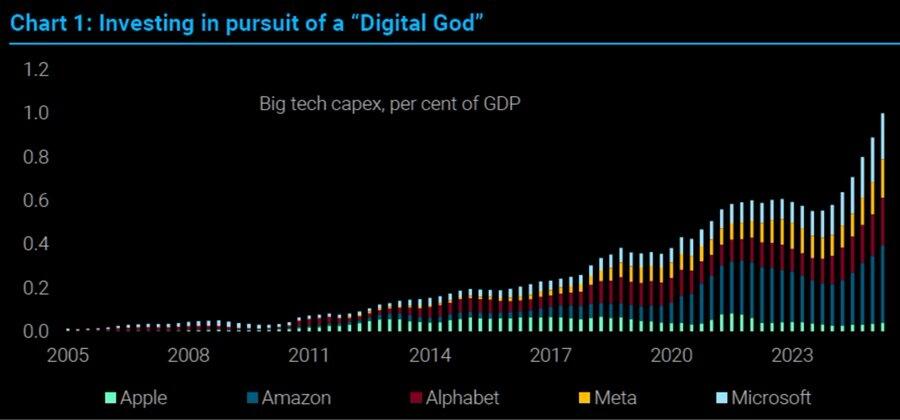
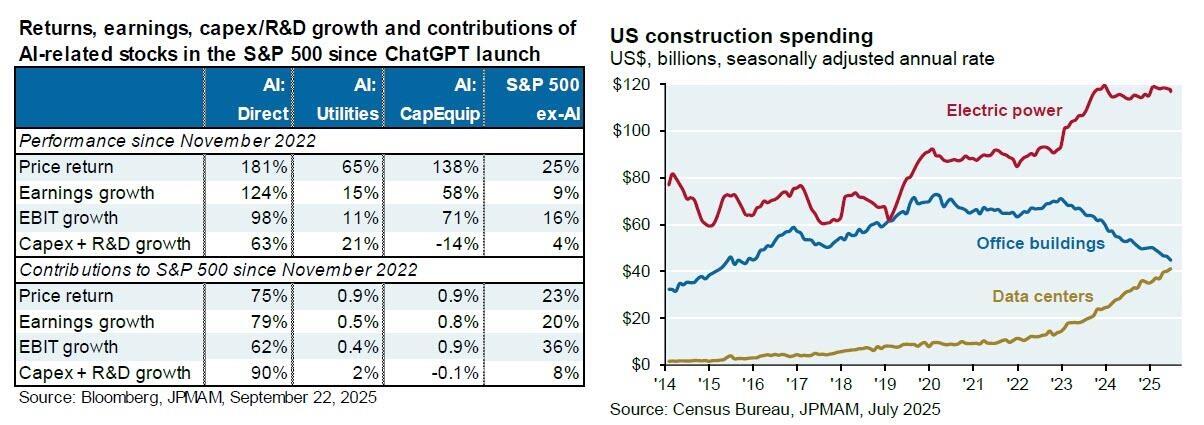
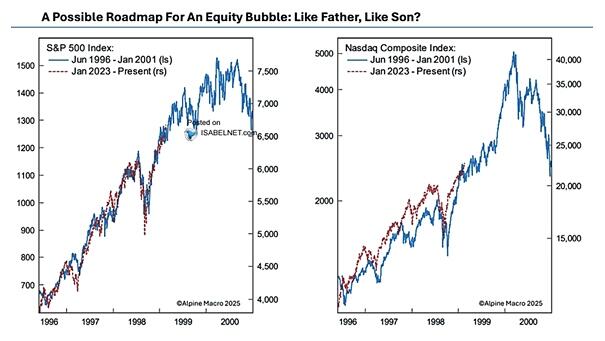
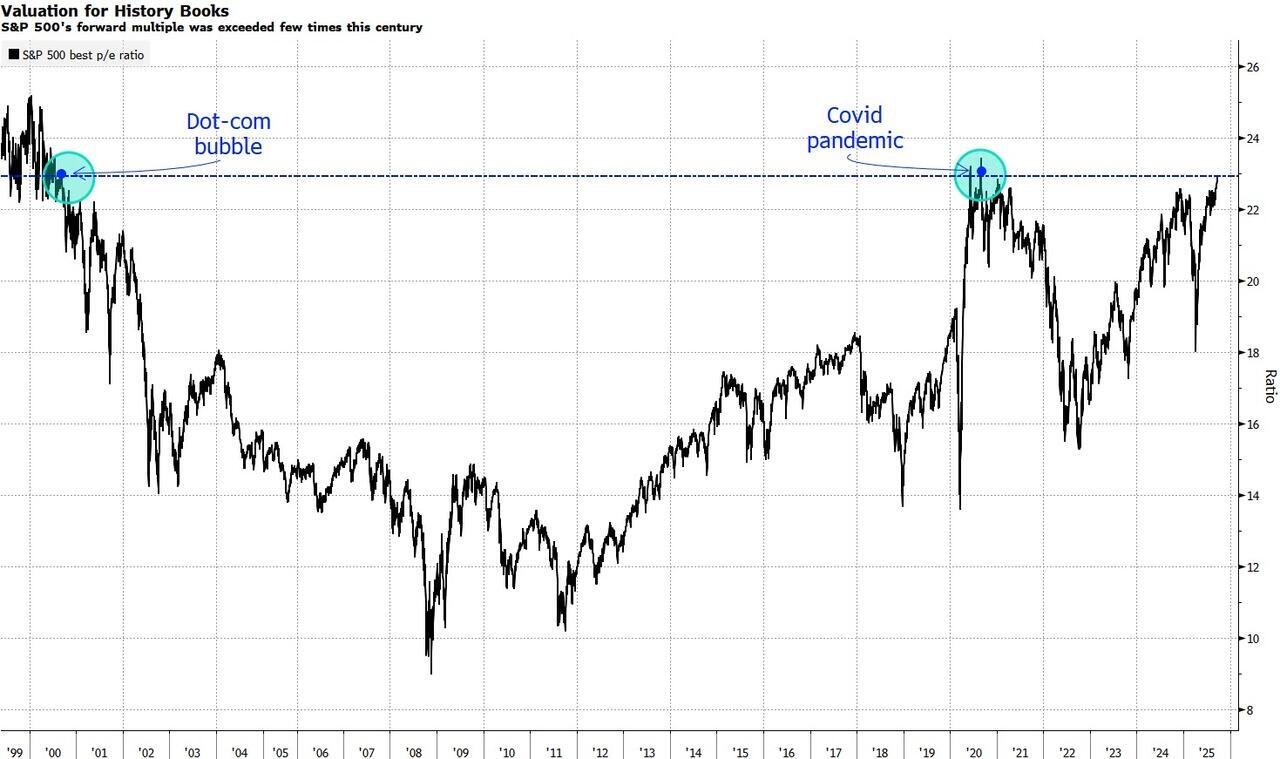
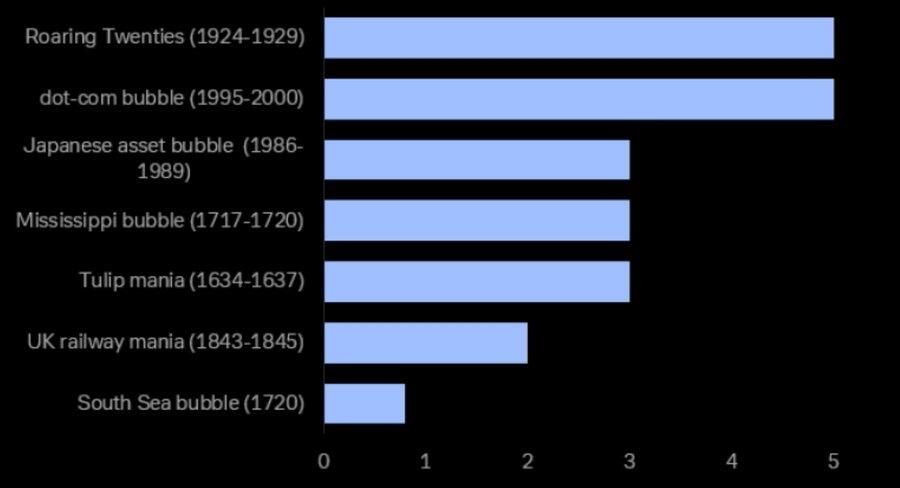
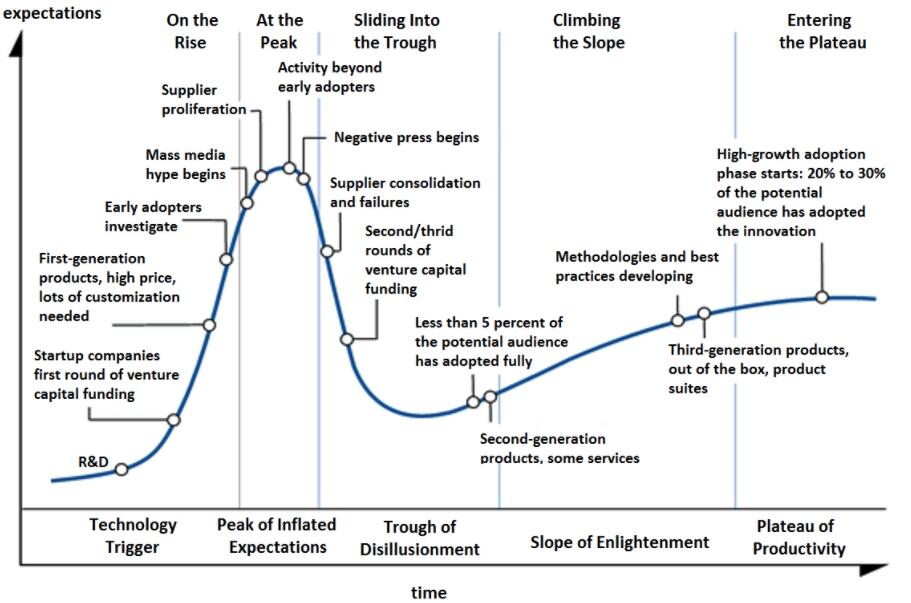
Bubble In AI? Echoes Of The Past, Lessons For The Present Bubble In AI? Echoes Of The Past, Lessons For The Present If you want to understand the engine under this market’s hood, follow the capital. A recent article by 📄.pdf  frames today’s AI boom as a “vendor-financing circle.” This circle occurs when capital raised by one set of companies (via stock, convertibles, or bonds) is recycled into other companies, and so on. In today’s market, that is where AI-related companies are raising capital to make massive AI capex investments, which become revenue for a handful of infrastructure suppliers (GPUs, networking, power, and data centers). Those reported revenues, in turn, help justify still more capital raises, higher valuations, and even bigger build-outs. It looks and feels like reflexivity in real time. You can see the loop in the tape. With sequential growth powered by AI demand, Nvidia’s data-center cycle has produced staggering top-line figures: $30B for Q2 FY2025 and $46.7B for Q2 FY2026. Those dollars don’t appear out of thin air; they are funded by hyperscalers and “neoclouds” expanding footprints at breakneck speed. Meanwhile, capital formation downstream has accelerated. Citigroup projects AI infrastructure outlays to reach roughly $490B by 2026 and $2.8T by 2029. image Oracle’s $18B bond sale, a jumbo deal, was explicitly tied to building AI cloud capacity for large customers. And OpenAI’s “Stargate” initiative targets a stunning $500B to deploy ~10 GW of compute across sites, with partners and suppliers intertwined through equity stakes, long-dated supply agreements, and chip-leasing constructs. When suppliers invest in customers who then pre-order supplier hardware, you’re not just seeing demand but circular demand. For example, Oracle doesn’t have the money to pay for this spending surge, which is projected to last well into the 2030s (This also assumes that there is NO RECESSION between now and then). While vendor financing with cash from operations is one thing, vendor financing with cash from debt is something totally different. As Cembalest noted, we have now evolved into a “circular economy” of AI, where growth depends on a narrow group of companies. As he noted: “I think this is well understood, but just to reinforce the point: AI related stocks (1) have accounted for 75% of S&P 500 returns, 80% of earnings growth and 90% of capital spending growth since ChatGPT launched in November 2022. AI is showing up other places as well. Data centers are eclipsing office construction spending and are coming under increased scrutiny for their impact on power grids and rising electricity prices.” image But here is his real eye-opening statement: “Other recent AI news: Oracle’s stock jumped by 25% after being promised $60 billion a year from OpenAI, an amount of money OpenAI doesn’t earn yet, to provide cloud computing facilities that Oracle hasn’t built yet, and which will require 4.5 GW of power (the equivalent of 2.25 Hoover Dams or four nuclear plants), as well as increased borrowing by Oracle whose debt to equity ratio is already 500% compared to 50% for Amazon, 30% for Microsoft and even less at Meta and Google. In other words, the tech capital cycle may be about to change.” This pattern has historical rhyme. During the late-1990s telecom boom, equipment makers extended aggressive credit (“vendor financing”) to carriers, effectively funding the purchase orders that produced the vendors’ reported revenues. By mid-2001, the Wall Street Journal tallied at least $25.6B of such loans across major vendors; for one cohort, that financing equaled 123% of combined pretax earnings in 1999. Vendors wrote down receivables when customers defaulted, and the virtuous loop snapped. The takeaway isn’t that today’s AI spend is fake; the ecosystem itself reflexively finances some portion of revenue. While that completely supports the market while the “music plays,” it becomes problematic if cash returns lag capex for too long, power and supply constraints slow utilization, or financing windows narrow. Is AI a bubble? Maybe. The AI Bubble Today: Similarities and Differences from the Late ’90s Every bubble has a story at its core. In 1999, that story was the internet: a transformational technology that would reshape commerce, communications, and culture. Investors saw the future, bid prices into the stratosphere, and assumed profits would inevitably follow. In 2025, the story is artificial intelligence, which carries the same irresistible promise of reshaping industries, creating productivity booms, and unlocking new frontiers. The parallels are hard to miss, along with the current price action. image Like the dot-com era, today’s market is being driven by breathtaking growth assumptions. Back then, Cisco traded north of 100x earnings on the belief it was selling the “backbone of the internet.” Pets.com and Webvan raised hundreds of millions, only to collapse when business models proved unsustainable. The psychology, then and now, is driven by the “fear of missing out.” Investors rush in because the narrative is too powerful to ignore: However, “if AI changes everything, you can’t afford not to own it.“ But while the similarities are striking, the differences are equally significant. Unlike the dot-com darlings of the 1990s, today’s AI leaders are not pre-revenue companies burning cash with no path to profitability. Nvidia generates tens of billions in quarterly revenue from its GPU dominance. Microsoft, Amazon, and Alphabet have deep operating businesses producing free cash flow to fund their AI bets. These are not speculative shell companies; they are some of history’s largest, most profitable corporations. That distinction matters. In the late ’90s, investors piled capital into companies with no earnings or customers. Today, investors are bidding up firms with massive revenues, entrenched customer bases, and operating leverage. The risk, however, is that investors are again extrapolating linear revenue growth into the future without considering bottlenecks, power constraints, monetization limits, and slowing marginal returns on AI spend. So while today’s AI ecosystem is more grounded than the dot-com startups of 1999, the underlying behavior is the same: valuations are being stretched on the assumption that a revolutionary technology will deliver exponential profits. image History reminds us that transformative technologies often succeed over decades, but the first wave of companies and their investors rarely capture the full promise implied in their stock prices. Bubble Length and Eventual Endings Timing is the cruel part. As shown above, is this Alan Greenspan’s “irrational exuberance” moment in December 1996? Or, are we much later in the cycle? Honestly, I have no idea. But in 1996, the Nasdaq peaked more than three years later, suggesting that amid the “inflation of a bubble,” inflation can last longer than seems logical. We see that through all previous bubbles in history. image The critical issue for investors, both then and now, was that many were “right” about the Dot.com bubble. However, they were so early in their warnings that they were wrong in their portfolios. The same warning applies currently. Is there a bubble in AI? Maybe. But, I would even suggest that it is pretty likely. As investors, we must realize that during the “inflation” phase of the bubble, there is a lot of money to be made, but the cycle will eventually end. image That’s why fighting parabolic moves can be so problematic. As Peter Lynch once stated: “Far more money has been lost by investors preparing for corrections, or trying to anticipate corrections, than has been lost in the corrections themselves.” Read that again. We are likely closer to a top than not, but that top could be months, quarters, or even one or two years away. That is why the better frame for investors to consider is “cycle math.” Focus on liquidity, policy, indexation, and corporate incentives, as they can extend manias far beyond fundamental comfort. However, eventually, those cycles begin to reverse, and what previously ended speculative bubbles begin to “rhyme.” Financing tightens; ROI disappoints; Accounting adjustments reveal how much growth was pulled forward, not run-rate, and Leadership concentration flips from strength to fragility as forced sellers meet illiquidity. From 2000 to 2002, the telecom sector unwind delivered all of the above from defaults, receivable write-offs, and serial guidance cuts. Replace “fiber overbuild” with “compute and power overbuild,” and you have a credible left-tail scenario if demand monetization trails supply for too long. Ratings agencies and sell-side shops have noticed, flagging the leverage and power constraints embedded in the current build cycle, even as they acknowledge substantial real use cases. Today, it is the same, but in a different form. As Roger McNamee recently wrote for The Guardian: “Investors have assumed that every major US player in [large language models (“LLMs”)] will be a winner. This assumption is essential, as the monopolies that power big tech – such as Microsoft’s Office suite, Google Search, Gmail, and Docs, and Meta’s Facebook – are, without exception, approaching the end of their useful lives. The vast majority of customers believe that these products have gotten worse – and made users less productive – over the past decade or more. Each big tech company needs a global monopoly in AI to sustain their success and market value. They are not all going to get one. The former General Electric CEO Jack Welch made famous the notion that only two players can be profitable in a competitive industry. Below the top two, it is a struggle to survive. That means that at least three, and perhaps more, of the current players will be forced to write off their investments in LLMs. Each of the big tech companies has invested in the range of $100bn through this year, and by next year that number could easily double. If LLM technology does not improve rapidly, their corporate customers will also face write-offs. The day may come sooner than many expect when shareholders, directors and executives will demand evidence that the massive investment in LLM technology will generate an adequate return for them. The answer will be no for many, if not most, players, and the reckoning will [be] ugly for everyone.“ Such reminds me of Charles Kindleberger’s old line: “If something cannot go on forever, it will stop.” Critically, I am not suggesting that the AI bubble is about to burst tomorrow. We have many of those particular stocks in our portfolios, from Google to Meta to Nvidia and others. Furthermore, my discussion here is not intended to be a timing tool but rather a budgeting tool. Don’t expect the current market to underwrite infinite carry from a finite financing window. That mindset kept investors alive in 1999–2002 and again in 2007–2009. It applies again in 2025. 📒 Portfolio Tactics – Navigating A Market Bubble Let me conclude by stating that my intention is not to dunk on innovation; it’s to manage risk amid it. The practical playbook in bubbles is more carpentry than heroics. First, separate plumbing from promises. Infrastructure winners can post extraordinary revenue growth if the financing loop remains open. That’s tradable momentum but not the same as durable, end-customer ROI. In your underwriting, prioritize evidence of cash demand (contracted workloads with measurable payback) over capital demand (pre-buys and option-like contracts funded by equity or fresh debt). Until the monetization bridge is built, capex dependence is a risk factor, not a moat. Second, let prices do the heavy lifting. When leadership is this extended, mean-reversion is a feature, not a bug. Use predefined rebalancing bands to trim exposure into vertical rallies and add on resets to rising 50/100-DMAs instead of chasing exhaustion gaps. That keeps you involved (because bubbles can run) while turning volatility into a source of discipline rather than damage. Third, demand balance-sheet realism. In the late ’90s, vendor financing and receivables quality were the tell. Watch interest coverage after new bond deals, capex as a share of operating cash flow, and disclosure around take-or-pay or utilization guarantees. If the ecosystem is cross-subsidizing itself (supplier invests in the customer who pre-orders the supplier’s gear), discount the apparent “visibility.” The more circular the revenue, the more fragile the flywheel when financing costs rise. Recent deals around Stargate and supplier co-investments are a case in point. Fourth, think in barbells and play defense in the middle. On one end, maintain a measured exposure to proven cash generators that genuinely benefit from AI (unit-level margins, network effects, or distribution that converts AI into pricing power). On the other hand, hold high-quality ballast, short-duration Treasuries, or cash equivalents, to fund drawdowns and keep optionality. In between, be choosy with capital-intensive stories where the cash-in date sits far beyond the cash-out date. As the Dallas Fed and Goldman work suggests, productivity gains likely build over years—not quarters—so leave yourself time. Finally, accept that you won’t nail the top. That’s okay. Successful navigation is less about calling a date and more about insisting on process: valuation awareness, position sizing, staged entries/exits, and the humility to let price action confirm your thesis. Bubbles end the same way, financing tightens, a few high-profile misses flip psychology, and cash becomes king. Have some. Trade accordingly. Tue, 10/07/2025 - 07:20
"For God's Sake, Stop The Rhetoric!": Border Czar Tom Homan Pleads With Anti-ICE Dems "For God's Sake, Stop The Rhetoric!": Border Czar Tom Homan Pleads With Anti-ICE Dems Border Czar Tom Homan said Thursday that ICE will not be intimidated by the left’s anti-ICE attacks and will continue its mission of deporting criminal illegal aliens. “They won’t stop the men and women of ICE,” he  Fox News host Harris Faulkner. image According to the Department of Homeland Security, U.S. Immigration and Customs has seen   in violence against agents as they carry out their operations. In the latest episode on Wednesday,  29-year-old Joshua Jahn managed to kill an illegal alien detainee and wound two others before shooting himself in the head. Police found unspent bullet casings with the words “anti-ICE” written onto them at the scene. While ICE was clearly the target, no agents were harmed in the targeted attack. Homan said there are about 600,000 illegal aliens with criminal histories walking the streets, mostly because of sanctuary cities. He explained that because authorities in sanctuary jurisdictions do not cooperate with ICE, agents are forced to go into neighborhoods to find criminal illegals, endangering themselves, and often causing nonviolent illegal aliens to get swept up with them. “In sanctuary cities, they force us to go into communities to find the bad guy and if we find them with others, they’re coming too,” the Border Czar explained. “We’re not going to turn our back, we’re not going to turn out back on the law Congress enacted,” he continued. “If you want less collateral arrests, then let us into the damn jail where it’s safe for the agent, it’s safe for the alien and it’s safe for the community. But they won’t do it,” he lamented. “Throughout my career, I’ve buried Border Patrol, I’ve buried ICE agents. I’ve handled too many folded flags for spouses and children of those who died in the line of duty! For God’s sake, stop the rhetoric!” he pleaded. “These men and women are patriots. They’re moms and dads too. And I want every one of them to go home to their families each night.” Rather than moderating their tone, however, leading Democrats have doubled down on their inflammatory rhetoric, even as attacks on federal law enforcement officers have increased.  provided just a sampling of the invective being spewed by Dems toward ICE in recent days: In a post on X several hours after the shooting, Rep. Nikki Budzinski, D-Ill., accused ICE agents of unleashing “dangerous and reckless immigration operations” on the public. “I’ve joined the Illinois delegation in demanding answers about DHS’s dangerous and reckless operations in our state,” wrote Budzinski. “We refuse to stand by while masked agents trample on due process, indiscriminately arrest our neighbors, and threaten immigrant communities.” In a since-deleted post, Sen. Mark Warner, D-Va., also criticized ICE agents after the attack, accusing them of “picking up moms as they drop off their kids to daycare or people going to work.” Just days before the attack, Rep. Robin Kelly, D-Ill., who is also a Democratic senatorial candidate, accused ICE of using “Gestapo tactics” against the American people, saying their actions “are a betrayal of the values we swear to uphold.” Leading Democrats have also taken a similar tone against ICE agents, including House Minority Leader Hakeem Jeffries, D-N.Y., who accused Trump border czar Tom Homan of working to “unleash masked ICE agents on the American people.” Last week, former Democratic presidential candidate Sen. Elizabeth Warren, D-Mass., accused ICE of intentionally stoking fear and tearing communities apart. “ICE is targeting community members with no criminal record,” Warren wrote on X. “Agents are sitting outside of churches and schools. Driving unmarked vans and breaking car windows. These violent ICE arrests don’t make us safer — they intentionally stoke fear and tear communities apart.” Speaking on the Senate floor last week, Sen. Dick Durbin, D-Ill., accused federal officials of targeting anyone with “brown skin and a Hispanic surname.” “ICE is arresting first and asking questions later,” Durbin said. “I’ve seen the devastating impacts of these policies in my state of Illinois. People are fearful of masked men in unmarked vans who can grab them at any time because of how they look or their voice, accent.” California Governor Gavin Newsom   the Trump administration’s deportation effort as “authoritarian” during an appearance on Stephen Colbert’s late night show Tuesday. “That’s happening in the United States of America, Newsom fumed. “Masked men jumping out of unmarked cars, people disappearing, no due process, no oversight, zero accountability!” The Border Czar said he prays for the safety of his agents, as well as “the safety of those we’re looking for.” As for the anti-ICE protesters, Homan said they don’t even know what they’re protesting. “If you ask them why they’re protesting, they’re going to say things they heard in the fake media,” he explained.  “If the media would tell the truth about what ICE is actually doing, maybe so many people wouldn’t get inflamed!” Tue, 10/07/2025 - 06:30

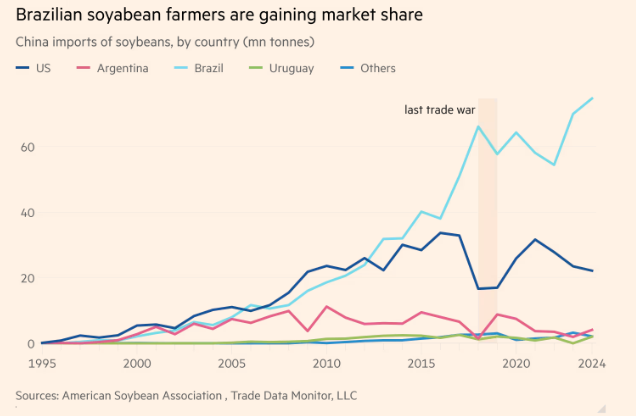
China's Soybean Boycott - Key Questions Before Trump-Xi Meeting China's Soybean Boycott - Key Questions Before Trump-Xi Meeting At the end of last week, new details emerged via a Wall Street Journal report outlining the Trump administration's potential farm bailout, estimated to be in the range of $10 billion to $14 billion, aimed at cushioning farmers amid China's pivot in agricultural purchases to Brazil. Trump blasted China last week, saying Beijing was "hurting" American farmers during the ongoing trade negotiations, and noted that soybeans would be a major topic in his upcoming meeting with Chinese President Xi Jinping.  Soybeans and agricultural purchases have yet again become a central battleground in US-China trade talks.  To make sense of it all, https://www.bloomberg.com/news/articles/2025-10-03/why-china-is-refusing-to-buy-us-soybeans provided readers with a Q&A breakdown about the soybean debate ahead of the Trump-Xi meeting at the Asia-Pacific Economic Cooperation summit, which begins in late October: Why is China refusing to buy U.S. soybeans? China hasn't purchased any soybeans from the current U.S. harvest. U.S. Treasury Secretary Scott Bessent and other administration officials say Beijing is using soybeans as leverage in broader trade negotiations. Earlier this year, the two countries came to a temporary truce that lowered tariffs and eased export controls, but that agreement expires in November. Trump has accused China of holding off "for negotiating reasons only." This season, Beijing has instead turned to South America. Brazil and Argentina have been supplying soybeans for China's animal feed producers and oil extraction "crushers," filling a need usually met by the U.S. How is this impacting U.S. soybean farmers? The fallout for farmers has been significant. In 2024, the U.S. made up about one-fifth of China's soybean imports, worth more than $12 billion, and those sales represented more than half of the value of all U.S. soybean exports. Without that market, growers are left with fewer buyers and weaker prices. Across the U.S. Midwest, farmers are watching storage bins fill up as harvests roll in. Researchers at Purdue University warn that higher costs for fertilizer, seed, and chemicals — combined with falling soybean prices — are squeezing profits. Many growers are choosing to store crops rather than sell at steep losses. That pain ripples across the industry. Grain elevators, processors, and the railroads that move soybeans across the country are all affected by the slowdown. Does Washington have leverage to pressure Beijing into changing its policy? The Trump administration has suggested it does. Bessent predicted a "pretty big breakthrough" from the next round of talks. Trump has promised to put soybeans at the top of his agenda when he meets Xi. However, Republican senators left a meeting on Sept. 30 with the U.S. ambassador to China discouraged, saying Beijing has little intention of resuming purchases anytime soon. Trump has said his administration will use funds collected from tariffs to provide farmer relief. On Sept. 24, Agriculture Secretary Brooke Rollins promised a new aid package "in the next couple of weeks," though the federal shutdown complicates the picture. Are there risks for China? Yes, but they're limited in the short run. China's massive animal agriculture industry needs soybeans to produce animal feed. But Chinese crushers and farmers have already built up higher-than-usual inventories, and government reserves provide a further cushion. That gives Beijing room to wait until early 2026 before it feels pressure to buy more from abroad. China's reliance on Brazil and Argentina brings long-term risks, however. With fewer suppliers, a future weather shock could prove costly, even as Beijing's tilt toward Brazilian beans is boosting output from the world's top grower. What are soybeans used for? Soybeans are essential to China's food system. The bulk of imports are crushed into meal for animal feed for pigs, which supply most of the country's meat, and other livestock. Soy oil is also widely used for cooking and food products. Soybeans are also processed into biofuels and industrial products. Has China boycotted U.S. soybeans before? Yes. During Trump's first term, Beijing slashed purchases of U.S. soybeans as part of the 2018–2019 trade war. That pressure helped push the Trump administration to agree to the so-called Phase One deal. Under that agreement, China pledged to buy tens of billions of dollars' worth of U.S. farm goods, including soybeans, in exchange for tariff relief. Trump later blamed his successor, Joe Biden, for not adequately enforcing the agreement. The current standoff looks similar. Once again, China is using soybeans as leverage to counter U.S. tariffs and restrictions. Related: Key chart to understand China's pivot: image . . . Tue, 10/07/2025 - 05:45
Goaded By Tariffs, European Pharmaceutical Industry Pivots To The US Goaded By Tariffs, European Pharmaceutical Industry Pivots To The US The U.S. tariff policy and its unmatched pharmaceutical market are pulling European drugmakers to invest more heavily, from new manufacturing plants to U.S. stock listings and discount pricing deals. image Since early 2025, European drugmakers have stepped up their U.S. presence. In the most recent move, the United Kingdom’s giant AstraZeneca on Sept. 29 a direct listing on the New York Stock Exchange, just months after pledging $50 billion of U.S. investment by 2030. The UK-headquartered Indivior has likewise committed at least $20 billion in American projects through 2030. The moves reflect both the pull of the U.S. market, which 📄.pdf for more than half of global prescription medicine sales in 2024, and the push of political signals from Washington. On Sept. 25, President Donald Trump, after months of warning about pharmaceutical tariffs, a 100 percent levy on imports of branded and patented medicines from Oct. 1 unless manufacturers build plants in the United States. “Pharmaceutical companies are very cognizant of what the White House is saying, and they’re acting accordingly,” Russ Mould, investment director at British investment platform AJ Bell, told The Epoch Times. He said that the United States, as the world’s largest economy and the biggest pharmaceutical market, was not a place where any chief executive wanted to risk being put at a competitive disadvantage. US Market Dwarfs Its Peers According to 📄.pdf from the European Federation of Pharmaceutical Industries and Associations (EFPIA), North America represented 54.8 percent of global prescription sales in 2024, compared with 22.7 percent for Europe. Between 2019 and 2023, two-thirds of new drug launches were made first in the United States, compared with just 16 percent across Europe’s top five markets. That dominance has left non-U.S. drugmakers highly exposed to tariff risk. The European Union nearly €120 billion ($127 billion) worth of medicines to the United States in 2024, making America its largest pharmaceutical trading partner, according to the European Commission. The United Kingdom alone shipped £7 billion ($8.5 billion) in pharmaceutical products across the Atlantic in the year to March 2025, UK government 📄.pdf show. Industry analysts say the U.S. tariff policy, combined with Trump’s push for lower U.S. drug prices, are accelerating strategic shifts. “It does look as though it is the direction of travel,” said Susannah Streeter, money and markets analyst at UK consultancy Consultable told The Epoch Times. “If companies are planning to build a factory in the United States, they will be exempt from extra tariffs. So this is concentrating minds among pharma giants about where to locate future manufacturing facilities.” Streeter said the trend of companies shifting stock exchange listings from Europe to the United States depends largely on where their core business is located. In AstraZeneca’s case, U.S. revenues in the first quarter of 2025 📄.pdf roughly 42 percent of regional sales. Smaller firms, Streeter said, are less likely to make such a move due to the capital required and the need for an established U.S. customer base. “It’s quite a big undertaking. You certainly require a lot of capital to start moving entire operations, uprooting them and moving across the United States. Obviously you would need to make sure that you have a strong customer base there … So the bigger companies, it’s probably more likely that you’d see movement more quickly.” For investors, she said the rationale behind these shifts is to avoid higher duties that could raise the cost of drugs in the United States. “The hope is that they will avoid increased duties, which would make the drugs more expensive … so that they can ensure that their drugs get the widest possible customer base,” Streeter said. The Push From Europe and the UK Britain far less on medicines overall, just 9 percent of its healthcare budget, compared with 15–17 percent in France, Germany, and Italy, data from the Association of the British Pharmaceutical Industry (ABPI) show. Streeter said this helps explain “why you see moves away from the UK first.” In the United Kingdom, drug companies have to hand back a large share of sales under government rebate schemes. In 2025, firms in the main voluntary scheme will 31.3 percent from July, averaging 23.4 percent across the year. Rates are set to climb further to 24.3 percent in 2026 and 26 percent in 2027. By comparison, clawbacks are far lower in other European countries—about 7 percent in Germany, 9 percent in Ireland, and 5–12 percent in France, according to the Association of the British Pharmaceutical Industry. The pressure is not limited to Britain. The European Union is also rewriting its drug rules, which determine how long companies can sell a new medicine without competition from generics. In June 2025, EU governments https://www.consilium.europa.eu/en/press/press-releases/2025/06/04/pharma-package-council-agrees-its-position-on-new-rules-for-a-fairer-and-more-competitive-eu-pharmaceutical-sector/ a plan to give firms at least eight years of protection, plus up to two extra years in some cases. US Price Pressures and the Pfizer Deal While Washington is also pressing for lower drug prices, the U.S. still offers greater rewards than Europe thanks to its size, deeper stock market liquidity, and new drug launch priority. Following the Sept. 30 Reuters he expected announcements “one by one in the coming days and weeks.” Both https://www.astrazeneca-us.com/media/press-releases/2025/AstraZeneca-launches-direct-to-consumer-platform-to-expand-access-to-medications-for-US-patients-including-those-living-with-chronic-conditions.html also unveiled measures on Sept. 26 aimed at expanding affordability. For some companies, the U.S. market also looks more attractive because of its financial depth. “The London Stock Exchange has been suffering from lower levels of liquidity, and that has been a concern, certainly compared to the United States, where there’s been a huge amount of trading activity,” said Streeter. “There are—there are concerns about that, certainly in London.” Tariff Uncertainty and Investment Outlook Uncertainty remains around how U.S. tariffs will be applied, particularly for EU countries. Under a reached with the United States in July, tariffs on pharmaceuticals were capped at 15 percent. The Trump administration formally Dublin would study the impact of the broader tariff announcements, but welcomed the exemptions for EU products under the agreement. In parallel, the United States and the United Kingdom to work on giving UK-made medicines and ingredients better trade terms, depending on the outcome of a U.S. review of whether certain imports threaten national security. “I still think that there is a question mark surrounding how onerous the tariffs would actually be, particularly for European Union-based drugs companies,” Streeter said. Meanwhile, U.S.-based financial services and investment research firm Morningstar said in a Sept. 25 that tariffs on imported pharmaceuticals would likely have only a limited long-term effect on major drugmakers. The firm estimated that a 15 percent tariff would reduce earnings by about 9 percent for U.S. companies and 6 percent for European ones, but said the impact would likely be eased by steps such as outsourcing production and securing multiple suppliers for key ingredients. Analysts noted that European groups such as AstraZeneca and Novartis face higher upfront costs to expand in the United States, but could benefit from lower trade risks over time. Tue, 10/07/2025 - 05:00

Germany's "Debt Boom": Merz's €500 Billion Gamble Is Keynesian Madness On Steroids Germany's "Debt Boom": Merz's €500 Billion Gamble Is Keynesian Madness On Steroids Submitted by Thomas Kolbe  In Berlin’s government circles, anticipation is rising: the massive debt program is ready for launch. Soon, the 500-billion-euro credit package—disguised as a “special fund”—will hit the economy like a tidal wave, supposedly to free the country from its chronic recession. Looking back, Chancellor Friedrich Merz’s term in office will likely be remembered for one thing above all: his gigantic debt orgy. Half a trillion euros in new borrowing—added on top of the already planned annual deficit of 3.3% of GDP—are supposed to reignite the faltering economic engine over the next decade. Maastricht Is History Year after year, the debt mountain, already 65% of GDP, will grow by another 1.15% in new debt. The annual net borrowing thus climbs to 4.6%—a far cry from the once “sacred” Maastricht thresholds. Those days are long gone. Berlin hopes for a Keynesian miracle, ignoring the fact that such policies always deepen structural problems rather than solving them. According to , citing insider sources, Economics Minister Katharina Reiche (CDU) will present the new growth figures on Wednesday. Her ministry’s outlook aligns closely with the joint forecast of Germany’s leading economic institutes: both the DIW and RWI now expect GDP growth of 1.3% for 2026 and 1.4% for 2027. All of them are counting on the debt stimulus—more is better, and qualitative questions or the limits of economic planning have long since disappeared from view. The belief that the economy can be centrally managed is now dogma in Berlin. The free market is treated as an adversary. Merz’s “Turning Point” Chancellor Merz recently declared a “turnaround” in investment flows. After years of massive capital flight, he now claims that money is returning to Germany. He seems to believe that the additional €50 billion in new loans—mostly directed into climate projects, infrastructure, and military expansion—will trigger a private investment boom. Through state guarantees, private capital is to be “mobilized.” It’s a wager that debt-driven stimulus will revive the economy. In reality, it’s Habeck-style logic—industrial decay and bankruptcies are baked into the cake. Label Fraud and Voodoo Economics This “growth” is a statistical illusion. It doesn’t reflect market-driven investment or real demand—it’s a debt-fueled mirage, a bonfire lit by the printing press. The consequences will be devastating: taxpayers will foot the bill through higher taxes or inflation once the new credit mass meets a stagnant economy and limited supply, pushing prices up. True prosperity and growth must be measured differently. In a free market, goods and services arise from genuine demand. The state, by contrast, becomes a consumption factor that destroys purchasing power through bureaucracy. Capital Markets Under Strain The same applies to investment. Ideologically driven projects like the “green transformation” are, in truth, capital destruction programs. They drain scarce resources from the private sector, drive up financing costs, and tighten the labor market by tying up workers in unproductive bureaucracies. For context: the currently stands at about 50%. With a planned new debt ratio of 4.7% next year and projected GDP growth of only 1.3%, the private sector would need to shrink by roughly 3.4% in real terms to make the math work. In other words: Germany is already deep in a debt spiral where each additional euro of public borrowing yields diminishing growth. The government plans to raise spending another 4–5% next year—piling more weight onto the private economy’s back. As the state expands, the productive backbone contracts. Berlin calls it “progress.” The “New Dawn” of the Merz Government The administration is now preparing to inject its vast debt package into the parched channels of the green subsidy industry and the emerging war economy. On German Unity Day, Merz wrapped this in lofty rhetoric—speaking of renewal, vigor, and optimism, urging citizens not to be paralyzed by fear. But behind this staged optimism lies nothing of substance. Not a word about who will ultimately pay the bill for this credit-fueled firework—through taxes, inflation, and the erosion of savings. This isn’t a “new dawn.” It’s a demolition party. While Berlin and Brussels double down on propping up their state-fed pseudo-industries, others are moving in the opposite direction. In the U.S., fiscal burdens for citizens and businesses are falling. In https://de.marketscreener.com/boerse-nachrichten/desantis-strebt-die-abschaffung-der-grundsteuer-in-florida-an-ce7d59d8dc8ef122 , lawmakers are even discussing abolishing property tax altogether. Washington is deregulating the energy sector, freeing it from the CO₂ straitjacket—while in Germany, every effort to restore market order gets buried under green dogma. March Into Eco-Socialism Quite the opposite: Berlin is already paving the way to refinance its debt binge through higher inheritance taxes and the abolition of the spousal tax break. Merz is working overtime to expand an already overextended state sector—now consuming more than half of the economy—while crowding out private enterprise step by step. His pledge to cut bureaucratic costs by €16 billion and eliminate 8,000 public jobs belongs in the realm of political fairy tales. The distribution of the new debt torrent alone will require thousands of new administrators. Germany is on a fatal path—into a new form of eco-socialism where the state is once again the center of the universe and the market is reduced to a mere auxiliary engine to keep the fragile edifice afloat for a little while longer. * * *  About the author: Thomas Kolbe, born in 1978 in Neuss/ Germany, is a graduate economist. For over 25 years, he has worked as a journalist and media producer for clients from various industries and business associations. As a publicist, he focuses on economic processes and observes geopolitical events from the perspective of the capital markets. His publications follow a philosophy that focuses on the individual and their right to self-determination. Tue, 10/07/2025 - 03:30