
Just as the US justice decides whether Google will have to divest its web browser, Chrome, a new generation of rivals emerges, bringing built-in artificial intelligence “assistants” as their differentiator.
It’s quite likely a coincidence, but it’s still curious. There are several asterisks to this story, starting with the fact that these new rivals are built on top of Chrome’s foundation, Chromium. I’ll set those asterisks aside, though, because the more important question is whether these assistants are here to stay.
[Dia]( ), from The Browser Company; [Comet](https://www.perplexity.ai/comet ), from Perplexity; [Edge](
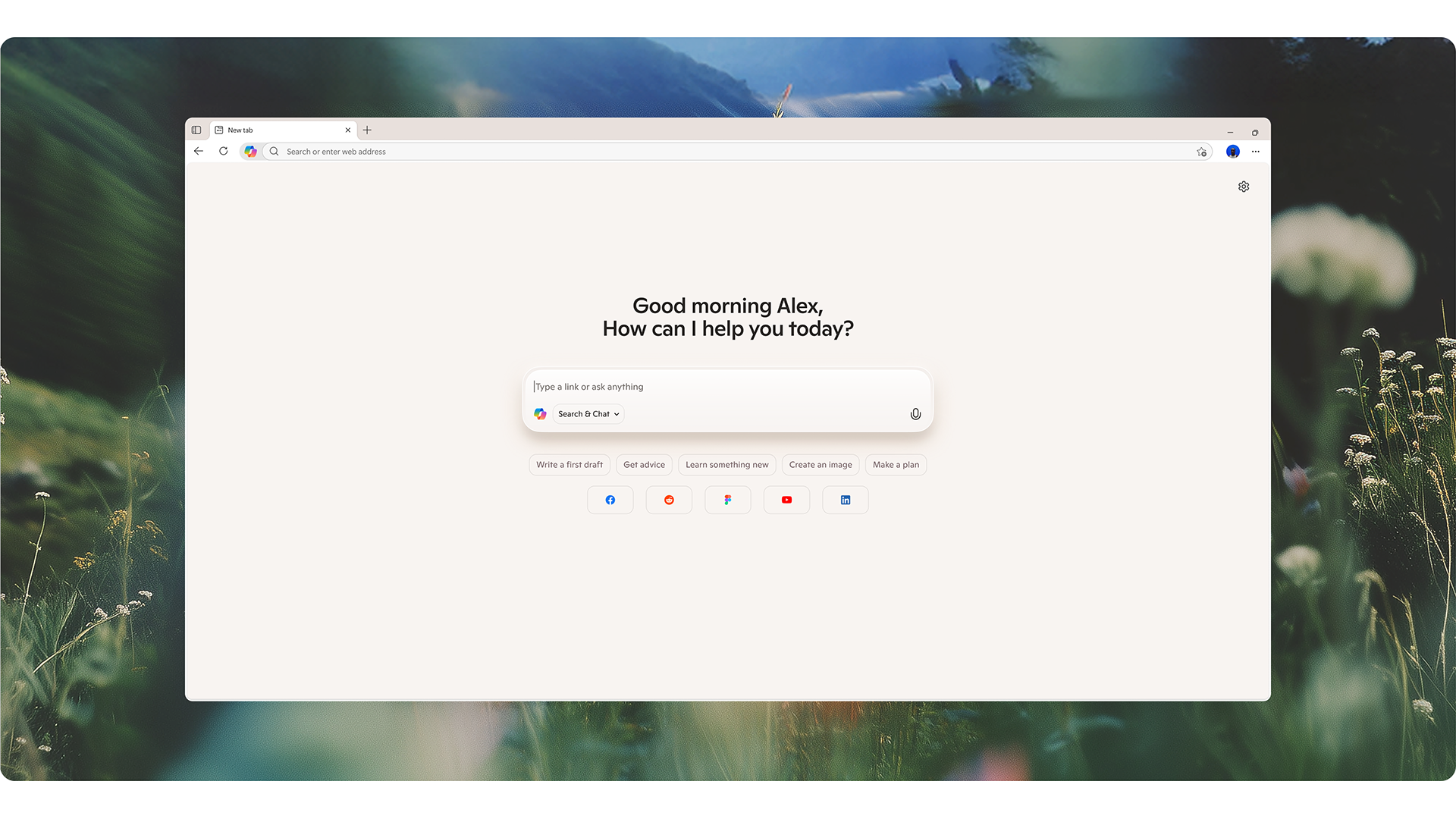 ), from Microsoft; and [Chrome itself](
 ) from Google. Not yet announced, but already on the horizon, is also [OpenAI’s browser](https://www.reuters.com/business/media-telecom/openai-release-web-browser-challenge-google-chrome-2025-07-09/ ).
All of these, new or retread, bring an “assistant,” or built-in generative AI. Beyond the things any ChatGPT does (answer questions and hallucinate), the assistants can work with more context and perform actions directly on websites. For example, analyzing multiple open tabs simultaneously to summarize them or sending emails on your behalf through Gmail.
***
Many people already use generative AIs. On ChatGPT alone, from OpenAI, there are [700 million people](
) from Google. Not yet announced, but already on the horizon, is also [OpenAI’s browser](https://www.reuters.com/business/media-telecom/openai-release-web-browser-challenge-google-chrome-2025-07-09/ ).
All of these, new or retread, bring an “assistant,” or built-in generative AI. Beyond the things any ChatGPT does (answer questions and hallucinate), the assistants can work with more context and perform actions directly on websites. For example, analyzing multiple open tabs simultaneously to summarize them or sending emails on your behalf through Gmail.
***
Many people already use generative AIs. On ChatGPT alone, from OpenAI, there are [700 million people]( ) who use the service at least once a week. On Google, [450 million](
 ) turn to Gemini at least once a month. There seems to be demand.
I haven’t had the chance to use any of these “smart” browsers yet, so I’m relying on companies’ promises and third-party reports.
The Browser Company burned investors’ money to produce [this commercial]( ) showing use cases.
American journalist Joanna Stern, a Comet adopter, is full of praise. [In her newsletter](
) turn to Gemini at least once a month. There seems to be demand.
I haven’t had the chance to use any of these “smart” browsers yet, so I’m relying on companies’ promises and third-party reports.
The Browser Company burned investors’ money to produce [this commercial]( ) showing use cases.
American journalist Joanna Stern, a Comet adopter, is full of praise. [In her newsletter](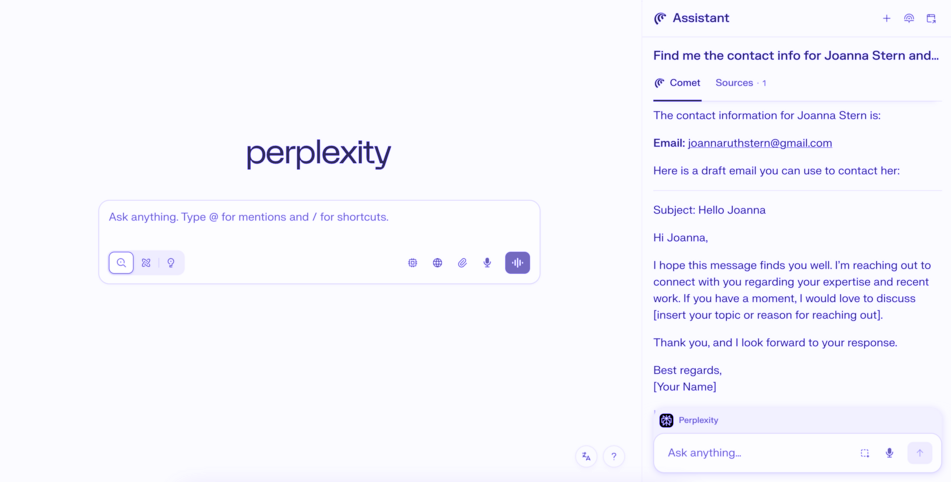 ), she said she replaced a flesh-and-blood assistant, whom she had hired earlier this year to help research her new book, with Perplexity’s browser:
> For example, this week I wanted to find people who had been laid off from customer service jobs because of AI. I told the Comet assistant to find LinkedIn posts from people talking about it and then draft a note to them for me. In less than a minute, it scanned posts and comments, pulled a few names and links, and started drafting outreach messages. They were right there in the sidebar—ready for me to review.
***
I understand the appeal and recognize the potential demand. Still, two concerns won’t leave my mind.
The first is the impact that AI-powered web browsers will have on the web itself. AI imposes itself between visitor and site, weakening a relationship that’s already limping. If sites are reduced to input for AIs, what’s the motivation to publish one?
The immediate response from those living off SEO (search engine optimization) is to [shift focus to “GEO”](
), she said she replaced a flesh-and-blood assistant, whom she had hired earlier this year to help research her new book, with Perplexity’s browser:
> For example, this week I wanted to find people who had been laid off from customer service jobs because of AI. I told the Comet assistant to find LinkedIn posts from people talking about it and then draft a note to them for me. In less than a minute, it scanned posts and comments, pulled a few names and links, and started drafting outreach messages. They were right there in the sidebar—ready for me to review.
***
I understand the appeal and recognize the potential demand. Still, two concerns won’t leave my mind.
The first is the impact that AI-powered web browsers will have on the web itself. AI imposes itself between visitor and site, weakening a relationship that’s already limping. If sites are reduced to input for AIs, what’s the motivation to publish one?
The immediate response from those living off SEO (search engine optimization) is to [shift focus to “GEO”]( ) (generative engine optimization). It might even make sense for a commercial site whose purpose is to sell. For informational sites, newspapers, blogs, and small personal projects, “GEO” seems pointless to me.
The other concern falls on trust. What guarantees that the people Comet selected for Joanna’s interviews fit the profile? Did she review the AI assistant’s selection? If so, did this take less time than it would have taken her to do the research alone, without assistance, or through her former human assistant?
There’s also the need to trust (or ignore) the AIs themselves and the companies behind them. Judging by the profile and track record of these providers, they might be asking too much.
In April this year, Aravind Srinivas, Perplexity’s CEO, said in a podcast that [he wanted to have a browser to](
) (generative engine optimization). It might even make sense for a commercial site whose purpose is to sell. For informational sites, newspapers, blogs, and small personal projects, “GEO” seems pointless to me.
The other concern falls on trust. What guarantees that the people Comet selected for Joanna’s interviews fit the profile? Did she review the AI assistant’s selection? If so, did this take less time than it would have taken her to do the research alone, without assistance, or through her former human assistant?
There’s also the need to trust (or ignore) the AIs themselves and the companies behind them. Judging by the profile and track record of these providers, they might be asking too much.
In April this year, Aravind Srinivas, Perplexity’s CEO, said in a podcast that [he wanted to have a browser to]( ):
> That’s kind of one of the other reasons we wanted to build a browser, is we want to get data even outside the app to better understand you. Because some of the prompts that people do in these AIs is purely work-related. It’s not like that’s personal. On the other hand, what are the things you’re buying; which hotels are you going [to]; which restaurants are you going to; what are you spending time browsing, tells us so much more about you.
It doesn’t stop there:
> We plan to use all the context to build a better user profile and, maybe you know, through our discover feed we could show some ads there.
Of course. Obviously.
***
I still make very specific uses of generative AIs, almost always through [DuckDuckGo’s interface](https://duck.ai/ ), which presents itself as disposable — nothing I chat with the AI is recorded or used to profile me, show ads, train LLMs, or anything similar.
This doesn’t mean I’ll resist browsers powered by AI assistants to the end. At some point, given the intensity with which companies in the sector are investing in the technology, something like this will probably appear in my browser, in all of them.
I’ll experiment, it might be useful to some extent, but I don’t intend to leave the good old web aside, as exclusive territory for AIs. There are things a robot can’t (or shouldn’t) do for us.
):
> That’s kind of one of the other reasons we wanted to build a browser, is we want to get data even outside the app to better understand you. Because some of the prompts that people do in these AIs is purely work-related. It’s not like that’s personal. On the other hand, what are the things you’re buying; which hotels are you going [to]; which restaurants are you going to; what are you spending time browsing, tells us so much more about you.
It doesn’t stop there:
> We plan to use all the context to build a better user profile and, maybe you know, through our discover feed we could show some ads there.
Of course. Obviously.
***
I still make very specific uses of generative AIs, almost always through [DuckDuckGo’s interface](https://duck.ai/ ), which presents itself as disposable — nothing I chat with the AI is recorded or used to profile me, show ads, train LLMs, or anything similar.
This doesn’t mean I’ll resist browsers powered by AI assistants to the end. At some point, given the intensity with which companies in the sector are investing in the technology, something like this will probably appear in my browser, in all of them.
I’ll experiment, it might be useful to some extent, but I don’t intend to leave the good old web aside, as exclusive territory for AIs. There are things a robot can’t (or shouldn’t) do for us.
Dia Browser
Dia Browser | AI Chat With Your Tabs
Dia is the AI browser from The Browser Company. Chat with your tabs, write in your own voice, learn and plan faster, shop, and more — all with pr...
Microsoft Edge Blog
Introducing Copilot Mode in Edge: A new way to browse the web
For decades, the way we’ve used browsers has remained linear: open a tab (or 20), search for something, read a page, repeat. It’s a model thatâ...
Gemini
Gemini in Chrome — AI assistance, right in your browser
Get helpful AI assistance from Gemini in Chrome. Understand more, work faster, and unlock new ideas effortlessly on any webpage.
X (formerly Twitter)
Nick Turley (@nickaturley) on X
This week, ChatGPT is on track to reach 700M weekly active users — up from 500M at the end of March and 4× since last year. Every day, people an...
X (formerly Twitter)
Sundar Pichai (@sundarpichai) on X
2/ Strong growth in AI usage across our products and platforms:
We’re processing 980 trillion+ monthly tokens across our products and APIs (up...
Joanna Stern's Newsletter
Perplexity Comet Review: My Assistant Is Now a Web Browser 💻🕸️
How Perplexity's Comet browser became my new book research assistant
Intelligencer
SEO Is Dead. Say Hello to GEO.
Search-engine optimization now feels dated. Generative-engine optimization is all about trying to trick AI chatbots.
TechCrunch
Perplexity CEO says its browser will track everything users do online to sell 'hyper personalized' ads | TechCrunch
Perplexity is building its own browser is to collect data on everything users do outside of its own app to sell ads.