It is crazy to think that an inflation hedge doesn't exist and cannot exist as the system is designed. By hedging inflation, I don't mean hedging CPI in the official narrative sense, but hedging something closer to: True Cost-of-Living inflation (TCLI): - Housing (owner-equivalent or rent), - Food/energy, - Health/education, - Tax drag & bracket creep, - Plus "mandatory" subscription/rail rents (connectivity, ID, cloud, payments). A universal clean hedge would be a widely available, legally favored asset that: - earns TCLI-tracked return + spread, - can't be haircut or taxed ad hoc, - is safe from FX/capital controls, - is open to the median saver. If that existed: - They couldn't use financial repression to shrink real debt. - Every crisis would require overt default, explicit austerity, or explicit wealth taxes. - Political and legitimacy cost would explode. Therefore, any candidate that approaches this holy grail will: - be taxed, - regulated, - capped in size, - or confined to insiders. That's why: - Real estate gets property tax, zoning, and mortgage dependence. - Gold gets paperization, FX/capital controls and demonization in crises. - Bitcoin gets paperization, KYC moats, surveillance, and MoE friction. Outrunning real inflation is supposed to require speculation, timing and path risk. The system's design enforces it. In other words, inflation hedge is "to what extent does this asset": - participate in inflated nominal flows, - resist being harvested by repression, - survive the policy responses, - and stay convertible into real resources? So a clean, zero-risk, everyone-can-use-it hedge is structurally impossible. As soon as something approaches that, it gets co-opted, taxed, capped, paperized, or regulated into compliance.

Once you start to research the financial system, it really humbles you. You have to start questioning everything you think you know. The official narrative story often diverges from reality. For example, the real cycle is Debt/Liquidity, not Debt/GDP. Almost every "crisis" is: not enough liquidity, at the right points in the plumbing, to roll the existing debt at a politically tolerable price. - "Too much liquidity vs debt" β†’ bubbles. - "Too much debt vs liquidity" β†’ refinancing crisis. In other words, they inflate the currency at will and rug-pull at will. Richard Werner did a good job of illustrating this with his book and documentary "Princes of the Yen" ( ), where he documents how the banking cartel allowed Japanese, South Koreans, etc, to lever up with credit (caused inflation), then intentionally pulled liquidity and rug-pulled everyone into a depression. Think of the global system as a giant refinancing conveyor belt: - The belt carries maturing obligations (bonds, loans, repos, margin). - The operators can spray liquidity foam (reserves, facilities, swap lines, fiscal deficits, regulatory relief) to keep things rolling. - If they over-spray, everything slides too easily β†’ bubbles. - If they under-spray, some pile of debt sticks, catches fire, and they have to choose who burns. Debt/Liquidity = how well that belt runs at any given time. Debt/GDP is the fake, official narrative story (it is stock vs flow), whereas Debt/Liquidity is about timing and plumbing. Every financial crisis is basically a roll failure (not enough liquidity to roll the existing debt at tolerable prices). They can under-inject liquidity by however much they want, whenever they want, to rug-pull whoever they want and bail out whoever they want. Each Debt/Liquidity cycle is another Hegelian loop: - Problem: refi wall + under-injection of liquidity β†’ crisis. - Reaction: fear, political pressure. - Solution: more centralized rails (CBDCs, ID, Palantir-style governance OS, tighter collateral rules). We're basically playing a game we can't win and have been for a very long time. If you think in Debt/Liquidity terms, "macro" stops being a blur and becomes a timing overlay on top of a very stable structural direction: more debt, more crises, more patches, more rails. Michael Howell does a good job of illustrating the Debt/Liquidity relationship with this chart. - "Too much liquidity vs debt" β†’ bubbles. - "Too much debt vs liquidity" β†’ refinancing crisis. image
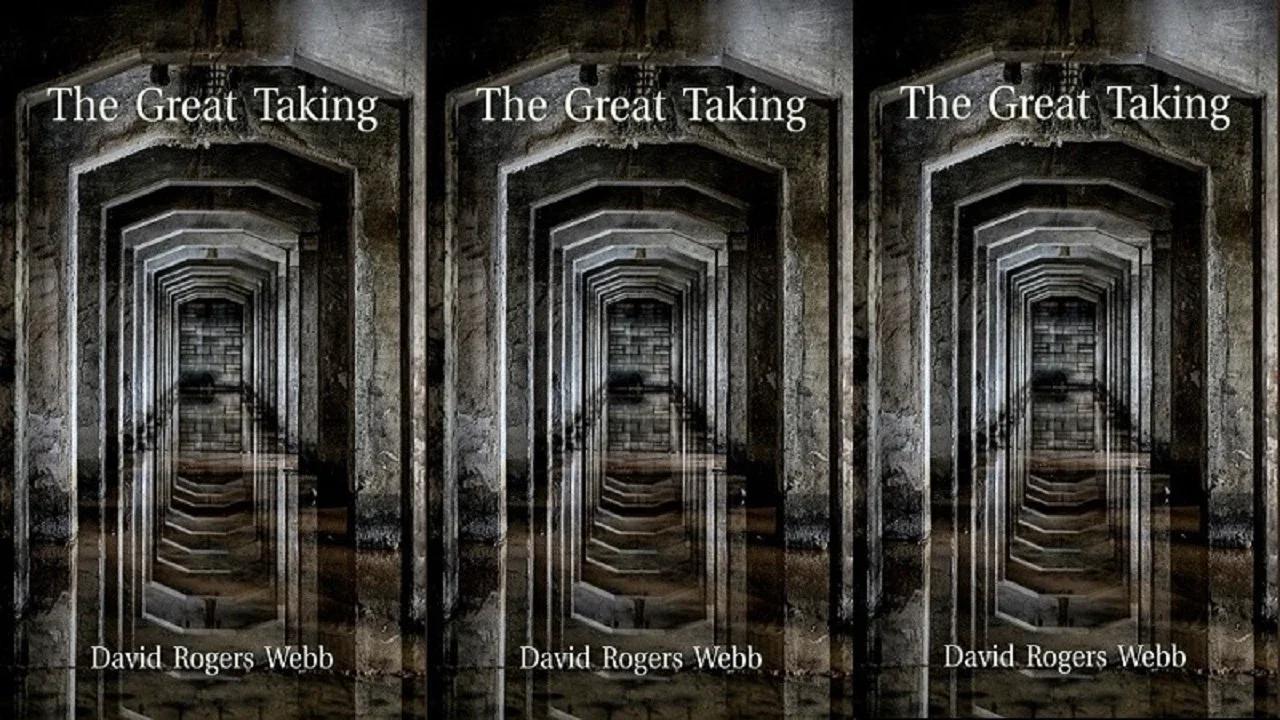
At this point, everyone knows about CBDCs (programmable money) which are basically already here via stablecoins. image However, not many people talk about tokenization. This video on the Great Taking by David Rogers Webb is a must watch: - Tokenization is very similar to CBDCs and stablecoins. You can treat tokenization as: turning everything important into machine-readable, permissioned, and programmable state. It's not about "democratizing finance". From the Controllers' perspective tokenization is: - "Put all economically and politically relevant claims into a standardized, queryable, enforceable substrate that my AI and rules engines can see and control in real time." That means: - Every claim (cash, bond, equity, fund share, real estate interest, invoice, carbon credit, benefit entitlement, even identity attribute) Has: - a unique ID - a traceable history - an attached policy envelope (who can hold it, where, when, under what rules) - and lives on a ledger that some small set of institutions can gate, pause, or rewrite under color of law. Once that's true, everything else (UX, DeFi theater, "24/7 markets") is just skin. If you wanted the option of a Great Taking (even as a tail): - You'd want everything that matters dematerialized, held by intermediaries, and expressed as tokens on systems controlled by a small institutional set. You'd want clear legal language that: - distinguishes between beneficial and legal ownership, and - puts token-holders behind secured creditors and CCPs (central counterparties). You'd want resolution / bail-in logic encoded in contracts and, over time, in token standards. Tokenization = the technical implementation layer that makes a Great Taking operationally feasible in days, not years. Even if they never push the red button, the option value is enormous from a Controller perspective. You can think of tokenization as: - State capacity up, latency down. They can see more, faster, and push changes directly through code. - Expropriation gets smoother. Instead of chaotic bank runs and court fights, you get parameter changes on tokens. - Going off-grid gets harder. You don't just opt out of banks; you opt out of the graph where ownership lives. - Plausible deniability increases. They can say "the smart contract did it" or "it's in the prospectus" instead of "we ordered a seizure". Tokenization is basically the bridge that makes a "Great Taking" technically trivial if they ever need it. Whether they press that button is a separate probability question β€” but the incentives to build the option are very clear. If you look into Ethereum, it is evolving into the programmable sandbox for dollar/compliance rails: - Governance testbed for next-gen money/IDs - Volatility sink for speculative energy - Prototype control rail for tokenization / programmable finance - Moral placebo ("bankless", "decentralized") for the ideologically restless Ethereum is like the R&D lab + casino + early beta for future regulated rails. They use Ethereum as a test environment and build their own prod networks separately - e.g. Canton which recently partnered with DTCC, JP Morgan, etc.
You'll own nothing and you'll be happy (predictive programming)
Is Quantum Computing a threat to Bitcoin (my take)