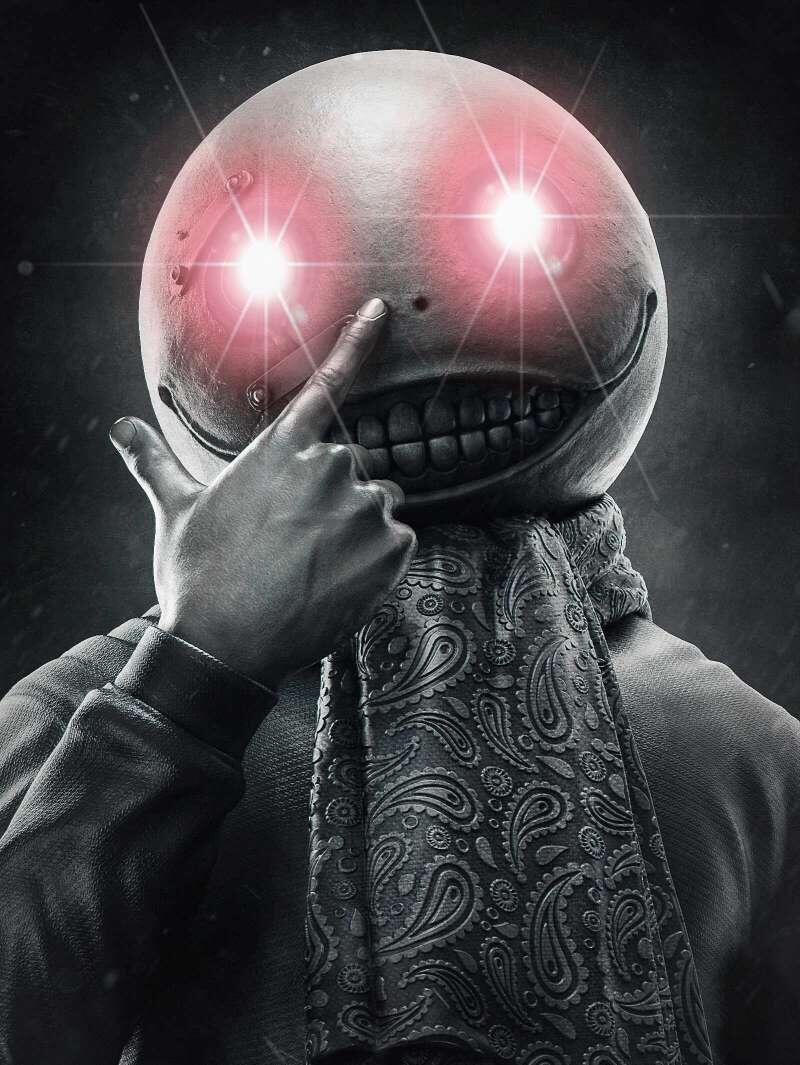
Depressingly classic duopoly shit. duopolies present a false dichotomy and generate polarization rage and suck up all the attention. of course there are always more than two options (an infinite number!), and the more the two try to tell you, "not only are there NOT more than two - but there's not even two! i'm the only solution!" the more the "lesser evil" fallacy shows itself.
yes, schelling points are often useful - but they can easily mutate into a malicious antipattern when you mistake the "party" for the goal itself.
you see this in political parties, you see it in culture wars and moral panics, you see it in Bitcoin right now.
i'm not advocating for **A** Third Way in any of the above, but suggesting that you notice - in yourself - when your original abstract goals and ideals get quietly replaced with 'party-as-solution', whatever those goals may be; ethical governance, prosperity, social justice, individual freedom, neutral permisnionless electronic global money...
i don't believe it is possible to "temporarily use a party to get towards your goal and then ditch it later" because they are darwinian organisms that are empowered exponentially by our energy. it only takes a few small injections of energy and attention to nearly permanently entrench the rot as an apex predator. (and you're the prey, obvs, silly)
the only way to win is to not play
> "Certainly the price for refusing [to play] is high, but that there is a price at all points to the fact that oppressors themselves acknowledge that even the weakest of their subjects must agree to be oppressed. If the subjects were unresisting puppets or automatons, no threat would be necessary, and no price would be paid thus"
James Carse; _Finite and Infinite Games_
coordination problems coordination problems coordination problems coordination problems coordination problems