Thread

🛡️
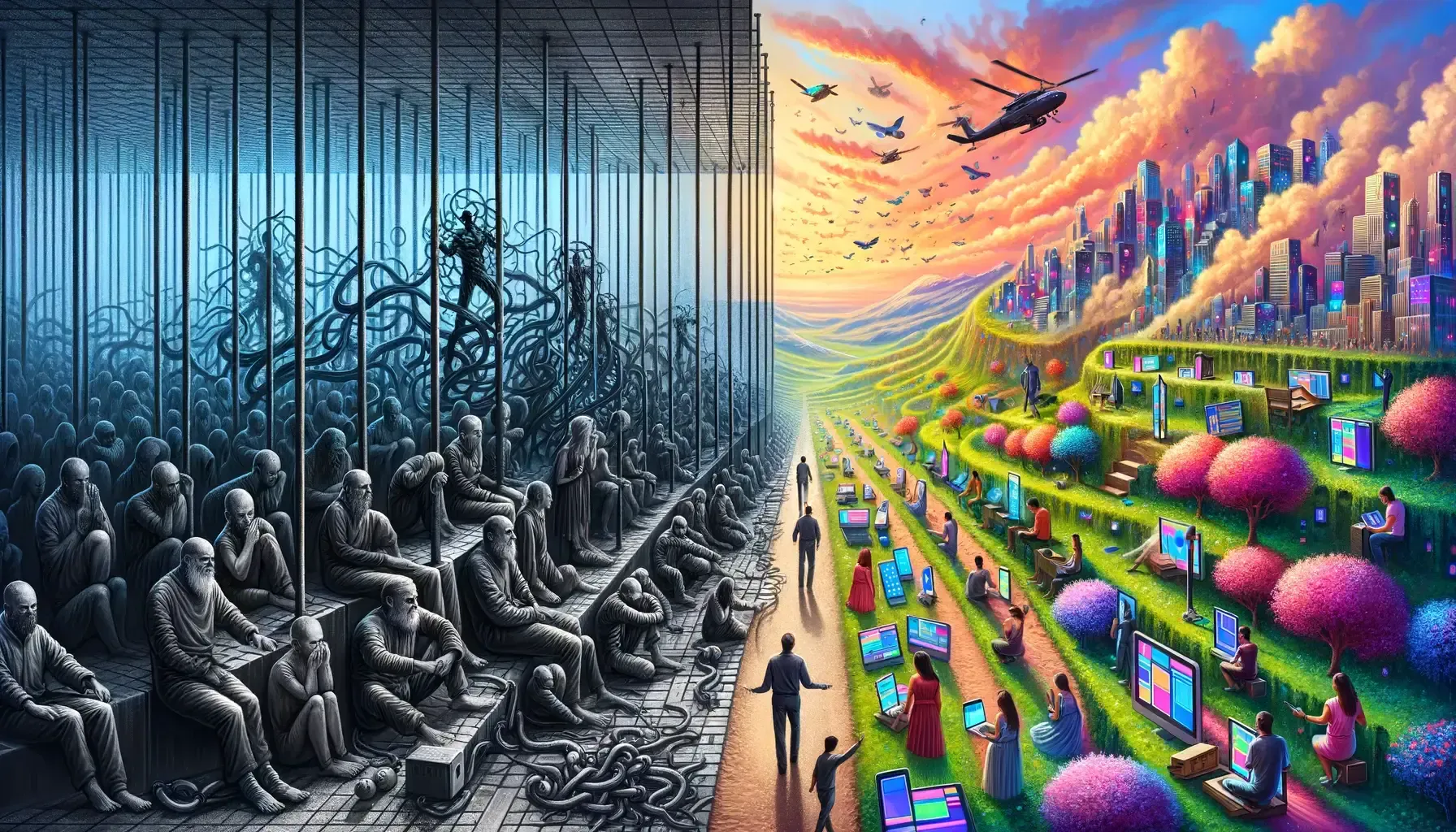
The last 20 years on the internet has been a story of “network effects” based on vertical integration & user data lock-in. I strongly believe the next 20 will be a story of breaking down the walled gardens and of power shifting back to users. Our laptops and phones are more powerful that the servers that powered the original SaaS companies. Running software (using containers and package managers) has become trivial even for the most newb technical users. The pendulum is swinging back. It's time to free our data and our workflows from the SaaS prisons. Open, interoperable, and decentralized networks are the future.

Replies (12)

Pendulum swing is real, can feel it everywhere in all things. Big part of why I subscribe to the Fourth Turning concept, you see time and human nature is cyclical if you study history and we’re experiencing pole shifts in real time.
🛡️
An important caveat to this that might not be immediately obvious. Open, interoperable, and decentralized are not benefits that are immediately obvious to users. Very few come for the ideology. We have to build stunningly beautiful, fun, easy-to-use products that genuinely solve problems for users if we want to win. View quoted note →
I think this caveat is something a lot of people on Nostr don’t get. “Better” isn’t good enough to disrupt an established network effect. That’s why railroad tracks are the same width as Roman chariot cart wheels. Network effects are that strong. They can last for 1000 years. To upset a network effect, you typically have to be about 10x better than the thing you’re replacing. Like telegram replacing the pony express. Learning Morse code was hard, but sending messages at the speed of light was just so next level that it upset the whole communication system.
> Open, interoperable, and decentralized networks are the future. That'd be great. I doubt they will exit their niche though. How about this abstraction? Centralized mega data silo companies developed through some kind of techno-cultural evolution .. they evolved to form a symbiosis with the intuitive portion of the brain of internet users. While the rational reasoning (thinking about long-term benefit) of internet users _should have_ led them away from centralized enshittified platforms and towards nerdy decentralized free networks .. it didn't. Why? Because people live most of their lives intuitively. They shop at Amazon because it's easy, even though in the long-term the oligopoly harms everyone but the shareholders. Will the intuition of the majority of people ever opt for decentralized networks?