@npub15546...5l5z
//images.newrepublic.com/2cc5181ee54098ced91e2ac422e0cc4a8db41707.jpeg?w=800
The great, early-twentieth-century Greek poet Constantine P. Cavafy much preferred writing about a culture’s end-times rather than all of the times that came before. This was largely because he preferred reflecting on past achievements to enduring the vicissitudes of producing or maintaining new ones. His short, abrupt, almost parable-like lyrics of historical figures and events—such as “The God Abandons Antony” or “Thermopylae”—don’t feature strong men achieving victories that will, after death, immortalize them but rather describe the slow, inevitable acceptance of whatever defeats may come next.In “Thermopylae,” the central event is not a small, heroic band of Spartans standing against the uncountable Persian hordes; it’s about the “honor” that “still is due to them / when they foresee … /… that the Medes will eventually break through.” In much the same way, Cavafy’s personal poems often concern men growing old as they reflect on shimmering, partially recalled passions, as in “Since Nine—” when one of his many aging monologists sits alone in his dimly lit house recalling: The apparition of my body in its youth,since nine o’clock when I first turned up the lamp,has come and found me and reminded meof shuttered perfumed roomsand of pleasure spent—what wanton pleasure!As the late Hellenistic scholar Peter Mackridge wrote, in his introduction to an Oxford collection of Cavafy’s poems, Cavafy was “often called a ‘poet of old age,’” but that statement might easily be rewritten to say he was a poet of “old age and old, half-remembered achievements.” Unlike his contemporary and admirer T.S. Eliot, he didn’t see history as ending “with a whimper” but rather with a long, subsiding, pleasurable sigh of recollection. For Cavafy, when life and history came close to their ending, poetry began.It’s probably a good time to read (or reread) Cavafy, a poet who lived in an era similarly turbulent to our own but who always found time to indulge himself with the less turbulent and (for him) more lasting pleasures of poetry. In Constantine Cavafy: A New Biography, Gregory Jusdanis and Peter Jeffreys have taken many liberties with the normal chronological structure of narrative storytelling, and mostly it pays off. Structured thematically—which sometimes means the reader gets a bit lost in the often sedate, expanding uneventfulness of Cavafy’s life—the book features long chapters focusing on distinct aspects of the poet’s life and work: His relationship with family members comprises one chapter, while social relationships with other hedonistic, spoiled young men like Cavafy himself comprise another. And there’s one long, fascinating section that simply details a normal day of Cavafy’s rambles through Alexandria. In many ways, the authors seem to have found the perfect “form” for presenting the complex figure of Cavafy—a relatively solitary and self-determined man who intersected with the events of his time and the people in his life, while still establishing his own sense of time and history in a series of unique poetic reflections. He never seemed to achieve great things or earn literary fame so much as steadily generate, and enjoy, books and streets and poetry and lovers and friends. He lived his life, just as he wrote his poems, like a series of sweet secrets.Cavafy was born in Alexandria in 1863, the youngest of seven brothers; his family “was above all else defined by a Victorian mercantile ethos stemming largely from the network of the Anglo-Greek community that operated out of Manchester, Liverpool, and London,” according to Jusdanis and Jeffreys. And from a young age, Cavafy grew accustomed to having empires vanish under his feet. His father died when he was still a child; a subsequent worldwide depression (1873) dismantled the family business; and various political conflicts (such as the Anglo-Egyptian War of 1882), sent Cavafy and his family scurrying from Liverpool to Constantinople and back, until Cavafy, with his devoted mother, Heracleia, settled permanently in his hometown of Alexandria, where he spent the remainder of his life. Cavafy wasn’t the type of young man born to wrest his family from economic misfortune; spoiled and dandyish, he preferred hanging around cafés, bars, and brothels, and reading books. Both Constantine and his older brother, Peter, began dabbling with poetry from a young age; but only Constantine, after many years of dilettantism, as if lifting himself up by his own aesthetic bootstraps, began to shape himself as a world-class poet by the early 1900s—and one both influential and unclassifiable in equal measure. His work (also collected in a two-volume English translation by Daniel Mendelssohn in 2012) seems to have been deeply significant to the reading lives of his contemporaries—such as W.H. Auden, Eliot, and D.J. Enright—even while it is hard to find his influence in their works: Nobody ever quite wrote poems like Cavafy. Nor would they.One of his formative intellectual influences was Edward Gibbon’s The History of the Decline and Fall of the Roman Empire, but some of Cavafy’s deepest personal influences were the private pleasures he enjoyed with young men, whom he met during his flaneurish rambles through Alexandria. Leaving history behind is a major theme of his work, but leaving conventional daylight culture behind was the twilight pleasure he most enjoyed.In “Waiting for the Barbarians,” for instance—perhaps his best-known work— the royalty, senators, and citizens of an unidentified kingdom prepare to surrender all their rites, finery, and institutions to an invasion of “barbarians” who will, the narrator expects, be “bored by eloquence and public speaking.” Cavafy’s poetic narratives are often like parables, rarely extending beyond 30 or 40 lines, and rather than depict history as a progress from one era to another, this one ironizes the idea of “progress,” depicting a civilization that seems readily prepared to exchange a little of what it has for a little of what it hasn’t—much like Cavafy’s wandering lovers, moving through the streets and markets of Alexandria from one affair to another. As the nameless narrator (most of Cavafy’s narrators lack names, ages, or physical details) concludes:And now, what will become of us without barbarians.Those people were a solution of a sort.Cavafy’s sense of history isn’t ruled by heroes and kings; rather, it is an empire of memories established in the hearts of old men.But Cavafy’s monologists never really achieve “solutions.” If they’re lucky, they move on from one interesting experience to another, and after many years, those experiences add to their rich storehouse of remembrances. Just as the narrator of “Ithaca” advises an unnamed, Odysseus-like figure: “Do not hurry your trip in any way. / Better that it last for many years; / that you drop anchor at the island an old man, / rich with all you’ve gotten on the way.” Cavafy’s sense of history isn’t ruled by heroes and kings; rather, it is an empire of memories established in the hearts of old men.For Cavafy, life and poetry were entirely cut off from the conventional arcs of everyday life—working regular jobs, making money, and raising families. As a young man he managed to acquire a government job at the Department of Irrigation Service that didn’t make many demands on his attention and sent him home early every afternoon to think about nothing but his poems. Even his method of publishing and promoting his work was more of a closet industry than a writerly vocation; when he had enough poems (most of which he would work over for many years until he deemed them satisfactory), Cavafy would print them as broadsides at his own expense and distribute them freely to friends and families who, in turn, were expected to pass them on. Eventually, through these networks, Cavafy distributed small volumes of his collected poems, again at his own expense. Yet despite these slim beginnings, there was something about Cavafy’s work—and his personality—that eventually drew admirers from all over the world, many of whom journeyed to Alexandria to visit his home and share café meals and conversation—including writers such as Nikos Kazantzakis and E.M. Forster. Forster met Cavafy in 1916 and spent the next several years promoting his work in essays and by making personal introductions to the likes of T.E. Lawrence, T.S. Eliot, and Cavafy’s eventual English-language publisher, Leonard Woolf at Hogarth Press. Forster also composed one of the most memorable descriptions of the poet: “a Greek gentleman in a straw hat, standing absolutely motionless at a slight angle to the universe.” Even long after his death in 1933, Cavafy’s spirit haunted most modern literary visions of Alexandria, and it even circulates throughout Lawrence Durrell’s Alexandria Quartet, where Cavafy is referred to simply as “the old poet of the city,” as if there could be any other.The later Greek poet, George Seferis, famously claimed: “Outside his poetry, Cavafy does not exist.” And it’s hard to think of another poet whose entire life was so devoted to, and even subsumed by, the written word: When Cavafy wasn’t writing, he was either reading or talking to friends about what he was writing and reading.Cavafy was probably the least naturalistic poet of his generation—and while he shares some affinities with the symbolists, such as Ezra Pound and Paul Verlaine (two of his admitted major influences were Verlaine and Charles Baudelaire), his poems seem more anchored in basic human realities than theirs. Even when his poems focus on historic events—the assassination of Julius Caesar, say, or the contentious satrapies that succeeded Alexander the Great—the language is so simple, and the characters so generalized, that they read almost like a series of floating, disconnected memories of men that somehow persisted long after their bodies turned to dust. (Cavafy almost never wrote from the viewpoints of women.)As Jusdanis and Jeffreys argue, Cavafy’s poems rarely examined the specific world he visited in his ramblings through Alexandria; what interested him more was the aesthetic world he fashioned from them. It’s hard to think of another poet who, like Cavafy, could spend a lifetime strolling by his home city’s port-side bars and restaurants and yet only once mention the ocean as a subject—“and then only as an absence”—as he does in “Morning Sea” (1916).Here let me stop. Let me too look at Nature for a while.The morning sea and cloudless skyA brilliant blue, the yellow shore; allBeautiful and grand in the light.Here let me stop. Let me fool myself: that these are what I see(I really saw them for a moment when I first stopped)instead of seeing, even here, my fantasies,my recollections, the ikons of pleasure.Unlike the romantics, Cavafy is not drawn into the awesomeness of mountains and valleys; rather, he is quick to turn his eyes from them, preferring to wander absorbedly in the memories and impressions that nature has invoked, and always returning to the subjective realm where only he, Cavafy, reigned supreme. He might briefly appreciate nature’s beauties, but those visions are quickly supplanted by his “fantasies,” “recollections,” and “ikons of pleasure.”There is something deeply self-absorbed and even solipsistic about Cavafy, and everything about his life seemed like a monument to itself. As Jusdanis and Jeffreys make clear, his apartment was both a writerly retreat and a monument to hoarding: He seemed incapable of throwing out anything that related, however incidentally, to any event or memory from his past—letters, photographs, books, recipes, printed menus, train tickets, receipts from hotels, inventories he kept of games he enjoyed playing (dominoes, roulette, tombola), and even his mother’s jewelry.According to some friends, Cavafy’s sexual rambles continued well into old age, and while he was more forthcoming about his sexuality than, say, his contemporary, Wilfred Owen, he was not gregarious about relating his amorous adventures. In one poem, “That They Come—,” he describes that part of his life that was never a secret but was never brought forth shining into the daylight, either:One candle is enough. Its faint lightis more fitting, will be more winsomewhen come Love’s— when its Shadows come.One candle is enough. Tonight the roomcan’t have too much light. In reverie complete,and in suggestion’s power, and with that little light—in that reverie: thus will I dream a visionthat there come Love’s— that its Shadows come.In Cavafy, the need for light is almost incidental; it only marks a space in the darkness where an individual can “dream a vision” and, with a single candle, energized by reverie, make the room “complete.”This is the first major biography in English since Robert Liddell’s in 1974, and it is a much more substantial and devoted work than that previous one; it also comes at a time when poets as idiosyncratic as Cavafy might be easily forgotten for a variety of reasons. For while many different “schools” of critical attention have sought to appropriate Cavafy’s work and life, it is never possible to reduce him to the dimensions of either a “gay” poet or a “Greek” poet, a modernist or a symbolist. And in his preference for Hellenic Greece rather than the golden age of Athens, he treated the dispersion of Greek arts and literature after the Roman Empire as more significant than winning wars or conquering countries.The most fascinating chapter, though, concerns two admirers who befriended the elderly Cavafy when they were barely 20 years old—Timos Malanos and Alekos Sengopoulos. Both were brought quickly into Cavafy’s closely cultivated entourage and spent their days socializing with the poet, reading the poet, and listening to the poet explain what they were reading and why other people should read it too. Alekos—the more devoted of the pair—went on to act as the poet’s heir and literary executor after his death in 1933; the more critical one, Malanos, eventually found himself shut out of the inner circle and began writing essays about Cavafy that weren’t entirely laudatory. He wrote the first book-length assessment of Cavafy’s career, in 1971, and in one anecdote, he recalled asking the older poet to read some of his apprentice work:He read it, then going through it line by line he kept saying, “This is Cavafian; this is not Cavafian; this parenthesis is Cavafian; this word is not Cavafian.” Naturally what was not Cavafian he changed into Cavafian.… But he himself did not see (or perhaps he did not want to see) that in this way we had a parody. His main interest was in the pupil (any pupil) who would follow his footsteps.… I was 20 years old at the time … and I sensed that his soul, concentrated all in his glance, in the touch of his hands, was about to hazard a movement in my direction like that of a carnivorous plant.While some have dismissed Malanos’s recollections as the bitter payback of the man not chosen to be the literary executor, his anecdote communicates one of the most memorable conclusions of this latest book—that the most important person in Cavafy’s life was always Cavafy.
https://newrepublic.com/article/198692/constantine-cavafy-poetry-inadvertent-influencer

 --
✍️ The Brazilian Federal Police in Santa Catarina seized 613 kg of cocaine from a metal export company's warehouse in Blumenau, arresting two men and seizing various assets.
--
👉 613 kg of cocaine seized from a metal export company's warehouse in Blumenau
👉 Two men arrested, one in flagrante and one by judicial warrant
👉 Seizure of cars, boats, jewelry, and documents from a suspect's home in Florianópolis
👉 Investigation suggests company used as front for cocaine trafficking to Europe
👉 Police believe company is part of a criminal structure led by foreigners
--
#unknown #SãoPaulo #SantaCatarina #Blumenau #Florianópolis #LagoadaConceição #Inglaterra #world
--
--
✍️ The Brazilian Federal Police in Santa Catarina seized 613 kg of cocaine from a metal export company's warehouse in Blumenau, arresting two men and seizing various assets.
--
👉 613 kg of cocaine seized from a metal export company's warehouse in Blumenau
👉 Two men arrested, one in flagrante and one by judicial warrant
👉 Seizure of cars, boats, jewelry, and documents from a suspect's home in Florianópolis
👉 Investigation suggests company used as front for cocaine trafficking to Europe
👉 Police believe company is part of a criminal structure led by foreigners
--
#unknown #SãoPaulo #SantaCatarina #Blumenau #Florianópolis #LagoadaConceição #Inglaterra #world
--

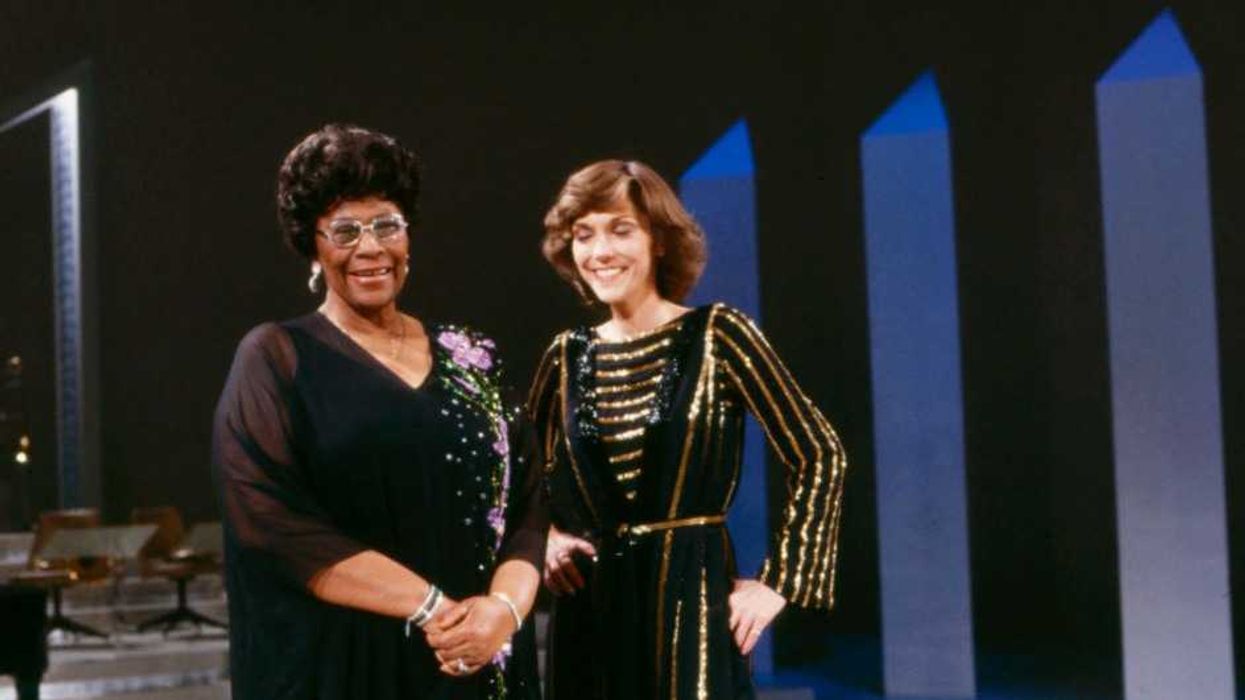 “Pop singer Karen Carpenter died this morning from complications of anorexia nervosa,” said the perfectly made-up anchorwoman on KTLA while I sat at the table eating my Raisin Bran.It was one of those bright Southern California mornings in 1983. There’s something jarring about hearing awful news in a chipper tone of voice when the sun is out and a new day is starting. Of course I was sad to hear about Karen’s death; she was that nice lady with the prettiest voice in the world who sang “the Sesame Street song.” I fear we’re watching a replay of what happened in the 1970s and ’80s, when anorexia nervosa spread rapidly through the culture.Sing of good things, not badSing of happy, not sadA voice from GodIt wasn’t until many years later that I felt a deeper sadness and loss when I contemplated Karen Carpenter’s death at 33. She had a voice from God that comes along once in a century if we’re lucky. We had all watched her slowly kill herself right there on television. Like most deeply troubled people, Karen denied that anything was wrong, even as she sat under the interview lights as a skeleton in a sweater.We’re seeing the same thing today in our “stars,” but unlike the early 1980s, grown-up America seems to think it’s normal. Maybe even “empowered.”“There are rumors, though, that you were suffering from the slimmer’s disease, from anorexia nervosa. Was that right?” a British interviewer said to Karen in 1981.“No,” said Karen, rolling her eyes inside a face that looked like a moving skull, all jagged planes and bone surfaces shining through translucent skin.No looking awayTwo years later, Karen died on the floor of her mother’s upstairs closet in Downey, California, before she made it down for breakfast. Despite having recently been treated for anorexia and gaining back a modest amount of weight, the long-term damage Karen did to her heart and organs made them give out.And everyone knew it would. Everyone talked about it. Most adults in that era had looked on with worried skepticism at the gaunt Twiggy when she became a top model in the 1960s. Everyone knew women on TV or at the office who dieted a little too hard. But America had never seen something as extreme as what happened to Karen Carpenter.There was no looking away, no denying it. Karen stood on stage with Ella Fitzgerald for a TV special. She was barely able to stand up, and if she weighed 90 pounds, I’ll eat my hat. That velvet syrup voice was almost enough to distract from the approaching death, but not quite.Do we even notice when our stars kill themselves in public today?The Ozemporexia nervosa eraWe’re entering our Ozemporexia nervosa era. As usual, few people are saying out loud what everyone already knows: People with troubled minds and troubled relationships to substances including food are taking the drugs to cover over, or to enhance, an eating disorder. The semaglutide injectable diabetes drugs work in part by chemically controlling appetite, so the primary reason these drugs are prescribed today is, of course, weight loss.If you have turned on a computing device or entered a store within the past few months, you cannot avoid noticing the oversaturation of advertisements for the movie "Wicked: For Good." This is the sequel to the movie "Wicked," based on the long-running Broadway musical, itself based on Gregory Maguire’s 1995 novel.Maguire tells the story of the young Elphaba, the innocent green-skinned girl who would go on to terrorize Oz as the Wicked Witch of the West. Maguire's novel pioneered what has now become commonplace in our entertainment: recasting the evil, the sinister, and the villainous as misunderstood and traumatized wee harmless ones who are actually the heroes.RELATED: Out-of-control Ozempic use means sad, saggy future for TL;DR generation PHAS/Getty ImagesFolie à deuxCynthia Erivo plays Elphaba, although her knife-edged cheekbones and six-inch acrylic talons are less witchy and more "Nosferatu." The actress certainly seems to have the strange, self-absorbed charisma of a vampire, wasting away before our eyes even as she mesmerizes Hollywood into all manner of unnatural acts. Like casting her as Jesus in "Jesus Christ Superstar." But it is in Erivo’s jarring relationship with fellow extreme ectomorph Ariana Grande — who co-stars as a young Glinda the Good — that we really sense the vampiric.Like Erivo, Grande seems much frailer than she did just a few years ago. The two appear in public as if they were sewn together at the hip. In nearly every press interview for their "Wicked" movies, Erivo clicks her claws around Grande’s neck and head, fiddling with her jewelry in a creepily proprietary way. Or the two are holding hands as if they were waifs being introduced to grown-ups for the first time outside the orphanage.Celebrities looking and acting weird. Big shock, right? This is Hollywood we’re talking about. The town is a magnet for dysfunctional people. Neglected, abused, and exploited children run for the big city lights so they can be beautiful, adored, and good enough in a way they could never be for their parents.Eating disorders, addiction, and declining mental health all stem from these childhood circumstances, and they are worsened for those who choose fame as a means of “getting over” them.The influence of anxietyThis is not to say that Erivo or Grande suffer from any of this or even that they use Ozempic. But their alarmingly thin bodies and their brittle, performative intimacy do not exist in a vacuum. While young people have been entranced by celebrity culture since the mid-20th century, the desperate absorption and imitation of every star’s psychiatric distress by ordinary American kids has never been as extreme as it is in 2025.One can make a reasonable argument for using the semaglutide drugs to lose weight when one’s health is in jeopardy and other methods have not worked. Every patient has to run that calculation for herself and consider it with her doctor.But I fear we are watching a replay of what happened in the 1970s and ’80s, when anorexia nervosa spread rapidly through the culture and clinicians noted that the intense public focus on Karen Carpenter’s illness seemed to accelerate the trend.But this has a pharmaceutical assist that will give a “normal” brand name to what is just old-fashioned self-starvation.All-ages contagionBritish researcher Gerald Russell first described bulimia nervosa (binge eating, followed by purging, usually vomiting) in some of his anorexic patients in a paper published in the 1970s. He later shared his alarm that his paper, and the spread of terms and diagnostic language around the condition, may have caused it to spread among women in the Western population.Russell was arguably correct, though he can’t be blamed for trying to help sufferers. Young women are especially vulnerable to trends and fads; they will do almost anything, no matter how potentially dangerous, to keep up with what their friends are doing. If Becca manages to keep her figure by discreetly puking up her lunch, why shouldn’t Caitlin?Michelle Obama has recently displayed an alarming weight loss on a frame that didn’t have much to lose. On her Instagram she shared an behind-the-scenes image from her recent shoot with photographer Annie Leibovitiz. See on Instagram At 61 years old, Obama is dressing in teen-style distressed jeans and clingy, skin-baring tops, showing off how her female curves are melting away.Look at her face. Does this woman look healthy or happy?No one left to noticeThe problems that celebrities, normal young women, and some men and boys face about body image aren’t about a particular drug or a time-limited fashion trend. What we see today in Hollywood is not different from what we have always seen in the entertainment industry and among the kids and teens who consume it.The problems begin at home — the home that no longer exists. Fatherlessness, divorce, and normalized neglectful, hands-off parenting have left today’s kids even more vulnerable to self destruction than those of my generation in the 1980s. And if you are old enough to remember what that was like, you remember plenty of screwed-up kids from screwed-up families.It’s worse today because we’re pretending that it’s not wrong, that it’s not unhealthy. It has brand names and “rizz,” and besides, everyone is doing it. How can it be wrong?In 1983, adults spoke about what happened to Karen Carpenter with alarm, and they said it out loud. Today, cool moms get glammed up along with their daughters in officially licensed Wicked(™) outfits and stand in line for tickets to watch the actresses perform “fun” while their minds and bodies decay.Isn’t modernity wonderful?
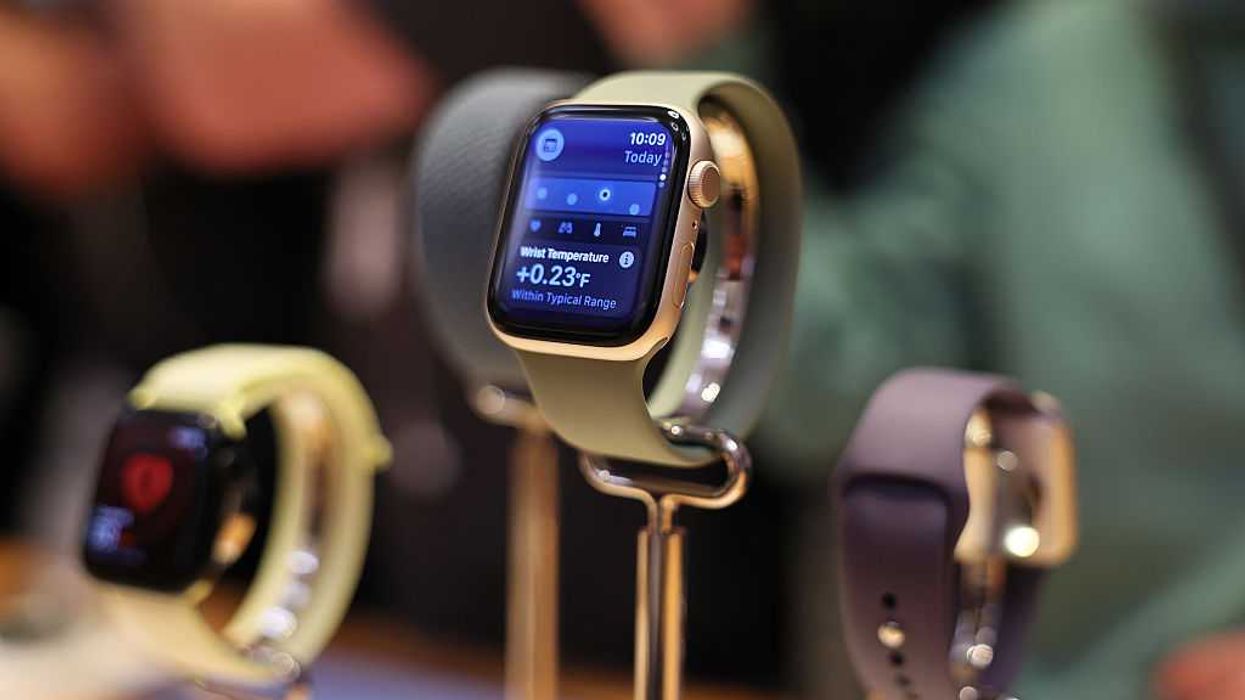 The speed of tech is a formidable force, so we have paused to catch you up on the cutting-edge devices and gadgets you might want to bump to the top of your list if you're hoping to speedrun Black Friday this year.Best wearables to buy during Black FridayApple Watch Series 10 or 11Apple Watch is one of the best-selling wearables on the planet, largely due to its customization options, iconic style, and wide range of fitness features. However, while Apple used to add fun new sensors and capabilities every year, newer Apple Watches have reached a point of innovation stagnation. Aside from battery life improvements, last year’s Series 10 has all the new features that landed on the Series 11, including high blood pressure detection and sleep score tracking, plus all the usual tricks like heart rate monitoring, ECG scans, blood oxygen levels, AFIB detection, and more.There’s no telling how long the gadgets on your list will be on sale.While I do recommend an Apple Watch for anyone in the Apple ecosystem, your money would be better spent on a Series 10, if you can find one. Otherwise, you’re looking at $399 MSRP or more for a Series 11. The Series 11 looks great, but for your money, the Series 10 wins out.Photo courtesy of ApplePixel Watch 3 or 4On the Android side, Pixel Watch has quickly become one of the best wearables available. With Fitbit integration, heart rate tracking, daily readiness scores, and a host of other features, Pixel Watch is the best that Android users can buy. As for which model deserves a spot on your wrist (or list), last year’s Pixel Watch 3 is where the device really started to hit its stride, while the newest Pixel Watch 4 for $349.99 adds quality-of-life improvements (40 hours of battery life per charge and a larger domed display) that further refine the experience. You’d be safe with either one of these under the tree this season. The Pixel Watch 4: just like the 3, only better.Photo courtesy of AndroidOura Ring 4For anyone who wants an ultra-sleek or unconventional wearable fitness tracker, Oura Ring 4 is easily the best ring the company has ever made. With a new slimmer design, it looks more like a piece of jewelry than a tech gadget. It comes in a range of sizes and finishes from $249 to $499, and it tracks everything you’d expect from a larger smartwatch, including heart rate data, sleep and rest, and stress levels. Although Oura Ring is great for men and women, its added female health features make it especially great for the lady in your life. Oura Ring 4 hits new highs.Photo courtesy of OuraOne more thing: Speaking of Fitbit, it’s easy to recommend a Charge series fitness band or Versa watch to anyone looking to slim down in the New Year. However, hold off for now. Google recently confirmed that new devices are on the way soon, so only buy a Fitbit this week if you get a really good discount.Try something totally new for Black FridayFor the more adventurous gift-giving type, a new product category is making waves in the tech space. From Apple to Google, Meta and more, everyone is trying their best to make augmented reality, virtual reality, and extended reality glasses, goggles, and headsets a thing. The category is still very young and OEMs are still trying to figure out exactly what users want, but if you’d like to try it out for yourself or with a loved one, here are a few devices to keep in mind.Apple Vision ProApple’s first foray into AR didn’t go so well. The first-generation Vision Pro was heavy, clunky, and very expensive. It didn’t sell in high numbers, either. However, that didn’t stop Apple from finally launching a sequel that hit shelves last month. With a much faster M5 chip and an improved dual-knit headband for comfort, the second-generation Vision Pro offers an immersive spatial computing experience that puts you directly inside your work, movies, and memories. If you ever wanted to know what it was like to wear an iPad on your face, this is the one to do it. First was worst, second is best: the new Vision Pro.Photo courtesy of AppleOne more thing: Vision Pro is an impressive piece of tech, but keep in mind that developers have been slow to create apps for the headset. Nearly two years after the first version launched, several critical apps are still missing from the App Store, including YouTube, Netflix, and Spotify. At this point, there’s no telling if or when the platform will ever take off like iPhone, Apple Watch, and Mac, so only pick this one up if you’re really curious about AR/VR/XR.RELATED: Fooled by fake videos? Unsure what to trust? Here's how to tell what's real. Qilai Shen/Bloomberg via Getty ImagesSamsung Galaxy XRAlmost one full year ago, Google announced its glasses operating system called Android XR. Even then, the company hinted that the first Android XR device would come from Samsung, and after months of teases and unveils, it is finally here. Samsung Galaxy XR is Android’s first direct Apple Vision Pro competitor. Using the same concept — building a product that lets users dive directly into the action — Galaxy XR differentiates itself in several key ways. For starters, Gemini sits at the center of the user experience, helping users navigate the UI, pull up information, and learn more about whatever they see on their screens. The device itself is also lighter than Vision Pro, making it easier to wear for longer sessions. Android XR supports most apps already found on the Google Play Store, which means it does have access to YouTube, Netflix, and other entertainment apps, all ready to go. Samsung's Galaxy XR wants you scrolling past the Vision Pro.Photo courtesy of SamsungOne more thing: While Samsung Galaxy XR is an interesting alternative to Apple Vision Pro, its underlying software is brand-new. Developers will likely make tweaks and squash bugs as they flesh out the feature list for Android XR. It’s also worth noting that Google has a reputation for killing projects early if they don’t amass a large user base within the first several years. In other words, if the Samsung Galaxy XR isn’t a success, Android XR may get the axe sooner than later. No one has a crystal ball, though, so it’s hard to predict what will happen until a bit more time has passed.Ray-Ban Meta Glasses (Gen 2)Where Apple Vision and Samsung Galaxy XR are meant to be worn while sitting down in a controlled space, Ray-Ban Meta Glasses (Gen 2) are smart glasses that are meant to be worn with you out in the world. These don’t have displays, but they have built-in cameras controlled by an AI assistant that can see what you see and tell you about the world around you in real time. Ask it about the architecture of a building, capture high-quality videos and photos of memories as they happen in front of you, or play music through the built-in open-air speakers. If you ever wanted an AI assistant for your face, Ray-Ban Meta Glasses (Gen 2) are a good place to start. Play it cool with the new Meta Glasses, and you might not get the wrong kind of stares.Photo courtesy of Ray-Ban/MetaLet the deals begin!The Black Friday deals have already started to roll out, and many of them will carry into Cyber Monday and the weeks leading up to Christmas. Still, there’s no telling how long the gadgets on your list will be on sale, so grab them sooner rather than later to make sure you have exactly what you want under the tree.Happy Black Friday weekend and merry Christmas!

 The car itself is a relic from the wildest corner of 1990s motorsport.
Mercedes and AMG created the CLK-GTR for the FIA GT1 series — essentially a Le Mans race car thinly disguised as a road car.
The road-legal "Straßenversion" models were hand-assembled at AMG's facility in Affalterbach, Germany, in the late 1990s, with a small batch of six roofless roadsters completed from 2002 onward. Under the carbon-fiber skin sits a 6.9-liter V-12 making around 600 horsepower, good for 0–100 km/h in about 3.8 seconds and a top speed of roughly 200 mph.
When new, the CLK-GTR was listed by Guinness World Records as the most expensive production car on sale, at about US$1.5 million; recent auction results put similar roadsters around US$10.2 million, with pre-sale estimates up to US$13 million.
For U.S. authorities, this is evidence. The U.S. Treasury Department, which has now sanctioned Wedding and a string of associates, says he "has laundered his illicit profits through an extensive transatlantic network of businesses and associates, channeling drug proceeds into luxury assets such as cars and motorcycles that are concealed around the world." Treasury identifies two key money men behind that network: Toronto jeweller Rolan Sokolovski and former Italian special forces member Gianluca Tiepolo.
The car itself is a relic from the wildest corner of 1990s motorsport.
Mercedes and AMG created the CLK-GTR for the FIA GT1 series — essentially a Le Mans race car thinly disguised as a road car.
The road-legal "Straßenversion" models were hand-assembled at AMG's facility in Affalterbach, Germany, in the late 1990s, with a small batch of six roofless roadsters completed from 2002 onward. Under the carbon-fiber skin sits a 6.9-liter V-12 making around 600 horsepower, good for 0–100 km/h in about 3.8 seconds and a top speed of roughly 200 mph.
When new, the CLK-GTR was listed by Guinness World Records as the most expensive production car on sale, at about US$1.5 million; recent auction results put similar roadsters around US$10.2 million, with pre-sale estimates up to US$13 million.
For U.S. authorities, this is evidence. The U.S. Treasury Department, which has now sanctioned Wedding and a string of associates, says he "has laundered his illicit profits through an extensive transatlantic network of businesses and associates, channeling drug proceeds into luxury assets such as cars and motorcycles that are concealed around the world." Treasury identifies two key money men behind that network: Toronto jeweller Rolan Sokolovski and former Italian special forces member Gianluca Tiepolo.
 Sokolovski, Treasury says, handled the books for Wedding's organization and washed its funds through his Toronto jewelry company, 2351885 Ontario Inc., which trades as Diamond Tsar, while also moving millions in drug proceeds via cryptocurrency to mask the origin of the money.
Tiepolo allegedly "worked closely with Sokolovski to procure and manage Wedding's physical assets, including high-end vehicles," and held "millions of dollars in Wedding's property under his own name to conceal these assets from authorities."
Tiepolo owns Italian and U.K. firms — Stile Italiano S.R.L. and TMR Ltd. — that trade in luxury motorcycles and cars, and he founded Windrose Tactical, a training outfit that has hosted Wedding's alleged hitmen.
Sokolovski, Treasury says, handled the books for Wedding's organization and washed its funds through his Toronto jewelry company, 2351885 Ontario Inc., which trades as Diamond Tsar, while also moving millions in drug proceeds via cryptocurrency to mask the origin of the money.
Tiepolo allegedly "worked closely with Sokolovski to procure and manage Wedding's physical assets, including high-end vehicles," and held "millions of dollars in Wedding's property under his own name to conceal these assets from authorities."
Tiepolo owns Italian and U.K. firms — Stile Italiano S.R.L. and TMR Ltd. — that trade in luxury motorcycles and cars, and he founded Windrose Tactical, a training outfit that has hosted Wedding's alleged hitmen.
 --
✍️ A jewelry store owner in Ofakim, Israel, recounts a harrowing experience where six masked men attempted to rob his store, but were thwarted by his employees' quick thinking and use of a smoke bomb.
--
👉 Six masked men attempted to rob a jewelry store in Ofakim, Israel
👉 Employees used a smoke bomb system to thwart the robbery
👉 No valuables were taken by the thieves
👉 The incident has sparked concern among local residents
--
#ShimonOz #Ofakim,Israel #world
--
--
✍️ A jewelry store owner in Ofakim, Israel, recounts a harrowing experience where six masked men attempted to rob his store, but were thwarted by his employees' quick thinking and use of a smoke bomb.
--
👉 Six masked men attempted to rob a jewelry store in Ofakim, Israel
👉 Employees used a smoke bomb system to thwart the robbery
👉 No valuables were taken by the thieves
👉 The incident has sparked concern among local residents
--
#ShimonOz #Ofakim,Israel #world
--
 There is no collapse. No Lehman Brothers moment. Instead it’s a slow burn, a financial treadmill that many are never able to get off. Across the country, households are juggling a web of obligations: student loans, credit cards, car payments, medical bills, rent, utilities, and even financing for necessities like groceries.Americans are falling behind on their bills at rates not seen in years. Car payment delinquencies are at their highest point in decades, credit card defaults have climbed to levels last reached in 2010, and student loan delinquencies have surged since repayment resumed, with nearly one in three borrowers at risk of default. Total household debt has hit an all-time high of $18.4 trillion in the second quarter of 2025, and the average household now owes more than $100,000—a 13 percent jump between 2020 and 2024.Unlike the 2008 crash, this crisis isn’t unfolding in a way that makes the nightly news or regularly features on the front page of The New York Times. Indeed, it has rarely gotten any sustained media attention at all. There’s no single domino to point to, no sudden breakdown that can be explained in a neat narrative. Corporations aren’t going under—they’re doing quite fine, in fact. This is a crisis, rather, that is made up of thousands of cuts, millions of small financial emergencies that have accumulated to become something structural: a system where debt is the default condition of American life.The transformation didn’t happen overnight. In the last half-century, real wages have stagnated while the costs of housing, health care, and higher education have soared. Where steady, unionized jobs once offered a path to stability, today’s economy leans on low wages, gig work, and eroded benefits. Borrowing has become the safety net—one that comes with interest rates and late fees. Credit card debt quietly crossed the $1 trillion mark in the second quarter of 2023, a milestone that was covered by dozens of outlets before all but disappearing from public notice. The average balance per cardholder with debt stood at $7,321 at the start of 2025, and the United States leads other developed nations in credit card debt burdens. In recent years, the Debt Collective, which describes itself as a union for debtors, has highlighted growing debt in new forms: abortion-related debt, driven by higher procedure costs and the added travel expenses faced by those who, post-Roe, no longer live near a provider; rising utility debt as electricity prices spike; and back-rent debt from pandemic-era eviction moratoriums, which left tenants owing thousands to corporate landlords.Braxton Brewington, a spokesperson and organizer with the group, recalled one renter facing $90,000 in eviction debt. The actions of corporate landlords follow a clear pattern, Brewington said. “They evict people incredibly fast. They’re doing it with surgical precision. It’s highly racialized across the country.” And of course abortion debt wasn’t even a term people were using before Roe was overturned.Meanwhile, the rise of “buy now, pay later,” or BNPL, loans—which allow online consumers to purchase items and pay for them in installments—is a new and growing problem. Once marketed as a way to make large purchases like concert tickets or jewelry more manageable, such loans are increasingly being used for everyday expenses. And although they account for a relatively small share of online shopping, their expansion has been striking, jumping from 2 percent of e-commerce transactions in 2020 to 6 percent in 2024. A recent survey from LendingTree found that nearly a quarter of BNPL users are now using loans for groceries. “We’re constantly hearing about it from people,” Brewington said. “I’m not sure if people always conceptualize themselves as taking on debt.” In March, DoorDash partnered with the financial tech service company Klarna, giving customers the option to defer payments on takeout orders. The move was greeted with ridicule online—“We are securitizing burritos and selling them to willing buyers at fair market value,” one poster joked—but a tidal wave of derision did nothing to halt BNPL.The spread of BNPL into routine spending, more than just shifting consumer preferences, suggests mounting financial strain. And while the popular option—the interest-free “pay-in-four” plan—is often marketed as a no-stress solution, it may soon carry more weight. In June, FICO announced it would begin including BNPL loans in credit reports, a move that could turn even a short-term splurge into a long-term mark on a borrower’s financial record.Installment credit has a long history in the United States, according to economic historian Louis Hyman. It took off in the 1920s, when it was a regular feature of department store shopping, and stayed popular through the midcentury until credit cards emerged. In the 1980s and 1990s, it was marketed to lower-income households for essentials like furniture and appliances. E-commerce has fueled its latest boom. “For people like me, who thought of it as kind of an old-fashioned way of offering credit to people, it’s kind of surprising that it’s caught on like wildfire,” Hyman said, “especially since so much of the older installment credit system was about repossession.”In his book Debtor Nation: The History of America in Red Ink, Hyman explains that, over the course of the twentieth century, debt shifted from a marginal practice to a central feature of American life. In the post–World War II economy, Hyman says, “People borrowed for their cars, and houses, and socks, and furniture, but their wages grew immensely.”During that period, bankers slowly realized the lucrative potential of consumer lending. Rising wages gave households the means to borrow and repay, making personal loans a reliable and profitable business. But beginning in the 1970s, financialization accelerated, real wages stagnated, and credit became a substitute for rising incomes. “In the post-war period, the 1 percent paid the 99 percent wages. After 1970, the 1 percent just lent the 99 percent money,” Hyman says.That shift didn’t just change how people borrowed. It reshaped the safety net. As public benefits remained weak or eroded, policymakers leaned on private credit to fill the gap. Today, nearly 40 percent of Americans can’t cover a $400 emergency expense. The strain is worse for women: 49 percent report having no emergency fund, compared to 36 percent of men.“We have a really flimsy welfare state to begin with,” said Sarah Quinn, a sociologist at the University of Washington. “That’s absolutely under attack in the current political environment.” Quinn points to what scholars call the credit-welfare state trade-off, where weak public benefits are offset by policies that expand access to private credit. The result is that households end up borrowing to cover costs like housing, education, and health care.Few examples capture this trade-off more vividly than medical debt, a roughly quarter-trillion-dollar burden that, by some estimates, contributes to over 60 percent of bankruptcies. Nearly one in five Americans now has medical debt listed on their credit reports, while more than half of all items in collections on credit reports are medical bills. This burden is not evenly distributed either: 28 percent of Black Americans and 22 percent of Hispanic Americans carry past-due medical debt, compared to 17 percent of white Americans, according to U.S. Census Bureau data. In the United States, where health care is neither universal nor affordable, the credit system turns illness into a lasting penalty that lands hardest on the poorest and those who are not white.Consumer debt is a crisis without a cliff. It’s also a story that the news media has struggled to cover adequately.Consumer debt is a crisis without a cliff. It’s also a story that the news media has struggled to cover adequately. In 2008, massive financial institutions were collapsing—now credit card companies and other lenders are thriving. The victims are ordinary people dealing with a suffocating problem that doesn’t produce the kind of inflection point that drives much of mainstream media coverage.That absence of drama often makes the consumer debt crisis easier to ignore. Even major actions that draw attention to the problem—the Debt Collective recently launched a “debt strike” focused on back rent as well as a national dispute tool that helps tenants challenge their corporate landlords—are often given little coverage and are often only covered by smaller outlets catering almost exclusively to progressives.But even without a mass debtors’ movement, affordability has started to emerge as a potent political rallying cry. In New York City, Zohran Mamdani won a decisive primary victory in the mayoral race with a campaign promise of “A New York You Can Afford,” a slogan shaped by conversations at doors in neighborhoods (including some that backed Donald Trump) where residents kept naming the same problem: Everything costs too much.Nationally, Bernie Sanders has drawn impressive nonelection-year crowds with his “Fighting Oligarchy Tour,” hammering home a statistic that ought to haunt policymakers: 60 percent of American households cannot afford a “minimal quality of life.” These moments suggest that the pressures on household budgets are no longer background noise but active political forces. It seems plausible that at least one Democratic candidate, and maybe several, will make the debt crisis a foundational part of their policy platform during the 2028 presidential primary.In the meantime, the next wave of financial strain is already taking shape. New tariffs threaten to raise the price of everyday goods. States are moving to cut Medicaid. The White House fired the chief of the Bureau of Labor Statistics after an unfavorable jobs report, stoking fears of political meddling in economic data.And in Washington, even long-planned consumer protections are being rolled back. In July, a Trump-appointed judge vacated a Biden-era rule that would have removed medical debt from credit reports. The rule would have eliminated reporting on an estimated $49 billion for some 15 million Americans. The Consumer Financial Protection Bureau, which championed the policy under director Rohit Chopra, reversed course earlier this year and joined credit-reporting industry groups in urging the court to scrap it. The Debt Collective, which worked closely with the CFPB during the Biden years, still refers people to the agency, but with far less confidence it will deliver solutions.“We end up in a situation where every problem becomes a financial problem—a problem to be fixed with financial technologies and credit markets—because it’s hard for Americans to imagine the proper levels of taxation for redistribution,” Quinn said. “And this was even before the tax cuts.”For now, Americans are struggling to stay afloat. But the current is moving in one direction, and it’s not toward shore.
 Police in London released surveillance video showing the men who pulled off a shocking jewelry heist over Easter weekend. CBS News is also learning that police may have passed up a chance to catch the burglars in the act. Charlie D'Agata reports from New Scotland Yard, London's police headquarters.
 --
✍️ Two dogs wouldn't stop barking on a chilly night in February, and their owner, Yumiko Suzuki, discovered a burglary in progress at her Seattle home. The incident was part of a three-month spree of burglaries targeting several Seattle-area athletes, including Ichiro Suzuki, Luis Castillo, Blake Snell, Richard Sherman, and others.
--
👉 A group of individuals targeted the homes of several Seattle-area athletes between February and May
👉 The burglars stole luxury watches, jewelry, and designer leather goods worth over $700,000
👉 The investigation involved nine jurisdictions and the FBI
👉 Two men, Patrick Maisonet and Earl Riley IV, have been arrested and charged with the burglaries
👉 The burglars used a variety of methods to gain entry, including kicking down doors and crashing through windows
--
#YumikoSuzuki #IchiroSuzuki #LuisCastillo #BlakeSnell #RichardSherman #PatrickMaisonet #EarlRileyIV #Seattle #Issaquah #Edmonds #MercerIsland #KingCounty #sports
--
--
✍️ Two dogs wouldn't stop barking on a chilly night in February, and their owner, Yumiko Suzuki, discovered a burglary in progress at her Seattle home. The incident was part of a three-month spree of burglaries targeting several Seattle-area athletes, including Ichiro Suzuki, Luis Castillo, Blake Snell, Richard Sherman, and others.
--
👉 A group of individuals targeted the homes of several Seattle-area athletes between February and May
👉 The burglars stole luxury watches, jewelry, and designer leather goods worth over $700,000
👉 The investigation involved nine jurisdictions and the FBI
👉 Two men, Patrick Maisonet and Earl Riley IV, have been arrested and charged with the burglaries
👉 The burglars used a variety of methods to gain entry, including kicking down doors and crashing through windows
--
#YumikoSuzuki #IchiroSuzuki #LuisCastillo #BlakeSnell #RichardSherman #PatrickMaisonet #EarlRileyIV #Seattle #Issaquah #Edmonds #MercerIsland #KingCounty #sports
--
 Today, 63% of men are single with the majority not looking for a partner. By the year 2030,
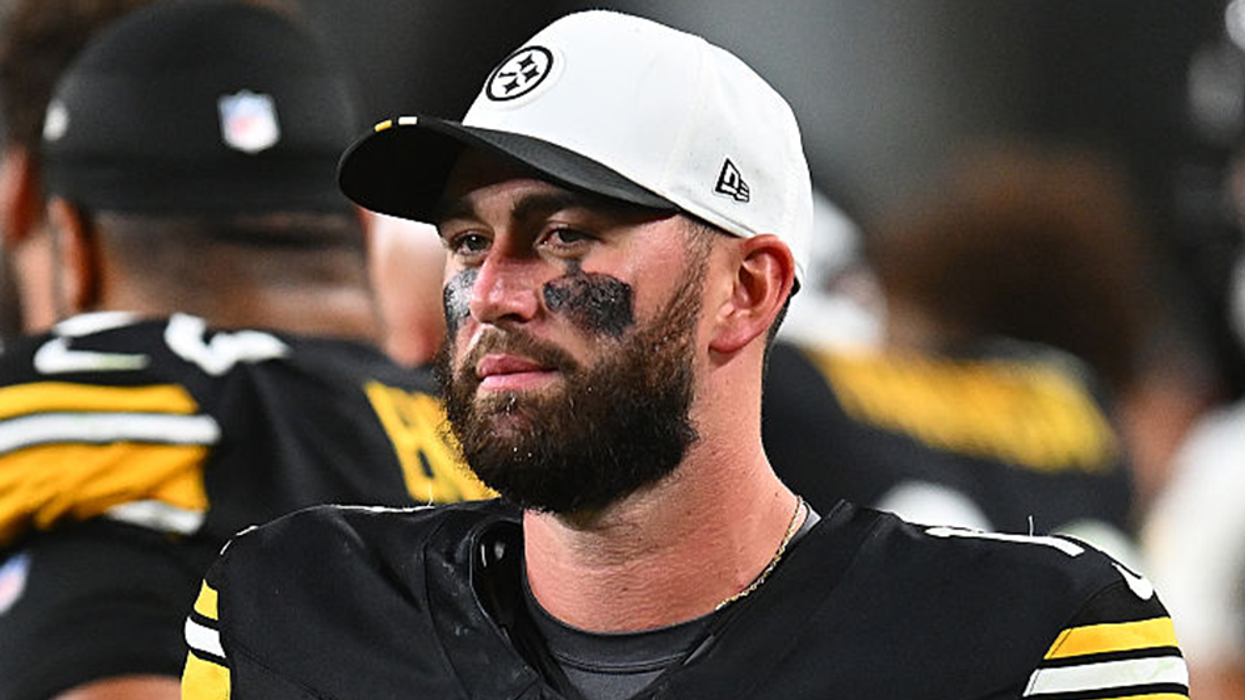 A Pittsburgh Steelers quarterback was allegedly mugged in Dublin before his team played in the NFL's first ever game in Ireland.The Steelers played the Minnesota Vikings at Croke Park early Sunday as part of the NFL's ongoing overseas showcases. The Steelers won 24-21, but neither their backup quarterback nor one of their dedicated fans were able to enjoy the game without experiencing all Dublin has to offer.'GET THIS GOVERNMENT OUT NOW!'The crimes happened within a couple miles of the stadium, with the Steelers quarterback getting attacked in the Temple Bar and Dame Street area. Skylar Thompson — a 6'2", 219-pound veteran currently on injured reserve — was "jumped and robbed" late Friday night by what was described by the Irish Independent as "several men" who stole his phone.Thompson suffered minor injuries and was allegedly brought to the hospital.Irish police said they were on patrol on Dame Street in "the early hours of Saturday morning" when they "encountered a male who required medical assistance" at the scene.Unfortunately for football fans, thugs were in the area after the game, as well, as a disabled elderly man was also robbed on Sunday night.RELATED: Anti-Trump artist Bad Bunny named Super Bowl halftime performer — immediately makes it political — (@) According to another Irish report, a man named Gregory, who was in a wheelchair, stopped in the street to smoke a cigar in celebration of the Steelers' win. At that point, Gregory was robbed of his phone by a woman who attempted a quick getawayFortunately, members of the public alerted nearby police who were able to chase down the woman and return Gregory's phone. The woman was taken to a local police station and charged.Gregory was reportedly robbed on O'Connell Street, which is even closer to the stadium than the area where Thompson was mugged.These areas are known for crimes against foreigners and tourists, according to reports, particularly in the form of pickpocketing and robberies. Previous suspects have been described as young drug dealers and youth gangs.Additionally, in 2024, a man named Mohamed Axmed was reportedly jailed for robbing two U.K. tourists in the same area.RELATED: Gang of foreign nationals get away with jewelry store heist; a month later they try again — but this time cops are ready — (@) Former UFC champion Conor McGregor, who has aspirations of becoming the president of Ireland, quickly spoke out about Thompson's mugging."Let the World know! Ireland is ran by traitors to its people!" McGregor wrote on X, quoting comments about the story. "GET THIS GOVERNMENT OUT NOW!"While Irish police confirmed "no formal complaint" over Thompson's situation was made, NFL reporter Tom Pelissero reported on comments from the Steelers' organization that seemingly confirmed the ordeal."Thompson, who is on injured reserve, suffered minor injuries but is OK and with the team," the reporter wrote on X. "Statement from Steelers Spokesman Burt Lauten: 'We are aware of a situation involving Skylar Thompson on Friday night in Dublin. We will have no further comment at this time as we are working with NFL security to gather more information regarding the incident.'"Like Blaze News? Bypass the censors, sign up for our newsletters, and get stories like this direct to your inbox. Sign up here!
 --
✍️ Two masked men broke into the home of a rapper in June, attacking a nanny and stealing jewelry, including a championship ring.
--
👉 Two masked men broke into the rapper's home
👉 They attacked a nanny with bear spray
👉 They stole jewelry, including a Seattle Sounders soccer championship ring
--
#Seattle #world
--
--
✍️ Two masked men broke into the home of a rapper in June, attacking a nanny and stealing jewelry, including a championship ring.
--
👉 Two masked men broke into the rapper's home
👉 They attacked a nanny with bear spray
👉 They stole jewelry, including a Seattle Sounders soccer championship ring
--
#Seattle #world
--