ZacG

ZacG's avatar
ZacG
npub1ycue...s9jh
financial freedom @hrf | host @learningbitcoin
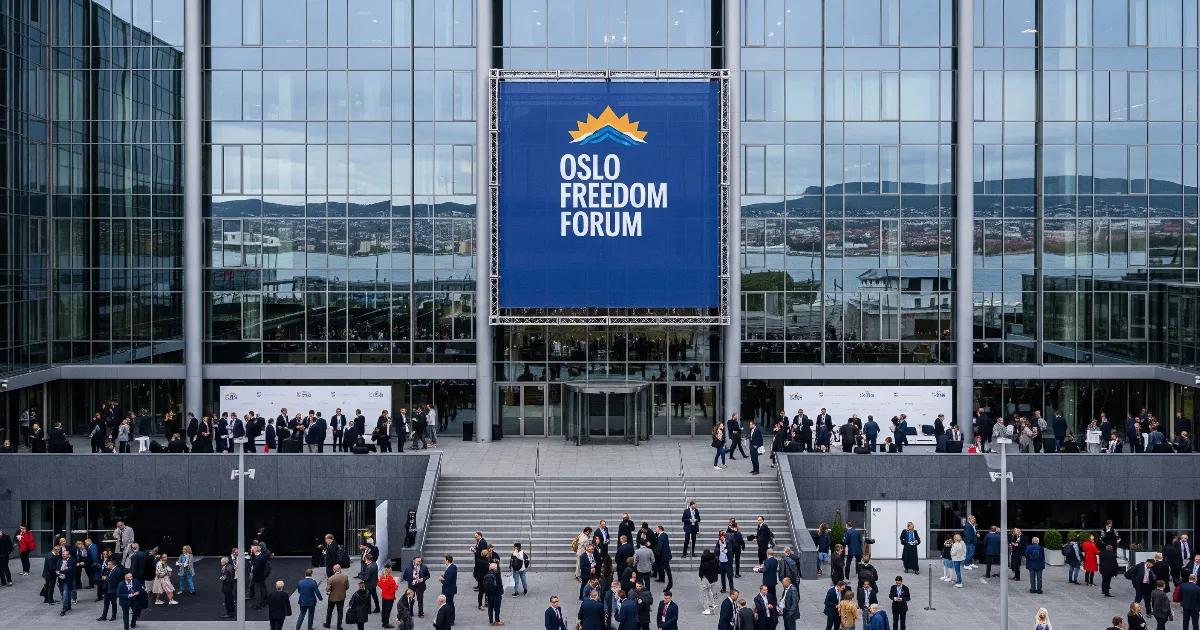
A true pinch me moment: my first ever article for #Bitcoin Magazine. Returning from Oslo too inspired to not put pen to paper. The result is a reflection on brave dissidents, harsh repression, and the tools defending freedom at the Oslo Freedom Forum.
As I stepped onto the plane leaving Oslo 🇳🇴 the weight and warmth of the last few days settled into my chest. The Oslo Freedom Forum is not a conference. It's not a summit. It’s something harder to name. A convergence of courage, truth, and defiance that burns through the noise of the modern world and gives you no choice but to listen, feel, and act. For the second time, I’ve walked away from OFF more convinced than ever that the tide is turning. That amid the censorship, surveillance, and state repression, something unstoppable is rising. The Forum doesn’t trade in empty optimism. It delivers a different kind of hope: forged from lived experience, stitched together by people who have been in the dark and still chose to build the light. The stories shared were hard. At times, devastating. But they weren’t offered for pity. They were calls to action. You don’t leave Oslo feeling defeated. You leave reminded that truth is more powerful than propaganda, that code can protect life, and that resistance isn’t just possible, it’s already happening. This year, there was a noticeable pulse of momentum around freedom tech. Human rights defenders from the front lines spoke not only about the oppression they face, but about the tools they’re using to push back. #Bitcoin, nostr, privacy protocols, open source AI models, and uncensorable VPNs. These are the instruments keeping movements alive, getting money to dissidents, and protecting voices at risk. And behind every tool is a quiet builder, a pseudonymous contributor, or an open-source developer who may never take the stage but is just as much a part of the story. Being part of the financial freedom team at HRF only deepens this sense of purpose. I couldn’t ask for a more principled, talented group of allies. @gladstein @ck @Arsh Molu @Ayelen @npub1y2st...fyr7 nostr:nprofile1qqsrjp40qtt73860r6ptfgr0ejwgl58s499egfvlvs49zszy4u2unaqpp4mhxue69uhkummn9ekx7mqpr3mhxue69uhkummnw3ezucnfw33k76twv4ezuum0vd5kzmq3jzqf4nostr:nprofile1qqsgpq7lvzqajx6zhncsggs4ujlu39903y7dql4ywt5qr0q8jndrjdqpzamhxw309a6k6cnjv4kzumr0vdskcw358q6rstcpz9mhxw309a6k6cnjv4kr5dpcxsuz7j9w6wc @npub1xawv...ayf9 These are people who care deeply, work quietly, and show up every day to make sure those fighting for their rights and freedoms aren’t left alone. It’s easy to feel overwhelmed by the scale of the problem, but being in this team reminds me that change starts by standing with those who share a vision and mission for a more free and just world. I’m leaving with a head full of names and projects, and a heart that feels cracked open in the best way. I’m grateful for the conversations, the hard questions, the laughter over dinners, and the moments of silence that said more than any speech could. Above all, I’m reminded that no authoritarian regime, no matter how brutal or well-funded, has ever succeeded in stamping out the human desire to be free. Oslo is proof of that. And if you're paying attention, it's also a glimpse into what comes next. Onwards and upwards, my friends 🧡
A Syrian economist is proposing the central bank removes two zeros from the Syrian pound to solve their economic crisis and remedy ongoing hyperinflation. If the rules of your money can be changed overnight, opt out with #Bitcoin image
Spent last week in Austin for SXSW where HRF’s Financial Freedom team came to raise awareness about CBDCs—through our CBDC Tracker booth and a panel featuring experts @Nick Anthony, Charlene Fadirepo, and @Roger H I left the conference with surprising insights after hundreds of conversations🧵 The Public Remains Dangerously Unaware This was the theme of our CBDC Tracker booth, and it couldn’t have rung truer. Over 130 jurisdictions are exploring CBDCs. 3.6 billion people live under authoritarian regimes working on their own CBDCs. Yet, most people have no idea this is happening. Out of 100 people I conversed with, I estimate less than five were familiar with CBDCs. People generally don’t understand what CBDCs are. Many thought CBDCs are just another form of cryptocurrency. Memecoins, Bitcoin, CBDCs. They lump them all together as some kind of “digital money.” Once we explained that CBDCs are a direct liability of a central bank — meaning you are banking directly with your central bank and by extension your government, it clicked. Lack of understanding of the risks CBDCs pose. A few people had heard of CBDCs but hadn’t yet fully grasped the full extent of their capabilities—such as state surveillance, programmability, censorship, and seizure—and the implications these have for transactional freedom, financial privacy, and civil liberties around the world. Right now, people are overwhelmingly against CBDCs once they understand them. But that could change fast. What happens when their politician of choice starts pushing CBDCs as “progress” or for “financial inclusion”? We’re on borrowed time before they get repackaged and sold to the public, at home and abroad. Even in countries where CBDCs already exist, people are unaware. Met a young man from Nigeria whose family back home is living under the eNaira—Nigeria’s struggling and state-controlled CBDC. He had no idea it even existed. Again, people remain dangerously unaware of CBDCs and the threats they pose, even when they’re already living under them. The conversation would inevitably move to Bitcoin. At first, when people asked, “What’s the alternative?” or “What’s the solution?”— I hesitated. I didn’t want to scare them off by promptly answering Bitcoin, causing them to disregard anything I had previously said. Instead, I leaned into terms like “awareness,” “open-source alternatives,” and “decentralized money.” But as the conversation deepened, it became clear that people were hungry for more than vague responses. They wanted solutions. And Bitcoin was the answer they sought. What surprised me was how quickly people became receptive to Bitcoin after learning about the dangers of CBDCs. With their newly equipped understanding of the risks, Bitcoin no longer felt like an abstract concept—it became a real solution, especially for those in authoritarian regimes that constantly strip away basic human rights and financial freedom. A small, but growing group gets it. We met some folks who already understood Bitcoin is fundamentally different from state-controlled money like CBDCs and speculative tokens that dominate the rest of the crypto space. In fact, we probably met more “bitcoiners” than we did people who understood and were aware of CBDCs . This suggests that CBDCs remain even less understood than Bitcoin, at least in the sample we observed. Overall, it was a successful and eye-opening week. The conversations were enlightening, and it’s clear that while many are unaware of CBDCs, once they understand them, they see the risks. While this may sound grim, I’ve come to accept that CBDCs are effectively inevitable under most authoritarian regimes. That means our best defense is to educate and equip individuals with the tools and resources to circumvent the top-down economic control CBDCs offer governments. That means #Bitcoin. That means grassroots education. This is our zero-to-one moment and the time to act is now.