John

John's avatar
John
npub1y7lu...qs2u
🔒 Expert Linux & Privacy 🌠Protège tes données, gagne ta liberté 💡 Outils éthiques & accessibles à tous 🧠Linux & KDE fan 🔠E2EE chiffrement de bout en bout ₿ Bitcoin maxi 💪Ici pour construire, éduquer, décentraliser
With my friend Abel, we are 2 passionate guys to share Bitcoin knowledge and help people get out of the fiat mindset. We hosted some live physical event in Geneva during this year. Now we are switching online to organize a 3-day BITCOIN CHALLENGE — for those starting on their Bitcoin journey. Whether you’ve never taken the time to learn about Bitcoin or you've got burned by a crypto scam — this is for you. No judgment. Just clear, calm, high signal. We’re helping you understand money, Bitcoin, and how to take real, safe first steps, without stress. Maybe you know someone who’s curious but scared? Invite them. This is the moment to start together. 👉 Register here: 🧠 What You’ll Actually Walk Away With: âœ”ï¸ How inflation steals your buying power — and how to protect yourself âœ”ï¸ Your first two investments set up (one traditional, one in Bitcoin fractions) âœ”ï¸ Hardware wallet mastery — so you truly control your savings âœ”ï¸ Real insight into how companies & governments are adopting Bitcoin âœ”ï¸ A clear answer to: “What does waiting really cost me over 10 years?†📺 Missed our intro live? We gave an online session to explain the basics on Bitcoin blockchain. You can watch it here: Don’t wait for “the right time.†Build your plan now — with Abel and me, with others who get it. You’ve got this. 🧡🫂
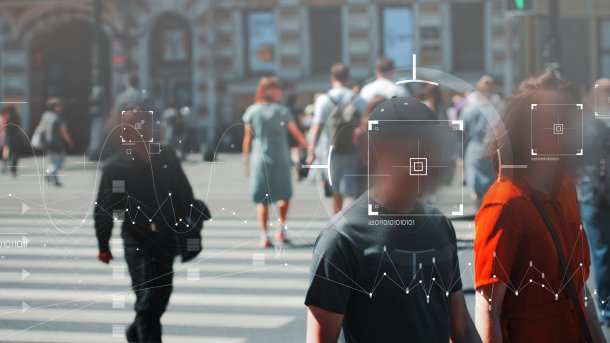
# 👮 Berlin : la police peut pénétrer secrètement dans les domiciles pour installer des chevaux de Troie gouvernementaux Pour collecter des données à partir de systèmes informatiques, les enquêteurs berlinois peuvent fouiller secrètement les chambres des suspects. Cette mesure figure dans un amendement à la loi sur la police. ![Facial recognition AI in use](image) (Image : Trismegist san/Shutterstock.com) Avec la majorité de la coalition CDU-SPD et les voix de l'opposition AfD, la Chambre des députés de Berlin a adopté jeudi une modification complète de la loi sur la sécurité générale et l'ordre public (ASOG). Cette réforme accorde à la police des pouvoirs qui empiètent fortement sur les droits fondamentaux et dépassent les limites précédentes de la politique de sécurité de la capitale. Alors que la sénatrice de l'Intérieur Iris Spranger (SPD) défend cette loi comme une mise à jour nécessaire à l'ère numérique et dans la lutte contre le terrorisme, ses détracteurs y voient une atteinte disproportionnée à la vie privée. ### La loi prévoit un resserrement massif La combinaison de la surveillance numérique et de l'intrusion physique est un sujet controversé : afin de surveiller les communications cryptées, les enquêteurs seront désormais autorisés, selon le [projet du Sénat](📄.pdf) et les [Änderungen der Abgeordneten](📄.pdf), non seulement à pirater les systèmes informatiques, mais aussi à pénétrer secrètement dans les appartements des suspects. Cette innovation explosive se cache dans les paragraphes 26a et 26b. Ceux-ci réglementent ce qu'on appelle la surveillance des sources de télécommunications (Quellen-TKÜ) et les perquisitions secrètes en ligne. Afin d'intercepter les communications sur des appareils tels que les smartphones ou les ordinateurs portables avant ou après leur décryptage, la police peut utiliser des logiciels malveillants tels que des chevaux de Troie d'État. Mais la nouvelle loi sur la police va encore plus loin : si l'installation à distance du logiciel espion n'est techniquement pas possible, le paragraphe 26 autorise explicitement les enquêteurs à « pénétrer secrètement dans des locaux et à les fouiller » afin d'accéder aux systèmes informatiques. En fait, Berlin légalise ainsi – [comme l'avait fait auparavant le Mecklembourg-Poméranie occidentale]() – l'intrusion de l'État dans des appartements privés afin d'y installer physiquement des chevaux de Troie, par exemple via une clé USB. Les experts en sécurité informatique ne se contentent pas de mettre en garde [contre le fait de laisser des vulnérabilités ouvertes](). Ils voient également une violation de la Constitution dans la combinaison de la violation de l'espace résidentiel et de l'enquête numérique. ### Caméras corporelles, fouilles de téléphones portables et lecture des plaques d'immatriculation Cette atteinte à l'inviolabilité du domicile s'accompagne du paragraphe 24c, qui réglemente désormais l'utilisation des caméras corporelles. Alors que leur utilisation était auparavant limitée aux espaces publics, les forces de police sont désormais autorisées à activer les caméras dans les domiciles privés et autres lieux non publics s'il existe des indications concrètes d'un danger pour la vie ou l'intégrité physique. Bien que le législateur mette l'accent sur l'aspect de l'autoprotection, les opposants craignent que cela ne conduise dans la pratique à une surveillance audiovisuelle dans le refuge le plus intime des citoyens. Berlin procède également à une mise à niveau technique dans les espaces publics. Avec le paragraphe 26e, la requête relative aux antennes-relais est élargie. À l'avenir, la police pourra demander aux opérateurs de réseau les données de trafic de tous les téléphones mobiles qui se trouvaient dans une zone couverte par une antenne-relais donnée à un moment précis. Cela permettra de créer des profils de déplacement de milliers de citoyens innocents, qui se trouvaient peut-être par hasard sur le lieu d'une manifestation, grâce à des recherches par quadrillage. Parallèlement, le paragraphe 24d crée la base juridique pour l'utilisation de systèmes automatiques de reconnaissance des plaques d'immatriculation. Ces scanners capturent les plaques d'immatriculation dans le trafic routier et les comparent avec des bases de données de véhicules recherchés. Le paragraphe 24h autorise également l'utilisation de moyens techniques contre les systèmes sans pilote tels que les drones, y compris la prise de contrôle. ### Reconnaissance faciale et apprentissage automatique Un autre aspect critiqué par les experts est l'introduction du paragraphe 28a. Celui-ci autorise la police à effectuer des comparaisons biométriques de visages et de voix à partir de données accessibles au public sur Internet. La police peut ainsi effectuer des recherches automatisées sur les réseaux sociaux ou les plateformes de photos, par exemple à l'aide de la reconnaissance faciale automatisée, en utilisant des images issues de la vidéosurveillance pour identifier des individus. En outre, le nouveau paragraphe 42d autorise le traitement ultérieur des données à caractère personnel à des fins de « formation et de test des systèmes d'intelligence artificielle ». Ainsi, les représentants du peuple créent une base juridique pour l'utilisation de données policières réelles – telles que des images, des vidéos ou des messages texte issus d'enquêtes – pour la formation d'algorithmes d'IA. Les défenseurs de la protection des données critiquent vivement cette mesure, car les modèles d'IA permettent souvent de tirer des conclusions sur les données d'entraînement, et la limitation de la finalité des données initialement collectées est ici considérablement étendue. Les possibilités de privation de liberté sont également en augmentation. Avec la révision du paragraphe 33, la durée maximale de la détention préventive est prolongée de 48 heures à cinq jours. En cas de menaces terroristes imminentes, elle peut même être prolongée jusqu'à sept jours. Sur le plan politique, ce durcissement a été discuté notamment dans le contexte des actions menées par le groupe « Last Generation ». ### Protestations de toutes parts L'opposition a réagi par un rejet catégorique. Elle accuse Schwarz-Rot de sacrifier sans scrupules les droits fondamentaux. Niklas Schrader (Die Linke) a parlé d'un « jour noir pour les libertés civiles » lors du débat. Vasili Franco (Verts) considère que cet amendement est très risqué sur le plan constitutionnel. L'Alliance NoASOG considère cette réforme comme une atteinte à la société civile. La Société pour les droits civils (GFF) a annoncé qu'elle examinerait la possibilité d'un recours constitutionnel. Avec cette décision, Berlin rejoint les rangs des États fédéraux qui ont considérablement renforcé leurs lois policières. Cependant, la combinaison des nouveaux instruments rend le paquet berlinois particulièrement ambitieux. Le législateur a ainsi considérablement abaissé les obstacles à l'accès de l'État à la vie privée numérique et physique. La responsable de la protection des données à Berlin, Meike Kamp, a qualifié la légalisation du cheval de Troie d'État d'attaque frontale contre la sécurité informatique de tous les citoyens. Elle a estimé que l'ensemble des mesures aboutissait à une densité de surveillance hautement contestable sur le plan constitutionnel. [Source]()
# 👮 Berlin: Police can secretly enter homes for state trojan installation To collect data from IT systems, investigators in Berlin can secretly search suspects' rooms. This is in a Police Act amendment. ![Facial recognition AI in use](image) (Image: Trismegist san/Shutterstock) With the majority of the coalition of CDU and SPD, as well as the votes of the opposition AfD, the Berlin House of Representatives passed a comprehensive amendment to the General Security and Public Order Act (ASOG) on Thursday. The reform grants the police powers that deeply interfere with fundamental rights and cross previous red lines of the capital's security policy. While Interior Senator Iris Spranger (SPD) defends the law as a necessary update for the digital age and the fight against terrorism, critics see it as a disproportionate attack on privacy. ### Law provides for massive tightening A bone of contention is the combination of digital surveillance and physical intrusion: In order to monitor encrypted communication, investigators will in future, according to the [Senate draft](📄.pdf) and the [Änderungen der Abgeordneten](📄.pdf), not only be allowed to hack IT systems but also to secretly enter suspects' apartments. The explosive innovation is hidden in paragraphs 26a and 26b. These regulate so-called source telecommunications surveillance (Quellen-TKÜ) and secret online searches. In order to intercept communication on devices such as smartphones or laptops before or after decryption, the police may use malware such as state Trojans. But the new Police Act goes a step further: If remote installation of the spyware is technically not possible, paragraph 26 explicitly allows investigators to "secretly enter and search premises" in order to gain access to IT systems. In fact, Berlin is thus legalizing – [as Mecklenburg-Western Pomerania did before]() – state intrusion into private apartments in order to physically install Trojans, for example via USB stick. IT security experts not only warn [about leaving vulnerabilities open](). They also see a constitutional violation in the combination of residential space violation and digital investigation. ### Bodycams, mobile phone searches, and license plate scanning This infringement on the inviolability of the home is accompanied by paragraph 24c, which newly regulates the use of bodycams. While their use was previously focused on public spaces, police forces are now allowed to activate the cameras in private homes and other non-public areas if there are concrete indications of a danger to life or limb. Although the legislator emphasizes the aspect of self-protection, opponents fear that this will lead to audiovisual surveillance in the most intimate retreat of citizens in practice. Berlin is also technically upgrading in public spaces. With paragraph 26e, the cell tower query is being expanded. In the future, the police will be able to request traffic data from all mobile phones from network operators that were located in a defined cell tower area at a specific time. This enables the creation of movement profiles of thousands of innocent citizens through grid searches, who may have coincidentally been at a demonstration site. In parallel, paragraph 24d creates the legal basis for the use of automatic license plate recognition systems. These scanners capture license plates in flowing traffic and compare them with wanted databases. Paragraph 24h also allows the use of technical means against unmanned systems such as drones, including taking over control. ### Facial recognition and AI training Another aspect that is met with criticism in expert circles is the introduction of paragraph 28a. This allows the police to perform biometric comparisons of faces and voices with publicly accessible data from the internet. This enables the police to conduct automated searches on social networks or photo platforms, for example with automated facial recognition, using material from video surveillance to identify individuals. In addition, the new paragraph 42d allows the further processing of personal data for "training and testing of artificial intelligence systems." Thus, the representatives of the people create a legal basis for using real police data – such as images, videos, or text messages from investigations – for training AI algorithms. Data protectionists sharply criticize this, as AI models often allow conclusions to be drawn about the training data, and the purpose limitation of the originally collected data is greatly extended here. Options for deprivation of liberty are also increasing. With the revised paragraph 33, the maximum duration of so-called preventive detention is extended from 48 hours to up to five days. In the case of imminent terrorist offenses, up to seven days are even possible. Politically, this tightening was discussed particularly in the context of the actions of the "Last Generation." ### Protests from many sides The opposition reacted with sharp rejection. They accuse Schwarz-Rot of carelessly sacrificing fundamental rights. Niklas Schrader (Die Linke) spoke of a "black day for civil liberties" in the debate. Vasili Franco (Greens) considers the amendment to be constitutionally highly risky. The [Alliance NoASOG]() views the reform as an attack on civil society. The Society for Civil Rights (GFF) has announced that it will examine a constitutional complaint. With this decision, Berlin joins the ranks of federal states that have massively tightened their police laws. However, the combination of the new instruments makes the Berlin package particularly far-reaching. The legislator has thus significantly lowered the hurdles for state access to digital and physical privacy. Berlin's data protection officer Meike Kamp described the legalization of the state trojan as a frontal attack on the IT security of all citizens in advance. She saw the sum of the measures as achieving a constitutionally highly questionable density of surveillance. [Source]()
# 👮 Berlin : la police peut pénétrer secrètement dans les domiciles pour installer des chevaux de Troie gouvernementaux Pour collecter des données à partir de systèmes informatiques, les enquêteurs berlinois peuvent fouiller secrètement les chambres des suspects. Cette mesure figure dans un amendement à la loi sur la police. ![Facial recognition AI in use](image) (Image : Trismegist san/Shutterstock) Avec la majorité de la coalition CDU-SPD et les voix de l'opposition AfD, la Chambre des députés de Berlin a adopté jeudi une modification complète de la loi sur la sécurité générale et l'ordre public (ASOG). Cette réforme accorde à la police des pouvoirs qui empiètent fortement sur les droits fondamentaux et dépassent les limites précédentes de la politique de sécurité de la capitale. Alors que la sénatrice de l'Intérieur Iris Spranger (SPD) défend cette loi comme une mise à jour nécessaire à l'ère numérique et dans la lutte contre le terrorisme, ses détracteurs y voient une atteinte disproportionnée à la vie privée. ### La loi prévoit un resserrement massif La combinaison de la surveillance numérique et de l'intrusion physique est un sujet controversé : afin de surveiller les communications cryptées, les enquêteurs seront désormais autorisés, selon le [projet du Sénat](📄.pdf) et les [Änderungen der Abgeordneten](📄.pdf), non seulement à pirater les systèmes informatiques, mais aussi à pénétrer secrètement dans les appartements des suspects. Cette innovation explosive se cache dans les paragraphes 26a et 26b. Ceux-ci réglementent ce qu'on appelle la surveillance des sources de télécommunications (Quellen-TKÜ) et les perquisitions secrètes en ligne. Afin d'intercepter les communications sur des appareils tels que les smartphones ou les ordinateurs portables avant ou après leur décryptage, la police peut utiliser des logiciels malveillants tels que des chevaux de Troie d'État. Mais la nouvelle loi sur la police va encore plus loin : si l'installation à distance du logiciel espion n'est techniquement pas possible, le paragraphe 26 autorise explicitement les enquêteurs à « pénétrer secrètement dans des locaux et à les fouiller » afin d'accéder aux systèmes informatiques. En fait, Berlin légalise ainsi – [comme l'avait fait auparavant le Mecklembourg-Poméranie occidentale]() – l'intrusion de l'État dans des appartements privés afin d'y installer physiquement des chevaux de Troie, par exemple via une clé USB. Les experts en sécurité informatique ne se contentent pas de mettre en garde [contre le fait de laisser des vulnérabilités ouvertes](). Ils voient également une violation de la Constitution dans la combinaison de la violation de l'espace résidentiel et de l'enquête numérique. ### Caméras corporelles, fouilles de téléphones portables et lecture des plaques d'immatriculation Cette atteinte à l'inviolabilité du domicile s'accompagne du paragraphe 24c, qui réglemente désormais l'utilisation des caméras corporelles. Alors que leur utilisation était auparavant limitée aux espaces publics, les forces de police sont désormais autorisées à activer les caméras dans les domiciles privés et autres lieux non publics s'il existe des indications concrètes d'un danger pour la vie ou l'intégrité physique. Bien que le législateur mette l'accent sur l'aspect de l'autoprotection, les opposants craignent que cela ne conduise dans la pratique à une surveillance audiovisuelle dans le refuge le plus intime des citoyens. Berlin procède également à une mise à niveau technique dans les espaces publics. Avec le paragraphe 26e, la requête relative aux antennes-relais est élargie. À l'avenir, la police pourra demander aux opérateurs de réseau les données de trafic de tous les téléphones mobiles qui se trouvaient dans une zone couverte par une antenne-relais donnée à un moment précis. Cela permettra de créer des profils de déplacement de milliers de citoyens innocents, qui se trouvaient peut-être par hasard sur le lieu d'une manifestation, grâce à des recherches par quadrillage. Parallèlement, le paragraphe 24d crée la base juridique pour l'utilisation de systèmes automatiques de reconnaissance des plaques d'immatriculation. Ces scanners capturent les plaques d'immatriculation dans le trafic routier et les comparent avec des bases de données de véhicules recherchés. Le paragraphe 24h autorise également l'utilisation de moyens techniques contre les systèmes sans pilote tels que les drones, y compris la prise de contrôle. ### Reconnaissance faciale et apprentissage automatique Un autre aspect critiqué par les experts est l'introduction du paragraphe 28a. Celui-ci autorise la police à effectuer des comparaisons biométriques de visages et de voix à partir de données accessibles au public sur Internet. La police peut ainsi effectuer des recherches automatisées sur les réseaux sociaux ou les plateformes de photos, par exemple à l'aide de la reconnaissance faciale automatisée, en utilisant des images issues de la vidéosurveillance pour identifier des individus. En outre, le nouveau paragraphe 42d autorise le traitement ultérieur des données à caractère personnel à des fins de « formation et de test des systèmes d'intelligence artificielle ». Ainsi, les représentants du peuple créent une base juridique pour l'utilisation de données policières réelles – telles que des images, des vidéos ou des messages texte issus d'enquêtes – pour la formation d'algorithmes d'IA. Les défenseurs de la protection des données critiquent vivement cette mesure, car les modèles d'IA permettent souvent de tirer des conclusions sur les données d'entraînement, et la limitation de la finalité des données initialement collectées est ici considérablement étendue. Les possibilités de privation de liberté sont également en augmentation. Avec la révision du paragraphe 33, la durée maximale de la détention préventive est prolongée de 48 heures à cinq jours. En cas de menaces terroristes imminentes, elle peut même être prolongée jusqu'à sept jours. Sur le plan politique, ce durcissement a été discuté notamment dans le contexte des actions menées par le groupe « Last Generation ». ### Protestations de toutes parts L'opposition a réagi par un rejet catégorique. Elle accuse Schwarz-Rot de sacrifier sans scrupules les droits fondamentaux. Niklas Schrader (Die Linke) a parlé d'un « jour noir pour les libertés civiles » lors du débat. Vasili Franco (Verts) considère que cet amendement est très risqué sur le plan constitutionnel. L'Alliance NoASOG considère cette réforme comme une atteinte à la société civile. La Société pour les droits civils (GFF) a annoncé qu'elle examinerait la possibilité d'un recours constitutionnel. Avec cette décision, Berlin rejoint les rangs des États fédéraux qui ont considérablement renforcé leurs lois policières. Cependant, la combinaison des nouveaux instruments rend le paquet berlinois particulièrement ambitieux. Le législateur a ainsi considérablement abaissé les obstacles à l'accès de l'État à la vie privée numérique et physique. La responsable de la protection des données à Berlin, Meike Kamp, a qualifié la légalisation du cheval de Troie d'État d'attaque frontale contre la sécurité informatique de tous les citoyens. Elle a estimé que l'ensemble des mesures aboutissait à une densité de surveillance hautement contestable sur le plan constitutionnel. [Source]()
# Invisible torture: mind control and cyber torture in the face of global indifference Published on 07/11/2025 By Raúl Allain ![](image) There is a form of torture that leaves no visible marks, but silently destroys the mind, body and identity of those who suffer it. A form of violence so sophisticated that it is confused with paranoia or mental illness. I am talking about mind control and cyber torture: real, documented phenomena, yet systematically denied by the structures of power and international indifference. For years, the United Nations (UN) has received reports from victims who claim to have been subjected to electronic harassment, neuropsychological manipulation and covert surveillance using advanced technologies. The Special Rapporteur on Torture has recognised that the definition of torture must be adapted to new forms of technological aggression. And yet, there is still a wall of silence when someone mentions the word cyber-torture. The term does not officially appear in the treaties, but its existence is felt in the testimonies. Victims speak of synthetic voices that intrude on their thoughts, induced impulses, remote emotional manipulation, or the constant feeling of being watched even in the most absolute privacy. It sounds like science fiction, and perhaps that is why it has been so easy to dismiss. But the fact that something sounds implausible does not make it any less real. As a sociologist, I have learned to be wary of overly comfortable consensus. History is full of practices that were denied at the time and later recognised as flagrant violations of human rights. Non-consensual experimentation on humans—from Nazi concentration camps to secret intelligence programmes during the Cold War—shows that the ethical boundaries of science can be blurred with alarming ease. The MK-Ultra Project, for example, was not a conspiracy theory, but a real operation documented by the CIA in the 1950s and 1960s. Its objective: to explore mind control techniques using drugs, hypnosis, and extreme sensory stimulation. When some of the documents were declassified in the 1970s, the world learned of only a fraction of the horror. This was a precursor to what some researchers today describe as "remote neuromodulation": the use of microwave technologies, electromagnetic frequencies, and nanodevices to alter brain activity or human behaviour. Exaggeration? Perhaps. But refusing to investigate it thoroughly would be, at best, irresponsible. At worst, complicity. In 2019, the UN received a report from the Special Rapporteur on Torture, Nils Melzer, warning that the use of neuro-targeted technologies for coercive purposes should be considered a form of torture. Melzer, known for his work in defence of Julian Assange, pointed out that systematic psychological manipulation can be as devastating as physical pain. Behind that observation lies something deeper: the recognition that the human consciousness may become the battlefield of the 21st century. I have spoken with people who claim to have been victims of mind control. They are not delusional or mystical. They are professionals, students, ordinary workers who began to notice disturbing patterns: digital harassment, constant surveillance, subliminal messages on social media, interference with their devices. Some have isolated themselves, unable to explain what they are experiencing without being judged. Others have organised themselves into support communities, such as the International Coalition Against Electronic Torture and the Robotisation of Living Beings (ICATOR), which has been reporting the existence of neuroelectronic harassment technologies to the United Nations for years. In Lima, I have encountered similar cases: people who report hearing directed "voices," feeling internal shocks, or experiencing induced dreams after being subjected to surveillance or political conflicts. Some have been diagnosed with schizophrenia, others simply silenced. And although not all cases may have a technological origin, the coincidence in the descriptions should be enough to motivate serious and transparent scientific investigation. The problem, of course, is that the boundaries between technology, mental health, and political power have become blurred. States and technology corporations possess surveillance tools that were unimaginable just two decades ago. Algorithms know more about us than we know about ourselves. Artificial intelligence can mimic voices, emotions, and even intentions. Who can guarantee that these systems will not be used—or are not already being used—to manipulate collective or individual perception? Cyber torture, more than just abuse, represents the ultimate dehumanisation. It is no longer about subjugating bodies, but consciences. It is torture without physical contact, but with devastating effects: insomnia, induced paranoia, loss of sense of self, learned helplessness. In practice, it turns victims into mental prisoners. The most alarming aspect is the legal vacuum. International human rights conventions, including the UN Convention against Torture, were drafted before the rise of neurotechnology. They do not contemplate the possibility that a person could be tortured without being touched. International law has remained stuck in the 20th century, while 21st-century technologies advance without effective regulation. In 2020, the European Union began debating the ethical limits of "applied neuroscience." Organisations such as the Human Brain Project have warned that brain manipulation could be used for coercive purposes. However, scientific warnings rarely reach the general public. The discussion about cyber-torture remains marginal, and those who denounce it are easily ridiculed or silenced. This is no coincidence. Denial is part of the mechanism. Throughout history, control systems have depended on the disbelief of the masses. The invisible becomes unpunishable. And meanwhile, victims continue to be treated as mentally ill, which constitutes a second form of violence: institutional violence. I remember a woman, a mother of two, who tearfully told me how her world began to fall apart after participating in social protests. "I couldn't sleep. I heard voices, but they weren't in my head. They changed tone, responding to my thoughts. My devices turned on by themselves. I thought I was going mad, until other people started telling me similar things." That phrase — "I thought I was going mad" — is repeated like an echo in the testimonies of victims of cyber torture. The anguish of not being able to prove one's own suffering. Technology, which began as a promise of freedom, has become a new form of slavery. And the most perverse thing is that this slavery is invisible. There are no bars, no interrogators in dark rooms. Just a series of impulses, frequencies and algorithms capable of penetrating the most intimate space: the mind. The UN has an unavoidable responsibility. It cannot continue to ignore allegations on the pretext that they are "unverifiable". Just because something is difficult to prove does not mean it does not exist. When gas chambers were rumoured to exist, it was also said that they were impossible. When Latin American dictatorships denied the existence of disappeared persons, it was also said that these were exaggerations. The pattern repeats itself: first denial, then belated acceptance, when it is already too late. Mind control and cyber torture represent the new face of totalitarianism. A totalitarianism without visible ideology, without an army or concentration camps, but with the ability to infiltrate thoughts, shape emotions and nullify free will. If that isn't torture, what is? In a world where mass surveillance has become normalised—from digital tracking to everyday biometrics—the risk of these technologies being used for coercive purposes is real. It is not a question of futurism or paranoia, but of power. All power tends to expand if no limits are placed on it. Cyber-torture must be officially recognised as a crime against humanity. The UN must set up an interdisciplinary working group, comprising independent scientists, human rights defenders and victims, to investigate allegations of neuroelectronic manipulation. And states must adopt laws prohibiting the development and use of mind control technologies without consent. Discussions about technological ethics are not enough. A legal framework is needed to defend the sovereignty of the human mind. Because, ultimately, the mind is the last free territory we have left. I am concerned about the silence from academia and the media. The press, so eager to cover political scandals or viral trivialities, avoids talking about cyber torture. Perhaps out of fear of losing credibility, perhaps because control mechanisms also operate in the media. But journalism, if it wants to continue to be an exercise in truth, must have the courage to look at what no one else wants to look at. Sociologists often say that reality is not what happens, but what society accepts as real. If we accept cyberbullying as mere fantasy, we are contributing to its perpetuation. If we recognise it as a concrete threat, we can begin to combat it. The difference between these two positions is the line that separates ignorance from responsibility. Ultimately, the question is not whether mind control exists, but to what extent we are willing to admit that technology has surpassed our ethical capacity. History will judge us for what we refuse to see. Torture in the 21st century leaves no scars on the skin, but on the conscience. And as long as we continue to deny its existence, we will be allowing the human mind — that sacred space of inner freedom — to become the new battlefield of power. -​--------- **References** - Melzer, Nils. _Report of the Special Rapporteur on Torture and Other Cruel, Inhuman or Degrading Treatment or Punishment_, Naciones Unidas, 2019. - United Nations Human Rights Council. _Emerging Technologies and Human Rights_, Geneva, 2020. - Marks, John. _The Search for the “Manchurian Candidateâ€: The CIA and Mind Control_. W.W. Norton, 1979. - ICATOR (International Coalition Against Electronic Torture and the Robotisation of Living Beings). _Petition to the United Nations_, 2021. - European Parliament. _Ethics of Neurotechnology and Human Rights_, 2020. Source:
# Careless Whisper: WhatsApp and Signal can leak data from silent receipts __Just saw this video () from Daniel Boctor about a type of exploit that can be used to determine your phone model, whether the screen is locked, unlocked or the app is active, whether you're on Wi-Fi or cellular and much more just from sending malformed messages and analyzing the silent delivery receipts. All an attacker needs, is your phone number. Couple that with the recent WhatsApp leak (https://www.univie.ac.at/en/news/detail/forscherinnen-entdecken-grosse-sicherheitsluecke-in-whatsapp) (and we don't know if anyone else exploited it aside from the security researchers) and we have a pretty devastating situation with WhatsApp in particular.__ __The original source can be found here:__ https://arxiv.org/pdf/2411.11194 __As of now, it seems a fix is not available and neither WhatsApp/Meta or Signal/Signal Foundation have shown any interest in fixing it, which I find quite concerning. Just thought I would share this, so you can be aware. The video is also pretty good, so I suggest you watch that, even after reading the paper first.__ Source :
Je viens de voir cette vidéo () de Daniel Boctor sur un type d'exploit qui peut être utilisé pour déterminer le modèle de votre téléphone, si l'écran est verrouillé ou déverrouillé, si l'application est active, si vous êtes connecté au Wi-Fi ou au réseau cellulaire, et bien plus encore, simplement en envoyant des messages malformés et en analysant les accusés de réception silencieux. Tout ce dont un pirate a besoin, c'est de votre numéro de téléphone. Ajoutez à cela la récente fuite de WhatsApp (https://www.univie.ac.at/en/news/detail/forscherinnen-entdecken-grosse-sicherheitsluecke-in-whatsapp) (et nous ne savons pas si quelqu'un d'autre l'a exploitée à part les chercheurs en sécurité) et nous nous retrouvons dans une situation assez catastrophique, en particulier avec WhatsApp. La source originale se trouve ici : https://arxiv.org/pdf/2411.11194 À l'heure actuelle, il semble qu'aucun correctif ne soit disponible et ni WhatsApp/Meta ni Signal/Signal Foundation ne semblent intéressés par la résolution du problème, ce que je trouve assez préoccupant. Je tenais simplement à vous en faire part afin que vous en soyez informés. La vidéo est également très intéressante, je vous suggère donc de la regarder, même après avoir lu l'article. Source :
Interview from #PlanBLugano Check what the guys from https://getportal.cc are doing. Cool demo with an NFC tag to login into a website or to open a door 🚪 They should go live in Q1 2026 with their project, so don't hesitate to contact them to beta test. PS: there was lots of background noise in the room, I had to use AI to remove the noise. #PlanB
At #PlanBLugano I interviewed Daniel from https://www.fairdeeds.com His company supports circular economy in developing countries. He buys product from them and pay them in sats. Keychain and mini surf board, upcycling from used board that the kids cannot surf on it anymore with Bitcoin related backstreet art from StreetCyber from Barcelona. #PlanB