EU ESTIVE LÁ!! // I WAS THERE!!
#FourTet #TheLoop #Dekmantel #Dekmantel2025 #EDM
Miguel Afonso Caetano
remixtures@tldr-nettime-org.mostr.pub
npub1pwuv...95z7
Senior Technical Writer @ Opplane (Lisbon, Portugal). PhD in Communication Sciences (ISCTE-IUL). Past: technology journalist, blogger & communication researcher.
#TechnicalWriting #WebDev #WebDevelopment #OpenSource #FLOSS #SoftwareDevelopment #IP #PoliticalEconomy #Communication #Media #Copyright #Music #Cities #Urbanism
"Given the histories at play, some might argue that human rights and global health projects do not deserve rescue. If these frameworks have always served the interests of powerful states and individuals at the expense of those they have dispossessed and exploited, why defend them now? Why mourn their erosion at Harvard, of all places?
Because even a compromised universalism provides a vocabulary for demanding equality that authoritarian politics cannot tolerate. Because institutions that acknowledge their failures can correct them, while institutions that deny their obligations altogether cannot. And because abandoning universalism under pressure from governments, donors and political actors would confirm the most cynical assessment of American power: that our ethical commitments from within US institutions can only ever extend as far as strategic alliances allow.
Bassett’s removal demonstrates what happens when institutions choose short-term protection over intellectual and ethical integrity. But it also clarifies what remains worth fighting for. A public health field that cannot describe the destruction of Gaza’s health system forfeits its credibility on every other question of justice and claim to truth. A human rights discourse that excludes Palestinians cannot credibly defend anyone. And a university that punishes scholars for naming political violence does not merely betray its ideals; it becomes a malign force in the world it claims to seek to redeem and to carry forward into a better future."
#USA #Trump #Harvard #AcademicFreedom #Palestine #Gaza #Genocide

the Guardian
A Harvard scholar’s ouster exposes a crisis of institutional integrity | Eric Reinhart
The dismissal of a a renowned health leader who refused to ignore Palestine highlights false claims of universality in human rights, global health ...
"As an American reporter living in Beijing, I’ve watched both China and the rest of the world flirt with cutting-edge technologies involving robots, drones and self-driving vehicles.
But China has now raced far beyond the flirtation stage. It’s rolling out fleets of autonomous delivery trucks, experimenting with flying cars and installing parking lot robots that can swap out your E.V.’s dying battery in just minutes. There are drones that deliver lunch by lowering it from the sky on a cable.
If all that sounds futuristic and perhaps bizarre, it also shows China’s ambition to dominate clean energy technologies of all kinds, not just solar panels or battery-powered cars, then sell them to the rest of the world. China has incurred huge debts to put trillions of dollars into efforts like these, along with the full force of its state-planned economy.
These ideas, while ambitious, don’t always work smoothly, as I learned after taking a bullet train to Hefei, a city the size of Chicago, to see what it’s like to live in this vision of tomorrow. Hefei is one of many cities where technologies like these are getting prototyped in real time.
I checked them all out. The battery-swapping robots, the self-driving delivery trucks, the lunches from the sky. Starting with flying taxis, no pilot on board.
Hefei is one of the first Chinese cities to issue permits for what are basically flying cars. So I booked a ride."
#China #CleanEnergy #Renewables #FlyingTaxis #BulletTrains #FoodDeliveryDrones

Flying Taxis? China Has Them. And Drone Lunch Deliveries, Too.
China’s experiments in clean energy can feel like living in the future. Even when things don’t quite work.
"Utilities aren’t just passive actors responding to market signals; in most cases, they are corporations, seeking to maximize value and increase profits. And there’s a quietly growing body of evidence showing that for years electric and gas utilities have been taking in more profits than they need to cover their costs and keep investors happy, at great consequence to Americans. This means, among other things, that it’s far from certain that sending money to the sector will address the crisis in energy prices, or meaningfully update the grid. Instead, utilities and their investors will continue to benefit tremendously, thanks to a regulatory system that allows them to extract enormous profits from everyday people.
I’ve spent the past year speaking to people in the utility industry, attending its conferences, and sounding out its critics. What I’ve found is that beneath the sector’s undeniable need for new and upgraded infrastructure lies a deeper problem concerning how the industry makes its money. When utilities earn substantial profits, one might expect customers to see some relief in their monthly bills. But as a result of the ownership model of the utilities that serve most Americans, this is rarely what happens. Rather, utilities earn substantial profits because regulators allow them to require ordinary people to pay more. Far from responding to an affordability crisis, electric utilities are helping to create it."
#USA #Electricity #Utilities #Monopolies

Harper's Magazine
Power Brokers, by Nick Bowlin
What’s really behind your soaring utility bills
"The secret is out about the potential artificial intelligence bubble — and Wall Street’s sharks smell blood in the water.
Wall Street traders have sharply increased how much they’re spending on “credit default swaps,” which, in case you weren’t paying attention during the movie The Big Short, are insurance derivatives that pay out when a company fails (a form of short).
Investors are shorting Big Tech companies, mainly Oracle and Meta, to “protect [themselves] and create a hedge,” one anonymous credit executive said. That means more and more investors are managing their risk by putting their money on the AI market’s eventual crash — just like in The Big Short.
In the lead-up to the 2008 financial crisis, firms like Goldman Sachs “made a fortune” playing both sides of the economic crash by selling mortgage-backed securities that its executives infamously identified as “shitty,” then also selling credit default swaps (shorts) against these investments as it became apparent they’d fail.
According to data reported by the Financial Times this week, the volume of credit default swaps tied to U.S. technology giants has risen 90 percent just since early September after being reportedly “thin to nonexistent” at the start of the year."
#AI #BigTech #AIBubble #WallStreet #CreditDefaultSwaps

The Lever
The Big Short 2: AI Boogaloo
An increasing number of Wall Street investors are betting against artificial intelligence.
"Capitalist ecomodernist visions require a very rapid and large-scale buildout of zero-carbon energy infrastructure. But, under capitalism, investment and production is organized around whatever is most profitable to capital, rather than what is most necessary for achieving social and ecological goals. This creates a problem for the energy transition, because while renewables are increasingly cheap, fossil fuels are three times more profitable, in large part because they are more conducive to monopoly power (Christophers 2025). So, capital continues to flow to fossil fuels and we get inadequate investments in clean energy. In recent months, several major financial firms have abandoned their low-carbon investments because they are not profitable enough. In other words, ecomodernism’s commitment to capitalism ultimately works against its ecological objectives. This may help explain why ecomodernists tend to promote nuclear power, because an energy grid dominated by capital-intensive forms of energy production with high barriers to entry is more likely to be profitable.
The green transition ultimately cannot be left in the hands of capital. It will require substantial public finance, public works, industrial policy and planning in order to build out necessary renewable energy capacity, as well as to undertake other low-profit or zero-profit activities such as expanding public transit, insulating buildings, and regenerating ecosystems. Furthermore, increasing these activities cannot be done while national productive capacities are already maxed out by capitalist production. It will necessarily require scaling down less-necessary production, to liberate labour, engineers, resources etc to be remobilized for this purpose. Here too, this is not something that can be achieved within capitalism. Capital will not voluntarily scale down profitable forms of production."
.xml
#Ecomodernism #Ecosocialism #GreenGrowth #Capitalism #GreenTransition
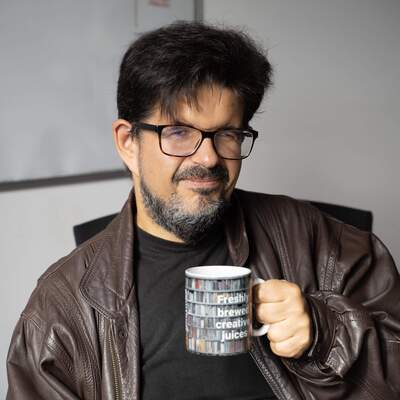
RT @VersoBooks
Now available for preorder: The Alibi of Capital by Timothy Mitchell
Stealing the future and concealing the theft – capitalism’s method, as examined by the author of the acclaimed Carbon Democracy


Verso
The Alibi of Capital
Today, extraordinary wealth seems to arrive from nowhere. The trick of conjuring this unearned wealth is, in fact, the key to understanding capital...
"According to the study, tax rates that are increased or newly introduced during rearmament phases generally remain in place at least in part even after these phases end. Fully repealing newly introduced taxes is the exception rather than the rule.
As a result, average tax revenues more than a decade after the start of a rearmament phase were still 20 to 30 percent above their original level, while top marginal tax rates were around 15 percentage points higher.
“The current rearmament in NATO countries is among the largest in Western industrialized countries over the past 150 years, comparable to the rearmament phases prior to the World Wars or after the Korean War. A look at history suggests that this will also entail long-term financial burdens for taxpayers,” says Christoph Trebesch, Director of the Research Center International Finance at the Kiel Institute and co-author of the study “Guns and Butter: The Fiscal Consequences of Rearmament and War.”
In wartime, governments have predominantly financed sharply rising military spending through higher public debt. In addition, new taxes are introduced or existing ones increased, for example to finance rising interest payments.
A similar pattern can also be observed in rearmament phases during peacetime, such as periods of geopolitical threat without direct warfare on a country’s own territory, conditions currently faced by many NATO members. While debt issuance and tax increases are smaller in such threat scenarios than in wars, they have nevertheless often led to noticeable changes in tax systems, including higher income or consumption tax rates."
#War #PublicDebt #Taxes #Rearmament #NATO #Warfare #Austerity

Rearming for deterrence and war: First debt, then higher taxes
Current NATO rearmament plans could lead to permanently higher taxes in member states, according to a new analysis by the Kiel Institute based on a...
"China’s leaders have spent years preparing for Trump’s return and view the trade war as part of a much larger contest that is likely to last for decades. In the short term, Beijing’s priority is securing the concessions on advanced technology needed to accelerate semiconductor development in China and reduce reliance on imports. In the medium term, it aims to deepen technological capacity, diversify export markets, and capture a larger share of value-added exports in global supply chains to reduce U.S. leverage. In the long run, it intends to build an alternative global trading and financial architecture strong enough to strip the United States of its unilateral sanctioning power. Above all, China wants recognition that its core interests lie beyond even the threat of Western interference—that it has full freedom of action within its sphere of influence, including Taiwan and its regional periphery, and that it can engage economically with the world on terms no less favorable than those accorded to the United States or other great powers.
In essence, China is attempting a geopolitical feat without precedent. It seeks to obtain an equal place alongside the United States without triggering “the Thucydides trap’’—the tendency for rising and established hegemons to come to blows. Unlike earlier revisionist powers, China intends to complete its ascent through the steady accumulation of economic power and influence rather than through military conquest. To succeed, it must not merely draw even with the United States but surpass it in some areas, to the point that any U.S. refusal to acknowledge its superpower status appears absurd to the rest of the world.
As this protracted struggle unfolds, conventional side-by-side comparisons of economic data or military capability are unlikely to provide a clear indication of which side is ahead, which is slipping behind, and why."
#China #EconomicWar #USA #Empires #Imperialism #Superpowers #PoliticalEconomy
Foreign Affairs
China’s Long Economic War
How Beijing builds leverage for indefinite competition.
"An infinitesimal delay in the typed commands of a new IT worker provided an early clue that an imposter had gotten access to an Amazon.com Inc. corporate computer.
Keystroke data from the laptop of a worker who was supposed to be in US should have taken tens of milliseconds to reach Amazon’s Seattle headquarters. Instead, the flow from this machine was more than 110 milliseconds, Amazon’s Chief Security Officer Stephen Schmidt told me.
The barely perceptible lag suggested the worker was half a world away.
The person, who Schmidt said was hired by an Amazon contractor, was part of the surge in recent years of North Koreans skirting strict sanctions by the US and other countries to con their way into remote jobs, often in IT. The purpose is to raise money for the Democratic People’s Republic of Korea, or DPRK, including for its weapons programs. The pattern of imposters has raised legal and security concerns for small businesses and major corporations.
Since April 2024, Amazon staff have found and foiled more than 1,800 attempts to be hired by North Koreans, Schmidt said during a security event at the company’s New York City office this week. This year, the number of such attempts has gone up 27%, on average, from one quarter to the next, the company says."
#Amazon #CyberSecurity #NorthKorea

Bloomberg.com
Amazon Caught North Korean IT Worker By Tracing Keystroke Data
Security personnel tracked connections from a contractor.