
In the rapidly evolving world of Bitcoin, running a Bitcoin node has become more accessible than ever. Platforms like Umbrel, Start9, myNode, and Citadel offer user-friendly interfaces to simplify node management. However, for those serious about maintaining a robust and efficient Lightning node ⚡, relying solely on these platforms may not be the optimal choice.
Let’s delve into why embracing Bitcoin Core and mastering the command-line interface (CLI) can provide a more reliable, sovereign, and empowering experience.
Understanding Node Management Platforms
What Are Umbrel, Start9, myNode, and Citadel?
Umbrel, Start9, myNode, and Citadel are platforms designed to streamline the process of running a Bitcoin node. They offer graphical user interfaces (GUIs) that allow users to manage various applications, including Bitcoin Core and Lightning Network nodes, through a web-based dashboard 🖥️.
These platforms often utilize Docker containers 🐳 to encapsulate applications, providing a modular and isolated environment for each service.

The Appeal of Simplified Node Management
The primary allure of these platforms lies in their simplicity. With minimal command-line interaction, users can deploy a full Bitcoin and Lightning node, along with a suite of additional applications.
✅ Easy one-command installation
✅ Web-based GUI for management
✅ Automatic app updates (but with delays, as we’ll discuss)
However, while this convenience is attractive, it comes at a cost.
The Hidden Complexities of Using Node Management Platforms
While the user-friendly nature of these platforms is advantageous, it can also introduce several challenges that may hinder advanced users or those seeking greater control over their nodes.
🚨 Dependency on Maintainers for Updates
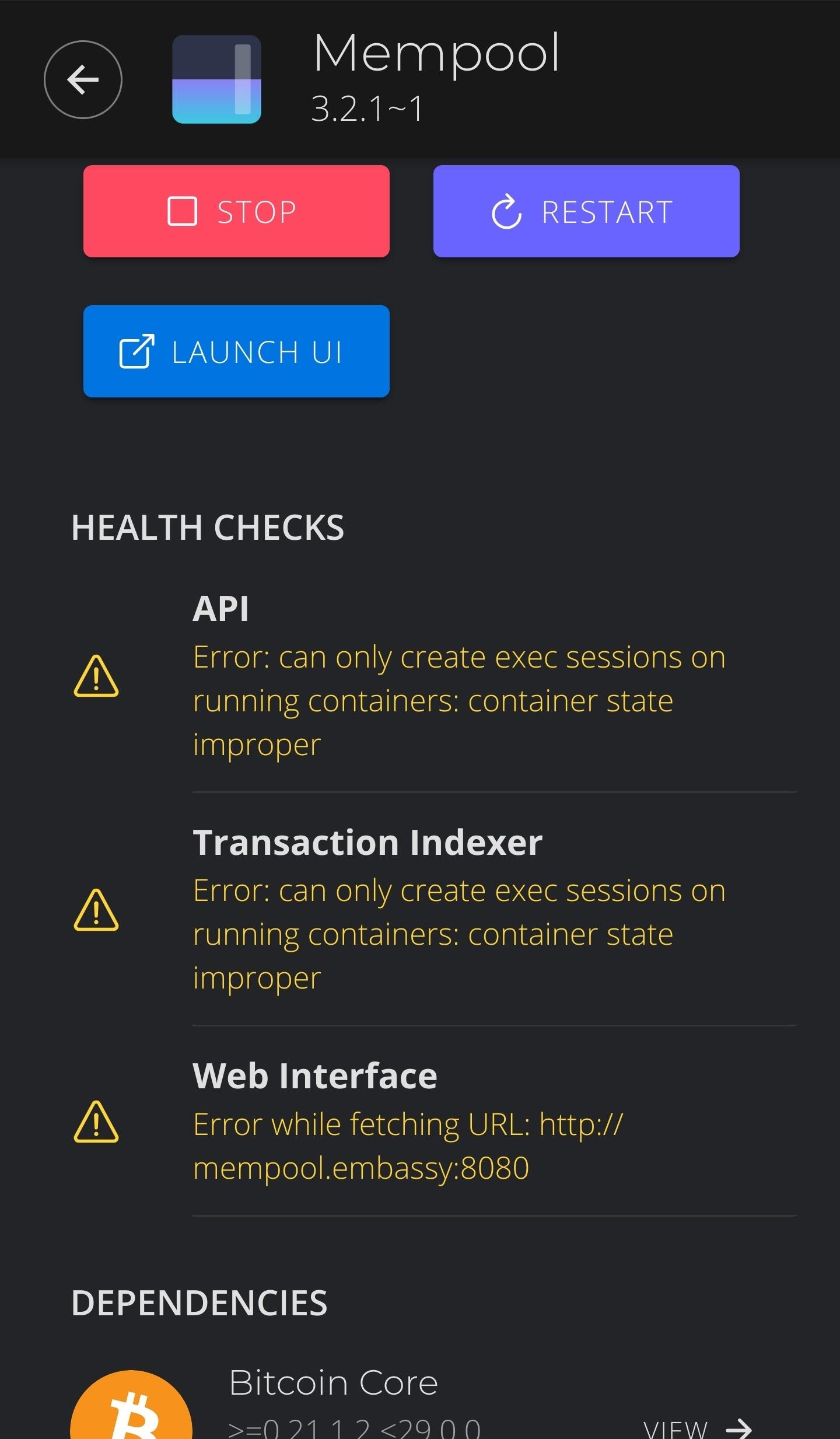
One significant concern is the reliance on platform maintainers for updates. Since these platforms manage applications through Docker containers, users must wait for the maintainers to update the container images before they can access new features or security patches.
🔴 Delayed Bitcoin Core updates = potential security risks
🔴 Lightning Network updates are not immediate
🔴 Bugs and vulnerabilities may persist longer
Instead of waiting on a third party, why not update Bitcoin Core & LND yourself instantly?
⚙️ Challenges in Customization and Advanced Operations
For users aiming to perform advanced operations, such as:
- Custom backups 📂
- Running specific CLI commands 🖥️
- Optimizing node settings ⚡
…the abstraction layers introduced by these platforms become obstacles.
Navigating through nested directories and issuing commands inside Docker containers makes troubleshooting a nightmare. Instead of a simple bitcoin-cli command, you must figure out how to execute it inside the container, adding unnecessary complexity.
Increased Backend Complexity
To achieve frontend simplicity, these platforms make the backend more complex.
🚫 Extra layers of abstraction
🚫 Hidden logs and settings
🚫 Harder troubleshooting
The use of multiple Docker containers, custom scripts, and unique file structures can make system maintenance and debugging a pain.
This complication defeats the purpose of “making running a node easy.”
✅ Advantages of Using Bitcoin Core and Command-Line Interface (CLI)
By installing Bitcoin Core directly and using the command-line interface (CLI), you gain several key advantages that make managing a Bitcoin and Lightning node more efficient and empowering.
Direct Control and Immediate Updates
One of the biggest downsides of package manager-based platforms is the reliance on third-party maintainers to release updates. Since Bitcoin Core, Lightning implementations (such as LND, Core Lightning, or Eclair), and other related software evolve rapidly, waiting for platform-specific updates can leave you running outdated or vulnerable versions.
By installing Bitcoin Core directly, you remove this dependency. You can update immediately when new versions are released, ensuring your node benefits from the latest features, security patches, and bug fixes. The same applies to Lightning software—being able to install and update it yourself gives you full autonomy over your node’s performance and security.
🛠 Simplified System Architecture
Platforms like Umbrel and myNode introduce extra complexity by running Bitcoin Core and Lightning inside Docker containers. This means:
- The actual files and configurations are stored inside Docker’s filesystem, making it harder to locate and manage them manually.
- If something breaks, troubleshooting is more difficult due to the added layer of abstraction.
- Running commands requires jumping through Docker shell sessions, adding unnecessary friction to what should be a straightforward process.
Instead, a direct installation of Bitcoin Core, Lightning, and Electrum Server (if needed) results in a cleaner, more understandable system. The software runs natively on your machine, without containerized layers making things more convoluted.
Additionally, setting up your own systemd service files for Bitcoin and Lightning** is not as complicated as it seems**. Once configured, these services will run automatically on boot, offering the same level of convenience as platforms like Umbrel but without the unnecessary complexity.
Better Lightning Node Management
If you’re running a Lightning Network node, using CLI-based tools provides far more flexibility than relying on a GUI like the ones bundled with node management platforms.
🟢 Custom Backup Strategies – Running Lightning through a GUI-based node manager often means backups are handled in a way that is opaque to the user. With CLI tools, you can easily script automatic backups of your channels, wallets, and configurations.
🟢 Advanced Configuration – Platforms like Umbrel force certain configurations by default, limiting how you can customize your Lightning node. With a direct install, you have full control over:
- Channel fees 💰
- Routing policies 📡
- Liquidity management 🔄
🟢 Direct Access to LND, Core Lightning, or Eclair – Instead of issuing commands through a GUI (which is often limited in functionality), you can use:
lncli(for LND)lightning-cli(for Core Lightning) …to interact with your node at a deeper level.
Enhanced Learning and Engagement
A crucial aspect of running a Bitcoin and Lightning node is understanding how it works.
Using an abstraction layer like Umbrel may get a node running in a few clicks, but it does little to teach users how Bitcoin actually functions.
By setting up Bitcoin Core, Lightning, and related software manually, you will:
✅ Gain practical knowledge of Bitcoin nodes, networking, and system performance.
✅ Learn how to configure and manage RPC commands.
✅ Become less reliant on third-party developers and more confident in troubleshooting.
🎯 Running a Bitcoin node is about sovereignty – learn how to control it yourself.
Become more sovereign TODAY
Many guides make this process straightforward
K3tan has a fantastic guide on running Bitcoin Core, Electrs, LND and more.
- Ministry of Nodes Guide 2024
- You can find him on nostr
nostr:npub1txwy7guqkrq6ngvtwft7zp70nekcknudagrvrryy2wxnz8ljk2xqz0yt4x
Even with the best of guides, if you are running this software,
📖 READ THE DOCUMENTATION
This is all just software at the end of the day. Most of it is very well documented. Take a moment to actually read through the documentation for yourself when installing. The documentation has step by step guides on setting up the software. Here is a helpful list:
- Bitcoin.org Bitcoin Core Linux install instructions
- Electrs Installation
- LND Documentation
- CLN Documentation
If you have any more resources or links I should add, please comment them . I want to add as much to this article as I can.