
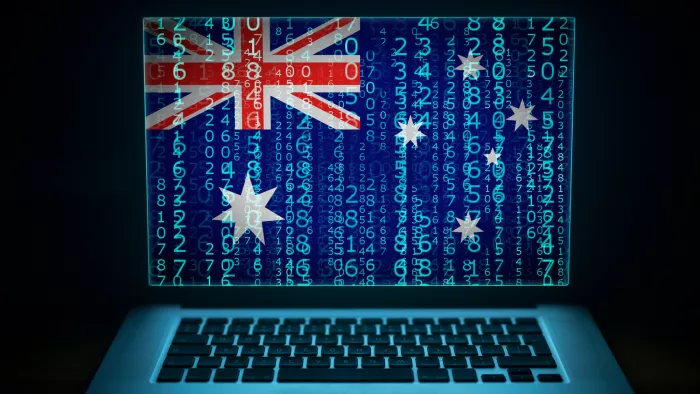
The internet was the promise of free flowing information where any user's voice was able to reach the world. The knowledge of mankind available for all. A place where ideas could flourish and dissent could be heard and discussed by anonymous users. But in Australia, that vision has all but vanished. Replaced by a system of omnipresent surveillance, state mandated censorship, and invasive data collection, the digital world is no longer a place of freedom. It is a digital panopticon with its prison walls made of algorithms, eSafety officers and government mandates that file users into a control grid where every citizen is monitored, every inconvenient truth silenced and any dissenter a victim of virtual assassination via deplatforming. Australia’s new online policies form a blueprint for a complete lockdown of our digital world.
The government has not merely regulated the internet, it has weaponised it. Under the guise of “protecting public safety” and “combating misinformation,” Australia has enacted a series of policies that establish state control over speech, privacy, and identity where any dissenter can be treated as an enemy combatant and every platform becomes an enforcement arm of the state. The key pieces of legislation that have entrenched this framework are the "Online Safety Act 2021" and the "Online Safety Amendment (Social Media Minimum Age) Bill 2024." Together the eSafety Commission armed with these pieces of legislation has created a complete framework of digital control.
Australia's eSafety Commission was established in 2015 with the stated purpose "to help safeguard Australians at risk of online harms and to promote safer, more positive online experiences. As the first agency of its kind in the world, eSafety is at the forefront of preventing online risks, reducing the impacts of harms and building safer digital spaces." They state that "Our laws need to keep pace with advances in technology and the threats we face online from harmful behaviour and toxic content. These modern times of rapid change and social upheaval call for robust new laws." But what exactly are these "robust new laws" being implemented and who gets to decide what is "harmful activity and content"? What they are implementing is not regulation to keep us safe, it is control to keep us enslaved. A system where the internet becomes a tool for surveillance rather than self expression.
Introduced in 2022 the Online Safety Act gives eSafety new powers to require internet service providers to block access to material, enforce app store and search engine delisting and require platforms to remove content or deplatform users. The powers granted to the eSafety commission have been widely criticised both domestically and internationally. The Institute of Public Affairs describe eSafety as having "immense power ... with no meaningful democratic oversight, in order to silence online debate and opinion" describing it as a "dangerous internet censorship regime [that] must be overhauled." The Australian Human Rights Commission described the laws as "an impermissible restriction of free speech." In a statement released in response to actions taken by the eSafety commission the United States State Department expressed they were "concerned about efforts by governments to coerce American tech companies into targeting individuals for censorship" stating that this "censorship undermines democracy, suppresses political opponents, and degrades public safety." The impact of these laws is clear and the chilling effects are real: users self censor out of fear, platforms prioritise compliance over free thought, and the internet becomes a space where only approved narratives are allowed to survive.
The eSafety commissions deathgrip over our digital lives is only set to strengthen with the introduction of the Online Safety Amendment (Social Media Minimum Age) Bill with enforcement scheduled to begin in December 2025. This bill will require any platform where "the sole purpose, or a significant purpose, of the service is to enable online social interaction between 2 or more end‐users" to implement a ban on any user under the age of 16 from using their service with failure to age restrict under 16's access to social media platforms resulting in a fine of up to $49.5 million. While many people may agree with restricting children's access to social media the practical application of this law will mean every user, under 16 or over, will have to verify their identity and age in order to use online platforms. The platforms are either able to verify user age through the upload of government ID documents or other proposed methods such as facial identification or verification of credit card or financial details. While these methods provide the illusion of choice they all create the same reality, users are forced to verify their identity if they wish to continue to use the internet. In response to these laws Amnesty International captured this violation well with the statement "any proposal that would see Australians forced to upload their personal identification documents or facial biometrics to social media companies, or private third parties creates an unacceptable risk to Australians’ human right to privacy."
The combination of strict online hate speech and misinformation laws combined with identifying every user is a powerful and dangerous cocktail. The new laws are not isolated measures. They form a two-pronged assault on digital freedom, combining the threat of violating "online safety" laws with the invasive demand for personal identification. Together, they create a system where your voice is not just policed but traceable, where voices are silenced, where the ideas and discussions that shape a nation and the world can be tightly regulated. This is not the government keeping children safe online, it is the entrenchment of a surveillance state.
Australia is not alone in this descent into surveillance and regulation commanded and enforced from above. It is part of a global trend, one that has already turned the internet into a battleground between freedom and domination. And for those who still believe in free speech, privacy, and autonomy, there is only one path forward: escape.
Enter Nostr, the decentralised protocol that could be our last refuge in this digital dystopia. Nostr is not a platform, it’s a revolution. A protocol built on decentralised relays, where your content is not stored in a big tech company datacenter but scattered across the network, immune to takedown requests, censorship mandates, or corporate algorithms. Where your identity is not uploaded through your government documents but generated with secure cryptography. It is digital freedom, where your words are yours to keep and own, your identity is yours to protect, and your ability to speak without fear is not contingent on the whims of a state or corporation.
In Australia’s new surveillance state, Nostr is not just an alternative, it’s a rebellion. It allows you to bypass the walls of censorship, evade surveillance, and reclaim your right to speak without fear. No ID verification required. No one to deny your permission to post. Your content is not policed by government agents or corporate censors, it’s shared freely, as it was meant to be. In a world where every keystroke is monitored and every message is filtered, the only escape is through radical free expression.
This is not a hypothetical threat, it is already happening. The digital age has given us the tools to resist, but only if we choose to use them. Australia’s policies are not simply a warning nor are they a crushing blow we can not resist, they are a call to action. If we allow this system to expand, if we let the state control grow unchecked, then every voice will be silenced, every thought policed, and every citizen reduced to a number in a database to be carefully manipulated and monitored.
We are at the edge of a precipice. On one side lies compliance, surveillance, and the disappearance of digital freedom, of free speech and of independent thought. On the other lies Nostr, a decentralised network that could be the final firewall against a world where free speech is extinct. The question is no longer whether the world needs Nostr. The question is whether the world still believes in freedom, or if we are ready to hand it over to the state.