From
@fnew:
The Crypto Asset Reporting Framework – what does this mean for Bitcoin in the UK?
How will it affect your personal safety and security if it’s implemented as planned?
We have today released a research paper and delivered this to HMRC with commentary on recommended changes to the draft legislation.
What’s being proposed? Under the Crypto Asset Reporting Framework or CARF, it’s proposed that tax authorities worldwide will gather and have access to information on cryptocurrency transactions, allegedly to combat tax evasion and ensure compliance with tax laws.
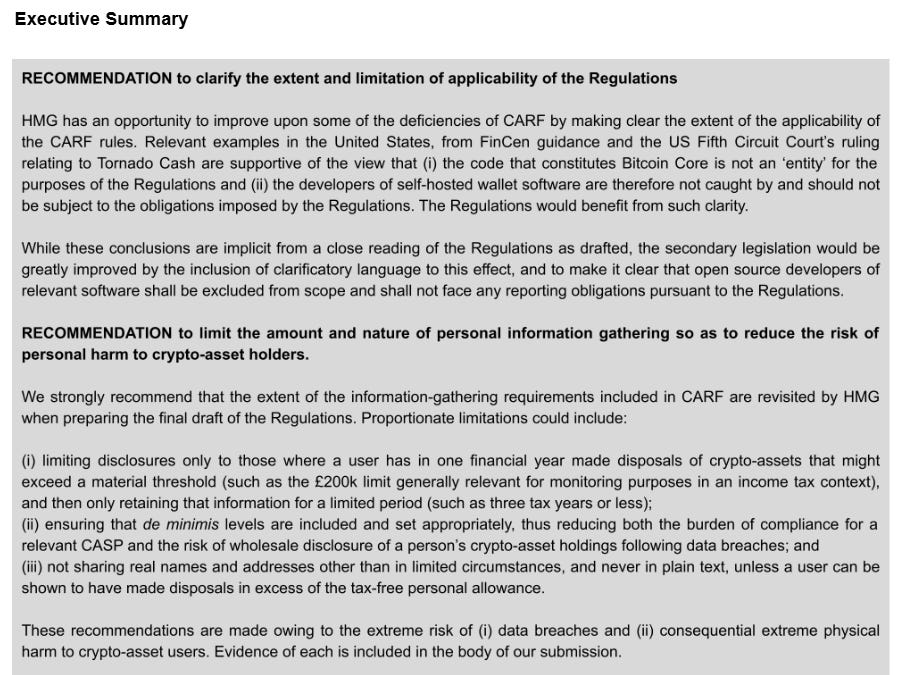
What’s wrong with it? The amount of personal and transaction data that will be gathered and shared is truly staggering. This won’t just be shared with your domestic tax authorities, but with others across the globe. It will include your name, address, date of birth, amount of Bitcoin held or sold or transferred. This is a highly dangerous level of intrusion into your personal and private life, particularly given the increasing frequency of data breaches (examples in our paper) and also the risk of violent physical attacks against Bitcoiners whose details are leaked to or obtained by bad actors. Additionally, the UK’s new draft regulations fail to make clear that none of these reporting requirements will fall upon the developers of free and open source software, as such persons cannot be in a position to comply.
How should it be changed? We recommend two simple changes – that the information being gathered on Bitcoin and cryptocurrency users is severely limited and in a way proportionate to the high risk of personal harm, and that the regulation clarifies that it cannot and shall not apply to the developers of free and open source software.
More details on our Substack👇
The Cryptoasset Service Providers (Due Diligence and Reporting Requirements) Regulations 2025
BPUK has provided guidance and commentary to proposed UK legislation