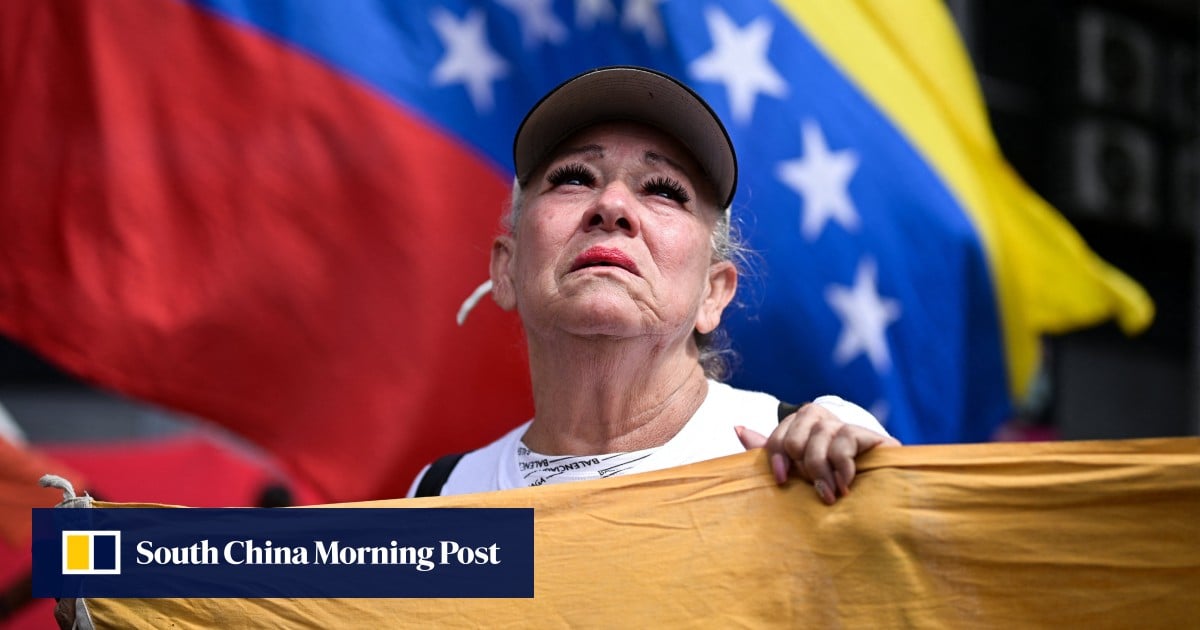
Well, one thing is for certain. The American actions over Venezuela have resulted in a wide variety - and multitude - of publicly expressed opinions over China and Taiwan. For whatever it’s worth, keep in mind that the truth is always found somewhere in the middle. Statements of the more definitive nature don’t tend to age well.
China Morning Missive IPOs as a Strategic Lever Capital formation in China is back with a vengeance and is being strategically deployed for the expressed purpose of countering America’s technological dominance. Over the past two months the pace of IPOs has been frenetic both in Hong Kong and on the upstart STAR Market here in Shanghai. While western business media has covered a handful of highly publicized chip makers going public, what has been missed is how Beijing is accelerating the use of the primary market to funnel capital towards key industries of geopolitical significance. Before commenting on the strategic nature underlying the renewal of Chinese IPOs, it is well worth noting that the move wouldn’t have been possible had Chinese retail investors not turned decidedly “risk on”. There has been a palpable shift in sentiment over the past year, and while Chinese households do remain cautious over the near-term economic prospects there has been a recognition of a vast improvement directionally. That said, the primary driver of retail investor demand is a genuine excitement over Chinese tech/AI companies demonstrating an ability to not just match their American rivals, but – in more than a few cases – out innovate. DeepSeek, it is now clear, wasn’t a “moment”, it was an insurgent declaration of intent and ability. What resulted was a solid 2025 for equity returns and performance has continued to deliver so far this year. In fact, volumes of late have been at or near record highs. It does need to be mentioned, however, that Chinese investors are limited when it comes to available alternatives to allocate capital. With property still viewed as toxic and limited upside to fixed income then meant a shift back to equities was expected. At the same time, Chinese retail investors are the tail which wags the dog and they’ve a ton of idle capital sitting on the sidelines. What all of this has meant is an opportunity for Beijing to strategically direct growing end investor demand. With all approvals to list tightly controlled by the CSRC, China’s securities regulator, the decision was made to prioritize those companies building capabilities and critical infrastructure that could best ameliorate the containment threat posed by America. The uniqueness of the policy, however, went even farther. The IPO process favors companies that are at an earlier stage of development, even loss-making and, additionally, approvals to list are also widespread with a far greater number of such companies greenlit to IPO and a stark departure from previous periods. Take but a few examples from just last week; GPU maker Iluvatar CoreX and Edge Medical which manufactures surgical robotics. These companies raised $473million and $154million respectively and, currently, trade with market capitalization of around $6.0billioin and $3.0billion. Small in size by just about any measure, but forward leaning industrial players and, once again, only a small sample set of the multitude of the types of companies now going public. The concept of “market cap” doesn’t even register as a priority KPI here in China and directing capital is an activity solely meant to optimally deliver on both market and political objectives. This isn’t a new concept, but the leveraging of IPOs is. There will, ultimately, be a considerable destruction of capital as an outcome of this IPO policy, as was evident with the solar and EV industries. The policy, however, will also deliver an array of world leading companies as well, again as is evident with the solar and EV industries. https://m.investing.com/news/stock-market-news/china-ai-chipmaking-stocks-extend-rally-as-ipo-boom-boosts-sentiment-4440684?ampMode=1
China Morning Missive Software is useless without the hardware to run it As anecdotes go, this is perhaps one that should be duly noted. Moreover, I highly recommend for those interested in an assessment of the ongoing and ever intensifying competition between China and America over the future of technological advances to give this article a read. Basically, what we have here is a reporter from PCMag who attended last week’s Consumer Electronics Show in Las Vegas. The highlighted summary quote from the article reads “It was hard to ignore the pull of what was emerging from Shenzhen.” The author then went on to detail a host of areas where it was increasingly clear that China wasn’t just matching the United States in terms of innovation but that it was increasingly hard to ignore the numerous areas where Chinese companies have unquestionably taken the lead. Now, the author did have a rather specific focus, consumer solutions for energy storage and solar generation. The comments made on the advances in sodium-ion battery technology, versus today’s ubiquitous lithium standard, were of particular interest. The author did, however, look to extrapolate his specific area of interest farther afield. What stood out, however, was the comparison of the vastly different nation-state policies, although not all that unexpected. Washington, under the Trump administration, was curtailing aggressively support to all categories within the vertically integrated complex of next-gen power solutions. Beijing, to quote the author, “was doubling down” as was supported by the datapoint of there being a cumulative 650 gigawatts of solar capacity installed nation-wide (I believe this to be an underreported datapoint though). It isn’t that the comments here or those in the linked article represent some sort of tectonic shift in the present state of the geopolitical rivalry. At issue is the increasingly obvious direction of travel. Then there is the issue of competitive primacy. Yes, there can be no question that America has a lead, I’d even say a material lead, in advanced chips. But chips are, essentially, just software and will have no commercial value without the requisite hardware. Beyond datacenters, the manufacturing of real-world hardware requires production capabilities, and this is where China dominates and does so at tremendous scale. There is no better example than the rapid global expansion of Chinese EVs. You should expect the very same with humanoid robotics over the next five years, if not sooner. Bear in mind as well that China is entering the first year of its fifteenth five-year plan. This then means an even greater concentration of energies to further dominate the global hardware arena.
How to change the path of what increasingly looks to be an inevitable repeat of ancient (and modern as well) history? It is a question I struggle with each and every day. image
China Morning Missive You’ll have to accept my apologies. In my note the other day I made the claim that in response to American action over Venezuela, Beijing would do nothing and sit idly by awaiting the expected, and dire, second and third order effects of said action. With that outlook a very amateur mistake on my part, as it pertains to China, was made. Not a mistake, mind you, in terms of the original outlook. It remains the case that Beijing will “do noting” in direct response. You’ll notice here, however, that there’s a vital distinction this time around with the inclusion of the world “direct” and that is what should have been expected and, we now know, was carried out. Shortly after the weekend’s Latin American activities, China announced that it would be targeting Japan with a series of rare earth export controls. To the uninitiated, the two events would look to have very little connective tissue. There’s been an ongoing, and increasingly heated, exchange between the two Asian nations over the issue of Taiwan. Any decision by Beijing to scale up the fight shouldn’t be seen as a surprising development and the same, too, in deciding to deploy rare earth export controls. What hasn’t been asked, however, is why would Beijing take such action now? This latest episode of regional saber rattling began back last November and only now is the decision to apply leverage made. If we look back to the events of 2010 when China and Japan were also entangled in a territorial dispute, Beijing had first used rare earth export controls as a point of pressure and did so almost immediately. I would argue that the difference, today, comes down to a material shift in geopolitical dynamics over the past 15 years. The gamesmanship here is for this move to act as an application of indirect pressure on America. It might even be a not-to-subtle signal as well. As is readily known, access to rare earths remains an issue for America and, while there is a delicate truce currently in place, China has various vested interest in Venezuela that are now threatened. Placing export controls on Japan might very well be an artfully telegraphed message to Washington. Beijing will be seeking some form of negotiated settlement over a host of Venezuelan related issues and the move on Japan could indicate that rare earth access remains firmly on the table. It could also be far simpler. The act of escalation would require at least some level of attention out of Washington and attention is in very short supply at the moment. The art of forced distraction on a rival is an often applied tactic by China. Whatever the case might be, it is, at least from my vantage point, clear that the placement of export controls on Japan is an indirect response to events from this past weekend. Furthermore, albeit depending on how events transpire over the coming weeks and months, additional indirect pressure applied by China should be expected. Finally, and keeping in mind China’s ever present strategic aim of embedding optionality throughout all decision making, the direct pressure on Japan serves to meet the objective of driving Prime Minister Takaichi from power. An objective I do believe that Beijing views as distinctly possible before the end of this year. https://www.reuters.com/world/asia-pacific/china-curbs-rare-earth-exports-japanese-companies-after-dual-use-ban-wsj-reports-2026-01-08/
China Morning Missive If rare earth minerals, and China’s stranglehold over the refinery process, was the topic of 2025, you should all expect to see at some point a similar heated discussion over LiDAR. This critical technology used in everything from EVs to weapon systems (you know, all that hyped up precision targeting) is dominated by Chinese players and now, with the latest application, robotics, the subject looks to be finally gaining the attention of various American interested parties. The reason for bringing this topic up today is in relation to the news that Nvidia has selected a Chinese company – Hesai Technology – to provide LiDAR sensors to its recently announced autonomous driving platform. A rather sharp shift from the American conventional wisdom (ie Elon Musk) which viewed LiDAR as a luxury and which favored a camera-centric system for autonomous driving. Hesai is currently the single largest supplier of LiDAR sensors globally and is a company I’m fairly certain virtually no one has ever heard of. It is also a company which has been uniquely responsible for obliterating the cost to manufacture. From sensors priced in the thousands of US dollars, Hesai built an in-house production facility and is now selling sensors at just US$500. Not only is the company now beginning to shift focus towards the robotics industry, but it is also in the process of doubling its manufacturing capacity with the stated aim of reducing the price point to US$200. A well-worn tactic among Chinese companies over the past three decades: Build a competitive product and then scale production aggressively to price out the competition. Just think back on the entire solar panel industry and, I would highlight, the example of Sunnova and with it the limitations laid bare of an American industrial policy. Dozens of American industries are reliant on LiDAR systems and while it isn’t all that clear the degree of sourcing from China given both cost and availability of supply it would be reasonable to conclude that there is an industrial dependence. Then there is the “national security threat”. Even the most minimal reliance on Chinese LiDAR would be looked upon as concerning. It is, after all, Chinese tech and Washington has made it quite clear that Chinese tech is to be avoided at all costs. For myself, the actual issue isn’t about LiDAR or rare earth minerals for that matter. I’ve stressed for the lonest time that China produces everything and America produces nothing. Perhaps a gross exaggeration, but the point still holds. For the foreseeable future there is little that can change this dynamic. The leverage in the geopolitical relationship is owned by China and, it is now increasingly clear, both sides understand this to be true.
China Morning Missive During the holiday break there was a news item that was very poorly covered and yet provided indicative clarity to a decade’s long key geopolitical shift. China announced that its official holdings of American debt had not only declined yet again in the month of November, but had reached a level not seen since 2008. In terms of the data points, the country stated that it held a total of $688brillion worth of US treasuries. That is a 48% decline from the 2013 peak of $1.32trillion. Furthermore, of China’s total FX reserves, the relative position of US sovereign debt has also been cut in half and is now just 20% of China’s total FX reserves. There has certainly been commentary and coverage over this downtrend in the past, but there has been little, dare I say no, critical analysis into the explicit strategy underlying, what is, a very deliberate move made by Beijing. Consider the following. As an historical pattern, the main driver of China’s foreign currency reserves, in total, was its annual trade surplus. At the time of peak exposure to US sovereign debt in 2013, which just so happened to correspond with total peak FX reserves I should add ($3.8trillion), China’s trade surplus was $260billion. By 2021 the trade surplus had more than doubled reaching $676billion. And for 2025? It will surpass $1.0trillion as I am rather certain you’ve already read in the business media. You had a massive influx of foreign currency over the past decade, and yet total reserves held in a tight range of between $3.0trillion and $3.2trillion. Where, then, did the excess funds from a rapidly accelerating trade surplus go? Not into US Treasuries, that’s for sure. To some extent, the trade surpluses remained on the balance sheets of the exporters and in their onshore (and offshore) bank accounts as there was no longer the direct requirement to repatriate and/or convert into the local currency. That would, maybe, account for a fifth to a quarter of the trade surplus leaving hundreds of billions unaccounted for. The answer lies, primarily, in the Belt and Road Initiative (BRI) which, you will not be surprised to find, was formally launched in 2013. US dollar funding was directed into an aggressive global infrastructure investment program. Ports in Greece and Peru. Rail lines in Hungary and Serbia. A massive sector wide investment into Indonesia. The list goes on and on. You see, Beijing policy makers were the first to truly comprehend that to address a large and growing debt obligation, Washington had no other option than to continue with a debasement of the currency. With this knowledge, China not only made the decision to de-risk its direct USD exposure but to go even farther and learn from the lesson and de-risk from as much sovereign “paper” as possible and, instead, reallocate excess reserves into hard assets. Data is difficult to source, but what is out there has China’s total cumulative BRI investment since 2013 at around $1.3trillion. I’d take the over on that though. Either way, that is a significant redirected flow of funds away from American sovereign debt and a truly debilitating loss of a (not so) marginal buyer. One final point to make: China also “officially” purchased a total of 1,226 tons of gold between 2013 and 2024. Here, again, I would be taking the over. No question though. China has been exiting the entire sovereign paper market for over a decade, artfully executed I might add, and there is little doubt that this trend will continue.
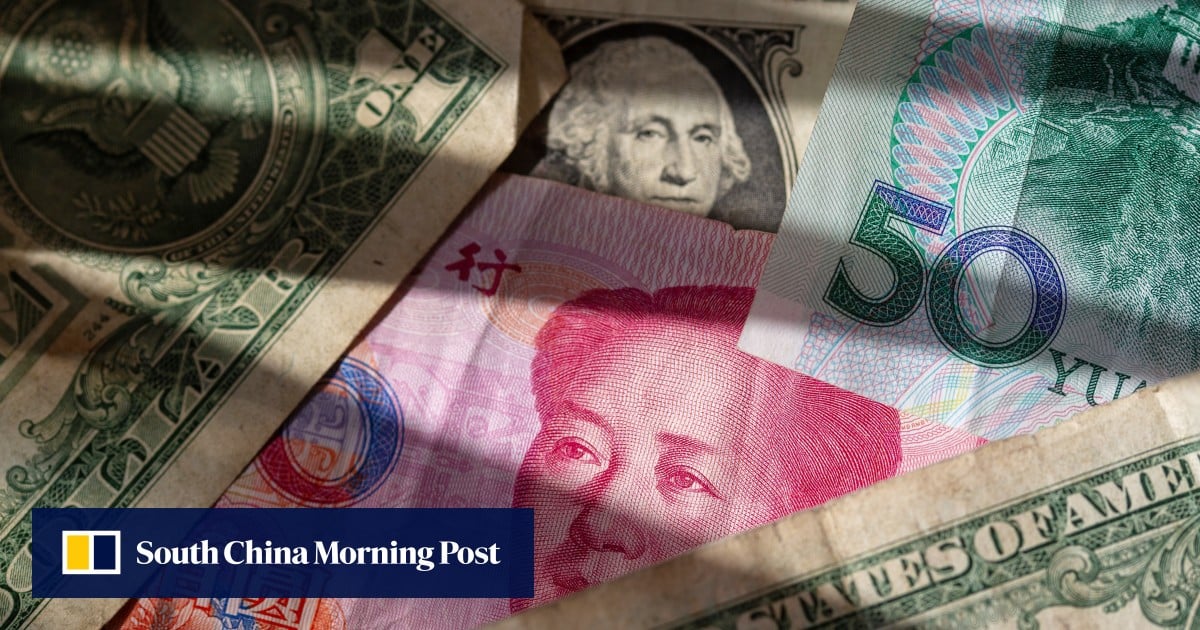
China Morning Missive New Year and it is time to return with my periodic updates on all things China. Perhaps apropos of current events, but with America’s adventurism into Venezuela it didn’t come as a surprise to anyone that the Chinese leadership has responded in a deeply negative way, albeit conveyed with diplomatic flair. Above all else, there is the Great Game 2.0 at play here as China maintains certain key assets in the South American country and there was even an elevation of the bilateral relationship to what was termed an “all weather partnership” whatever that might mean. China remains the largest creditor of Venezuela (not a surprise) and is also the single largest buyer of the country’s oil exports (again, no surprise). That said, it’s estimate are that only 5% of China’s overall annual oil imports come from Venezuela. Here’s the real question though: What is it that China will do in the immediate future? The answer is absolutely nothing. Yes, there will be bellicosity and some periodic saber rattling, that is just how China operates. In terms of any meaningful actions, though …. expect Beijing to sit idly by and do nothing. Classic (misattributed) Sun Tzu quote, “Never interrupt your enemy when he is making a mistake.” The primary reason for this “non-action” approach is that it plays to Beijing’s favor. There are numerous occasions from the past where America has acted quickly with military might and in doing so quickly found itself mired in a quagmire and, ultimately, exited the theater. In each of these past occasions those activities resulted in a sidelined, distracted and, ultimately, humbled hegemon. China simply needs to tap into that ample reserve of low time preference energy and wait for the inevitable. Doing nothing whenever it is that America acts in haste has always found China coming out the other side far stronger in term of diplomatic relationships. I would just add here that China will also aggressively leverage this latest American move as further evidence of the abjectly uselessness of the “international rules-based order”. Granted, this will be done deep in the background. There should even be the expectation of a willing audience throughout Latin America.