<img class="shadow" data-lazy-fallback="1" decoding="async" src="/dog_not_eating_dog_food.webp"/>
[PetMD](

Why Is My Dog Not Eating? Causes and What To Do
If your dog suddenly loses their appetite, it could be due to stress, sickness, or many other reasons. Learn what to look for if your dog suddenly ...
)
…or if you prefer, [eating my own cooking](
IndieWeb
eat what you cook
🍽
), or [scratching my own itch](
IndieWeb
scratch your own itch
Scratch your own itch was an early IndieWeb focus, and is a metaphor for the current IndieWeb principle “make what you need” that encourages cr...
), or [drinking my own champagne](
IndieWeb
selfdogfood
😋 selfdogfood is metaphor and a historical IndieWeb encouragement to use your own creations and depend on them personally yourself, beyond j...
). Sure. These are all metaphors for the idea that if you build something, it turns out better if you use it yourself, especially if you *want* it yourself. However, when I think about [my projects](

Bridgy
Connects your web site to social media. Likes, reposts, mentions, cross-posting, and more...
) [for bridging](
Bridgy Fed
Bridgy Fed is a bridge between decentralized social networks like the fediverse, Bluesky, and web sites and blogs.
) [social networks](
granary: the social web translator
Fetches and converts data between social networks, HTML and JSON with microformats2, ActivityStreams 1 and 2 (including ActivityPub), Atom, RSS, JS...
), I wonder if I don’t use them myself deeply enough. If I’m not the target audience. Is that a problem?
It’s not entirely true. Strictly speaking, I do use them. After this post gets published, you’ll see a trickle of likes, reposts, and replies from social networks start to show up [down in the comments](#comments ), thanks to [Bridgy](
Bridgy
Connects your web site to social media. Likes, reposts, mentions, cross-posting, and more...
) and [Bridgy Fed](
Bridgy Fed
Bridgy Fed is a bridge between decentralized social networks like the fediverse, Bluesky, and web sites and blogs.
). The part I worry about isn’t the tools part, it’s the social part. How online social tools should work, how communities should use them, how they affect the ways people interact online. These have all been hot topics for a while now, with social networks pushing “healthy conversations” and Congress haranguing tech execs on Capitol Hill, and even more acutely recently now that [Twitter is burning](

snarfed.org
So long, Twitter API, and thanks for all the fish
Well, it’s come to this. Twitter is burning, a billionaire owes money, an API will soon get lobotomized, so Bridgy’s Twitter support wi...
) and a new crop of social networks has sprouted.
These questions are complex, deep, and important. Many people have their own slants: big companies on business models, startups [on](
Introducing Substack Notes
Unlocking the power of the subscription network
) [features](
BeReal.
BeReal.
Your daily dose of real life
) [and](
https://post.news/ ) [news](
https://artifact.news/ ), [IndieWeb](

IndieWeb
The IndieWeb is a people-focused alternative to the “corporate web”.
) on owning your data, the [fediverse](

) on [consent and safety](

Home invasion - Mastodon's Eternal September begins
The fediverse is dealing with a huge wave of Twitter people bringing toxic ideas with them.
), libertarian techies [on anti-censorship](

GitHub
GitHub - nostr-protocol/nostr: a truly censorship-resistant alternative to Twitter that has a chance of working
a truly censorship-resistant alternative to Twitter that has a chance of working - nostr-protocol/nostr
), government officials on…whatever helps them get re-elected, I guess.
I don’t know which of these angles is right, but I do know the issues are important. And as someone building social plumbing and tools, I’m keenly aware that my choices directly impact them, if only for my relatively small user base. They’re not easy choices! [In Thorsten Ball’s dichotomy](
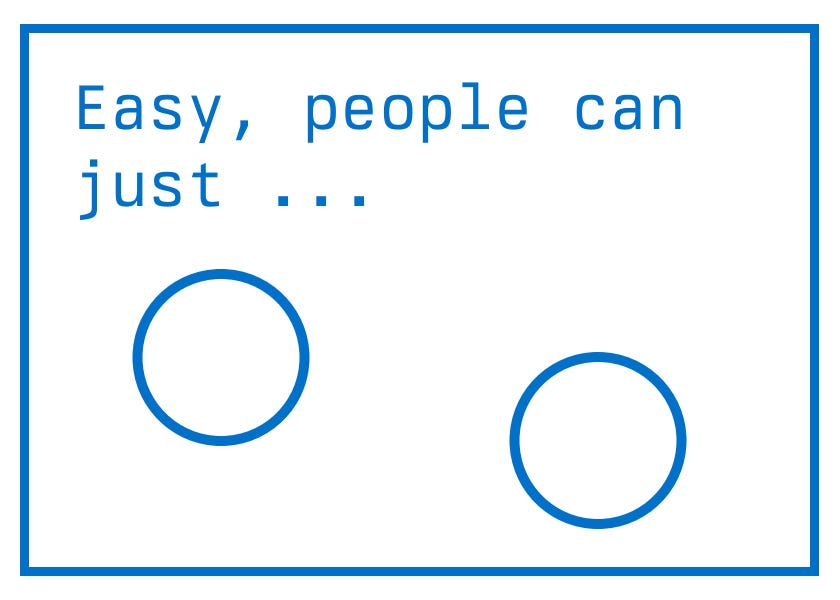
Two types of software engineers
One assumes it's easy because it's a non-technical problem, the other assumes that's why it's hard
), I’m fully type 2: if a technical problem requires human behavior, that makes it *more* difficult to handle, not less.
<img class="shadow" data-lazy-fallback="1" decoding="async" src="/cebu_taoist_temple_philippines.jpg"/>
[Curioso](
https://www.shutterstock.com/image-photo/pagoda-dragon-sculpture-taoist-temple-cebu-338318765 )
The problem is, I don’t have my own angle. I don’t know how tech should handle online social interactions – granted, probably no one does for sure – and I’m not particularly qualified or motivated to tackle it. Part of it is that [I don’t really hang out on the internet](/2018-09-04_i-dont-hang-out-on-the-internet ). I’m [somewhat online](
Extremely online - Wikipedia
) in a few bits of open source, but only somewhat, and not a ton elsewhere. I don’t post many times a day, I’m not on Twitter or Mastodon for hours at a time, I haven’t made many close friends on the internet. I definitely don’t have deep experience in community organizing or support.
At the same time, I’m not under any illusion that the tools and services I build are neutral. We’ve mostly matured beyond “tech isn’t good or bad, it’s how it’s used,” especially for social tech. [Joel Spolksy’s historical view on this is one of my favorites](

Joel on Software
Building Communities with Software
The social scientist Ray Oldenburg talks about how humans need a third place, besides work and home, to meet with friends, have a beer, discuss the...
), including his “primary axiom of online communities”:
>
Small software implementation details result in big differences in the way the community develops, behaves, and feels.
I’ve seen this firsthand with [Bridgy](
Bridgy
Connects your web site to social media. Likes, reposts, mentions, cross-posting, and more...
). Most users love it, but I do occasionally hear complaints that it creates surprising [context collapses](
Context collapse - Wikipedia
) when someone’s reply shows up in a different place than they originally posted it. There’s also the broader concern that webmentions [support and promote public conversations over private ones](
Haven Blog: Private Comments, or Why I’m Down On Webmentions
The bulk of existing social media is about interacting in public, but there is a huge value in exploring what these systems look like if commenting...
), and the ongoing debate over whether they [hurt](

sebastiangreger.net
The Indieweb privacy challenge (Webmentions, silo backfeeds, and the GDPR) // Sebastian Greger
) [or help](

View from Ascraeus
A microentry
Sebastian, first of all, thank you for your detailed write up on this issue. I think much of your roadmap is worthwhile, and of great interest.
I c...
) your control over your own data. These conversations are [many years old](
IndieWeb
backfeed
Backfeed is the process of syndicating interactions on your POSSE copies back (AKA reverse syndicating) to your original posts.
... ), but the recent explosion of alternative social networks and the fediverse has injected new life into them.
Again, these are important questions. We need to figure out how to design healthy online spaces and tools! And I may have a few loose opinions here and there, but in general, I don’t have deeply held ideas or convictions, nor do I have a burning desire to work on the problem. It’s just not me.
I’m grateful to the people and groups who are. And honestly, I’m not *too* worried. I still believe I can build tools that are net positive even if I’m Not That Online. I don’t feel too much like I’m neglecting some internet civic duty. But every now and then, I wonder if I’m not eating quite enough of my own dog food cooking, or not in quite the right way, or something.
Am I overthinking it? What do you think?

 )
)


 )
)


 )
[
@snarfed.org
](
)
[
@snarfed.org
](