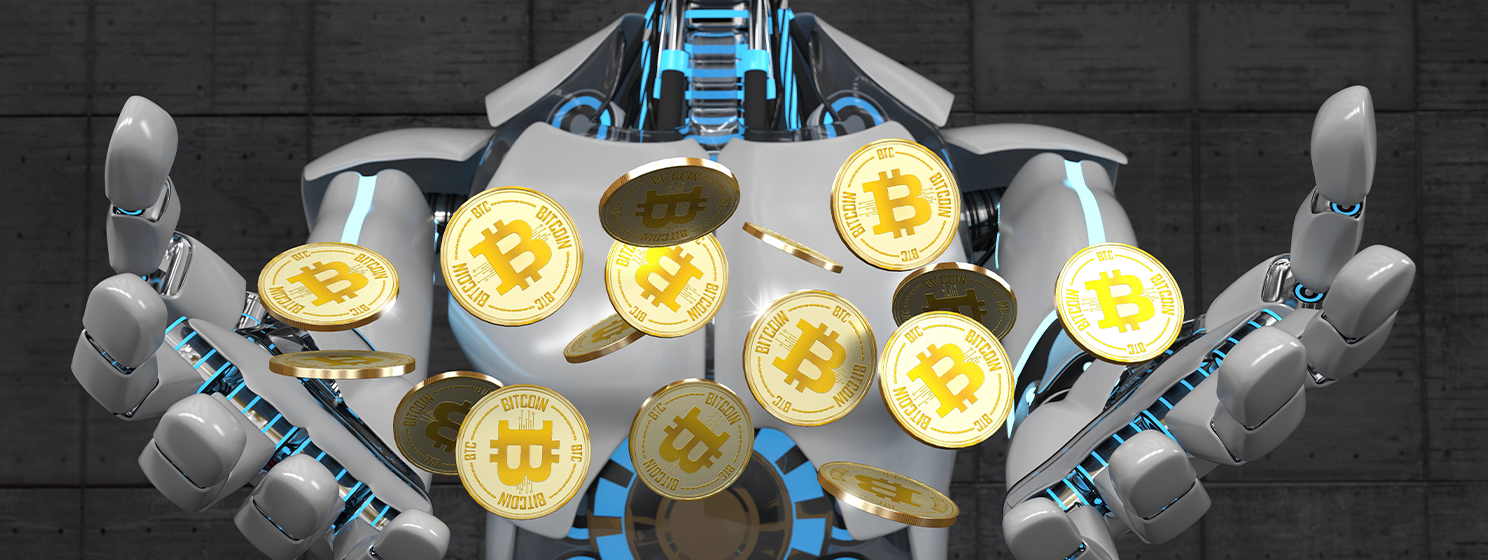
FROM PROOF OF WORK TO PROOF OF COMPUTE Why #Bitcoin miners are abandoning their ASICs for AI. What you are about to read is my opinion based on data. Bitcoin's ROI is drying up. By the end of 2025, the total cost of mining 1 BTC (including equipment renewal) will be around $130,000. With such tight margins and network difficulty at historic highs, buying the latest generation of ASICs is no longer the obvious move for capital. The real asset is energy. Miners have discovered that their greatest treasure is not their machines, but their energy contracts and electrical substations. In a world hungry for computing power, having gigawatts ready to use is like having liquid gold. But what yields more per watt? AI. The neighbor who pays better. While Bitcoin mining depends on market volatility, AI offers 10-year hosting contracts with fixed income. It is estimated that 1 kWh dedicated to AI generates between 15 and 20 times more value than that same kWh dedicated to mining satoshis. From warehouses to high-tech clouds. The transition is not easy. Miners are moving away from buying “Antminers” to investing in fiber optics and liquid cooling. They are converting rustic warehouses into High Performance Computing (HPC) data centers capable of housing Nvidia Blackwell racks. And whether you like it or not, Bitcoin is traded on the stock market, not only because of ETFs but also because the big mining companies are owned by bankers. Wall Street dictates the verdict. The markets are rewarding this change. Companies such as Core Scientific and IREN have seen their valuations skyrocket after announcing deals with AI giants. The message from investors is clear: they prefer the predictability of AI to the roller coaster of hash prices. A Bitcoin ASIC is a chip designed to do one thing: solve the SHA-256 algorithm. It's like a hammer that only works for one type of nail. It cannot process the matrix and tensor calculations required by AI (such as ChatGPT or Llama). AI needs GPUs (and CPUs): To generate AI power, miners have to buy completely new hardware (mainly Nvidia GPUs). Old ASICs cannot be “reprogrammed”; if they are not suitable for mining, they become electronic scrap or are sold to countries with extremely cheap energy (such as Ethiopia or Paraguay). What we are seeing is that companies are becoming hybrid: -Bitcoin as a “cushion”: They mine BTC when energy is cheap or when they don't have AI customers lined up. -AI as a “premium”: They lease their power to tech companies for long-term contracts. The end of mining? No, but its transformation. Bitcoin is becoming a “network balancing” tool: data centers will mine when there is excess energy or when AI does not need it. The future of the sector is no longer just crypto, it is the infrastructure that supports the entire digital economy. Sources: 1. 2. 3.
In 𝕏 in the Creator Studio menu. Digital identity will be mandatory. It is necessary for technocracy. And Elon Musk is the largest architect of his infrastructure. image
Elon Musk with DOGE in the Trump administration was a strong signal of #Technocracy Few understand this.
DEEP WEB vs DARK WEB And the choice between Tor and I2P Deep Web vs. Dark Web: Understanding the Iceberg -The Deep Web represents the vast majority of the internet—estimated at 90-96%—that is not indexed by standard search engines. It consists of private data behind passwords, such as your email inbox, banking portals, and private academic databases. You access it daily using standard browsers. -In contrast, the Dark Web is a small, intentional subset of the Deep Web that is hidden and requires specific software to access. It is designed specifically for anonymity and cannot be reached through regular web browsers. While it is often associated with illegal marketplaces, it is also used by activists and journalists to communicate safely. Tor vs. I2P: Choosing Your Anonymity Tool -Tor (The Onion Router) is the most widely used tool for anonymity. It functions by wrapping your data in multiple layers of encryption (like an onion) and routing it through three random volunteer nodes. Its primary strength is allowing users to browse the "surface web" (normal websites) without revealing their identity. -I2P (Invisible Internet Project) is a decentralized "network within a network". Unlike Tor, which aims to help you reach the public internet, I2P is optimized for communication strictly inside its own ecosystem. It uses "Garlic Routing," which groups multiple encrypted messages together and utilizes separate unidirectional tunnels for sending and receiving data. Key Comparisons Exit Points: Tor is designed with "exit nodes" to let you access the regular web anonymously. I2P is primarily a closed system with very few exit points, focusing on internal .i2p sites. Performance: Tor is generally faster for web browsing and is easier for beginners to install via the Tor Browser. I2P is more resilient and efficient for peer-to-peer (P2P) file sharing and internal messaging. Architecture: Tor relies on a directory-based system for its nodes, while I2P is a fully decentralized peer-to-peer network where every user helps route traffic for others.
Serendipity is a statistical bias; it favors the focused mind. What we call chance is often causality filtered through attention.
I know that most people use centralized storage services from Big Tech companies, so I suggest encrypting the content before uploading it and avoiding their synchronization apps. You can encrypt it with PGP. The most popular app is Kleopatra, a graphical interface for managing PGP (Pretty Good Privacy) keys and encrypting digital files. This guide is for you, not a spy, not a criminal, not even a tech nerd, just a regular person living an ordinary life, like most people: EVERYDAY PRIVACY: The Guide liberlion.com/privacy
Firefox is developed by Mozilla Corporation, a "non-profit" subsidiary. Ironically, their biggest benefactor is Google. Yes, the privacy-focused champion is basically a subsidized pet kept alive by the very data-hungry giant it claims to be protecting you from. Follow the money trail to understand the destination and the intention. image
App or Browser? If you care about your privacy, the short answer is: Browser. But beware: not just any browser. Using Chrome is like changing cells in the same prison. For real privacy, the top recommendations are Brave or LibreWolf. Brave blocks ads and trackers natively through its Shields. It is ideal for mobile and PC because it is fast and requires no complex configuration. LibreWolf is the hardened version of Firefox. It comes without telemetry, meaning it sends no data to its creators, and features maximum security settings by default. Both prevent the fingerprinting that apps use to identify you. The golden rule for your mobile device is to use Brave or LibreWolf for social media, shopping, and news. This way, trackers die before they even load. Use the native app only for banking and encrypted messaging. This approach results in less tracking, no advertising, and better battery life.
Prophetic for the first phase. The second phase of Bitcoin, which is currently underway, is the co-opting of BTC by bankers. Michael is in this phase. image
To better understand, the information must be contextualized. Analyzing data without looking for relationships is like trying to understand a forest by looking at a single tree. Elon Musk is not an improviser, and his logic is not about business; it is about power. Forget about Tesla as a car company or SpaceX as a rocket manufacturer. We are witnessing the final assembly of a master plan to build a technical infrastructure that does not just compete within the market but aims to replace the core functions of the modern state. Welcome to Technocracy. View Article →