[1/2] Vending machines installed in a university in Canada have cameras, but various companies assert that they don't identify persons or store photos of them. They only detect that some person is in front of the machine and perhaps wants to use it. In my view, the injustice of most cameras that watch people lies in tracking people. A camera that …
[4/4] … into injustice. Trade agreements is one of the few areas in which the corrupter did good things, For instance, keeping the US out of the TPP, and spiking the WTO. But that is no reason to vote for the corrupter, since Biden has continued the same policies. What's more, Biden has taken broad action against monopolies in the US. In any case, the danger that the corrupter would impose fascism and abolish human rights in the US outweighs other the political issues.
[3/4] … government of the country it claims to be located in to sue on its behalf. With the dispute resolution system spiked, the WTO will be unable to do much to countries that relax the unjust copyright laws that persecute people who share with other people, and may be unable to pressure countries to make exceptions in patent law for software, medicine and agriculture. If the WTO limited itself to preventing international dumping of products, I would support it. But it goes far beyond that, …
[2/4] … US has sabotaged the WTO by blocking appointment of "judges" to implement its dispute appeals procedure. See how I have condemned the WTO in the past. The WTO "dispute resolution procedure" is much like an ISDS clause except that businesses cannot directly sue countries for making laws to protect human right, public health, the environment, or their citizens' standard of living. In the WTO, only another member country can do that. But a big enough company can generally get the …
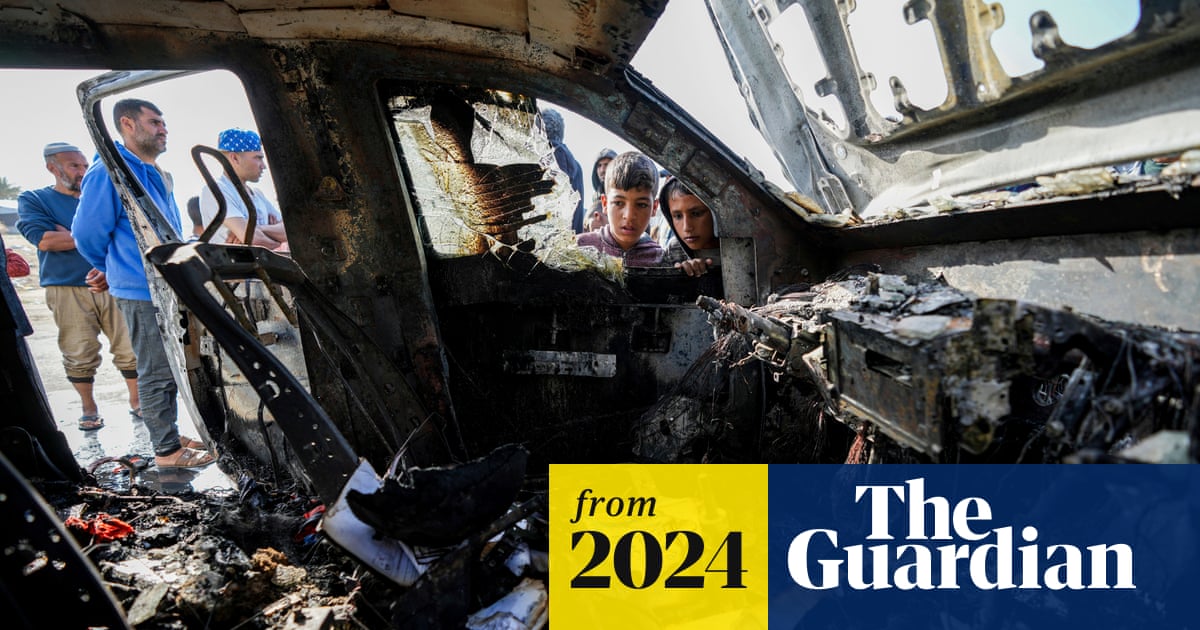
[5/5] … the aid operations suspend bringing food to Gaza. A hypothetical sincere investigation might confirm this, but governments are not often that sincere about their motives. The US should skip the useless "investigation" and tell Israel to change these policies and respect truces for aid deliveries, or it will receive no more arms.
[4/5] … six months hoping the world will get distracted. Perhaps the US made that response before Israel stated the details in the article. Unless the facts stated in the article are incorrect, the only remaining question is why commanders concluded it was acceptable to knowingly attack an aid convoy that they had agreed to protect. Such a sensitive policy decision must have come from a high level — from ministers, I expect. One must speculate that the purpose of this attack was to make …
[3/5] … matter. Even if he had accompanied them, that would not have excused the wrong of attacking an aid convoy. Local temporary truces are normal and important in war, and Israel must respect them when aid agencies make them. It must also generally avoid attacking civilians even though some HAMAS fighters are near them. The US government response, though critical of Israel, was too weak. We cannot expect the demanded investigation to seek the truth, and Israel could easily draw it out for …
[2/5] … fighter was accompanying them (but not in order to attack anyone). So what? That is no excuse to attack a group of civilians, let alone a group of aid workers! That statement shows that Israel's policies are such as to systematically lead to attacks on aid workers, and that its "cooperation" with aid deliveries is bogus. The article reports that that HAMAS fighter had in fact remained at the warehouse and did not accompany the aid workers who were attacked. But that detail does not …
[1/5] Aid workers in Gaza were returning from distributing food that had arrived by ship, when three successive Israeli drone attacks hit their three vehicles and killed 7 of them. In response, the humanitarian charities that ran the operation have suspended their activities in Gaza. Israel said that the attack was done intentionally, and offered the excuse that an armed HAMAS …
A 19th century law limits the liability of the shipowner for destroying the bridge in Baltimore. Ship-owning companies have lobbied hard to block revision of that law.