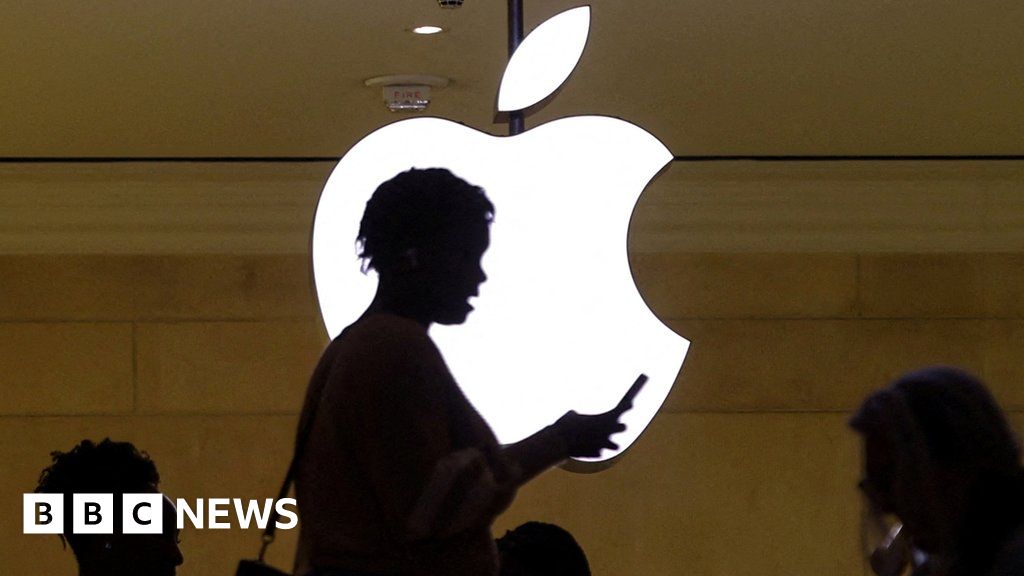
The overwhelming consensus among experts is that encryption is either effective for everyone or useless for all. There is simply no way to achieve mass surveillance that is both safe and private, and no amount of wishful thinking or baseless claims can change this indisputable fact. I appreciate Apple’s stand on this.
I've just finished pouring my thoughts into a new essay, and I'd love for you to check it out. This time, I've delved into the potential of AI as an augmentation tool, exploring its power, its potential impact on society and its transformative role in decision-making. This isn't just an exploration of AI's capabilities - it's a call for responsible development, social framing and governance. As much as I'm fascinated by AI's possibilities, I believe it's crucial we remember the need for humanist values, ethical considerations, and regulations in its development. We're standing at a turning point, and it's important we choose the right path forward.
Wait! What’s that deep in the forest? #Bitcoin
Imagine Fiat Maxi's underestimating the power of Bitcoin's visual imaging, which is pretty much on steroids right now, powered by artificial intelligence. This can scale infinitely and visually convey complex ideas, creating visuals that drive aspirations, dreams, and hopes. These people have no idea of the tsunami building up steam. #bitcoin image
Bitcoin represents a profound revolution in human civilization's history. For the first time, individuals have the power to become their own bank, take control of their financial future, and not rely on traditional banking systems. Bitcoin's parallel economy offers people the freedom to transact without intermediaries, with a high degree of privacy and security, and without manipulative regulators or abusive governments' prying eyes. Bitcoin is not just a technological innovation, but a fundamental shift in our thinking about money and financial systems. It challenges the traditional notion of money as a centralized and government-controlled entity. Instead, it offers a vision of a more democratic, decentralized, and transparent financial system. As an activist, I have never encountered a more potent tool than Bitcoin for empowering people and promoting freedom. It provides a way for individuals to store and transfer value without the risk of government interference or currency devaluation, especially in countries with unstable political or economic conditions. Study Bitcoin. image
Bitcoin represents a profound revolution in human civilization's history. For the first time, individuals have the power to become their own bank, take control of their financial future, and not rely on traditional banking systems. Bitcoin's parallel economy offers people the freedom to transact without intermediaries, with a high degree of privacy and security, and without manipulative regulators or abusive governments' prying eyes. Bitcoin is not just a technological innovation, but a fundamental shift in our thinking about money and financial systems. It challenges the traditional notion of money as a centralized and government-controlled entity. Instead, it offers a vision of a more democratic, decentralized, and transparent financial system. As an activist, I have never encountered a more potent tool than Bitcoin for empowering people and promoting freedom. It provides a way for individuals to store and transfer value without the risk of government interference or currency devaluation, especially in countries with unstable political or economic conditions. Study Bitcoin.
Bitcoin's journey from its humble beginnings to its current status as a global phenomenon is comparable to the growth of a plant. Like a plant that needs to be nurtured and cultivated to reach its full potential, Bitcoin has required patience and careful attention to grow and flourish. Back in the early days, Bitcoin was primarily used by a small group of enthusiasts who saw its potential as a decentralized and secure digital currency. However, as more people began to recognize the benefits of using Bitcoin, its adoption momentum has picked up steam. Its decentralized nature meant that it was not subject to the control of any government or central authority, making it an attractive tool for those seeking financial freedom and autonomy. Despite facing challenges such as wild price fluctuations and concerns about security and regulation, Bitcoin's adoption continued to grow. More businesses began to accept it as a form of payment, and the number of Bitcoin ATMs and exchanges increased. Today, Bitcoin has become a mainstream phenomenon, with millions of people around the world using it for a variety of purposes, from buying goods and services to investing and trading. Its value has skyrocketed, making early adopters wealthy and attracting the attention of mainstream investors and institutions. Looking ahead, I believe that Bitcoin's decentralized nature has the potential to revolutionize the traditional financial system, offering a more equitable and transparent alternative for people worldwide. Like a plant that continues to grow and evolve, I think that the future of Bitcoin is bright and full of potential. In fact, I believe that Bitcoin is primed for the next leg up. Its adoption and use continue to grow, with more and more mainstream investors and institutions taking notice of its potential. With its decentralized nature and increasing adoption, Bitcoin could well be on its way to becoming a widely accepted and valuable asset class. Study Bitcoin. image
Just put the finishing touches on an essay I'm really excited to share with you all. It's a deep dive into the contrasting ideologies of Humanism and Naturalism, and how finding a balance between them can guide us towards a future that is not only technologically advanced, but also ethically sound and sustainable. I've also had a good look at how extremes, like the case of Theodore Kaczynski, can lead to dangerous pitfalls. If you've ever wondered about the role of ethics in scientific progress, or if you're simply up for a thought-provoking read, give it a go! Can't wait to hear your thoughts. Let's get the conversation started!
An important aspect of scientific inquiry is the willingness to reassess one's position in light of new data. However, it's concerning when individuals or institutions resort to censorship, cancellation, and mandates rather than engaging in open discussion about scientific findings and potential disagreements. In some cases, there have been instances of individuals - like that of Dr. Peter Hoatez - speaking authoritatively and ridiculing other domain experts who hold differing views, while urging state action against them. This type of behavior leaves no room for dissent or constructive dialogue. Additionally, it's important for scientists to acknowledge when changes occur in the scientific landscape and to provide explanations for why their position may have changed. Failing to engage in open discussions and acknowledge changes in scientific findings can have serious consequences for public trust in the medical establishment, particularly in the context of rapidly evolving health crises. When individuals or institutions adopt an authoritarian or dismissive approach to scientific inquiry, it can create a culture of fear and distrust, leading to skepticism or even rejection of important medical interventions such as vaccines. This is particularly evident in the current climate, where vaccine hesitancy and doubt have become major issues. The lack of transparency and open discussion around the development and distribution of vaccines has fueled skepticism and mistrust among large sections of the public. While the intent of actions aimed at promoting public health and safety may be well-intentioned, the unintended consequences can be significant. The erosion of public trust in medical authorities can lead to a breakdown in communication between healthcare providers and patients, reducing the likelihood that individuals will seek out important medical care or adhere to recommended treatments. This, in turn, can have far-reaching effects, ultimately impacting the health and wellbeing of entire communities. It is therefore important for those involved in scientific research and healthcare to adopt a transparent and collaborative approach to scientific inquiry, acknowledging potential uncertainties and engaging in open dialogue with the public. By doing so, we can build trust and foster a shared commitment to public health and safety, ultimately leading to better outcomes for everyone.
The idea of schools having an open and transparent curriculum is based on the belief that education should be accessible and equitable for all students while maintaining the fundamentals of science. For instance, an open curriculum can ensure that the education is scientific and aligned with the values and beliefs of the community without giving in to pressures from ideologically motivated people, such as religious communities and modern secular unscientific woke orthodoxy littered in scientism and science-sounding jargon. An open curriculum is one that is clearly defined, publicly accessible, and regularly updated, allowing parents and the broader community to have a better understanding of what their children are learning and how it aligns with their values and beliefs. An open curriculum allows parents and the broader community to have a better understanding of what their children are learning and how it aligns with their values and beliefs. It can also promote trust between schools and parents, as parents feel more informed and involved in their children's education. The open curriculum can promote social cohesion by providing a common set of knowledge and skills that all students can learn and apply in their lives. To address concerns about the resources required, schools can collaborate with parents and the community to develop and refine the curriculum. This can help to ensure that the curriculum aligns with the values and beliefs of the community and meets the needs of all students. Disagreements over what should be included in the curriculum can be addressed by involving a diverse group of stakeholders in the curriculum development process. While an open curriculum may not be suitable for all students, schools can provide individualized or specialized instruction for those who need it. This can include differentiated instruction, personalized learning plans, or specialized programs for students with unique needs or interests. Implementing an open curriculum requires careful planning and collaboration, but the benefits of transparency, trust, and social cohesion in education make it a worthwhile endeavor. By involving the community in the curriculum development process and providing individualized instruction for students who need it, schools can ensure that all students receive a high-quality education that prepares them for success in the 21st century. image