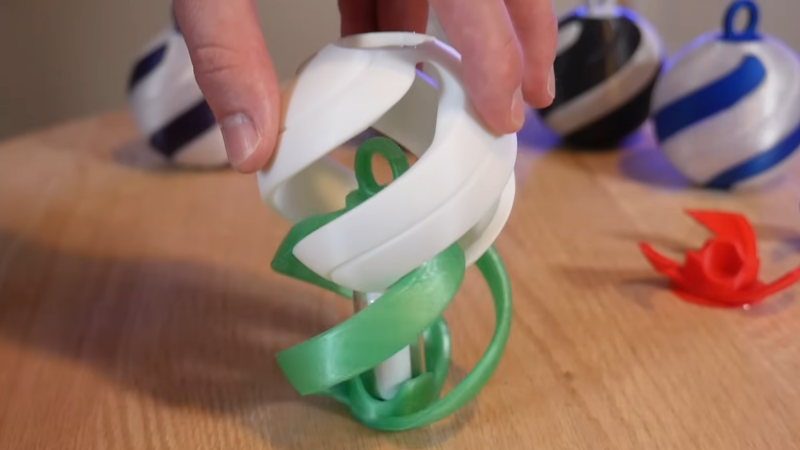
Christmas Ornament Has Hidden Compartment, Clever Design If you need something clever for a gift, consider this two-part 3D-printed Christmas ornament that has a small secret compartment. But there’s a catch: the print is a challenging one. So make sure your printer is up to the task before you begin (or just mash PRINT and find out). Want a challenging print that’s also useful? This two-piece ornament has a small gift area inside, and prints without supports. This design is from [Angus] of [Maker’s Muse] and it’s not just eye-catching, but meticulously designed specifically for 3D printing. In fact, [Angus]’s video (embedded under the page break) is a great round-up of thoughtful design for manufacture (DFM) issues when it comes to filament-based 3D printing. The ornament prints without supports, which is interesting right off the bat because rounded surfaces (like fillets, or a spherical surface) facing the build plate — even when slightly truncated to provide a flat bottom — are basically very sharp overhangs. That’s a feature that doesn’t generally end up with a good surface finish. [Angus] has a clever solution, and replaces a small section with a flat incline. One can’t tell anything is off by looking at the end result, but it makes all the difference when printing. There are all kinds of little insights into the specific challenges 3D printing brings, and [Angus] does a fantastic job of highlighting them as he explains his design and addresses the challenges he faced. One spot in particular is the flat area underneath the hang hole. This triangular area is an unsupported bridge, and because of its particular shape, it is trickier to print than normal bridges. The workable solution consists of countersinking a smaller triangle within, but [Angus] is interested in improving this area further and is eager to hear ideas on how to do so. We wonder if he’s tried an approach we covered to get better bridges. Want to print your own? 3D files are available direct from [Angus]’s site in a pay-what-you-like format. If your 3D printer is up to it, you should be able to make a few before Christmas. But if you’d prefer to set your sights on next year with something that uses power and hardware, this tiny marble machine ornament should raise some eyebrows. youtube.com/embed/Oyy16lbpe_c?… hackaday.com/2025/12/22/christ…
Device Code Phishing: la minaccia che non ruba password, ma compromette gli account utente @npub1vje7...y8ga Il phishing del codice dispositivo provoca la compromissione dell’account, l’esfiltrazione di dati e molto altro ancora. Ecco come proteggersi dal Device Code Phishing, la forma di phishing che non ruba la password, ma si
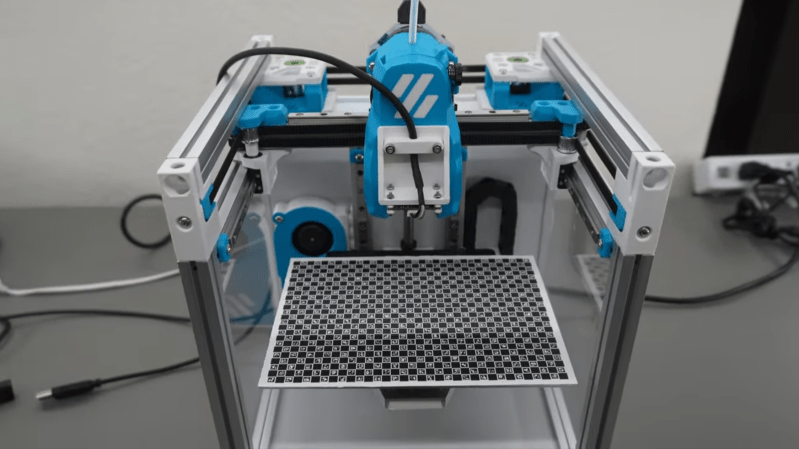
Calibrating a Printer with Computer Vision and Precise Timing [Dennis] of [Made by Dennis] has been building a Voron 0 for fun and education, and since this apparently wasn’t enough of a challenge, decided to add a number of scratch-built improvements and modifications along the way. In his latest video on the journey, he rigorously calibrated the printer’s motion system, including translation distances, the perpendicularity of the axes, and the bed’s position. The goal was to get better than 100-micrometer precision over a 100 mm range, and reaching this required detours into computer vision, clock synchronization, and linear algebra. To correct for non-perpendicular or distorted axes, [Dennis] calculated a position correction matrix using a camera mounted to the toolhead and a ChArUco board on the print bed. Image recognition software can easily detect the corners of the ChArUco board tiles and identify their positions, and if the camera’s focal length is known, some simple trigonometry gives the camera’s position. By taking pictures at many different points, [Dennis] could calculate a correction matrix which maps the printhead’s reported position to its actual position. Leveling the bed also took surprisingly deep technical knowledge; [Dennis] was using a PZ probe to detect when the hotend contacted the bed in various places, and had made a wiper to remove interfering plastic from the nozzle, but wasn’t satisfied by the bed’s slight continued motion after making contact (this might have introduced as much as five micrometers of error). To correct for this, he had the microcontroller in the hotend record the time of contact and send this along with the hit signal to the Raspberry Pi controller, which keeps a record of times and positions, letting the true contact position be looked up. This required the hotend’s and the printer’s microcontrollers to have their clocks synchronized to within one microsecond, which the Pi managed using USB start-of-frame packets. The final result was already looking quite professional, and should only get better once [Dennis] calibrates the extrusion settings. If you’re looking for more about ChArUco boards, we’ve covered them before, as well as calibration models. If you’re looking for high-precision bed leveling, you could also check out this Z sensor. youtube.com/embed/8DvygwWloCc?… Thanks to [marble] for the tip! hackaday.com/2025/12/22/calibr… image
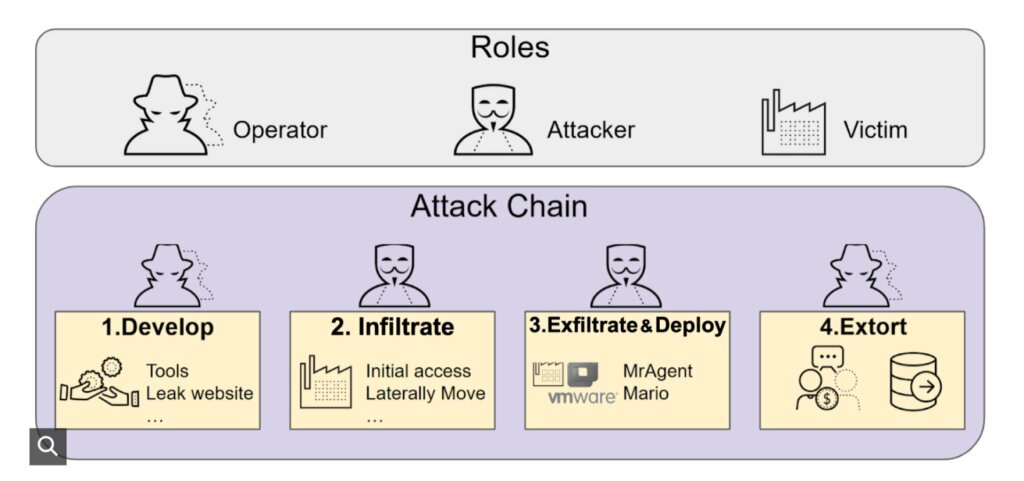
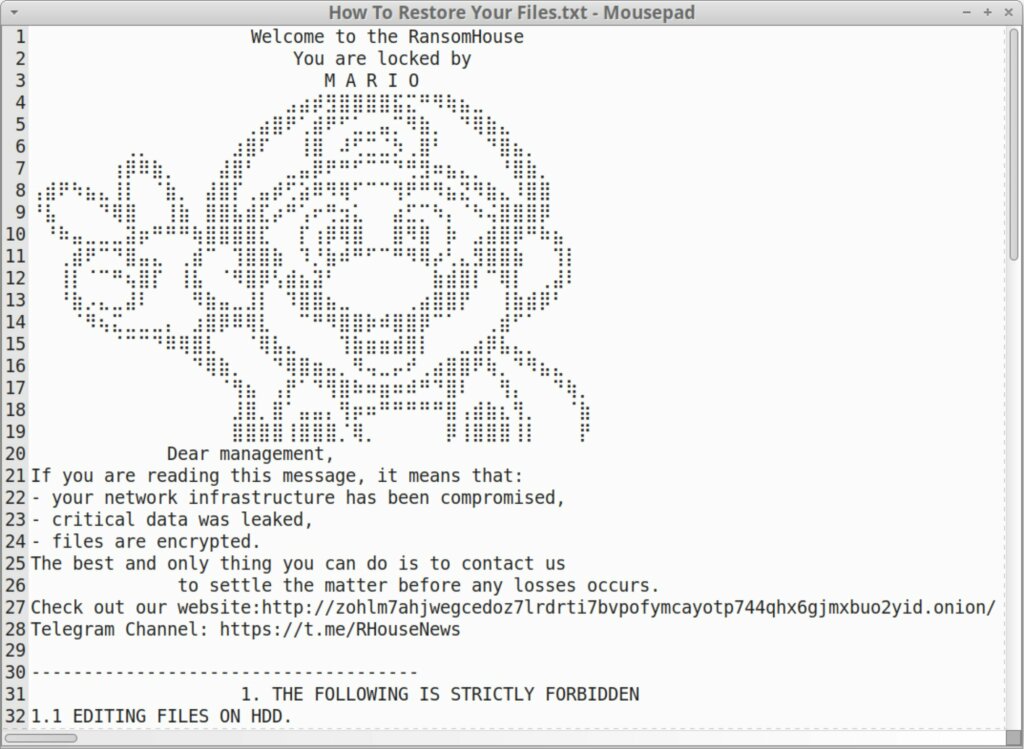
RansomHouse rilascia Mario! Il ransomware si evolve e diventa più pericoloso Il gruppo dietro RansomHouse, uno dei più noti servizi di distribuzione di ransomware, ha rafforzato le capacità tecniche dei suoi attacchi. Secondo gli esperti, i criminali informatici hanno aggiunto al loro arsenale uno strumento di crittografia aggiornato, caratterizzato da un’architettura più complessa e funzionalità ampliate. Le modifiche hanno interessato sia l’algoritmo di elaborazione dei file sia i metodi che ne complicano l’analisi successiva. RansomHouse è attivo dalla fine del 2021, inizialmente con fughe di dati e poi con l’uso attivo di ransomware negli attacchi. Il servizio si è sviluppato rapidamente, incluso il rilascio dell’utility MrAgent per il blocco di massa degli hypervisor VMware ESXi. Uno degli incidenti più recenti noti ha riguardato l’uso di diverse varianti di ransomware contro la società di e-commerce giapponese Askul Un recente rapporto dell’Unità 42 di Palo Alto Networks descrive una nuova variante del ransomware chiamata “Mario“. A differenza della versione precedente, che utilizzava un’elaborazione monofase, la modifica aggiornata utilizza un approccio a due fasi con due chiavi: una chiave primaria da 32 byte e una chiave secondaria da 8 byte. Ciò aumenta significativamente la potenza della crittografia e complica i tentativi di recupero dei dati. Un’ulteriore protezione è fornita da un meccanismo di elaborazione dei file riprogettato. Invece di uno schema lineare, viene utilizzata la suddivisione dinamica dei blocchi, con una soglia di 8 GB e crittografia parziale. Le dimensioni e il metodo di elaborazione di ciascun file dipendono dalle sue dimensioni e vengono calcolati utilizzando complesse operazioni matematiche. Questo approccio complica l’analisi statica e rende il comportamento del crittografo meno prevedibile. Anche la struttura di gestione della RAM è stata modificata: ora vengono utilizzati buffer separati per ogni fase di crittografia. Ciò aumenta la complessità del codice e riduce la probabilità di rilevamento durante l’analisi. Inoltre, la nuova versione fornisce informazioni più dettagliate durante l’elaborazione dei file, mentre in precedenza si limitava a un messaggio sul completamento dell’attività. I file delle macchine virtuali, che ricevono l’estensione “.emario” dopo la crittografia, rimangono il bersaglio degli attacchi. In ogni directory interessata viene lasciato un messaggio con le istruzioni su come ripristinare l’accesso ai dati (ransom note). Gli specialisti dell’Unità 42 sottolineano che questa evoluzione del ransomware RansomHouse è un segnale d’allarme. La maggiore complessità ostacola la decrittazione e complica notevolmente l’analisi dei campioni, suggerendo una strategia ben ponderata, focalizzata non sulla scala, ma sull’efficienza e sulla segretezza. L'articolo RansomHouse rilascia Mario! Il ransomware si evolve e diventa più pericoloso proviene da Red Hot Cyber.
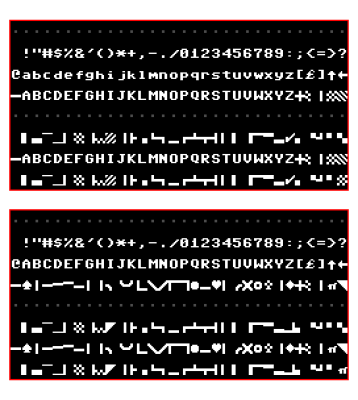
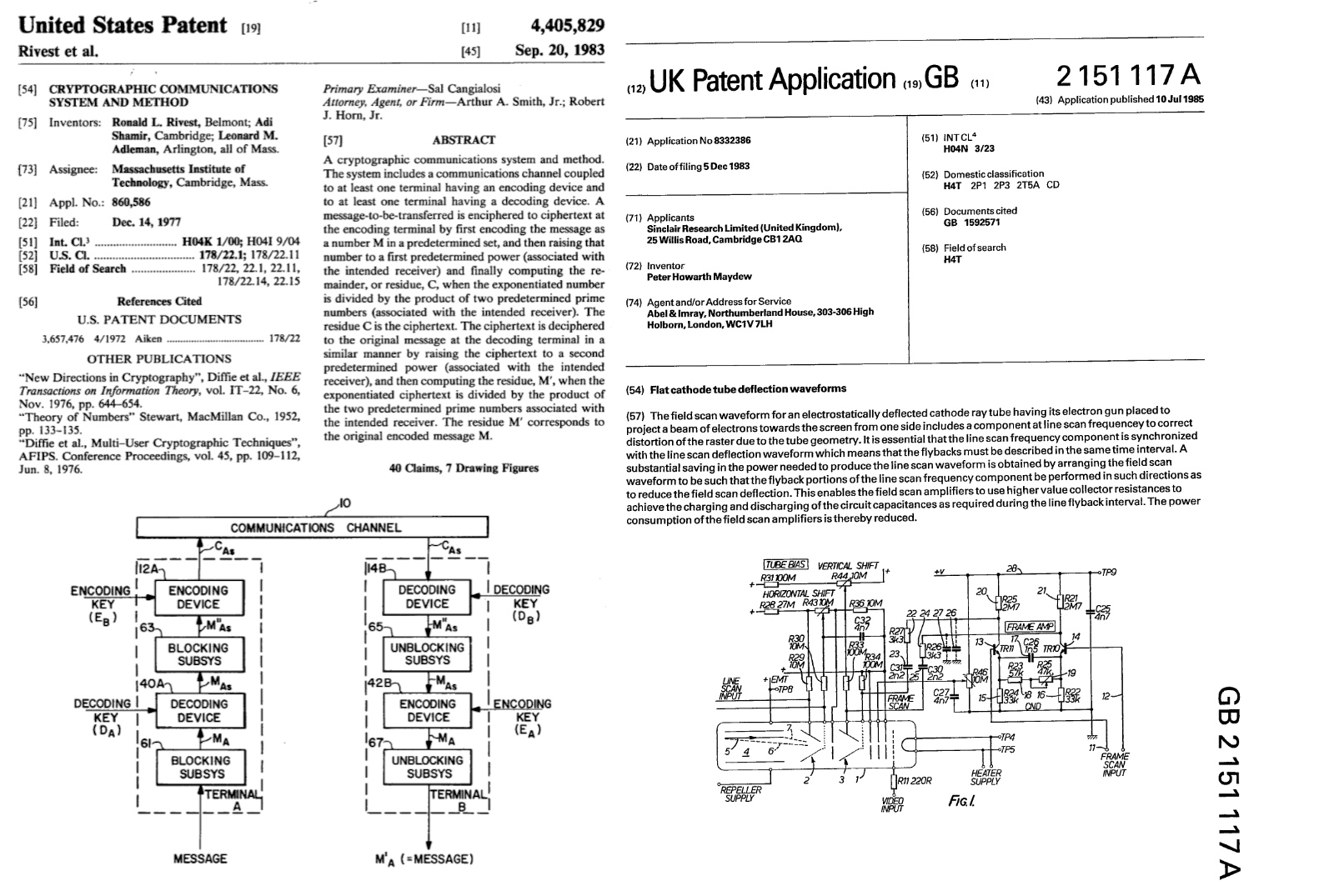
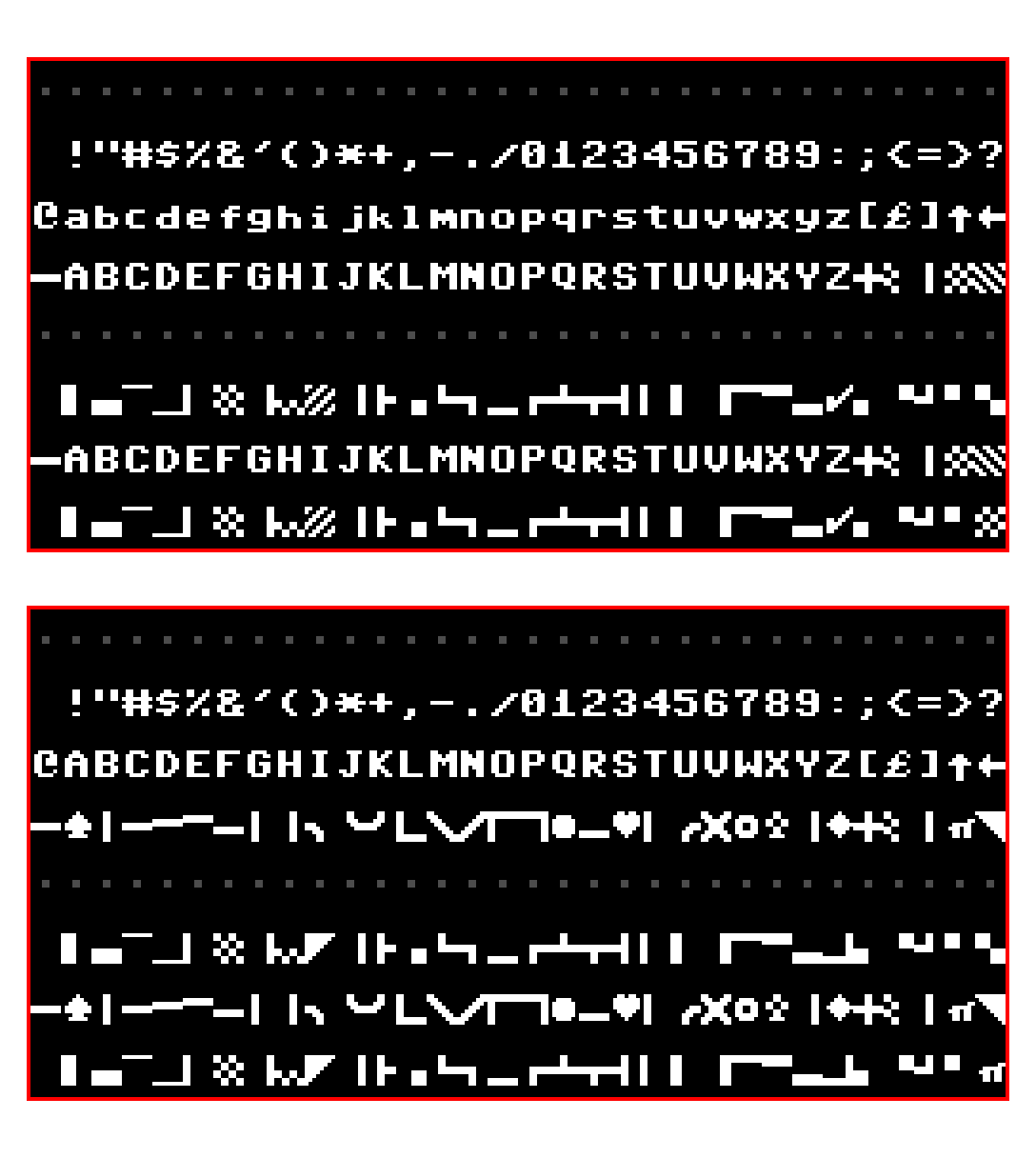
Ask Hackaday: What Goes Into A Legible Font, And Why Does It Matter? American and British patents, for comparison. There’s an interesting cultural observation to be made as a writer based in Europe, that we like our sans-serif fonts, while our American friends seem to prefer a font with a serif. It’s something that was particularly noticeable in the days of print advertising, and it becomes very obvious when looking at government documents. We’ve brought together two 1980s patents from the respective sources to illustrate this, the American RSA encryption patent, and the British drive circuitry patent for the Sinclair flat screen CRT. The American one uses Times New Roman, while the British one uses a sans-serif font which we’re guessing may be Arial. The odd thing is in both cases they exude formality and authority to their respective audiences, but Americans see the sans-serif font as less formal and Europeans see the serif version as old-fashioned. If you thought Brits and Americans were divided by a common language, evidently it runs much deeper than that. But What Makes Text Easier To Read? Is this legible enough for you? We’re told that the use of fonts such as Arial or Calibri goes a little deeper than culture or style, in that these sans-serif fonts have greater readability for users with impaired vision or other conditions that impede visual comprehension. If you were wondering where the hack was in this article it’s here, because many of us will have made device interfaces that could have been more legible. So it’s worth asking the question: just what makes a font legible? Is there more to it than the presence or absence of a serif? In answering that question we’re indebted to the Braille Institute of America for their Atkinson Hyperlegible font, and to Mencap in the Uk for their FS Me accessible font. It becomes clear that these fonts work by subtle design features intended to clearly differentiate letters. For example the uppercase “I”, lowercase letter “l”, and numeral “1” can be almost indistinguishable in some fonts: “Il1”, as can the zero and uppercase “O”, the lowercase letters “g”, and “q”, and even the uppercase “B” and the numeral “8”. The design features to differentiate these letters for accessibility don’t dominate the text and make a font many readers would consider “weird”. Bitmap Fonts For The Unexpected Win The typeface used in the Commodore 8-bit machines. User:HarJIT, Public domain. It’s all very well to look at scaleable fonts for high resolution work, but perhaps of more interest here are bitmap fonts. After all it’s these we’ll be sending to our little screens from our microcontrollers. It’s fair to say that attempts to produce smooth typefaces as bitmaps on machines such as the Amiga produced mixed results, but it’s interesting to look at the “classic” ROM bitmap fonts as found in microcomputers back in the day. After years of their just flowing past he eye it’s particularly so to examine them from an accessibility standpoint. Machines such as the Sinclair Spectrum or Commodore 64 have evidently had some thought put into differentiating their characters. Their upper-case “Ii” has finials for example, and we’re likely to all be used to the zero with a line through it to differentiate it from the uppercase “O”. Perhaps of them all it’s the IBM PC’s code page 437 that does the job most elegantly, maybe we didn’t realise what we had back in the day. So we understand that there are cultural preferences for particular design choices such as fonts, and for whatever reason these sometimes come ahead of technical considerations. But it’s been worth a quick look at accessible typography, and who knows, perhaps we can make our projects easier to use as a result. What fonts do you use when legibility matters? Header: Linotype machines: AE Foster, Public domain. hackaday.com/2025/12/22/just-w…
Apple: multa di 115 milioni di dollari dal Garante della Concorrenza e del Mercato italiano L’Autorità Garante della Concorrenza e del Mercato italiana (AGCM) ha imposto una sanzione significativa ad Apple. La sanzione ammonta a 98,6 milioni di euro, ovvero circa 115 milioni di dollari. ed è relativa a al presunto abuso di posizione dominante nel mercato delle app mobili. Secondo l’autorità di regolamentazione italiana, l’azienda ha limitato gli sviluppatori di app di terze parti, violando le norme europee sulla concorrenza. Il caso riguarda l’informativa sulla privacy dell’App Tracking Transparency (ATT) introdotta nel 2021, in base alla quale Apple richiede agli sviluppatori un consenso separato agli utenti per raccogliere dati e utilizzarli a fini pubblicitari. La notifica corrispondente non viene generata dagli sviluppatori stessi, ma da Apple stessa, e solo secondo uno scenario stabilito dall’azienda. L’agenzia ritiene che questo approccio crei condizioni di disparità per gli operatori di mercato e violi i principi di proporzionalità. Afferma che la politica di raccolta dati è imposta unilateralmente, ostacola il pieno funzionamento dei partner commerciali ed è incompatibile con le normative sulla protezione dei dati personali. Particolare attenzione è stata prestata al fatto che gli sviluppatori terzi erano costretti a duplicare le richieste di consenso, costringendo di fatto gli utenti a ripetere la stessa procedura più volte. Ciò, secondo l’autorità di regolamentazione, ha comportato ulteriori complicazioni e ha messo le aziende che utilizzano l’App Store in una posizione vulnerabile. L’indagine è iniziata nella primavera del 2023. Le autorità italiane hanno sottolineato che l’indagine è stata condotta in stretta consultazione con la Commissione Europea e le autorità antitrust di altri Paesi. Apple non ha ancora rilasciato dichiarazioni ufficiali in merito alla decisione. L'articolo Apple: multa di 115 milioni di dollari dal Garante della Concorrenza e del Mercato italiano proviene da Red Hot Cyber.
Preparatevi alla distruzione dei dati! Se non paghi, la pubblicazione non basta. Entrano in scena i wiper Secondo BI.ZONE, entro il 2026, gli aggressori opteranno sempre più per la distruzione totale dell’infrastruttura aziendale anziché per la crittografia. Questo si riferisce a scenari in cui, dopo essere penetrati in una rete, gli aggressori utilizzano wiper, strumenti distruttivi che cancellano i dati e possono disabilitare le apparecchiature di rete. Questo approccio aumenta i danni e complica il ripristino: le aziende devono affrontare non solo tempi di inattività, ma anche la perdita di componenti critici. Nel 2025, le aziende del settore retail sono state le più frequenti richiedenti di indagini su incidenti informatici gravi, rappresentando il 31% di tutte le richieste. BI.ZONE rileva inoltre che il settore retail è diventato il principale responsabile delle violazioni dei dati, rappresentando quasi il 40% dei casi. Le cause principali includono problemi comuni: infrastrutture IT obsolete e scarsa segmentazione della rete, che consentono agli attacchi di diffondersi più rapidamente lungo il perimetro e di colpire più sistemi. Il settore IT si è classificato al secondo posto in termini di numero di indagini, con una quota del 26%. Anche le piccole aziende IT sono attraenti per gli aggressori, poiché spesso lavorano come appaltatori per grandi clienti. Di conseguenza, la compromissione di un’azienda appaltatrice viene utilizzata come gateway per infrastrutture più sicure. BI.ZONE stima che nel 2025 il 30% degli incidenti altamente critici fosse collegato ad attacchi tramite terze parti. Un anno prima, questa percentuale era la metà, al 15%. Il terzo posto in termini di numero di indagini è condiviso da aziende di trasporto, telecomunicazioni e organizzazioni governative, ciascuna responsabile dell’11% dei casi. BI.ZONE descrive la tendenza generale come una crescente sofisticatezza e distruttività degli attacchi, mentre le motivazioni di base rimangono le stesse: il guadagno finanziario rimane dominante e il phishing rimane il metodo più comune di penetrazione iniziale. Tuttavia, l’enfasi si sposta di anno in anno: nel 2022, defacement e campagne di hacktivisti sono stati prominenti, nel 2023, fughe di notizie e dump di dati di massa, nel 2024, la crittografia attiva delle infrastrutture e nel 2025 l’uso di wiper è stato registrato con frequenza significativamente maggiore. BI.ZONE rileva anche un aumento del tempo necessario agli aggressori per rimanere inosservati nell’infrastruttura. Nel 2024, la media era di 25 giorni, per poi salire a 42 giorni nel 2025. Tuttavia, la differenza rimane significativa: il tempo minimo di sviluppo dell’attacco dalla penetrazione alla crittografia nel 2025 era di 12,5 minuti, mentre il massimo era di 181 giorni. Il ripristino da tali incidenti richiede ancora molto tempo. Nel 2025, le aziende colpite hanno impiegato in media tre giorni per ripristinare i sistemi critici necessari alla ripresa delle operazioni aziendali. Il ripristino completo dei processi aziendali ha richiesto in media 14 giorni. L'articolo Preparatevi alla distruzione dei dati! Se non paghi, la pubblicazione non basta. Entrano in scena i wiper proviene da Red Hot Cyber.
The Music of the Sea For how crucial whales have been for humanity, from their harvest for meat and oil to their future use of saving the world from a space probe, humans knew very little about them until surprisingly recently. Most people, even in Herman Melville’s time, considered whales to be fish, and it wasn’t until humans went looking for submarines in the mid-1900s that we started to understand the complexities of their songs. And you don’t have to be a submarine pilot to listen now, either; all you need is something like these homemade hydraphones. This project was done as part of a workshop in Indonesia, and it only takes a few hours to build. It’s based on a piezo microphone enclosed in a small case. A standard 3.5 mm audio cable runs into the enclosure and powers a preamp using a transistor and two resistors. With the piezo microphone and amplifier installed in this case, the case itself is waterproofed with a spray and allowed to dry. When doing this build in places where Plasti-Dip is available, it was found to be a more reliable and faster waterproofing method. Either way, with the waterproofing layer finished, it’s ready to toss into a body of water to listen for various sounds. Some further instructions beyond construction demonstrate how to use these to capture stereo sounds, using two microphones connected to a stereo jack. The creators also took a setup connected to a Raspberry Pi offshore to a floating dock and installed a set permanently, streaming live audio wirelessly back to the mainland for easy listening, review, and analysis. There are other ways of interacting with the ocean using sound as well, like this project, which looks to open-source a sonar system. Thanks to [deathbots] for the tip! hackaday.com/2025/12/22/the-mu… image
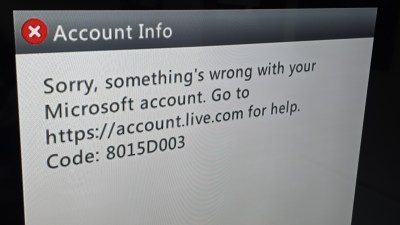
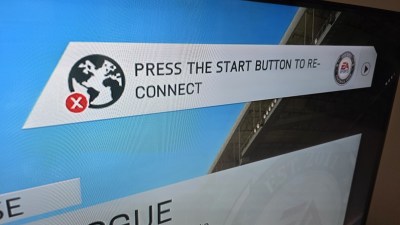
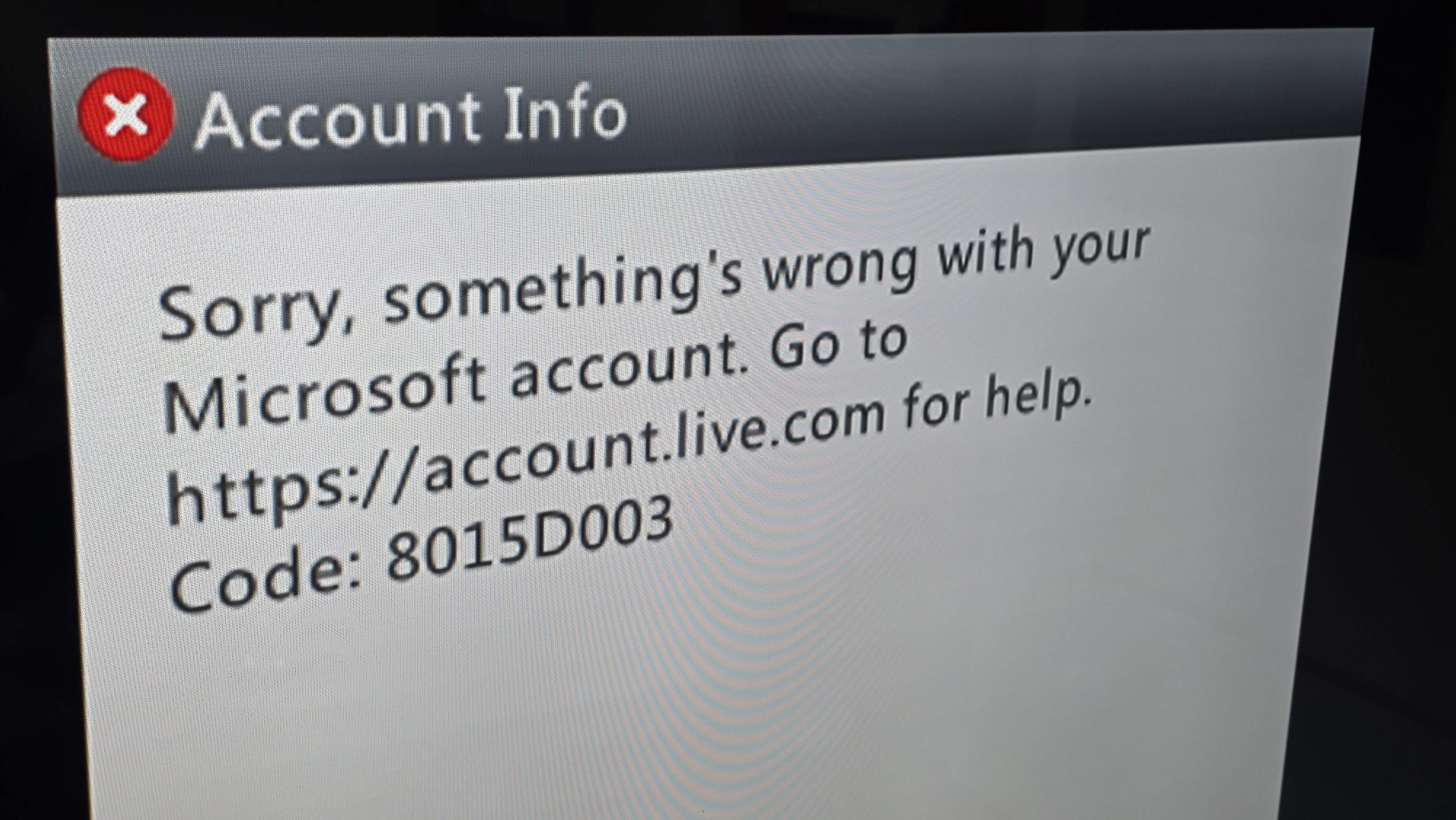
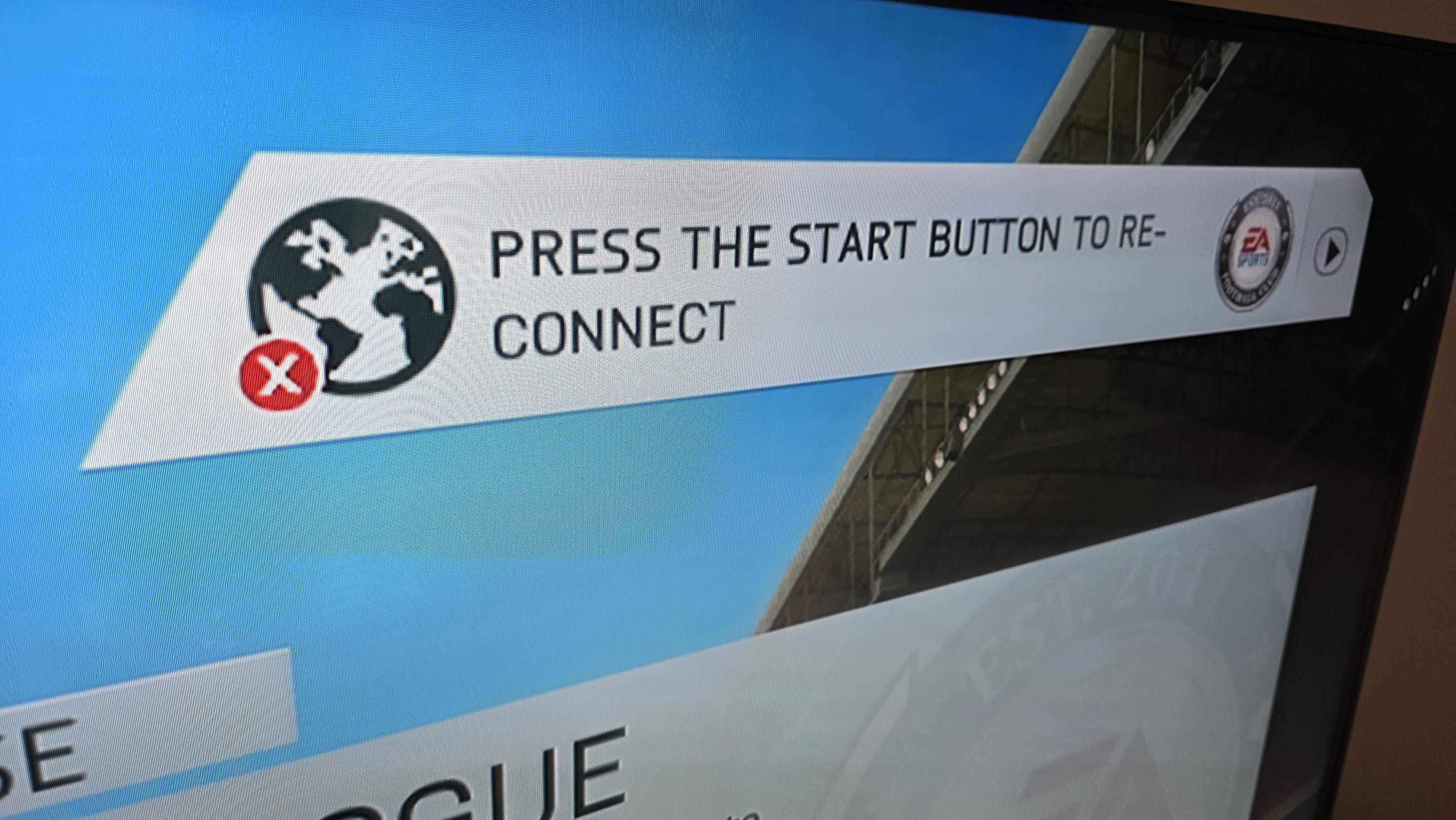
Internet-Connected Consoles Are Retro Now, And That Means Problems A long time ago, there was a big difference between PC and console gaming. The former often came with headaches. You’d fight with drivers, struggle with crashes, and grow ever more frustrated dealing with CD piracy checks and endless patches and updates. Meanwhile, consoles offered the exact opposite experience—just slam in a cartridge, and go! That beautiful feature fell away when consoles joined the Internet. Suddenly there were servers to sign in to and updates to download and a whole bunch of hoops to jump through before you even got to play a game. Now, those early generations of Internet-connected consoles are becoming retro, and that’s introduced a whole new set of problems now the infrastructure is dying or dead. Boot up and play? You must be joking!Turn 360 Degrees And Log Out The Xbox 360 was a console that had online gaming built in to its very fabric from the outset. Credit: author Microsoft first launched the Xbox 360 in 2005. It was the American company’s second major console, following on from the success of the Xbox that fought so valiantly against the Sony PlayStation 2 and the Nintendo GameCube. Where those sixth generation consoles had been the first to really lean in to online gaming, it was the seventh generation that would make it a core part of the console experience. The Xbox 360 liked to sign you straight into Xbox Live the moment you switched on the console. All your friends would get hear a little bling as they were notified that you’d come online, and you’d get the same in turn. You could then boot into the game of your choice, where you’d likely sign into a specific third-party server to check for updates and handle any online matchmaking. The Xbox 360 didn’t need to be always online, it just really wanted you to be. This was simply how gaming was to be now. Networked and now highly visible, in a semi-public way. Where Microsoft blazed a trail in the online user experience for the console market, Sony soon followed with its own feature-equivalent offering, albeit one that was never quite as elegant as that which it aimed to duplicate. Boot up an Xbox 360 today, and you might find it rather difficult to log into your Xbox Live account—even if you do remember your password! Credit: author Fire up an Xbox 360 today, and you’ll see that console acting like it’s still 2008 or something. It will pleasantly reach out to Microsoft servers, and it will even get a reply—and it will then prompt you to log in with your Xbox Live or Microsoft account. You’ve probably got one—many of us do—but here lies a weird problem. When you try to log in to an Xbox 360 with your current Microsoft account, you will almost certainly fail! You might get an error like 8015D086 or 8015D000, or have it fail more quietly with a simple timeout. It all comes down to authentication. See, the Internet was a much happier, friendly place when the Xbox 360 first hit the shelves. Back then, a simple password of 8 characters or more with maybe a numeral or two was considered pretty darn good for login purposes. Not like today, where you need to up the complexity significantly and throw in two-factor authentication to boot. And therein lies the problem, because the Xbox 360 was never expecting two-factor authentication to be a thing. Today, your Microsoft account won’t be authorized for login without it, and thus your Xbox 360 won’t be able to log in to Xbox Live. In fairness, you wouldn’t miss much. All the online stores and marketplaces and games servers were killed ages ago, after all. However, the 360 really doesn’t like not being online. It will ask you all the time if you want to sign in! Plus, if you wanted to get your machine the very last dashboard updates or anything like that… you need to be able to sign into Xbox Live. Thankfully, there is a workaround. Community members have found various solutions, most easily found in posts shared on Reddit. Sometimes you can get by simply by disabling two-factor authentication and changing to a low-complexity password due to the 360’s character limit in the entry field. If that doesn’t work, though, you have to go to the effort to set up a special “App Password” in your Microsoft account that will let the Xbox 360 authenticate in a simpler, more direct fashion. Plenty of modern video games are built with online features that rely on the publisher-hosted servers. When those shut down, parts of the game die. Credit: author Pull all this off, and you’ll hear that famous chime as your home console reaches the promised land of Xbox Live. None of your friends will be online, and nobody’s really checking your Gamerscore anymore, but now you can finally play some games! Only, for a great many titles on the Xbox 360, there were dedicated online servers, too. Pop in FIFA 16, and the game will stall for a moment before it reports that it’s failed to connect to EA’s servers. Back in the day, those servers provided a continual stream of minor updates to the game, player rosters, and stats, making it feel like almost a living thing. Today, there’s nothing out there but a request that always times out. This would be no issue if it happened just once, but alas… you’ll have to tangle with the game doing this time and again, every time you boot it up. It wants that server, it’s so sure it’s out there… but it never phones back from the aether. Many games still retain most of their playability without an Internet connection, and most consoles will still boot up without one. Nevertheless, the more these machines are built to rely on an ever-present link to the cloud, the less of them will be accessible many years into the future. Not Unique It’s much harder to join the fun than it used to be. Credit: author This problem is not unique to the Xbox 360. It’s common to run into similar problems with the PlayStation 3, with Sony providing a workaround to get the old consoles online. For both consoles, you’re still relying on the servers remaining online. It’s fair to assume the little remaining support for these machines will be switched off too, in time. Meanwhile, if you’re playing Pokemon Diamond on the Nintendo DS, you’ve probably noticed the servers are completely gone. In that case, you’re left to rely on community efforts to emulate the original Nintendo WFC servers, which run with varying levels of success. For less popular games, though there’s simply nothing left—whatever online service there was is gone, and it’s not coming back. These problems will come for each following console generation in turn. Any game and any console that relies on manufacturer-run infrastructure will eventually shut down when it becomes no longer profitable or worthwhile to run. It’s a great pity, to be sure. The best we can do is to pressure manufacturers to make sure that their hardware and games retain as much capability as possible when a connection isn’t available. That will at least leave us with something to play when the servers do finally go dark. hackaday.com/2025/12/22/intern…
Una recensione negativa, un indirizzo di casa e il GDPR che piange Il caso del provv. n. 591 del 9 ottobre 2025 dell’Autorità Garante per la protezione dei dati personali è emblematico nel rappresentare quanto un’eccessiva leggerezza nel comunicare o, come in questo caso, diffondere dati personali possa comportare una violazione del GDPR. Tutta colpa di una recensione, verrebbe da dire. O meglio: della risposta data ad una recensione negativa, in cui è stata riportata, come intestazione, nome e cognome nonché l’indirizzo di residenza dell’autore della sopradetta recensione. Autore che si è piuttosto risentito e ha presentato per questo motivo un reclamo al Garante Privacy il quale ha avviato un procedimento sulla possibile illiceità del trattamento dal momento che è stato diffuso un indirizzo di residenza senza una base giuridica valida e per finalità assolutamente divergenti rispetto a quelle per cui era stato legittimamente raccolto. La difesa della società quale soggetto titolare del trattamento ha però voluto insistere sul fatto che:“il reclamato utilizzo del solo indirizzo […] risulta certamente strumentale e necessario da parte di questo titolare del Camping Don Diego a dare doveroso riscontro alla “recensione negativa” sul portale di Google”. cancellando in seguito all’audizione i dati di residenza in adesione alla richiesta formulata nel reclamo. La decisione del Garante Privacy. Non dovrebbe sorprendere più di tanto che il Garante non abbia accolto tale tesi difensiva, confermando così la violazione del principio di liceità e di limitazione della finalità,in quanto il titolare del trattamento ha diffuso in rete illecitamente l’indirizzo di residenza della reclamante in assenza di idonea base giuridica e per finalità diverse da quelle che ne avevano determinato la relativa raccolta. I dati personali del reclamante, tra cui rientra anche l’indirizzo di residenza, sono stati infatti raccolti per dare esecuzione a misure precontrattuali e contrattuali per il periodo di soggiorno. Inoltre, come è intuitivo, un riscontro ad una recensione non richiede certo l’intestazione del destinatario se viene fornito come reply. Facendo riferimento proprio al contesto del trattamento, il Garante ricorda come criterio orientativo, quello fornito dal considerando n. 39 del GDPR che può essere convertito in una domanda che è sempre bene porsi: è davvero necessario trattare quei dati personali per ciò che voglio fare? Potremmo dire: first think, then process the personal data. In questo pensare, sarà bene individuare ciò che si vuole fare con i dati e cogliere l’occasione per applicare il principio di minimizzazione in modo hardcore andando a ricercare alternative in cui si conseguono le stesse finalità senza scomodare alcun dato personale. Dopodiché si ricercano soluzioni alternative sempre riducendo al minimo la quantità di dati da impiegare. Altrimenti, quel che accade è semplicemente l’accettazione del rischio che la modalità di trattamento sia illecita. Come in questo caso che è valso un ammonimento del titolare e la pubblicazione del provvedimento. Non basta il buon senso. Attenzione, però, a ritenere che sia sufficiente il buon senso. Perché può rivelarsi un alleato inaffidabile soprattutto quando non si hanno chiare le regole del gioco. Infatti, la maggior parte di quelle che vengono catalogate come leggerezze si fondano proprio su una mancata consapevolezza di ciò che si può fare e ciò che non si può fare con un dato personale, qualunque esso sia e in qualunque modo sia stato raccolto. Fun fact: per il titolare sarebbe stato sufficiente rileggere la propria informativa per comprendere i limiti d’impiego di quei dati personali. Dopotutto, nella stessa venivano riportate le attività che ci si proponeva di svolgere e nessuna di queste prevedeva la diffusione dei dati. L'articolo Una recensione negativa, un indirizzo di casa e il GDPR che piange proviene da Red Hot Cyber.