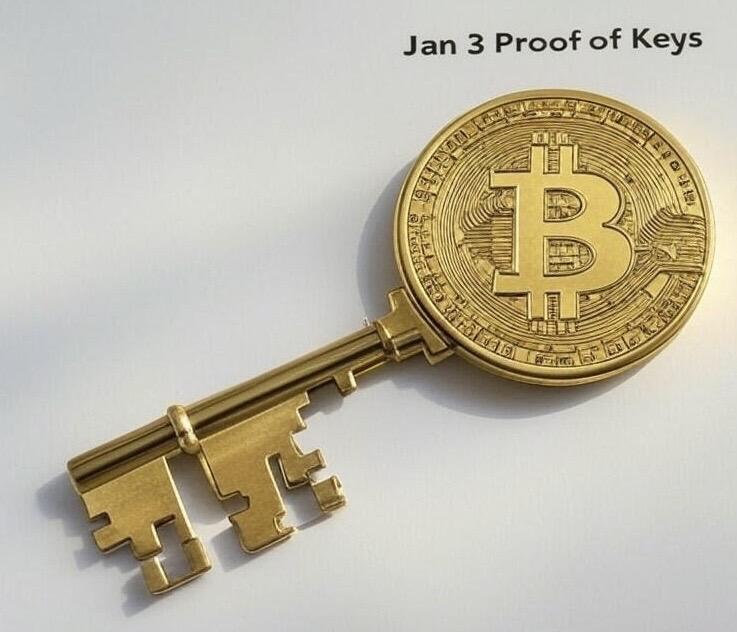
The practice of withdrawing your bitcoin from exchanges on January 3rd is rooted in several significant reasons, often encapsulated under the event known as "Proof of Keys Day." Here are the key rationales:
1. **Security and Ownership**: The core principle of "Not your keys, not your coins" emphasizes that if you do not control the private keys to your bitcoin, you do not truly own it. Exchanges hold these keys, which means you're trusting a third party with your assets. Withdrawing your bitcoin to a personal wallet where you control the keys mitigates risks associated with exchange hacks, mismanagement, or insolvency. This day serves as a reminder to take back control of your assets.
2. **Verification of Exchange Solvency**: January 3rd, which coincides with the anniversary of the genesis block of Bitcoin, is used as a day to test the solvency of exchanges. By withdrawing funds en masse, users can check if exchanges can fulfill all withdrawal requests, exposing any potential issues with fractional reserve practices where exchanges might not have 1:1 backing for all deposited cryptocurrencies.
3. **Promoting Decentralization**: Bitcoin was created to promote decentralization and reduce reliance on centralized institutions like banks or, in this context, exchanges. By withdrawing your bitcoin, you're actively participating in the philosophy of Bitcoin by decentralizing your holdings and not leaving your digital assets in centralized custody.
4. **Historical Precedents**: There have been numerous instances where exchanges have either gone bankrupt, been hacked, or failed to return users' funds. January 3rd serves as a practical reminder to avoid such fates by securing your assets in personal storage. Events like the FTX collapse underscore the risks of keeping substantial amounts of cryptocurrency on exchanges.
5. **Educational and Community Engagement**: This annual event also acts as an educational opportunity for newer users to learn about the importance of self-custody and how to manage their own wallets securely. It fosters community engagement by encouraging discussions on the importance of personal responsibility in cryptocurrency ownership.
6. **Anticipation of Regulatory Actions**: There's a concern among some Bitcoin advocates that future regulatory actions might restrict the ability to withdraw cryptocurrencies from exchanges to private wallets. Withdrawing on this day can be seen as a proactive measure against potential future restrictions.
By participating in Proof of Keys Day, Bitcoin holders are not only securing their own assets but are also collectively contributing to the robustness and integrity of the Bitcoin network. Remember, while this day highlights the importance of these actions, the principles behind it apply year-round for secure cryptocurrency management.