It’s important to recognize, as we see more and more media mergers, that they are not about quality. They’re about control.

The internet is essential to how people speak, learn, and participate in public life. When access depends on flawed technology or hard-to-obtain documents, we deepen existing inequalities and silence the people who most need these platforms.
Mandatory social media disclosure and surveillance “has not proven effective at finding terrorists and other bad guys,” EFF’s Sophia Cope told The New York Times. “But it has chilled the free speech and invaded the privacy of innocent travelers” and Americans, too.
All forms of age-gating are “a privacy nightmare that burdens the civil liberties of people both young and old,” EFF’s @npub1xz6k...0xty told Al Jazeera, forcing all to share sensitive information that could be abused or hacked.
Losing anonymity online “means that personal private data is able to be collected and retained and stored and breached, maybe used by bad actors linking your identity to the sites that you visit online,” EFF’s Molly Buckley told Michigan Public.
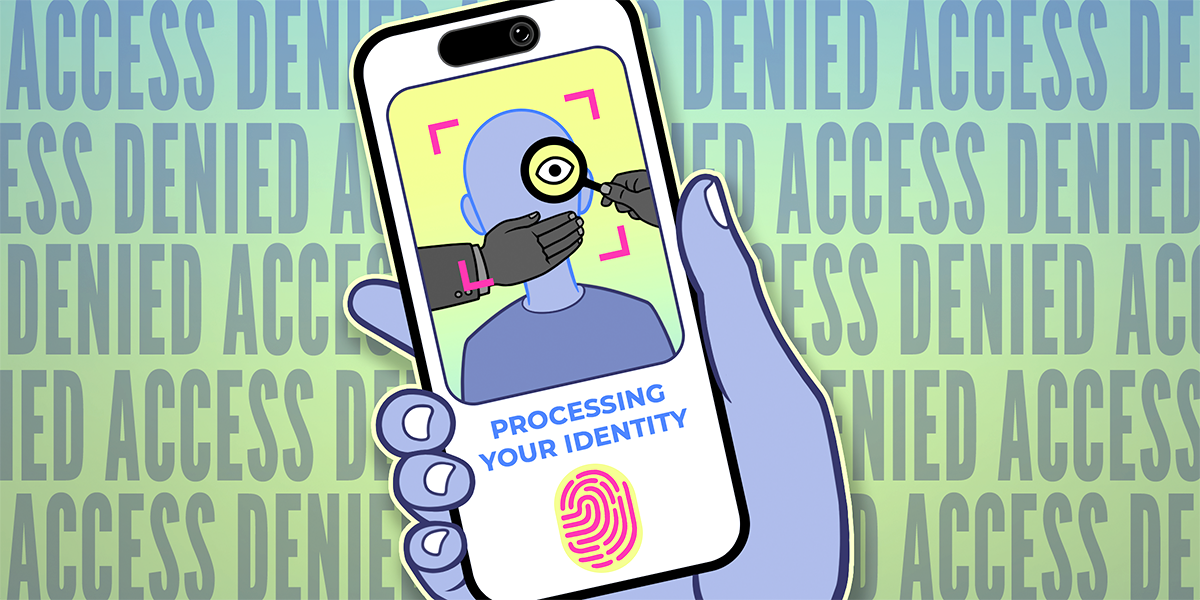
Today we’re launching , our one-stop shop to answer all of your questions about online age verification mandates. What’s at stake for users? How do we push back? What even IS age verification, anyway? Visit now to explore our resources and join the fight to protect the internet.
In general, there is a high risk that the law will end up being extremely complex. The risk categories in the Commission's text, in particular, will quickly lead to mandatory maximum-risk mitigation measures (such as scanning and age verification).