Today in Labor History December 31, 1930: American singer-songwriter, guitarist, civil rights activist and actress Odetta was born. She played and sang folk music, blues, jazz and spirituals. She influenced Bob Dylan, Joan Baez, Mavis Staples and Janis Joplin. She is perhaps most remembered for her performance of “O Freedom” at the 1963 March on Washington. In reference to the Civil Rights Movement, she described herself as "one of the privates in a very big army." #workingclass #LaborHistory #folkmusic #civilrights #protest #activism #odetta #BlackMastodon
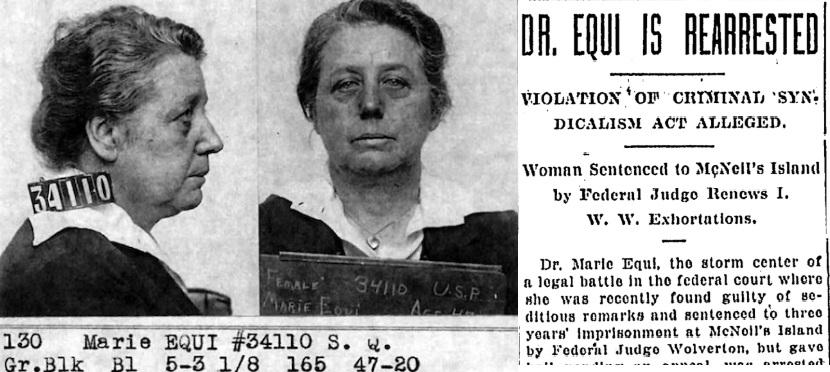
Today in Labor History December 31, 1918: U.S. courts found Marie Equi guilty of sedition for speaking out against World War One. Marie Equi was born to working-class immigrant parents in New Bedford, Massachusetts. As a young woman, she went to work in a textile mill. Her first documented experience as an activist came in 1893, when she horse-whipped Reverend Orson D. Taylor, a land developer and superintendent of the Wasco Independent Academy, after he reneged on paying her lover, Bessie Holcomb, her salary for teaching at the institution. Many local people considered Taylor as a crook and applauded her attack. In 1897, she moved to San Francisco to study medicine. She practiced medicine in Portland, Oregon, where she cared primarily for working-class and poor patients. However, she came back to San Francisco to volunteer during the 1906 earthquake. In 1913, she went to support a strike by women cannery workers at Oregon Packing Company over low wages. When the IWW and socialists joined the strike, the demands broadened to include equal rights for women and the right to free speech. During that strike, police clubbed her as she protested their brutality toward a pregnant woman. The experience radicalized her and drew her into the anarchist and the radical labor movements. She became a leader in Portland’s unemployment crisis of 1913-14, supported the IWW’s free speech fights, and the labor battles of the region’s timber workers. Throughout her career as a doctor, she provided information on birth control and abortions despite both being illegal at the time, providing discounts to lower income women. She was imprisoned in 1916 for providing abortion literature. As nationalism and jingoism increased during the years leading up to U.S. involvement in World War One, there were massive Preparedness Parades held throughout the country. Equi believed the war was about profits for capitalists at the expense of working-class people. During one Preparedness Parade in downtown Portland, she unfurled a banner that reading: Prepare to die, workingmen, JP Morgan & Co. want preparedness for profit. She was arrested at this protest, and again in 1918. They sentenced her to three years at San Quintin, which President Wilson commuted to one. After her release, she returned to Portland and invited IWW organizer Elizabeth Gurley Flynn to come live with her. #workingclass #LaborHistory #marieequi #anarchism #feminism #lgbtq #antiwar #strike #police #policebrutality #abortion #birthcontrol #sedition #prison #IWW image
They haven't even been convicted of anything, nor even brought to trial, and they have been imprisoned for over a year now, in spite of British rules requiring a trial within 6 months of arrest. image
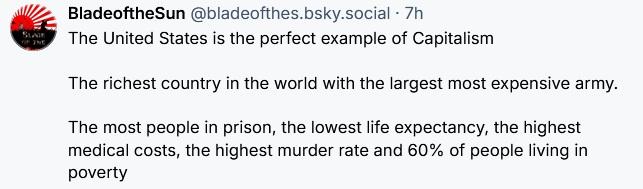
And the most perfect example of why capitalism is a disaster and must be overthrown. Any wonder that nearly two-thirds of young people in the U.S. hold a favorable view of socialism? image
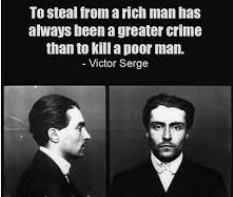
Today in Labor History December 30, 1890: Victor Serge was born on this date in Brussels. Serge was a novelist, poet, historian, & militant activist most well-known for his novel, “The Birth of Our Power.” In 1909 he moved to Paris, where he collaborated with Raymond Callemin on the newspaper L’anarchie. Callemin was executed in 1913 for his role in the Bonnot gang of anarchist bank robbers. Serge never participated in any of their robberies, but refused to denounce them in his paper. Consequently, he got five years imprisonment for his association with the gang. He wrote about this in his novel, “Men in Prison.” After his release, in 1913, he was expelled from France, moved to Barcelona, joined the CNT union, wrote for their newspaper, “Tierra y Libertad,” and participated in the General Strike and anarchist uprising of 1917. He went to Russia in 1918, initially in support of the communists. However, he quickly became disillusioned with the repressive, autocratic rule, particularly the suppression of the Kronstadt rebellion in 1921. Throughout the 1920s, he was stationed in Berlin and Vienna, where he wrote for the Comintern journal International Press Correspondence and began associating with the Trotskyists. After his return to the Soviet Union in 1925, he was kicked out of the Communist Party and later imprisoned, where he began writing his most famous books. In the late 1920s-early 1930s, he completed “Men in Prison,” “Birth of Our Power,” and “Year One of the Russian Revolution,” which were published abroad, but suppressed in the USSR and ignored or criticized by much of the mainstream and Communist press. In 1933, he and his son were deported to a gulag in Orenburg, where they were nearly starved to death. Yet he still managed to write four more books while imprisoned there. An international campaign for his release was launched by friends abroad, including Magdeleine Paz, André Malraux and André Gide. In 1936, he was granted permission to leave the Soviet Union, but they confiscated all of his manuscripts and had to rewrite them from memory. He fled to France, where he was under constant harassment by the left and the right. In 1940, he reached Marseilles, which was then a refuge for anti-fascist intellectuals and political militants seeking to escape Europe. He lived there briefly under the protection of American diplomat Varian Fry, working there with other anti-fascist artists and writers on the Emergency Rescue Committee, before fleeing to Mexico, where he lived until his death in 1947. Throughout his latter years, while living in Mexico, he continued to be harassed by both the left and right, with some even accusing him of being a Nazi sympathizer. Many believe he was poisoned by the Soviet secret police and there is evidence that the MGB ran an assassination squad among Mexico City cab drivers. He also continued to write, publishing “Memoirs of a Revolutionary, 1901–1941,” “The Case of Comrade Tulayev,” and “The Long Dusk.” #workingclass #LaborHistory #victorserge #anarchism #communism #fascism #nazis #soviet #ussr #bonnottgang #revolution #uprising #antifascism #writer #author #fiction #novels #books [@bookstadon]( ) image
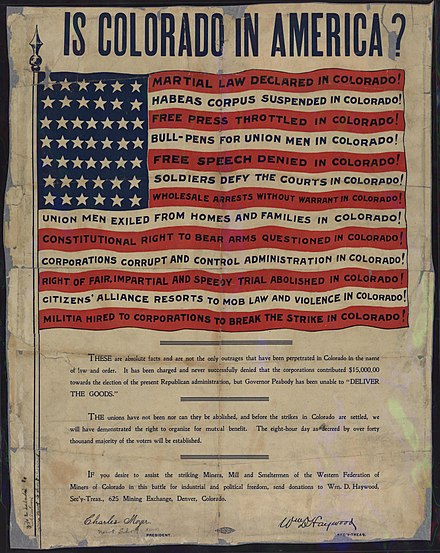
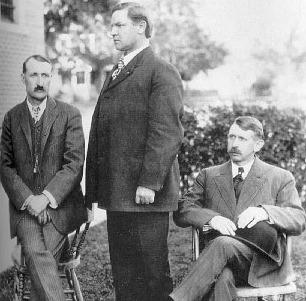
Today in Labor History December 30, 1905: Governor Frank Steunenberg of Idaho was assassinated by a bomb. Steunenberg had been elected on a Populist Party "defend the working man" ticket. But then he called on federal troops to crush the 1899 miners’ strike. Authorities promptly blamed members of the radical WFM, including Big Bill Haywood, who would later go on to cofound the IWW. The actual assassin was Harry Orchard, a WFM union member who was also a paid informant and agent provocateur for the Cripple Creek Mine Owners’ Association. The investigation was conducted by Pinkerton agent James McParland, the same man who infiltrated the Ancient Order of Hibernians in eastern Pennsylvania and acted as an agent provocateur, leading to the wrongful executions of 20 Irish miners. After interrogation by McParland, Orchard signed a 64-page typed confession claiming that he had been hired to kill Steunenberg by the WFM leadership ("Big Bill" Haywood; General Secretary, Charles Moyer; and President George Pettibone). Superstar labor lawyer Clarence Darrow got all three WFM defendants acquitted. Orchard pled guilty and received a death sentence in a separate trial, but the sentence was commuted to life in prison. McParland also plays prominently in my novel, “Anywhere But Schuylkill,” about the period leading up to the wrongful executions of the Irish miners. Read more about the Western Federation of Miners here: Read more about the Pinkertons here: Read more about the wrongfully convicted Irish miners here: Pick up a copy of my novel, Anywhere But Schuylkill, here: Or send me $25 via Venmo (@Michael-Dunn-565) and your mailing address, and I will send you a signed copy! #workingclass #LaborHistory #union #strike #wfm #westernfederationofminers #bigbillhaywood #pinkertons #police #prison #books #novel #historicalfiction #writer #author [@bookstadon]( ) image
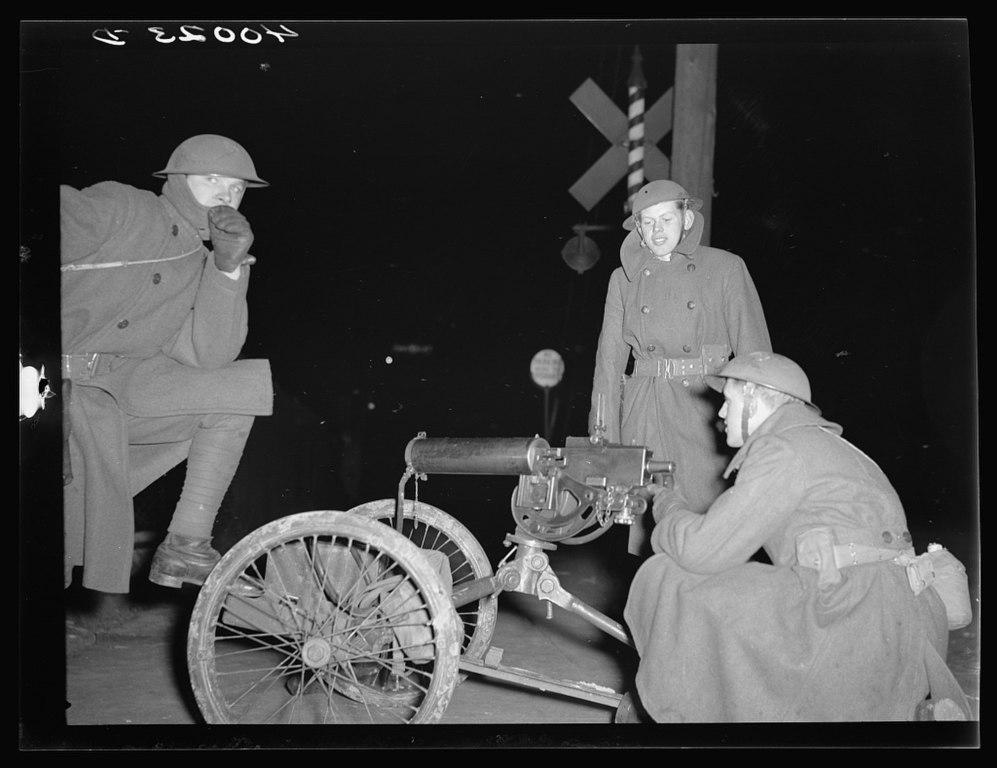
Today in Labor History December 30, 1936: Auto workers began their historic sit-down strike at the GM Fisher plant in Flint, Michigan. The protest effectively changed the United Automobile Workers (UAW) from a collection of small local unions into a major national labor union. It also led to the unionization of the domestic automobile industry. By occupying the plant, they prevented management from bringing in scabs and keeping the plant running and making money. Furthermore, by occupying the plant, they weren’t forced to picked outside in the snow. On January 11, police armed with guns and tear gas tried to storm the plant. Strikers repeatedly repelled them by throwing hinges, bottles and bolts at them. Fourteen strikers were injured by police gunfire during the strike. In February, GM got an injunction against the union by Judge Edward Black, who owned over three thousand shares of GM. The strikers ignored the injunction. And when the UAW found out about the conflict of interests, they got the judge disbarred. The strike ended after 44 days with GM recognizing the union and giving its workers a 5% raise. Filmmaker Michael Moore’s uncle participated in the strike. The first documented sit-down strike in the U.S. occurred when the IWW engaged in a sit-down strike against General Electric, in Schenectady, NY, in 1909. #workingclass #LaborHistory #uaw #sitdownstrike #strike #union #gm #generalmotors #flint #michigan #IWW #newyork #generalelectric image
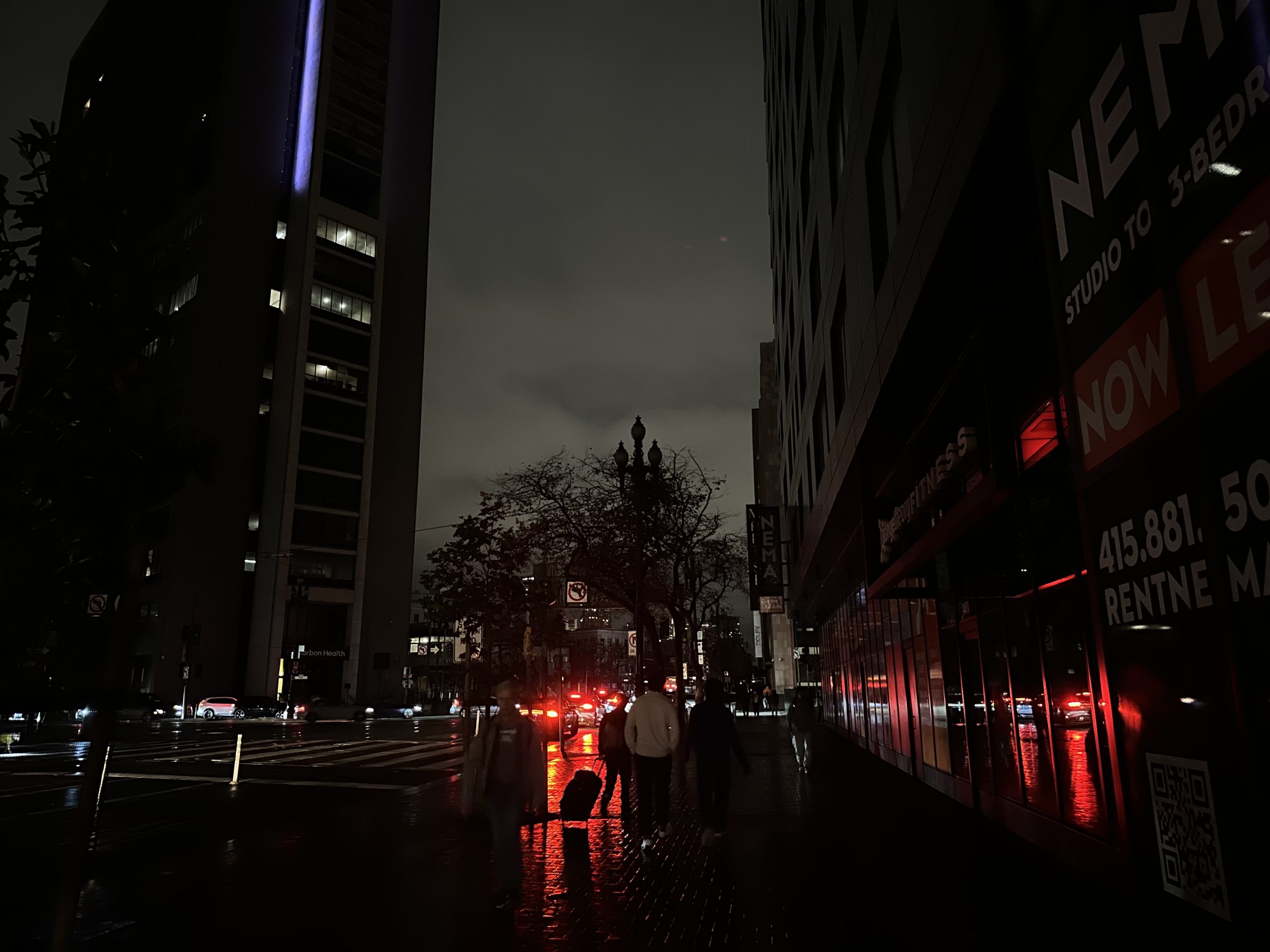
Municipalize PG&E Now! In the last two decades, PG&E has blown up a quaint Peninsula town, triggered some of California’s most lethal and destructive wildfires, entered into a pair of bankruptcies, been convicted of multiple felonies and has been accused by a federal judge of engaging in a “crime spree” while acting as a “continuing menace to California.” Now, according to this article, San Francisco may be on the verge of buying PG&E and municipalizing it, whether PG&E accepts their offer or not.