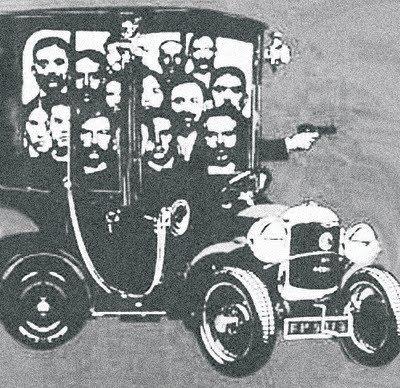
Today in Labor History December 21, 1911: The Bonnot Gang, a group of anarchist bandits, pulled off one of the first bank robberies known to have used an automobile as a getaway car. They did it in broad daylight, in the midst of a populous Paris district. They were also among the first to use repeating rifles, technology that the French police did not yet have. They successfully robbed several banks before being caught and executed. The gang members were anarchist individualists, of the Max Stirner school. They were loosely connected with the anarchist periodical, “L’Anarchie,” edited by Victor Serge, who later participated in the Russian Revolution. Serge was imprisoned by the Bolsheviks and, while in prison, wrote his most famous novel, “Birth of Our Power.” You can read more about the Bonnot Gang in Richard Parry’s book “The Bonnot Gang.” #workingclass #LaborHistory #anarchism #BonnotGang #VictorSerge #russia #banks #Revolution #prison #books #novel #fiction #author #writer [@bookstadon]( ) image
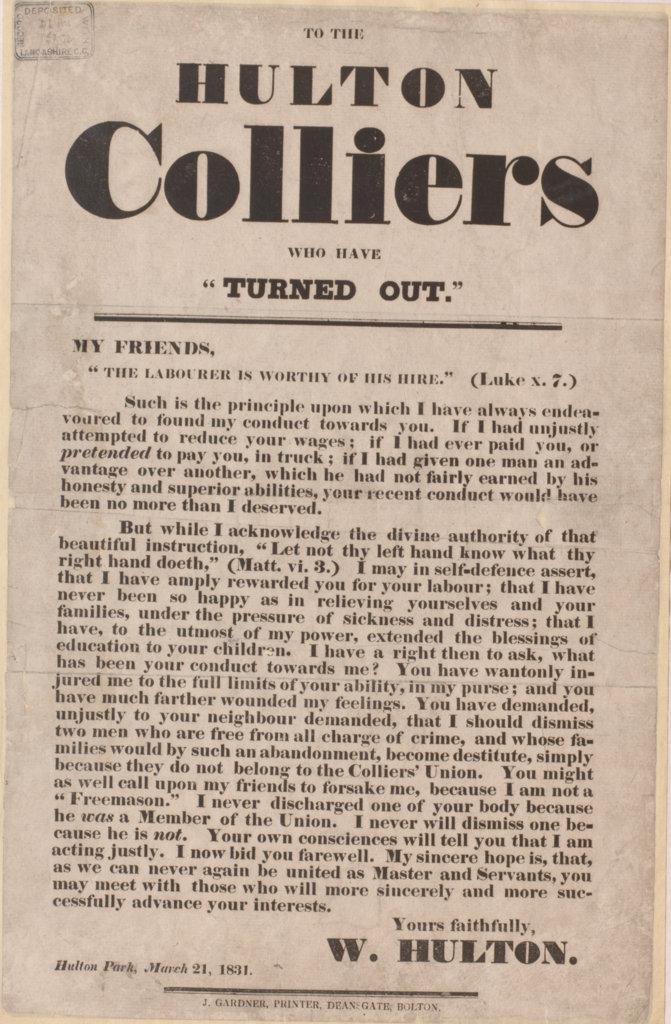
Today in Labor History December 21, 1910: 344 miners died when the Hulton Bank Colliery No. 3 Pit exploded in Westhoughton, England. It was the third worst mining disaster in British history. The original owner of the mine, William Hulton, once served as sheriff. In that role he sentenced 4 people to death, including a 12-yer-old boy, for taking part in a Luddite attack in 1812. His orders also led to the Peterloo Massacre in 1819, in which the cavalry charged a crowd of 60,000 workers and peasants fighting for universal suffrage, killing 18. Many had just returned from Waterloo. Hulton paid the lowest wages of any colliery owner in Lancashire and he violently opposed any attempts to organize. His son and grandson, who later took over control of the colliery, were no better. For a really good portrayal of the Peterloo events, see Mike’s Leigh’s 2018 film, “Peterloo.” Several recent novels portray Peterloo, including Carolyn O'Brien's “The Song of Peterloo” and Jeff Kaye's “All the People.” Isabella Banks wrote the novel “The Manchester Man” in 1876, based on her own interviews with survivors of the massacre. Additionally, there is a graphic novel in 'verbatim' form, Peterloo: Witnesses to a Massacre, as well as a 2016 Doctor Who audio adventure based on the Peterloo Massacre. #workingclass #LaborHistory #miners #disaster #Peterloo #massacre #luddite #books #film #novel #fiction #doctorwho #author #writer [@bookstadon]( ) image
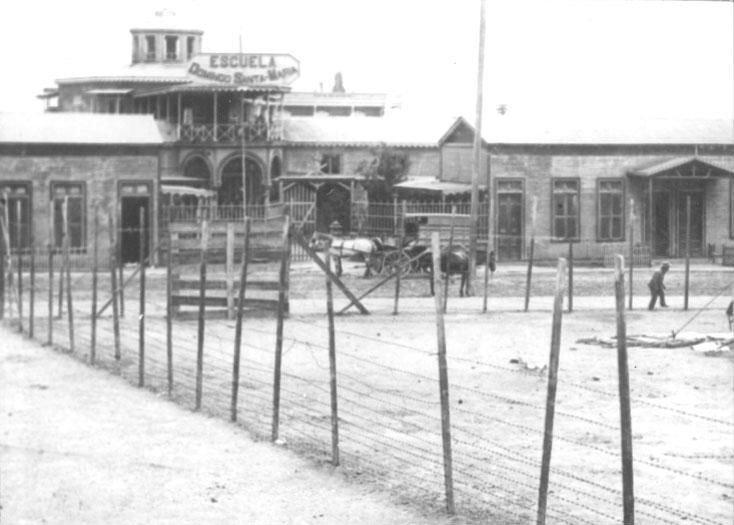
Today in Labor History December 21, 1907: The Santa María School massacre occurred in Iquique, Chile. The Chilean Army attacked striking saltpeter (nitrate) miners and their wives and children, killing up to 3,600 and destroying the strike. The saltpeter strike was part of a wave of strikes that started in 1902, including a General Strike earlier in December, 1907. There were also deadly Meat Riots, in Santiago, in 1905, protesting cattle tariffs that were causing food prices to soar, in which 230 were slaughtered. The Santa Maria School massacre is depicted in Volodia Teitelboim’s 1952 novel, “Hijo de salitre.” The massacre, and the wave of repression that followed, virtually destroyed the labor movement for the next decade. The Chilean labor movement and syndicalism, in particular, trace their roots to the organizing among the nitrate miners. The workers, like miners in the U.S. and other countries, were often forced to live in Company towns, where they rented living quarters from the bosses, and had to buy their food, heating coal, medicines, and mining equipment at inflated prices from the Company Store. They were paid in Company scrip, rather than legal tender, redeemable only within the Company town where they worked. #workingclass #LaborHistory #chile #union #strike #miners #massacre #GeneralStrike #unionbusting #women #children #books #fiction #novel #author #writer [@bookstadon]( ) image
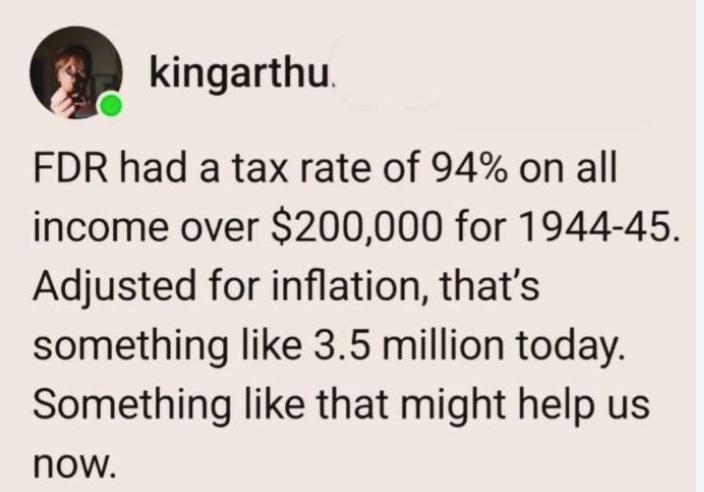
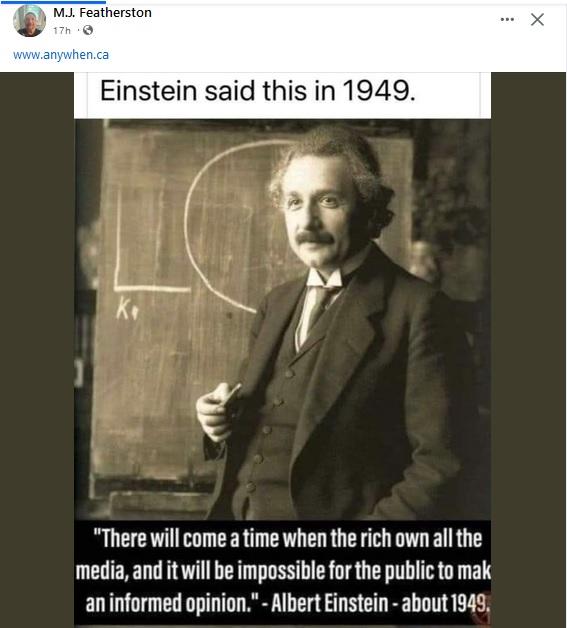
Sure, but it would help even more if we expropriated all their wealth, redistributed it amongst the working class, seized the means of production, and abolished capitalism. Remember, the richest don’t gain their wealth from working and have relatively little taxable income. For example, Mark Zuckerberg, whose net worth is somewhere in the $200-250 billion range, pays himself a $1 base salary at Meta, but takes home $27 million in compensation, mostly in company shares that aren’t subject to the marginal income tax. And the majority of billionaires’ overall wealth comes from profits from stocks, bonds, property, and other investments that are, likewise, not subject to income tax image
Who Own the Media: *Elon Musk, X, Net Worth $681 Billion *Larry Ellison, Paramount Global (CBS, MTV, Comedy Central) & trying to buy Times Warner, Net Worth: $370 billion *Mark Zuckerberg, Meta, Net Worth $264 billion *Jeff Bezos, Washington Post, Net Worth: $215 billion *Michael Bloomberg, Business Week, Net Worth: $104.7 billion *Carlos Slim Helu, New York Times, Net Worth: $99.1 billion *Sheldon Adelson, Las Vegas Review Journal, Net Worth: $29.8 billion *Rupert Murdoch, Wall Street Journal, Net Worth: $24 billion *Anne Cox Chambers, Atlanta Journal-Constitution, Net Worth: $17 billion *Laurene Powell Jobs, The Atlantic, Net Worth: $15 billion *Patrick Soon-Shiong, Los Angeles Time, Net Worth: $8.5 billion *Marc Benioff, Time, Net Worth: $5.8 billion *John Henry, The Boston Globe, Net Worth: $5.7 billion *Chatchaval Jiaravanon, Fortune, Net Worth: $115 million image