As a true Bitcoiner, I live by these core principles: — Self-sovereignty above all: I hold my own private keys and treat any form of custody like it’s radioactive. — Run my own full node: I personally verify every rule and every transaction myself, strengthening the network and never outsourcing trust to someone else’s server. — Bitcoin mine, no matter how small: Even if it’s just a tiny rig or a lottery ticket setup, I directly contribute to securing the network instead of sitting on the sidelines. — Understand Bitcoin at its deepest level: I get the hard-coded scarcity, true decentralization, unbreakable immutability, and why sound money must be separated from the state. — Actually use Bitcoin as money: I spend and receive bitcoin in real life whenever it makes sense, instead of just hoarding it like a collectible. — Give back to the ecosystem: I teach newcomers, support open-source projects, defend privacy tools, or help build censorship-resistant infrastructure—whatever I can do to make Bitcoin stronger. — Long-term stewardship mindset: I don’t see Bitcoin as just another investment; I see it as one of the most important technological, economic, and philosophical inventions in human history, and I act accordingly.
Getting Started | Bitchat
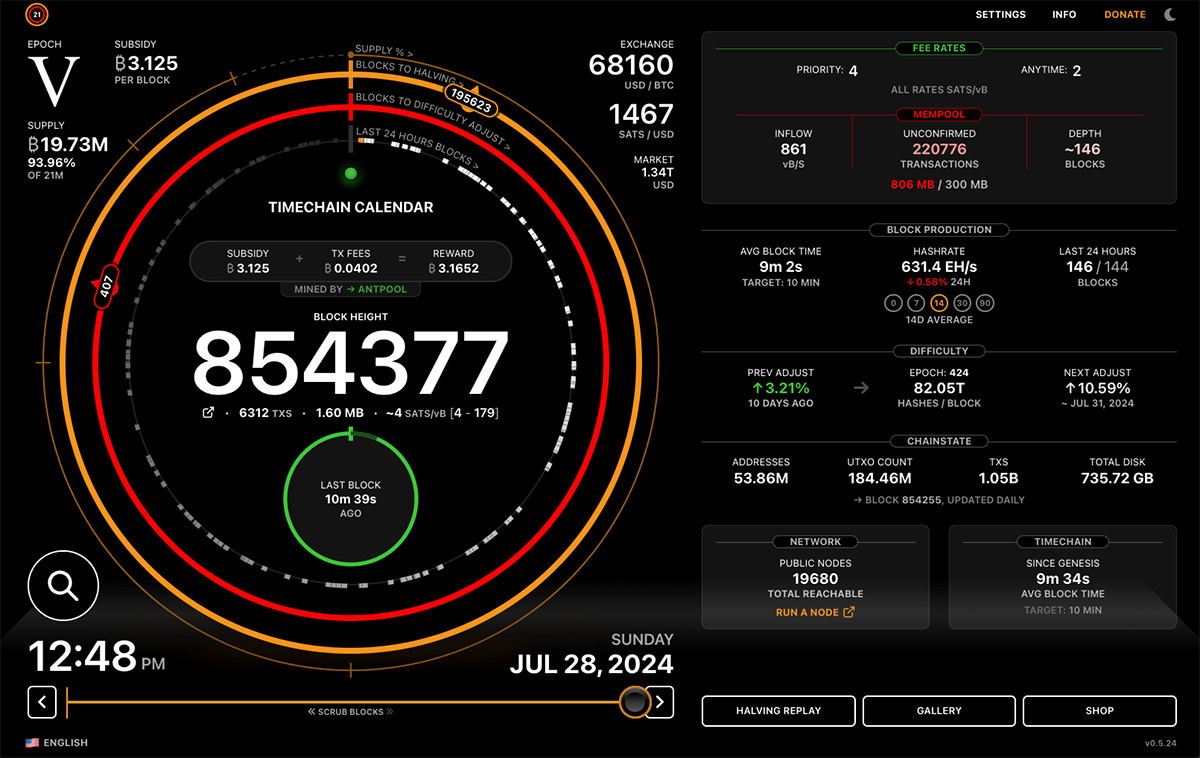
Bitcoin is fundamentally a time-chain, exactly as Satoshi Nakamoto described it—not a “blockchain” in the way the term is used today. The word “blockchain” was originally just a simple metaphor Satoshi chose to explain the concept to regular people (the same way he called Bitcoin “digital gold” or “electronic cash”). The real innovation is the ever-growing chain of blocks ordered and secured by proof-of-work, which creates an unbreakable, objective record of time—hence: a time-chain. What fintech “experts” and consultants now call “blockchain technology” is almost always something completely different: centralized or permissioned ledgers, consortium chains, or fiat-pegged tokens. When they say “everything will be tokenized on the blockchain,” they’re talking about putting traditional financial assets on these imitation systems—none of which have Bitcoin’s open, neutral, immutable properties. Those are just digitized fiat, not Bitcoin. So yes, Bitcoin got stuck with the name “blockchain,” but that term has since been hijacked and diluted. At its core, Bitcoin remains the original time-chain: the only monetary network that reliably timestamps history without trusting any third party. Everything else wearing the “blockchain” label is usually just old finance in a new costume. Here is a tool you can use to explore this innovative idea:
"What role do intermediaries—such as merchants, distributors, and traders—play in the market? Far from being mere profiteers, these intermediaries play an essential role in the division of labor. Without them, society as a whole could not function." -- Ulrich Fromy Bastiat’s long-forgotten case for middlemen is worth dusting off. Are banks, payment processors, platforms, and merchants actually the bad guys—or is the real issue that we handed them ownership of the very networks they operate? With Bitcoin, Lightning Network, and Nostr as working proofs, we can keep all the speed and convenience that intermediaries provide while stripping away their ability to control, censor, or extract rents. The question is no longer whether it’s possible; it’s what it will actually take to finish building that world. Article: Frédéric Bastiat: The Unseen Role of Intermediaries https://mises.org/mises-wire/frederic-bastiat-unseen-role-intermediaries
The future of real online privacy is on the darknet — the regular internet (clearnet) is already under total surveillance by governments and corporations. The reason mainstream media always paints the darknet as a pure criminal wasteland is deliberate: yes, illegal stuff obviously exists there, but there are also tons of legitimate uses, whistleblower platforms, uncensored libraries, and resources you’ll never find on the surface web. Tor basically is the uncensored internet. Just download Tor Browser and start exploring. If you’re new to Tor and the darknet, here are the essential rules to stay safe: 1. Only download Tor Browser from the official site → torproject.org and always verify the signature. 2. Never log into Google, Facebook, Discord, or any mainstream account while on Tor. 3. Don’t resize or maximize the browser window (it’s a fingerprinting risk). 4. No extensions, no plugins — ever. 5. Keep JavaScript on “Safer” by default; switch to “Safest” only on really shady sites. 6. For anything actually sensitive, use Tails OS (on a USB) or Whonix in a VM. 7. Never download files and open them outside Tor Browser. 8. Treat every .onion link as potentially malicious — get links only from trusted directories like dark[.]fail, tor[.]taxi, or the Ahmia .onion search engine. 9. Never use your real name, photos, location, or any personal info — ever. 10. Hit “New Identity” (or “New Circuit for this Site”) after anything sensitive. 11. If a site asks for phone/SMS verification, it’s either a scam or law enforcement — run. Safe browsing! Reliable link directories (clearnet + .onion): darkfailenbsdla5mal2mxn2uz66od5vtzd5qozslagrfzachha3f3id.onion tortaxi2dev6xjwbaydqzla77rrnth7yn2oqzjfmiuwn5h6vsk2a4syd.onion juhanurmihxlp77nkq76byazcldy2hlmovfu2epvl5ankdibsot4csyd.onion Always PGP-verify any .onion links or crypto addresses you plan to use seriously. Stay paranoid — it keeps you safe.