#fascists #US #history
"Is the United States sliding into fascism? It’s a question that divides a good portion of the country today.
Embracing a belief in American exceptionalism — the idea that America is a unique and morally superior country — some historians suggest that 'it can’t happen here,' echoing the satirical title of Sinclair Lewis’ 1935 book about creeping fascism in America. The social conditions required for fascism to take root do not exist in the U.S., these historians say.
Still, while fascist ideas never found a foothold among the majority of Americans, they exerted considerable influence during the period between the first and second world wars. Extremist groups like the Silver Shirts, the Christian Front, the Black Legion and the Ku Klux Klan claimed hundreds of thousands of members. Together they glorified a white Christian nation purified of Jews, Black Americans, immigrants and communists.
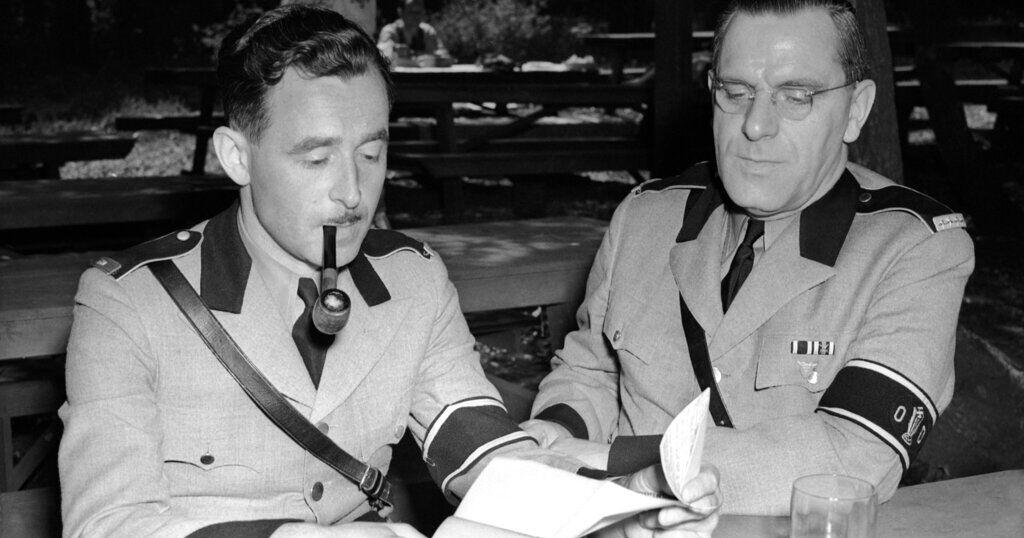
During the 1930s and early ’40s, fascist ideas were promoted and cheered on American soil by groups such as the pro-Nazi German American Bund, which staged a mass rally at New York’s Madison Square Garden in February 1939, displaying George Washington’s portrait alongside swastikas.
The Bund also operated lodges, storefronts, summer camps, beer halls and newspapers across the country and denounced the 'melting pot.' It encouraged boycotts and street brawls against Jews and leftists and forged links to Germany’s Nazi party.
Yet the Bund and other far-right groups have largely vanished from public memory, even in communities where they once enjoyed popularity. As a sociologist of collective memory and identity, I wanted to know why that is the case.
My analysis of hundreds of oral histories of people who grew up in New Jersey in the 1930s and ’40s, where the German American Bund enjoyed a particularly strong presence, suggests that witnesses saw them as insignificant, 'un-American' and unworthy of remembrance.
But the people who rallied with the Bund for a white, Christian nation were ordinary citizens. They were mechanics and shopkeepers, churchgoers and small businessmen, and sometimes elected officials. They frequented diners, led PTA meetings and went to church. They were American."
The Philadelphia Tribune
America has buried its history with fascism
Masked officers conduct immigration raids. National Guard troops patrol American cities, and protesters decry their presence as a “fascist ta...