Nintendo isn’t selling fewer Switches because people stopped liking handheld gaming. They’re selling fewer Switches because the Switch stopped being a uniquely good deal.
November data makes this uncomfortable. Switch 2 plus original Switch sold fewer units than the original Switch alone did last year. That’s not a launch bump. That’s cannibalization with shrinkage. New hardware arrived and total demand still went down.
Price is the first problem. Switch 2 lands at about C$630 in Canada. That’s not outrageous in isolation, but it kills the old Switch’s role as the cheap second console. Late-cycle Switch hardware is supposed to get cheaper, not sit awkwardly just below the Switch 2 in price. The value ladder collapsed.
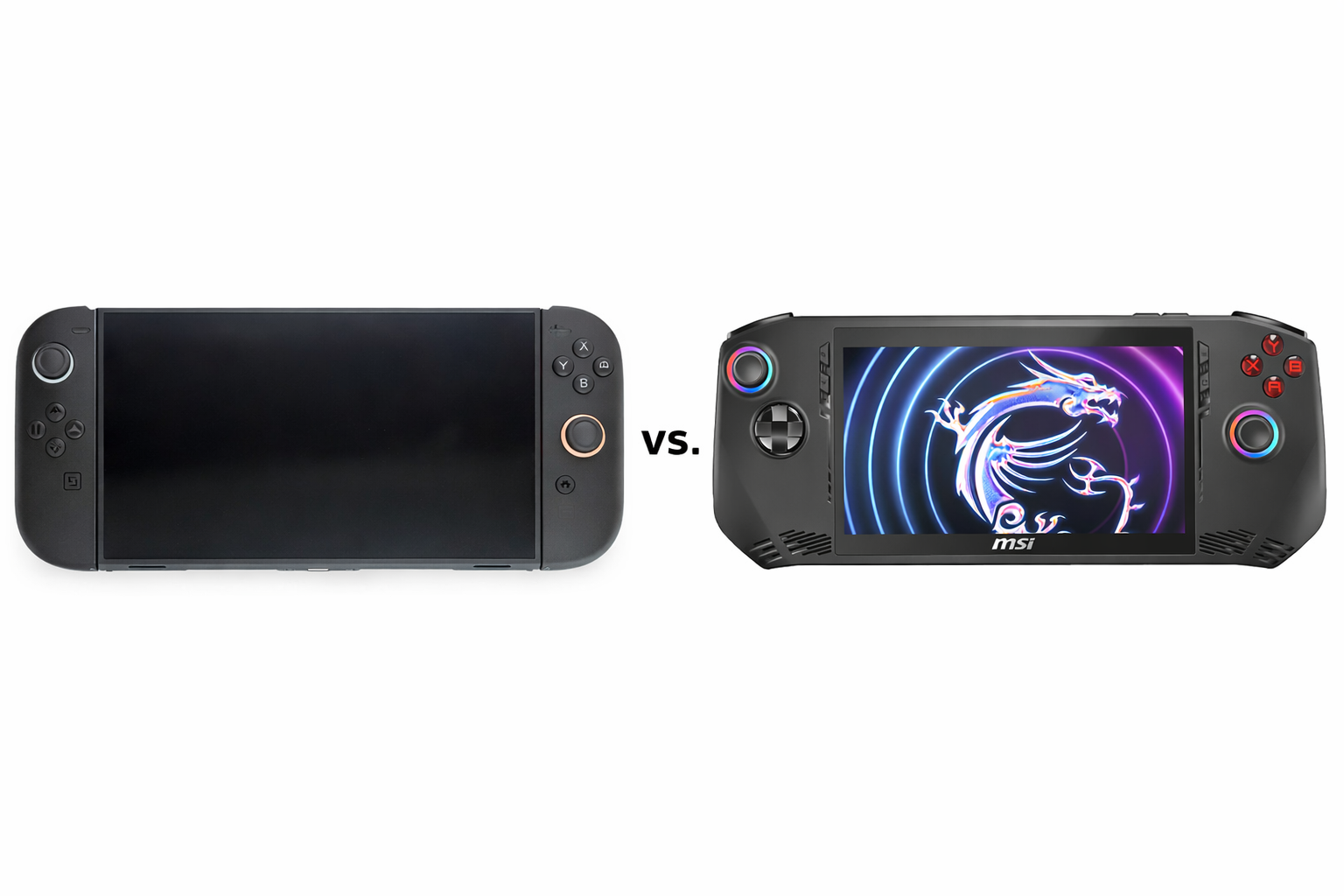
The second problem is competition that Nintendo pretends doesn’t exist. People love saying Switch 2 vs handheld PCs is apples-to-oranges. Sure. But if you can make the comparison at all, it already matters.
The MSI Handheld Claw A1M looks like a console. It feels like a console. It costs about C$650. That’s basically Switch 2 money. You don’t need a philosophy degree to see why consumers pause.
On paper, the Claw is absurdly good for the price. PC-class Intel CPU, 16GB RAM, 1TB NVMe SSD. Intel Arc graphics pushing roughly 4.6 TFLOPS in a handheld. But also: Windows, Steam, Game Pass, emulation. Plug in an eGPU later if you feel unwell and want to do something unhinged.
Switch 2 is much more efficient and much more controlled. Yes, custom Nvidia silicon. But in comparison, it has drawbacks: 12GB RAM, 256GB internal storage, lower raw compute—especially handheld mode. But sure, I'll acknowledge some heavily optimized games, neat DLSS tricks, and Nintendo polish.
None of that changes the consumer math. At C$630, Switch 2 isn’t competing with a memory of the Switch anymore. It’s competing with devices that offer more hardware per dollar and a vastly larger software library. Even if most people still choose Nintendo, the pressure exists. That alone suppresses sales.
And no, handheld PCs don’t need to outsell Switch 2 to matter. They just need to exist in the same price band while looking console-like. They’re not niche curiosities anymore. They’re awkward questions on a Best Buy shelf.
There’s also macro reality. Hardware spending is down. Average prices paid are up. People are tired. When wallets tighten, value propositions get interrogated. Nintendo used to win those interrogations by default. Now they have to actually answer them.
Switch 2 isn’t failing. But it’s no longer immune. The combined Switch numbers show that clearly. Nintendo built a great ecosystem. What they didn’t build this time is a moat around price.
And once price stops being sacred, comparisons start happening whether anyone likes it or not.