This is the Super A’Can video game console. Never heard of it? That’s because it was released only in Taiwan, with a limited run in China. It was a massive flop. This was a 16-bit console launched in 1995. The worst possible timing. The Saturn and PlayStation had just arrived, and in Taiwan especially, PCs were already pulling ahead. In the 90s, Taiwan was a global hub for PC hardware. Consoles were about to lose relevance fast. The Super A’Can never had a chance. It failed so badly that the company reportedly lost USD $7M in production costs. To stop the bleeding, they destroyed the manufacturing and development equipment and dumped the remaining units to the United States as scrap. Only 12 games were officially released. There were still a few standouts. The only console release of Sango Fighter. The RPG Super Light Saga – Dragon Force, if you could read Chinese. And the solid platformer Speedy Dragon. What’s more interesting is what never shipped. 11 completed or near-completed games were cancelled. Demon Island was one of them. Even if you owned a Super A’Can, you never got to play it. Funtech, the company behind the console, was a subsidiary of semiconductor giant UMC. After the failure, UMC pulled the plug. Funtech shut down in 1998, just 3 years after the Super A’Can launched. image
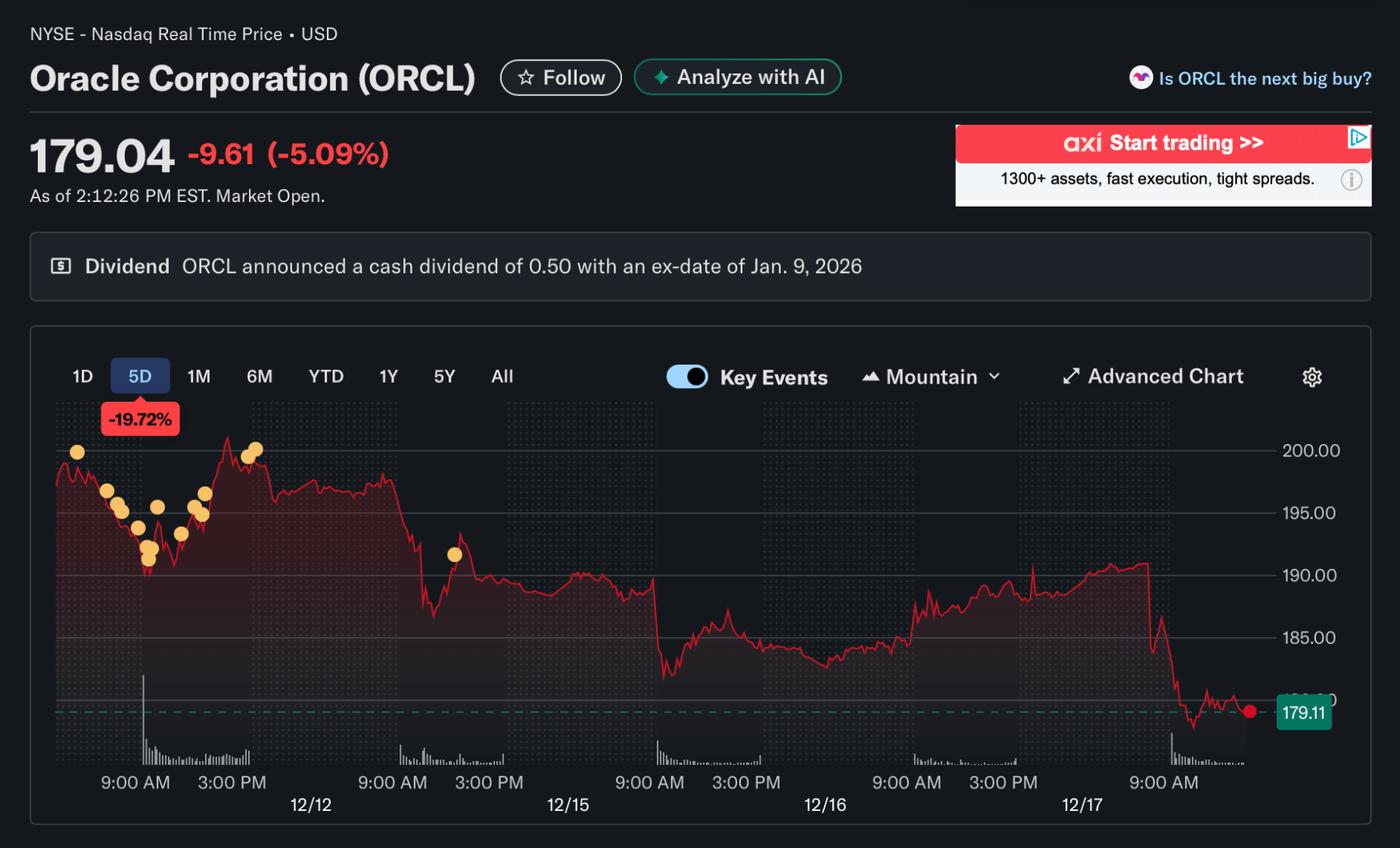
Oracle is down ~19.7% over the past 5 trading days. The market is treating Oracle as a partial proxy for OpenAI risk. Oracle signed an AI infrastructure deal commonly cited at roughly $300B over approximately 5 years, with the contract period beginning in 2027. That figure reflects contracted capacity and commitments (approximately $60B annually), not a single upfront cheque. Still, it implies massive capex and financing pressure—Oracle has already secured $18B in new debt with an additional $38B in negotiations pending—with debt and cash flow timing doing the real work. There is no clause saying Oracle must recoup the spend in 5 years. But the economics are front-loaded. Oracle reported negative free cash flow of approximately $10B in its most recent quarter and increased full-year capex guidance from $35B to $50B in December 2025. If utilization ramps slower than expected, margins disappoint, or OpenAI's revenue projections falter (the company projects $200B+ annual revenues by 2030 while currently generating ~$13B), the balance sheet takes the hit long before the upside shows up. That is what investors are reacting to. The credit default swap spreads on Oracle debt have surged to five-year highs, reflecting market anxiety about servicing ~$100B in total debt while burning billions annually through 2027, when contract revenues begin. This is not a verdict on whether AI is real. It is about execution risk and capital intensity. Even if AI demand explodes, Oracle is competing in a market dominated by hyperscalers. Google, AWS, and Microsoft do not need Oracle to stumble for Oracle's risk profile to matter. More critically, OpenAI's single $300B contract represents approximately 66% of Oracle's entire $455B remaining performance obligations backlog, creating severe concentration risk. OpenAI itself faces competitive pressure from Google Gemini, which has captured approximately 13.7% market share (up from near-zero in 2024), forcing OpenAI to divert resources from revenue growth back to core product improvement precisely when it needs maximum cash generation. image
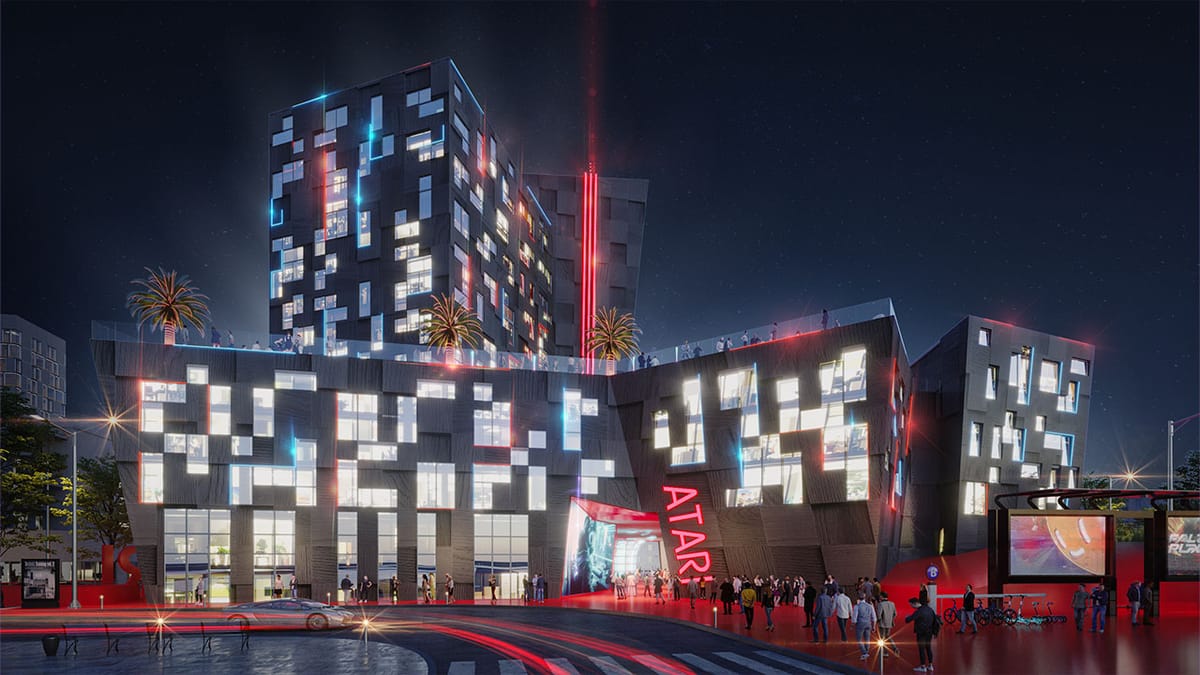
Atari is getting into hotels. More precisely, Atari is licensing its name to a real estate developer betting that retro gamers want to stay in an Asteroids-themed resort. If this were closer to a Chuck E. Cheese on steroids, with a serious arcade, events space, and a real convention centre, I would be interested as a guest. As an investment, no. The Atari brand still has cultural weight, but not enough to reliably get the average person to book a stay. I would like to be wrong.
Damn. There’s no way for the video game industry to spin this. Console hardware sales are at their lowest level since 1995. November unit sales for 2025 came in at 1.6M. Barely above where the market sat three decades ago. The difference is context. In 1995, the PlayStation, Saturn, and Nintendo 64 were about to reset the entire industry. In 2025, there is no cavalry coming. This was a launch year for the Switch 2. Combined sales of Switch 2 and the original Switch are still below Switch sales last year. That should not happen in a healthy market. Elsewhere looks worse. PlayStation hardware sales are down 40%. Xbox is down 70%. That is not a cycle. That is structural damage. One problem is that the previous generation is good enough. PS4, Switch, and Xbox One still run most games fine. Visual gains are incremental. Performance gains are niche. That is why new games keep shipping on old hardware. If performance does matter, PC is the obvious upgrade path. A GPU costs more than a console. But console pricing has not fallen in 5 years. It has risen. The value proposition has flipped. Consoles also face pressure from handheld PCs. The Switch 2 has respectable hardware. It does not meaningfully outclass the Steam Deck OLED. Against Legion Go or ROG Ally models, it loses outright. These devices sell fewer units, but they extract more money per unit and serve a broader use case. Then there is the PC ecosystem itself. Games are cheaper. Online is free. Storefronts compete. Steam alone will see roughly 20,000 releases this year. That scale makes console libraries look constrained and curated by comparison. A new Steam Machine is also expected next year. Pricing is unknown. But it will not be framed as a console. It will be a PC with a console interface. At $1,000, that is defensible because it is a general-purpose computer. Documents, media, creative work, keyboard and mouse support. Consoles cannot justify that comparison. Low-end pressure is just as real. Smart TVs now handle gaming natively. Pair a controller to an Apple TV and you are done. Many LG TVs ship with Xbox, GeForce Now, and Luna built in. No external hardware required. Below that, Android devices and Raspberry Pi systems cover emulation. This is not only piracy. There is active homebrew. New releases for obsolete systems. Fantasy consoles like PICO-8. With tools like FEX, running PC software on ARM hardware is no longer a barrier. Console prices are rising while being attacked from both ends. High-end PCs above. Old consoles, smart TVs, mobile devices, and hobbyist hardware below. The final problem is collectibility. Consoles used to mean shelves. Boxes. Physical proof of taste. Digital-only strategies erase that entirely. When ownership stops being visible, emotional attachment drops. If you are not buying a console out of habit, there is little reason to buy one at all. The sales numbers reflect that. And the trajectory is not improving.
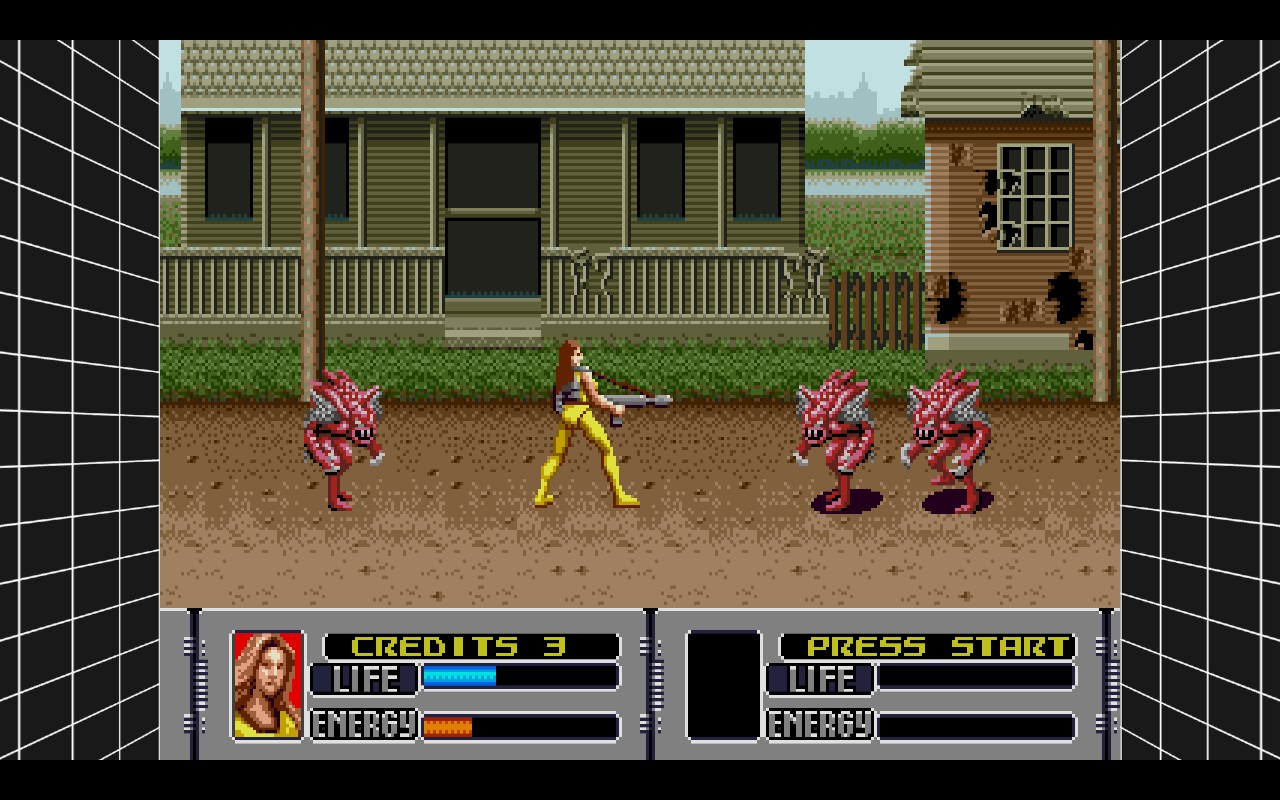
Alien Storm is SEGA asking a simple question: what if Golden Axe, but with xenomorphs? That tracks. SEGA loved aliens. Enough to make Alien Syndrome, Alien Soldier, and Alien Storm. This was a recurring obsession. As SEGA beat ’em ups go, it’s solid. It just lacks the cult weight of Streets of Rage 2. That bar is unreal and still untouched. The game mixes in first-person, on-rails shooting between stages. Similar idea to Shinobi. It works and breaks up the pacing. You can tell it’s an early Genesis title. The color palette is muted. In 1990, this looked impressive. The NES could not do this. Hence the whole “Genesis does” era. If you were there, you know. If you like Golden Axe, Alien Storm will land. Not essential, but worth playing. image