Today, I ran an experiment: I brewed coffee at 70C instead of 100C. And there was a substantial change to the flavour profile. Instead of tasting bold and bitter, it now tastes subtly grassy and sour. Kind of like a lemon water. I actually like the taste, but your mileage may vary.
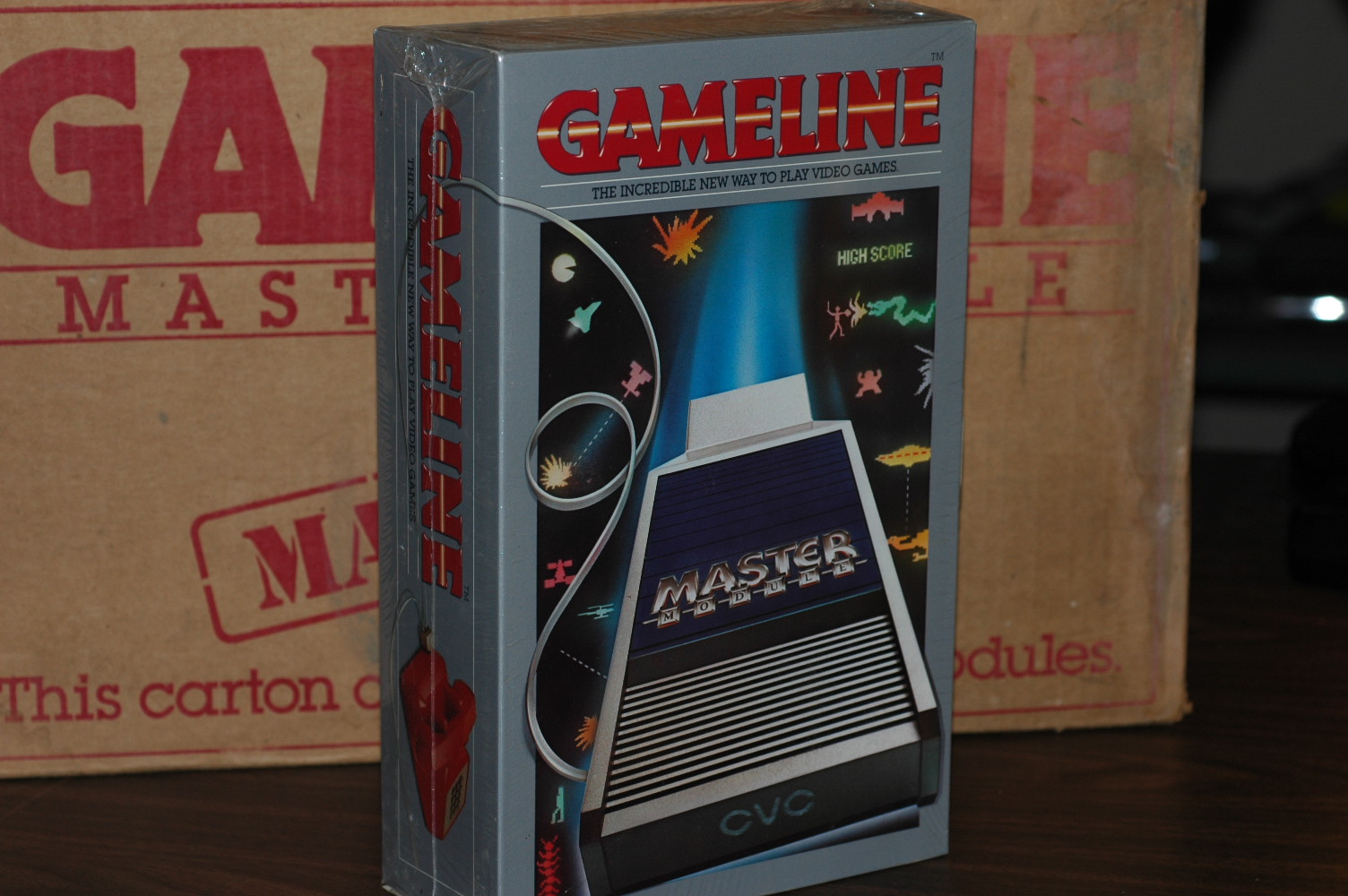
The history of AOL is absurd in the best way. Everyone remembers the dot-com peak, when it was the world’s dominant ISP and carpet-bombed households with discs. At one point, 25% of all CDs manufactured were AOL discs. That frenzy hit its peak with the Time Warner merger, briefly making AOL the largest company on Earth by market cap. Before that, it ran Q-Link on the Commodore 64. I used it. Chat, shopping, games—on a 300-baud modem. Primitive, but it worked. Before that, it ran GameLine on the Atari 2600. A modem in the cartridge slot. A phone line. And suddenly Demon Attack and Atlantis were downloadable in the early Internet era. And before that—which shows how old this company actually is—it ran the Home Music Store, piping music to retail locations by satellite. It predicted SiriusXM decades early. Record labels then killed the idea. So AOL managed to be SiriusXM before SiriusXM, and Napster before Napster. And no—AOL isn’t dead. Verizon sold it to an Italian tech firm called Bending Spoons. They own Vimeo, Evernote, Eventbrite, Brightcove, and a long tail of once-important Internet brands. Out of all of them, AOL is the one with the most interesting half-life. image
This is the trailer for Legends of Zork—the final Zork game ever made. You can’t play it. It was a browser title that lived and died on an Internet connection. It went offline two years later and never shipped an offline build. This is why game preservation matters.
You might be wondering why I’ve been studying Gnosticism. Earlier this year, I came into contact with a cult. The leader declared herself God. When I asked what they believed, I got a torrent about “5D,” higher planes of existence, and ascension. When I asked what any of that actually meant, they told me to reread the material. It was a lot. And that if I were truly ascended—if I reached mastery—I would understand. So I said, screw this. I’m going to cheat. I uploaded their literature into an AI, had it crawl everything, and asked it to decode what the hell they were talking about. Sorry, not sorry. What I found was a hodgepodge. A cafeteria line of astrology, Hermeticism, Kabbalah, Neoplatonism, and Gnosticism. Pick a little of each. Call it revelation. Most of it was easy to untangle. Though I have to note that for an explicitly antisemitic cult, they sure steal a lot from Judaism. The Gnosticism part was the hardest. Until you realize that the labyrinthine cosmology is the point. Complexity is the feature, not the bug. And Gnostics almost never agree with each other anyway. My takeaway from the whole experience is simple. Most “new” Western religions keep reusing the same ingredients. They just rename the dish and insist it’s original. Cults are not very innovative these days.
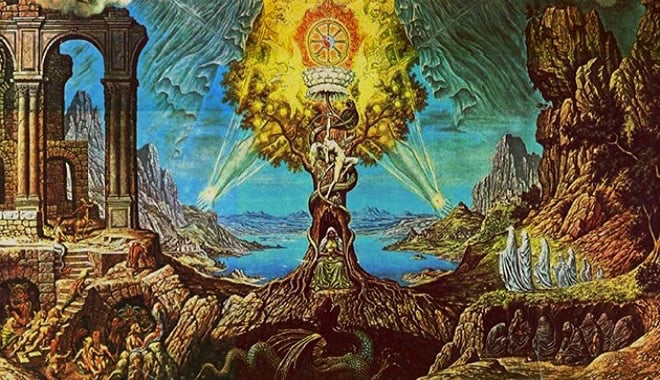
Lately I’ve been studying Gnosticism. To be blunt, most of it reads like total hokum. The cosmology is absurd. And despite what modern Gnostics insist, Nicene Christianity didn’t win *solely* because of persecution. State backing mattered, but so did the fact that “salvation by faith” is simple, portable, and easy to teach. A maze of demiurges, pleromas, and aeons is not. And Nicenes weren’t the only critics. Pagans attacked Gnostics too. Plotinus wrote an entire treatise arguing that their “gnosis” was confused and philosophically incoherent—an awkward problem for a movement built on the claim that it possessed superior knowledge. Neo-Gnostics still say the Church wiped them out. But that’s not quite true. The Mandaeans still practice. Estimates range from 60,000 to 100,000 worldwide. Their historic homelands are Iraq and Iran, where baptism remains central to their rites, though many members now live in diaspora. But out of 30+ ancient Gnostic sects, only the Mandaeans remain recognizably Gnostic. Why? Because their system is relatively clear. One God. The power of Light. The immortality of the soul. A cosmology structured in threes—three emanations, three worlds. It’s coherent enough that you can explain the scaffolding without a dissertation. That clarity helps. So does the fact they’re an ethno-religious community that traditionally rejects conversion and discourages marrying out. There’s one other “survivor,” though it barely counts: Manichaeism. It was once a genuine rival to Christianity. Augustine himself spent years as a Manichaean. And a Manichaean temple still exists in China, though most worshippers treat it as a Buddhist site. Syncretism kept it alive by blurring its identity. That exposes the core problem. Gnosticism begins as syncretism, and syncretism dissolves what makes a religion distinct. But even that isn’t the whole story. Gnosticism’s real competitor wasn’t Christianity—it was Hermeticism. Hermeticism also promised salvation through knowledge, but inverted the cosmology. The world wasn’t a trap. The world was good. Ordered. Lawful. Worth studying. Governed by a higher power whose workings could be uncovered. Hermeticism survived because it was useful. It claimed we perceive reality through altered modes of consciousness, and that these modes can be accessed through repeatable techniques. Alter the state, alter the perception—predictably. That predictability fed straight into early natural philosophy, back when science and magic were still interwoven. Gnostics, by contrast, dismissed the material world. When you write off the world, you don’t bother studying it. Hermetic thinkers did. Which is why Hermetic ideas fed into early astronomy, alchemy, and experimental method. This is why Hermeticism shaped the world, while the only surviving Gnostic sect sits at the margins. image
Millennials are the last generation to be defined by physical media. Think about that. Gen Z and Alpha will have a hard time passing their art down to their children, and explaining why their art meant something.
So I’ve been thinking about the problem of ownership. Mainly, how much of this “stuff” matters. In my house, I have a big collection of video games, music, books, and movies. Various physical formats—some of them obscure. If I die, I know all this stuff gets liquidated. The only exception, I’m sure, will be the vinyl—because this is something I listen to with my child every day and it’s her library as much as it’s mine. The LaserDisc movies, though? It will be the first to go. Same with my collection of sci-fi novels. I’ve tried to get other people into this stuff. No dice. Not a single care about these things I very much care about. And I suppose, big picture, they don’t matter. It’s just stuff. But it’s also stuff that very much touched my life.
All right, let me list all the consoles I own in order that I got them: * NES * SEGA Genesis * SEGA Nomad * SEGA Saturn * Sony PlayStation (two of them!) * Game Boy Color * Game Boy Advance * Sony PlayStation 2 * Microsoft Xbox (two of them!) * Game Micro * Nintendo DS (three of them!) * Nintendo Wii * Microsoft Xbox 360 * Atari Flashback 5 * Nintendo 3DS * Famicom Mini * Sony PSP * Hyperkin RetroN 5 * Nintendo Switch * The C64 Mini I thought about counting the Steam Deck and Legion Go. But no, those are handheld PCs. It’s the same reason I don’t count my Amazon Fire Stick as a console either—even though it can play games. So actually, I have 24 consoles in total.
Someone designed a Commodore 64 laptop. At 8lbs, it is incredibly impractical. Nevertheless, still cool.
Owning 12,000 physical games sounds good until you realize IT TAKES PHYSICAL SPACE. I get it. I own about 500 physical games. 10 consoles. An arcade cabinet. My shelves look cool. No argument there. But thank God most of my library is digital. Steam, GOG, EGS, Amazon, itch.io. Thousands of games that do not require shelves, boxes, or square footage. They exist as bits. That is the point. And yes, I am that guy. I own 10,000s of games. Digital storage is the only reason this does not qualify as hoarding.