
Unmasking the Unthinkable: A Mother’s Cyberbullying of Her Teen Daughter
 A mother engaged in a year-long anonymous online harassment campaign targeting her teenage daughter. The case became public after an investigation revealed the source of the messages.
Kendra Gayle Licari, a Michigan resident, was accused of using fake online identities and youth-oriented slang to send hostile messages to her daughter and her daughter’s boyfriend. The situation drew attention due to the unusual nature of the relationship between victim and perpetrator.
Beal City Public Schools became involved early in the investigation. When school officials were unable to determine the source of the harassment, they contacted law enforcement. The FBI later traced the messages back to Licari’s devices, discovering hundreds of pages of messages. Licari was arrested on December 12, 2022, and charged with multiple offenses.
According to a 2022 study published in the Journal of Adolescent Health, less than 5 percent of cyberbullying cases involve family members. However, those cases may result in more complex emotional and psychological consequences due to the nature of the relationship. Victims in such cases may experience difficulty seeking help, especially if the perpetrator holds a position of trust or authority in the household.
Cyberbullying is often framed as a peer-based or anonymous external threat. This case presents an exception that challenges that assumption. Investigators noted that the use of anonymous accounts and digital platforms made detection more difficult, despite the proximity of the individuals involved.
As digital communication becomes more integrated into daily life, the boundaries between public and private spaces continue to blur. The Licari case demonstrates that cyberbullying can take place within the family, using the same tools often associated with school-based or social-media harassment.
While rare, cases involving intra-family cyberbullying highlight the need for broader definitions, updated prevention models, and investigative strategies that consider both external and internal sources of harm in digital environments.
A mother engaged in a year-long anonymous online harassment campaign targeting her teenage daughter. The case became public after an investigation revealed the source of the messages.
Kendra Gayle Licari, a Michigan resident, was accused of using fake online identities and youth-oriented slang to send hostile messages to her daughter and her daughter’s boyfriend. The situation drew attention due to the unusual nature of the relationship between victim and perpetrator.
Beal City Public Schools became involved early in the investigation. When school officials were unable to determine the source of the harassment, they contacted law enforcement. The FBI later traced the messages back to Licari’s devices, discovering hundreds of pages of messages. Licari was arrested on December 12, 2022, and charged with multiple offenses.
According to a 2022 study published in the Journal of Adolescent Health, less than 5 percent of cyberbullying cases involve family members. However, those cases may result in more complex emotional and psychological consequences due to the nature of the relationship. Victims in such cases may experience difficulty seeking help, especially if the perpetrator holds a position of trust or authority in the household.
Cyberbullying is often framed as a peer-based or anonymous external threat. This case presents an exception that challenges that assumption. Investigators noted that the use of anonymous accounts and digital platforms made detection more difficult, despite the proximity of the individuals involved.
As digital communication becomes more integrated into daily life, the boundaries between public and private spaces continue to blur. The Licari case demonstrates that cyberbullying can take place within the family, using the same tools often associated with school-based or social-media harassment.
While rare, cases involving intra-family cyberbullying highlight the need for broader definitions, updated prevention models, and investigative strategies that consider both external and internal sources of harm in digital environments.
A mother engaged in a year-long anonymous online harassment campaign targeting her teenage daughter. The case became public after an investigation revealed the source of the messages.
Kendra Gayle Licari, a Michigan resident, was accused of using fake online identities and youth-oriented slang to send hostile messages to her daughter and her daughter’s boyfriend. The situation drew attention due to the unusual nature of the relationship between victim and perpetrator.
Beal City Public Schools became involved early in the investigation. When school officials were unable to determine the source of the harassment, they contacted law enforcement. The FBI later traced the messages back to Licari’s devices, discovering hundreds of pages of messages. Licari was arrested on December 12, 2022, and charged with multiple offenses.
According to a 2022 study published in the Journal of Adolescent Health, less than 5 percent of cyberbullying cases involve family members. However, those cases may result in more complex emotional and psychological consequences due to the nature of the relationship. Victims in such cases may experience difficulty seeking help, especially if the perpetrator holds a position of trust or authority in the household.
Cyberbullying is often framed as a peer-based or anonymous external threat. This case presents an exception that challenges that assumption. Investigators noted that the use of anonymous accounts and digital platforms made detection more difficult, despite the proximity of the individuals involved.
As digital communication becomes more integrated into daily life, the boundaries between public and private spaces continue to blur. The Licari case demonstrates that cyberbullying can take place within the family, using the same tools often associated with school-based or social-media harassment.
While rare, cases involving intra-family cyberbullying highlight the need for broader definitions, updated prevention models, and investigative strategies that consider both external and internal sources of harm in digital environments. Debunking the Myth of the Penitent Prostitute
Mary Magdalene has long been misrepresented.
For centuries, she was portrayed as a repentant prostitute an image deeply embedded in Western Christian tradition. But this depiction has no basis in the Bible. The truth is both simpler and more powerful: Mary Magdalene was a devoted disciple, a courageous witness to Christ’s death, and the first to proclaim the Resurrection. This article sets the record straight and reclaims her rightful place in history.
What the Bible Actually Says
Mary Magdalene appears multiple times in the Gospels, always in close connection to Jesus and his ministry. Luke 8:2 introduces her as a woman “from whom seven demons had gone out”—indicating a miraculous healing, not a sinful past.
She stood by Jesus at the Crucifixion when most of his disciples had fled. She was the first to discover the empty tomb. In John 20, she is the first to see the risen Christ and is instructed by him to inform the others. For this reason, many theologians and Church leaders now refer to her as the “Apostle to the Apostles.”
There is no biblical text that labels her a prostitute. That notion was added later.
How the Myth Began
The confusion can be traced to a sermon in 591 AD by Pope Gregory I. In it, he conflated three separate women from the Gospels:
Mary Magdalene
Mary of Bethany (sister of Martha and Lazarus)
The unnamed “sinful woman” who anointed Jesus’s feet (Luke 7:36–50)
Gregory treated all three as a single person and implied that Mary Magdalene was a former prostitute. This interpretation, though unsupported by Scripture, took root and was repeated for centuries in art, literature, and religious teaching.
The Cost of Misidentification
This mislabeling was not a minor detail it had deep consequences.
Mary Magdalene’s legacy was reduced to her (alleged) sin and redemption, instead of her faith, leadership, and loyalty. The myth fed into broader patterns of shaming women, especially those outside traditional roles. Her image became a symbol of sexual repentance rather than spiritual strength.
Reclaiming Her Legacy
In 1969, the Catholic Church officially separated Mary Magdalene from the unnamed sinful woman in Luke’s Gospel. Then, in 2016, Pope Francis elevated her memorial to a Feast Day on par with those of the male Apostles and formally declared her the “Apostle to the Apostles.”
Modern scholars and theologians now widely agree: Mary Magdalene was not a prostitute, but a foundational figure in the early Christian movement.
Who She Really Was
Mary Magdalene was:
A healed and transformed follower of Christ
A financial supporter of his ministry (Luke 8:3)
A witness to his Crucifixion
The first person to see the risen Christ
A messenger who carried the news of the Resurrection to the apostles
In short, she was a leader, a believer, and a faithful servant—worthy of honor, not slander.
Conclusion
The myth of Mary Magdalene as a prostitute is one of the most persistent misunderstandings in Christian history. It served cultural and theological agendas that are no longer defensible. Reexamining her story isn’t just about setting the record straight it’s about reclaiming a powerful example of female discipleship, courage, and faith.
It’s time we remember Mary Magdalene for who she truly was: not a fallen woman, but a risen one.
Debunking the Myth of the Penitent Prostitute
Mary Magdalene has long been misrepresented.
For centuries, she was portrayed as a repentant prostitute an image deeply embedded in Western Christian tradition. But this depiction has no basis in the Bible. The truth is both simpler and more powerful: Mary Magdalene was a devoted disciple, a courageous witness to Christ’s death, and the first to proclaim the Resurrection. This article sets the record straight and reclaims her rightful place in history.
What the Bible Actually Says
Mary Magdalene appears multiple times in the Gospels, always in close connection to Jesus and his ministry. Luke 8:2 introduces her as a woman “from whom seven demons had gone out”—indicating a miraculous healing, not a sinful past.
She stood by Jesus at the Crucifixion when most of his disciples had fled. She was the first to discover the empty tomb. In John 20, she is the first to see the risen Christ and is instructed by him to inform the others. For this reason, many theologians and Church leaders now refer to her as the “Apostle to the Apostles.”
There is no biblical text that labels her a prostitute. That notion was added later.
How the Myth Began
The confusion can be traced to a sermon in 591 AD by Pope Gregory I. In it, he conflated three separate women from the Gospels:
Mary Magdalene
Mary of Bethany (sister of Martha and Lazarus)
The unnamed “sinful woman” who anointed Jesus’s feet (Luke 7:36–50)
Gregory treated all three as a single person and implied that Mary Magdalene was a former prostitute. This interpretation, though unsupported by Scripture, took root and was repeated for centuries in art, literature, and religious teaching.
The Cost of Misidentification
This mislabeling was not a minor detail it had deep consequences.
Mary Magdalene’s legacy was reduced to her (alleged) sin and redemption, instead of her faith, leadership, and loyalty. The myth fed into broader patterns of shaming women, especially those outside traditional roles. Her image became a symbol of sexual repentance rather than spiritual strength.
Reclaiming Her Legacy
In 1969, the Catholic Church officially separated Mary Magdalene from the unnamed sinful woman in Luke’s Gospel. Then, in 2016, Pope Francis elevated her memorial to a Feast Day on par with those of the male Apostles and formally declared her the “Apostle to the Apostles.”
Modern scholars and theologians now widely agree: Mary Magdalene was not a prostitute, but a foundational figure in the early Christian movement.
Who She Really Was
Mary Magdalene was:
A healed and transformed follower of Christ
A financial supporter of his ministry (Luke 8:3)
A witness to his Crucifixion
The first person to see the risen Christ
A messenger who carried the news of the Resurrection to the apostles
In short, she was a leader, a believer, and a faithful servant—worthy of honor, not slander.
Conclusion
The myth of Mary Magdalene as a prostitute is one of the most persistent misunderstandings in Christian history. It served cultural and theological agendas that are no longer defensible. Reexamining her story isn’t just about setting the record straight it’s about reclaiming a powerful example of female discipleship, courage, and faith.
It’s time we remember Mary Magdalene for who she truly was: not a fallen woman, but a risen one.
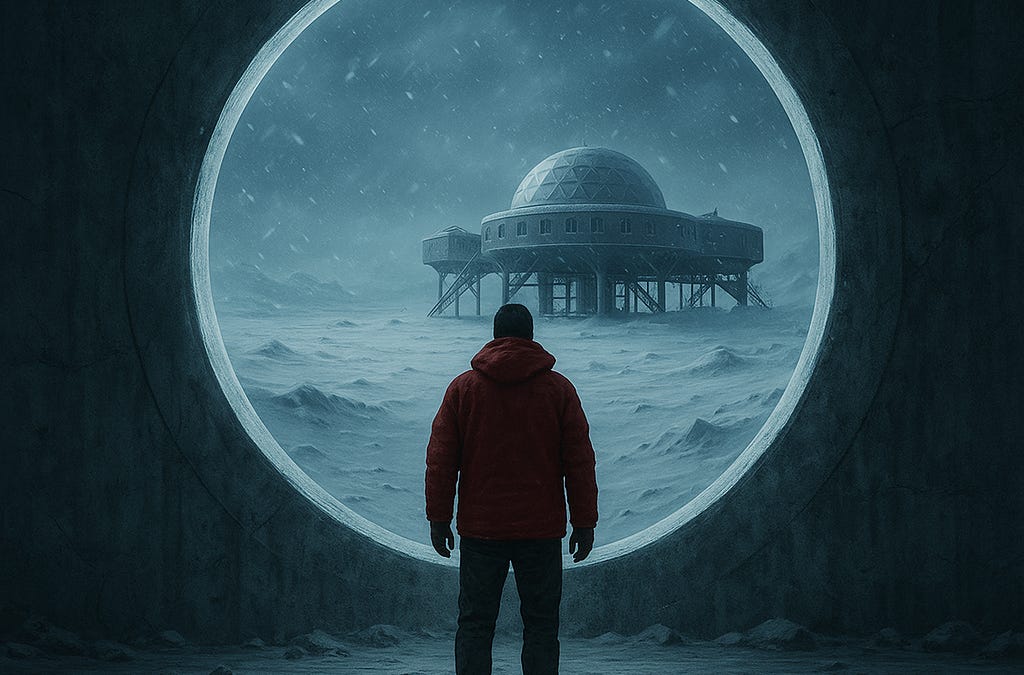
 A former contractor’s testimony about secret technologies beneath the South Pole has ignited controversy. Is it whistleblowing, disinformation, or a modern myth in the making?
Eric Hecker first entered the public consciousness not through mainstream headlines, but through podcasts, conferences, and conspiracy forums. A former Navy firefighter and Raytheon contractor, Hecker claims he spent nearly a year working at the Amundsen–Scott South Pole Station in Antarctica around 2010–2011. His dual role as a plumber and fire systems technician allegedly gave him access to nearly every part of the station, including sensitive and restricted areas. Since then, he has stepped forward with explosive claims about what he says is really happening at the bottom of the world.
Who Is Eric Hecker?
According to his own testimony, Hecker served in the U.S. Navy before taking a position with Raytheon to work at one of the most remote scientific outposts on Earth. His job, he says, gave him unusually broad access to infrastructure and systems at the South Pole base. It was during this time that he claims to have witnessed evidence of technology and operations far beyond public knowledge.
The Core of His Claims
Hecker’s allegations focus on the existence of highly advanced and classified technologies hidden in plain sight beneath the ice. Among his key claims:
Directed Energy Weapons (DEWs)
Hecker asserts that the IceCube Neutrino Observatory, a scientific research station designed to detect subatomic particles, is secretly functioning as a massive directed energy weapon. According to him, it has the potential to trigger earthquakes and other planetary disruptions.
Scalar Wave and Tesla-Based Technologies
He references exotic systems inspired by Nikola Tesla’s theories, including scalar wave devices capable of long-range, non-linear effects. These are technologies often discussed in fringe science circles but dismissed by mainstream physics.
Deep Space Communication and Exotic Propulsion
Hecker claims the station is used for interstellar or interdimensional communication, including systems that support non-atmospheric propulsion. He suggests this points to reverse-engineered technology or contact with non-human intelligence.
Seismic Weaponry and Global Surveillance
Some of the more controversial claims include the notion that the South Pole station is equipped to manipulate geological activity across the globe and possibly to monitor or interfere with atmospheric systems.
Childhood Programs and CIA Ties
In interviews and public appearances, Hecker has also claimed he was involved from childhood in CIA projects such as Stargate and MK-Ultra, notorious for their alleged use of mind control, psychic experiments, and psychological manipulation. He connects these experiences to his later involvement in secretive military-industrial programs.
Platforms and Public Testimony
Hecker has shared his story on several well-known alternative media platforms, including the Shawn Ryan Show, Edge of Wonder, and Disclosure Project events. He has also testified publicly in civilian forums, claiming to have submitted material to the Senate Intelligence Committee and the Pentagon’s All-Domain Anomaly Resolution Office (AARO). He maintains a website, Deciphering.tv, to present his story and related research.
Public Response and Fact-Checking
While Hecker’s narrative has gained traction among alternative media and UFO disclosure enthusiasts, it has not withstood scrutiny from independent fact-checkers or scientific institutions.
Debunked Claims
One of his most dramatic assertions — that IceCube functions as a directed energy weapon — has been publicly debunked. IceCube is a passive neutrino detector, and experts say it has no capacity for transmission, let alone planetary-scale weapons deployment.
No Verifiable Evidence
To date, none of Hecker’s claims have been independently verified. There is no scientific documentation, internal Raytheon reporting, or whistleblower corroboration to support the existence of scalar wave generators, non-atmospheric propulsion systems, or seismic weaponry at the South Pole Station.
Skepticism from Experts
Scientific bodies and engineers familiar with Antarctic research operations have dismissed his claims as speculative and lacking evidence. However, his testimony continues to spread in circles distrustful of mainstream narratives.
Why These Stories Resonate
Eric Hecker’s claims thrive in a cultural moment filled with suspicion toward government, science, and authority. Antarctica, remote, restricted, and mysterious, serves as an ideal canvas for narratives about secret experiments and hidden truths. Coupled with a growing appetite for whistleblower stories and a fascination with exotic technologies, his story blends Cold War paranoia with modern disclosure culture.
Conclusion
Eric Hecker presents a provocative story, one that straddles the line between whistleblower and mythmaker. His testimony raises unsettling questions about how truth is filtered in the age of conspiracies and digital media. But until corroborating evidence emerges, his claims remain unverified — compelling to some, discredited by others, and symbolic of our ongoing search for hidden truths in an increasingly uncertain world.
A former contractor’s testimony about secret technologies beneath the South Pole has ignited controversy. Is it whistleblowing, disinformation, or a modern myth in the making?
Eric Hecker first entered the public consciousness not through mainstream headlines, but through podcasts, conferences, and conspiracy forums. A former Navy firefighter and Raytheon contractor, Hecker claims he spent nearly a year working at the Amundsen–Scott South Pole Station in Antarctica around 2010–2011. His dual role as a plumber and fire systems technician allegedly gave him access to nearly every part of the station, including sensitive and restricted areas. Since then, he has stepped forward with explosive claims about what he says is really happening at the bottom of the world.
Who Is Eric Hecker?
According to his own testimony, Hecker served in the U.S. Navy before taking a position with Raytheon to work at one of the most remote scientific outposts on Earth. His job, he says, gave him unusually broad access to infrastructure and systems at the South Pole base. It was during this time that he claims to have witnessed evidence of technology and operations far beyond public knowledge.
The Core of His Claims
Hecker’s allegations focus on the existence of highly advanced and classified technologies hidden in plain sight beneath the ice. Among his key claims:
Directed Energy Weapons (DEWs)
Hecker asserts that the IceCube Neutrino Observatory, a scientific research station designed to detect subatomic particles, is secretly functioning as a massive directed energy weapon. According to him, it has the potential to trigger earthquakes and other planetary disruptions.
Scalar Wave and Tesla-Based Technologies
He references exotic systems inspired by Nikola Tesla’s theories, including scalar wave devices capable of long-range, non-linear effects. These are technologies often discussed in fringe science circles but dismissed by mainstream physics.
Deep Space Communication and Exotic Propulsion
Hecker claims the station is used for interstellar or interdimensional communication, including systems that support non-atmospheric propulsion. He suggests this points to reverse-engineered technology or contact with non-human intelligence.
Seismic Weaponry and Global Surveillance
Some of the more controversial claims include the notion that the South Pole station is equipped to manipulate geological activity across the globe and possibly to monitor or interfere with atmospheric systems.
Childhood Programs and CIA Ties
In interviews and public appearances, Hecker has also claimed he was involved from childhood in CIA projects such as Stargate and MK-Ultra, notorious for their alleged use of mind control, psychic experiments, and psychological manipulation. He connects these experiences to his later involvement in secretive military-industrial programs.
Platforms and Public Testimony
Hecker has shared his story on several well-known alternative media platforms, including the Shawn Ryan Show, Edge of Wonder, and Disclosure Project events. He has also testified publicly in civilian forums, claiming to have submitted material to the Senate Intelligence Committee and the Pentagon’s All-Domain Anomaly Resolution Office (AARO). He maintains a website, Deciphering.tv, to present his story and related research.
Public Response and Fact-Checking
While Hecker’s narrative has gained traction among alternative media and UFO disclosure enthusiasts, it has not withstood scrutiny from independent fact-checkers or scientific institutions.
Debunked Claims
One of his most dramatic assertions — that IceCube functions as a directed energy weapon — has been publicly debunked. IceCube is a passive neutrino detector, and experts say it has no capacity for transmission, let alone planetary-scale weapons deployment.
No Verifiable Evidence
To date, none of Hecker’s claims have been independently verified. There is no scientific documentation, internal Raytheon reporting, or whistleblower corroboration to support the existence of scalar wave generators, non-atmospheric propulsion systems, or seismic weaponry at the South Pole Station.
Skepticism from Experts
Scientific bodies and engineers familiar with Antarctic research operations have dismissed his claims as speculative and lacking evidence. However, his testimony continues to spread in circles distrustful of mainstream narratives.
Why These Stories Resonate
Eric Hecker’s claims thrive in a cultural moment filled with suspicion toward government, science, and authority. Antarctica, remote, restricted, and mysterious, serves as an ideal canvas for narratives about secret experiments and hidden truths. Coupled with a growing appetite for whistleblower stories and a fascination with exotic technologies, his story blends Cold War paranoia with modern disclosure culture.
Conclusion
Eric Hecker presents a provocative story, one that straddles the line between whistleblower and mythmaker. His testimony raises unsettling questions about how truth is filtered in the age of conspiracies and digital media. But until corroborating evidence emerges, his claims remain unverified — compelling to some, discredited by others, and symbolic of our ongoing search for hidden truths in an increasingly uncertain world.


 Resignation Rumors, Renovation Scandals, and the Trump Team’s Push for a New Fed Direction
Federal Reserve Chair Jerome Powell is facing a growing wave of pressure—political, media-driven, and possibly coordinated. On July 16, 2025, Rep. Anna Paulina Luna declared via social media that Powell’s firing is “imminent,” claiming she’s heard it from “very serious sources.” While the Fed maintains that Powell intends to serve out his term, multiple signals suggest his tenure may soon be coming to an end, voluntarily or not.
What Rep. Luna Said
Luna’s public statement that Powell is “99% likely” to be fired sent a clear message. Whether she was echoing insider intelligence or acting as a political surrogate, her message aligned with a broader narrative gaining momentum in Trump-aligned circles: Powell’s days are numbered.
Bessent Offers a Calmer Message
Treasury Secretary Scott Bessent appeared on Bloomberg the same day Luna made her statement. He said President Trump is not planning to fire Powell but confirmed that a formal process to identify a successor has begun. This suggests the White House is preparing for a transition, regardless of whether Powell steps down voluntarily or is pushed aside.
Renovation Scandal Heats Up
At the center of the controversy is a $2.5 billion renovation of the Federal Reserve’s headquarters, up from an original estimate of $1.9 billion. With over $700 million in cost overruns, Powell is under scrutiny from both Congress and the administration. FHFA Director Bill Pulte has publicly floated the idea that Powell may resign over the scandal. Trump himself has said, “He should resign immediately.” While Powell has requested an internal watchdog review, he has not signaled any intention to step down.
Pressure Without Formal Removal
Although the law states that a Fed chair can only be removed “for cause,” such legal boundaries may be irrelevant if Powell is simply pressured into resigning. Trump-aligned figures appear to be orchestrating a sustained narrative attack, likely designed to erode Powell’s credibility and push him toward a voluntary exit with no lawsuits or open conflict, just overwhelming political force.
Market Reaction: Volatility First, Then Stability
If Powell resigns under pressure, markets are likely to react with volatility. But once Trump names a successor, especially someone seen as loyal and ready to cut interest rates, markets are expected to stabilize and potentially rally. The expectation is that a Trump-aligned chair will move aggressively to lower rates and stimulate short-term economic growth.
The risk, however, is inflation. Slashing rates too quickly or too deeply could reverse disinflationary progress and reignite price instability. Investors may cheer the cuts, but economists will be watching closely for signs of overheating.
What’s Next: A Trump-Aligned Fed?
The Trump administration is already reviewing candidates. A new chair is expected to reverse Powell-era tightening, align more closely with Trump’s fiscal agenda, and embrace lower rates regardless of inflationary signals. This would mark a sharp turn in Fed leadership both in style and substance.
Conclusion: The End of the Powell Era?
Powell hasn’t resigned. He hasn’t been fired. But the pressure is escalating fast. Whether it ends in a quiet exit or a political showdown, the stakes are enormous. With the 2024 election behind him and 2026 approaching fast, Trump appears determined to reshape the Federal Reserve to be more friendly to his economic policies.
Resignation Rumors, Renovation Scandals, and the Trump Team’s Push for a New Fed Direction
Federal Reserve Chair Jerome Powell is facing a growing wave of pressure—political, media-driven, and possibly coordinated. On July 16, 2025, Rep. Anna Paulina Luna declared via social media that Powell’s firing is “imminent,” claiming she’s heard it from “very serious sources.” While the Fed maintains that Powell intends to serve out his term, multiple signals suggest his tenure may soon be coming to an end, voluntarily or not.
What Rep. Luna Said
Luna’s public statement that Powell is “99% likely” to be fired sent a clear message. Whether she was echoing insider intelligence or acting as a political surrogate, her message aligned with a broader narrative gaining momentum in Trump-aligned circles: Powell’s days are numbered.
Bessent Offers a Calmer Message
Treasury Secretary Scott Bessent appeared on Bloomberg the same day Luna made her statement. He said President Trump is not planning to fire Powell but confirmed that a formal process to identify a successor has begun. This suggests the White House is preparing for a transition, regardless of whether Powell steps down voluntarily or is pushed aside.
Renovation Scandal Heats Up
At the center of the controversy is a $2.5 billion renovation of the Federal Reserve’s headquarters, up from an original estimate of $1.9 billion. With over $700 million in cost overruns, Powell is under scrutiny from both Congress and the administration. FHFA Director Bill Pulte has publicly floated the idea that Powell may resign over the scandal. Trump himself has said, “He should resign immediately.” While Powell has requested an internal watchdog review, he has not signaled any intention to step down.
Pressure Without Formal Removal
Although the law states that a Fed chair can only be removed “for cause,” such legal boundaries may be irrelevant if Powell is simply pressured into resigning. Trump-aligned figures appear to be orchestrating a sustained narrative attack, likely designed to erode Powell’s credibility and push him toward a voluntary exit with no lawsuits or open conflict, just overwhelming political force.
Market Reaction: Volatility First, Then Stability
If Powell resigns under pressure, markets are likely to react with volatility. But once Trump names a successor, especially someone seen as loyal and ready to cut interest rates, markets are expected to stabilize and potentially rally. The expectation is that a Trump-aligned chair will move aggressively to lower rates and stimulate short-term economic growth.
The risk, however, is inflation. Slashing rates too quickly or too deeply could reverse disinflationary progress and reignite price instability. Investors may cheer the cuts, but economists will be watching closely for signs of overheating.
What’s Next: A Trump-Aligned Fed?
The Trump administration is already reviewing candidates. A new chair is expected to reverse Powell-era tightening, align more closely with Trump’s fiscal agenda, and embrace lower rates regardless of inflationary signals. This would mark a sharp turn in Fed leadership both in style and substance.
Conclusion: The End of the Powell Era?
Powell hasn’t resigned. He hasn’t been fired. But the pressure is escalating fast. Whether it ends in a quiet exit or a political showdown, the stakes are enormous. With the 2024 election behind him and 2026 approaching fast, Trump appears determined to reshape the Federal Reserve to be more friendly to his economic policies.

 The Whisper Network of Disclosure
Project SERPO is one of the most bizarre and captivating stories in the world of UFO conspiracy theories. It claims that the U.S. government secretly engaged in an exchange program with an extraterrestrial race from the Zeta Reticuli star system. According to the narrative, a group of twelve American military personnel were selected to travel to the aliens' home planet, Serpo, in a classified mission kept hidden from the public for decades.
The story emerged from a series of anonymous emails allegedly sent by a former official within the Defense Intelligence Agency (DIA). These messages quickly spread through internet forums and UFO research communities. Despite the absence of official confirmation, Project SERPO remains one of the most discussed cases in the realm of alleged extraterrestrial disclosure.
The Claim: A Secret Government-Alien Exchange Program
At the heart of the story is a claim that sounds more like science fiction than secret history. In the 1960s, the U.S. government allegedly coordinated an exchange with an alien race from Zeta Reticuli. Twelve American military service members, including scientists, doctors, and officers, were trained and then transported aboard an alien spacecraft to the distant planet known as Serpo.
The exchange was said to last over a decade. The humans were expected to live among the aliens, observe their society, and report back. Out of the original twelve, only eight allegedly returned to Earth. Two reportedly died during the mission, and two chose to remain on Serpo permanently.
Origins of the Story
The first public mention of Project SERPO appeared in 2005 through a series of emails sent to UFO researcher Victor Martinez. These emails were signed by an anonymous source identifying as a retired DIA official with direct knowledge of the program.
The emails described the mission’s logistics, the alien civilization’s nature, and the human participants’ experience. These messages were eventually published online, drawing significant attention from UFO researchers and conspiracy communities.
The Roswell Connection
Project SERPO is often linked to the 1947 Roswell incident, a cornerstone of UFO lore involving a supposed spacecraft crash in New Mexico. According to the SERPO narrative, one of the extraterrestrials from the Roswell crash survived and became known as “EBE-1.”
This being allegedly communicated with U.S. officials, and that dialogue continued for years. Eventually, it led to an agreement between the U.S. government and the alien race for the exchange program. In this retelling, Roswell was not just a crash but the beginning of interstellar diplomacy.
The Role of Majestic 12
Another central component of the SERPO narrative is the secretive organization known as Majestic 12. This group, reportedly formed by President Truman after the Roswell incident, was allegedly tasked with overseeing all interactions with extraterrestrials.
According to the story, Majestic 12 was responsible for planning and coordinating Project SERPO. The group managed everything from selecting personnel to maintaining operational secrecy. Though many documents tied to MJ-12 have been deemed fraudulent, their presence continues to loom large in UFO-related conspiracy theories.
Life on Serpo
The planet Serpo, as described in the leaked emails, had two suns, thin atmosphere, and a weaker gravitational pull than Earth. These environmental conditions reportedly made adaptation difficult for the human team. The extreme heat, alien diet, and unusual day-night cycles added to the challenge.
Despite these hardships, the humans reportedly spent years observing and interacting with the alien civilization. The extraterrestrials were said to communicate telepathically, lived in a structured and cooperative society, and had advanced technology. The eight returning participants were debriefed upon their return and lived the rest of their lives in anonymity.
Cultural Impact and Legacy
Project SERPO has left a lasting imprint on UFO culture. It has inspired books, documentaries, online forums, and podcasts that continue to analyze and speculate about its authenticity. The story has become part of the larger mythology surrounding alien contact, government secrecy, and cosmic diplomacy.
It reflects a deep-rooted public fascination with the possibility of contact beyond Earth and the belief that governments may already be concealing such encounters. Regardless of whether it is ultimately proven true or false, the tale of Project SERPO continues to spark curiosity and debate.
Conclusion: Hoax, Disinfo, or Truth Waiting to Surface?
Project SERPO stands as a provocative entry in the catalog of UFO and extraterrestrial claims. Its sweeping narrative, detailed accounts, and connections to Roswell and Majestic 12 make it difficult to ignore. While no definitive proof has ever emerged to confirm the story, its influence continues to ripple through conspiracy theory culture.
Whether it is an elaborate hoax, a piece of psychological warfare, or an actual leak from the hidden history of extraterrestrial relations, Project SERPO remains one of the most enigmatic and enduring legends of the disclosure era.
The Whisper Network of Disclosure
Project SERPO is one of the most bizarre and captivating stories in the world of UFO conspiracy theories. It claims that the U.S. government secretly engaged in an exchange program with an extraterrestrial race from the Zeta Reticuli star system. According to the narrative, a group of twelve American military personnel were selected to travel to the aliens' home planet, Serpo, in a classified mission kept hidden from the public for decades.
The story emerged from a series of anonymous emails allegedly sent by a former official within the Defense Intelligence Agency (DIA). These messages quickly spread through internet forums and UFO research communities. Despite the absence of official confirmation, Project SERPO remains one of the most discussed cases in the realm of alleged extraterrestrial disclosure.
The Claim: A Secret Government-Alien Exchange Program
At the heart of the story is a claim that sounds more like science fiction than secret history. In the 1960s, the U.S. government allegedly coordinated an exchange with an alien race from Zeta Reticuli. Twelve American military service members, including scientists, doctors, and officers, were trained and then transported aboard an alien spacecraft to the distant planet known as Serpo.
The exchange was said to last over a decade. The humans were expected to live among the aliens, observe their society, and report back. Out of the original twelve, only eight allegedly returned to Earth. Two reportedly died during the mission, and two chose to remain on Serpo permanently.
Origins of the Story
The first public mention of Project SERPO appeared in 2005 through a series of emails sent to UFO researcher Victor Martinez. These emails were signed by an anonymous source identifying as a retired DIA official with direct knowledge of the program.
The emails described the mission’s logistics, the alien civilization’s nature, and the human participants’ experience. These messages were eventually published online, drawing significant attention from UFO researchers and conspiracy communities.
The Roswell Connection
Project SERPO is often linked to the 1947 Roswell incident, a cornerstone of UFO lore involving a supposed spacecraft crash in New Mexico. According to the SERPO narrative, one of the extraterrestrials from the Roswell crash survived and became known as “EBE-1.”
This being allegedly communicated with U.S. officials, and that dialogue continued for years. Eventually, it led to an agreement between the U.S. government and the alien race for the exchange program. In this retelling, Roswell was not just a crash but the beginning of interstellar diplomacy.
The Role of Majestic 12
Another central component of the SERPO narrative is the secretive organization known as Majestic 12. This group, reportedly formed by President Truman after the Roswell incident, was allegedly tasked with overseeing all interactions with extraterrestrials.
According to the story, Majestic 12 was responsible for planning and coordinating Project SERPO. The group managed everything from selecting personnel to maintaining operational secrecy. Though many documents tied to MJ-12 have been deemed fraudulent, their presence continues to loom large in UFO-related conspiracy theories.
Life on Serpo
The planet Serpo, as described in the leaked emails, had two suns, thin atmosphere, and a weaker gravitational pull than Earth. These environmental conditions reportedly made adaptation difficult for the human team. The extreme heat, alien diet, and unusual day-night cycles added to the challenge.
Despite these hardships, the humans reportedly spent years observing and interacting with the alien civilization. The extraterrestrials were said to communicate telepathically, lived in a structured and cooperative society, and had advanced technology. The eight returning participants were debriefed upon their return and lived the rest of their lives in anonymity.
Cultural Impact and Legacy
Project SERPO has left a lasting imprint on UFO culture. It has inspired books, documentaries, online forums, and podcasts that continue to analyze and speculate about its authenticity. The story has become part of the larger mythology surrounding alien contact, government secrecy, and cosmic diplomacy.
It reflects a deep-rooted public fascination with the possibility of contact beyond Earth and the belief that governments may already be concealing such encounters. Regardless of whether it is ultimately proven true or false, the tale of Project SERPO continues to spark curiosity and debate.
Conclusion: Hoax, Disinfo, or Truth Waiting to Surface?
Project SERPO stands as a provocative entry in the catalog of UFO and extraterrestrial claims. Its sweeping narrative, detailed accounts, and connections to Roswell and Majestic 12 make it difficult to ignore. While no definitive proof has ever emerged to confirm the story, its influence continues to ripple through conspiracy theory culture.
Whether it is an elaborate hoax, a piece of psychological warfare, or an actual leak from the hidden history of extraterrestrial relations, Project SERPO remains one of the most enigmatic and enduring legends of the disclosure era. Exploring claims of a secret tunnel system and extraterrestrial operations beneath the Moon’s far side
A Lunar Mystery That Refuses to Fade
The far side of the Moon, forever hidden from Earth’s view due to tidal locking, has long been a canvas for speculation. Among the most enduring and provocative theories is the claim that a massive underground base lies beneath its surface. More than just a bunker, this alleged facility is described as a vast tunnel network or spaceport, used by non-human intelligences or by breakaway human factions as a gateway for activities far beyond the public's imagination.
The Core Claim: A Subterranean Port on the Far Side
According to proponents of this theory, the Moon’s far side hosts a large subterranean installation. Descriptions vary, but common themes include:
A vast tunnel system bored deep into the Moon’s crust
A port or transit station for spacecraft, possibly interstellar
A staging area for surveillance or intervention in Earth affairs
Because the Moon’s far side is shielded from Earth’s direct line of sight, it is seen as the perfect location for such a hidden facility. Some claim it is an alien outpost. Others argue it is operated by secret human factions, possibly in collaboration with non-terrestrial entities.
Origins and Rise of the Theory
Much of the modern mythos surrounding a lunar base stems from whistleblower testimony and mission-era rumors. One of the most cited figures is Karl Wolfe, a former U.S. Air Force technician who, in the 1980s, claimed he was shown classified images depicting artificial structures on the Moon while working with NASA-related equipment.
Similar claims emerged surrounding the Apollo missions. Some believe that astronauts encountered UFOs on or around the Moon and were told never to return. Alleged audio recordings and transcripts, though never verified, have circulated for decades, describing strange activity and unearthly sightings on the lunar surface.
In parallel, CIA remote viewing programs such as the Stargate Project explored lunar and planetary locations. Well-known remote viewers like Ingo Swann and Pat Price reported seeing artificial structures and underground bases, not only on the Moon but on Mars and elsewhere. Their descriptions often matched the theory of a concealed tunnel system beneath the lunar crust.
Different Versions of the Moon Base Theory
As with most underground or extraterrestrial theories, there are several variations, each with its own narrative:
Alien Control Center: The base is operated entirely by extraterrestrials and is used to observe Earth, manipulate events, or mine resources.
Breakaway Human Civilization: A secret faction of humanity developed advanced technology and established an off-world presence hidden from the public.
Joint Alien-Human Operation: An alliance was allegedly formed between certain governments and non-human entities to share space or technology.
Occult-Energetic Theory: From a more metaphysical perspective, the Moon and particularly the far side is believed to serve as a psychic or energetic control hub. The base below it functions as a node in a planetary system of influence.
Clues and Alleged Evidence
Supporters point to a range of data points and testimonies:
Leaked NASA imagery showing geometric patterns, domes, or lights
Mission anomalies from Apollo that remain unexplained in official records
Remote viewing reports describing base-like interiors and activity
Whistleblower claims from alleged insiders with access to classified information
Although these sources are anecdotal and unverifiable by conventional standards, they continue to fuel belief in the existence of something hidden beneath the Moon’s surface.
Cultural Power and Symbolism
Whether or not the theory holds physical truth, its psychological power is undeniable. The image of a base on the Moon's far side taps into collective feelings of wonder, suspicion, and the fear of the unknown. It reflects a deeper distrust in institutions, a yearning for secrets just beyond the veil, and a fascination with what might lie beyond humanity’s current reach.
This theory has permeated science fiction, inspired video games, and shaped alternative media narratives. It has become a symbol not just of hidden technology, but of hidden truth concealed not by nature but by design.
Conclusion
The theory of a Moon base beneath the far side is more than a fringe belief. It is a modern myth that encapsulates our obsession with secrecy, power, and otherworldly possibilities. Whether viewed as alien infrastructure, human ambition, or something in between, the idea continues to provoke and inspire. As long as questions remain unanswered and shadows remain unexplored, the notion of a hidden port on the Moon will endure.
Exploring claims of a secret tunnel system and extraterrestrial operations beneath the Moon’s far side
A Lunar Mystery That Refuses to Fade
The far side of the Moon, forever hidden from Earth’s view due to tidal locking, has long been a canvas for speculation. Among the most enduring and provocative theories is the claim that a massive underground base lies beneath its surface. More than just a bunker, this alleged facility is described as a vast tunnel network or spaceport, used by non-human intelligences or by breakaway human factions as a gateway for activities far beyond the public's imagination.
The Core Claim: A Subterranean Port on the Far Side
According to proponents of this theory, the Moon’s far side hosts a large subterranean installation. Descriptions vary, but common themes include:
A vast tunnel system bored deep into the Moon’s crust
A port or transit station for spacecraft, possibly interstellar
A staging area for surveillance or intervention in Earth affairs
Because the Moon’s far side is shielded from Earth’s direct line of sight, it is seen as the perfect location for such a hidden facility. Some claim it is an alien outpost. Others argue it is operated by secret human factions, possibly in collaboration with non-terrestrial entities.
Origins and Rise of the Theory
Much of the modern mythos surrounding a lunar base stems from whistleblower testimony and mission-era rumors. One of the most cited figures is Karl Wolfe, a former U.S. Air Force technician who, in the 1980s, claimed he was shown classified images depicting artificial structures on the Moon while working with NASA-related equipment.
Similar claims emerged surrounding the Apollo missions. Some believe that astronauts encountered UFOs on or around the Moon and were told never to return. Alleged audio recordings and transcripts, though never verified, have circulated for decades, describing strange activity and unearthly sightings on the lunar surface.
In parallel, CIA remote viewing programs such as the Stargate Project explored lunar and planetary locations. Well-known remote viewers like Ingo Swann and Pat Price reported seeing artificial structures and underground bases, not only on the Moon but on Mars and elsewhere. Their descriptions often matched the theory of a concealed tunnel system beneath the lunar crust.
Different Versions of the Moon Base Theory
As with most underground or extraterrestrial theories, there are several variations, each with its own narrative:
Alien Control Center: The base is operated entirely by extraterrestrials and is used to observe Earth, manipulate events, or mine resources.
Breakaway Human Civilization: A secret faction of humanity developed advanced technology and established an off-world presence hidden from the public.
Joint Alien-Human Operation: An alliance was allegedly formed between certain governments and non-human entities to share space or technology.
Occult-Energetic Theory: From a more metaphysical perspective, the Moon and particularly the far side is believed to serve as a psychic or energetic control hub. The base below it functions as a node in a planetary system of influence.
Clues and Alleged Evidence
Supporters point to a range of data points and testimonies:
Leaked NASA imagery showing geometric patterns, domes, or lights
Mission anomalies from Apollo that remain unexplained in official records
Remote viewing reports describing base-like interiors and activity
Whistleblower claims from alleged insiders with access to classified information
Although these sources are anecdotal and unverifiable by conventional standards, they continue to fuel belief in the existence of something hidden beneath the Moon’s surface.
Cultural Power and Symbolism
Whether or not the theory holds physical truth, its psychological power is undeniable. The image of a base on the Moon's far side taps into collective feelings of wonder, suspicion, and the fear of the unknown. It reflects a deeper distrust in institutions, a yearning for secrets just beyond the veil, and a fascination with what might lie beyond humanity’s current reach.
This theory has permeated science fiction, inspired video games, and shaped alternative media narratives. It has become a symbol not just of hidden technology, but of hidden truth concealed not by nature but by design.
Conclusion
The theory of a Moon base beneath the far side is more than a fringe belief. It is a modern myth that encapsulates our obsession with secrecy, power, and otherworldly possibilities. Whether viewed as alien infrastructure, human ambition, or something in between, the idea continues to provoke and inspire. As long as questions remain unanswered and shadows remain unexplored, the notion of a hidden port on the Moon will endure.