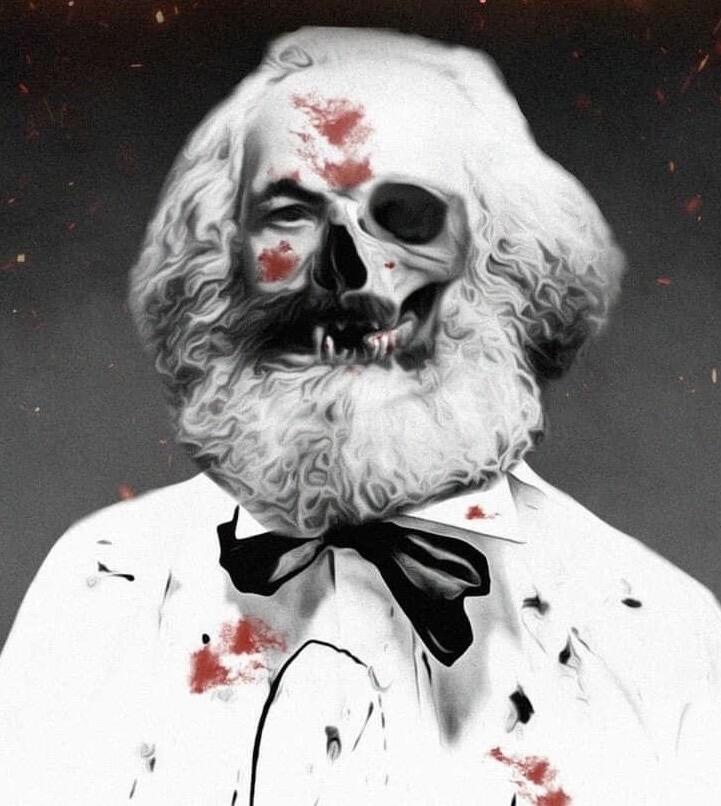
Please allow children to believe in Santa. You believe in magical internet money and no one is ruining that for you. #Bitcoin
No one knows how much effort some people put in just to seem ordinary. This does not only refer to those on the fringes of society, but also to those with a sharp conscience and a mind that is constantly working and who see the world differently from most people around them. These bright souls have to make an enormous effort to adapt to a reality that conflicts with their inner world. And therein lies the real suffering: in trying to come to terms with a world that does everything to put them in a framework that is acceptable to the masses. image
On this day, November 12, 1976, it seemed like any other day. A car accident and a seemingly innocuous diagnosis: a right knee injury. Nothing serious—or so it seemed at the time. And yet, in the months that followed, the pain not only remained, but grew worse. Finally, the brutal, merciless truth arrived: osteosarcoma—a malignant bone tumor that can strike suddenly and take one's life. Terry Fox, then not yet twenty years old, found himself faced with a choice no one should have to make: the amputation of his right leg and its replacement with a mechanical prosthesis. Today we have modern solutions, but back then… even walking was a heroic effort. Let alone running. But Terry didn't give up. Three years later, on April 12, 1980, he decided to do something that seemed impossible: run across Canada from coast to coast. On foot. With one leg. The goal? To raise one dollar from every Canadian and donate it all to cancer research. Thus was born a race that made history: the “Marathon of Hope.” Every day he ran the marathon distance — 42 kilometers. Every day. He went through Newfoundland, Nova Scotia, Prince Edward Island, New Brunswick, Quebec, Ontario… It was an epic, inhuman challenge — no professional athlete had dared to repeat it. After 143 days and 5,373 kilometers, he had to stop. The cancer had attacked his lungs. He no longer had the strength, not because he lacked courage, but because his body refused to obey. It was September 1, 1980. By then, he had already raised $24 million. A little less than a year later, on June 28, 1981, he passed away. He didn’t even live to see his 23rd birthday. His marathon was completed a few years later by Steve Fonyo — also a cancer survivor, also with an amputated leg. In this way, the “Marathon of Hope” came to its symbolic end. I write these words with admiration and sadness. Today, hordes of teenagers (and not only them) flock to stores to buy T-shirts of overpaid athletes who are worshipped as gods for every goal, dunk or dribble. There are also those who abused the image and work of this young man for their own selfish purposes, but they should not be given much attention. There are champions. And there are heroes. There are sports legends. And there is the one who ran for hope. There are famous names. And then… there is TERRY FOX. image
The fight against corruption 🤣 "The European Union will now require ID checks for every cash payment over €3,000, and for all crypto transactions, no matter how small. Even worse, cash payments above €10,000 are being outright banned. They call it “security.” Many call it the next step toward total financial surveillance. " image
Just because it didn't work out doesn't mean you failed. You successfully fucked it up. GN
Have you ever wondered why birds fly in a V-shaped formation? For years, scientists have wondered why birds line up in this way. It turns out that nature has created an ingenious mechanism that allows them to fly huge distances without losing direction or wasting unnecessary energy. Each bird, flapping its wings, creates lift for the one flying immediately behind it. Thanks to this, the entire formation reaches speeds of up to 30–60% greater than each bird could do on its own. Air resistance becomes lower, and the effort is more evenly distributed. This is why birds can cover thousands of kilometers without resting. At the head flies a leader – usually the oldest and most experienced bird, who has flown the same route many times and knows the way. Its wing movements create strong air currents that make the flight easier for those flying behind it. The second bird helps the third, the third the fourth, and so on – until the end of the formation. The oldest, weakest or injured birds always take their place at the back of the formation, because there is the least air resistance. Then they can glide almost effortlessly on the air wave created by the birds in front of them. It is also interesting that birds flying in a V-formation can maintain a speed of up to 80 km/h throughout the entire migration route. But no leader could do it alone. That is why there are always several “commanders” in a formation. When the first one gets tired, it calmly descends to the end of the formation, and the next one takes his place. And so they take turns all the way — like a perfectly coordinated team. And another fascinating thing: that characteristic cry that we hear from the sky is mostly emitted by the birds flying behind. In this way, they cheer on the leaders, give them strength and motivate them to keep up the pace. It is their form of support and encouragement. If a bird tries to break away from the wedge and fly alone, it immediately feels enormous resistance and weight. That is why it quickly returns to the formation. Because in a group – it's always easier. image
Christmas magic is in the air. image
They just need to establish a court of appeal and that's it. image