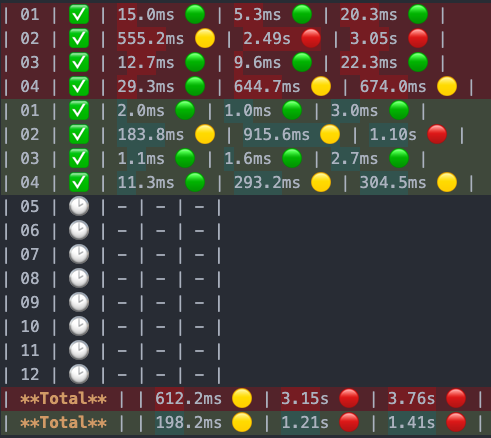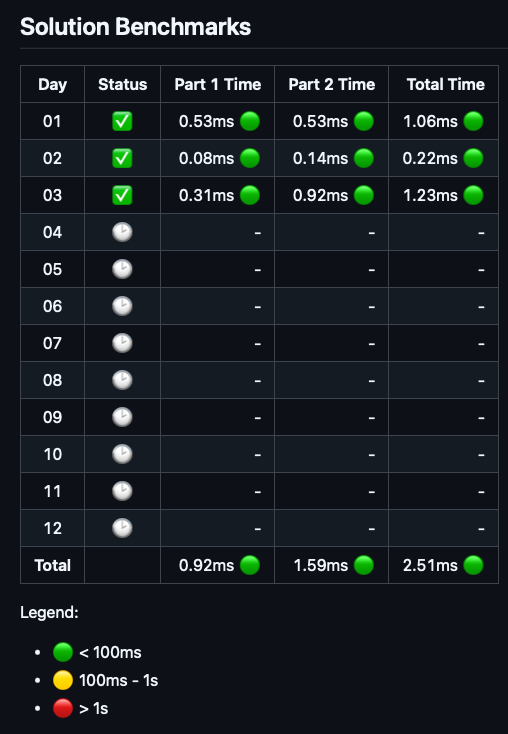
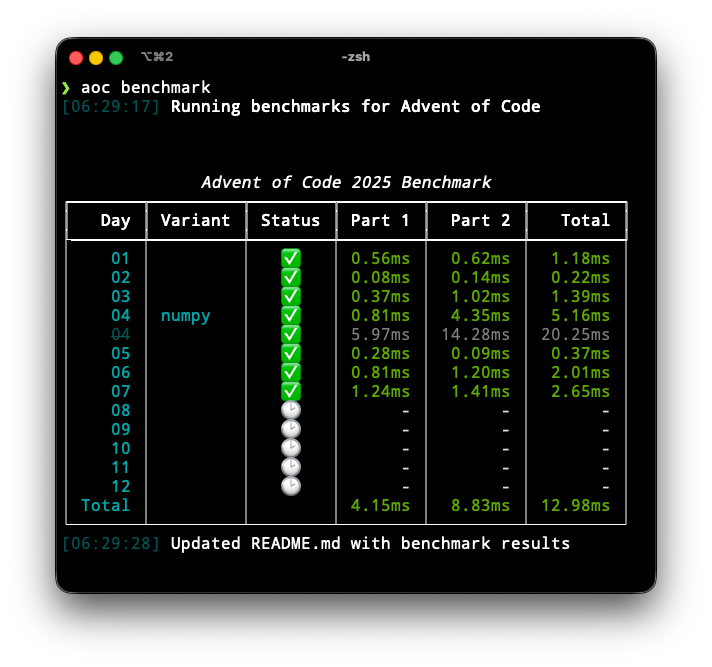
New release of adventofcode PyPI package today improves the display of alternative solutions for each day: 1. Slower solutions are no longer counted in totals 2. Slower solutions are dimmed out Why limit yourself to one #adventofcode solution per day? 😆 Happy solving! 🎄 image
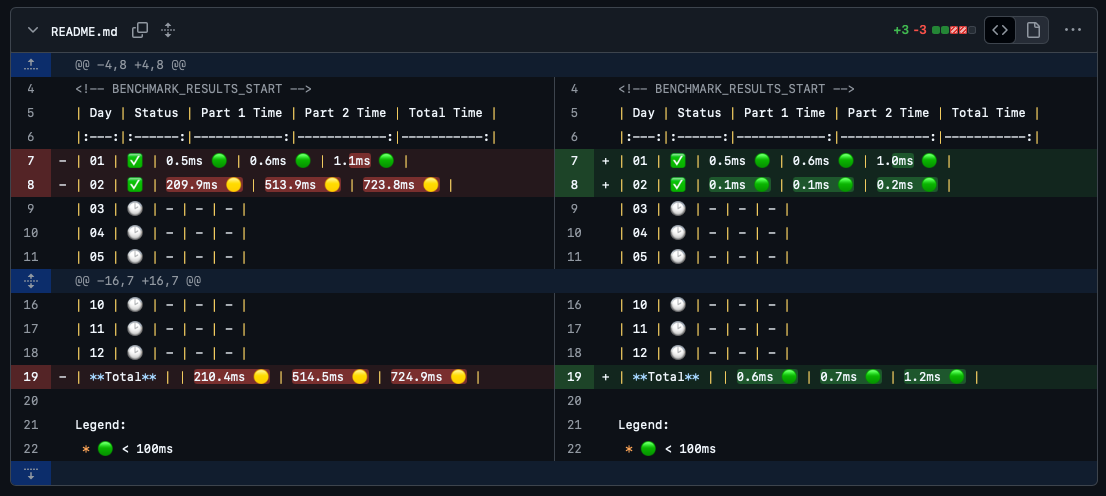
I compared the first 4 #adventofcode solutions on two different CPUs. * Rows with a red background are on 8x Intel(R) Core(TM) i7-10510U CPU @ 1.80GHz. * Rows with a green background are on Apple M3 Max. So if you want to be better at advent of code just get a better CPU? 😆 image
I wonder how long I'll be able to keep all the days green like this #adventofcode 🟢 Today I learned that you can use None when slicing a list in Python: >>> [1,2,3][:None] [1, 2, 3] Useful to avoid the edge case where [:0] would give an empty list: >>> [1,2,3][:0] [] image
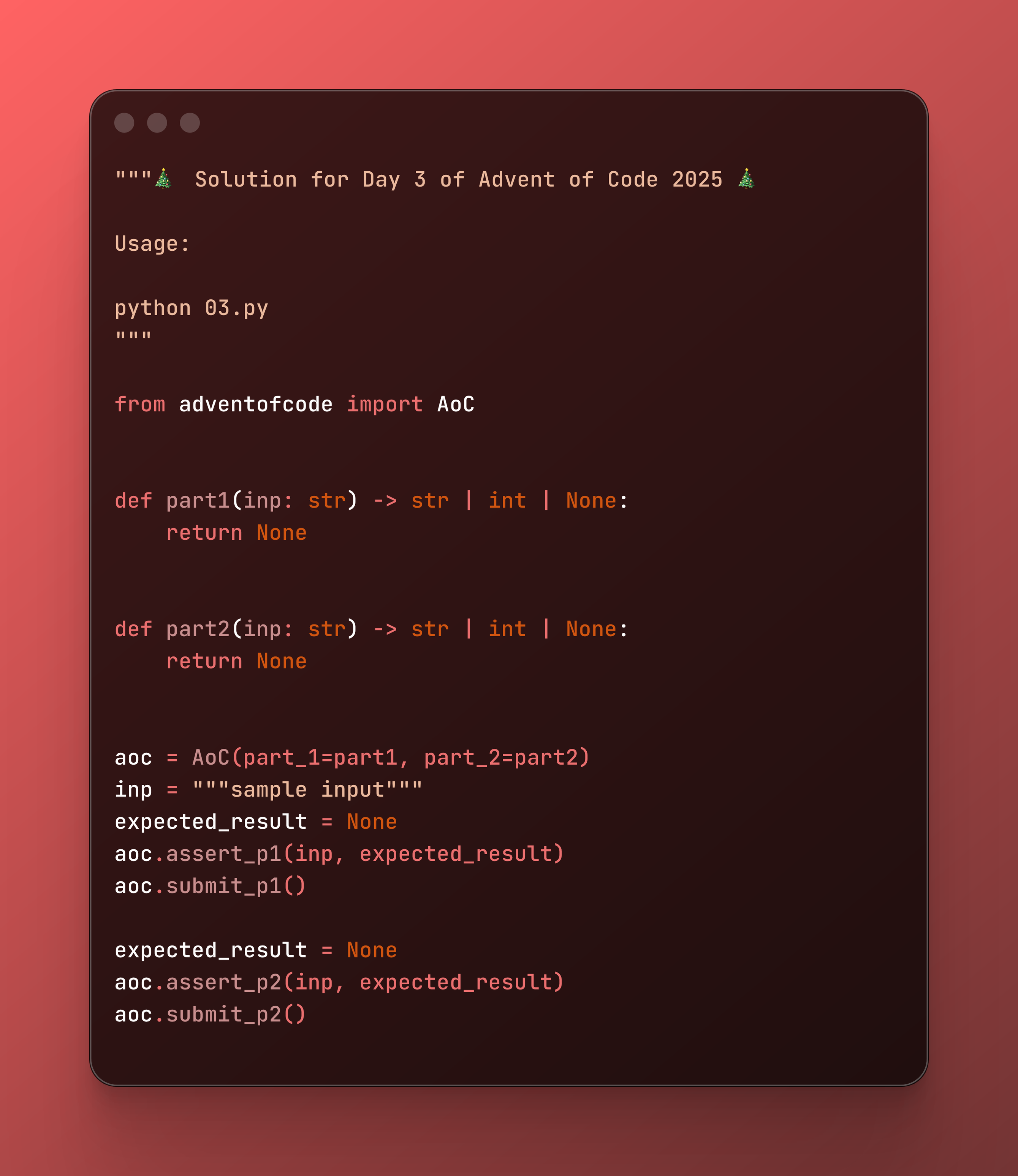
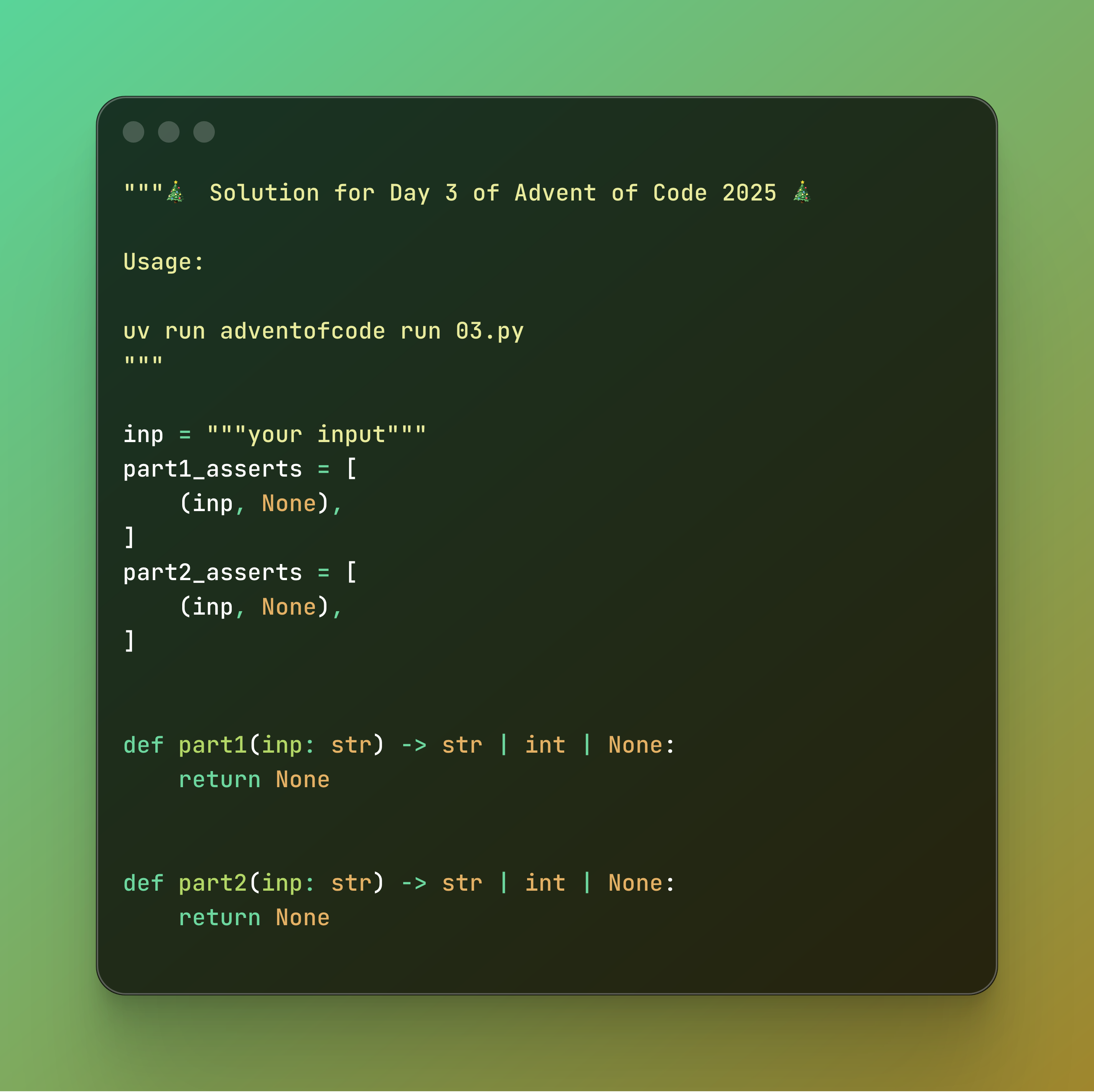
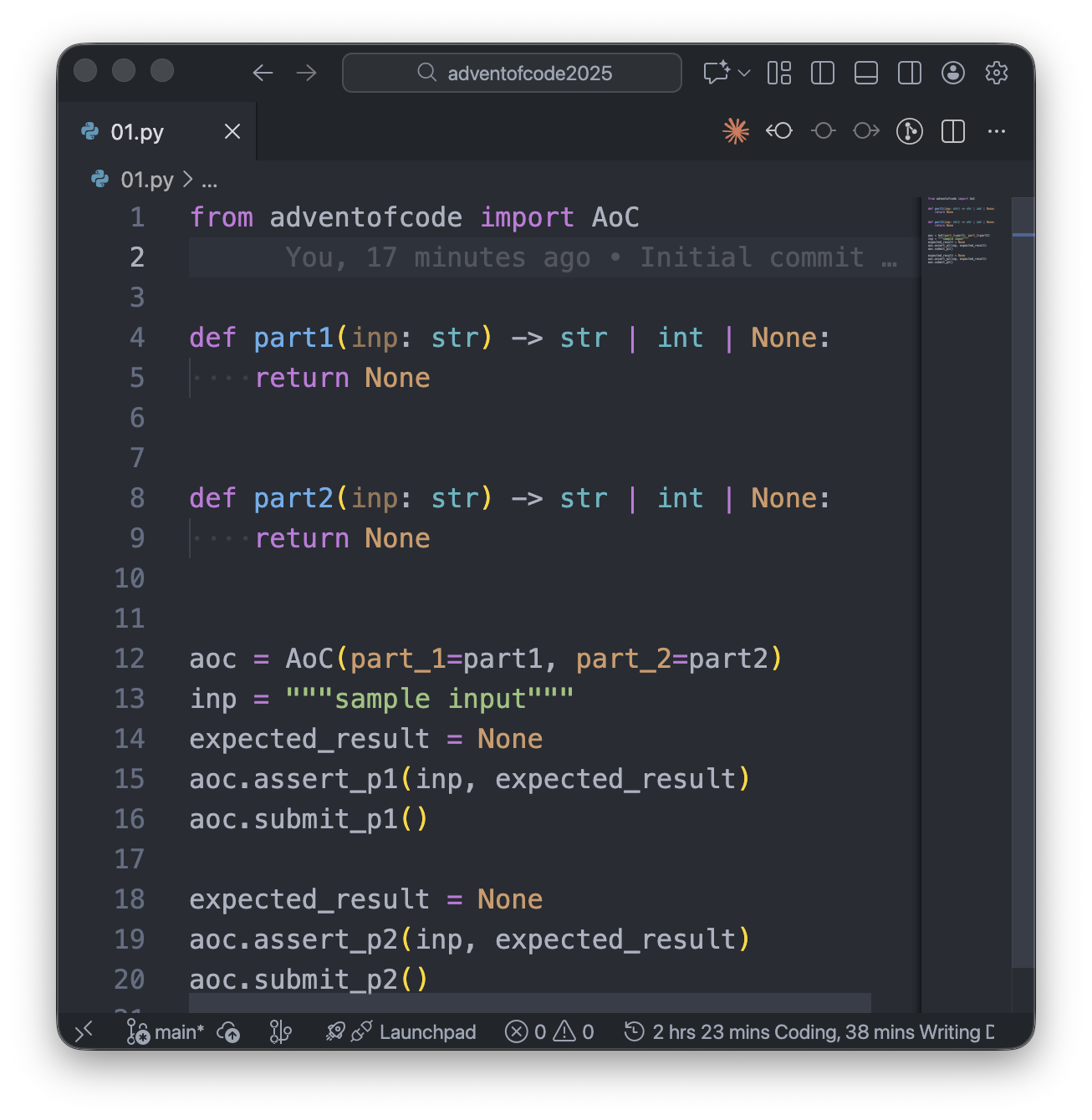
Just launched version 25.4 of my adventofcode PyPI package! 🚀 25.4 adds a `adventofcode run` command that removes the ugly boilerplate that you had to have in your puzzle files until now! Before: After:
Day 2 of #adventofcode kinda felt easier than day 1 or was it just me? I got to the solution fairly quickly but it was a bit slow. I then spent the next hour optimizing it and managed to make part 1 200x faster and part 2 500x faster 🎉 image
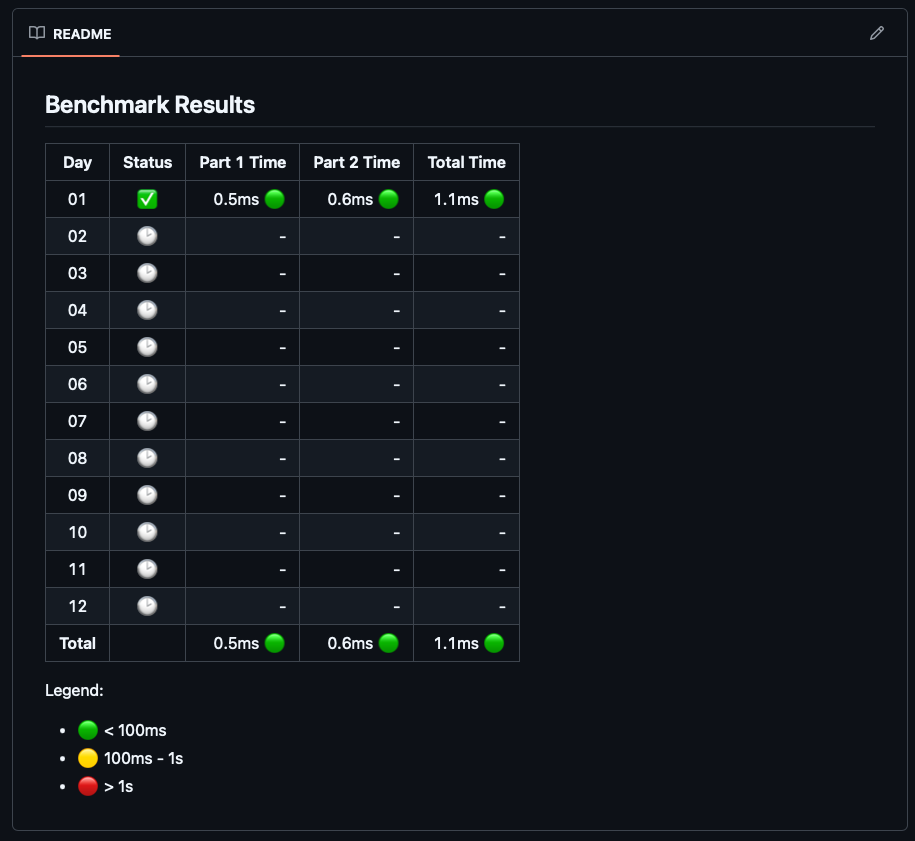
Day 1 of #adventofcode felt a bit harder than previous day 1 puzzles. It took me way longer to figure out part 2 than I care to admit, but I'm blaming this on my sleepy brain 😅 My code took 1.1ms for both parts without any perf optimizations 🎉 Eleven more to go! image
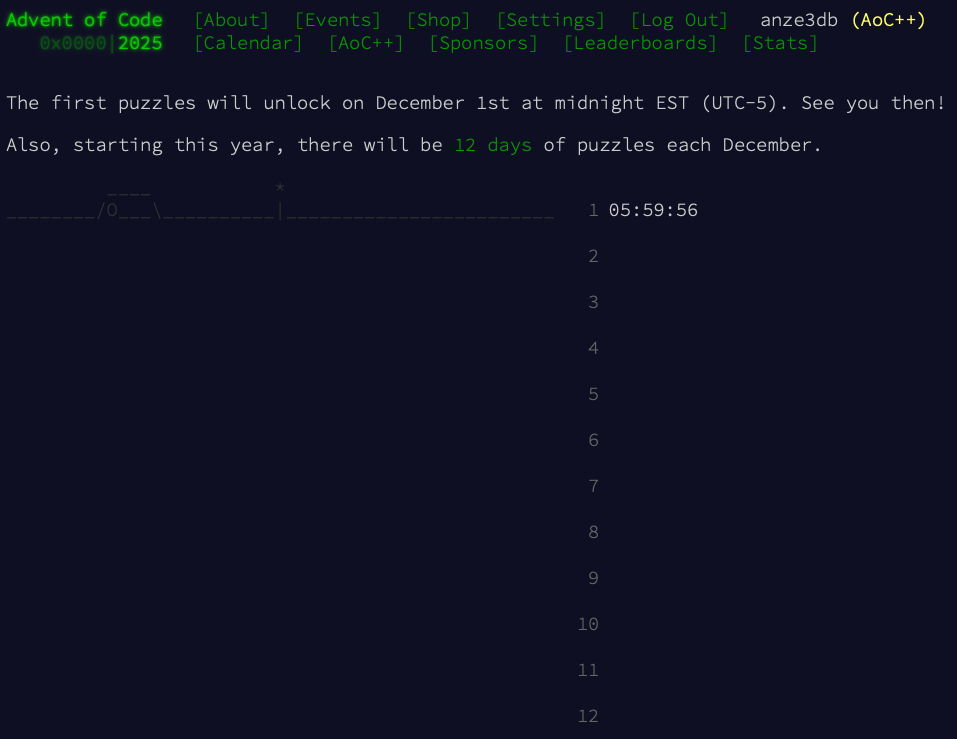
6 hours until the first advent of code puzzle unlocks. Who's going to participate this year? 🎄 image
RE: So this is the strategy AGI came up with for generating investment returns? 😆 View quoted note →
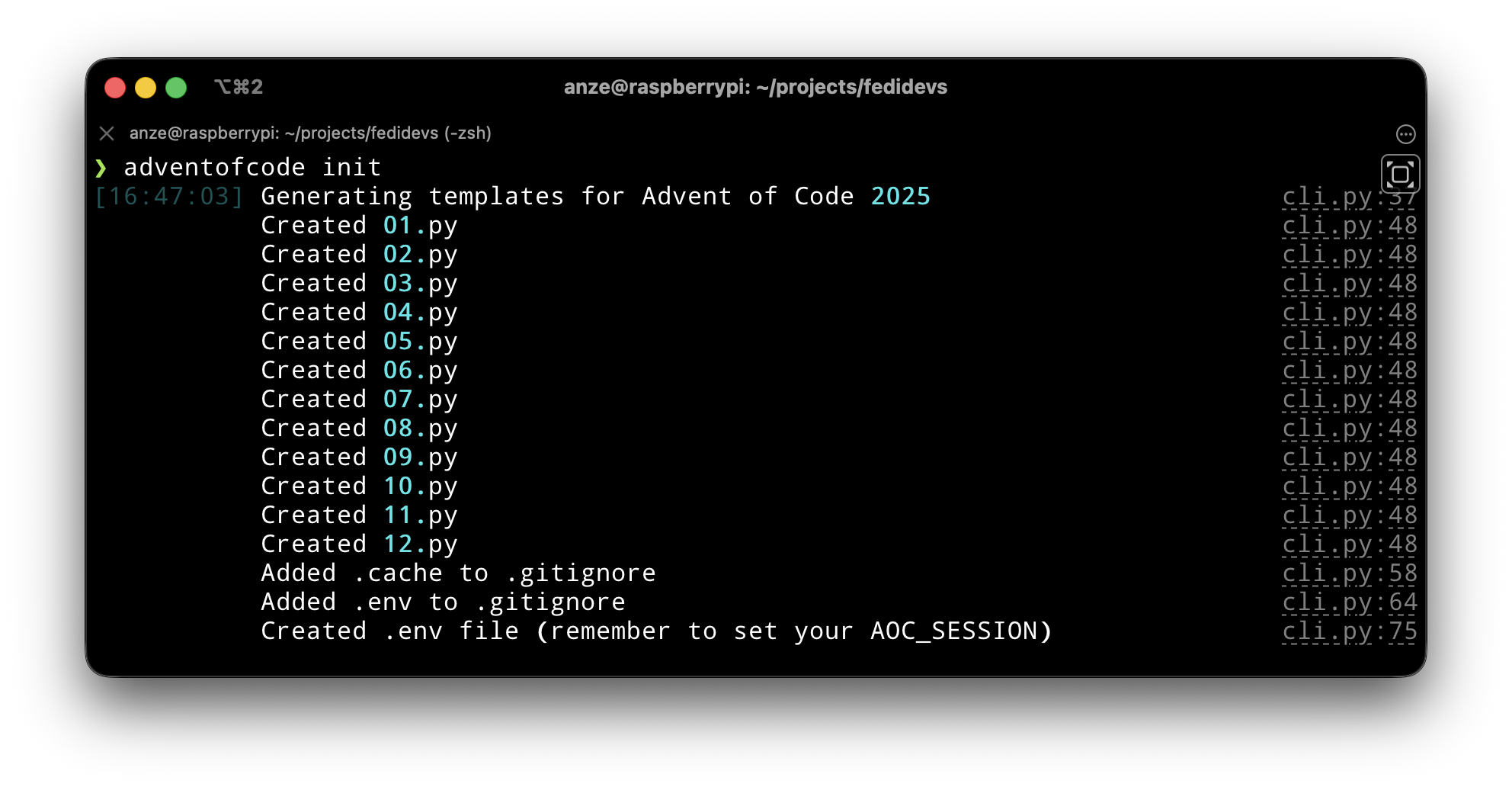
I've just published a new version of my adventofcode PyPI package, just in time for Advent of Code that starts in 36 hours! 🎉 I've added a command line tool that helps you scaffold all the files for puzzle days because I got annoyed by copy pasting the same file each time!
Carlton's proposal to move Django to an annual release cycle makes all the sense. The x.2 LTS releases always felt wrong to me since it has always been much easier and safer to upgrade each version rather than doing the LTS to LTS leap in one go.