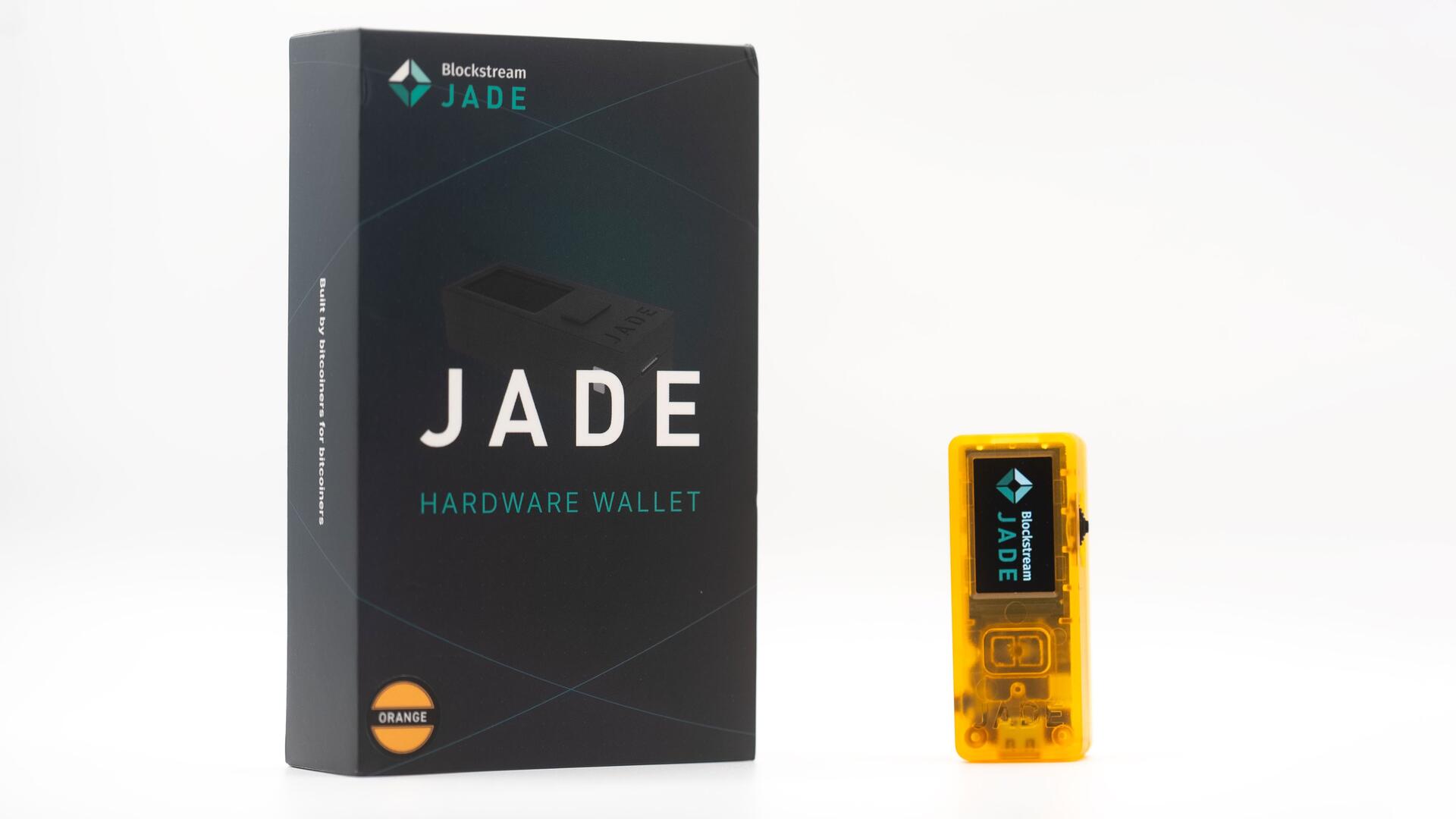
Last week, we announced a partnership with Swan regarding their new collaborative custody solution that features
@Blockstream Jade. For those unfamiliar with Jade, I've compiled an (incomplete) list of what makes it so unique and such a compelling piece of hardware 🧵
Entirely open source
Jade uses fully open-source hardware, software and infrastructure that is reproducible for greater security and peace of mind. This level of transparency is unmatched in the hardware wallet industry. Don't trust, verify.

GitHub
GitHub - Blockstream/Jade: Jade hardware wallet
Jade hardware wallet. Contribute to Blockstream/Jade development by creating an account on GitHub.
Affordable
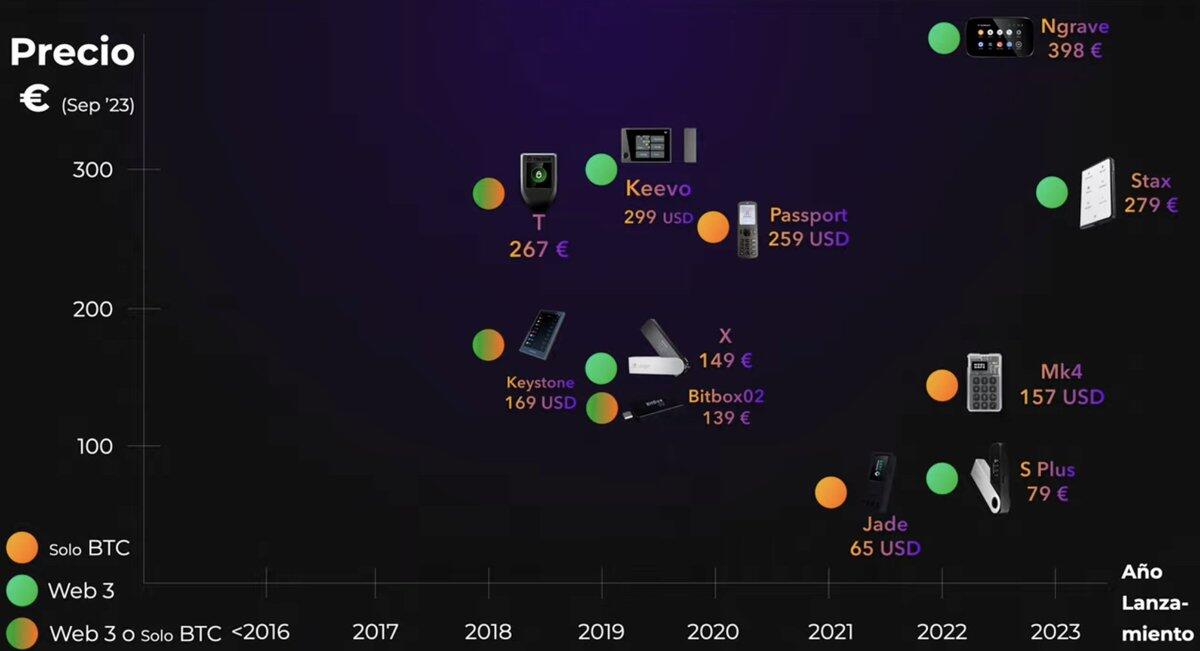
Because Jade uses commodity hardware, it's one of the most affordable options on the market. You can purchase two (even three) Jades and create your own multisig setup for the price of just one of the competitors —all without giving up quality or security.
Versatile
Jade is simple to use with great support (
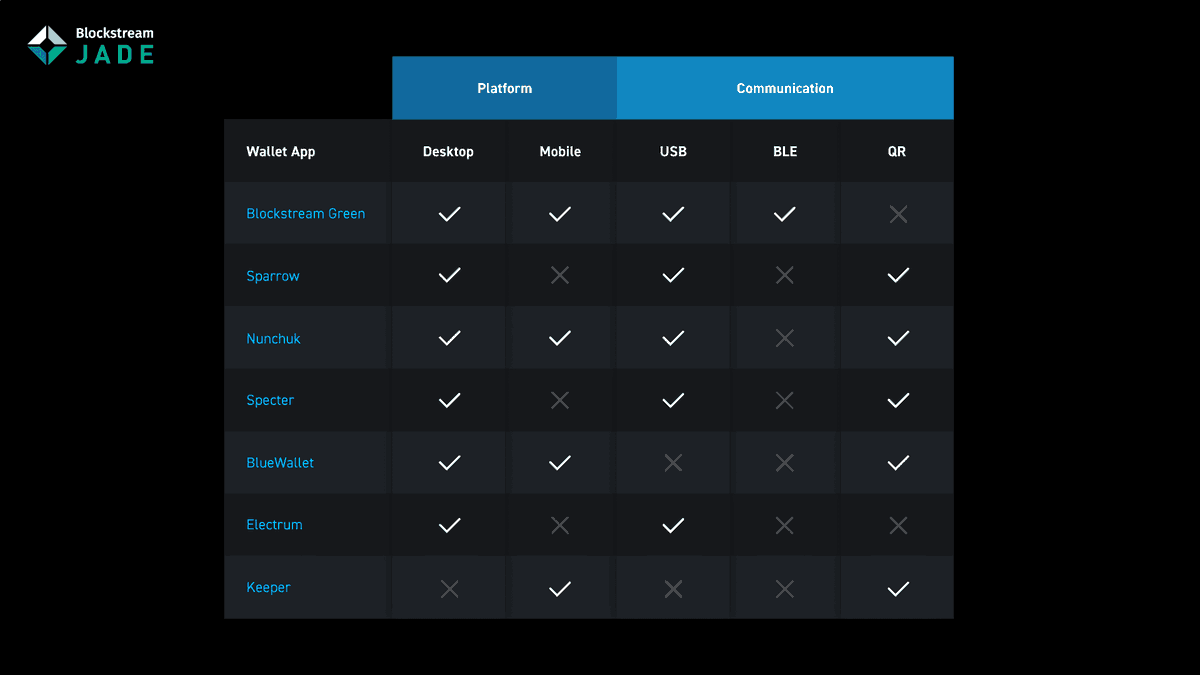
@Rich) for easy onboarding, but has features like QR Scan, BIP 85, and a duress pin for more advanced users. Jade is also multi-platform and widely compatible, with no one dedicated companion app.
Fully air-gapped
Jade's built-in camera lets you scan and display QR codes, making it possible to send bitcoin and verify addresses without directly connecting to the internet with USB or Bluetooth—providing an extra layer of security.
Immune to physical key extraction
Jade deploys a virtual secure element comprising three separate secrets: a Jade secret (via an encrypted blob on the device), a user-generated unique pin, and a remote blind oracle, making extraction from the device alone impossible.
https://help.blockstream.com/hc/en-us/articles/12800132096793-Set-up-a-personal-blind-oracle
You can run your own blind oracle with cmd line (see link). The team is also placing the final touches on a new app for several plug-in-play solutions that would make setting up a personal blind oracle much easier.
https://help.blockstream.com/hc/en-us/articles/12800132096793-Set-up-a-personal-blind-oracle
DIY-able
Jade's FOSS software and unique security model allow you to install its firmware (without loss of functionality) on inexpensive, off-the-shelf hardware. [@YTCryptoGuide](

X (formerly Twitter)
Crypto-Guide (@YTCryptoGuide) on X
Free support and tools on my YouTube channel. For wallet recovery or private support, request it here https://t.co/H172QGcmGu
) has several video tutorials for building your own DIY Jade for $10-$40.
Made for hyperbitcoinization
Jade's price, versatility, and DIY-ability make it an ideal choice for people in developing countries or those affected by currency debasement. It can be argued they need Bitcoin the most and, subsequently, a secure way to cold store, which Jade provides.
Cypherpunk tool
Due to its affordability, many pick up an extra Jade to use it solely as a more secure, private 2FA authentication device or to do fun things, like mine bitcoin. Because Jade can produce TOTPs for platforms that require 2FA, it can function similarly to an authenticator app, giving users more control over their personal data and providing better security than a regular authenticator.
https://help.blockstream.com/hc/en-us/articles/20182747993625-Use-Jade-as-a-2FA-authentication-device
Jade can also be set up as a #bitcoin miner, offering a fun way to learn the ins and outs. It does not require a wallet to be set up or accessed and can easily be reversed if you decide to go back to using it purely as a hardware wallet.

X (formerly Twitter)
Tatum Turn Up (Christmas arc) (@tatumturnup) on X
My @Blockstream Jade was overheating with the new mining firmware, so I had to take matters into my own hands.
Now it’s a REAL miner.
I hope this thread provides a useful snapshot of Jade's unique security model and features and why you may want to snag one.
....it also now comes in orange. 😎
[
https://store.blockstream.com/product/blockstream-jade-hardware-wallet/