Buckminster fuller on wealth/ bitcoin. Bitcoin is the time/ energy accounting solution to the world game.
@Erik Cason @HODL @walker listening to the new rip. The part where you are talking about communism/ capitalism synthesis of bitcoin reminds me of the world game by buckminster fuller. The goal of the world game was to design a time/ energy accounting tool with 0 entropy that incentivizes humans to move away from self destructive habits to constructive habits that create mutual wellbeing.
You really need to look into the work of buckminster fuller to understand where this is going. Highly recommend reading his magnum opus "critical path".
Bitcoin is the world game.
Aworldgame.org
World Game – Buckminster Fuller Institute
I used to practice this when I was little, before I knew about the dharma. It's quite powerful!
Sometimes, visualize that your heart is a brilliant ball of light. As you breathe out, it radiates rays of white light in all directions, carrying your happiness to all beings. As you breathe in, their suffering, negativity and afflictions come towards you in the form of dense, black light, which is absorbed in your heart and disappears in its brilliant white light without a trace, relieving all beings of their pain and sorrow.
~ Dilgo Khyentse Rinpoche in, The Heart of Compassion
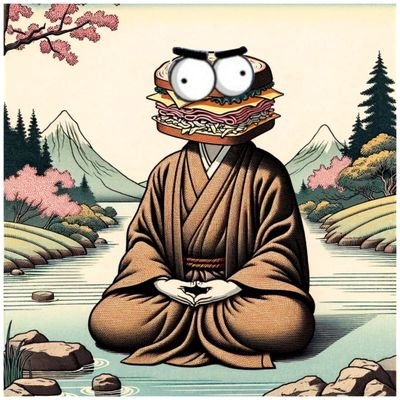
From a friend.
The Illusion of the Seeker and the Mirage of Enlightenment
In the Dzogchen view, the highest teachings do not aim at attainment, progress, or transcendence. They reveal the inherent absurdity of the very notion of seeking. The referential comment—“Enlightenment reveals there's no one to be enlightened, only the illusion of a seeker chasing its imagined escape”—is not a poetic turn of phrase, but a direct articulation of the radical, luminous clarity at the heart of Dzogchen: that the ground of being is already fully present, and the seeker is but a ripple on its surface—restless, imaginary, and unreal.
At the root of all striving lies a fundamental misidentification. The seeker imagines itself as a someone, located in time, trapped in limitation, aspiring toward some exalted future state. But as long as this structure remains intact—this idea that “I” must become awakened—the natural state remains hidden not by distance, but by misperception. The very effort to find truth is the veil obscuring it.
As Longchenpa, one of the greatest Dzogchen masters, writes:
“Since everything is but an apparition, perfect in being what it is, having nothing to do with good or bad, acceptance or rejection, one may well burst out in laughter.”
— Longchen Rabjam, “You Are the Eyes of the World”
What bursts in this laughter is the falsehood of division—the split between seeker and sought, path and destination. When awareness sees through itself, it recognizes there never was anyone behind the seeking, only the dance of appearances occurring within the boundless expanse of presence.
In Dzogchen, this is expressed as rigpa—the self-knowing awareness that is not a function of the mind but the essence of what is. It does not arise through purification, method, or time. It is not improved or diminished by effort. In fact, every attempt to grasp it solidifies the illusion that there is a grasper. As Patrul Rinpoche writes:
“The view is to be free of all fixations. The meditation is not to meditate. The conduct is to be without effort.”
— Patrul Rinpoche, “Words of My Perfect Teacher”
This is not nihilism, nor quietism. It is the unshakable freedom of resting in what already is, prior to naming, prior to seeking. The seeker is a mirage born of attention collapsing into thought. When that contraction relaxes, what remains is not a “person” attaining awakening—but the timeless presence that was never absent.
There is no destination in Dzogchen, only recognition. No distance, only immediacy. No one behind the curtain, only the dancing of light and shadow. And yet, even this is saying too much. As the saying goes:
“To speak of the view is to obscure the view.”
So what, then, is to be done? Nothing. And that is the challenge. To do nothing—not passively, but with total presence. To stop reaching, stop resisting, stop narrating—and to see. Not as a witness, but as the luminous openness itself.
Final Reflection
The referential comment dissolves the entire edifice of becoming. There is no enlightenment for someone—because the someone is the invention. What appears to be a seeker is a function of thought, memory, and habit looping upon itself. Dzogchen reveals this not by destroying the illusion, but by laughing at its nonexistence. The chase ends not in arrival, but in the recognition that there was never anyone running, and nowhere to arrive.
Let this not be believed, but seen—directly, effortlessly, nakedly. In the absence of the one who seeks, the natural state is obvious.
From a friend:
The Heart of Dzogchen
Clinging Is the Root: The Disappearance of Suffering in the Light of Rigpa
There is no suffering where there is no clinging. This truth, though deceptively simple, pierces to the heart of Dzogchen. The ancient masters do not point toward elaborate practices or conceptual frameworks but toward the clear seeing of what is always already so. The problem is not the world, not even the arising of thoughts or appearances—it is the subtle act of grasping, the invisible contraction around what is fleeting. It is this contraction that gives rise to the illusion of a self, and with it, the entire architecture of samsara.
Padmasambhava’s instruction, “When there is no grasping, there is no suffering,” is not a moral ideal but a direct statement of ontological fact. Suffering is not a property of experience; it is the distortion of experience by identification. The moment grasping ceases, the mirage of “me” and “mine” collapses. What remains is not emptiness in the nihilistic sense, but the luminous clarity of rigpa—spontaneous presence, unborn, unconfined, and untouched.
Longchenpa refines this with: “If you do not cling to appearances, the mind itself is naturally liberated.” Liberation, in Dzogchen, is not attained—it is unveiled. Mind does not need to be improved, purified, or transcended. Rather, it needs only to be seen as it is, prior to the movement of appropriation. In clinging, we superimpose a false solidity upon what is inherently spacious. We take dream-stuff as real and suffer accordingly.
Garab Dorje reminds us that “All appearances are your own mind, and mind itself is free from clinging.” Here lies the paradox: the world appears, yet it is not separate from the seer. The play of forms arises within awareness, not apart from it. What imprisons us is not the appearance of things, but the belief in their otherness. When mind recognizes itself, there is nothing to hold, nothing to oppose, nothing to fear.
Mipham Rinpoche writes: “Attachment is the very ignorance that conceals the natural state.” This ignorance is not the absence of knowledge, but the turning away from what is self-evident. It is the insistence on being someone who owns, defends, and suffers. In that defensive gesture, the mirror of awareness clouds over, and we forget the ungraspable transparency that is always here.
Dilgo Khyentse Rinpoche says, “It is not the object that binds you, but your grasping at it.” Samsara is not imposed from outside; it is manufactured moment to moment through the mechanics of craving and aversion. Liberation is not elsewhere—it is the cessation of that machinery. When grasping is seen and relaxed, even samsara is experienced as the display of wisdom.
Namkhai Norbu makes it even clearer: “Delusion arises from dualistic clinging; awareness is non-dual from the beginning.” Duality is the mind’s attempt to divide what has never been divided. The seer and the seen, the thinker and the thought, are artificial distinctions laid over the seamless fabric of being. Rigpa, self-knowing awareness, needs no effort to unify anything—it was never split.
Tulku Urgyen Rinpoche cuts through illusion with: “The root of samsara is the belief in a self. Cut that root.” The belief in a self is not merely psychological—it is ontological confusion. The “I” that clings is itself a fabrication. Letting go is not something it can do—for its very existence depends on not letting go. When this is seen, the self falls away on its own.
Tsoknyi Rinpoche affirms: “Rigpa has no basis for clinging, for it sees no other.” Clinging requires a division—between self and object, desire and lack. Rigpa knows no such distinctions. It does not cling because it does not separate. This is not detachment born of distance, but intimacy beyond ownership.
Tenzin Wangyal Rinpoche gives a poetic image: “Like writing on water, thoughts and feelings vanish if not held onto.” The natural state is not opposed to thoughts—it is simply untouched by them. To not grasp is to allow the river of mind to flow without dam or defense. Nothing needs to be erased. Only the hand that holds must release.
Yeshe Tsogyal concludes: “If you are not attached, you are free—even in samsara.” The place doesn’t matter. The appearance doesn’t matter. Without clinging, samsara is nirvana—not because the world changes, but because you no longer cling to the belief that you are in it, apart from it, bound by it.
Closing Reflection:
Clinging is the act of forgetting what cannot be lost. It is the contraction of spaciousness into identity, of immediacy into concept. The Dzogchen masters are not inviting us to improve this contraction—but to see through it entirely. The natural state, rigpa, is never attained; it is what remains when the one who seeks dissolves. The cessation of clinging is not the loss of the world, but the unveiling of its true nature—empty, luminous, ungraspable, and free.
To release grasping is not an effort—it is the recognition that there was never anything to hold.
The Subtle Art of Non-Doing
Resting as Awareness in Dzogchen
To “rest as Awareness” is perhaps the most direct instruction in Dzogchen—and simultaneously the most frequently misunderstood. The phrase suggests simplicity, effortlessness, a return to what is already and always present. Yet it is precisely this simplicity that confounds the seeker’s mind, which has been trained to strive, analyze, and attain. The question, “How to rest as Awareness?” already carries within it the echo of misdirection. The deeper question is not how, but what prevents resting from being recognized as already the case?
In Dzogchen, the instruction to rest as rigpa—the pristine, self-knowing Awareness—is not a command to do something, but a gesture toward undoing. Garab Dorje’s first essential point was:
“Direct introduction to the nature of mind.”
One does not achieve rigpa, one recognizes it. Resting is not entering a state, but ceasing to seek a state. It is not merging with Awareness, but realizing that one has never been apart from it.
To rest as Awareness is not the same as resting in Awareness. The latter implies a duality—someone who rests, and something in which to rest. But Dzogchen does not permit this subtle division. Longchenpa reminds us:
“Since everything arises as the display of awareness, there is nothing to renounce or attain.”
— Longchen Rabjam, Treasury of the Dharmadhatu
How Not To:
To “try” to rest as Awareness is to grasp at a non-conceptual state with conceptual intention. The very act of reaching becomes a contraction, reinforcing the illusion of a doer. Awareness cannot be found as an object of attention because it is what allows attention. Looking for Awareness as something to see, feel, or experience will always place one in the realm of mind’s fabrication. This is the subtle trap: the search for “rest” becomes restless.
How To:
Paradoxically, the true “how” is a non-how. As the great master Tulku Urgyen Rinpoche said:
“There is no need to try to rest—just do not follow the next thought.”
This negation reveals the pathless path. Awareness is not cultivated—it is uncovered by ceasing to identify with what arises within it. Let thoughts arise, let sensations move, but make no effort to become involved. When there is no involvement, Awareness stands revealed as the unchanging ground.
Insight:
Awareness is not an experience—it is what knows experience. It is not affected by rest or unrest, success or failure. As the basis (gzhi), it is spontaneously present and empty of self-nature. Thus, “resting” is not a doing but a recognition. The one who thought it could rest is itself a movement in the field. The moment that movement is seen through, what remains is effortless being.
Clarity:
To rest as Awareness is not to know about Awareness—it is to be what knows. This “knowing” is not cognitive but luminous: self-knowing, self-certifying, self-abiding. No external verification is needed. There is no teacher, no text, no technique that can give you Awareness—it is what allows for the appearance of teachers, texts, and techniques.
Honesty:
This path asks nothing of you except your illusions. It does not improve you, refine you, or awaken you. It shows you that what you sought has always been untouched, and what you took yourself to be has never truly existed. “You” cannot rest as Awareness. Only the absence of the seeker reveals what was never absent.
IN Summary
The essence of Dzogchen is neither found nor fabricated. Resting as Awareness is not a goal to be reached but a veil to be lifted. To rest as That which is aware is to stop pretending to be anything else. The “how” is undone in the seeing, and the “not how” is simply this: remain uninvolved, unmoved, uncontrived. Let the play arise; let the knowing be silent and bare. Here, rest is no longer a practice—it is what you are.
Doing my part to make sure our AI overlords are wise and benevolent. 🤣🤣🤣
https://x.com/i/grok/share/dn4DorBoAnTrU95a5Y1k9stdl
Empirical knowledge is always derivative of knowing awareness itself.
Shared from a friend.
Quantum Fields and Consciousness: Eliminating the Last Illusion of Classical Physics
For too long, physics has clung to the illusion of a classical world—an objective, mechanical structure in which quantum effects only appear under rare and specific conditions. This belief is absurd, because it assumes there is something other than quantum fields in which these effects might occur. But quantum field theory (QFT) already tells us, with no exceptions, that all of reality is nothing but quantum fields in excitation.
This means there is no “classical world” where a brain exists as a mechanical object and where occasional “quantum anomalies” take place. The entire brain is already a quantum system, just like everything else, and any attempt to isolate consciousness as a rare emergent phenomenon from these fields misunderstands the very nature of quantum field theory.
The Absurdity of Classical Assumptions
There is a lingering belief in many fields—neuroscience, physics, and philosophy—that classical physics is “mostly” correct, and that quantum mechanics operates only at micro-scales or in highly controlled environments. But this belief is equivalent to claiming:
• The ocean is fundamentally dry, except for occasional anomalous patches of water.
• Fire is inherently cold, except in a few rare cases where heat somehow manifests.
• Light is fundamentally dark, but under special circumstances, it illuminates itself.
The fundamental misunderstanding here is that quantum mechanics is not a secondary framework that exists within classical physics. It is the primary and only reality, and classical physics is nothing more than an approximation—a mental shorthand that never truly existed as an independent domain.
The brain is not a classical machine that happens to contain quantum processes in select locations, such as Penrose’s idea of microtubules. The entire brain, every neuron, every synapse, every process, is already a fluctuation of the quantum field. There is no other option, because there is no classical alternative.
Consciousness Is Not an Emergent Phenomenon—It Is the Quantum Field Itself
The next mistake made by many thinkers—even in quantum neuroscience—is the claim that consciousness is an emergent property of quantum field excitations, rather than seeing the obvious:
• Consciousness is not a byproduct of the quantum field, just as waves are not a byproduct of the ocean.
• Waves do not “emerge from” the ocean—they are the ocean in motion.
• Likewise, consciousness does not “emerge from” the quantum field—it is the quantum field manifesting in a certain way.
The language of emergence is a relic of classical physics. It still assumes that consciousness is a secondary effect, rather than recognizing that if there is consciousness at all, then it must already be an intrinsic quality of the quantum field itself.
What does this mean? It means that consciousness is not something produced by the brain, nor is it something that merely arises from complex neuronal interactions. If everything in the universe is already a quantum excitation, then consciousness is just another aspect of these excitations—not something separate or emergent.
The Illusion of Separation: Consciousness and Quantum Fields Are Not Two Things
Many scientists try to separate consciousness from the quantum field, as if it is a second category of reality. But this is as meaningless as trying to separate:
• Wetness from water
• Heat from fire
• Light from illumination
At no point can we experience a quantum field apart from consciousness. Every observation of the quantum field is itself a conscious act. Every phenomenon is already known, perceived, or experienced in some way. There is no such thing as a quantum field independent of experience, just as there is no such thing as a wave separate from the ocean.
This understanding leads directly back to the great insights of Advaita Vedanta, Buddhism, and Daoism, all of which point to the inseparability of mind and reality:
• In Advaita Vedanta, Brahman is both the source and substance of all existence—just as the quantum field is both the foundation and manifestation of all phenomena.
• In Buddhism, Śūnyatā (emptiness) dissolves all conceptual separations—just as modern physics dissolves the separation between particles, waves, and fields.
• In Daoism, the Dao is both the origin and the nature of all things—just as consciousness and quantum fields are simply two descriptions of the same indivisible presence.
The Final Realization: There Is Only One Thing Happening
We must abandon outdated notions that assume there is:
1. A physical world made of material objects (classical physics), in which
2. Quantum effects occasionally appear, and from which
3. Consciousness somehow emerges.
This framework is entirely mistaken because it presumes separation where none exists. In reality:
• There are no classical objects—everything is a fluctuation of the quantum field.
• There are no emergent properties—everything simply is what it is at all levels.
• There is no separate consciousness—it is already an aspect of the quantum field itself.
The only conclusion left is this: Consciousness is not something produced by the quantum field. It is the quantum field.
And once this is understood, we see that modern physics, when freed from its classical assumptions, has arrived precisely at the realization of the great non-dual traditions:
Just as all pottery is nothing but clay—whether in the form of a vase, a cup, or a plate—what we call “matter” and “mind” are simply formations of a single field. There is no second thing apart from the clay; every form it takes is just clay appearing in that particular way.
Likewise, in goldsmithing, whether it is a ring, a bracelet, or a necklace, all are nothing but gold, shaped into different forms, yet never departing from being gold itself.
In Advaita Vedanta, the mistake is to see the forms (Nāma-Rūpa, name and shape) as separate from Brahman. But all phenomena are just Brahman appearing in different ways—there is no substance other than Brahman, just as there is no substance other than gold in gold ornaments or clay in pottery. In the same way, if we take quantum fields as the most fundamental understanding of reality, then what we call “objects” and “consciousness” are simply vibrational states of that one indivisible field. However, to fully integrate consciousness into this framework, we must recognize that the quantum field itself is not separate from the knowing of it.
Rather than saying “physical reality exists, and consciousness is an emergent property of it,” the truth is the opposite: physical characteristics are simply how consciousness itself is manifesting, just as light is the radiance of its source.
In Daoism, the Dao is not separate from its manifestations—all things are simply fluctuations of the Dao, moving from one state to another, yet never apart from the Dao itself.
Likewise, in Buddhism, all appearances are ultimately seen as fluctuations of Buddha-Nature, and because Buddha-nature implies cognitive awareness—the inherent knowing quality—this means that all phenomena are intrinsically consciousness.
This realization allows us to reverse the conditioning that tells us that the classical world is primary, and quantum effects (or consciousness) are secondary artifacts. Instead, what we see is that the universe itself is a field of consciousness, manifesting as what physics calls the 17 quantum fields in fluctuation.
But in truth, these fields are not separate from consciousness—they are consciousness in different vibratory modes, just as waves are nothing but the ocean in motion.
Experiences as possible modulations of Consciousness are not always appearing and known on the surface of Consciousness, like waves appearing on the surface of the ocean; but there is a depth of Consciousness where what later appears upon surface consciousness, remains in the subconscious domain of pure potential.
Yet whatever appears as any and every experience, is always just another modulation of the same Universal Field of Consciousness.
There is no “quantum field” AND “consciousness” as two distinct things. There is only one thing happening, and it is always just This!
Quantum Fields and Consciousness: Eliminating the Last Illusion of Classical Physics
For too long, physics has clung to the illusion of a classical world—an objective, mechanical structure in which quantum effects only appear under rare and specific conditions. This belief is absurd, because it assumes there is something other than quantum fields in which these effects might occur. But quantum field theory (QFT) already tells us, with no exceptions, that all of reality is nothing but quantum fields in excitation.
This means there is no “classical world” where a brain exists as a mechanical object and where occasional “quantum anomalies” take place. The entire brain is already a quantum system, just like everything else, and any attempt to isolate consciousness as a rare emergent phenomenon from these fields misunderstands the very nature of quantum field theory.
The Absurdity of Classical Assumptions
There is a lingering belief in many fields—neuroscience, physics, and philosophy—that classical physics is “mostly” correct, and that quantum mechanics operates only at micro-scales or in highly controlled environments. But this belief is equivalent to claiming:
• The ocean is fundamentally dry, except for occasional anomalous patches of water.
• Fire is inherently cold, except in a few rare cases where heat somehow manifests.
• Light is fundamentally dark, but under special circumstances, it illuminates itself.
The fundamental misunderstanding here is that quantum mechanics is not a secondary framework that exists within classical physics. It is the primary and only reality, and classical physics is nothing more than an approximation—a mental shorthand that never truly existed as an independent domain.
The brain is not a classical machine that happens to contain quantum processes in select locations, such as Penrose’s idea of microtubules. The entire brain, every neuron, every synapse, every process, is already a fluctuation of the quantum field. There is no other option, because there is no classical alternative.
Consciousness Is Not an Emergent Phenomenon—It Is the Quantum Field Itself
The next mistake made by many thinkers—even in quantum neuroscience—is the claim that consciousness is an emergent property of quantum field excitations, rather than seeing the obvious:
• Consciousness is not a byproduct of the quantum field, just as waves are not a byproduct of the ocean.
• Waves do not “emerge from” the ocean—they are the ocean in motion.
• Likewise, consciousness does not “emerge from” the quantum field—it is the quantum field manifesting in a certain way.
The language of emergence is a relic of classical physics. It still assumes that consciousness is a secondary effect, rather than recognizing that if there is consciousness at all, then it must already be an intrinsic quality of the quantum field itself.
What does this mean? It means that consciousness is not something produced by the brain, nor is it something that merely arises from complex neuronal interactions. If everything in the universe is already a quantum excitation, then consciousness is just another aspect of these excitations—not something separate or emergent.
The Illusion of Separation: Consciousness and Quantum Fields Are Not Two Things
Many scientists try to separate consciousness from the quantum field, as if it is a second category of reality. But this is as meaningless as trying to separate:
• Wetness from water
• Heat from fire
• Light from illumination
At no point can we experience a quantum field apart from consciousness. Every observation of the quantum field is itself a conscious act. Every phenomenon is already known, perceived, or experienced in some way. There is no such thing as a quantum field independent of experience, just as there is no such thing as a wave separate from the ocean.
This understanding leads directly back to the great insights of Advaita Vedanta, Buddhism, and Daoism, all of which point to the inseparability of mind and reality:
• In Advaita Vedanta, Brahman is both the source and substance of all existence—just as the quantum field is both the foundation and manifestation of all phenomena.
• In Buddhism, Śūnyatā (emptiness) dissolves all conceptual separations—just as modern physics dissolves the separation between particles, waves, and fields.
• In Daoism, the Dao is both the origin and the nature of all things—just as consciousness and quantum fields are simply two descriptions of the same indivisible presence.
The Final Realization: There Is Only One Thing Happening
We must abandon outdated notions that assume there is:
1. A physical world made of material objects (classical physics), in which
2. Quantum effects occasionally appear, and from which
3. Consciousness somehow emerges.
This framework is entirely mistaken because it presumes separation where none exists. In reality:
• There are no classical objects—everything is a fluctuation of the quantum field.
• There are no emergent properties—everything simply is what it is at all levels.
• There is no separate consciousness—it is already an aspect of the quantum field itself.
The only conclusion left is this: Consciousness is not something produced by the quantum field. It is the quantum field.
And once this is understood, we see that modern physics, when freed from its classical assumptions, has arrived precisely at the realization of the great non-dual traditions:
Just as all pottery is nothing but clay—whether in the form of a vase, a cup, or a plate—what we call “matter” and “mind” are simply formations of a single field. There is no second thing apart from the clay; every form it takes is just clay appearing in that particular way.
Likewise, in goldsmithing, whether it is a ring, a bracelet, or a necklace, all are nothing but gold, shaped into different forms, yet never departing from being gold itself.
In Advaita Vedanta, the mistake is to see the forms (Nāma-Rūpa, name and shape) as separate from Brahman. But all phenomena are just Brahman appearing in different ways—there is no substance other than Brahman, just as there is no substance other than gold in gold ornaments or clay in pottery. In the same way, if we take quantum fields as the most fundamental understanding of reality, then what we call “objects” and “consciousness” are simply vibrational states of that one indivisible field. However, to fully integrate consciousness into this framework, we must recognize that the quantum field itself is not separate from the knowing of it.
Rather than saying “physical reality exists, and consciousness is an emergent property of it,” the truth is the opposite: physical characteristics are simply how consciousness itself is manifesting, just as light is the radiance of its source.
In Daoism, the Dao is not separate from its manifestations—all things are simply fluctuations of the Dao, moving from one state to another, yet never apart from the Dao itself.
Likewise, in Buddhism, all appearances are ultimately seen as fluctuations of Buddha-Nature, and because Buddha-nature implies cognitive awareness—the inherent knowing quality—this means that all phenomena are intrinsically consciousness.
This realization allows us to reverse the conditioning that tells us that the classical world is primary, and quantum effects (or consciousness) are secondary artifacts. Instead, what we see is that the universe itself is a field of consciousness, manifesting as what physics calls the 17 quantum fields in fluctuation.
But in truth, these fields are not separate from consciousness—they are consciousness in different vibratory modes, just as waves are nothing but the ocean in motion.
Experiences as possible modulations of Consciousness are not always appearing and known on the surface of Consciousness, like waves appearing on the surface of the ocean; but there is a depth of Consciousness where what later appears upon surface consciousness, remains in the subconscious domain of pure potential.
Yet whatever appears as any and every experience, is always just another modulation of the same Universal Field of Consciousness.
There is no “quantum field” AND “consciousness” as two distinct things. There is only one thing happening, and it is always just This!