Imke Wedekind

Imke Wedekind 's avatar
Imke Wedekind
Imke Wedekind@getalby.com
npub1lpjq...zg4m
Bitcoin | Decentralization | Philosophy 🧡💫🙏
Altruism is often understood as the opposite of egoism. Yet in truth, it is part of the same principle: every action follows a motive — including giving. Human beings act because they perceive something as valuable. This applies to material goods as much as to emotional ones. Selfless behavior is not proof of moral purity, but an expression of an inner logic: we give because it makes us feel connected, meaningful, or at peace. This does not diminish the gesture — quite the opposite. It makes it truthful. For help that arises from awareness is stronger than help that arises from duty. True altruism is not a sacrifice, but a conscious form of exchange. It shows that self and other are not opposites, but resonances. Conscious. Not compliant. #conscious #notcompliant image
Fast answers, slow thinking – The trade-offs of voice-to-voice AI usage Voice-to-voice AI: Shifting how we process information Voice-to-voice AI – systems that process spoken input and respond in spoken form – is not only changing how we communicate, but also how our brains function. What used to be read, understood, and memorized is now often spoken, answered, and acted upon within seconds. This is convenient, efficient, and practical – but it alters our cognitive processes more profoundly than it might appear at first glance. AI increasingly takes over functions our brains once performed: collecting, structuring, and storing information. As a result, the brain is less needed as an active memory system – AI handles this faster and often more comprehensively. This makes it all the more important to deliberately strengthen our ability to evaluate, prioritize, and make purposeful choices. Cognitive effects: Automation requires compensation From a neuroscientific perspective, higher-order processes – such as weighing cost and benefit or integrating emotional relevance – rely on regions like the anterior cingulate cortex (ACC) and the insula. If these networks are not used regularly – for example, because decision preparation is increasingly automated – this can lead to decision fatigue, cognitive inertia, or reduced executive control over time. Studies show: while short-term automation increases comfort, long-term reliance can foster cognitive passivity. Externally structured information begins to replace our own mental evaluation. AI does not make decisions in the true sense. It offers probability-based suggestions, typically optimized using historical patterns – but lacks contextual understanding, value sensitivity, or accountability. The more convenient and accurate the suggestions seem, the less frequently we question them. This creates an illusion of efficiency while gradually eroding our capacity for active self-governance. The brain is a muscle – use it or lose it Why reading matters more than ever Reading plays a crucial role in preserving cognitive independence. Unlike passive listening, reading activates additional neural networks – including those responsible for visual processing, orthographic decoding, working memory, and mental simulation. It is not a passive act, but an active cognitive achievement. Reading helps develop a stable cognitive reserve and trains our ability to discern, compare, and make conscious decisions. While voice-based AI presents content linearly and fleetingly, reading enables non-linear navigation: jumping back, repeating, linking ideas, reflecting. These abilities – structuring, critical thinking, and perspective-shifting – are fundamental to human judgment. Human action in the spirit of the Austrian School The Austrian School of Economics – particularly Ludwig von Mises – defines action as a genuinely human activity. In praxeological terms, action is: conscious, purposeful behavior grounded in subjective valuation. It assumes that an individual: identifies and evaluates goals, - weighs alternative options, - selects appropriate means, and - takes responsibility for the consequences. These capabilities are, by definition, inaccessible to machines. AI can analyze, sort, and predict – but it does not act. It has no intrinsic preferences, no sense of purpose, and no capacity for moral judgment. It simply executes what it is programmed to do. Mises puts it concisely: “Action presupposes a choice between alternatives and the pursuit of goals; neither of these is accessible to machines in principle.” Therefore, only humans are capable of conscious, intentional action. To maintain this ability, we must continue to develop it – especially in an AI-enhanced world. Conclusion Voice-to-voice AI is a powerful tool for increasing efficiency and convenience – but it fundamentally alters how we think. The real challenge lies in setting the right cognitive counterweights. Reading is far more than passive intake – it builds judgment, discernment, and cognitive autonomy. Action, in the full human sense, remains a uniquely human domain. Those who want to use AI responsibly will need to continue training conscious reading, reflective thinking, and self-determined action – and thereby remain autonomous, capable, and resilient in a world increasingly shaped by algorithms. Further reflection Beyond cognitive autonomy, another question is gaining urgency: How does voice-based AI impact our emotional intelligence? Emotional intelligence does not emerge in interactions with machines – it grows in human connection, where we are mirrored, challenged, and sometimes unsettled. #VoiceAI #CognitiveHealth #CriticalThinking #Neuroscience #HumanAgency #ReadingMatters #AustrianEconomics #Praxeology #EmotionalIntelligence #SelfLeadership #MindfulTechnology #UseItOrLoseIt image
🧡 Series: "The Fiat System and Its Empty Growth Promises – How #Bitcoin Provides a Solution" 🧡 Sometimes life doesn’t go as planned – and that’s okay. Originally, I intended to present this article series "The Fiat System and Its Empty Growth Promises – How Bitcoin Provides a Solution" in a different chronological order, but a personal experience prompted me to start with the third part today. Why? Because its content is helping me process a personally disappointing situation. This reminds me a bit of how the Star Wars movies were released – not in numerical order. Similarly, I’m beginning this series unconventionally with Part 3, highlighting how the fiat system fosters mistrust and societal conflict through division and inequality, while Bitcoin offers a solution through #transparency, #fairness, and #community. Stay tuned to see how the series unfolds. ➡️Title: Social Consequences and Societal Cohesion – Fiat System vs. Bitcoin Fiat System: Societal Division, Eroding Trust, and the Productivity Paradox The fiat system operates on the premise of endless growth and continuous money creation through credit issuance and inflationary mechanisms, fostering societal division and alienation. In this environment, many perceive an effort-reward imbalance where increased labor is not proportionally rewarded. Instead, profits are often concentrated in a few societal layers, while the majority suffers from loss of purchasing power and increased financial pressure. This unequal distribution creates social injustice and feeds a sense of exploitation, identified by psychologists as a key source of social tension (Siegrist, 1996). The imbalance between effort and reward breeds social envy and distrust toward institutions. People increasingly perceive the fiat system as manipulative, with promised rewards and wealth growth realized only for a small elite. This leads to deep societal division and significantly erodes trust in central institutions – including banks and governments. Research indicates that in societies with low institutional trust, radical movements and populist ideologies gain traction, threatening social cohesion and political stability (Rothstein & Uslaner, 2005). Additionally, the increasing performance pressure within the fiat system often results in the productivity paradox: although employees are expected to deliver more, studies show that such pressure ultimately reduces real productivity (Bosworth & Triplett, 2007). High work demands and lack of recognition demotivate workers and foster inefficient practices. Young talent and highly skilled professionals are increasingly withdrawing from traditional industries or emigrating to countries and sectors that offer a more balanced effort-reward ratio. This "brain drain" poses a long-term threat to innovation and economic stability, as skilled labor forms the foundation of technological advancement and productive economic structures. Bitcoin: Promoting Community, Fairness, and Sustainable Productivity Bitcoin, on the other hand, provides a transparent and decentralized system that could mitigate many of the negative consequences described above. The architecture of Bitcoin is based on a fixed protocol, which limits the total supply to 21 million units. This scarcity creates a sustainable store of value and prevents inflationary devaluation – a central difference from the fiat system, which allows for theoretically unlimited money creation. Since no central institution controls Bitcoin or can change its rules, all participants operate under the same immutable principles. This transparency and equality foster a sense of fairness, which forms the foundation for societal trust and cohesion (Nakamoto, 2008). Bitcoin’s decentralized system allows anyone to participate in the network without favoritism or discrimination, managing their assets independently of state or institutional control. Studies on social cohesion suggest that such egalitarian structures strengthen community spirit and societal stability, as people are more likely to trust systems perceived as fair and open (Putnam, 2000). Bitcoin’s decentralization and traceability promote a sense of responsibility and community among users, contrasting with the competition-driven mentality of the fiat system. People feel less compelled to compete and instead share a collective responsibility to maintain the system. Furthermore, Bitcoin encourages a sustainable productivity model focused on real value creation and long-term stability. Unlike the fiat system, which depends on exponential growth, Bitcoin relies on a constant, predictable system that reduces short-term performance expectations and growth pressures. This allows businesses and individuals to focus on innovation and efficiency without the immediate threat of inflation or purchasing power loss. The limited supply of Bitcoin incentivizes efficient and sustainable resource use, contributing to a more productive economic system in the long run (Fry & Cheah, 2016). Additionally, Bitcoin’s stable and transparent system attracts young talent and highly skilled professionals who are increasingly interested in alternative financial structures based on fairness and sustainability. In an environment free from arbitrary interference or monetary manipulation, professionals experience a work setting that values their efforts and expertise over the long term. Thus, Bitcoin not only fosters sustainable productivity but also offers a solution to the brain drain by providing a stable foundation for innovative minds focused on long-term value creation and collective stability. Summary The fiat system, through unlimited money creation and growth pressure, fosters social division and distrust as many people feel unfairly compensated, and institutional trust diminishes. This leads to social envy, brain drain among skilled professionals, and declining productivity, as constant pressure undermines real value creation. Bitcoin, however, offers a transparent, decentralized system with fixed rules that promote fairness and a sense of shared responsibility. Bitcoin’s stability and scarcity enable long-term planning and innovation, potentially strengthening social cohesion and creating a more sustainable economic foundation. References: • Bosworth, B., & Triplett, J. E. (2007). The Productivity Paradox: Evidence from the U.S. Economy. Brookings Institution Press. • Fry, J., & Cheah, E. T. (2016). Negative bubbles and shocks in cryptocurrency markets. International Review of Financial Analysis, 47, 343–352. • Nakamoto, S. (2008). Bitcoin: A Peer-to-Peer Electronic Cash System. • Putnam, R. D. (2000). Bowling Alone: The Collapse and Revival of American Community. Simon and Schuster. • Rothstein, B., & Uslaner, E. M. (2005). All for All: Equality, Corruption, and Social Trust. World Politics, 58(1), 41-72. • Siegrist, J. (1996). Adverse health effects of high-effort/low-reward conditions. Journal of Occupational Health Psychology, 1(1), 27-41.
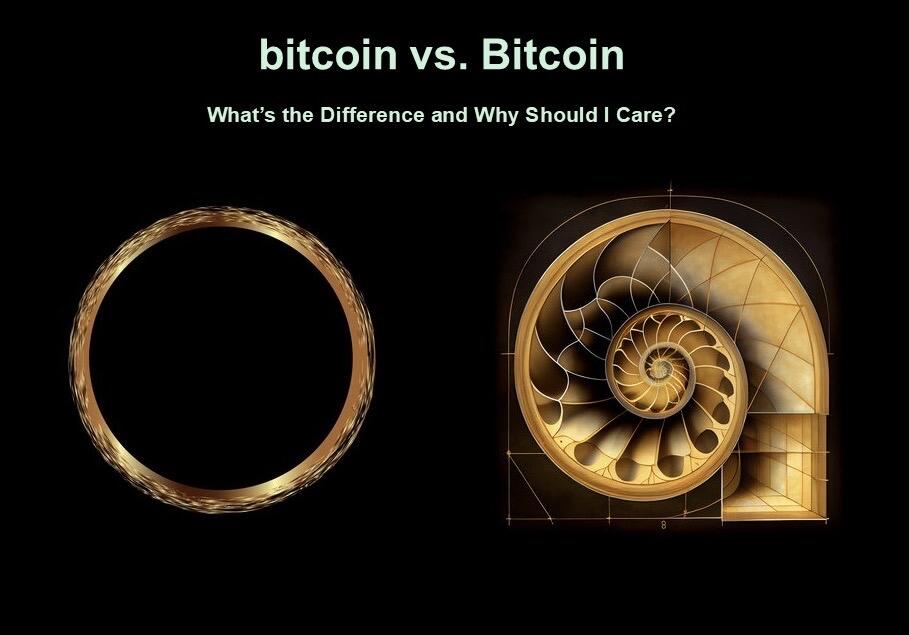
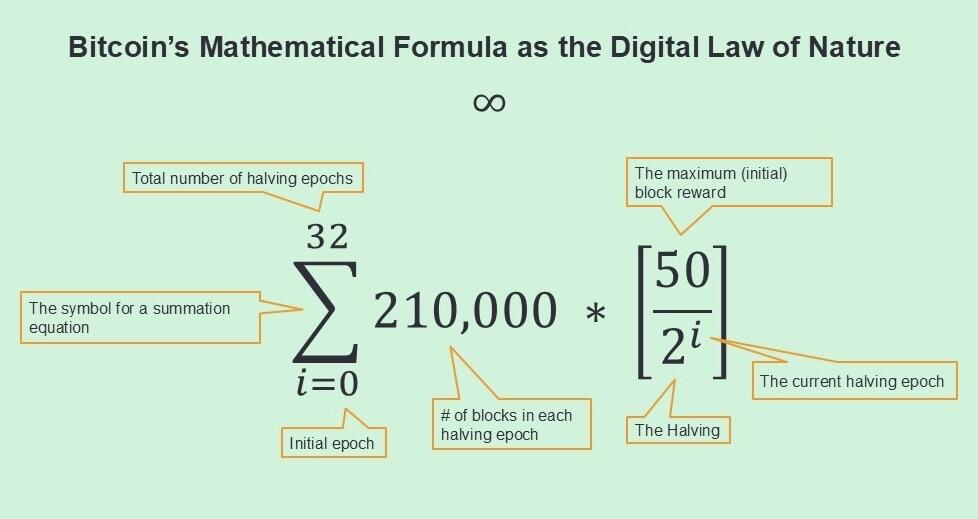
bitcoin vs. Bitcoin – What’s the Difference and Why Should I Care? In recent days, the rising price of Bitcoin has attracted many people once again – driven by typical FOMO and the hope for quick profits. As in every cycle, many of them will drop out again once the price falls, thinking Bitcoin is just a tool for making money fast. The good thing is, some people will stay who genuinely want to learn more about Bitcoin. Some of them will come to realize that Bitcoin (with a capital “B”) represents more – a vision of decentralization, self-sovereignty, and freedom. bitcoin (Store of Value & Medium of Exchange) When we talk about bitcoin with a lowercase “b,” it refers to the digital currency itself – the coins we use as a store of value and for payments. bitcoin is often compared to “digital gold” because its supply is limited to 21 million units, which protects it from inflation. Thus, bitcoin offers an alternative to traditional currencies, which can be devalued by central banks. Behind this stands the idea of independence and financial freedom: bitcoin gives people the ability to secure and protect their wealth without relying on banks or governments. Bitcoin (Network & Protocol) With a capital “B,” Bitcoin refers to the network and protocol that make bitcoin as a currency possible. The Bitcoin network is a decentralized network operated on thousands of computers worldwide, ensuring that all transactions are verified and permanently recorded in a blockchain. The Bitcoin protocol is a set of established rules that ensures all participants play by the same, unchangeable rules. There is no central authority or institution that can interfere. Instead, Bitcoin relies on mathematics and security principles. Bitcoin as a network stands for fairness, transparency, and independence. Every participant in the network plays by the same rules and contributes to the security of the system. Bitcoin enables a fairer system that is not influenced by the decisions of a few. Why Does This Distinction Matter? In summary: bitcoin is the "digital gold" serving as a store of value, while Bitcoin is the revolutionary network that offers transparency, security, and decentralization. Many people who come only because of the price, stay for the values and vision that Bitcoin embodies. They realize that Bitcoin is about more than just an asset – it’s about supporting a system that enables true independence and fairness. Why Is This Understanding Important? One could consider Bitcoin as a kind of “digital force of nature.” Just as physical laws exist independently of our approval – gravity, the passage of time, the movement of planets – Bitcoin functions through immutable mathematical rules. The network moves steadily and reliably according to fixed rules, regardless of external events, based on consensus created solely by the participants themselves – a natural principle in the digital realm. This “independence” is one of its most fascinating qualities and makes it one of the few systems that can genuinely operate globally and neutrally. This understanding offers a glimpse into the true meaning of Bitcoin and why it plays an important role in an increasingly digital world. Bitcoin is more than a currency – it is a system that redefines security, control, and independence. With this article, I hope to encourage you to reflect on your own values, question them critically, and potentially realign them. It is helpful to view Bitcoin in comparison to fiat currencies initially to better grasp the concept. But ultimately, this comparison only goes so far: 1 BTC = 1 BTC – a fixed and immutable unit, independent of external influences. Those who understand this see that Bitcoin models a system based on stability, clarity, and independence that cannot be manipulated by central authorities #Bitcoin#Freedom #Decentralization #BitcoinCommunity #StoreOfValue #MediumOfExchange #Network #Protocol