

According to the 2018 trustees’ report, Medicare faces a $37 trillion unfunded liability over the next 75 years, and Social Security $13 trillion. None of this is part of the $34 trillion U.S. debt as of 2024.
"But why worry? Taxpayers pay in now, then get paid later when they're old. Problem solved!" Now let’s look at reality:
1- Aging Population: In case anyone missed it, populations in most developed countries are aging fast. Fewer workers supporting more retirees. So the math here is simple: fewer people paying into the system, more people taking out. What could go wrong?
2- Rising Costs: Medical technology keeps advancing (good for health, bad for budgets), and people live longer than ever. Healthcare and pension costs grow faster than inflation or GDP. But hey, I’m sure "the rich" can foot the bill, right?
3- Economic Shocks: Tax revenue isn’t a guaranteed stream. A recession hits, revenue drops, and obligations like pensions and Medicare don’t magically shrink. So where does the money come from? Print it? Borrow more? Oh wait, we already maxed that strategy.
But sure, keep telling us that unfunded liabilities aren’t a problem. What’s another few trillion, anyway? It’s not like future taxpayers will mind footing the bill for today’s promises.
#grownostr #fiatstandard #debtcrisis #bitcoin #liberty
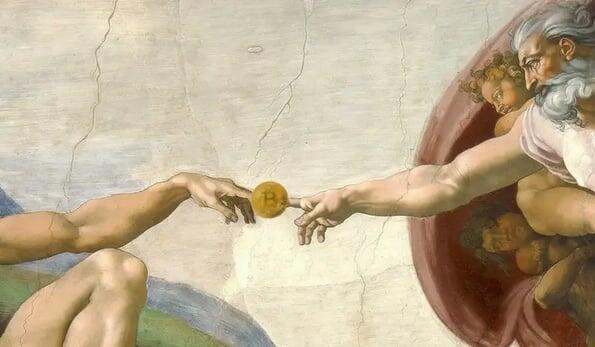
I’ve never been deeply drawn to mythology, but I’ve noticed the recurring theme of scarcity. In myths and ancient beliefs, there’s always a limited number of divine beings or supernatural forces shaping existence. From the singular, all-powerful gods of monotheistic traditions to the pantheons of ancient Greece or Norse mythology, these figures are always finite.
This scarcity is what made myths so captivating. Imagine if there were thousands of Zeuses or Thors—what would happen to the sense of wonder? The uniqueness would fade, and with it, the awe that draws people to these stories.
For the first time in human history, though, we have something in the material world that’s provably scarce—and yet, some people still fail to appreciate its beauty!
#grownostr #bitcoin #scarcity
So, when people like Hoppe or Curtis Yarvin discuss abolishing democracy and replacing it with monarchies, what’s their proposed method? Do they envision something like a majority vote in a town to sell all the land to a corporation, or how would it work? any articles or sources on that?
#asknostr #grownostr #monarchism #anarchism #anarchocapitalism #libertarianism
Google "Denmark cow burp tax" and you won't believe it!!!
#grownostr #state
Antitrust advocates argue that monopolistic practices by big companies lead to unfair competition, discouraging investment in other businesses. But here's the reality: dominant companies usually rise to the top because they outperform their competitors.
While antitrust measures might give smaller players a temporary boost, the market naturally gravitates toward those offering the best value. This is especially true in tech, an evolving industry where the market structure often supports one or two leaders. Things may change in the future, but for now, that’s how it works.
History backs this up. Time and again, we’ve seen new entrepreneurs with zero market share dethrone dominant players through innovation. But in the past 40 years, there hasn’t been a single U.S. antitrust case where government intervention caused smaller players to overtake the leader. That’s capitalism: small players stay small unless they deliver something truly exceptional!
Hans-Hermann Hoppe distinguishes between two scenarios: one where migrant A moves to the destination country with an invitation from person B, and another where migrant A migrates without an invitation. He believes that the first scenario is exactly like free trade, where for every good entering a state's protected territory, there's an accepting party. Therefore, any restriction by the state is unethical. However, in the second scenario, since no one has accepted the migrant, there is forced integration, as A is using public goods that are collectively owned by all residents.
The contradiction I don’t understand is that simply having an invitation from person B doesn’t turn migrant A into B’s property! Apart from the working hours set by B, A is essentially like any other migrant who has just crossed the border without any invitation from any resident.
Does the mere fact that one person (B) is okay with A’s presence during non-working hours—just because A might (we don’t know if A will uphold their promise to B, and under libertarian legal theory, failing to fulfill promises is legal as long as it doesn't harm private property)—mean that forced integration doesn’t occur? If that's the case, then if even one American is okay with Mexicans entering the country because they might benefit from their services in the future, wouldn't closing the U.S. border be forced exclusion rather than forced integration?
#grownostr #libertarianism #freeimmigratiton #anarchocapitalism #anarchocapitalism #openborders #freetrade #hoppe #freesociety
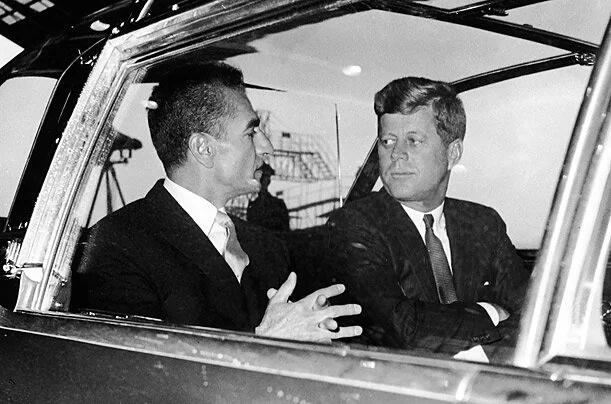
In the 1960s, a bright idea emerged: "Communism spreads because of poverty!" The thinking went that agricultural societies would remain stuck in poverty until they industrialized. So, America's grand strategy to combat communism? Poverty eradication through industrializing the world's farmers.
To achieve this, they pushed land reform programs and modernized agriculture. The mastermind behind it all? Walter Rostow, a famed economist with a book called The Stages of Economic Growth. The U.S. even pressured its allies, like Iran, into land reforms, thinking this would do the trick.
But this whole plan was a classic misreading of institutional economics. They believed that by breaking up landowner control and pushing through land reforms, they'd magically create a modern, industrial economy.
And the cherry on top? The most extreme version of this mindset was exporting democracy—something we've painfully witnessed over the last two decades. Under the guise of "institution-building," the U.S. left a trail of disastrous results in its wake.
Now, let's talk about Iran’s land reforms. Taking lands from the landowners was a massive blunder. First, it was an outright invasion of private property. Second, it made the landowners powerful enemies of the Shah. And third, the farmers, unable to manage their newfound land, flocked to the big cities over the following years. They eventually became a driving force behind the Islamic Revolution of 1978!
#grownostr #history #libertarianism #Iran #privateproperty #revolution #economics #state #institutionaleconomics #institutions #democracy
I'm struggling with a theoretical flaw in Rothbard's theory of punishment, particularly his idea of double restitution. He states:
'The criminal should not only have to return the $15,000 but also be forced to pay the victim another $15,000, so that he loses the rights to the amount he took.'
I'm fine with the 'double' aspect, but why must it be based on the market value? Isn't value subjective in the Austrian perspective? What if my property is subjectively worth more than $15,000 to me? Wouldn't it make more sense to let independent, voluntarily chosen courts determine the real value?
If you're wondering how courts would assess this, that's their responsibility—just like how restaurants figure out how to make a better pizza than their competition. And if you're skeptical about whether such a tool could exist, remember that 500 years ago, we had no tool to record the past, but today we have cameras!
#asknostr #grownostr #rothbard #austrianeconomics #law #libertarianism #anarchocapitalism
According to Rothbard, contracts based on future promises without a clear transfer of property shouldn’t be enforced by law. The reasoning is that no one can transfer ownership of their future will. For instance, if I simply promise to pay you $1,000 tomorrow and you act on that, there’s no obligation for me to pay. However, if you give me $900 today and I promise to pay $1,000 tomorrow, this is different. In this case, property has changed hands, and if I don’t pay, it’s effectively theft. Therefore, in a libertarian society, contracts preventing a party from offering future services to others (like exclusivity agreements) wouldn’t be protected by law, ensuring monopolies can’t be legally enforced.
#grownostr #rothbard #austrians #contracts #philosophy #moralphilosophy #monopoly #trust #freemarket #libertarianism #llibertarian
In the country I live in, where the economy is in shambles, an average family spends around $300 a month to live (after subtracting debts, taxes, insurance, etc. from their income). The annual inflation rate is about 50%, and it's getting worse over time. #Bitcoin #Adoption seems like a reasonable solution, especially with the #Lightning Network enabling payments of $300 a month. But what's holding it back?
I used to think it was all about volatility, but then I asked myself—volatility for just $300? Sure, it's a significant amount for us, but we're talking about #Bitcoin here. I'm also aware of adoption cases in #Cuba and #Africa, where even there, Bitcoin users remain a minority.
In the spirit of documenting the situation, I’m listing some reasons below and I #AskNostr for more insights, reasons, and solutions:
1) It’s hard to explain to everyday people why Bitcoin is economically superior in their current conditions. It’s even more puzzling when you realize many are trading shitcoins on exchanges!
2) People are accustomed to traditional trust systems with #government institutions. They still trust failing banks to hold their money, and I’m sure they’ll trust CBDCs (which are gradually emerging). Some even trust online exchanges but hesitate when it comes to holding their private keys. It's voluntary #slavery in a way.
3) People in countries like mine have a very high time preference. Deep down, they’ve accepted they can’t change the future, so they don’t even bother trying. I hear things like, 'Someday it’ll be fixed,' or 'Just believe in karma.' This mindset is so entrenched that, despite everything going downhill year after year, they don’t think long-term. They stay trapped in short-term pleasure cycles.
4) We've experienced one of the longest periods of chronic inflation in the world, but we haven’t hit #hyperinflation yet (though I believe we're on the verge). The issue is, people can't imagine hyperinflation. They're not scared enough—or they just don’t want to be.
I’m sure there are other factors, I welcome your thoughts, advice, and shared experiences, especially from places like #Cuba, #Venezuela, #Nigeria, and other countries facing similar struggles.
#BitcoinAdoption #GrowNostr #Fiat #FiatStandard