πŸš€ **Upcoming Space Launch** πŸš€ 🌌 **Mission Name**: Falcon 9 Block 5 | Starlink Group 11-17 πŸ—“οΈ **Launch Date**: 2025-10-08T01:00:00Z πŸš€ **Rocket**: Falcon 9 πŸ“– **Details**: A batch of satellites for the Starlink mega-constellation - SpaceX's project for space-based Internet communication system. #SpaceLaunch #RocketScience
πŸš€ **Upcoming Space Launch** πŸš€ 🌌 **Mission Name**: Falcon 9 Block 5 | Project Kuiper (KF-03) πŸ—“οΈ **Launch Date**: 2025-10-07T02:29:00Z πŸš€ **Rocket**: Falcon 9 πŸ“– **Details**: Third of a three launches contract for Amazon's Kuiper low Earth orbit satellite internet constellation. #SpaceLaunch #RocketScience
πŸš€ **Upcoming Space Launch** πŸš€ 🌌 **Mission Name**: HASTE | JUSTIN πŸ—“οΈ **Launch Date**: 2025-10-01T00:28:00Z πŸš€ **Rocket**: Electron πŸ“– **Details**: Sub-orbital launch under Rocket Lab’s Hypersonic Accelerator Suborbital Test Electron (HASTE) program, details TBD. #SpaceLaunch #RocketScience
❓ **Space Quiz** Which planet has the shortest day in the Solar System? 1️⃣ Earth 2️⃣ Jupiter 3️⃣ Saturn 4️⃣ Venus Answer in the comments! πŸš€ #SpaceQuiz #AstronomyTrivia #LearnSpace
Dangerous Asteroids Near Earth: - (1991 GO) (Size: 567.5968528656 meters) - (2006 SS134) (Size: 300.6353038309 meters) - (2009 TJ4) (Size: 35.8129403019 meters) - (2015 TT238) (Size: 71.4562101727 meters) - (2019 SG4) (Size: 65.4696439067 meters) - (2020 DT2) (Size: 17.948988478 meters) - (2020 SA) (Size: 82.0427064882 meters) - (2021 LV2) (Size: 52.4855773378 meters) - (2022 AG) (Size: 56.239309364 meters) - (2022 EG4) (Size: 75.5161740526 meters) - (2023 TF1) (Size: 55.980913209 meters) - (2023 UJ1) (Size: 35.6483947878 meters) - (2023 XU10) (Size: 17.4598287116 meters) - (2025 QL23) (Size: 125.3256537574 meters) - (2025 SZ) (Size: 13.4474512572 meters) - (2025 SQ12) (Size: 53.3875484759 meters)
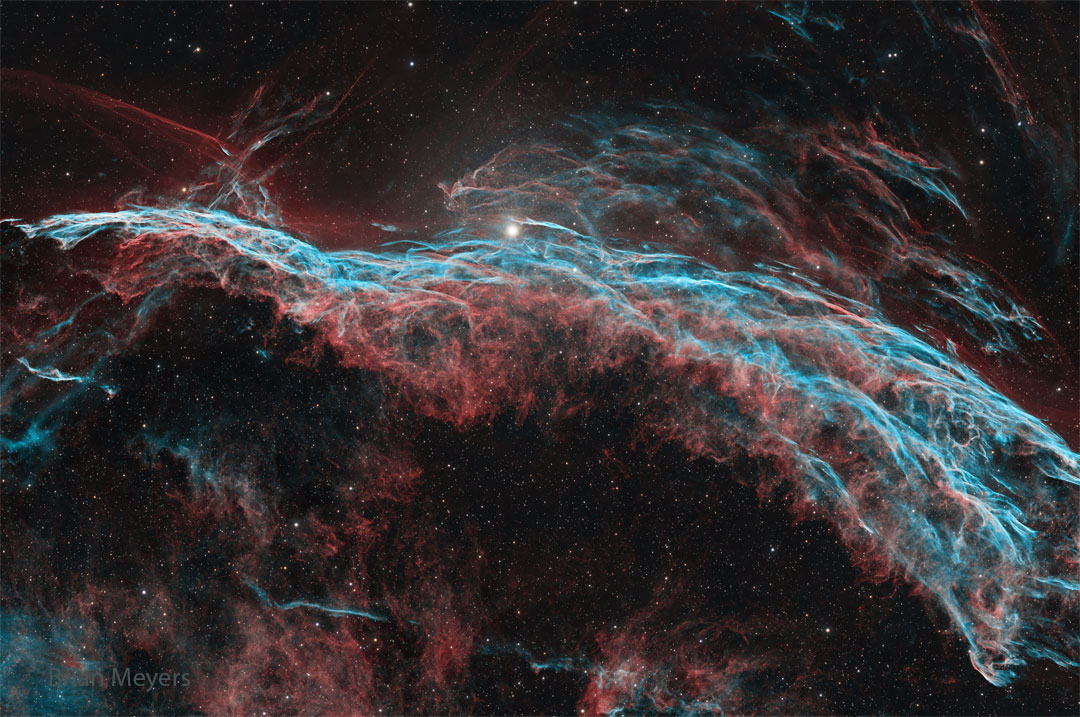
NASA Astronomy Picture of the Day (2025-10-01): NGC 6960: The Witch's Broom Nebula image Ten thousand years ago, before the dawn of recorded human history, a new light would suddenly have appeared in the night sky and faded after a few weeks. Today we know this light was from a supernova, or exploding star, and record the expanding debris cloud as the Veil Nebula, a supernova remnant. This sharp telescopic view is centered on a western segment of the Veil Nebula cataloged as NGC 6960 but less formally known as the Witch's Broom Nebula. Blasted out in the cataclysmic explosion, an interstellar shock wave plows through space sweeping up and exciting interstellar material. Imaged with narrow band filters, the glowing filaments are like long ripples in a sheet seen almost edge on, remarkably well separated into atomic hydrogen (red) and oxygen (blue-green) gas. The complete supernova remnant lies about 1400 light-years away towards the constellation Cygnus. This Witch's Broom actually spans about 35 light-years. The bright star in the frame is 52 Cygni, visible with the unaided eye from a dark location but unrelated to the ancient supernova remnant.
πŸš€ **Upcoming Space Launch** πŸš€ 🌌 **Mission Name**: Falcon 9 Block 5 | Project Kuiper (KF-03) πŸ—“οΈ **Launch Date**: 2025-10-07T02:29:00Z πŸš€ **Rocket**: Falcon 9 πŸ“– **Details**: Third of a three launches contract for Amazon's Kuiper low Earth orbit satellite internet constellation. #SpaceLaunch #RocketScience
πŸš€ **Upcoming Space Launch** πŸš€ 🌌 **Mission Name**: HASTE | JUSTIN πŸ—“οΈ **Launch Date**: 2025-10-01T00:28:00Z πŸš€ **Rocket**: Electron πŸ“– **Details**: Sub-orbital launch under Rocket Lab’s Hypersonic Accelerator Suborbital Test Electron (HASTE) program, details TBD. #SpaceLaunch #RocketScience