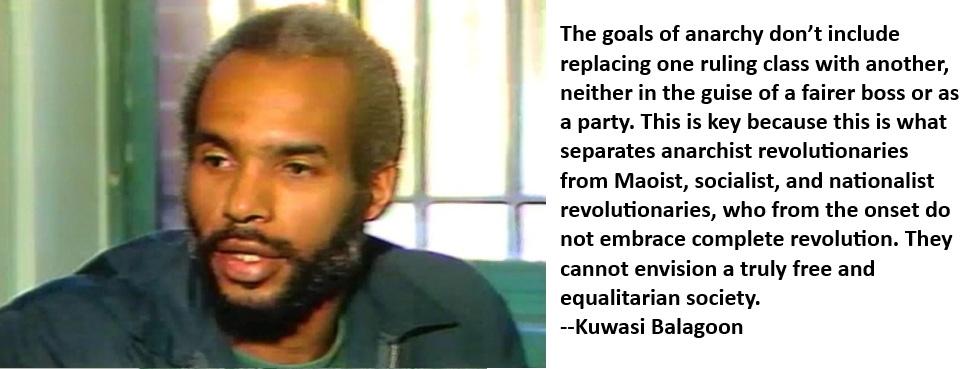
Today in Labor History December 22, 1946: Kuwasi Balagoon was born. In the early 1960s, while still a teen, he got involved in the Cambridge Movement, a Maryland civil rights movement that was becoming increasing militant, including advocating for armed self-defense. They were involved in the Cambridge Riots of 1963. He then served in the military and settled in New York after he was discharged in 1967, where he joined the Black Panther Party. He was also a tenants’ rights activist, organizing rent strikes, resisting illegal evictions, and once threatening a corrupt landlord with a machete. He also led a tenants’ rights demonstration in Congress leading to a melee with Capital Police after House Speaker, Tip O’Neil, ordered the cops to “Get those niggers out of here.” While in prison, as member of the Panther 21 (accused of several bombings), he became disillusioned with the Panthers, became an anarchist and joined the more militant Black Liberation Army. He escaped from prison twice. In 1979, while on the lam from his second prison escape, he helped to free political prisoner Assata Shakur, who fled to Cuba and who recently died there (2025). In 1986, Balagoon died in prison from AIDS. In 2019, PM Press released a collection of writings by and about Balagoon called, “Kuwasi Balagoon: A Soldier's Story.” And the prison abolitionist group, Black and Pink, which supports LGBTQ and HIV-positive prisoners, has, since 2020, run a "Kuwasi Balagoon award" for those living with HIV/AIDS. During his trial, he represented himself, admitted his guilt, but argued that his actions were justified in the war against the colonial, genocidal state. He was also open about his bisexuality. Yet many obituaries omitted this fact in what some activists have decried as the erasure of "internal struggle against homophobia and patriarchy." #workingclass #LaborHistory #anarchism #blackpanthers #BlackLiberationArmy #racism #newafrika #assatashakur #prison #lgbtq #aids #hiv #politicalprisoner #author #writer #books #BlackMastodon [@bookstadon]( ) image
image
image
image
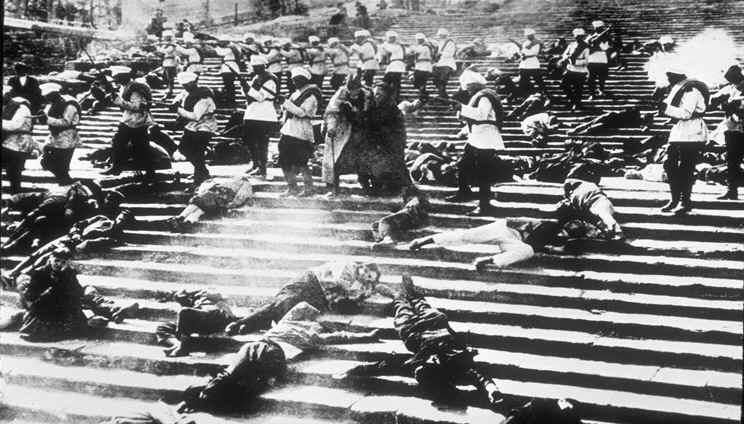
Today in Labor History December 21, 1925: Serge Eisenstein's silent movie The Battleship Potemkin premiered on this date in Moscow. This silent film, which inspired many later film greats, depicts the 1905 mutiny of sailors against their Czarist commanders during the Russo-Japanese war. The massacre on the Odessa steps scene was so iconic that dozens of later films paid homage to it, including Terry Gilliam’s “Brazil,” Brian De Palma’s “The Untouchables,” Peter Sellers’s “The Magic Christian,” Woody Allen’s “Bananas.” The film also influenced artist Francis Bacon. San Francisco’s avant-garde Club Foot Orchestra recreated the original score. Orson Welles, Charlie Chaplin and Billy Wilder all considered it one of the greatest films ever made. #workingclass #LaborHistory #SergeEisenstein #soviet #russia #communism #film #moscow image
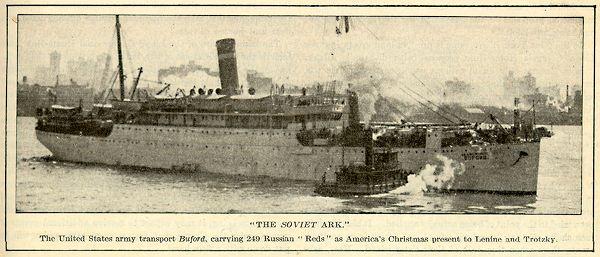
Today in Labor History December 21, 1919: U.S. immigration deported anarchists Emma Goldman and Alexander Berkman to Russia. The authorities deported, arrested and killed hundreds of anarchists, communists, labor leaders, IWW members, and oter radicals during the Palmer Raids (also known as the First Red Scare). #workingclass #LaborHistory #anarchism #IWW #deportation #redscare #Revolution #russia #soviet #prison #unionbusting #PalmerRaids image
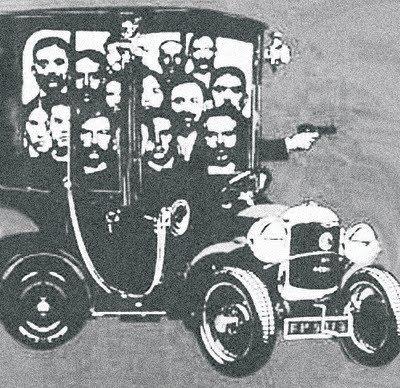
Today in Labor History December 21, 1911: The Bonnot Gang, a group of anarchist bandits, pulled off one of the first bank robberies known to have used an automobile as a getaway car. They did it in broad daylight, in the midst of a populous Paris district. They were also among the first to use repeating rifles, technology that the French police did not yet have. They successfully robbed several banks before being caught and executed. The gang members were anarchist individualists, of the Max Stirner school. They were loosely connected with the anarchist periodical, “L’Anarchie,” edited by Victor Serge, who later participated in the Russian Revolution. Serge was imprisoned by the Bolsheviks and, while in prison, wrote his most famous novel, “Birth of Our Power.” You can read more about the Bonnot Gang in Richard Parry’s book “The Bonnot Gang.” #workingclass #LaborHistory #anarchism #BonnotGang #VictorSerge #russia #banks #Revolution #prison #books #novel #fiction #author #writer [@bookstadon]( ) image
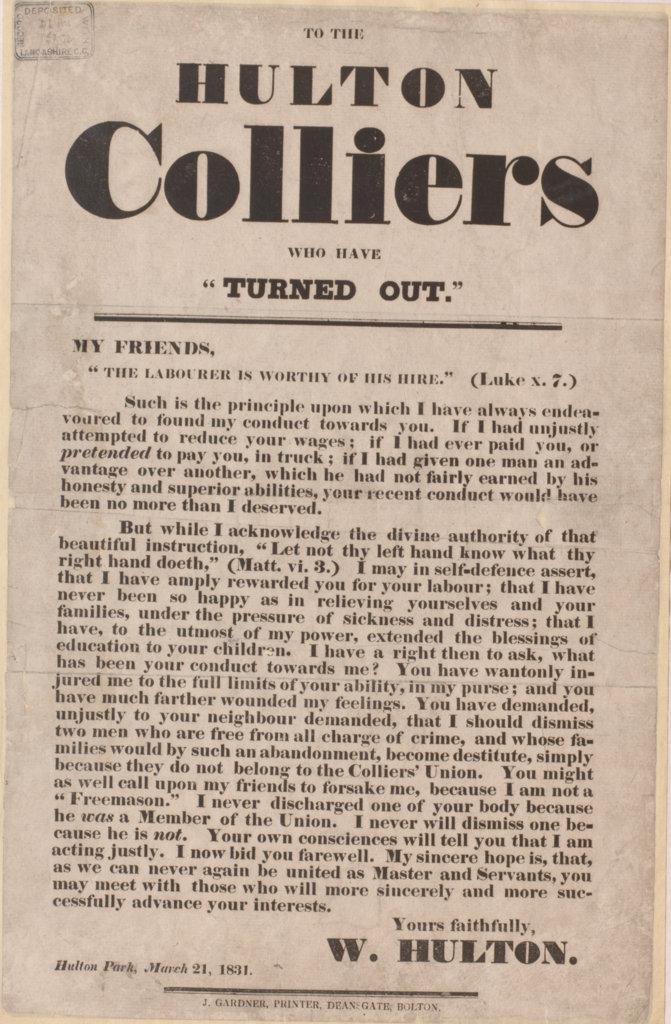
Today in Labor History December 21, 1910: 344 miners died when the Hulton Bank Colliery No. 3 Pit exploded in Westhoughton, England. It was the third worst mining disaster in British history. The original owner of the mine, William Hulton, once served as sheriff. In that role he sentenced 4 people to death, including a 12-yer-old boy, for taking part in a Luddite attack in 1812. His orders also led to the Peterloo Massacre in 1819, in which the cavalry charged a crowd of 60,000 workers and peasants fighting for universal suffrage, killing 18. Many had just returned from Waterloo. Hulton paid the lowest wages of any colliery owner in Lancashire and he violently opposed any attempts to organize. His son and grandson, who later took over control of the colliery, were no better. For a really good portrayal of the Peterloo events, see Mike’s Leigh’s 2018 film, “Peterloo.” Several recent novels portray Peterloo, including Carolyn O'Brien's “The Song of Peterloo” and Jeff Kaye's “All the People.” Isabella Banks wrote the novel “The Manchester Man” in 1876, based on her own interviews with survivors of the massacre. Additionally, there is a graphic novel in 'verbatim' form, Peterloo: Witnesses to a Massacre, as well as a 2016 Doctor Who audio adventure based on the Peterloo Massacre. #workingclass #LaborHistory #miners #disaster #Peterloo #massacre #luddite #books #film #novel #fiction #doctorwho #author #writer [@bookstadon]( ) image
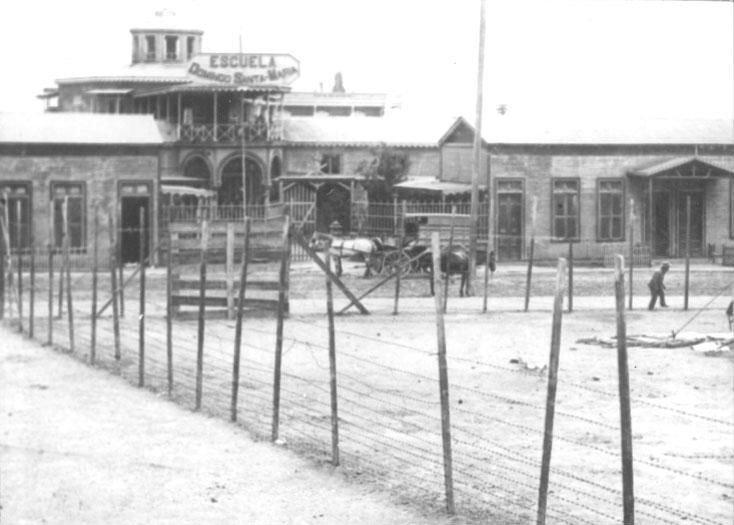
Today in Labor History December 21, 1907: The Santa María School massacre occurred in Iquique, Chile. The Chilean Army attacked striking saltpeter (nitrate) miners and their wives and children, killing up to 3,600 and destroying the strike. The saltpeter strike was part of a wave of strikes that started in 1902, including a General Strike earlier in December, 1907. There were also deadly Meat Riots, in Santiago, in 1905, protesting cattle tariffs that were causing food prices to soar, in which 230 were slaughtered. The Santa Maria School massacre is depicted in Volodia Teitelboim’s 1952 novel, “Hijo de salitre.” The massacre, and the wave of repression that followed, virtually destroyed the labor movement for the next decade. The Chilean labor movement and syndicalism, in particular, trace their roots to the organizing among the nitrate miners. The workers, like miners in the U.S. and other countries, were often forced to live in Company towns, where they rented living quarters from the bosses, and had to buy their food, heating coal, medicines, and mining equipment at inflated prices from the Company Store. They were paid in Company scrip, rather than legal tender, redeemable only within the Company town where they worked. #workingclass #LaborHistory #chile #union #strike #miners #massacre #GeneralStrike #unionbusting #women #children #books #fiction #novel #author #writer [@bookstadon]( ) image