image
Not only that, they also have higher life expectancies, better education outcomes, far less homelessness, almost no school shootings, pensions, and so much else. But let's not forget what else they have (and practice regularly): The General Strike. Yes, we can have all those things, too. But not without educating, organizing, agitating and Direct Action. image
image
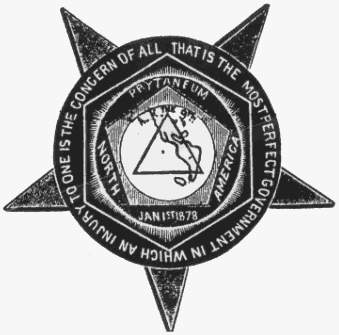
Today in Labor History December 9, 1869: The Knights of Labor was founded in Philadelphia as a secret society open to all members of the working class. They specifically barred bankers, land speculators, lawyers, liquor dealers and gamblers from membership in their union. The Knights were one of the most important labor organizations of the late 1800s, reaching a membership of 700,000 by 1886. One of their first early successes was their strike against J. Gould’s Wabash Railroad. In addition to walking off the job, they occupied company buildings and sabotaged the tracks and equipment. While other unions were fighting for a 10-hour work day, the Knights were demanding an 8-hour day, as well as an end to child and convict labor. They were also one of the earliest labor organizations to accept blacks and women, and one of the first organized by industry, rather than craft. 50 African American sugarcane workers, organized by the Knights, were murdered by white scabs in the 1887 Thibodaux massacre. Their motto was “An Injury to One is the Concern of All.” Yet they also supported the Chinese Exclusion Act and participated in anti-Chinese riots, including one in Tacoma, Washington (1885) in which they expelled all the Chinese from town (at the time, 10% of the city’s population), as well as the Rock Springs massacre, in Wyoming (1885), which killed scores of Chinese. Support for the Knights quickly waned following the repression in the wake of the Haymarket Affair. The KOL attracted and spawned many radicals, including Daniel DeLeon. He went on to cofound the IWW and the Socialist Labor Party. Two of the Haymarket martyrs were also KOL members. The KOL also denounced strikes. However, like its more radical cousin, the IWW, it called for the abolition of the wage system. And like the IWW, fought to organize all workers into one big union, including women and immigrants. In 1890, they merged with another union to form the United Mine Workers. #workingclass #LaborHistory #union #strike #knightsoflabor #racism #Riot #AntiAsianHate #haymarket #eighthourday #IWW image
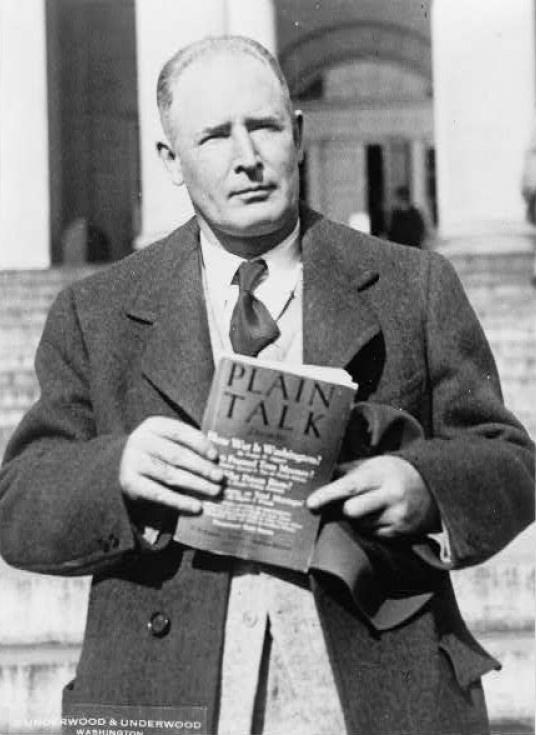
Today in Labor History December 9, 1935: Walter Liggett, American newspaper editor and muckraker, was murdered in a drive-by shooting with a Thompson submachine gun, as he stepped out of his car, groceries in his hand. His wife and daughter were in the car and witnessed his death. Liggett was a card-carrying member of the American Socialist Party, but he was more of a Mid-Western Populist-Socialist than a Marxist. In the 1920's he participated in efforts to free Sacco and Vanzetti and Thomas Mooney. In a series of articles, he accused Farmer-Labor politicians of collusion with the organized crime family of Isadore Blumenfield. He accused Minnesota Governor Floyd Olson of corruption and said that he should be impeached and prosecuted. In response, Blumenfield tried to bribe him to stop his exposés, but Liggett refused. Blumenfield and his gang savagely beat Liggett up. Liggett escalated his attacks and began printing a list of reasons for Olson's impeachment on the front page of the Midwest-American. Soon after, he was murdered. #workingclass #LaborHistory #journalism #FreedomOfThePress #FreeSpeech #corruption #socialism #assassination #gang #organizedcrime #mafia [@bookstadon]( ) image
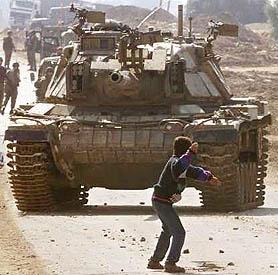
Today in Labor History December 9, 1987: The First Intifada began in the Gaza Strip and West Bank. It was series of protests, civil disobedience and riots carried out by Palestinians in the Israeli-occupied Palestinian territories and within the state of Israel against Israeli repression including beatings, shootings, killings, house demolitions, uprooting of trees, deportations, extended imprisonments, and detentions without trial. It lasted over 5 years, until September 1993, ultimately being suppressed by Israeli military force. Up to 200 Israelis and nearly 2,000 Palestinians died. Both the Oslo and Madrid conferences and Peace Accords stemmed from the First Intifada, as well as the PLO’s recognition of the right of Israel to exist as a Jewish state. Another result of these accords was the creation of the collaborationist Palestinian Authority (PA), which currently controls the West Bank, and which had controlled the Gaza Strip, until being ousted by Hamas in the 2006 elections. The PA, which is heavily funded by the U.S. and the E.U. #workingclass #LaborHistory #intifada #israel #palestine #westbank #gaza #EndTheOccupation #EndTheSiege #hamas #PLO #zionism #murder #prison #freepalestine image
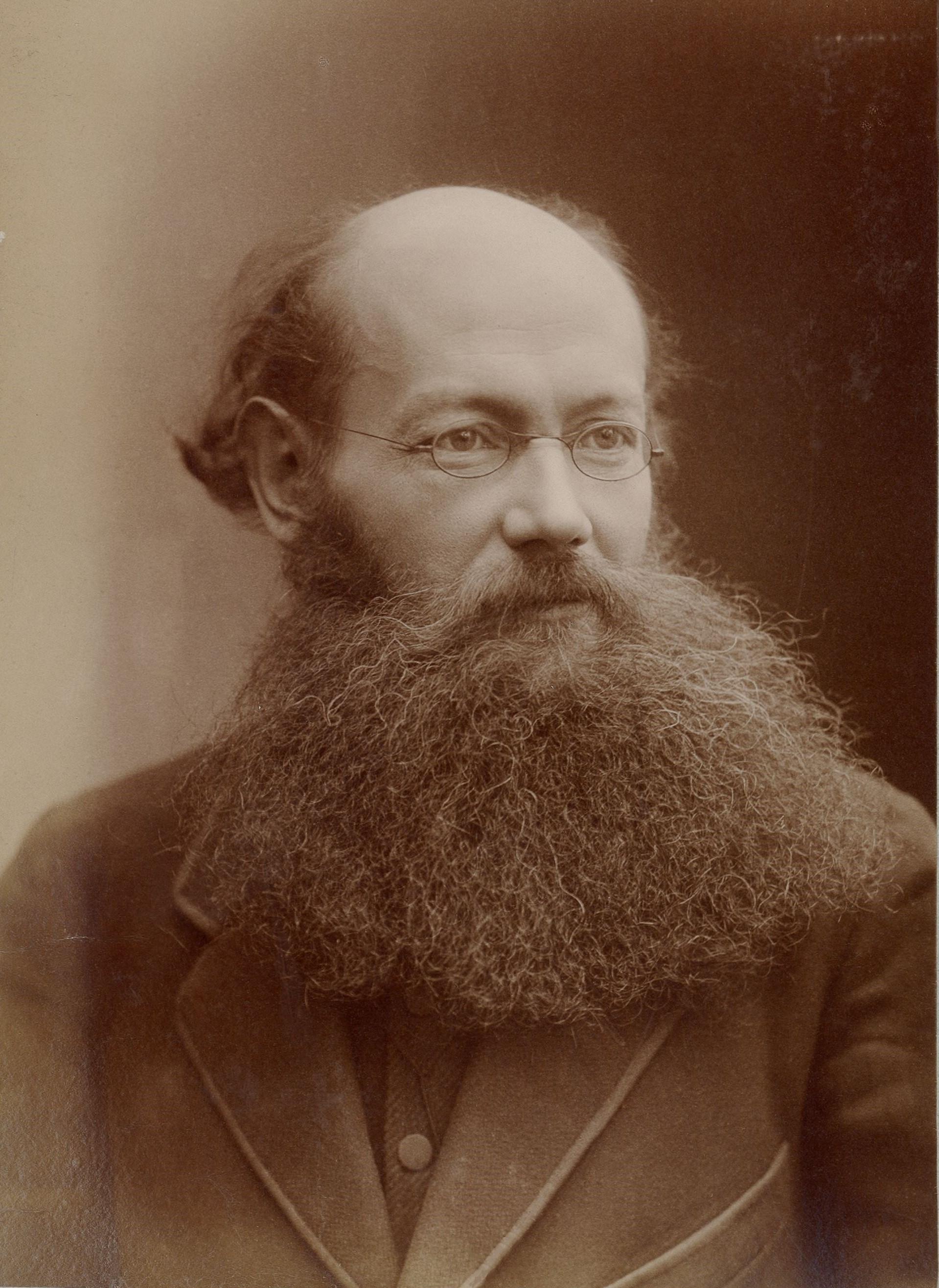
Today in Labor History December 9, 1842: The Anarchist formerly known as Prince, Peter Kropotkin, was born on this date in Moscow. Kropotkin was a geographer and anarcho-communist. His most well-known works include “Conquest of Bread,” “Fields, Factories,” and “Mutual Aid, A Factor of Evolution,” which explores the role of mutually-beneficial cooperation and reciprocity (i.e., mutual aid) in the animal kingdom and human societies both past and present. It was an argument against the theory of social Darwinism, popular at the time, that argued that existing social relations were the natural consequence of rich people’s inherent genetic superiority over the poor. Kropotkin argued that because mutual aid has pragmatic advantages for the survival of human and animal communities, it has proliferated through natural selection. In 1874, Kropotkin was arrested and imprisoned in the Peter and Paul Fortress for subversive political activity. In 1876, he escaped and fled to Switzerland. During his younger days, he served as a geographer for the Russian empire. In 1873, he published a scientific paper showing that the existing maps entirely misrepresented the physical features of Asia. #workingclass #LaborHistory #anarchism #kropotkin #russia #prison #geography #MutualAid #Revolution #books #writer #author [@bookstadon]( ) image
Kinda. How 'bout when they only sucked the balls of their corporate overlords and not those of fascist dictators? Or, maybe just the balls of a few fascist dictators? Nah, they always sucked balls. image
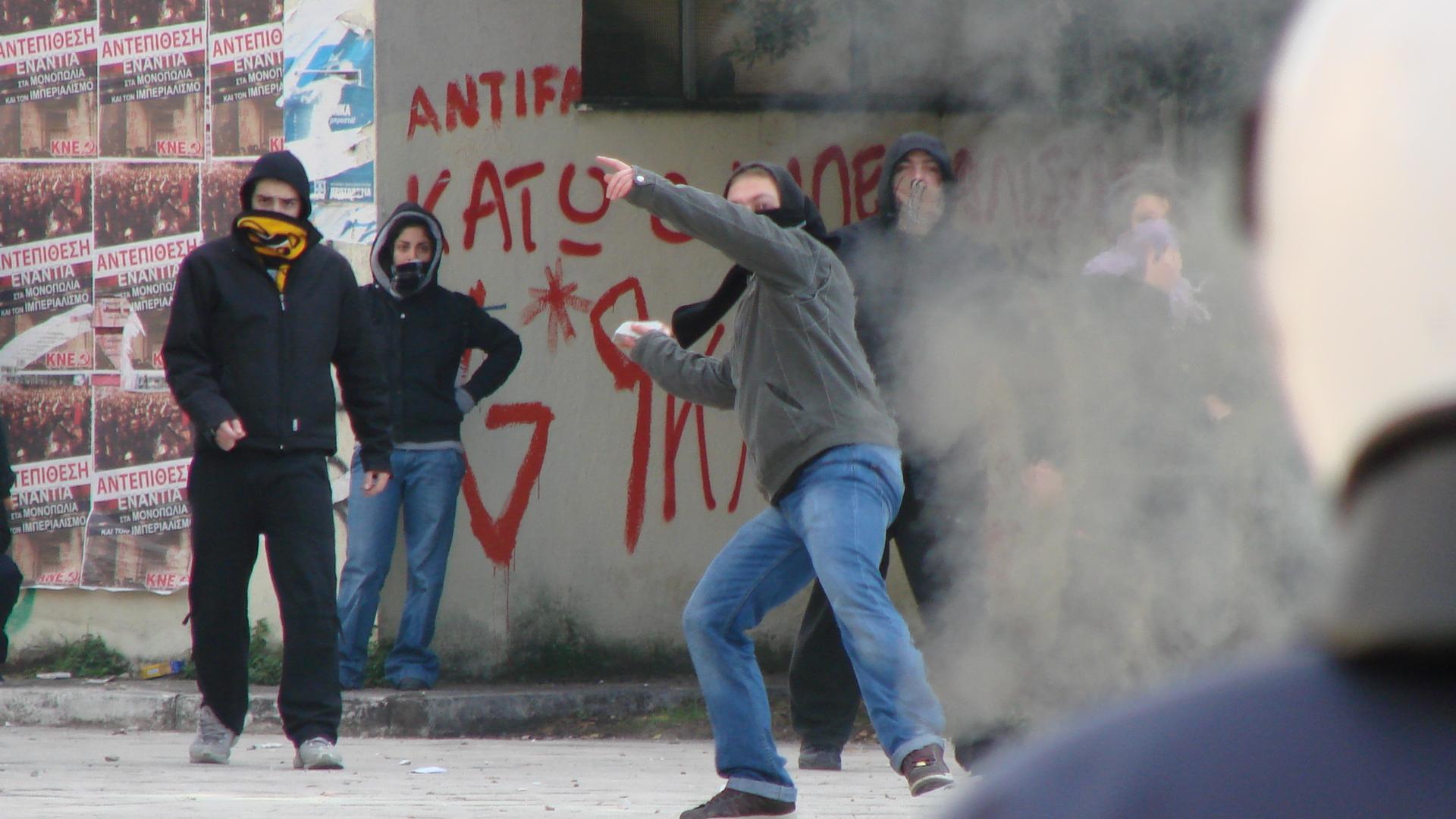
Today in Labor History December 8, 2008: A revolt broke out in Greece two days after the police murdered Alexandros Grigoropoulos, a fifteen-year-old student. Workers, unemployed people, students and immigrants participated. They built barricades, attacked police stations, set government buildings on fire. At one town, high school students burned all the police cars at their local police station. In Patras, they took over a television station and began broadcasting their own message. The uprising lasted until December. Ultimately, the state prosecuted the cops who murdered Grigoropoulos. #workingclass #LaborHistory #students #children #anarchism #greece #uprising #revolt image
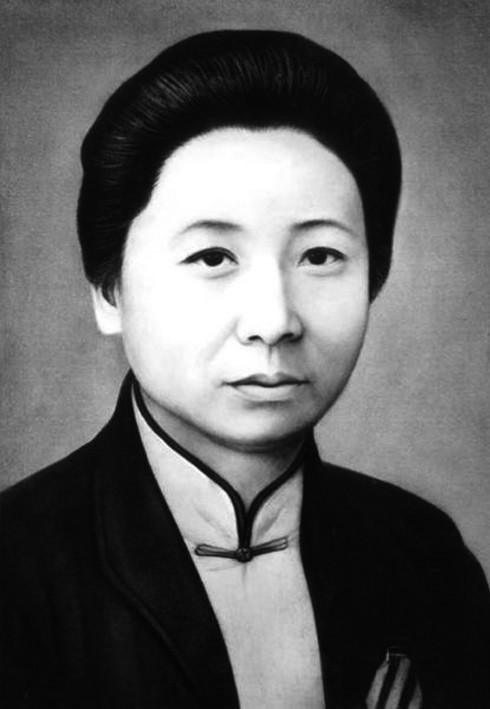
Today in Labor History December 8, 1871: Tang Qunying was born. She was the first female member of the Tongmenghui (Chinese Revolutionary Alliance), a secret society and underground resistance movement founded by Sun Yat-sen that helped to overthrow dynasty rule in China. In 1905, she was trained in weaponry and bomb making by Russian anarchists. In 1913, she founded Hunan's first newspaper for women: Women’s Rights Daily. #workingclass #LaborHistory #feminism #revolution #anarchism #china #tangqunying image