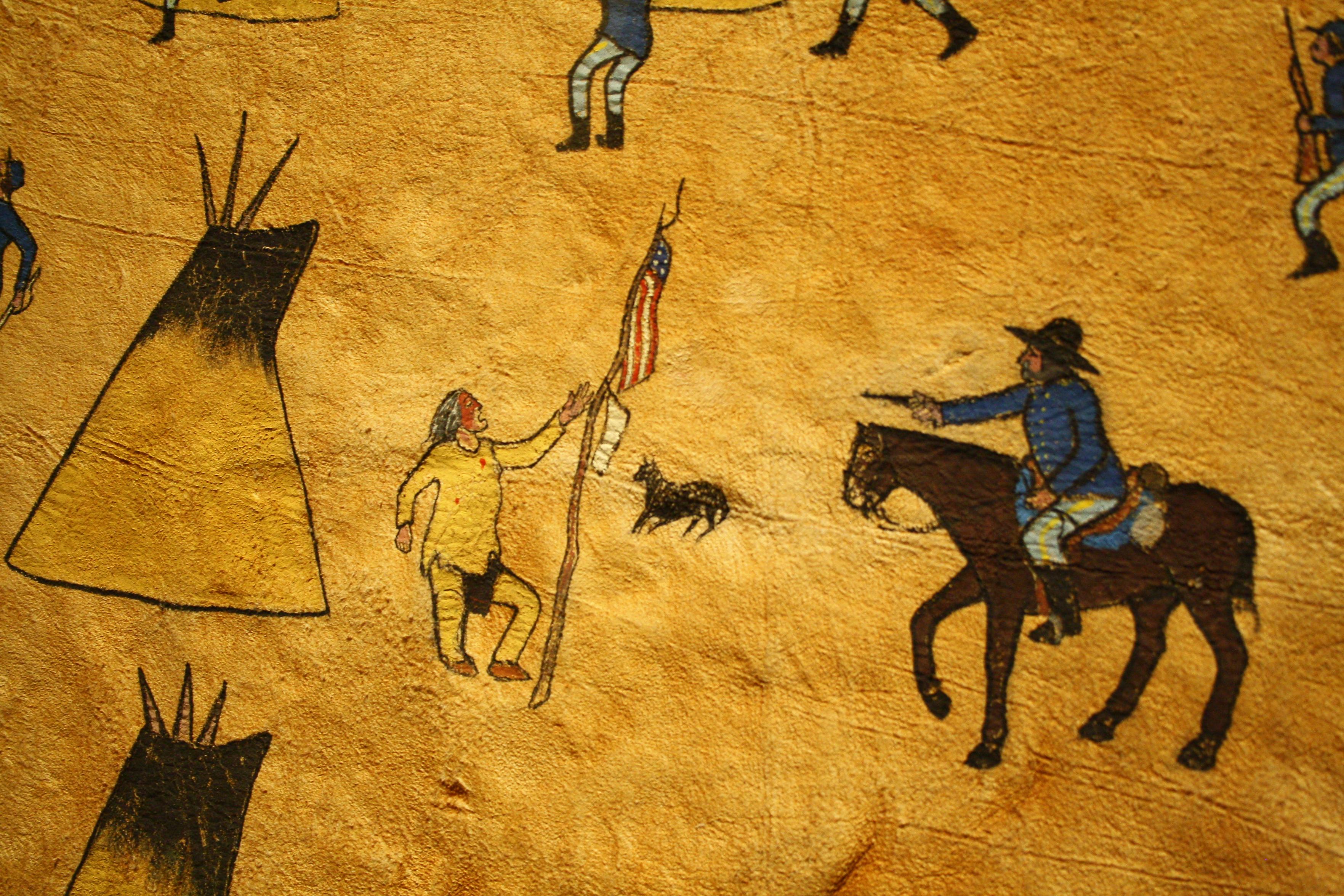
Today in Labor History November 29, 1864: Colonel John Chivington led a 675-man force in the Sand Creek Massacre of at least 150 Cheyenne and Arapaho noncombatants. They attacked and destroyed a village in southeastern Colorado Territory, killing and mutilating up to 600 Native Americans, two-thirds of whom were women and children. The massacre has been depicted in numerous books, including “Centennial” (1974) by James Michener; “Bury My Heart at Wounded Knee” (1971) by Dee Brown; “Flight” (2007) by Sherman Alexie; and “Choke Creek” (2009) by Lauren Small. #workingclass #LaborHistory #indigenous #nativeamerican #genocide #massacre #racism #cheyenne #arapaho #colorado #women #children #literature #fiction #novel #books #author #writer [@bookstadon]( ) image
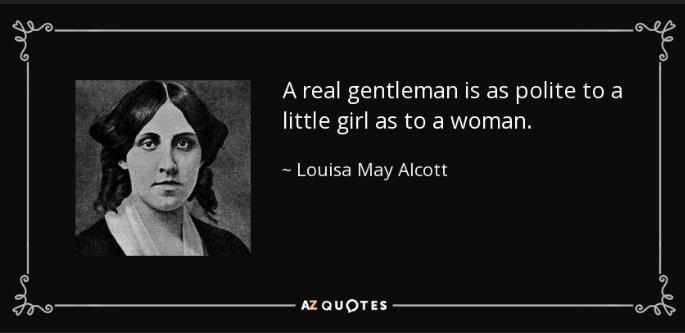
Today in Labor History November 29, 1832: Louisa May Alcott, author, nurse, feminist and abolitionist, was born. Her writing was influenced by the transcendentalists, like Emerson, Thoreau, Hawthorne and Longfellow, whom she knew personally. While she was most famous for her book, “Little Women,” she also wrote “Work,” an autobiographical novel that exposed the exploitation of women workers. Poverty forced her to work at a young age as a teacher, seamstress, governess and domestic. During the Civil War, she worked as a nurse and developed typhoid fever. The medicine she took contained mercury, which may have contributed to the autoimmune disorders that plagued her for the rest of her life and that ultimately killed her. She is buried on Author’s Ridge, at Sleepy Hollow Cemetery, in Concord, near Emerson, Thoreau and Hawthorne. #workingclass #LaborHistory #louisamayalcott #feminism #slavery #Abolition #nurse #teacher #poverty #exploitation #thoreau #hawthorne #longfellow #emerson #civilwar #books #literature #fiction #writer #author [@bookstadon]( ) image
Free Bobby Now, by the Lumpen #blackpanthers #blackpower #funk #thelumpen
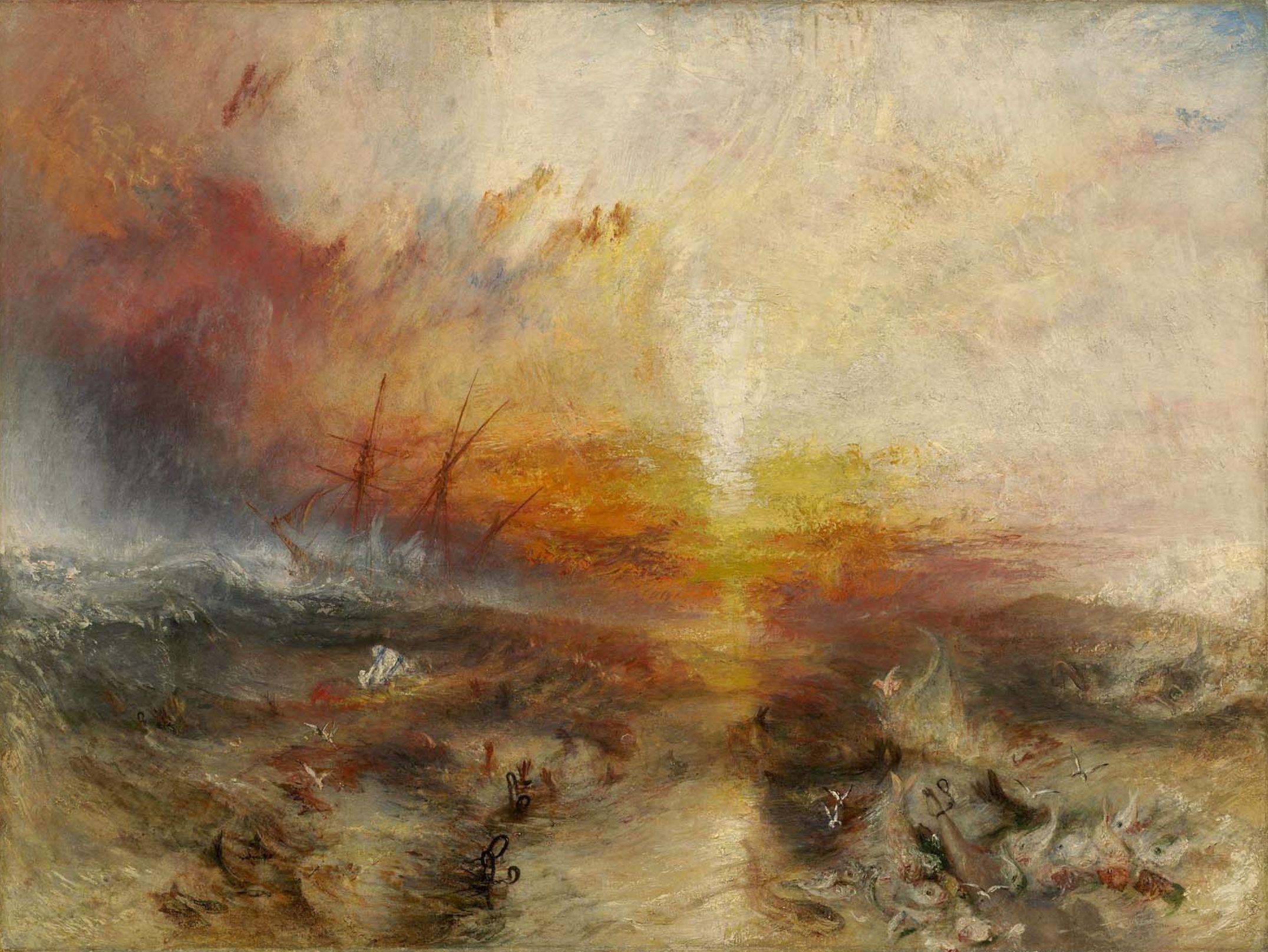
Today in Labor History November 29, 1781: The crew of the British slave ship Zong slaughtered over 130 enslaved Africans. According to the crew, the ship ran low on drinking water after several navigational blunders. Consequently, they threw the insured slaves overboard. However, when the insurers refused to pay, the slavers sued. On appeal, the judges, ruled against the slave trading syndicate, due to evidence that the captain and crew were at fault. Following the first trial, a freed man, Olaudah Equiano, brought news of the massacre to the attention of the anti-slavery campaigner Granville Sharp, who fought unsuccessfully to have the ship's crew prosecuted for murder. This did increase publicity, stimulating the abolitionist movement. The event led to the passage of the Slave Trade Act 1788, Britain’s first law regulating the slave trade. And in 1791, Parliament prohibited insurance companies from reimbursing ship owners when enslaved Africans were murdered by being thrown overboard. #workingclass #LaborHistory #slavery #abolition #massacre #racism #BlackMastadon image
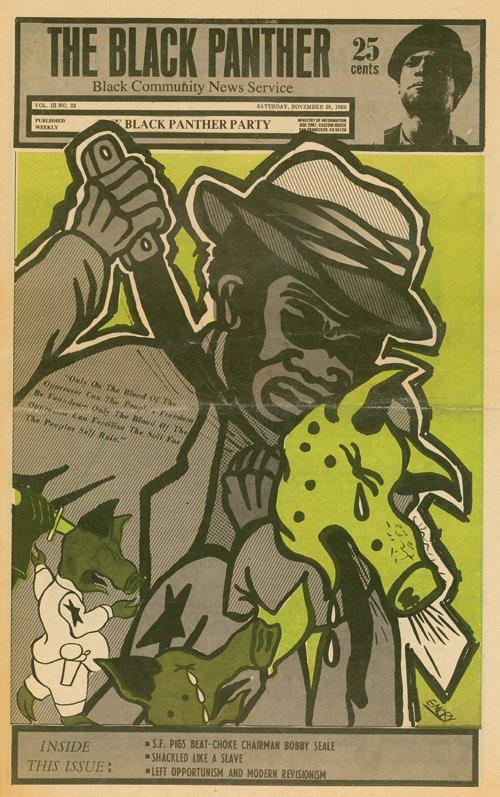
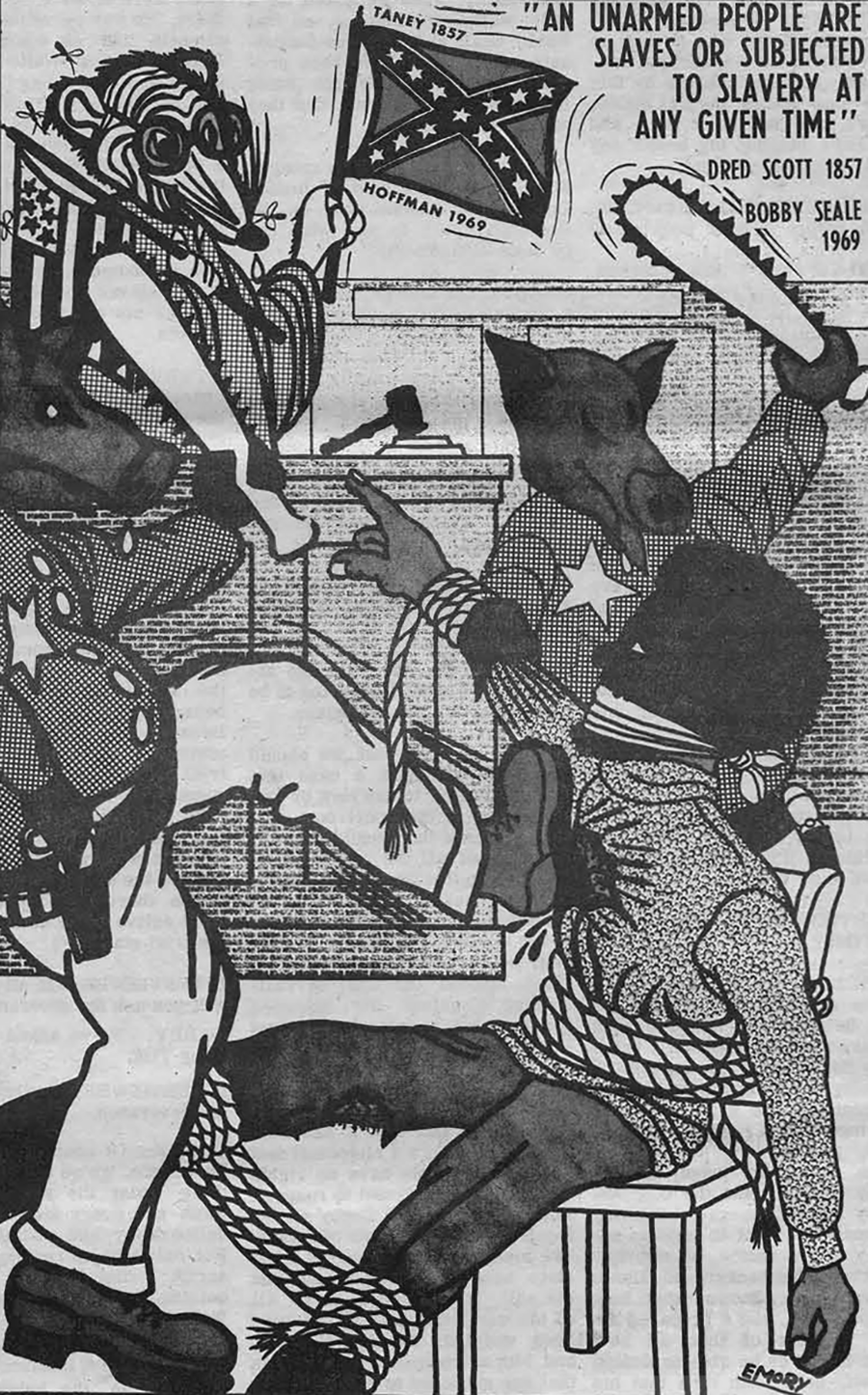
Today in Labor History November 29, 1969: The cover of the Black Panther Party paper portrayed an image of pigs being killed. The ubiquitous pig artworks in the BPP paper, created by Minister of Culture Emory Douglas, helped to popularize the use of the term “pig” as a pejorative for police in the late 1960s. Headlines in this issue of their paper included “S.F. Pigs Beat-Choke Chairman Bobby Seale,” and “Shackled Like a Slave,” the latter referring to how Seale was shackled and gagged in the courtroom of Julius Hoffman, just one month prior, during the 1969 trial of the Chicago Eight, in the aftermath of the Days of Rage protests and police riot during the Democratic National Convention in 1968. At the age of 13, Emory Douglas served time at a youth prison in Ontario, California, where he worked in the facility's printing shop and learned the basics of commercial printing. In 1960, he attended City College of San Francisco where he studied graphic design. There he joined the Black Students’ Association and worked with poet and playwright Amiri Baraka, designing theater sets. He joined the BPP in 1967, drawn to its dedication to self-defense. As one of the main artists for the Panther’s newspaper, he developed iconic images depicting policemen as bloodied or hanged pigs. His artwork also portrayed the Panther’s free breakfast program, free health clinics, and free legal aid. In 1970, he cofounded the revolutionary funk band, The Lumpen, which collaborated with Muhammad Ali and Curtis Mayfield on a prison concert at San Quentin. At that concert, they performed "Free Bobby Now" and "Ol' Pig Nixon," before the prison guards shut them down during a rendition of "Revolution is the Only Solution." The Lumpen influenced bands like Public Enemy, Dead Prez, and The Coup. Check out the excellent book about the band, “Party Music,” by music historian @RickyVincent, or see Vincent in person, next week, at the Howard Zinn Book Fair, where he’ll be discussing his book and sharing music clips. #workingclass #LaborHistory #blackpanthers #cartoons #emorydouglas #thelumpen #funk #racism #blackpower #revolution #BlackMastodon #books #author #writer [@bookstadon]( )
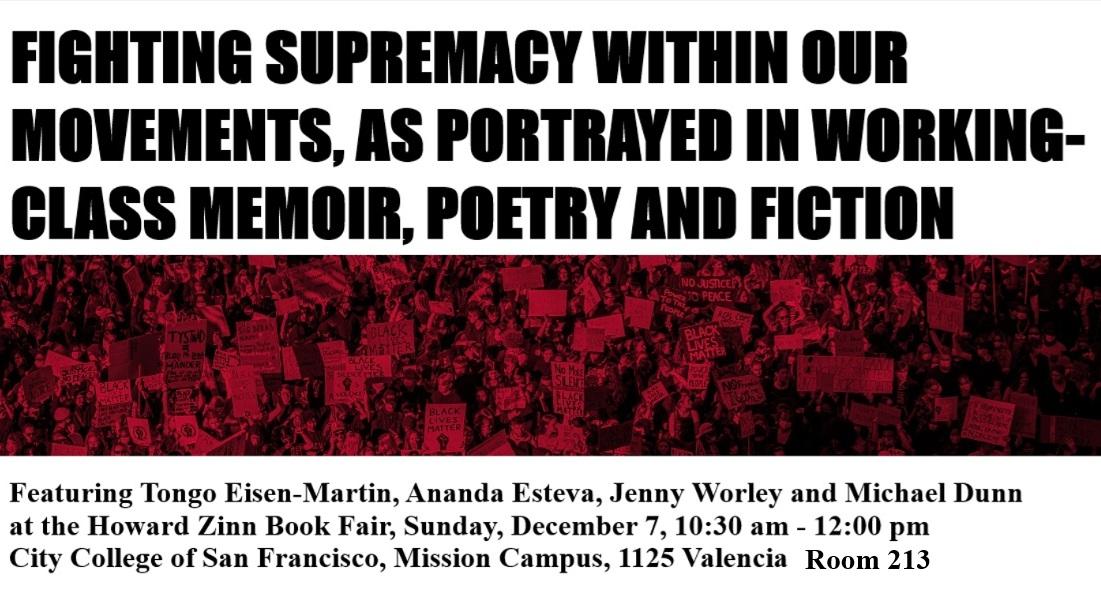
If you’re in the SF Bay Area next weekend, be sure to stop by the HOWARD ZINN BOOK FAIR. I’ll be reading from my novel and leading a panel discussion with •Tongo Eisen-Martin: San Francisco Poet Laureate & Activist (Someone's Dead Already; Waiting Behind Tornados for Food) •Ananda Esteva: Writer, Poet, Teacher (The Wanderings of Chela Coatlícue; Pisco Sours) •Jenny Worley: Author, Teacher (Neon Girls: A Stripper’s Education in Protest & Power) •Michael Dunn: Author, Teacher (Anywhere But Schuylkill) Sunday, December 7, 2025 10:30am-12:00pm City College of San Francisco, Mission Campus 1125 Valencia St., Room 213 image