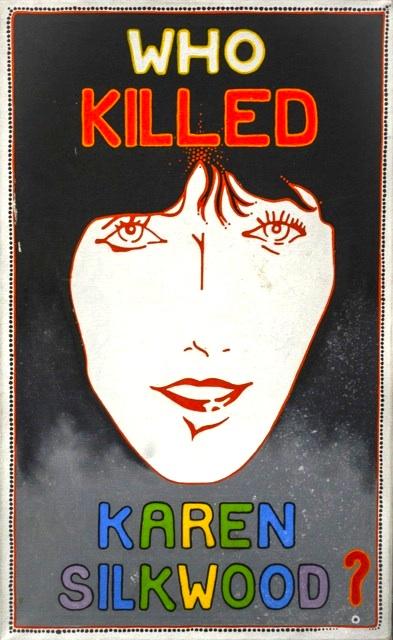
Today in Labor History November 13, 1974: Oil, Chemical and Atomic Workers union activist Karen Silkwood was assassinated during her investigation of a Kerr-McGee nuclear plant in Oklahoma. Her car was run off the road while she attempted to deliver documents to a New York Times reporter. Silkwood first started working at Kerr-McGee in 1972. She joined the Oil, Chemical & Atomic Workers union and participated in a strike. After the strike, her comrades elected her to the union’s bargaining committee. She was the first woman to attain that status at Kerr-McGee. In this role, one of her duties was to investigate health and safety issues. Not surprisingly, she discovered numerous violations, including exposure of workers to contamination. The union accused Kerr-McGee of falsifying inspection records, manufacturing faulty fuel rods and other safety violations. After testifying to the Atomic Energy Commission, Silkwood discovered that her own body and home were contaminated with radiation. Her body contained 400 times the legal limit for plutonium contamination and she was expelling contaminated air from her lungs. Her house was so contaminated they had to destroy much of her personal property. Later, she decided to go public with documentation proving the company’s negligence. She left a meeting with union officials in order to meet a New York Times journalist. She brought a binder and packet of documents supporting her allegations with her. However, she never made it, dying in a suspicious car crash. The documents were never found. Some journalists believe she was rammed from behind by another vehicle. Investigators noted damage to the read of her car that would be consistent with this hypothesis. She had also received death threats shortly before her death. However, no one has yet substantiated the claims of foul play. In 1979, an Oklahoma jury ruled in favor of the estate of atomic worker Karen Silkwood. Kerr-McGee Nuclear Company was ordered to pay $505,000 in actual damages and $10 million in punitive damages for negligence leading to Silkwood’s plutonium contamination. On appeal, the court reduced the settlement to a pitiful $5,000, the estimated value of her property losses. In 1984, the Supreme Court restored the original verdict, but Kerr-McGee again threatened to appeal. Ultimately, Silkwood’s family settled out of court for $1.38 million and the company never had to admit any wrongdoing. #workingclass #LaborHistory #silkwood #atomic #union #nuclear #nytimes #assassination image
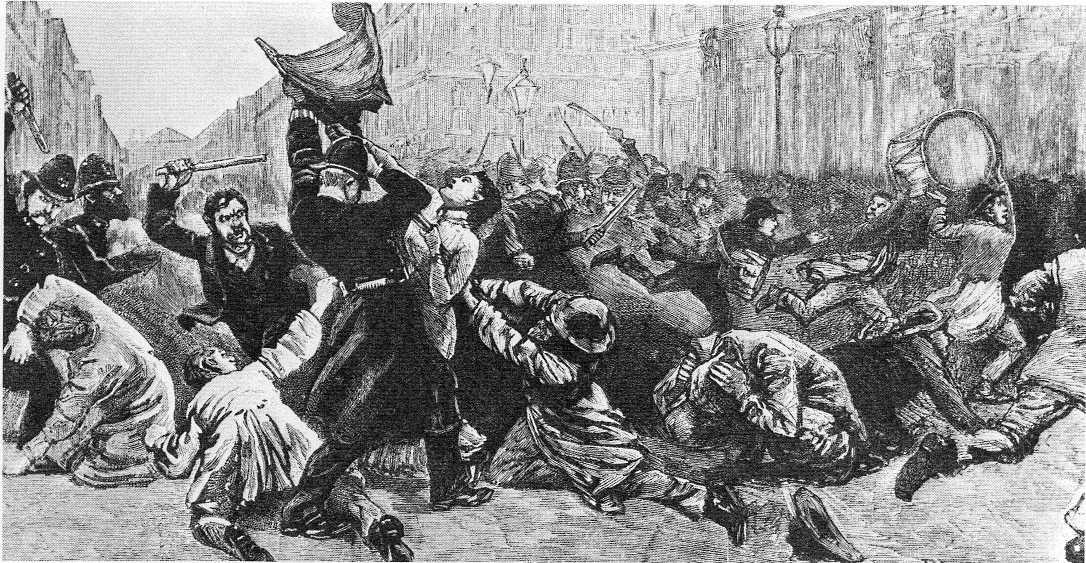
Today in Labor History November 13, 1887: Police charged a crowd of unemployed protesters in Trafalgar Square, London, killing three and arresting over 300 in what was to become known as "Bloody Sunday." At least 400 people were seriously injured, including one who was bayoneted. It also became a turning point in the British struggle for free speech, with William Morris, Edward Carpenter and George Bernard Shaw all speaking out against this repression. Eleanor Marx, Karl’s youngest daughter, also participated. #workingclass #LaborHistory #london #massacre #BloodySunday #police #policebrutality #freespeech #marx image
Just when you thought things couldn't get any worse, in Florida iguanas are falling from above.
Think things are bad now? It's for certain that we're surpassing the 1.5C threshold for catastrophic climate effects. Worse than that, the UN predicts we will hit 2.6-3.1 C over pre industrial level IF nations actually meet their current pledge. And if they don't? In other words, catastrophe is baked in. #climate #climatecrisis #globalwarming #carbon #pollution #cops
image
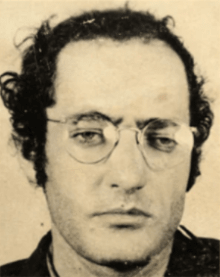
Today in Labor History November 12, 1969: Activists Sam Melville and Robert Palmer blew up a bomb in the New York City Criminal Courts Building after closing hours. No one was hurt. They did it to show solidarity with defendants in the Panther 21 case. Others supported the Panther 21 through fundraisers, articles and other forms of legal support, including Abbie Hoffman, Leonard Bernstein, Tom Wolfe, and Sydney Lumet. Melville and Palmer were caught, convicted and imprisoned. Melville was killed in prison. The Panther 21 had been charged with criminal conspiracy. During the trial, the prosecution read from Mao’s Little Red Book and they showed clips from The Battle of Algiers in an attempt to educate jurors on the Panthers’ “ideology.” However, after it was exposed that undercover cops and agents provocateur had played key roles as instigators, all 21 were acquitted. Melville was accused of numerous other bombings, including buildings belonging to United Fruit, Standard Oil, Chase Manhattan, and General Motors. He was imprisoned at Attica, where he helped organize inmates' demands and keep order during the Attica Prison Riot. He was also among those killed in the riot. #workingclass #LaborHistory #blackpanthers #police #prison #attica #blackmastodon image
image
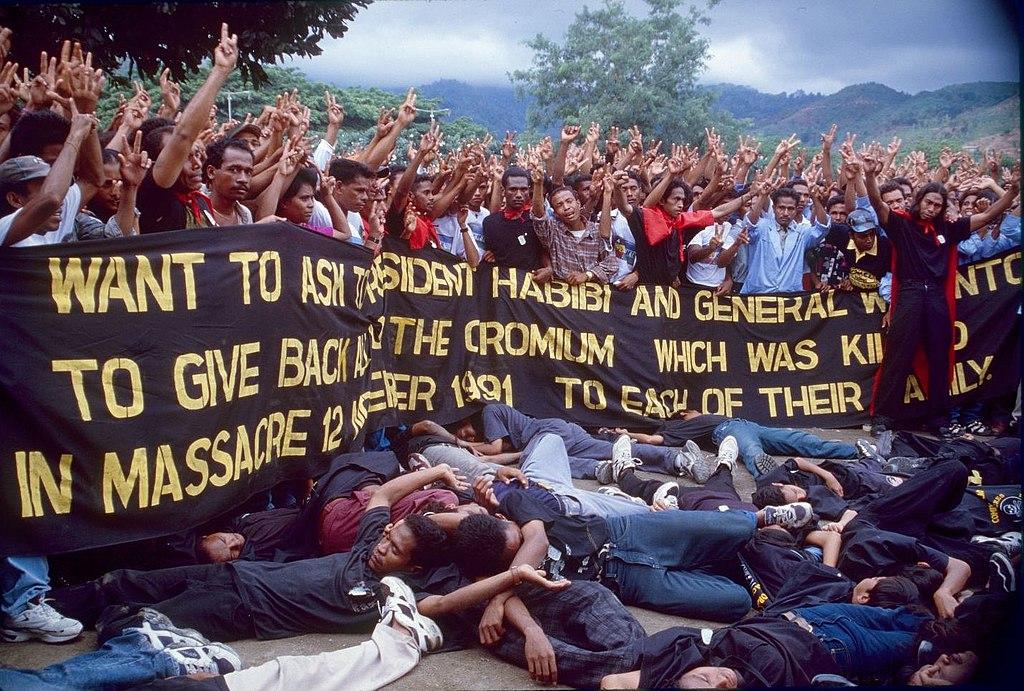
Today in Labor History November 12, 1991: The Indonesian Army opened fire on a crowd of student protesters in Dili, East Timor, killing over 250 people in the Santa Cruz massacre. Many foreign journalists witnessed the massacre, including journalists Amy Goodman (Democracy Now) and Allan Nairn, who were badly beaten, as they attempted to serve as human shields to defend the Timorese from attack. British cameraman Max Stahl filmed the massacre and smuggled it into Australia. The footage was used in the documentary: In Cold Blood: The Massacre of East Timor (1992). Stahl's footage, and the testimony of Nairn and Goodman, caused outrage around the world and led to mass organizing to support the Timorese independence movement. Between 1975 and 1999, the Indonesian military slaughtered up to 300,000 East Timorese, in a genocide that wiped out as much as 44% of the total population. #workingclass #LaborHistory #genocide #massacre #EastTimor #indonesia #journalism #dili image
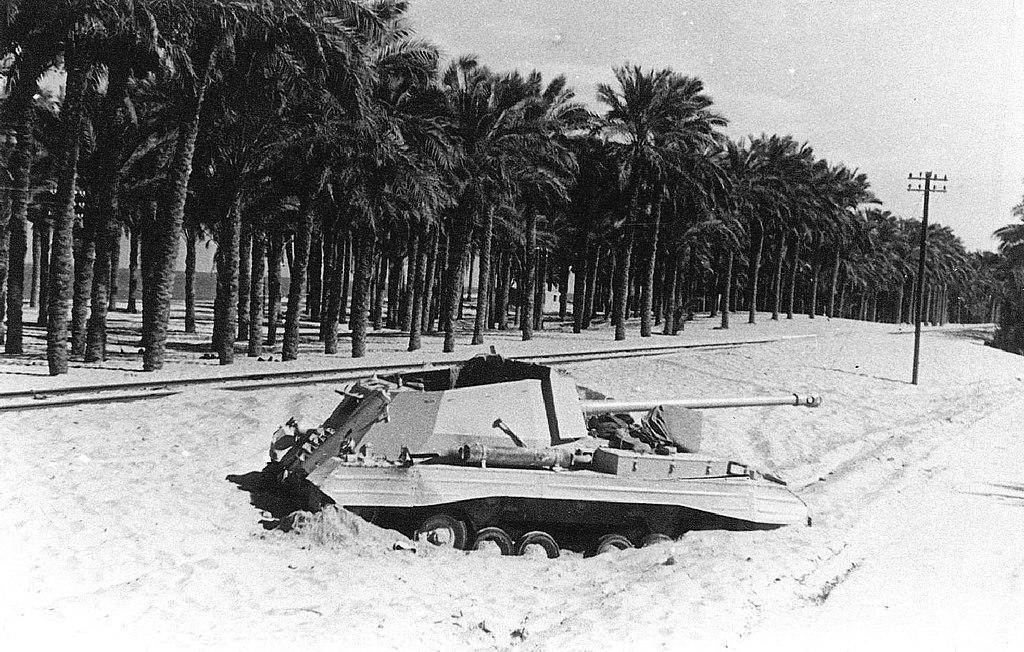
Today in Labor History November 12, 1956: In the midst of the Suez Crisis, over 100 Palestinian refugees were killed in Rafah by Israel Defense Forces after they invaded the Gaza Strip. Israel has neither denied nor acknowledged wrongdoing. Palestinians maintain that all resistance had ceased when the killings took place. Dozens of summary executions of Palestinian prisoners occurred, and up to 1,200 civilians were killed by the IDF in this four-month period of Israeli rule. The Suez Crisis began when Israel, followed by France and the UK, invaded Egypt and the Gaza Strip, in order to depose Gamal Nasser, and regain control over the Suez Canal, which Nasser had nationalized. Nasser was a leading figure in the secular, anti-imperialist, pan-Arabist movements of the day. #workingclass #LaborHistory #israel #idf #palestine #colonialism #massacre #egypt #rafah #freepalestine #zionism #EndTheOccupation image
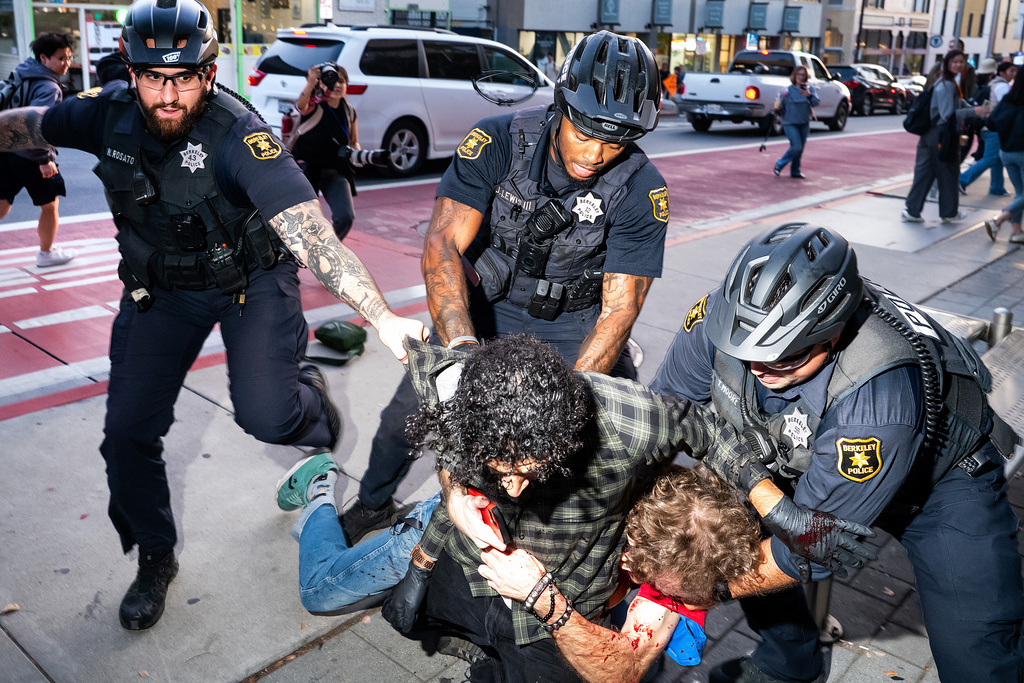
3 arrested during brawl outside TPUSA event at UC Berkeley this week. image