Ever wonder what happened to the “Trick” in “Trick or Treat?”
It all started when Halloween was brought to the U.S. by Scottish Immigrants, and Irish immigrants who were fleeing the Great Famine of 1845-1852. Back then, the holiday was celebrated quite differently than how most Americans celebrate it today. Early Irish-American Halloween celebrations usually began with a big meal, with foods and rituals to divine the future. A traditional Halloween entree was colcannon, a casserole of mashed potatoes, milk, onion and kale, served with lots of butter, if one could afford it. The cook would hide prizes in the colcannon. Finding a ring meant you were the next to get married. A coin indicated you’d have good luck for the rest of the year. Alternatively, they might scoop the first and last spoonful of colcannon into a girl’s stocking and hang that from a nail in the door. The next person to enter through that door supposedly would be her future husband.
Another Halloween treat was barmbrack, a sweetbread filled with fruit, and sometimes hidden prizes. In this case, finding a ring foretold of an impending romance, whereas a thimble meant you would never get married. A piece of rag meant bad luck or poverty. If a girl ate an apple while combing her hair in front of a mirror at midnight on All Hallows Eve, she would see her future husband gazing back at her. If she walked out into the night, blindfolded, and was led to a cabbage patch, she could predict the size and shape of her future husband by the size and shape of the first cabbage she picked. And if she peeled an apple and let the shavings fall to the ground, she might be able to discern her sweetheart’s initials.
The traditional Halloween supper was followed by bonfires, games, and Mumming, a ritual in which people in costumes (often in drag) marched door-to-door, performing rhyming plays, usually humorous, and often in exchange for food, treats, or even booze. Mumming was practiced in Ireland, Scotland, Mann and Wales, as well as several other European countries, going back at least as far as the Middle Ages. And it is still practiced in parts of the U.S., particularly in Pennsylvania, most likely as a result of the Irish and Welsh who immigrated there in the mid-1800s, many to work in the coal mines. Tolstoy portrayed mumming in War and Peace. For a fascinating history of Irish mumming, check out Henry Glassie’s, All Silver and No Brass (1975).
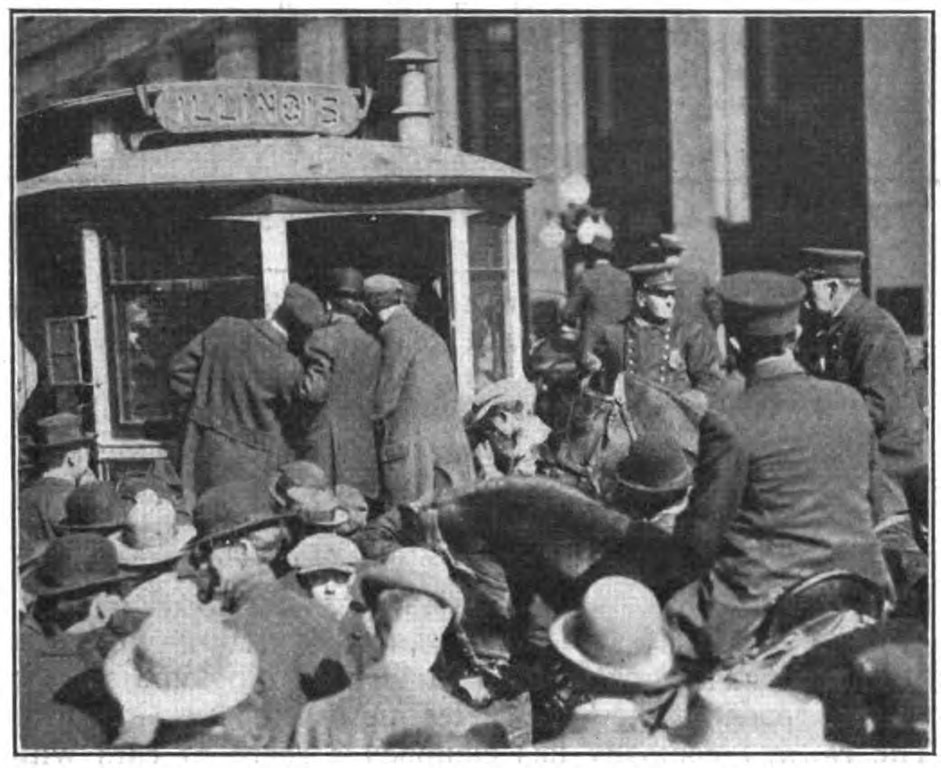
Mumming was likely the origin of trick-or-treating, as mummers sometimes threatened mischief if treats weren’t provided. Some of the pranks and mischief people did back then included removing the hinges from people’s gates; placing farmers’ wagons or livestock on top of their rooves; stringing ropes across walkways to trip people in the dark; mowing down their shrubs; knocking over swill barrels and outhouses; and even detonating small bombs. By the late 1800s and early 20th century, however, Halloween pranking had taken on a much more anti-authoritarian edge. Kids would vandalize their principal’s home, set off fire alarms, throw bricks through shop windows, attack well-dressed pedestrians and streetcar passengers with bags of flour, and strike out against authority, in general. Sometimes, homeowners would fight back, shooting kids with buckshot or saltpeter. By World War II, the authorities were so alarmed that they started to claim that these pranks were threatening the war effort by wasting scarce resources and disrupting the sleep of weary war workers.
Efforts to sanitize the holiday began in the 1930s, when “The American Home” magazine, and radio shows, like the Jack Benny Show, began promoting the idea of parents taking younger kids out trick-or-treating responsibly and politely. In 1950, the Senate Judiciary Committee, under President Truman, tried to transform Halloween into a more family-friendly holiday, renaming it “Youth Honor Day.” It was around this time that costumes started to become cuter and less scary, and that parents started organizing neighborhood haunted houses and parties to keep the kids out of mischief. In the 1952 Donald Duck cartoon, “Trick or Treat,” Huey, Dewey, and Louie tried to convince mean old Uncle Donald to give them candy instead of the explosives he wanted to give them. But the biggest changes came when food, tobacco, and toy companies saw the huge profits to be made from this new trend and began massively marketing candy and costumes in the weeks leading up to Halloween. By 1965, corporations were making $300 million per year in profits from Halloween costumes and candy.
Of course, the mischief never completely disappeared. Teenagers and some adults continue to light fireworks, and commit pranks, like leaving burning bags of poop on doorsteps, or blowing up jack-o’-lanterns. In 1994, MIT students dismantled a cop car and reassembled it on top of the Great Dome on the Cambridge campus. There’s an annual naked pumpkin run in Boulder, Colorado. And the parties can get pretty raucous, particularly San Francisco’s Castro Street Halloween (at least until the city authorities took it over, moved it downtown, and sanitized it).
And here is my all-time favorite Halloween prank. In 1991, there was a protest march in San Francisco when the governor vetoed a Gay Rights bill. Former San Francisco police chief and current mayoral candidate, Frank Jordan, decided to “win” votes by joining the protest. However, as police chief, he had overseen ongoing police harassment and abuse of the LGBTQ community. Angry protesters surrounded him, knocked him to the ground and stole his shoe. The shoe is now one of the most popular exhibits in the Gay Lesbian, Bisexual, Transgender Historical Society’s archives in San Francisco. But that’s not the end of the story. Back then, the raucous Halloween party in the Castro was preceded by a smaller, but even wilder party the night before Halloween. And on that particular night-before party, people lined up donuts down the length of Castro Street, with Frank Jordan’s shoe (or a facsimile of it) at the end, and then lit the entire thing on fire.
#workingclass #LaborHistory #halloween #lgbtq #police #homophobia #castro #sanfrancisco