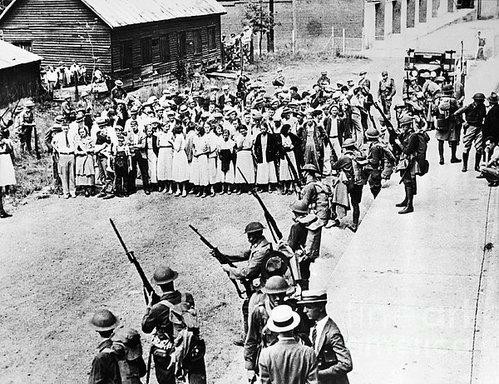
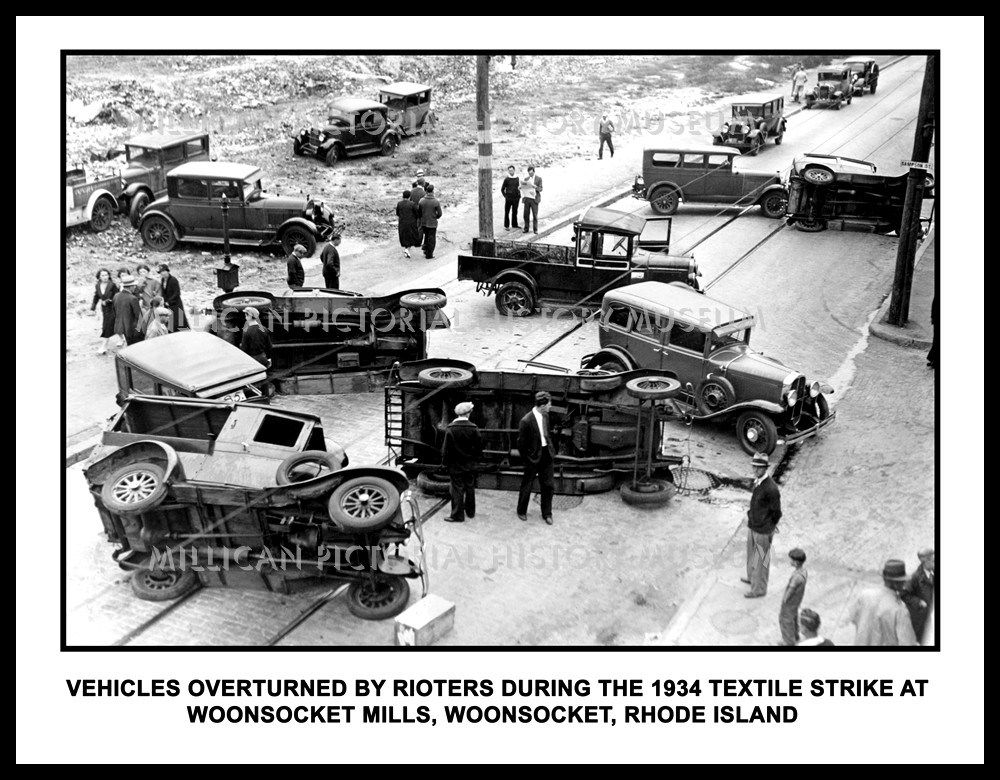
Today in Labor History September 12, 1934: National Guards troops were deployed throughout New England to quell textile labor strikes. 1,500 strikers fought state troopers in Connecticut, with other conflicts occurring in Fall River, Lawrence, Lowell and Lewiston. In Woonsocket, Rhode Island, 500 protestors attacked the police with bricks. National Guards fired into the crowd, killing one and wounding many. The governor declared that it was a Communist uprising and not a textile strike and sent in the military.
The Uprising of ’34 spread throughout the eastern seaboard, with 400,000 textile workers joining the strike, the largest textile strike in U.S. history until that point. Over 18 workers were killed and over 160 were injured, mostly in Georgia, and in South Carolina, where the governor issued shoot-to-kill orders against anyone picketing. The strike ended in defeat. The anti-union propaganda by employers, the state, and the media, were particularly effective in the South, where blacklisting of strike participants and continued union-busting kept the mills union-free and lower-wage for years. Many of the Northern mills relocated there to take advantage of the higher profits to be made from the low-wage, union-free shops.
#workingclass #LaborHistory #textile #strike #newengland #union #women #police #policebrutality